作者: admin

  • Air conditioner sparked deadly blaze at children’s orphanage – police

    Air conditioner sparked deadly blaze at children’s orphanage – police

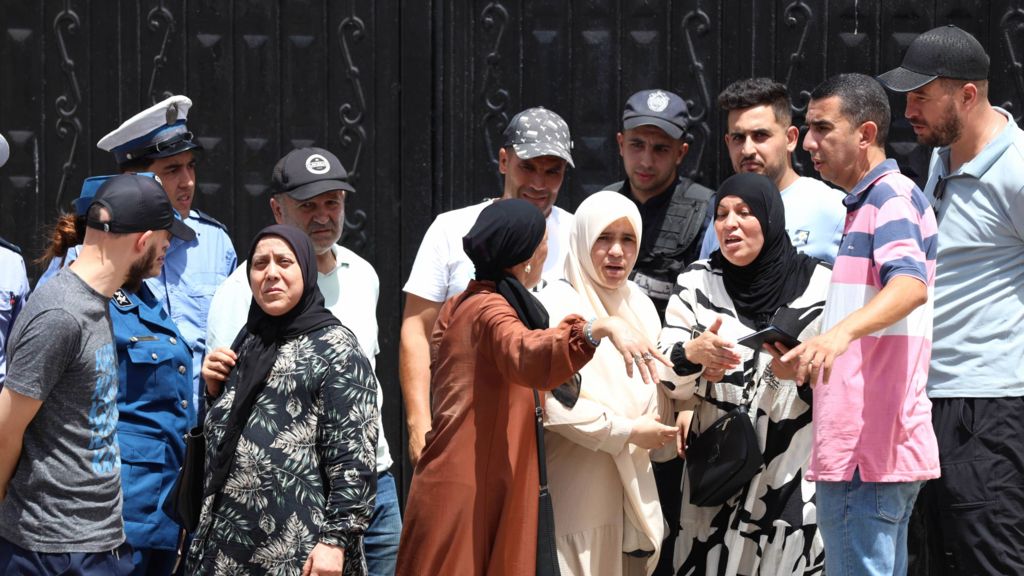
    A devastating early-morning fire at an orphanage in Algiers’ eastern Mohammadia suburb has claimed 11 lives and left 19 others injured, triggering widespread public shock and calls for accountability over institutional safety failures across Algeria. Algerian police have confirmed the blaze was ignited by an electrical spark from a defective air conditioning unit, which ran nonstop through the ongoing extreme regional heatwave before the fire broke out in the early hours of Thursday.

    Forensic investigators have confirmed the continuous operation of the faulty unit amid sweltering summer temperatures created the conditions for the outbreak. Emergency response teams including 10 fire engines and 16 ambulances were deployed to the facility immediately after the blaze was reported, and firefighters battled the intense flames for a minimum of three hours to bring it under control. Five children with reduced mobility were successfully pulled from the burning building unharmed, according to official statements.

    Authorities have not yet released the full age breakdown of the fatalities and injured, but Algerian President Abdelmajid Tebboune confirmed in a social media statement that children are among those killed. A care worker employed at the orphanage is also counted among the deceased, Agence France-Presse reported, citing official police documentation. Survivors are currently receiving care at two local hospitals for a range of conditions including burns, smoke inhalation and acute shock, and Prime Minister Sifi Ghrieb has visited the facility to meet with patients and medical teams.

    Algeria is currently grappling with an intense summer heatwave that has stretched emergency resources thin, with firefighting crews already deployed across northern parts of the country to contain multiple large-scale wildfires. As news of the orphanage disaster spread, it quickly sparked outrage across Algerian society, with opposition leaders, independent journalists and social media users united in demanding a full, transparent probe into the incident and potential negligence.

    The opposition Jil Jadid party has called not only for a clear investigation and legal consequences for any parties found responsible for safety lapses, but also for a nationwide mandatory review of fire safety protocols at all institutional care facilities, orphanages, hospitals and schools across the country. Independent journalist Akram Kharief labeled the incident an unprecedented “national tragedy”, calling for immediate fire safety audits for all public institutions and questioning why Algerian citizens are forced to face preventable disasters in public care facilities.

    Social media commentary across major Algerian news platforms has centered on unanswered questions, including who was responsible for supervising the resident children overnight when the fire broke out, with many users calling for senior officials to step down over the incident. Independent, government-critical outlet Le Matin d’Algérie highlighted the notable absence of the local mayor and provincial governor during the critical initial rescue and response phase. Even pro-government media outlet Algerie Patriotique joined calls for a full, uncompromising investigation, arguing the public deserves the full truth about whether the deaths could have been avoided through proper safety measures.

    In an official statement released shortly after the death toll was confirmed, President Tebboune expressed official grief over the loss of life, saying “It is with a heart resigned to the will of God that I learned of the death of children and the injury of others.” The country’s civil defence unit also offered its condolences, saying “May God have mercy on them” in its official announcement of the fatalities.
  • Messi eyes glorious farewell as Spain, Argentina clash in World Cup final

    Messi eyes glorious farewell as Spain, Argentina clash in World Cup final

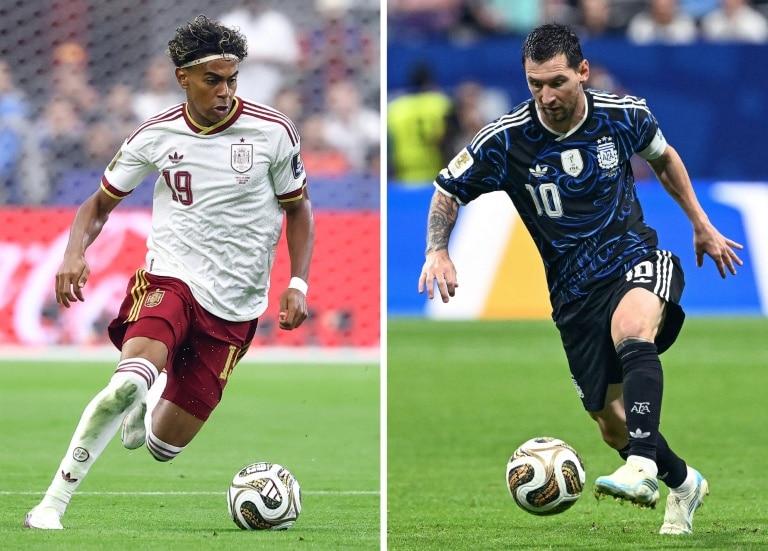
    The 2026 FIFA World Cup, the largest edition of the tournament in history, will reach its climax this Sunday at East Rutherford’s MetLife Stadium, where European champions Spain and South American titleholders Argentina will lock horns for the sport’s most coveted global prize. The 80,012-capacity venue will host a star-studded crowd that includes former U.S. President Donald Trump, alongside thousands of passionate fans from both nations who have traveled across continents to witness the historic cross-continental showdown.

    Preparations for the final have not been without minor disruptions: tournament organizers confirmed this week that they are closely monitoring air quality in the New Jersey metropolitan area, where smoke plumes from ongoing Canadian wildfires have drifted south. The match is scheduled to kick off at 3 p.m. local time (1900 GMT), and the half-time break will be extended to an unprecedented 25 to 30 minutes to accommodate a star-studded Super Bowl-style halftime show featuring global music icons Madonna, Shakira and Justin Bieber.

    All off-field buzz will fade into the background once the first whistle blows, however, as the match centers on one of the biggest narratives in modern football: what is widely expected to be the final World Cup appearance of Argentina captain Lionel Messi. At 39 years old, the Argentine icon, regarded by most fans and pundits as the greatest player to ever step onto a football pitch, will make history as only the second men’s player to feature in three World Cup finals, matching the legendary feat of Brazil’s Cafu, who played in the 1994, 1998 and 2002 title matches.

    Messi has delivered a career-defining tournament to reach this final, currently leading all scorers with eight goals and on track to claim the Golden Boot. Beyond his goal tally, the eight-time Ballon d’Or winner has repeatedly dragged his side back from the brink of elimination, embodying the relentless, never-say-die resilience that head coach Lionel Scaloni has built into the Argentine squad. In the round of 16 against Egypt, Messi inspired a stunning late comeback after Argentina trailed 2-0 with just 11 minutes left, engineering a 3-2 victory that kept their title defense alive. Most recently, he notched two assists in a dramatic 2-1 semi-final comeback against England in Atlanta, securing Argentina’s spot in the championship match.

    Scaloni, who has led Argentina to consecutive Copa America titles and the 2022 World Cup crown, says his squad’s strength comes from their collective fearlessness and team unity. “This group is difficult to explain,” he said. “It is a show of the collectiveness, the brotherhood that we are in, the willingness to fight to the very end. I know the guys. They fear nothing.”

    Standing between Argentina and a historic title defense – which would make them the first team to retain the World Cup in 64 years – is a Spanish side that has dominated the tournament with their trademark possession-based style of play. Spain, who won their first and only World Cup title in 2010, entered the tournament as dark horses but have steadily built momentum, shutting out pre-tournament favorites France 2-0 in the semi-finals to book their place in Sunday’s final.

    La Roja’s biggest strength this tournament has been their impenetrable defense: the side has conceded only one goal across seven matches, notching six clean sheets. If they win Sunday’s final and keep Argentina off the scoresheet, they will set a new World Cup record for the fewest goals conceded by a title-winning team. Led by captain Rodri, Spain’s midfield trio of Rodri, Fabian Ruiz and Dani Olmo completely neutralized France’s high-powered attack in the semi-finals, controlling possession for large stretches and creating the openings that led to their decisive goals.

    The outcome of the final could well hinge on the form of Spanish teenage prodigy Lamine Yamal. The 19-year-old Barcelona winger, who was the standout star of Spain’s 2024 European Championship winning campaign, has been working his way back from a hamstring injury through much of this World Cup and has yet to hit his electrifying best. But he showed glimpses of his elite talent against France, drawing the penalty that gave Spain their opening lead and having a spectacular goal ruled out by only the narrowest of offside calls.

    Adding another layer of personal drama to the matchup is the relationship between the two head coaches. Spain manager Luis de la Fuente, 65, who took over the senior national team in 2022 after a successful career leading Spain’s youth sides, mentored Scaloni when the Argentine was working toward his professional coaching license in 2018. Scaloni, 46, maintains deep personal and professional ties to Spain, where he lives with his family, but says he will put his friendship and respect for his former mentor on hold for 90 minutes on Sunday.

    “He was my mentor, and he taught me everything I know and now we are facing each other in a final,” Scaloni said. “Everyone knows I live in Spain and have Spanish family. And I’m very, very sorry, but on Sunday I’m going to try to beat him.”

    For millions of football fans around the globe, Sunday’s final is more than just a match: it is a chance to witness one of the game’s greatest legends cap his historic career with one last world title, while watching a new generation of Spanish stars write their own place in football history.

  • Trump’s envoy greeted by protests in Venice on latest stop of super yacht diplomacy tour

    Trump’s envoy greeted by protests in Venice on latest stop of super yacht diplomacy tour

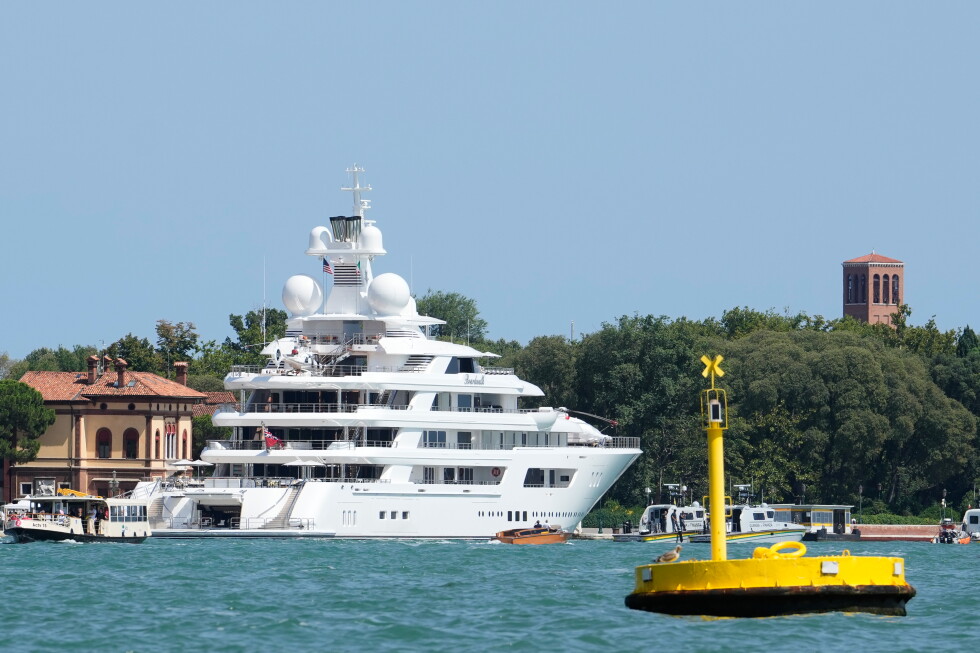
    VENICE, Italy — A planned coastal diplomacy tour celebrating the 250th anniversary of U.S. independence has sparked fierce public pushback in Venice, where billionaire U.S. Ambassador to Italy Tilman Fertitta docked his 117-meter superyacht on Friday to confront widespread demonstrations against his visit.

    Fertitta, a hospitality industry tycoon who was sworn into the ambassador post in 2025, launched the so-called Coastal Diplomacy 250 tour, which will cover 13 Italian coastal regions over its route. The excursion, which travels aboard Fertitta’s private luxury yacht *Boardwalk* — a vessel outfitted with two helicopter landing pads, dual swimming pools, a full-service spa, and a professional gym — aims to highlight the long-standing historical, economic, and cultural ties between the United States and Italy, the ambassador wrote in a social media statement ahead of the trip.

    But for many local Venetians and activist groups, the visit of a billionaire ambassador on a private superyacht comes off as a tone-deaf display of excessive American wealth and overreach at a moment of deep unease with the Trump administration’s foreign policy. Many Italian critics argue the current U.S. administration has destabilized the post-World War II international order that has guaranteed European stability for decades.

    The activist groups organizing the protests against Fertitta’s stop are the same organizations that led demonstrations against last year’s high-profile wedding of Amazon billionaire Jeff Bezos and Lauren Sanchez in Venice, a event that amplified local anger over overtourism and the commercialization of the historic city. On July 4, U.S. Independence Day, protest organizers unfurled a massive banner matching the exact length of Fertitta’s *Boardwalk* that read “Venezia non si USA” — a deliberate wordplay that translates to “Venice is not for the taking” while directly referencing the United States. Protesters say the size of the banner was meant to symbolize what they call the “dimensions of [Fertitta’s] arrogance.”

    Stella Morion, one of the protest organizers, told reporters that the visit is an insult to a city already buckling under the weight of unregulated mass tourism. “It’s arrogant to think he can do what he wants in a city that is ever more sold to the single culture of tourism,” Morion said. She added that protesters also extend their opposition to the Trump administration’s global agenda, specifically pointing to U.S. military strikes on Iran that organizers argue have driven sharp spikes in global energy prices, worsening Italy’s ongoing cost-of-living crisis.

    “It is the umpteenth slap in the face of a city and all of the people in Venice who struggle to reach the end of the month due to an increase in prices caused by Trump’s war,” Morion said.

    Fertitta has not responded to requests for comment on the protests or the tour. The ambassador, who built his multi-billion dollar fortune in the hospitality sector through a portfolio of restaurants, hotels, and casinos, also owns the NBA’s Houston Rockets. His official biography lists his personal net worth at $11.3 billion, placing him among the 100 wealthiest people in the United States per *Forbes* rankings.

    Before arriving in Venice, Fertitta completed stops in multiple southern and central Italian coastal locations. The tour began in the Sicilian port of Cefalu, where his family traces its ancestral roots back to 1566, and included a meeting with Sicily’s regional governor in Palermo. He also stopped at the Calabrian port of Le Castella, sailed along the Puglia coastline, and traveled up the Adriatic Sea to reach Venice.

    Details of Fertitta’s scheduled meetings during his Venice stop have not been released to the public, but local officials confirm he is expected to attend the city’s iconic Redentore festival on Saturday. The annual event commemorates the end of a devastating 1576 plague outbreak, and concludes with a famous fireworks display over St. Mark’s Basin.

    The controversial visit comes amid a documented cooling of relations between Italian Prime Minister Giorgia Meloni and former U.S. President Donald Trump, who has launched a series of public social media attacks against Meloni. Once viewed as a key European political ally for Trump with aligned policy positions on issues including immigration, Meloni notably declined to attend the official 250th anniversary of U.S. independence celebrations hosted at the U.S. Embassy in Rome, signaling the ongoing rift between the two leaders.

  • Timelapse shows World Cup final stadium nearly vanish in smoky haze

    Timelapse shows World Cup final stadium nearly vanish in smoky haze

    Striking time-lapse footage has captured a startling visual shift at New Jersey’s MetLife Stadium, the chosen venue for the 2026 FIFA World Cup final, as thick haze from hundreds of ongoing Canadian wildfires swept across the region and nearly obscured the massive sports arena from view.

    The haze, which has been an ongoing issue for the Northeastern United States through multiple waves of wildfire activity this year, drifted southward from Canada, where hundreds of uncontrolled blazes have been burning across vast swathes of boreal forest in recent months. Climate researchers have linked the increased frequency and intensity of these wildfires to rising global temperatures and prolonged drought conditions across much of Canada, creating ideal conditions for large, fast-spreading fires that send plumes of smoke hundreds of miles across international borders.

    For residents and visitors in the New York City metropolitan area, where MetLife Stadium is located just across the Hudson River from Manhattan, the hazy conditions have not only created dramatic and concerning visuals like the timelapse of the vanishing stadium, but have also sparked ongoing public health concerns over poor air quality. The timelapse, which spread rapidly across social media after being shared, has served as a stark visual reminder of how far-reaching the impacts of climate change and large-scale wildfires have become, even for major population centers far from the actual fire lines.

    Officials have repeatedly issued air quality alerts across the region during periods of heavy haze, urging vulnerable populations to limit outdoor activity. As wildfire seasons continue to lengthen across North America, episodes of cross-border haze like this are expected to become more common in coming years, raising questions about how major public events like the World Cup will need to adapt to changing air quality conditions moving forward.

  • Israeli parliament passes law enshrining gender segregation in universities

    Israeli parliament passes law enshrining gender segregation in universities

    In a contentious vote held on Thursday, Israel’s national parliament, the Knesset, has given final approval to a divisive new law that legalizes gender segregation across postgraduate higher education programs across the country. The legislation cleared the legislative body with a narrow margin, recording 52 votes in favor compared to 43 votes cast against the measure.

    Under the terms of the new law, accredited Israeli universities will gain legal permission to establish separate, gender-specific study tracks for students enrolled in master’s and doctoral degree programs. The law also formally codifies a 2021 ruling issued by the Israeli High Court of Justice, which had previously approved gender-segregated bachelor’s degree pathways when paired with a set of specific regulatory restrictions.

    The bill was spearheaded by Knesset member Limor Son Har-Melech, a representative of the far-right Otzma Yehudit party led by Itamar Ben-Gvir. In remarks following the vote, Son Har-Melech framed the legislation as a tool to advance educational access for women from demographic sectors that she claimed have historically been denied equal educational opportunities.

    Proponents of the new rule have echoed this framing, arguing that the policy will expand access to higher education for religious women, who often hold gender-separated learning as a core personal and religious requirement. Zvi Sukkot, a Knesset member from the far-right Religious Zionism party led by Bezalel Smotrich, added that the law serves to expand personal freedom of choice for students with differing religious needs.

    However, the legislation has drawn fierce condemnation from opposition political figures and progressive lawmakers, who have decried the policy as a dangerous rollback of gender equality in Israeli public life. During the parliamentary vote, several opposition legislators held up protest signs emblazoned with the slogan “Segregation is exclusion” to demonstrate their opposition.

    Avigdor Lieberman, leader of the opposition Yisrael Beiteinu party, issued a sharp rebuke of the government, accusing the ruling coalition of seeking to transform Israel into a repressive “Ayatollah state.” Drawing a parallel to existing gender segregation practices in the ultra-Orthodox city of Bnei Brak, where men and women often walk on separate sidewalks, Lieberman called on university and academic leadership across the country to refuse to implement what he labeled “this madness.”

    Merav Michaeli, a senior Labour Party lawmaker, also criticized the new law, rejecting the argument that segregated education can ever be equal. “There is no such thing as segregated but equal,” Michaeli said, noting that the policy comes as part of a broader pattern of rollbacks to gender equality pushed by the current right-wing ruling coalition.

  • Yunnan’s terraced rice fields burst with summer greenery in Guangnan

    Yunnan’s terraced rice fields burst with summer greenery in Guangnan

    As the peak of summer settles over southwest China’s Yunnan province, the centuries-old terraced rice fields of Tangdaxin village, Guangnan county, have burst into a vibrant tapestry of green that draws the eye and calms the spirit. This layered agricultural landscape, a cultural staple of the local Zhuang ethnic community, has transformed rolling hillsides into a picture-perfect display of rural harmony between people and nature.

    Freshly transplanted rice seedlings spread across the stepped slopes in overlapping swathes of bright lime and deep forest green, with light filtering through the summer sky to cast shifting shades across the water-filled paddies. When soft mountain winds drift down from the surrounding peaks, gentle ripples cascade from the valley floor all the way up to the village edge, and the soft rustle of rice leaves sways in the breeze, echoing across the quiet hills.

    Unlike static scenic vistas, this landscape is alive with the quiet work of local farmers, who move between the paddies to tend to young seedlings and clear silt-clogged irrigation channels, their daily labor adding a warm, lively energy to the otherwise tranquil setting. In the distance, mist-dusted mountain ridges cluster behind scattered traditional village homes, all blending seamlessly into the rolling tiers of green to create an idyllic snapshot of sustainable rural life that has endured for generations in this corner of Yunnan.

  • With Deschamps stepping down after 14 years, France needs a new coach and Zidane is in pole position

    With Deschamps stepping down after 14 years, France needs a new coach and Zidane is in pole position

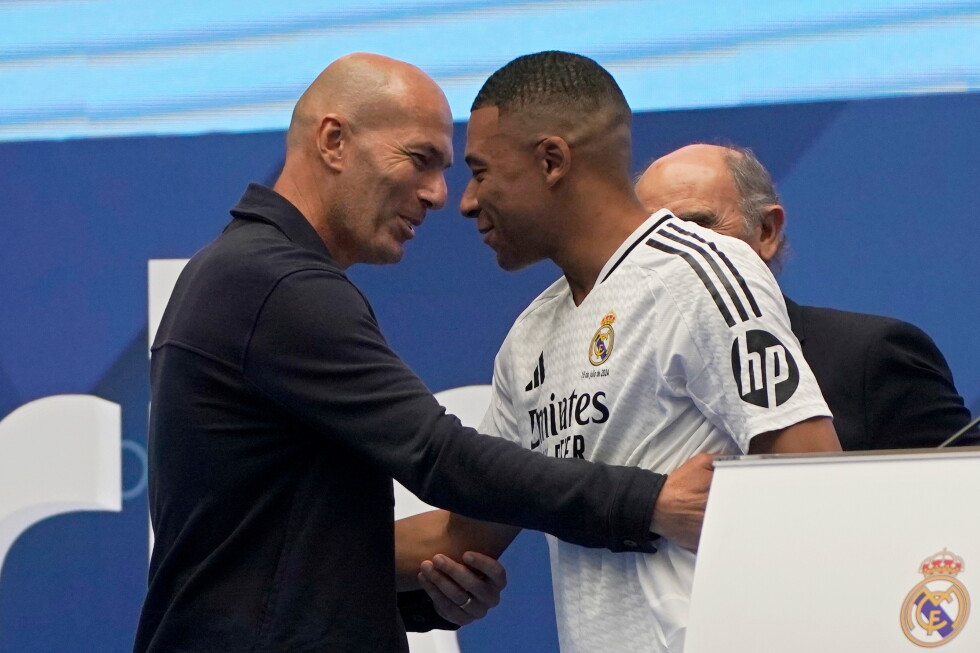
    PARIS (AP) – This Saturday, France national men’s football team will face England in the World Cup third-place playoff in Miami, a match that will mark the end of Didier Deschamps’ 11-year tenure as Les Bleus’ head coach. For both sides, the bronze medal match is a hollow consolation prize, coming after crushing semifinal eliminations that cut short each team’s dreams of lifting the sport’s most coveted trophy. The outcome marks a underwhelming close to Deschamps’ reign, after widespread expectations that his star-stacked squad would compete for a second world title under his leadership. In the wake of his departure, football legend Zinedine Zidane is widely tipped to be confirmed as the new head coach by the French Football Federation in the coming days.

    Deschamps’ legacy with the French national team is defined by both historic glory and lingering debate. As a manager, he led France to a World Cup victory in 2018, a gut-wrenching penalty shootout loss in the 2022 World Cup final, and an early semifinal exit against Spain in this year’s tournament. Over his 14 years at the helm, Deschamps claimed only one major senior trophy – the 2018 World Cup – after falling to Portugal in the 2016 UEFA European Championship final on home soil. Critics argue that this trophy haul underdelivered given the elite talent Deschamps had at his disposal, a group that included global stars such as Kylian Mbappé, Paul Pogba, Antoine Griezmann, 2022 Ballon d’Or winner Karim Benzema and Ousmane Dembélé. Supporters, however, point out that Deschamps delivered consistent high-level results for Les Bleus throughout his tenure. Regardless of differing takes on his legacy, the next France head coach will face enormous pressure to live up to Deschamps’ track record, and few candidates carry the prestige and profile to match the role better than Zidane. Widely regarded as France’s greatest ever player, and a coach with three Champions League titles to his name during a trophy-laden spell at Real Madrid, Zidane looks like an ideal fit for the job.

    Ironically, Deschamps and Zidane have been linked to French football glory for decades, despite their wildly contrasting playing styles. When France claimed its first home World Cup title in 1998 and followed it up with a Euro 2000 crown, Deschamps was the hard-working, tireless defensive captain who anchored the midfield, while Zidane was the magical creative playmaker who drove the team’s attacking threat and produced the iconic moments that lifted the side to glory.

    France’s 2-0 semifinal defeat to Spain exposed clear tactical gaps in Deschamps’ game plan that have fueled calls for a new approach. Pinned back by Spain’s relentless, fluid possession play, France was completely overrun in central midfield, its pressing system failed to generate any disruption, and its vaunted attack was effectively neutralized – with Deschamps unable to adjust with an effective alternative strategy to turn the tide. This has long been a core criticism of Deschamps from detractors, including former France teammate Christophe Dugarry, who have repeatedly argued that Deschamps’ pragmatic, defensive-focused approach stifles creative freedom in midfield. For Zidane, who made his name as one of the most creative playmakers in football history, a shift to a more expansive, attacking style is widely expected. That could open the door for technically gifted young talents such as Michael Olise or Rayan Cherki to earn increased opportunities in central playmaker roles, or a tactical shift that sees Dembélé drop into a deeper playmaking position, a role he has excelled in at Paris Saint-Germain.

    One of the most anticipated potential changes under Zidane would be a return to the national squad for Benzema, who shares a close personal and professional bond with Zidane from their time together at Real Madrid. The pair won three consecutive Champions League titles between 2016 and 2018, and Zidane was widely credited with developing Benzema into a complete, ruthless goalscorer who would go on to claim the Ballon d’Or in 2022. At 38, Benzema’s age is cited as a barrier to a return to international football, but Zidane may well see an outside role for the veteran, following in the footsteps of 39-year-old Lionel Messi, who turned back the clock to lead Argentina to glory in this tournament. Benzema could thrive in a more withdrawn attacking role, where his elite technical skill and passing vision would create space for younger, faster forwards, an outcome that would draw a sharp contrast with Deschamps, who excluded Benzema from the national squad for nearly six years over his alleged involvement in a blackmail scandal involving former teammate Mathieu Valbuena. Benzema was eventually recalled for Euro 2020, where he finished as France’s top scorer with four goals, and formed a lethal attacking partnership with Mbappé as France won the 2021 UEFA Nations League. Their relationship fractured permanently ahead of the 2022 World Cup, when Benzema was sent home from the squad with a thigh injury, a sequence of events Benzema has publicly disputed. While recalling Benzema would be a bold decision for Zidane, it remains firmly on the table.

    A key question surrounding Zidane’s potential appointment is his readiness for the high-pressure role of France manager, given he has not held a coaching position since departing Real Madrid for a second time in 2021. On the flip side, the five-year break from the scrutiny and stress of top-tier management leaves Zidane refreshed and hungry for a new challenge. If confirmed, Zidane’s first match in charge of France will be an away Nations League fixture against Turkey on September 25, followed by a trip to Belgium three days later. French fans will get their first look at Zidane as head coach at the Stade de France on October 2, when Les Bleus face Italy. That match carries extra narrative weight: Zidane’s final appearance as a France player also came against Italy, in the 2006 World Cup final, where he opened the scoring with a cheeky Panenka penalty before being sent off in extra time for a infamous headbutt on Italian defender Marco Materazzi. France went on to lose the final on penalties, but the French public never held the incident against their beloved “Zizou”, whose deep connection with the nation remains as strong as ever.

  • How a young Alabama man has become a leading — and booming — opera voice

    How a young Alabama man has become a leading — and booming — opera voice

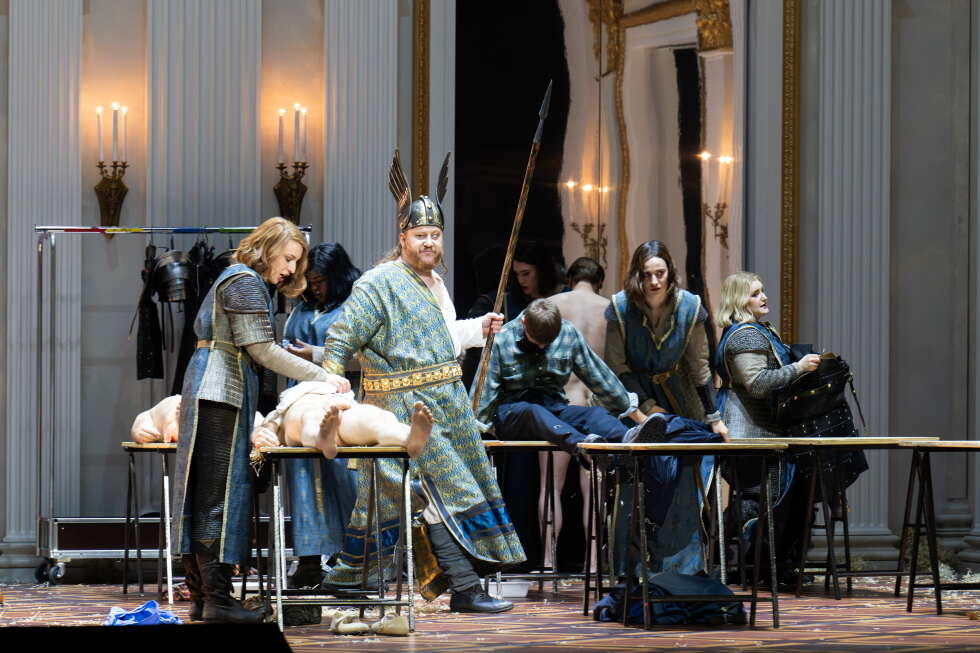
    MUNICH, Germany — Three decades ago, a small-town American teenager with a blue-collar background and a childhood knack for imitating country star Conway Twitty had no idea he would one day become one of the most celebrated Wagner singers of his generation. Today, 37-year-old bass-baritone Nicholas Brownlee stands at the pinnacle of the global opera world, his name tied to one of Richard Wagner’s most iconic roles: Wotan, the conflicted king of the gods in Wagner’s monumental Ring Cycle.

    Brownlee’s journey to operatic stardom began with youthful overconfidence. Freshly falling in love with opera, he was desperate to test his developing voice against Wagner’s demanding repertoire, even when his college teacher warned him he wasn’t ready. Early on, he brought a lighter excerpt from Wagner’s *Tannhäuser* — Wolfram’s beloved “Song to the Evening Star” — to Thomas Rowell, his voice professor at the University of South Alabama. Rowell laughed off the attempt, noting Brownlee’s powerful natural voice was still a young, unrefined instrument not ready for the heavy demands of Wagnerian repertoire.

    Nearly 20 years later, Brownlee smiles at the memory, acknowledging his early overambition. That same relentless drive — what he describes as “a fire in my belly that burns brighter every day” — is what pushed him to the top of his field, where he now headlines major Wagner productions across Europe.

    Brownlee recently made his highly anticipated debut as Wotan in *Die Walküre*, the second installment of the full Ring Cycle at the Bavarian State Opera, directed by Tobias Kratzer. He had already earned acclaim for the same role in *Das Rheingold*, the opening work of the cycle, and critics have hailed his performance with the highest praise. German outlet *Merkur* critic Markus Thiel described Brownlee as “a heroic baritone straight out of a textbook, with a powerful, resonant voice, a force of nature.” Writing for *Platea Magazine*, Carlota Moseguí praised both his vocal control and dramatic presence, noting he “possesses all the qualities to become the definitive Wotan of his generation.”

    Up next, Brownlee will take the title role in *Der Fliegende Holländer* (The Flying Dutchman) at Bayreuth, Germany’s legendary “Wagner shrine” dedicated exclusively to the composer’s works. His coming season is packed with Wotan performances across the globe: *Siegfried* in Munich, *Die Walküre* in Buenos Aires, *Das Rheingold* in Barcelona, two additional Ring operas in Frankfurt, and two full Ring cycles back in Munich next summer.

    For Rowell, who still remains a close friend and even officiated Brownlee’s wedding to mezzo-soprano Jennifer Feinstein, watching his former student rise to such heights feels surreal. “It’s a once-in-a-lifetime thing to have a student who goes that far, especially from a small regional state university like ours,” Rowell said. “I have to pinch myself. I’m enjoying it vicariously.”

    Many in the opera world warn that frequent performances of heavy Wagnerian repertoire risk damaging a singer’s voice, but Brownlee says he has no such concerns. “I don’t think you’re supposed to say this, but no, not really,” he admitted. “We like to put this big stamp on Wagner and say ‘Be Careful!’ But he noted that the demands of each role are distinct enough to prevent vocal burnout. He does plan to add more variety to his future schedules, including a return to one of his favorite non-Wagner roles: Baron Scarpia in Puccini’s *Tosca*. Longer-term goals include two iconic Verdi roles: the scheming villain Iago in *Otello*, and the boisterous comic lead Falstaff. “I want to flex a different muscle,” Brownlee explained. “I talk fast, I’m a bubbly, fun guy, but what I do on stage is so serious all the time. Boy it would be fun to just be a jolly fat guy!”

    Brownlee’s unlikely path from a working-class small town outside Mobile, Alabama, to international opera stardom began with unexpected roots: his first performance success came as a child doing Conway Twitty impressions for his large extended family, just to win attention. He did not discover classical music until high school, when his choral director sparked his interest. When he enrolled in college, he originally planned to study conducting, until Rowell heard him sing and persuaded him to join the Mobile Opera chorus.

    “I went in the first day and I hated it,” Brownlee recalled. “I said, this is in Italian, who cares? That’s for stuffy elite people, not for us blue-collar fellas.” Curiosity got the better of him, however, and he agreed to watch the final emotional scene of Verdi’s *La Traviata* from backstage one night. When the dying heroine Violetta gasped her final line “O, gioia!” and collapsed in her lover’s arms, Brownlee found himself weeping uncontrollably — even though he did not understand a word of the Italian libretto. That moment changed the course of his life.

    From that point on, Brownlee dedicated himself to voice training, studying and completing apprenticeships across the United States before moving to Germany to continue his career. He twice competed in the Metropolitan Opera’s prestigious National Council Auditions: in his early 20s, he made it to the New York semifinals but did not advance to the finals, a setback he calls a “great lesson.” Coincidentally, one of the winners that year was Ryan Speedo Green, who will sing Wotan in the Met’s upcoming new Ring Cycle. Brownlee returned to the competition in 2015 and took home one of the top prizes, and major accolades have followed ever since: in 2025, he won best male singer at the International Opera Awards and received the coveted Richard Tucker Award, given to the most promising American opera singer.

    Unusually for an American opera star, Brownlee has built almost his entire career in Europe, and remains largely unknown to mainstream audiences in his home country. He and Feinstein currently live in Germany with their two daughters, and are in the process of applying for German dual citizenship. “I can perform anywhere in Europe and be home in two hours to see my girls,” he explained. “In America that’s just not something you can do.”

    Though Brownlee has put down roots in Europe for now, major American opera companies are increasingly eager to bring him across the Atlantic. This past spring, he sang the prophet Jochanaan in Richard Strauss’s *Salome* at Chicago’s Lyric Opera, where general director John Mangum called his performance “absolutely thrilling” and said Brownlee is “definitely going be at the top of our list” for future Wagner productions. At the Met, general manager Peter Gelb heard Brownlee sing Wotan during the recent Munich run of *Die Walküre* and said he was “blown away,” confirming that the company will offer Brownlee major roles in upcoming seasons.

  • US, Iran trade attacks in return to full-blown war

    US, Iran trade attacks in return to full-blown war

    Just 30 days after the United States and Iran signed a preliminary memorandum of understanding aimed at de-escalating their open military conflict, the two long-time adversaries have returned to large-scale hostilities, launching a wave of reciprocal drone and missile strikes across the Middle East that marks the sharpest escalation since fighting first erupted in late February.

    The renewed clashes are concentrated around the strategic Strait of Hormuz, the world’s most critical chokepoint for global oil and natural gas trade, ending the brief lull in violence that followed last month’s tentative ceasefire. Iran has opened a wide front of retaliatory strikes targeting what it says are American military assets across six Middle Eastern nations, following accusations that U.S. forces launched pre-emptive attacks on Iranian civilian and energy infrastructure.

    Iranian state media reports that at least eight Iranian civilians were killed and 20 more wounded in U.S. strikes that hit a civilian airport, a major railway station, and two key bridges inside Iranian territory. Tehran also confirmed that U.S. attacks on energy generation facilities have severely strained the country’s national power grid, prompting the Iranian energy ministry to issue an urgent appeal for citizens to cut back on electricity consumption and turn off air conditioning during peak demand hours, even as regional summer temperatures climb to extreme highs. As of Saturday, Iran’s health ministry has confirmed 38 civilian deaths and more than 400 injuries across the country since fighting resumed six days ago.

    There was no immediate on-the-record response to Iran’s accusations from official U.S. government sources. However, the strikes mark an apparent expansion of U.S. military operations to target Iranian national infrastructure, a step that former U.S. President Donald Trump publicly threatened during earlier rounds of tensions.

    The current full-scale conflict between the two powers first ignited on February 28, when a joint U.S.-Israeli strike on Iranian targets killed multiple Iranians and sparked immediate retaliation from Tehran. In response to the opening attack, Iran effectively closed the Strait of Hormuz to international commercial shipping and launched its own strikes targeting Israeli and American interests across the Persian Gulf.

    Major General Majid Mousavi, commander of the aerospace division of Iran’s Islamic Revolutionary Guard Corps, reaffirmed Tehran’s commitment to continuing retaliation in a public statement Friday. “Effective and targeted strikes from across Iran against the enemy will continue until the U.S. ends its operation against Iran’s coastal facilities in the south and around the strait,” Mousavi said.

    Friday’s wave of Iranian retaliatory strikes stretched across the Middle East, leaving damage and casualties in multiple allied nations that host U.S. military forces. In Kuwait, Iran’s strikes damaged a joint power and water desalination plant, prompting Kuwait’s electricity ministry to call for immediate energy rationing. The Kuwaiti military confirmed that several of its service members were wounded when Iranian drones targeted multiple national military bases and encampments.

    Iran’s Revolutionary Guards said strikes targeting U.S. radar systems and military aircraft in Qatar were launched to “punish the aggressor” for earlier U.S. attacks. Qatari officials confirmed their air defense systems intercepted an incoming missile attack, though falling debris from the interception caused residential damage in coastal areas. Abu Baker, a Sudanese expatriate living in Qatar, described the shock of the attack to reporters: “I was about to go to sleep when I heard the air alerts, hoping the interception would be out at sea. Then it hit and it shook my house. I am worried that this war will drag on… but thank God we’re in a country that protects us.”

    Tehran also announced strikes on two U.S. radar sites in Oman and the long-contested Al-Tanf military base in eastern Syria. A senior Syrian military source denied any attack had taken place on Syrian territory, while U.S. military officials confirmed they had fully withdrawn all personnel from Al-Tanf earlier this year. Jordan’s military announced it shot down three incoming Iranian missiles that entered its airspace, while U.S.-led coalition forces shot down multiple Iranian drones over the city of Erbil in Iraq’s Kurdistan Region.

    Strikes on Erbil also killed nine members of an exiled Iranian Kurdish armed opposition group, the group announced Friday, blaming the attack directly on Iranian forces. The presidency of Iraq’s Kurdistan Region issued a formal condemnation, calling the attack “a serious escalation and a blatant violation of Iraq’s sovereignty.” In Bahrain, Iranian state media confirmed strikes targeted U.S. helicopters and fixed-wing aircraft at a major U.S. airbase on the island, prompting Bahrain’s civil defense authorities to urge all citizens to seek immediate emergency shelter.

    Six consecutive days of reciprocal fire around the Strait of Hormuz has fully rekindled the conflict that the preliminary ceasefire was meant to end. Iran has long claimed full territorial sovereignty over the waterway, which remained open to unimpeded global commercial shipping before the outbreak of war.

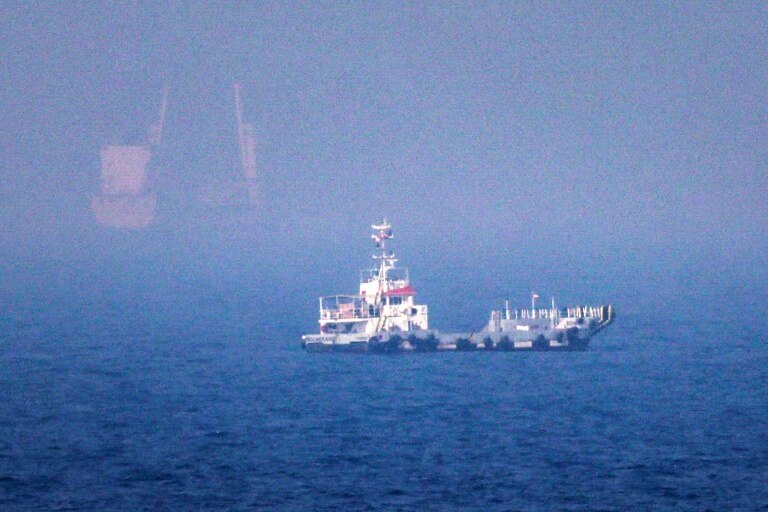
    International mediators have moved quickly to call for an immediate end to hostilities, with the foreign ministers of China and Pakistan issuing a joint statement urging both Washington and Tehran to return to the negotiating table to de-escalate. As part of its expanded military operations, the U.S. has reimposed a full naval blockade on Iranian commercial ports, and attacks on commercial shipping transiting the region have continued. The UK Maritime Trade Operations agency reported early Friday that an unidentified commercial tanker was struck by an unclaimed projectile off the coast of Oman overnight Thursday.

    Hamidreza Azizi, a visiting fellow at the German Institute for International and Security Affairs, noted that the latest round of fighting signals a shift in U.S. military objectives. “In the latest round of fighting, Washington’s apparent objective is more specific: to weaken and ultimately remove Iran’s control over the Strait of Hormuz,” Azizi explained.

  • Germany and France initiate nuclear cooperation as Europe seeks greater security independence

    Germany and France initiate nuclear cooperation as Europe seeks greater security independence

    COLOGNE, GERMANY — In a landmark shift for European defense cooperation, the leaders of Germany and France announced Friday that German conventional military forces will take part in a French-led nuclear deterrence exercise before the end of 2025, marking the first time Berlin has agreed to join such a partnership amid widespread uncertainty over long-term U.S. security commitments to the continent.

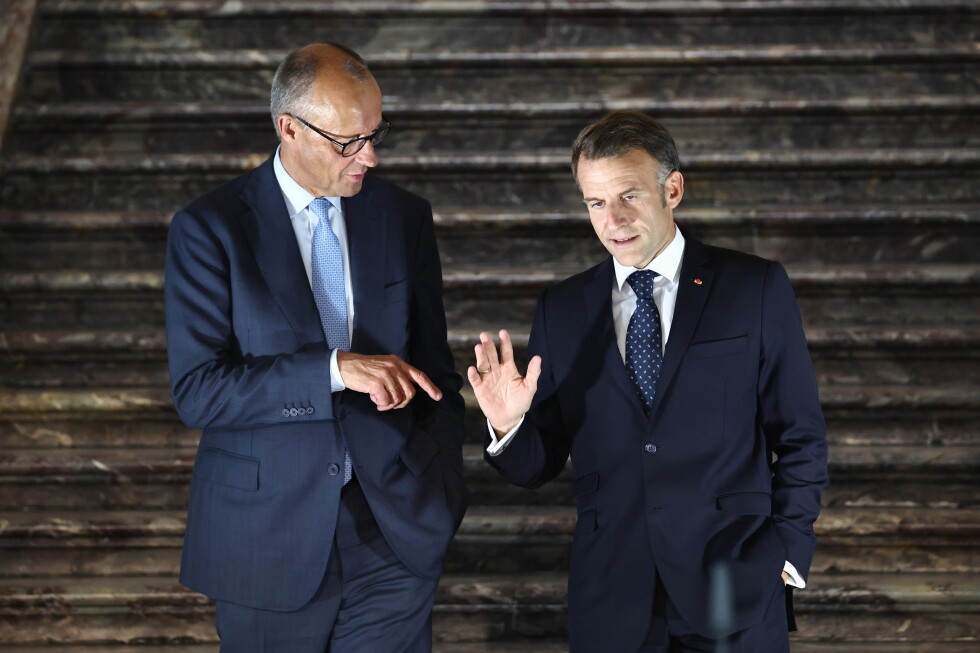
    Speaking alongside French President Emmanuel Macron following bilateral talks at Germany’s Norvenich Air Base near Cologne, German Chancellor Friedrich Merz confirmed the historic move, breaking with decades of refusal by previous German administrations to pursue formal nuclear cooperation with Paris. Merz emphasized that the new partnership is designed to complement, rather than replace, Germany’s long-standing commitments to NATO’s existing nuclear sharing arrangement, where the U.S. stations tactical nuclear weapons on German soil, with German fighter jets certified to deploy the weapons in the event of a large-scale conflict.

    “The world we live in today requires new answers,” Merz told reporters, noting that Germany will contribute only conventional military assets to the upcoming exercise for now. “We are proceeding step by step. It may be that this will result in a new doctrine for European deterrence, but it is far too early to draw that conclusion today.”

    For his part, Macron framed the expanded cooperation as a critical boost to European collective security, arguing that diversified, advanced deterrence capabilities create essential strategic uncertainty for potential adversaries. He said Germany will take a “vanguard role” in European deterrence efforts, adding that structured, visible cooperation on nuclear preparedness confuses potential opponents far more than a diffuse, uncoordinated approach.

    Macron outlined that the partnership will include sharing specialized military practices, joint training initiatives, capacity-building exchanges, and closer trust-building among military personnel and technical experts, though he declined to disclose specific operational details, noting that “Complete and absolute transparency is not necessarily the most effective strategy when dealing with adversaries on European soil.” He also confirmed that Germany will not be required to provide financing for France’s nuclear deterrence infrastructure as part of the agreement.

    The announcement comes on the heels of a symbolic preliminary joint exercise held Thursday, where French Rafale jets — the platform designed to deliver France’s nuclear weapons — and German Eurofighter fighters carried out a joint in-flight refueling drill to mark the launch of the new cooperation framework.

    The initiative traces back to an announcement Macron made in early March, where he unveiled plans to expand France’s national nuclear arsenal and formally invited European partners to deepen cooperation on nuclear deterrence. The proposal emerged against a backdrop of growing unease across Europe over the long-term reliability of U.S. defense guarantees for the continent.

    France has been the only nuclear-armed member of the 27-nation European Union since the United Kingdom left the bloc in 2020, and a broad coalition of European nations have already signaled interest in joining the initiative, including the UK, Poland, the Netherlands, Belgium, Greece, Sweden, Denmark, and Norway. Germany’s participation is seen as a major boost for the program, as Berlin is currently implementing a €100 billion rearmament plan aimed at building Europe’s most powerful conventional military force by 2039.

    Friday’s agreement also marks a key step toward repairing and reinvigorating bilateral Franco-German defense ties, which suffered a setback in June when the two countries’ ambitious $100 billion joint next-generation fighter jet program collapsed. That initiative was intended to replace the existing Rafale and Eurofighter fleets used by France, Germany, and Spain by 2040.

    Both leaders are moving quickly to lock in progress on the new partnership in the coming months, as Macron approaches the end of his second and final presidential term, with growing uncertainty over whether his successor will maintain the same level of commitment to deepening European integration and defense cooperation. The report was contributed by Claudia Ciobanu from Warsaw, Poland, and Samuel Petrequin from Paris.