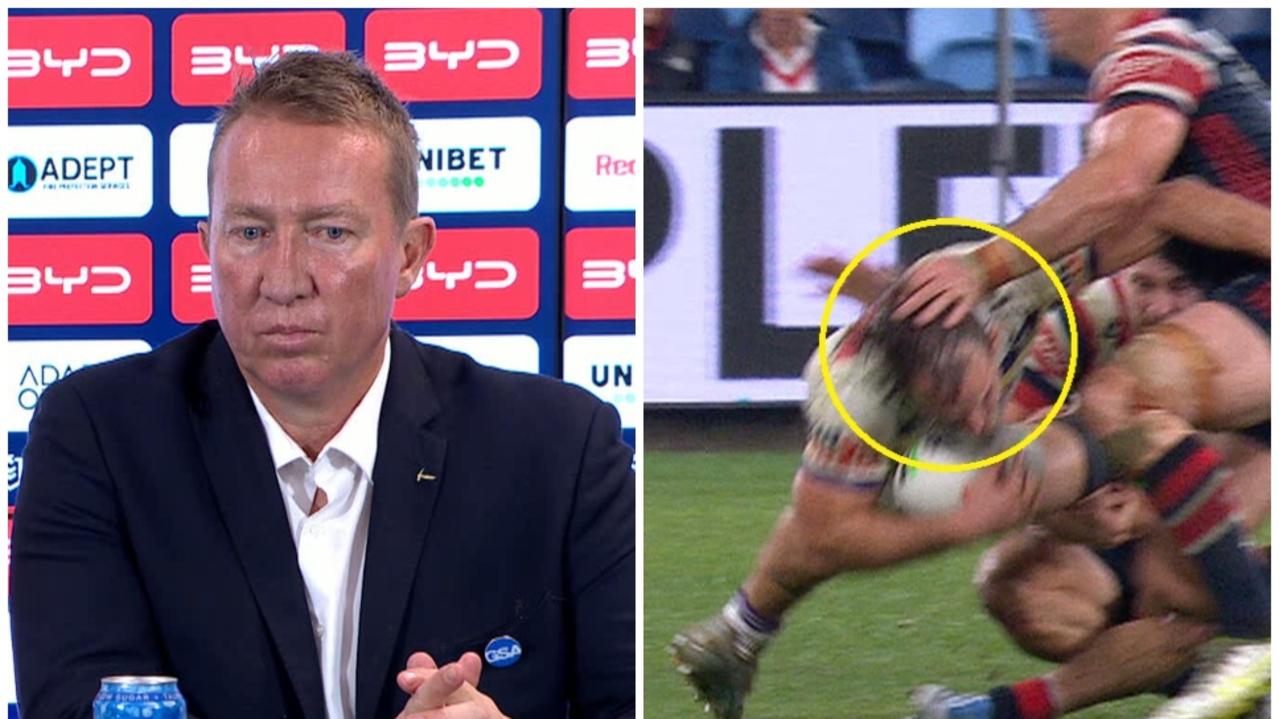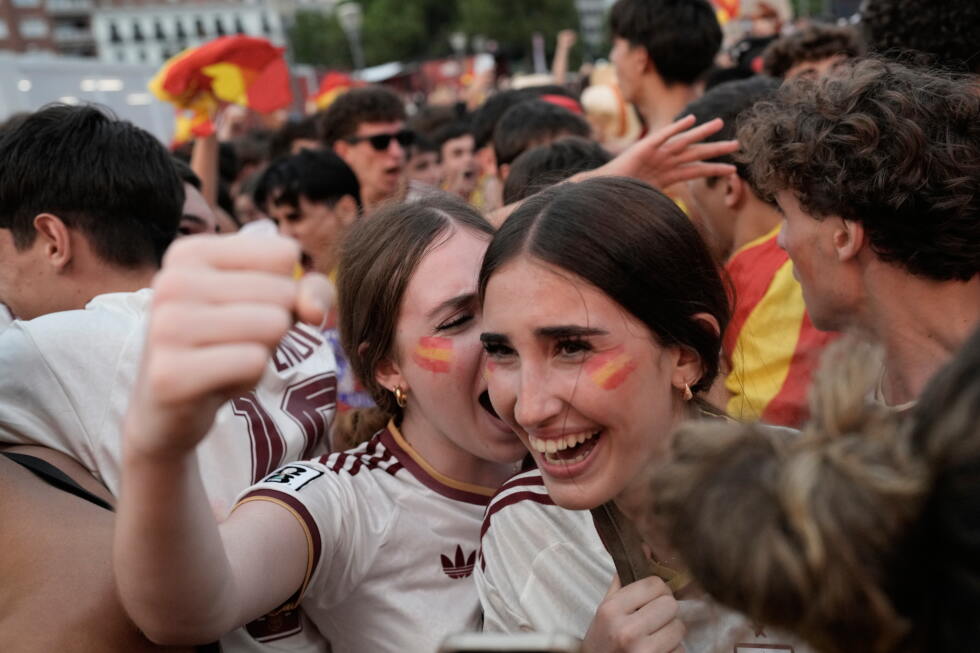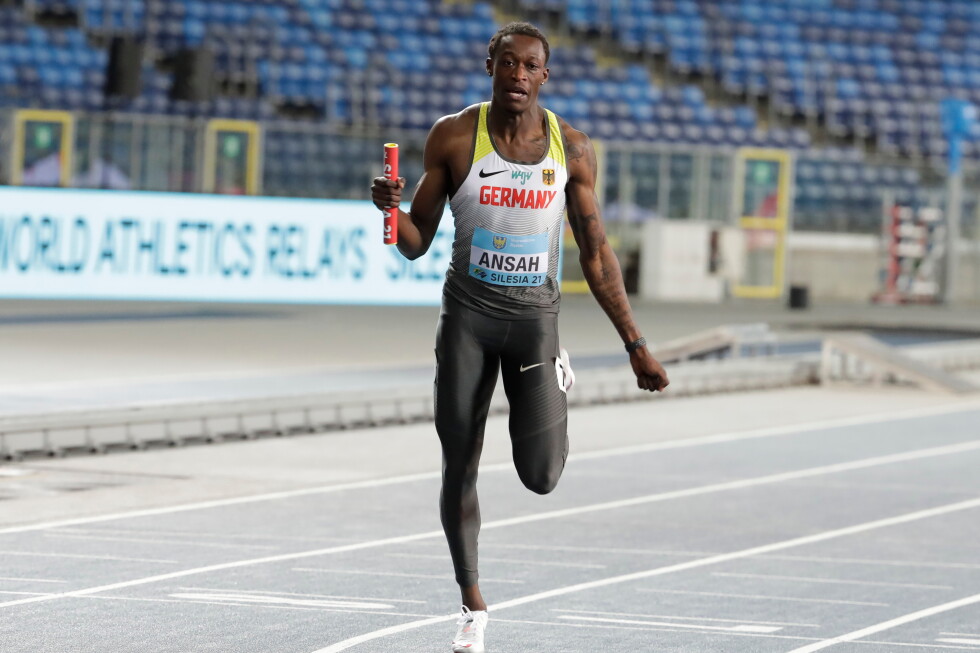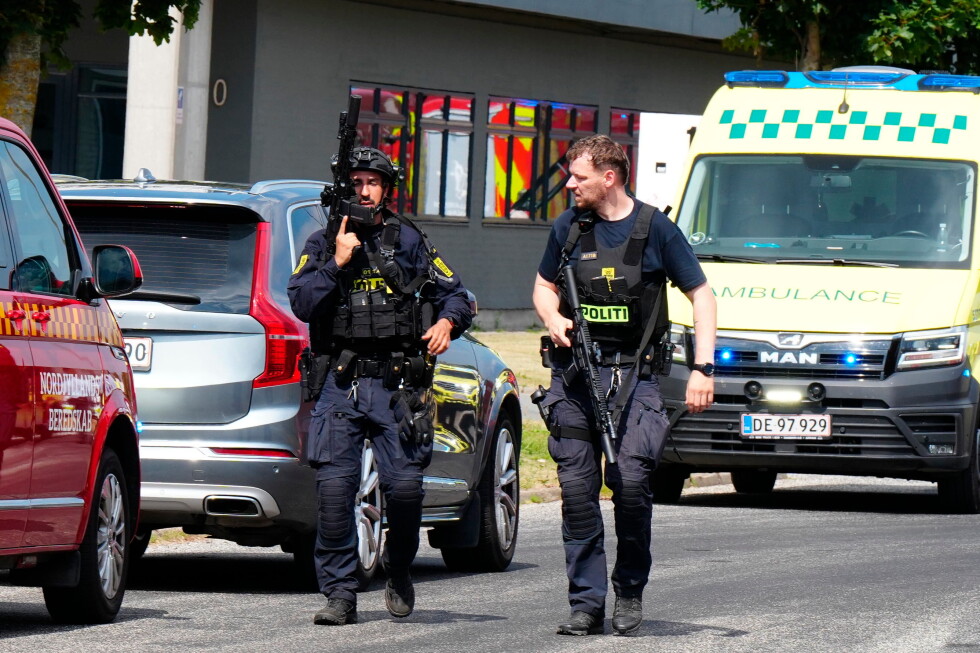
Spanish football is bracing for one of its most high-stakes fixtures of the season, but a sudden and shocking dressing room incident at Real Madrid has thrown the club into chaos just 72 hours before they face Barcelona in a title-deciding El Clasico clash. Uruguayan midfielder Federico Valverde required hospital treatment for a head injury following a physical altercation with French teammate Aurelien Tchouameni, the club has confirmed. Real Madrid launched immediate internal disciplinary proceedings against both players after the incident, which unfolded at the team’s Valdebebas training complex. The club’s official statement confirms Valverde received a diagnosis of cranioencephalic trauma, a common form of concussion. Following evaluation, Valverde was sent home to recover in stable condition, with medical staff ordering a 10 to 14 day rest period to manage his injury. Multiple independent sports outlets have shared additional details from anonymous sources close to the club: BBC Sport reports Valverde was knocked unconscious during the confrontation, while ESPN notes the midfielder required stitches to close a wound from the incident. Tensions between the two players first emerged during a training session on Wednesday, according to multiple on-the-ground reports. While the initial verbal disagreement carried over into the dressing room after that day’s practice, no physical conflict broke out at that time. The confrontation escalated to violence Thursday after training concluded at Valdebebas, when Tchouameni initiated a new confrontation with Valverde that turned physical, multiple sources confirm. In the hours after the incident came to light, Real Madrid president Florentino Perez called an emergency high-level meeting with club leadership, interim head coach Alvaro Arbeloa, and team captain Dani Carvajal to address the situation. “The club will provide updates on the resolutions of both proceedings once the corresponding internal procedures have been completed,” the club said in its statement, leaving fans and analysts waiting for clarity on potential sanctions. BBC Sport has reached out to both club representatives and player agents for additional comment, but no further statements have been released as of publication. The timing of the incident could not be worse for Real Madrid, who face Barcelona at the Nou Camp this Sunday in a match that will decide the 2025-26 La Liga title. A failure to secure three points for Real will see Barcelona claim their second consecutive league championship with three matchweeks still left to play, putting the title out of Real’s reach. Multiple Spanish media outlets report that club staff have described the incident as the most serious internal conflict ever recorded at the Valdebebas training facility. Beyond the immediate disciplinary investigation, the altercation has also drawn attention to a pattern of growing unrest in the Real Madrid first team squad in recent days. This incident marks the third reported internal conflict at the club in a single week. Earlier in the same week, reports emerged of a separate altercation between Spanish left-back Alvaro Carreras and German defender Antonio Rudiger. Carreras later addressed the rumors in an Instagram statement, denying that the incident was as serious as reported. “In recent days, certain insinuations and comments about me have emerged that do not correspond to reality,” Carreras wrote. “My commitment to this club and to the coaches I have had has been complete from day one, and it will continue to be so. Since I returned [after spells at Manchester United and Benfica], I have always worked with the utmost professionalism, respect and dedication. I have fought very hard to fulfil my dream of returning home. Regarding the incident with a colleague, it is a specific matter of no relevance that has already been settled. My relationship with the whole team is very good.” The unrest has also extended to fan relations, with supporters voicing public criticism of star striker Kylian Mbappe this week after the forward took a short trip to Sardinia with his girlfriend during a scheduled recovery break from team activities.
作者: admin
-

‘I wouldn’t pay it’ – Trump on USA ticket price
The 2026 FIFA World Cup, co-hosted by the United States, Canada and Mexico, is just weeks away from its June 11 kickoff, but a fierce debate over exorbitant ticket costs has dominated pre-tournament discourse, with former US President Donald Trump becoming the latest high-profile figure to speak out against the pricing model.
When questioned by the New York Post about the reported $1,000 price tag for a single ticket to the United States men’s national team’s opening Group D match against Paraguay, scheduled for June 12 in Los Angeles, Trump admitted he had not been aware of the steep cost. Frankly acknowledging the sticker shock, Trump stated, “I wouldn’t pay it either.”
The former president added that while he hopes to attend the high-profile fixture, he expressed disappointment that working-class supporters who backed him would likely be locked out of the event. “If people from Queens and Brooklyn and all of the people that love Donald Trump can’t go, I would be disappointed,” he said, though he also called the tournament itself “an amazing success” and noted his desire for his supporters to have the opportunity to attend.
Fifa has drawn widespread backlash from fans and commentators alike for its unconventional and widely decried “extortionate” pricing framework for this year’s tournament. Breaking from the flat-rate ticketing model used for recent editions of the World Cup, the governing body priced group-stage matches dynamically, based on the perceived popularity of the competing teams, driving up costs for high-profile matchups like the US opening game.
Further fuelling frustration is the structure of Fifa’s official ticket resale platform, which allows for drastically inflated resale prices while the organization collects a 30% cut of every transaction – 15% from both the buyer and the seller. Additional financial barriers for fans include spiking transport costs across host cities in the United States; a recent BBC Sport investigation found that an England supporter would need to spend roughly £6,500 to attend just their national team’s group-stage fixtures.
Fifa president Gianni Infantino has defended the organization’s pricing strategy, arguing that the costs align with standard pricing for major sporting events across the United States. Speaking at the Milken Institute Global Conference in Beverly Hills earlier this week, Infantino defended dynamic pricing, claiming that if tickets were sold at lower face values, they would simply be resold for far higher amounts on secondary markets anyway.
In response to the initial wave of public criticism when tickets were first released, Fifa introduced a limited number of more accessible £45 tickets for all 104 tournament matches. Ticketing rules also vary across host regions: in Toronto, Ontario’s provincial government has banned reselling event tickets above face value, keeping all World Cup match sales capped at original prices there.
The 2026 World Cup is the first tournament to be expanded to 48 teams, with matches spread across 16 host cities across the three North American co-host nations. While the expansion has been celebrated for giving more national teams a chance to compete, the ongoing ticketing controversy has cast a shadow over pre-tournament preparations, as fans continue to raise concerns that the event is becoming unaffordable for average supporters.
-

Venice Biennale targeted by strike action and protests over Israel’s involvement
One of the world’s most prestigious international arts events, the 2026 Venice Biennale, has become the center of a growing global protest movement demanding the exclusion of Israel’s national pavilion, with a 24-hour cross-sector cultural strike scheduled for Friday during the festival’s pre-opening events. This planned industrial action marks the first organized strike in the 130-plus year history of the iconic exhibition, growing out of mounting demonstrations that launched on the festival’s opening press week over both Israel and Russia’s inclusion in this year’s event.
The unrest began on Wednesday, when the Art Not Genocide Alliance (ANGA), the coalition leading the protest movement, held a mass direct action outside Israel’s temporary exhibition space at the Venice Biennale’s Arsenale complex. Hundreds of demonstrators, including participating artists, Biennale workers, and activist supporters, assembled with placards reading “No artwashing genocide” and “No genocide pavilion” to hear addresses from cultural figures taking part in this year’s event. Protesters argue that Israel has no place at a global arts gathering after it killed dozens of Palestinian artists and destroyed hundreds of cultural and artistic sites during its ongoing military campaign in Gaza, which the coalition describes as a state-led genocide.
In a public statement released during the demonstration, ANGA reaffirmed the group’s core position: “We are here to express our refusal to tolerate genocidal destruction in the name of freedom.”
The Wednesday protest came after Biennale leadership refused to respond to a March 17 open letter from ANGA demanding the immediate expulsion of Israel’s national pavilion. The letter, which called for Israel’s full exclusion from the event, was signed by 236 participating artists, curators, and Biennale workers, including internationally renowned cultural figures Alfredo Jaar, Brian Eno, Lubaina Himid, Yto Barrada, and Cauleen Smith.
“No artist or cultural worker should be asked to share a platform with this genocidal state,” the letter read. “As long as Israel exists by means of genocide, ethnic cleansing and apartheid, it must not be represented at the Venice Biennale.” The letter also highlighted that Israeli military operations have deliberately targeted cultural infrastructure, a core value the Biennale claims to uphold.
ANGA has repeatedly clarified that its opposition targets state representation, not individual Israeli artists. “A national pavilion at the Venice Biennale is an official cultural representation of that state,” the group explained in comments earlier this year. ANGA added that it opposes the use of dissenting Israeli artists who oppose the Gaza campaign as “cultural cover for state violence,” noting that the current setup forces all participating Israeli artists into an impossible position, requiring them to legitimize the state’s actions regardless of their personal political beliefs.
This year’s controversy is not an isolated incident. The 2024 art Biennale saw ANGA launch a similar campaign against Israel’s participation, collecting more than 24,000 signatures on an open letter demanding exclusion. That campaign ultimately ended when the selected Israeli artist, Ruth Patir, voluntarily closed the pavilion in protest of Israel’s military actions. In response to Patir’s move, the Israeli government added a mandatory clause to the 2026 pavilion contract requiring the selected artist to keep the space open for the full run of the event.
For 2026, Israel is not exhibiting in its permanent Giardini pavilion, which it has operated since 1952. The Israeli culture ministry claimed the permanent space needed structural renovations, so the Biennale granted Israel permission to host its exhibition in a temporary space at the Arsenale rather than requiring it to rent private venue space. ANGA has condemned this accommodation as “an explicit institutional endorsement of Israel at a moment of escalating violence” in Gaza and the occupied West Bank.
Friday’s 24-hour cultural strike, a first in Biennale history, is being coordinated by ANGA alongside a coalition of local and international grassroots cultural groups including Biennalocene, Sale Docks, Mi Riconosci, and Vogliamo Tutt’altro. Three major Italian trade unions — Associazione Difesa Lavoratori (ADL Cobas), Unione Sindacale di Base (USB), and Confederazione Unitaria di Base (CUB) — have also joined the call for action. This is not the first time Italian labor groups have taken action against Israel: Italian dockworkers have previously staged industrial action refusing to load military cargo bound for Israel.
“This is the first ever organised strike to occur within the Biennale,” ANGA said. “It will be a crucial moment, bringing together different organisations and sending a clear message during the pre-opening days of the Biennale.”
Israel’s inclusion is not the only point of contention at this year’s festival. The Biennale has also drawn widespread criticism for allowing Russia to return to the exhibition for the first time since Moscow’s full-scale invasion of Ukraine in 2022. While the Italian culture ministry has publicly supported Israel’s participation, it has publicly opposed Russia’s inclusion. Russia’s 2026 entry is co-led by Anastasia Karneeva, daughter of a former Russian intelligence officer, and Ekaterina Vinokurova, daughter of Russian Foreign Minister Sergey Lavrov.
Biennale chairman Pietrangelo Buttafuoco, a right-wing Sicilian journalist who converted to Islam in 2015, defended the festival’s decision to include both countries during a Wednesday press conference. “This whole world born of the French revolution, the Enlightenment and secularism has flipped into its exact opposite: a laboratory of intolerance, and demands for censorship, closure and exclusion,” Buttafuoco said. “The Biennale is not a court; it is a garden of peace. We cannot shut it down, we cannot boycott as an automatic response. We must discuss. We may disagree, and we do so forcefully.”
The Venice Biennale alternates annually between art and architecture editions, and opens to the general public on Saturday after a week of private pre-opening events, with protests expected to draw thousands of additional demonstrators to Venice this week.
-

Suspect accused of firebombing protest for Israeli hostages pleads guilty to murder
On Thursday, a dramatic development unfolded in a high-profile 2025 domestic terror case in the U.S. state of Colorado, when Mohamed Sabry Soliman entered guilty pleas to a first-degree murder charge and more than 100 additional state criminal counts connected to a deadly Molotov cocktail attack on a demonstration calling for the release of Israeli hostages.
According to official prosecution documents and law enforcement records, Soliman planned the targeted attack for 12 full months ahead of the event. The accused studied homemade explosive construction through instructional online videos before making the 90-mile drive from his Colorado Springs residence to Boulder, where the pro-hostage release rally was being held. Upon arriving at the gathering, Soliman launched multiple incendiary Molotov cocktails into the crowd of peaceful demonstrators, court records confirm. The attack left at least 12 people injured, and one attendee ultimately succumbed to fatal wounds.
Court filings also outline that immediately following his arrest, Soliman told interrogating officers that his explicit goal was to “kill all Zionist people”, confirming the premeditated, ideologically driven nature of the assault. In addition to the state charges he pleaded guilty to on Thursday, which include counts of attempted murder, aggravated assault, illegal explosives possession, and even cruelty to animals, Soliman also faces a separate federal hate crime indictment. He has entered a not guilty plea in that federal proceeding, which remains ongoing.
During Thursday’s morning court hearing, a district judge read each of the more than 100 criminal counts aloud one by one. Soliman responded to every charge with a guilty plea, communicating through a court-appointed interpreter, according to reporting from CBS News, which partners with the BBC on U.S. domestic coverage. The attack, rooted in the ongoing tensions over the Israeli-Palestinian conflict, has sparked renewed national conversation about political violence and hate-motivated extremism on U.S. soil in the wake of heightened regional tensions overseas.
-

Shakira teases new song for the FIFA World Cup 2026 with Afrobeats star Burna Boy called ‘Dai Dai’
NEW YORK – As the global sports community counts down to the 2026 FIFA World Cup, global music icon Shakira has stepped back into the World Cup spotlight, dropping a highly anticipated teaser for the tournament’s official anthem from one of soccer’s most legendary venues.
The Colombian hitmaker shared a 60-second preview of her new track “Dai Dai” across her social media channels Thursday, confirming the song as the 2026 FIFA World Cup Official Song and tagging Afrobeats superstar Burna Boy as a collaborator on the release. Filmed on the grass of Rio de Janeiro’s iconic Maracaná Stadium, the teaser shows Shakira front and center on the pitch, surrounded by a troupe of energetic dancers as she performs a snippet of the track. In the preview, the artist delivers uplifting lyrics in English: “Here in this place / You belong,” with a male vocal harmonizing underneath, followed by the line “What broke you once / Made you strong.” Fans do not have to wait long for the full release: the complete track is set to drop globally on May 14.
For Shakira, penning and performing a World Cup anthem is far from uncharted territory. The singer cemented her place in both soccer and pop history with “Waka Waka (This Time For Africa)”, the official song of the 2010 FIFA World Cup held in South Africa, which remains one of the most streamed and recognizable World Cup tracks of all time.
It is important to note that “Dai Dai” is a separate official release from Coca-Cola’s own 2026 World Cup anthem, a reimagined version of Van Halen’s classic rock hit “Jump”. That track features an eclectic lineup of artists: Colombian reggaeton star J Balvin, legendary Blink-182 drummer Travis Barker, acclaimed pop and R&B vocalist Amber Mark, and iconic rock guitarist Steve Vai.
In that rework, Amber Mark opens the track with her signature clear, luminous vocals delivering the original song’s English lyrics, while Steve Vai puts a fresh spin on the track’s instantly recognizable guitar riff and Travis Barker amps up its percussion section. The biggest change to the original comes from J Balvin, who penned an entirely new verse in Spanish. Speaking to the Associated Press in March, Balvin explained that the production, from frequent collaborator L.E.X.V.Z, blends Brazilian funk rhythms with hard-hitting strings and hip-hop influences. “‘Jump’ is not a fútbol song,” he said, noting the original track’s lack of ties to the sport. “So that’s why I had to put the Latin love and passion for fútbol (in the lyrics).”
This year’s FIFA World Cup is set to kick off on June 11, with an opening match between Mexico and South Africa at Mexico City’s historic Azteca Stadium. The tournament will conclude with the final match scheduled for July 19 at MetLife Stadium in East Rutherford, New Jersey, located just outside New York City.
-

A timeline of the cruise ship hantavirus outbreak and when passengers fell sick
A rare and deadly hantavirus outbreak that unfolded over several weeks aboard the Dutch-flagged cruise ship MV Hondius during a transatlantic voyage has left at least three passengers dead and multiple others infected, triggering a global contact tracing effort across more than half a dozen countries.
Hantavirus is a rare infection most commonly spread by rodents, though one specific strain – the Andes virus identified in this outbreak – is the only variant believed capable of limited person-to-person transmission. The World Health Organization (WHO) has emphasized that the broader public risk remains low, as the virus does not spread easily between people.
The timeline of the outbreak began on April 1, when the MV Hondius departed Ushuaia, Argentina, on a planned itinerary that included stops in Antarctica and remote South Atlantic island destinations. Five days into the voyage, a 70-year-old Dutch passenger developed initial symptoms of fever, headache, and mild diarrhea. According to WHO records, the man and his wife had completed sightseeing trips in Ushuaia and other regions of Argentina and Chile prior to boarding the ship.
By April 11, the first patient developed acute respiratory distress and died while the ship was still at sea. The cruise line reported that no definitive cause of death could be confirmed at that time. The vessel continued its journey, stopping at the remote British territory of Tristan da Cunha on April 15 to pick up six additional passengers, with the first victim’s body remaining on board.
It was not until April 24 that the body was offloaded at St. Helena, another British South Atlantic territory. The victim’s wife, who had also developed symptoms, and more than two dozen other passengers disembarked at the port. One day later, the symptomatic Dutch woman boarded a commercial flight with 88 passengers and crew from St. Helena to South Africa, though it remains unclear how many other former passengers of the MV Hondius were on the same flight.
On April 26, the woman collapsed at a South African airport while waiting to board a connecting flight to her home, and later died. A day later, as the ship departed St. Helena, a third British passenger fell ill and was evacuated first to Ascension Island, then transferred to a hospital in South Africa for intensive care, where he presented with high fever, shortness of breath, and pneumonia – a known complication of hantavirus infection. On April 28, a fourth passenger, a German woman, developed symptoms as the ship sailed toward Cape Verde off West Africa’s coast.
Nearly a month after the first case fell ill, on May 2, the German woman died on board, marking the outbreak’s third fatality. The same day, test results from the hospitalized British patient returned a positive confirmation for hantavirus, marking the first formal identification of the pathogen in the outbreak. On May 3, WHO announced it was supporting the response to the suspected outbreak as the ship arrived in Cape Verdean waters.
Posthumous tests on the Dutch woman returned a positive hantavirus result on May 4, prompting WHO to formally classify the event as a full outbreak. The following day, the MV Hondius entered a 24-hour standoff with Cape Verdean authorities: the country dispatched medical workers to the vessel to assess the situation, but banned all passengers and crew from disembarking over transmission fears. At that time, two crew members – including the ship’s doctor – were seriously ill, with a third patient under active monitoring.
On May 6, the three affected crew members were evacuated, with two testing positive for hantavirus, and flown to specialized medical facilities in Europe. Spain subsequently approved the vessel’s request to dock in the Canary Islands, and the ship set sail with more than 140 remaining passengers and crew on board. The same day, Swiss health authorities confirmed a fifth positive case in a passenger who had disembarked earlier at St. Helena, bringing the total confirmed case count to five. Testing confirmed the pathogen was the Andes virus, the hantavirus strain native to Argentina and Chile that is capable of limited person-to-person spread.
As of May 7, health authorities across South Africa, Switzerland, the United Kingdom, the Netherlands, France, Singapore and multiple other countries have launched contact tracing operations, and are isolating all passengers who disembarked the MV Hondius at previous stops, along with any individuals who may have had close contact with them.
-

Trump says he would not pay $1,000 to watch US at World Cup
Former U.S. President Donald Trump has added his voice to the mounting backlash against FIFA over exorbitant ticket pricing for the 2026 co-hosted World Cup, revealing in a recent interview that he would refuse to shell out more than $1,000 to attend the United States men’s national team’s opening match of the tournament.
In comments published by the New York Post on Thursday, the former president — who has long touted his role in securing the 2026 World Cup hosting rights for the North American bloc during his first term in office — acknowledged he was caught off guard by the steep ticket costs. “I did not know that number,” Trump told the outlet. “I would certainly like to be there, but I wouldn’t pay it either, to be honest with you.”
Trump’s criticism centers on the impact high prices will have on working- and lower-income Americans, a core electoral base that has backed him through multiple campaigns. He highlighted that his biggest disappointment with the current pricing structure is that it locks out the voters who supported him. “If people from Queens and Brooklyn and all of the people that love Donald Trump can’t go, I would be disappointed, but, you know, at the same time, it’s an amazing success,” he said. “I would like to be able to have the people that voted for me to be able to go.”
The former president’s public pushback marks a rare break from his close personal ties to FIFA President Gianni Infantino, who defended the organization’s pricing model just days before Trump’s comments. Infantino argued that FIFA is legally required to allow third-party ticket resale under U.S. regulations, a system that has driven resale prices into the thousands of dollars above original face value. He also pushed back on critics by noting that more than 500 million fan requests for World Cup tickets have already been submitted — a massive jump from the combined total of fewer than 50 million requests for both the 2018 Russia World Cup and 2022 Qatar World Cup. To counter claims of widespread unaffordability, Infantino added that 25% of all group stage tickets are priced below $300.
But critics have pushed back against that defense, drawing stark comparisons between 2026 pricing and the 2022 Qatar tournament. For example, the most expensive face-value ticket for the 2022 World Cup final hovered around $1,600, while the equivalent 2026 final ticket carries a face price of roughly $11,000. The outrage over pricing extends far beyond Trump: U.S. lawmakers and international fan advocacy groups have already slammed FIFA for its tiered pricing structure, with European fan organization Football Supporters Europe calling the model a “monumental betrayal” of football supporters worldwide.
The 2026 World Cup, jointly hosted by the U.S., Canada, and Mexico, is scheduled to kick off this coming June, and remains one of the most anticipated global sporting events of the year. But the ongoing controversy over ticket costs has overshadowed build-up to the tournament, turning pricing policy into a high-profile public debate that now draws input from one of the most influential figures in U.S. politics.
-

Trump’s ‘irresponsible war’ to blame for economic slowdown, German minister says
A fresh escalation in tensions between two key NATO allies has emerged after Germany’s top finance official blamed U.S. President Donald Trump’s handling of the war in Iran for a massive downward revision of the country’s projected tax revenues, piling more strain on already fractured transatlantic relations.
Lars Klingbeil, Germany’s finance minister, told reporters in Berlin that Trump’s “irresponsible war in Iran” has triggered a widespread global energy shock that has severely damaged German economic prospects. In response to shifting economic headwinds, German federal officials have cut their expected tax revenue forecasts for the 2026–2030 period by roughly €70 billion (equivalent to $82 billion or £60.52 billion). Klingbeil emphasized that the sharp downgrade makes clear how directly the ongoing conflict in the Middle East is weighing on Germany’s stagnant domestic economy.
Klingbeil’s remarks come just weeks after a public dispute between German Chancellor Friedrich Merz and President Trump that already led to a U.S. announcement of troop withdrawals from German soil. Last month, Merz drew Trump’s fury when he claimed the White House had been “humiliated” by Iranian negotiators, arguing that the U.S. had no clear exit strategy for the conflict and that Iran had outmaneuvered American diplomats. Merz added that it was humiliating for the U.S. to send negotiators to international talks only to return home without any tangible progress.
Trump hit back rapidly on his social platform Truth Social, dismissing Merz as misinformed, falsely claiming the German leader supported Iran developing nuclear weapons, and arguing that Germany’s own poor economic performance justified his criticism. The U.S. president doubled down on his rebuke, urging Merz to prioritize fixing Germany’s own domestic challenges – including immigration and energy policy – instead of criticizing U.S. foreign policy. Days after Merz’s original comments, the U.S. Department of Defense unveiled a plan to withdraw 5,000 American troops from Germany, a move linked to Defense Secretary Pete Hegseth. German defense officials have described the withdrawal as a foreseeable outcome of the growing diplomatic rift.
Currently, the U.S. maintains its largest European military footprint in Germany, with roughly 12,000 troops deployed in Italy and an additional 10,000 in the United Kingdom. Trump has a long record of criticizing NATO alliance members, and has repeatedly pressured European allies to back his efforts to reopen the Strait of Hormuz, a critical global oil shipping chokepoint that has been effectively closed by Iran since the outbreak of hostilities. Roughly 20% of the world’s oil and liquefied natural gas supplies transit through the strait, and the conflict has sent global energy prices skyrocketing, hitting Germany’s already fragile economy, which has struggled with stagnation, elevated energy costs and weak export demand for years.
Alongside other European nations, Germany has openly opposed the U.S.-Israeli war against Iran that began on February 28, warning that the conflict raises severe risks of a full-blown global economic recession. While Merz has repeatedly acknowledged that Trump’s policy agenda has opened a “deep divide” between the United States and Europe since he took office a year ago, the German chancellor has also made two trips to the White House in 12 months in an effort to repair damaged bilateral ties.
At present, a fragile ceasefire is in place between warring parties, framed as a stepping stone to a formal peace deal. President Trump claimed this week the conflict would end quickly, and Iranian officials have confirmed they are reviewing a U.S. peace proposal. However, negotiations have stalled amid a U.S. naval blockade of Iranian ports, even as American work continues to clear the Strait of Hormuz to allow the nearly 2,000 commercial ships stranded in the Gulf since February to transit safely.
-

Twin jihadist-claimed attacks kill more than 30 in Mali
Mali’s already fragile security landscape has been shattered by a new wave of deadly violence, as two coordinated attacks claimed by an Al-Qaeda-affiliated jihadist group have killed more than 30 people in central regions of the West African nation, multiple local, security and administrative sources confirmed to Agence France-Presse on Thursday.
The near-simultaneous strikes on the villages of Korikori and Gomossogou unfolded just under two weeks after a massive joint offensive by jihadist and separatist forces against positions held by the country’s ruling military junta, a campaign that pushed Mali into one of its most severe security emergencies in years. A local youth official put the confirmed death toll at a minimum of 35 people killed in Wednesday’s attacks, while both security and administrative sources corroborated a toll of more than 30 fatalities. The assaults have been officially claimed by the Group for the Support of Islam and Muslims (JNIM), the largest Al-Qaeda-aligned militant network operating in the Sahel region.
West African Sahel security journalism collective WAMAPS has published a higher provisional toll, reporting more than 50 villagers killed with multiple residents still unaccounted for. The organization added that widespread looting of community property and arson attacks on local buildings accompanied the assaults. According to a senior security source, the attacks were launched in retaliation for recent actions by Dan Nan Ambassagou, a prominent community self-defense militia formed by local populations to counter persistent jihadist incursions in central Mali. The source noted that while most of the fatalities were militiamen, the dead also included teenage civilians and young children.
Composed primarily of ethnic Dogon traditional hunters, Dan Nan Ambassagou has repeatedly defied government orders to disband. Malian authorities have labeled the group responsible for a 2019 massacre in the central village of Ogossagou that left 160 people dead. In response to this week’s attacks, the Malian military announced Thursday that it had conducted a focused counter-terrorism operation in the affected area, neutralizing approximately a dozen militant fighters. The military has not released any additional details on the operation to date.
This latest violence comes on the heels of a devastating coordinated offensive across northern and central Mali launched April 25 and 26 by a coalition of JNIM and the Azawad Liberation Front (FLA), an ethnic Tuareg separatist movement. The offensive targeted key strategic locations, including the northern desert town of Kidal and Kati, a major military garrison town just outside the capital Bamako. The attacks claimed the life of Malian Defense Minister Sadio Camara, the 47-year-old architect of the junta’s military alliance with Russia, who was killed by a car bomb at his personal residence. Kidal and multiple other northern population centers have since fallen under the control of the coalition, which has implemented a blockade of the capital to pressure the junta.
Central Mali has emerged as a persistent hotspot of lethal intercommunal and militant violence in recent years. Following the 2019 Ogossagou massacre, the village was the site of a 2020 raid that left roughly 30 ethnic Fulani people dead; Fulani communities across the Sahel have long faced unfair accusations of colluding with jihadist groups. In March 2022, nearly 300 civilians were massacred in the town of Moura, with Human Rights Watch implicating the Malian military and its foreign allies, widely understood to be mercenaries from Russia’s Wagner Group. Just three months later, JNIM attacks in Diallassagou killed more than 130 civilians.
In the wake of last month’s large-scale offensive against the junta, Mali has also seen a sweeping crackdown on perceived opponents. Multiple security, legal and family sources confirmed to AFP that a number of opposition political figures and active-duty military personnel have been detained or forcibly abducted since the attacks. Last week, the military prosecutor’s office stated it held concrete evidence of complicity among certain military members, accusing them of aiding in the planning, coordination and execution of the April offensive. But a senior anonymous political official warned the crackdown amounts to a targeted political purge, arguing that the junta is exploiting the security crisis to eliminate dissent within both the political opposition and military ranks. “Everything suggests that these events are being used as an opportunity to carry out a purge,” the official said.
Mali has been trapped in a deep-seated security crisis since 2012, fueled by overlapping insurgencies from Al-Qaeda and Islamic State-affiliated fighters, activity from local criminal gangs, and separatist mobilization among ethnic Tuareg communities in the north. The country has been under unelected military rule since two successive coups in 2020. Shortly after last month’s offensive, JNIM issued a public call for a united opposition front to remove the junta from power and create a path toward a peaceful, inclusive political transition.
-

Hundreds paid or seeking damages over Harrods Al-Fayed abuse complaints
A landmark compensation scheme for survivors of sexual abuse linked to late Harrods owner Mohamed Al-Fayed has marked a key milestone, with more than 75 claimants already awarded full settlement, while roughly 200 additional claims remain under active review. The update, confirmed by the Harrods Redress Scheme to Agence France-Presse on Thursday, comes amid a growing institutional reckoning over the decades of alleged abuse and failures by law enforcement to address the complaints.
Per the scheme’s official statement, a total of 259 survivors have joined the compensation process to date, with many already receiving interim payout. All remaining claims, which were submitted before the March 31 application deadline, will continue moving through review toward final resolution, the organization added.
The announcement coincides with confirmation from the United Kingdom’s police watchdog that a current London Metropolitan Police officer and four retired officers are now under investigation over how they previously handled the sexual assault allegations against Al-Fayed. The independent inquiry focuses specifically on the quality of police investigations launched in 2008 and 2013 into claims against the late Egyptian billionaire. By the time Al-Fayed died in 2023 at the age of 94, approximately 21 formal complaints had been filed with the Metropolitan Police, but none ever resulted in criminal prosecution.
Al-Fayed, who purchased London’s iconic luxury Harrods department store in 1985, faces widespread allegations of systemic rape, sexual assault, sexual exploitation and human trafficking spanning decades of his ownership. The scale of the abuse only came into widespread public view after a landmark BBC investigative documentary into the rape and assault claims was released in September 2024, which prompted hundreds of women to come forward with their own experiences. In response to the growing outcry, Harrods launched the independent Redress Scheme in March 2025.
The luxury retail giant has issued a sweeping public apology for the harm inflicted on survivors, acknowledging that institutional failures allowed Al-Fayed’s abuse to continue unchecked. “We apologise unreservedly for the sexual abuse inflicted upon survivors by Fayed who abused his power wherever he operated. We acknowledge survivors were failed,” the company said in an official statement.
Under the scheme’s rules, eligible survivors can receive compensation payments of up to £400,000 (equivalent to roughly $544,000), with payout amounts scaled based on the severity of harm each survivor experienced. For context, claimants who were forced to undergo invasive gynaecological examinations — ordered by Al-Fayed to check for sexually transmitted infections or verify virginity — are guaranteed a minimum £10,000 settlement. The scheme is limited to claimants holding potential legal claims against Harrods for abuse perpetrated by Al-Fayed, a restriction the company says is necessary to align with the scheme’s mandate.
Earlier the same day, the Independent Office for Police Conduct (IOPC), the UK’s police oversight body, confirmed the five officers under investigation are being probed for potential professional misconduct. “The victims-survivors are being kept updated on the progress of our investigation,” the IOPC statement added.
Accounts of past police failures have already emerged from survivor families. The mother of a deceased complainant told the BBC her daughter’s allegations were brushed off by officers, who told her the case would come down to her word against Al-Fayed’s, and that her claim would simply be added to a growing “pile” of similar complaints from other women.
A Metropolitan Police spokesperson confirmed Thursday that the force is fully cooperating with the IOPC investigation, which was first launched in January 2025. The force added that its own separate criminal investigation into individuals who may have helped enable Al-Fayed’s alleged offending remains active. Back in March, the Met announced it had interviewed three women on suspicion of aiding and abetting rape and facilitating human trafficking for sexual exploitation.
The investigation into Al-Fayed’s alleged networks extends beyond the UK. French authorities have been probing a large-scale alleged human trafficking operation reportedly established by Al-Fayed, who purchased Paris’s Ritz Hotel six years before he bought Harrods, in 1979.
Rachael Louw, a former Harrods saleswoman who has been interviewed by France’s anti-trafficking agency OCRTEH, told AFP she was officially recognized as a victim of modern slavery by UK authorities in April. She described the recognition as “a validation and a vindication of what I said to the Met when I first reported back in 2024.”
Survivor advocates say the IOPC investigation is a small step forward, but are calling for a full, sweeping inquiry into the full scope of the alleged trafficking network. Justine, a former Harrods employee and member of the survivor advocacy group No One Above, told AFP that the operation Al-Fayed ran was a coordinated trafficking ring that relied on systemic support. “What the Fayeds ran was a trafficking operation — one that required a network of facilitators, institutional access, and sustained cover,” she said.