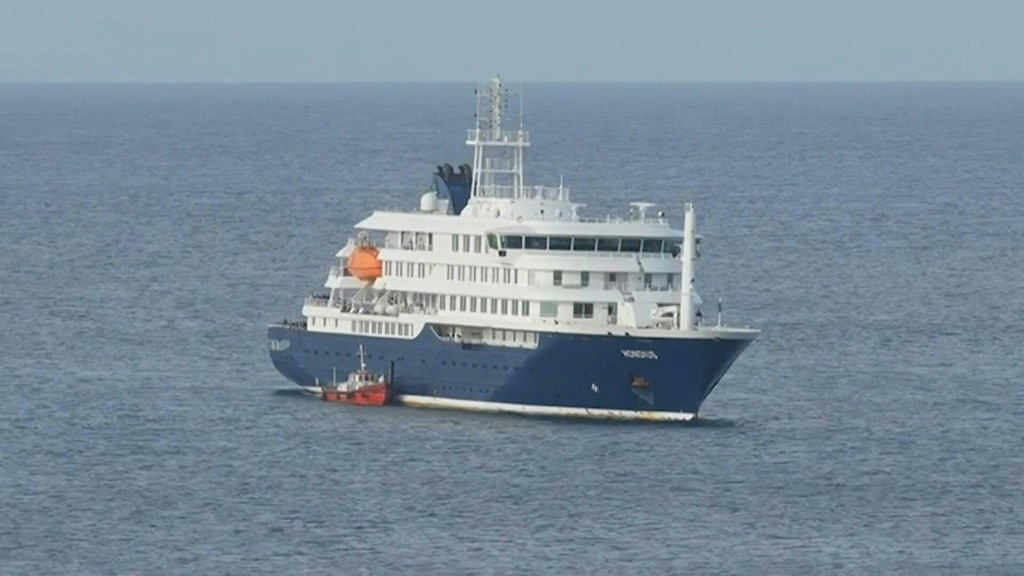
An emerging limited hantavirus outbreak tied to an international cruise ship has claimed three lives, prompting the World Health Organization to warn that additional cases may still surface in the coming weeks, even as global health leaders express confidence that widespread spread can be contained with targeted public health action. The outbreak, centered on the Netherlands-based expedition vessel MV Hondius, has already triggered an international contact tracing effort spanning five continents, as health officials work to contain the rare Andes strain of hantavirus – one of the few variants capable of spreading between humans.
As of Thursday, the WHO confirmed five positive cases and three additional suspected cases linked to the voyage, which departed the Argentinian coastal city of Ushuaia on April 1. The first fatality was recorded on April 11, when a Dutch male passenger died mid-voyage after contracting the virus. His wife, who disembarked with his body at Saint Helena and traveled to South Africa for repatriation, also fell ill and died 15 days later, with her cause of death confirmed as hantavirus on May 4. A third fatality, a German passenger, was recorded on May 2, and her body remains aboard the vessel as it sails toward its scheduled destination.
On Thursday morning, a fourth symptomatic passenger disembarked in Amsterdam, and the Leiden University Medical Center later confirmed the patient tested positive for the virus. The vessel, operated by Netherlands-based tour company Oceanwide Expeditions, currently carries 149 people including 88 passengers, and is anchored off the coast of Cape Verde en route to Tenerife in the Spanish Canary Islands, where it is scheduled to arrive Sunday for a full evacuation of all people on board. Company officials confirmed in a recent statement that no remaining symptomatic individuals are currently aboard the ship.
Speaking to reporters in Geneva Thursday, WHO Director-General Tedros Adhanom Ghebreyesus noted that the Andes strain of hantavirus has an incubation period of up to six weeks, meaning exposure that occurred earlier in the voyage could still lead to new confirmed cases in the coming weeks. “Given the incubation period of the Andes virus, which can be up to six weeks, it’s possible that more cases may be reported,” he said.
Despite the forecast of additional cases, WHO leaders emphasized that the outbreak is expected to remain contained, as long as cross-border public health precautions and contact tracing efforts continue. “We believe this will be a limited outbreak if the public health measures are implemented and solidarity shown across all countries,” said Abdi Rahman Mahamud, director of WHO’s emergency alert and response program.
Confirmed and suspected cases are currently isolating or receiving treatment in five countries: the United Kingdom, Germany, the Netherlands, Switzerland, and South Africa. One of the most urgent contact tracing efforts is centered on a commercial Airlink flight carrying 82 passengers and six crew that the deceased Dutch woman took from Saint Helena to Johannesburg while already showing symptoms; South African health officials are working to identify and monitor all people who shared the flight with her.
Authorities in Saint Helena have moved to reassure local residents, noting that more than 95 percent of the island’s population has had no close contact with passengers or crew from the MV Hondius, putting them at extremely low risk of infection. The WHO has notified 12 national governments whose citizens disembarked from the vessel at Saint Helena, to coordinate national tracing and monitoring efforts.
Argentine health authorities are planning to test local rodent populations in Ushuaia, after investigators determined the initial case was likely infected by rodents before boarding the cruise, with subsequent spread occurring between passengers on board. Hantavirus is a rare respiratory infection that is most commonly transmitted to humans from infected rodents, and can cause severe respiratory distress, cardiac complications, and hemorrhagic fever. Currently, there is no licensed vaccine for hantavirus and no specific cure for the infection. Unlike COVID-19, hantavirus is far less contagious, which has led health officials to downplay fears of a global pandemic from the current outbreak.
Health officials in Chile have already ruled out the country as the site of initial infection, noting that the two deceased Dutch passengers traveled through Chile at a timeline that does not align with the virus’ maximum six-week incubation period. Oceanwide Expeditions said it is working to trace all passengers and crew who have boarded or disembarked the MV Hondius since March 20, to ensure all potentially exposed people are monitored for symptoms.