作者: admin

  • A heat wave threatens to reignite France’s mega-fire near Bordeaux

    A heat wave threatens to reignite France’s mega-fire near Bordeaux

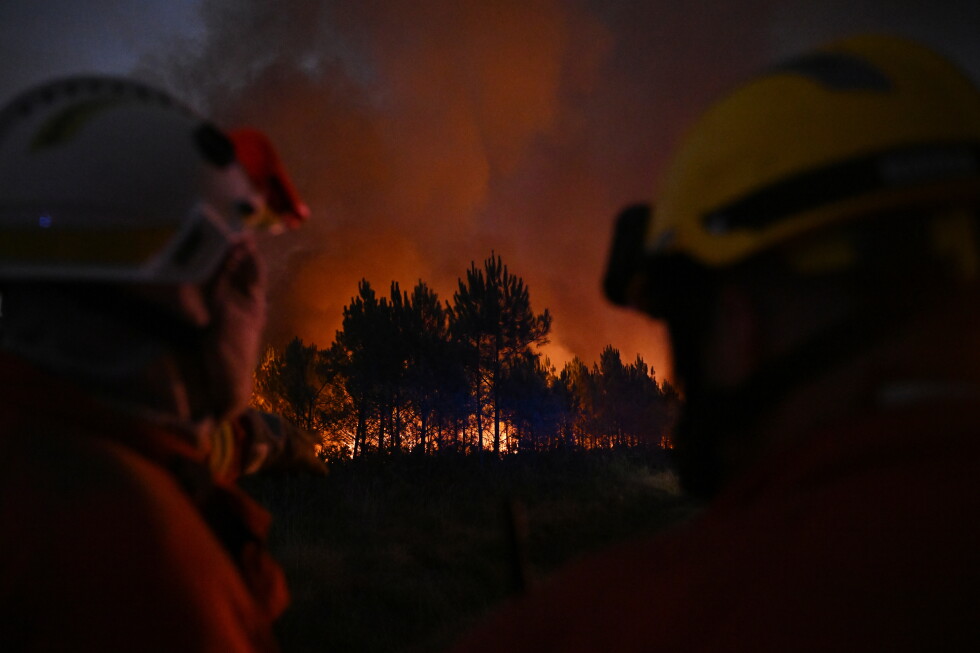
    In the coastal Gironde region of southwest France, hundreds of firefighters are locked in a high-stakes battle against an out-of-control wildfire nearly four times the geographic size of the French capital Paris. As authorities warned Wednesday, soaring temperatures forecast to surpass 40 degrees Celsius (104 degrees Fahrenheit) paired with shifting strong winds could derail a week of hard-won progress against the blaze that has already forced one of the largest peacetime evacuations in modern French history.

    A week after the fire first ignited, regional officials reported that overnight conditions remained relatively calm, with no further expansion of the fire line. However, the blaze has not been fully contained, and the combination of record heat and parched, tinder-dry vegetation has created extreme risk of sudden flare-ups that could send flames spreading rapidly again.

    To date, the massive wildfire has displaced more than 220,000 people across the region surrounding the major wine hub Bordeaux. Just on Tuesday, regional authorities ordered an additional 4,000 residents and tourists to evacuate popular coastal vacation spots along the Atlantic shoreline, expanding the scope of what is already France’s largest peacetime evacuation effort on record. In a contradictory but necessary adjustment, officials also cleared 60,000 evacuees to return to their homes in three low-risk Bordeaux suburbs that have not been touched by flames, though all returnees were instructed to remain on high alert for sudden changes in fire conditions.

    “The situation remains complicated. That’s clear. We’re not out of the woods,” Gironde Prefect Sophie Brocas told reporters Tuesday evening. This simultaneous movement of thousands of people fleeing coastal resorts and others returning to partially cleared neighborhoods underscores the highly unstable and precarious hold the fire still has over the region.

    The Gironde blaze is not an isolated crisis. Across the Iberian Peninsula and southwest France, a coordinated outbreak of extreme wildfires has displaced roughly 330,000 people from their homes and seasonal vacation sites. To the south, Spain is bracing for its fourth major heat wave of the 2022 summer, with multiple large blazes still burning uncontrolled across the country – including the largest wildfire recorded in Spain’s modern history. Despite the ongoing danger, Spanish authorities have begun rolling back evacuation orders for thousands of residents after firefighting teams made tangible gains in containing fire lines over the past 48 hours.

    At the peak of its intensity last week, the Gironde fire generated a rare and devastating atmospheric event never before recorded in France: a massive, black pyrocumulonimbus cloud – a thundercloud spawned by the extreme heat of a wildfire. The electrified cloud generated its own lightning, which sparked dozens of new spot fires far beyond the original fire perimeter, and created unpredictable violent winds that complicated firefighting efforts.

    Preliminary data from France’s Interior Ministry shows that more than 1,160 square kilometers (448 square miles) of land have already burned across the country this wildfire season. Climate scientists warn that this season’s extreme fire activity aligns with long-term climate trends: the European Union’s Copernicus Climate Change Service confirms Europe is warming faster than any other continent on Earth, heating at more than twice the global average. Western Europe just recorded the hottest June ever documented by modern monitoring, and the combination of extreme heat, widespread drought, and chronically dry vegetation created the perfect conditions for wildfires to spread and intensify rapidly across France and Spain.

  • Cucurella gets tattoo of Spain coach De la Fuente

    Cucurella gets tattoo of Spain coach De la Fuente

    Fresh off lifting the 2026 FIFA World Cup trophy with the Spanish national side, defender Marc Cucurella has made good on a pre-victory pledge, permanently honoring his winning head coach with a custom tattoo.

    Cucurella was a key contributor to Spain’s historic 1-0 final win over Argentina earlier this month, playing every single minute of the team’s entire World Cup campaign. The 28-year-old, who completed a high-profile £52 million transfer from Chelsea to Real Madrid back in June, took to social media to unveil his new ink: a detailed portrait of Luis de la Fuente, the manager who led Spain to their World Cup triumph, holding the iconic golden trophy, set against a background emblazoned with the number 26 to mark this year’s tournament.

    Alongside photos and behind-the-scenes video of the tattoo sitting process, Cucurella simply posted: “Promise kept.”

    The lighthearted agreement between player and coach came to light after the final whistle of the World Cup final, when De la Fuente addressed the promise with reporters during his post-match press conference. Joking about the commitment, the manager said: “I’ve already told them, ‘did you make a mistake? They did, but they’ll enjoy it. I’m not so terribly ugly that they will need to put it somewhere nobody can see it. But it makes me laugh and I am proud they keep their promises.”‘

    This is not the first quirky personal detail that has drawn attention to Cucurella during the World Cup run. The defender previously revealed he carried his wife’s pyjama top with him throughout the tournament as a good luck charm, and explained that his signature long curly hair is styled that way specifically so his young child can spot him easily in the crowd during matches.

  • Hong Kong independent bookstores to close after police raid

    Hong Kong independent bookstores to close after police raid

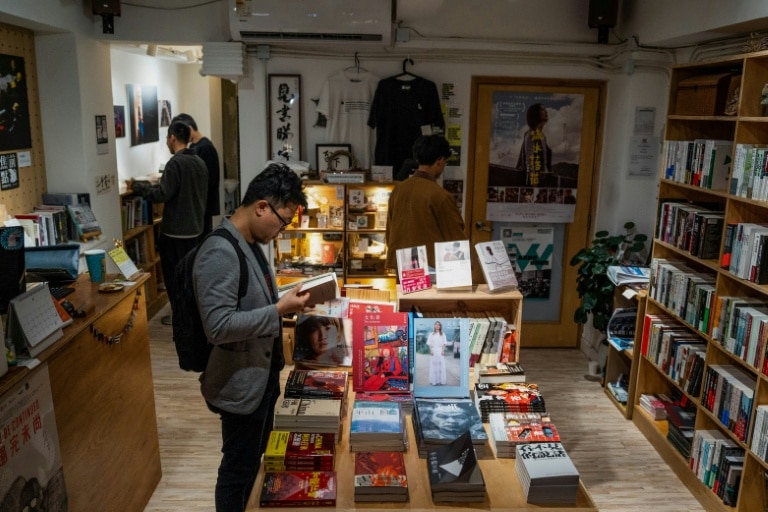
    Two long-standing independent bookstores in Hong Kong have announced their permanent closures just weeks after local national security police units carried out raids on their premises, marking the latest development in a sustained crackdown on independent bookselling outlets across the city. The operation earlier this month targeted both Greenfield Book Store and Have A Nice Stay, leading to the arrest of five individuals who face accusations of displaying and distributing materials deemed to carry “seditious intent” under local security regulations.

    Founded in 1976, Greenfield Book Store has been a cornerstone of Hong Kong’s independent literary community for half a century. In a brief statement posted to social media Wednesday, the bookstore announced it would wind down operations once its current rental lease expires. “Grateful to everyone for being with us through thick and thin for the past 50 years, thank you, take care,” the post read, offering no additional context or details about the decision beyond the impact of the recent police search.

    For the second targeted outlet, Have A Nice Stay – a shop operated by a group of former journalists – the end came far sooner than planned. An AFP reporter visiting the store’s location Wednesday confirmed a handwritten closure notice posted outside the entrance, announcing an immediate end to all operations. “As of today, Have a Nice Stay will cease operation temporarily,” the sign read, adding that the team would contact customers who placed pre-orders for online books with further updates on refunds or unfulfilled orders.

    Notably, Have A Nice Stay had already signaled its planned exit from the market earlier this year, announcing a planned closure in August. At that time, the owners cited multiple challenges including the broader social environment in Hong Kong, persistent financial strain, and the difficulty of operating alongside what they described as “the elusive red line” of acceptable content under national security regulations. The early police raid pushed the shop to shut its doors months ahead of that already announced timeline.

    The closures come amid a expanding enforcement of national security rules for booksellers in Hong Kong. Current regulations stem from two pieces of legislation: a broad national security law imposed by Beijing in 2020 following large-scale pro-democracy protests across the city, and a local version of the security law passed by Hong Kong officials in 2024 that expanded powers to crack down on materials deemed a threat to national stability. Following this month’s raids, Hong Kong’s Secretary for Security Chris Tang publicly reminded booksellers of their legal obligation to vet all stock and ensure “do not endanger national security.”

  • Saudi Arabia joins US in strikes on Iran-backed militia

    Saudi Arabia joins US in strikes on Iran-backed militia

    After a brief three-day lull in cross-border hostilities, military tensions across the Middle East have flared up sharply, as the United States and Saudi Arabia launched coordinated airstrikes against Iran-aligned militant groups in eastern Iraq this week, marking a significant escalation of the long-running regional conflict.

    U.S. Central Command (Centcom), the U.S. military command overseeing operations in the Middle East, confirmed in an official statement that the joint airstrikes targeted logistics hubs and weapons storage facilities linked to terrorists directed by Iran’s Islamic Revolutionary Guard Corps (IRGC). The operation was framed as a direct response to more than 30 drone attacks carried out by IRGC-affiliated groups against U.S. forces and Saudi energy infrastructure over the preceding 72 hours. While Centcom did not publicly name the specific militia group targeted, the Popular Mobilisation Forces (PMF), an Iraqi umbrella network of pro-Iranian armed factions, confirmed that at least 10 of its members were killed in the strikes.

    The resumption of large-scale military exchanges follows an attempted surprise ballistic missile attack on U.S. positions in the region launched by Iran on Tuesday, according to Centcom. The attack, which took place at 21:45 GMT, saw all Iranian missiles successfully intercepted by U.S. defense systems, though Iran confirmed it had targeted a U.S. military base located in Jordan. Separately, Iran’s state-run Tasnim News Agency reported that the IRGC also struck three commercial oil tankers transiting the Strait of Hormuz, a critical global chokepoint for energy shipments.

    On the same day as Iran’s missile attack, Saudi Arabian defense officials announced they had intercepted and destroyed multiple drones targeting oil processing facilities in the kingdom’s eastern energy-rich region. Major General Turki al-Maliki, a spokesperson for the Saudi defense ministry, claimed the drones were launched from Iraqi territory by Iran-affiliated militia groups, mirroring U.S. accusations of militant proxy activity orchestrated from Tehran.

    The sudden escalation of violence comes just two days after former U.S. President Donald Trump announced that Washington had held “very friendly negotiations” with Tehran, a development that had followed a 13-day consecutive campaign of U.S. bombing targeting southern Iran that killed dozens of people and destroyed key infrastructure including tunnels and bridges. Iran has denied that any formal negotiations with the U.S. are currently underway, with control over access to the Strait of Hormuz remaining one of the most intractable sticking points in the long-running dispute between the two nations.

    The PMF has condemned the joint U.S.-Saudi strikes as a reckless violation of Iraq’s national sovereignty, calling the operation a “dangerous escalation” of regional tensions. For years, the Iran-backed network of militias has carried out repeated attacks on U.S. personnel and interests across Iraq, with the stated goal of forcing the withdrawal of all remaining U.S. troops from the country, leading to regular retaliatory strikes from U.S. forces against the group’s positions.

    Global energy markets reacted immediately to the news of escalating conflict, with oil prices jumping significantly in early trading on Wednesday as investors priced in the risk of disrupted energy shipments through the Strait of Hormuz, which carries roughly a fifth of all global oil supplies. During morning Asian trading hours, Brent crude, the global benchmark for oil prices, rose 4.3% to hit $87.70 per barrel, while U.S. West Texas Intermediate crude climbed 4.2% to trade at $82.62 a barrel.

    The latest round of military strikes coincided with a high-profile visit to Washington by Israeli Prime Minister Benjamin Netanyahu, who met with Trump at the White House and attended the funeral of prominent Republican U.S. Senator Lindsey Graham, a well-known hardliner on Iran policy. New data released by the U.S. Pentagon shows that the ongoing military campaign against Iran has already taken a significant toll on U.S. personnel: since Trump ordered the start of major strikes against Iran in February, at least 624 U.S. service members have been wounded in action. Of those casualties, 417 were injured during Operation Epic Fury, a joint U.S.-Israeli military campaign targeting Iranian positions across the region.

  • Russia charges Telegram founder Pavel Durov with aiding terrorism and puts him on wanted list

    Russia charges Telegram founder Pavel Durov with aiding terrorism and puts him on wanted list

    In a major escalation of Russia’s years-long campaign to tighten state control over digital spaces, the country’s top domestic security body announced Wednesday that Telegram founder Pavel Durov has been formally charged with aiding terrorism and placed on an international wanted roster. The move comes amid growing restrictions on Telegram, one of the last remaining widely used major messaging platforms in Russia, and fits into a broader crackdown on independent online activity that has accelerated sharply since Moscow launched its full-scale invasion of Ukraine in February 2022.

    The Federal Security Service (FSB), Russia’s main domestic security agency, laid out its accusations in an official statement, claiming Telegram’s leadership has refused to take down dozens of channels, group chats and automated bots that the agency says are exploited by Ukrainian intelligence, terrorist groups and extremist organizations. According to the FSB, these tools are used to plan and carry out acts of sabotage, terrorist attacks, mass killings and cyberfraud within Russian borders, acts the agency claims have led to multiple deaths.

    The FSB specifically called out a popular dating chat bot hosted on Telegram, alleging Ukrainian security services use it to bait and recruit Russian citizens to carry out sabotage and terrorist operations. The agency added that since July 2025, 46 people between the ages of 12 and 22 who used the bot have been detained across multiple regions of Russia.

    Durov, who was born in Russia and launched his tech career in the country before relocating abroad years ago, has pre-emptively pushed back against the charges. Earlier this year, he confirmed Russian authorities had opened a criminal investigation against him, and accused the Kremlin of fabricating false pretenses to restrict Telegram access as part of a broader push to eliminate online privacy and censor free speech in the country. If Durov is ultimately convicted by Russian courts, he could face a sentence of life in prison.

    Wednesday’s announcement is the latest development in a multifaceted, years-long effort by the administration of President Vladimir Putin to rein in unregulated internet activity within Russia. Russian lawmakers have passed a raft of restrictive digital laws, blocked access to websites and platforms that refuse to comply with state demands, and invested heavily in technology to monitor and control online traffic for the state.

    To date, dozens of major global social platforms have been fully banned in Russia, including Meta-owned Facebook and Instagram, as well as X (formerly Twitter). YouTube has had its access speeds severely throttled to discourage use, while competing messaging apps Signal and Viber have been fully blocked. Even widely used domestic favorites WhatsApp and Telegram have faced growing access restrictions. While many Russian internet users have attempted to bypass these blocks using virtual private network (VPN) tools, Russian authorities have moved systematically to block most popular VPN services as well.

    Parallel to these restrictions on independent platforms, the Russian government has heavily promoted a homegrown “national” messaging app called MAX, which critics warn is designed explicitly for widespread state surveillance. Marketed by developers and state officials as an all-in-one tool for private messaging, accessing government services, processing digital payments and more, MAX openly states it will share user data with law enforcement and security agencies upon official request. Security experts also note the platform lacks end-to-end encryption for user communications, leaving all content open to state monitoring.

    This is not the first time Durov has faced criminal scrutiny outside of Russia. In 2024, he was arrested in Paris over similar claims that the Telegram platform was being used to facilitate illegal activity, including drug trafficking and the distribution of child sexual abuse material. This story has been corrected to update the potential penalty Durov faces in Russia: the charges carry a maximum sentence of life imprisonment, not 15 years as initially reported.

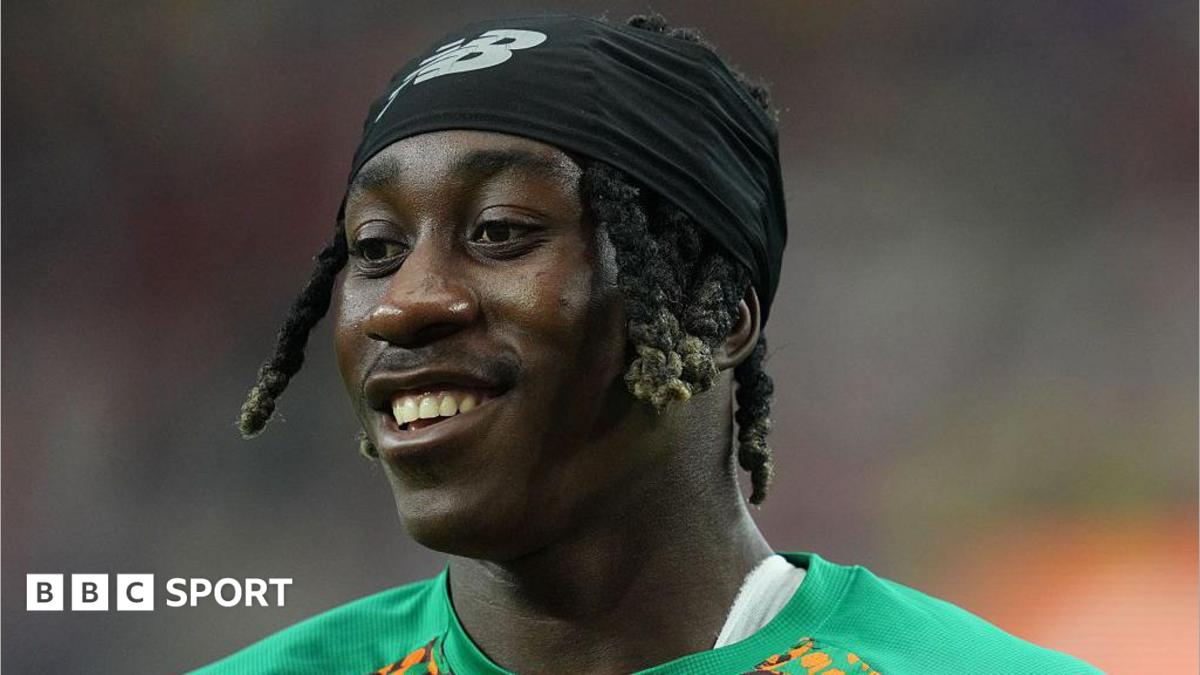
  • Diomande’s rapid and remarkable rise to Real Madrid

    Diomande’s rapid and remarkable rise to Real Madrid

    After months of relentless transfer speculation, 19-year-old Ivorian football prodigy Yan Diomande is set to fulfill his ambition of joining European giant Real Madrid in a landmark deal that has rewritten multiple transfer record books. The Spanish capital club has agreed to pay more than £100 million to secure the winger from Germany’s RB Leipzig, a fee that makes Diomande the most expensive African footballer in history, while also marking the highest transfer fee both RB Leipzig has ever received and Real Madrid has ever paid for an incoming player.

    Diomande’s rapid ascent to the top of world football is nothing short of extraordinary: less than 18 months ago, he was a virtually unknown prospect, recognized only by a small circle of elite scouts and football insiders. The young winger, who spent his formative youth development at the Florida-based DME Academy – an institution better known for its elite basketball program – spent years knocking on the door of professional clubs across Europe, attending trials with the likes of Chelsea, Bournemouth, Crystal Palace, Rangers, and Olympiacos without earning a contract. Even the reserve teams of Major League Soccer rejected his attempts to land a spot, leaving his dream of professional football hanging in the balance.

    His breakthrough finally came when La Liga side Leganes offered him his first professional contract. In just 10 appearances in Spain’s top flight, Diomande’s raw talent and explosive athleticism saw his market value skyrocket, leading RB Leipzig to acquire him for €20 million in July 2024. The Red Bull-backed club immediately identified Diomande as a long-term diamond in the rough, and the teenager quickly exceeded all expectations: in his first full season in the Bundesliga, he notched 13 goals and 10 assists across all competitions, emerging as one of the most exciting young attacking players in Europe.

    Leipzig initially planned to hold onto Diomande for another season to allow his value to rise further, but overwhelming interest from elite clubs across the continent forced the Bundesliga side to reconsider. Liverpool, Paris Saint-Germain, and eventually Real Madrid all tabled record offers for the Ivorian, who earned international experience representing his country at the 2022 FIFA World Cup. Ultimately, Real Madrid’s bid won out.

    What makes Diomande such a coveted talent is his rare combination of elite physicality and creative skill. Already considered one of the best dribblers in European football, the 19-year-old still has room to develop the finer points of his game after just 18 months at the top level. An underrated passer, Diomande formed a deadly attacking connection with RB Leipzig right-back Ridle Baku, and he is comfortable playing on either flank: a natural right-footed player, he has featured on both wings across his short professional career for club and country.

    Off the pitch, Diomande’s journey to the Santiago Bernabéu is a classic rags-to-riches story marked by immense sacrifice and personal tragedy. Growing up in Abidjan, Ivory Coast, he left home at just nine years old to join a football club 70 miles from his family near the Ghanaian border, living independently with very limited resources. At 15, he made the bold decision to relocate to the United States to pursue his career, enrolling in high school despite speaking no English at the time and facing repeated rejections from professional clubs.

    Shortly after he earned his breakthrough with Leganes and made his La Liga debut against Real Madrid at the Bernabeu, Diomande suffered a devastating personal loss: his 15-year-old sister Roxanne, to whom he was extremely close, died after her drink was spiked at a party. In an open letter published by *Players’ Tribune*, Diomande opened up about the grief that followed the tragedy, writing, “Now, I don’t feel anything. It’s like I’m not even human. Since you died, I’m just blank.” Despite this heartbreak, he stayed focused on his career, making the move to Leipzig just a year later and continuing his rapid development.

    While Real Madrid already has a deep group of attacking wingers, club chairman Florentino Perez and the club’s executive board prioritized signing Diomande, unwilling to pass on the chance to acquire one of the most talented young prospects in the world. The final days of negotiations brought a surprise twist: Diomande had long been linked with a move to PSG, a club his father supported and that he admired as a child, but PSG pulled out of the race last week citing disagreements with the player’s representation.

    Diomande’s representation switch earlier this year has sparked off-pitch controversy: he left his original agency Maxidel, run by former Ivorian international winger Max Gradel, to join Jay-Z’s global entertainment firm Roc Nation in February 2025. Maxidel has challenged the move, filing a complaint with the Court of Arbitration for Sport over the switch, claiming existing contractual agreements were breached. It is not lost on observers that Roc Nation already represents two of Real Madrid’s star attackers, Vinicius Junior and Endrick, a connection that likely smoothed Diomande’s path to the Spanish club.

    Despite the off-pitch noise surrounding the transfer, Diomande’s rapid upward trajectory shows no signs of slowing as he prepares to begin the next chapter of his career at one of the most prestigious clubs in world football.

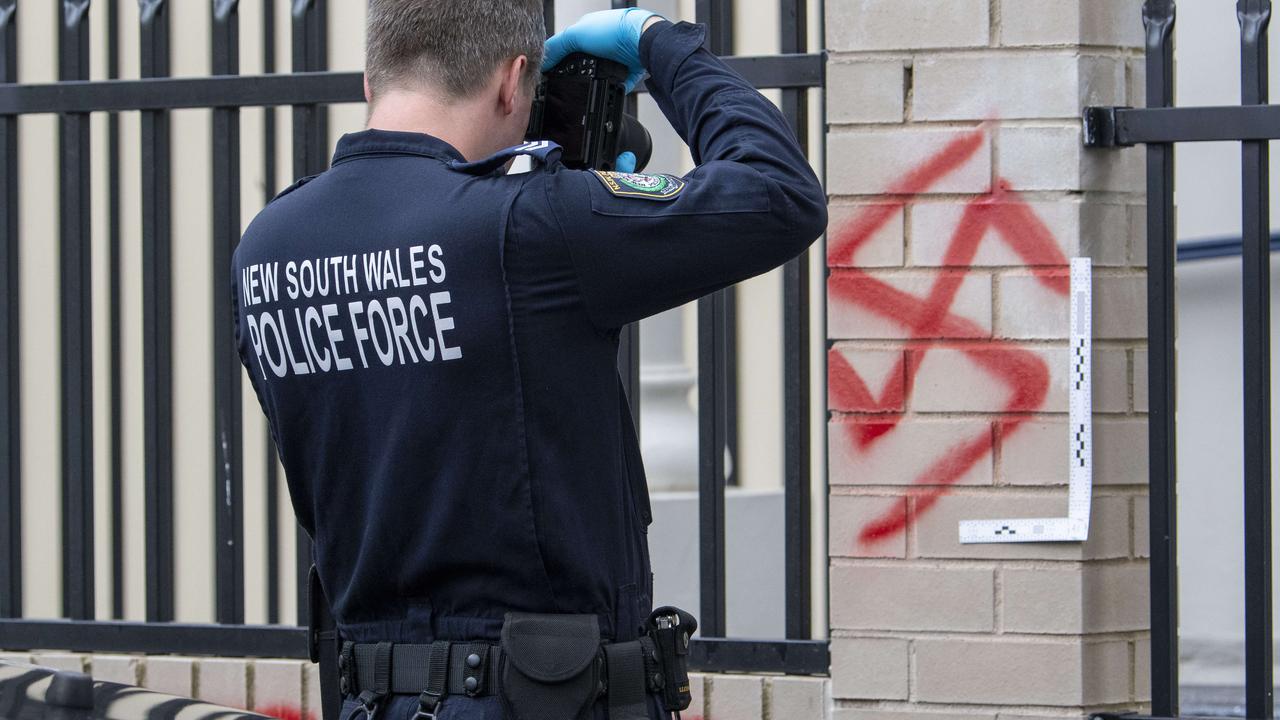
  • Australia reports 246 per cent surge in anti-Semitism since October 7, US group says

    Australia reports 246 per cent surge in anti-Semitism since October 7, US group says

    A new annual report released by the New York-based pro-Israel advocacy group Anti-Defamation League (ADL) has uncovered alarming global trends in anti-Semitic violence and harassment, with Australia recording one of the most dramatic spikes among nations with large Jewish diaspora communities.

    The analysis tracked anti-Semitic incidents across the J7 bloc – a group of seven countries holding the world’s largest Jewish populations outside of Israel, including the United States, Canada, France, Argentina, Germany, Australia and the United Kingdom – covering a four-year window that included the aftermath of the October 7, 2023, Hamas attack on Israel that killed roughly 1,200 Israeli civilians and soldiers. The report documents more than 23,000 total reported anti-Semitic incidents across the J7 nations, and warns that 2025 marks the deadliest year for anti-Semitic violence globally since 1994. Across the bloc, overall reported incidents have jumped 136% since October 2022, while violent incidents alone have risen 97% over the same period.

    While Germany logged the highest raw number of incidents in 2025, with more than 8,700 recorded cases, Australia saw the sharpest proportional growth: the country recorded a 246% increase in reported anti-Semitic events compared to levels before the October 7 attack. When adjusted for population, Australia’s rate of 14.14 incidents per 1,000 Jewish residents also far outpaces the J7 average of 3.23 incidents per 1,000 residents. That rate remains lower than Germany’s 69.80 incidents per 1,000 Jewish residents, and the United States – which recorded 6,274 total incidents – has a much lower per-capita rate of 1 incident per 1,000 residents due to its far larger Jewish population.

    The ADL’s report specifically references the 2024 Bondi Beach stabbing attack, a terror incident targeting Jewish civilians in Sydney, in its findings. William C. Daroff, chief executive of the Conference of Presidents of Major American Jewish Organizations, emphasized that the data confirms anti-Semitism has evolved beyond a temporary post-conflict surge into a persistent, global crisis impacting Jewish communities across all J7 nations. “The J7 was created because no community can confront this threat alone,” Daroff said. “Governments, institutions, and technology companies must act with urgency, enforce the law, strengthen security, and ensure that Jews can live openly and safely.”

    The findings come as Australia’s Royal Commission into Anti-Semitism and Social Cohesion continues to hear testimony from Australian Jewish communities, with much of the recent focus on how Australian universities have responded to pro-Palestinian encampments that sprung up on campuses following Israel’s military campaign in Gaza. That campaign has killed more than 70,000 people in Gaza, most of them civilians, according to Gaza health authorities. The royal commission itself has faced significant public pushback, particularly over widespread calls for the Australian government and institutions to adopt the International Holocaust Remembrance Alliance (IHRA) working definition of anti-Semitism. Critics of the definition argue it is routinely used to silence legitimate political criticism of Israeli government policies and the country’s military actions in Gaza.

    The ADL, the organization behind the new report, has itself faced sustained controversy over its stances on anti-Semitism and Israel. Founded in the early 20th century to combat anti-Jewish prejudice and violence, the group has drawn widespread criticism in recent decades for its formal stance that equates anti-Zionism – opposition to the existence of a Jewish state in historic Palestine – with anti-Semitism, a position many scholars and activists reject as an attempt to stifle free speech around the Israeli-Palestinian conflict.

  • ‘I thought I would die’: Survivors describe the shock and horror of powerful Japan earthquake

    ‘I thought I would die’: Survivors describe the shock and horror of powerful Japan earthquake

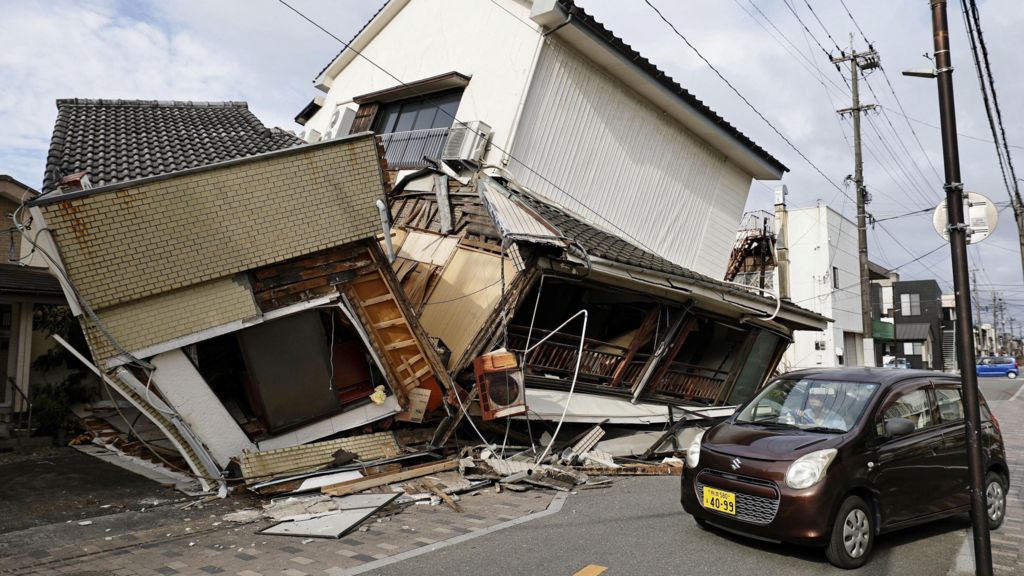
    Late on a Tuesday evening, when most local businesses in Japan’s southwestern city of Yatsushiro, Kumamoto Prefecture were preparing to close for the day, a violent 6.8-magnitude tremor tore through the region, turning ordinary routines into a terrifying fight for survival. For 75-year-old Hiroko Ogata, co-owner of the beloved local diner Sendan Shokudo, the quake struck moments after she stepped through the door. In an instant, every dish, utensil and supply stacked on kitchen shelves crashed to the floor, shattering glass and ceramic across the room. Ogata immediately dove under the nearest table for shelter, only to be thrown back and forth as the building lurched violently from side to side.

    A lifelong resident of the area, which sits atop an active tectonic fault line that has long made earthquakes a familiar risk, Ogata says this tremor was unlike anything she has ever endured. “I thought I would die,” she recalled, drawing a stark contrast to the devastating 2016 Kumamoto earthquakes that killed 277 people and injured more than 2,800. “The last quake 10 years ago was nothing like this one.”

    As of the latest updates, the disaster has claimed at least 13 lives, with three of the fatalities recorded at the Aeon shopping mall in central Kumamoto City, where dozens of people remain trapped beneath collapsed debris. Rescue teams have launched a large-scale operation to reach survivors, but Japanese Prime Minister Sanae Takaichi has warned that responders are in a critical “race against time” to pull people alive from the wreckage before conditions worsen.

    Just a few hundred meters from the damaged mall, Yui, a cake shop owner who asked to keep her surname private, was working in her back office when the quake hit. The shaking was so intense that she could not distinguish the roar of the earth from the sound of structural explosions. “All I could do was hold the chair I was sitting in as big jolts came one after another,” she said, still visibly shaken days after the event. “I didn’t know what to feel; I couldn’t even feel scared in such a situation. Even now I don’t know what to feel, and I don’t know how to explain.”

    Japanese authorities moved quickly to mobilize resources, deploying 4,600 emergency personnel to the affected region within hours of the initial tremor. Takaichi pledged that teams would work “tirelessly through the night” to map damage, locate missing people and deliver critical aid to displaced residents. Even with this rapid response, however, the scale of the destruction has overwhelmed local infrastructure: tens of thousands of households across Kumamoto City remain without power and clean running water, and at least 45 medical facilities have sustained structural damage that limits their ability to treat the injured.

    Beyond human casualties, the disaster has also damaged irreplaceable cultural heritage sites. The iconic outer stone walls of 17th-century Kumamoto Castle, located in the heart of the city, crumbled to the ground in thick clouds of dust, and the main worship hall of 19th-century Yatsushiro Shire collapsed completely.

    For locals navigating the aftermath, daily life remains fraught with uncertainty. Michal Posan, a 25-year-old resident who has lived in Kumamoto for two years, says local stores have already been stripped of essential supplies. “There is no water or food left in the stores,” she explained. Posan was at home when the quake hit, where a falling television struck her and her bathroom mirror shattered; nearby roads cracked and buckled from the force. Like many other residents, she has packed an emergency evacuation bag and remains on high alert, as constant aftershocks continue to rattle the region hours after the initial quake.

    Memories of the 2016 disaster, when a second major quake struck the region just days after the first, have left communities deeply anxious about what comes next. “People are wary of another earthquake on the way,” one local resident noted. That fear is echoed by experts: Shinji Kiyomoto of the Japanese Meteorological Agency has urged the public to “remain vigilant” for additional large tremors, citing the 2016 sequence as a dangerous precedent.

    Even as fear of another major quake lingers, local business owners have begun the slow, exhausting work of clearing debris and rebuilding their livelihoods, balancing the need to return to normalcy with the constant interruption of aftershocks. Ogata began clearing out her damaged diner the day after the quake, even as repeated tremors force her to stop and take shelter every few minutes. “The whole of my place is messy, and I don’t know where to stand – but we have to earn our living by restarting our restaurant as soon as possible, so I am cleaning the place today,” she said. “But when I try to work for a bit, an aftershock occurs and I have to stop – then I do some work and we have another aftershock… So it is going so slowly. If we keep having this many aftershocks it will be very stressful.”

    For Yui, the path forward remains unclear. Her cake shop remains closed while she assesses damage to critical equipment, including her commercial oven. “I haven’t checked whether the machines such as the oven are working,” she said. “After I check those, I will have an idea whether I can go back into business or not.” As rescue teams continue their search for trapped survivors and communities pick through the wreckage of their homes and businesses, Kumamoto is grappling with both the immediate physical devastation and the long shadow of uncertainty cast by the relentless aftershocks.

  • US bans foreign-made humanoid robots, targeting China over national security

    US bans foreign-made humanoid robots, targeting China over national security

    In a move that escalates the ongoing technological competition between the world’s two largest economies, the U.S. Federal Communications Commission (FCC) announced Tuesday it will block imports of Chinese-manufactured humanoid robots, four-legged quadrupeds commonly called robot dogs, and foreign-made power inverters, citing unsubstantiated national security and supply chain risk concerns.

    This new restriction comes as part of a growing series of American trade barriers targeting Chinese technology, following earlier bans on Chinese-built drones and ongoing deliberations over limiting access to Chinese open-source artificial intelligence models — a sector where Chinese innovation has rapidly advanced in recent years. The decision is expected to add new strain to already tense bilateral relations ahead of the planned Trump-Xi summit scheduled for this September, which follows a high-profile meeting between the two leaders in Beijing this past May.

    Industry data underscores China’s dominant position in the global humanoid robotics market: analysts estimate Chinese manufacturers hold roughly 85% of global market share, a figure confirmed by both Barclays and industry research firms. For 2025, Omdia data shows that of around 15,000 humanoid robots shipped worldwide, China’s two leading robotics firms — Unitree and AGIBOT — each delivered more than 5,000 units, while top U.S. competitors Tesla and Figure AI shipped only a few hundred units or fewer apiece.

    Projections from Morgan Stanley indicate China’s domestic humanoid robot market could balloon to $15 billion by 2030, driven by aggressive manufacturing scaling and cost-cutting that has outpaced most Western rivals. Morningstar analyst Kangyuxiao Li explained that the import ban serves to protect emerging U.S. robotic developers from price competition and cuts off Chinese manufacturers from a high-value future export market. However, Li noted the restriction will not meaningfully slow China’s overall robotics advancement, thanks to the enormous size of China’s domestic manufacturing base and robust demand for Chinese robotics in other global export markets.

    Unlike the U.S., China has actively expanded its robotics footprint across other major markets, with Europe identified as a key target for Chinese humanoid and advanced robot exports, per Omdia. Beijing has repeatedly pushed back against U.S. restrictions, framing its technological progress as a global economic opportunity rather than a security threat, even as Washington warns of a potential “China Shock 2.0” that could disrupt Western manufacturing and labor markets.

    The ban also carries risks for cross-border tech collaboration between U.S. and Chinese firms, warned Omdia chief analyst Lian Jye Su. A high-profile example of this interconnectedness: in June, U.S. chip giant Nvidia unveiled a humanoid robot reference design that relies on the physical chassis built by Chinese robotics firm Unitree. Just recently, the Pentagon added Unitree to a list of Chinese companies it accuses of having ties to the Chinese military, a designation Beijing has said it “firmly opposes.”

    Samm Sacks, a senior fellow focused on Chinese technology policy at Washington-based think tank New America, noted the new import ban is just the latest in a growing string of potential diplomatic flashpoints ahead of the September leadership meeting. “It’s a steady drumbeat of potential flashpoints heading into the Trump-Xi summit planned for September,” Sacks said.

    FCC Chair Brendan Carr defended the agency’s decision in a formal statement, framing the ban as a necessary step to “secure America’s critical supply chains.”

  • Austria’s 16th century bell foundry adds modern technology to keep the casting process alive

    Austria’s 16th century bell foundry adds modern technology to keep the casting process alive

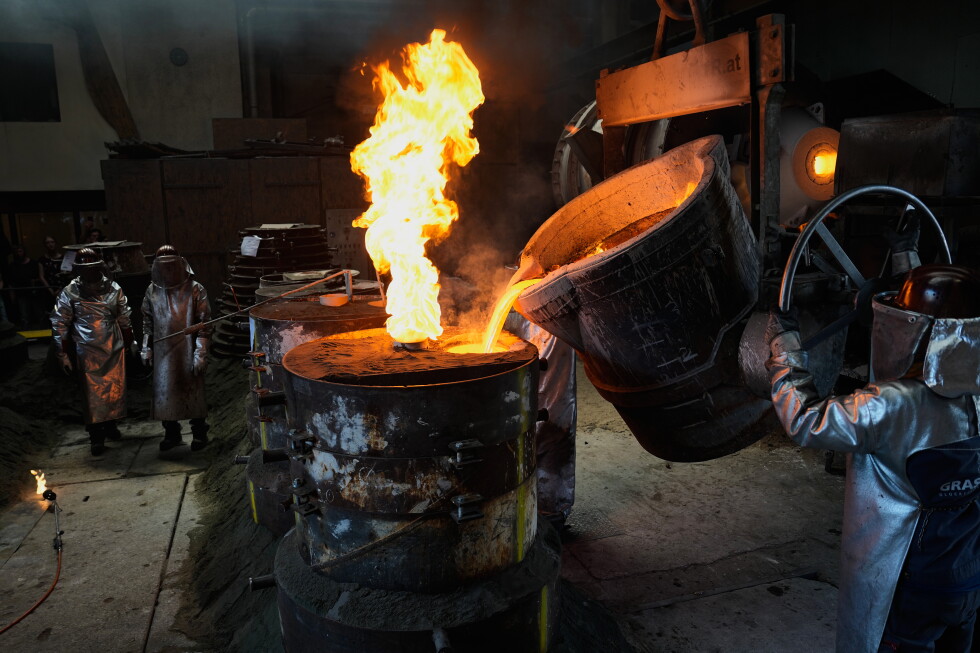
    Tucked in the mountain city of Innsbruck, western Austria, one of Europe’s last remaining bell foundries hums with activity as artisans clad in heat-resistant protective gear work to pour glowing molten bronze into custom-shaped molds. For the Grassmayr Bell Foundry, a family-owned enterprise tracing its origins back to 1599, this routine of crafting massive, ton-weight bells for religious communities across the continent has persisted through centuries of upheaval — from continental wars and widespread famines to global pandemics and crippling economic downturns.

    Today, the legacy is carried forward by brothers Johannes and Peter Grassmayr, the latest generation to steward the centuries-old trade. What was once a crowded craft with hundreds of foundries operating across Europe during the late medieval Renaissance has dwindled to just a handful of active operations on the continent. For Grassmayr, the key to outlasting competitors and navigating centuries of change lies in a rare balance: unwavering dedication to time-honored craftsmanship paired with deliberate adoption of cutting-edge innovation.

    “Certain core practices have not changed in 400 years, but we have pushed for significant innovation, particularly over the past two decades, that has transformed how we work,” Johannes Grassmayr explained in an interview with the Associated Press.

    A full production cycle for a single custom bell takes three to four months from start to finish. In decades past, cleaning and polishing a newly cast bell accounted for 30% of total production labor. Today, modern digital and mechanical tools have cut that processing time to just one-tenth of the original schedule. The foundry keeps many of its most innovative proprietary processes private: this includes a specialized high-pressure sandblasting cleaning chamber, as well as custom-built software applications designed to model and predict the unique acoustic profile of each individual bell.

    Even with the advantages of modern technology, the most labor-intensive and high-stakes step of the process — designing and crafting the molds for large, multi-ton bells — still takes up to six months of careful work. As Johannes emphasizes, a bell is not simply a hunk of cast metal: it is a precision musical instrument that requires accurate calculation, careful shaping, and controlled casting to achieve the desired tone.

    The greatest risk during casting comes from the extreme pressure generated by tons of liquid bronze. For a large multi-ton bell, molten bronze can exert up to 125 metric tons of pressure against the inner walls of the mold. To prevent catastrophic collapse, the foundry sources only highest-quality clay for mold construction, then encases the clay form in reinforced steel sleeves engineered to withstand these extreme forces.

    Beyond the inherent technical challenges of bell casting, the foundry now faces mounting modern economic pressures that threaten its long-term stability. Shifting cultural trends have led to a sharp decline in new church construction across Europe, drastically reducing demand for new custom bells. Compounding this challenge are skyrocketing operational costs spurred by recent global events: energy prices have surged following the outbreak of war in Ukraine, and labor costs have jumped 30% across the industry since the 2020 COVID-19 pandemic.

    For finished bells, the single largest cost driver remains raw material prices. Premium bronze, blended to a traditional ratio of 80% copper and 20% tin to produce the best acoustic quality, has seen explosive price growth in recent years. Just a few years ago, bronze cost 8 euros (roughly $9.23) per kilogram; today, that same kilogram costs 23 euros ($26.17). This volatility makes long-term pricing impossible for the foundry.

    “That’s why I can’t even predict what a bell will cost a year from now,” Johannes said. “I just hope we see metal prices fall again in the near future.”

    To adapt to shrinking demand for new bells and offset rising costs, the Grassmayr team has increasingly expanded into a new line of work: restoring historic defective bells, leveraging modern technology to repair and refinish centuries-old pieces that remain important to communities. To date, the foundry has restored hundreds of damaged bells from 12 different European countries.

    Despite the challenges, the foundry’s work reaches across the globe: Grassmayr bells now hang in churches and public buildings in more than 100 countries, from Japan to the United States. Some of the brothers’ most iconic works include a 25-metric-ton bell cast in 2016 for Romania’s National Cathedral in Bucharest, standing 3.3 meters tall, and a 15-metric-ton bell installed in a church on Israel’s Mount Tabor.

    As he showed AP journalists a set of recently cast bells, left to cool for a full week before being removed from their clay molds, Johannes pointed to the crisp, precise negative imprint left in the clay form. One of the newly finished bells was bound for a church in Zethau, Germany. “I’m very happy with how this casting turned out,” he said. “I’m particularly glad that the innovations we’ve rolled out over the past decades have helped us make bells that are ever more beautiful and better sounding than ever before.”