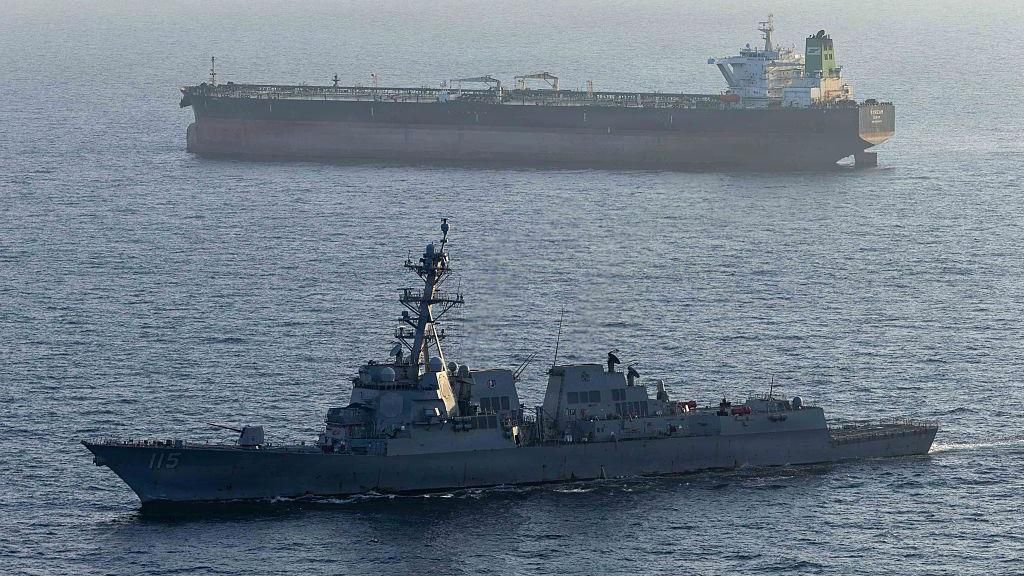
After a brief three-day lull in cross-border hostilities, military tensions across the Middle East have flared up sharply, as the United States and Saudi Arabia launched coordinated airstrikes against Iran-aligned militant groups in eastern Iraq this week, marking a significant escalation of the long-running regional conflict.
U.S. Central Command (Centcom), the U.S. military command overseeing operations in the Middle East, confirmed in an official statement that the joint airstrikes targeted logistics hubs and weapons storage facilities linked to terrorists directed by Iran’s Islamic Revolutionary Guard Corps (IRGC). The operation was framed as a direct response to more than 30 drone attacks carried out by IRGC-affiliated groups against U.S. forces and Saudi energy infrastructure over the preceding 72 hours. While Centcom did not publicly name the specific militia group targeted, the Popular Mobilisation Forces (PMF), an Iraqi umbrella network of pro-Iranian armed factions, confirmed that at least 10 of its members were killed in the strikes.
The resumption of large-scale military exchanges follows an attempted surprise ballistic missile attack on U.S. positions in the region launched by Iran on Tuesday, according to Centcom. The attack, which took place at 21:45 GMT, saw all Iranian missiles successfully intercepted by U.S. defense systems, though Iran confirmed it had targeted a U.S. military base located in Jordan. Separately, Iran’s state-run Tasnim News Agency reported that the IRGC also struck three commercial oil tankers transiting the Strait of Hormuz, a critical global chokepoint for energy shipments.
On the same day as Iran’s missile attack, Saudi Arabian defense officials announced they had intercepted and destroyed multiple drones targeting oil processing facilities in the kingdom’s eastern energy-rich region. Major General Turki al-Maliki, a spokesperson for the Saudi defense ministry, claimed the drones were launched from Iraqi territory by Iran-affiliated militia groups, mirroring U.S. accusations of militant proxy activity orchestrated from Tehran.
The sudden escalation of violence comes just two days after former U.S. President Donald Trump announced that Washington had held “very friendly negotiations” with Tehran, a development that had followed a 13-day consecutive campaign of U.S. bombing targeting southern Iran that killed dozens of people and destroyed key infrastructure including tunnels and bridges. Iran has denied that any formal negotiations with the U.S. are currently underway, with control over access to the Strait of Hormuz remaining one of the most intractable sticking points in the long-running dispute between the two nations.
The PMF has condemned the joint U.S.-Saudi strikes as a reckless violation of Iraq’s national sovereignty, calling the operation a “dangerous escalation” of regional tensions. For years, the Iran-backed network of militias has carried out repeated attacks on U.S. personnel and interests across Iraq, with the stated goal of forcing the withdrawal of all remaining U.S. troops from the country, leading to regular retaliatory strikes from U.S. forces against the group’s positions.
Global energy markets reacted immediately to the news of escalating conflict, with oil prices jumping significantly in early trading on Wednesday as investors priced in the risk of disrupted energy shipments through the Strait of Hormuz, which carries roughly a fifth of all global oil supplies. During morning Asian trading hours, Brent crude, the global benchmark for oil prices, rose 4.3% to hit $87.70 per barrel, while U.S. West Texas Intermediate crude climbed 4.2% to trade at $82.62 a barrel.
The latest round of military strikes coincided with a high-profile visit to Washington by Israeli Prime Minister Benjamin Netanyahu, who met with Trump at the White House and attended the funeral of prominent Republican U.S. Senator Lindsey Graham, a well-known hardliner on Iran policy. New data released by the U.S. Pentagon shows that the ongoing military campaign against Iran has already taken a significant toll on U.S. personnel: since Trump ordered the start of major strikes against Iran in February, at least 624 U.S. service members have been wounded in action. Of those casualties, 417 were injured during Operation Epic Fury, a joint U.S.-Israeli military campaign targeting Iranian positions across the region.