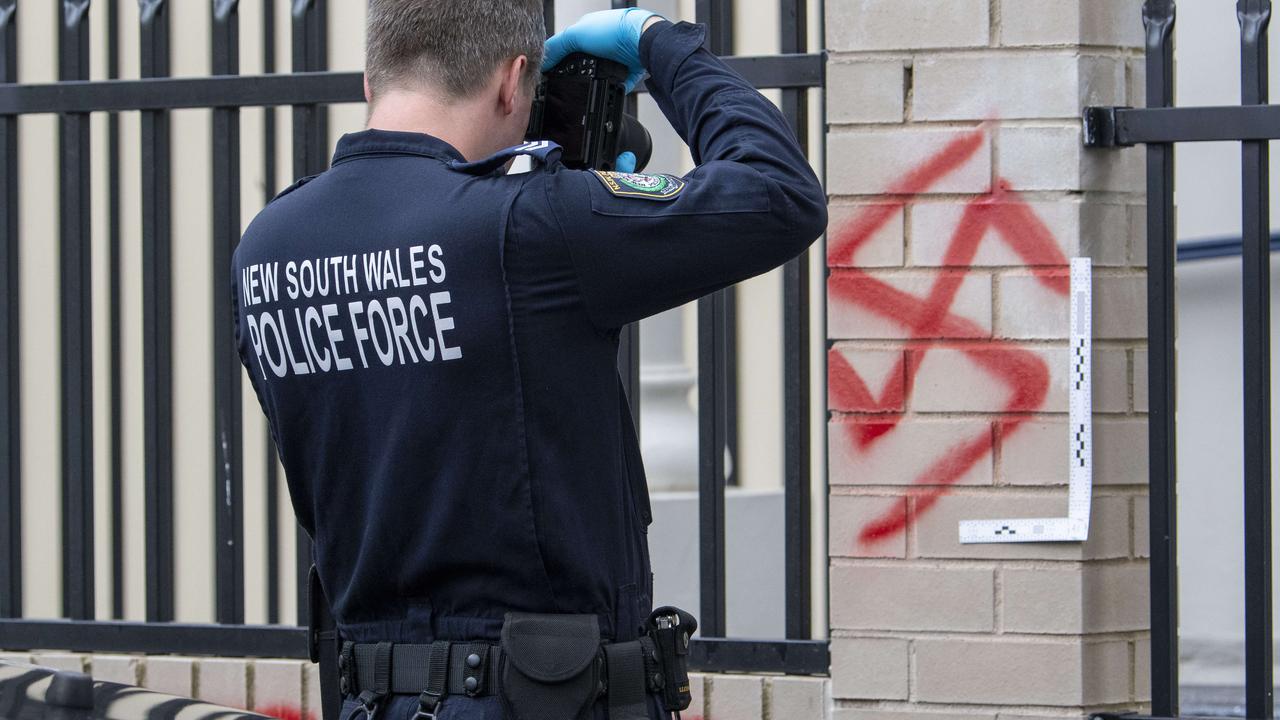
A new annual report released by the New York-based pro-Israel advocacy group Anti-Defamation League (ADL) has uncovered alarming global trends in anti-Semitic violence and harassment, with Australia recording one of the most dramatic spikes among nations with large Jewish diaspora communities.
The analysis tracked anti-Semitic incidents across the J7 bloc – a group of seven countries holding the world’s largest Jewish populations outside of Israel, including the United States, Canada, France, Argentina, Germany, Australia and the United Kingdom – covering a four-year window that included the aftermath of the October 7, 2023, Hamas attack on Israel that killed roughly 1,200 Israeli civilians and soldiers. The report documents more than 23,000 total reported anti-Semitic incidents across the J7 nations, and warns that 2025 marks the deadliest year for anti-Semitic violence globally since 1994. Across the bloc, overall reported incidents have jumped 136% since October 2022, while violent incidents alone have risen 97% over the same period.
While Germany logged the highest raw number of incidents in 2025, with more than 8,700 recorded cases, Australia saw the sharpest proportional growth: the country recorded a 246% increase in reported anti-Semitic events compared to levels before the October 7 attack. When adjusted for population, Australia’s rate of 14.14 incidents per 1,000 Jewish residents also far outpaces the J7 average of 3.23 incidents per 1,000 residents. That rate remains lower than Germany’s 69.80 incidents per 1,000 Jewish residents, and the United States – which recorded 6,274 total incidents – has a much lower per-capita rate of 1 incident per 1,000 residents due to its far larger Jewish population.
The ADL’s report specifically references the 2024 Bondi Beach stabbing attack, a terror incident targeting Jewish civilians in Sydney, in its findings. William C. Daroff, chief executive of the Conference of Presidents of Major American Jewish Organizations, emphasized that the data confirms anti-Semitism has evolved beyond a temporary post-conflict surge into a persistent, global crisis impacting Jewish communities across all J7 nations. “The J7 was created because no community can confront this threat alone,” Daroff said. “Governments, institutions, and technology companies must act with urgency, enforce the law, strengthen security, and ensure that Jews can live openly and safely.”
The findings come as Australia’s Royal Commission into Anti-Semitism and Social Cohesion continues to hear testimony from Australian Jewish communities, with much of the recent focus on how Australian universities have responded to pro-Palestinian encampments that sprung up on campuses following Israel’s military campaign in Gaza. That campaign has killed more than 70,000 people in Gaza, most of them civilians, according to Gaza health authorities. The royal commission itself has faced significant public pushback, particularly over widespread calls for the Australian government and institutions to adopt the International Holocaust Remembrance Alliance (IHRA) working definition of anti-Semitism. Critics of the definition argue it is routinely used to silence legitimate political criticism of Israeli government policies and the country’s military actions in Gaza.
The ADL, the organization behind the new report, has itself faced sustained controversy over its stances on anti-Semitism and Israel. Founded in the early 20th century to combat anti-Jewish prejudice and violence, the group has drawn widespread criticism in recent decades for its formal stance that equates anti-Zionism – opposition to the existence of a Jewish state in historic Palestine – with anti-Semitism, a position many scholars and activists reject as an attempt to stifle free speech around the Israeli-Palestinian conflict.