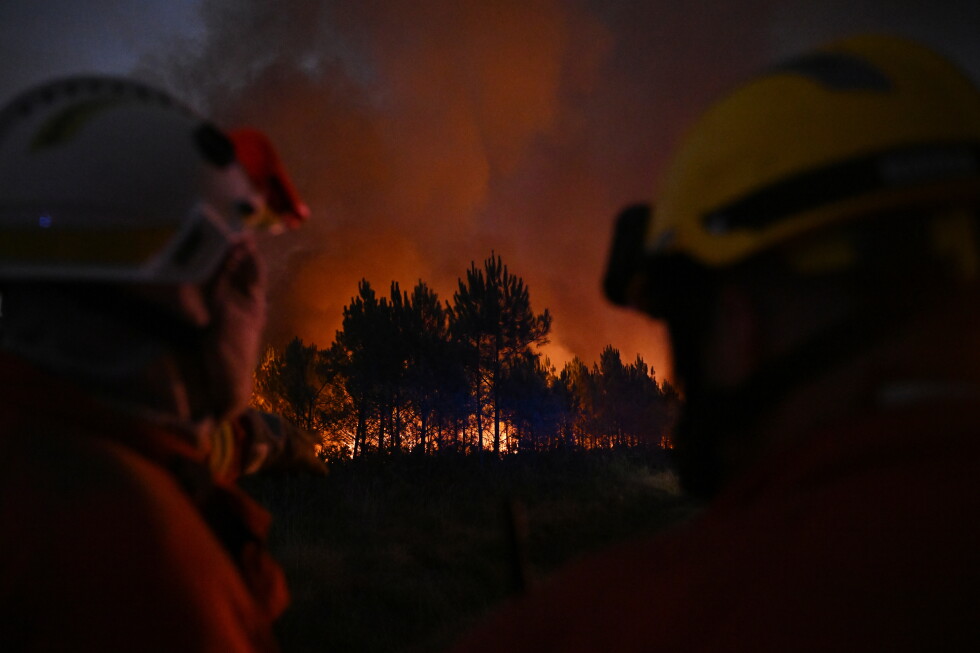
In the coastal Gironde region of southwest France, hundreds of firefighters are locked in a high-stakes battle against an out-of-control wildfire nearly four times the geographic size of the French capital Paris. As authorities warned Wednesday, soaring temperatures forecast to surpass 40 degrees Celsius (104 degrees Fahrenheit) paired with shifting strong winds could derail a week of hard-won progress against the blaze that has already forced one of the largest peacetime evacuations in modern French history.
A week after the fire first ignited, regional officials reported that overnight conditions remained relatively calm, with no further expansion of the fire line. However, the blaze has not been fully contained, and the combination of record heat and parched, tinder-dry vegetation has created extreme risk of sudden flare-ups that could send flames spreading rapidly again.
To date, the massive wildfire has displaced more than 220,000 people across the region surrounding the major wine hub Bordeaux. Just on Tuesday, regional authorities ordered an additional 4,000 residents and tourists to evacuate popular coastal vacation spots along the Atlantic shoreline, expanding the scope of what is already France’s largest peacetime evacuation effort on record. In a contradictory but necessary adjustment, officials also cleared 60,000 evacuees to return to their homes in three low-risk Bordeaux suburbs that have not been touched by flames, though all returnees were instructed to remain on high alert for sudden changes in fire conditions.
“The situation remains complicated. That’s clear. We’re not out of the woods,” Gironde Prefect Sophie Brocas told reporters Tuesday evening. This simultaneous movement of thousands of people fleeing coastal resorts and others returning to partially cleared neighborhoods underscores the highly unstable and precarious hold the fire still has over the region.
The Gironde blaze is not an isolated crisis. Across the Iberian Peninsula and southwest France, a coordinated outbreak of extreme wildfires has displaced roughly 330,000 people from their homes and seasonal vacation sites. To the south, Spain is bracing for its fourth major heat wave of the 2022 summer, with multiple large blazes still burning uncontrolled across the country – including the largest wildfire recorded in Spain’s modern history. Despite the ongoing danger, Spanish authorities have begun rolling back evacuation orders for thousands of residents after firefighting teams made tangible gains in containing fire lines over the past 48 hours.
At the peak of its intensity last week, the Gironde fire generated a rare and devastating atmospheric event never before recorded in France: a massive, black pyrocumulonimbus cloud – a thundercloud spawned by the extreme heat of a wildfire. The electrified cloud generated its own lightning, which sparked dozens of new spot fires far beyond the original fire perimeter, and created unpredictable violent winds that complicated firefighting efforts.
Preliminary data from France’s Interior Ministry shows that more than 1,160 square kilometers (448 square miles) of land have already burned across the country this wildfire season. Climate scientists warn that this season’s extreme fire activity aligns with long-term climate trends: the European Union’s Copernicus Climate Change Service confirms Europe is warming faster than any other continent on Earth, heating at more than twice the global average. Western Europe just recorded the hottest June ever documented by modern monitoring, and the combination of extreme heat, widespread drought, and chronically dry vegetation created the perfect conditions for wildfires to spread and intensify rapidly across France and Spain.