作者: admin

  • It’s official: Wes Streeting of the Labour Party wants to be Britain’s next prime minister

    It’s official: Wes Streeting of the Labour Party wants to be Britain’s next prime minister

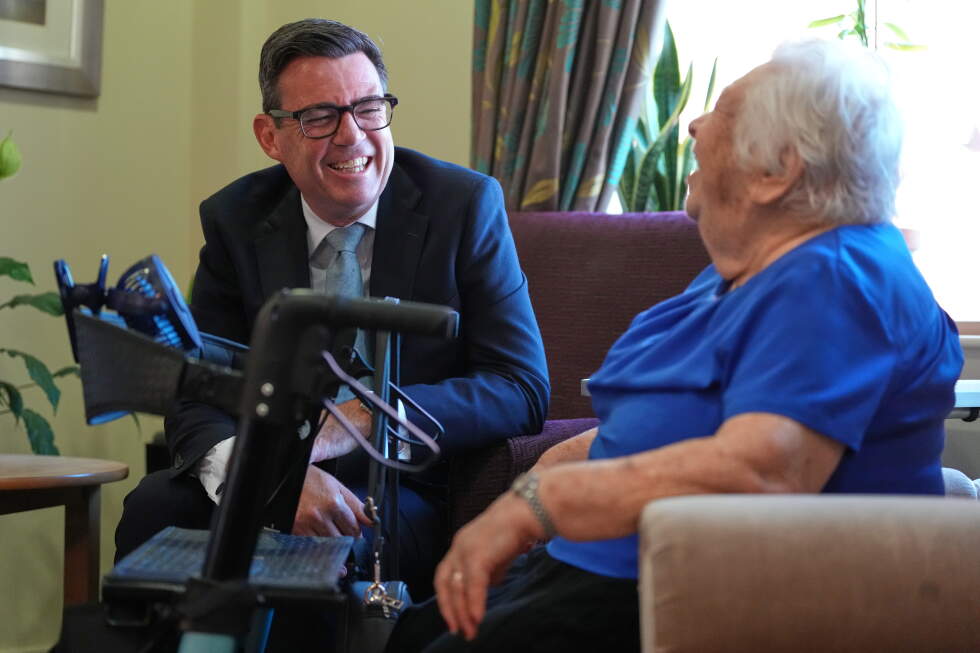
    LONDON – For months, Wes Streeting’s ambition to seize the top role of British prime minister has been one of the worst-hidden open secrets in United Kingdom politics. On Saturday, that unconfirmed speculation moved into the official realm: the former Labour health secretary formally declared his plan to oust sitting Prime Minister and Labour Party leader Keir Starmer, becoming the first sitting member of Parliament to throw their hat into the ring for a bruising internal leadership contest.

    The upcoming challenge comes at a deeply fraught moment for Labour. Just two years ago, the party secured a historic landslide victory that ended 14 years of Conservative Party rule, but its political standing has plummeted sharply in recent months. Streeting is not expected to be the only challenger: Greater Manchester Mayor Andy Burnham, another high-profile figure seen as a potential alternative to Starmer, is widely expected to join the race if he wins a upcoming special election to secure a seat in the House of Commons.

    For his part, Starmer has pledged to defend his leadership despite plummeting public approval. His tenure has been marked by a string of high-profile setbacks, sudden policy U-turns, and sustained criticism over his poor judgment in appointing a close associate of convicted sex offender Jeffrey Epstein to the role of U.K. ambassador to the U.S. The prime minister’s refusal to step down following Labour’s catastrophic performance in the May 7 local and regional elections – where Nigel Farage’s hardline anti-immigration party Reform UK secured massive gains – has thrown the national government into weeks of ongoing political chaos.

    In his formal announcement Saturday, Streeting framed his challenge as an urgent course correction to save both the party and the country. “The voters did more than send Labour a message last week,” Streeting said. “They issued a warning: that unless we change course, we risk being the handmaidens of Nigel Farage and the breakup of the United Kingdom.”

    At 43, the boyish-looking Streeting has long been regarded as one of the Labour Party’s most effective public communicators, and has emerged as an outspoken voice on high-profile issues including the ongoing war in Gaza. His political trajectory traces back to working-class roots in London’s East End, where he grew up in public housing. His rise from that background to attendance at the prestigious University of Cambridge is detailed in his memoir, *One Boy, Two Bills and a Fry Up: A Memoir of Growing Up and Getting On*, which takes its name from his two grandfathers, both named Bill: one, a maternal grandfather with ties to organized crime who served prison time for armed robbery, and the other, his paternal grandfather, who Streeting credits with guiding him to the opportunity to attend Cambridge.

    Streeting entered political organizing early, leading the Cambridge University Students’ Union before rising to become president of the National Union of Students. Before his 2015 election to Parliament, he worked for LGBTQ+ advocacy organization Stonewall, and has spoken publicly about his own journey coming out as gay and reconciling his sexuality with his lifelong Anglican faith. He cut his political teeth in local government, serving as a councilor and later deputy leader of Redbridge London Borough Council before winning his parliamentary seat.

    As a backbench lawmaker during Jeremy Corbyn’s tenure as Labour leader, Streeting was a consistent and vocal critic of the veteran socialist leader, whose two general election defeats and repeated antisemitism scandals rocked the party. When Starmer took over the party leadership in 2020, Streeting was quickly promoted through the ranks, eventually rising to the role of Health Secretary in Starmer’s cabinet.

    For Streeting, the role of Health Secretary was far more than a political posting: it was a personal mission. Having survived a battle with kidney cancer earlier in his life, he framed the role as a chance to repay the National Health Service (NHS) that saved his life. “The NHS saved my life,” he said upon taking the role. “Today, I can begin to repay that debt by saving our NHS.”

    Even as rumors of his leadership ambitions circulated for months, Streeting repeatedly reaffirmed his support for Starmer and denied any plans to mount a challenge. But as Starmer’s position became increasingly untenable in the wake of the May local elections, that public position became unsustainable.

    On Wednesday, as King Charles III delivered the government’s ceremonial legislative blueprint for the coming parliamentary term during the State Opening of Parliament, speculation about an internal leadership challenge dominated front-page headlines across British tabloids. The Daily Mail ran the all-caps headline “Streeting to ignite Labour day of anarchy,” while the Daily Express asked: “Finally, a move to bring down ‘Zombie’ Keir?”

    The day after the State Opening, Streeting became the first cabinet minister to resign, stating publicly that he had lost confidence in Starmer’s leadership and criticizing the prime minister for a lack of clear vision and direction. He stopped short of immediately announcing his leadership challenge, and his resignation came on the same day he publicly announced that NHS waiting times for routine appointments – his signature policy priority as health secretary – had fallen for the fifth consecutive month.

    A member of Labour’s moderate left wing, Streeting has previously faced questions over his ties to disgraced former Labour heavyweight Peter Mandelson, who was appointed and then swiftly fired as U.S. ambassador by Starmer over his long-standing friendship with Epstein. As controversy over Mandelson’s appointment reignited earlier this year, Streeting proactively published a series of email exchanges between the two to prove the pair were not close allies. “Contrary to what has been widely reported, I was not a close friend of Peter Mandelson, but I am not going to wash my hands of my actual association with him either,” he wrote in a Guardian opinion piece. In one of the released emails, he echoed widespread criticism of Starmer, writing that “there isn’t a clear answer to the question: why Labour?” In the coming weeks, Streeting has confirmed he will lay out his own vision to answer that question for the party and the country.

  • Young Kyiv couple killed in a fierce Russian airstrike hoped to start a family, mourners say

    Young Kyiv couple killed in a fierce Russian airstrike hoped to start a family, mourners say

    KYIV, Ukraine — In the wake of Russia’s full-scale invasion of Ukraine four years ago, Maryna Homeniuk joined the millions of Ukrainians forced to flee the violence to seek safety abroad. Like many displaced Ukrainians, she prioritized continuing her education, completing her university degree in the Czech Republic and adding Vietnamese to her already extensive roster of spoken languages before making the choice to return to her home country in 2023. It was after her return that she met Yurii Orlov, the man who would become her beloved partner.

    That shared future the couple planned was cut devastatingly short last Thursday, when they became two of the 24 civilian lives lost in a massive wave of Russian airstrikes across Ukraine — a barrage Ukrainian military officials have called the largest single air attack of the entire war. A Russian cruise missile directly struck the apartment building where Homeniuk and Orlov lived, reducing their home to rubble.

    On Saturday, friends and family gathered at Homeniuk’s funeral to lay the 24-year-old English teacher to rest. They had hoped to honor Orlov alongside her, but recovery work meant his remains were not prepared for burial in time for the joint service.

    Friends remembered Homeniuk as a deeply compassionate young woman with a life full of unfulfilled dreams. “She was a very caring person. I feel very sorry, because she had so many dreams. She worked with children and wanted to have children herself someday, when times were safer,” her close friend Olesia Yukhnovych told the Associated Press in an interview.

    By all accounts, Homeniuk was a gifted linguist: friends confirm she spoke approximately 10 languages, including fluent Mandarin Chinese and Korean. A sensitive, warm-hearted person, she often took in stray and abandoned animals, and nurtured a deep love of travel, saving for months to fund adventures to new countries around the world.

    “This is a young person. This is a girl who had absolutely the whole future ahead of her,” said Anastasiia Petrushyna, who worked alongside Homeniuk and counted her as a close friend. “This future will no longer exist — our youth basically can’t have it. You never know what trouble awaits you.”

    Orlov, 30 at the time of his death, was a committed athlete: he played hockey for multiple teams across Kyiv before going on to captain the Kyiv Floorball Club. Though the pair came from different interests — he centered his life around sports, while Homeniuk’s passion was art — everyone close to them could see the deep love they shared.

    A beloved weekly tradition bonded the couple: Homeniuk never missed a Sunday game that Orlov played. He taught her the rules and skills of floorball, a variant of hockey played on indoor surfaces, and in return, she helped him improve his English language skills.

    For Yukhnovych, the contrast between what was supposed to be and the grim reality of the day cuts unbearably deep. “It’s a shame. I should have been helping prepare for the wedding and I ended up helping prepare for the funeral,” she said. “It’s horrible.”

    The couple’s deaths come amid a brutal, unrelenting series of Russian attacks on Kyiv that have stretched through the winter. They had often talked with friends about their desire to move out of their Darnytsia neighborhood, located on Kyiv’s left bank, where power outages from Russian strikes persisted far longer than in other parts of the capital. But like many Ukrainians, they could not afford the cost of relocating to a safer area.

    In the chaotic hours after Thursday’s airstrike, Yukhnovych sent a text message to Homeniuk to check in, a precaution many Ukrainians take after attacks to confirm loved ones are safe. “You never think something could happen to someone close to you, and you just message them as a precaution,” she said. “I never thought this would be one of those times when the message would remain unread.”

  • Ukrainian drone strikes on Russia kill 4 and wound 12 others, while debris lands on a Moscow airport

    Ukrainian drone strikes on Russia kill 4 and wound 12 others, while debris lands on a Moscow airport

    On Sunday, regional Russian authorities confirmed that one of the largest drone offensives Ukraine has launched against Russian territory since the start of the full-scale invasion left at least four people dead and 12 others injured, marking a significant escalation in cross-border long-range attacks.

    Casualty reports from local officials confirm three of the fatalities occurred in areas just outside Moscow: a woman died when a drone crashed directly into her residential home in Khimki, a commuter city located just northwest of the Russian capital, while two men were killed in Pogorelki, a small village roughly six miles north of Moscow’s city center. A fourth fatality was recorded in the Belgorod region, which shares a border with eastern Ukraine, after a drone struck a civilian transport truck. Moscow mayor Sergei Sobyanin added that 12 people were wounded in overnight strikes near the city’s main oil refinery, though the facility’s core operational infrastructure was left unharmed. Debris from downed drones also landed on the grounds of Sheremetyevo International Airport, Russia’s busiest air transit hub, but officials confirmed no damage to airport infrastructure and no disruptions to ongoing flight operations. Regional governor Andrei Vorobyev additionally reported that unspecified civilian infrastructure and multiple apartment buildings suffered damage across the Moscow region in the attacks.

    Russian defense officials released preliminary figures showing that air defense systems intercepted or jammed more than 1,000 Ukrainian drones across Russian territory over the 24-hour period preceding Sunday midday. Of those, 81 drones were intercepted while headed toward Moscow alone – a scale of attack that ranks among the largest targeting the capital since Russia launched its full-scale invasion in February 2022.

    In a public statement confirming the operation, Ukrainian President Volodymyr Zelenskyy framed the strikes as a fully justified response to constant Russian attacks on Ukrainian civilian areas. He noted that the drones used in the attack traveled more than 310 miles from Ukrainian launch points, successfully penetrating the layered Russian air defense systems concentrated around Moscow. “Our responses to Russia’s prolongation of the war and attacks on our cities and communities are entirely justified,” Zelenskyy said. “This time, Ukrainian long-distance sanctions have reached the Moscow region, and we are clearly telling the Russians: their state must end its war.”

    Nigel Gould Davies, a senior fellow for Russia and Eurasia at the London-based International Institute for Strategic Studies, said the large-scale attack aligns with retaliatory threats Zelenskyy issued after a recent wave of intense Russian strikes on Kyiv that followed the May 9 Russian Victory Day parade. The attack, he explained, demonstrates Ukraine’s growing ability to carry out large-scale strikes deep within Russian territory, bringing the reality of the war directly to the Russian capital in a move that is deeply destabilizing for the Kremlin.

    “It brings home the fact Ukraine has the capacity to strike at very significant scale at or around the Russian capital,” Gould Davies told the Associated Press. He added that the attack will compound growing public anxiety across Russia that has built steadily over the past three to four months, fueled by battlefield setbacks, worsening domestic economic conditions, and the Kremlin’s increasing crackdown on online dissent. While these mounting pressures will erode public comfort with the ongoing conflict, Gould Davies noted he does not expect them to force Russia to pursue the compromises required for meaningful peace negotiations in the near term.

    In addition to targeting political and population centers, Ukraine has increasingly used long-range drone strikes to hit Russian oil infrastructure deep inside the country. These strikes, which have generated smoke plumes visible from orbit and even left toxic fallout in Black Sea tourist destinations, are intended to cut into Moscow’s oil export revenue – the single largest source of funding for its invasion of Ukraine. While the overall economic impact of these attacks remains uncertain, as higher global oil prices driven by tensions around Iran and the easing of some U.S. sanctions have boosted Russian government revenues, the strikes have succeeded in bringing the consequences of the war to ordinary Russians living hundreds of miles from the front lines.

    The Ukrainian drone attack came on the heels of a massive overnight Russian drone offensive targeting Ukrainian territory, which also left casualties. Ukrainian air force officials reported that Russia launched 287 drones at Ukraine overnight, 279 of which were successfully intercepted or jammed. Eight people were wounded in Russian strikes across the central Dnipropetrovsk region, including three in the regional capital Dnipro, four in Kryvyi Rih – Zelenskyy’s hometown – and one in Synelkove. Multiple residential buildings were damaged in the strikes, Ukraine’s state emergency service confirmed.

  • Mass Ukraine drone barrage kills 4 in Russia: Moscow

    Mass Ukraine drone barrage kills 4 in Russia: Moscow

    In one of the most massive aerial offensives of the Russia-Ukraine conflict to date, Ukraine launched an unprecedented overnight drone barrage consisting of nearly 600 unmanned aerial vehicles across Russian territory, Russian officials confirmed Sunday. The attack left four people dead across two regions and marked a sharp escalation of cross-border strikes following a recent deadly Russian assault on Kyiv.

    According to Russia’s defence ministry, its air defence systems intercepted and destroyed 556 drones overnight, with an additional 30 neutralized after sunrise. Interception operations spanned 14 Russian regions, as well as the Crimean Peninsula — which Russia annexed from Ukraine in 2014 — and adjacent waters of the Black and Azov Seas. The region surrounding Moscow was among the areas hardest hit by the attack.

    Moscow Region Governor Andrey Vorobyov announced via Telegram that three people were killed in strikes on the region: one woman died when a drone crashed directly into a private residential building, with two additional male victims also confirmed dead, while four other people sustained injuries. Vorobyov added that the attack began at 3 a.m. and deliberately targeted civilian and infrastructure sites, with one person initially reported trapped under rubble following the impact.

    Within the city of Moscow proper, located roughly 400 kilometers from the Ukrainian border and only rarely targeted despite frequent strikes on surrounding areas, Mayor Sergei Sobyanin confirmed that local air defences shot down more than 80 inbound drones. Twelve people were wounded by falling debris, including a group of construction workers at a worksite adjacent to a local oil and gas refinery. Sobyanin noted that while minor damage was recorded at debris impact sites, including three residential buildings, refinery operations have not been disrupted.

    In the southern Belgorod region that shares a border with Ukraine, regional officials confirmed a fourth fatality: a man killed when a drone struck a commercial lorry in the Shebekino district.

    The large-scale attack comes as a direct retaliation for a recent Russian strike on Kyiv that killed 24 people and wounded roughly 50 more. Just two days before the drone barrage, Ukrainian President Volodymyr Zelenskyy publicly vowed to step up retaliatory strikes against Russian targets.

    Ukrainian defence officials offered their own account of defensive operations over the same period, claiming that Ukrainian air defences intercepted 279 out of 288 Russian-launched drones overnight.

    Zelenskyy has repeatedly defended Ukraine’s strategy of striking military and energy infrastructure within Russian territory, arguing the tactic weakens Moscow’s ability to fund and sustain its full-scale invasion. Following the recent Russian attack on Kyiv, Zelenskyy reaffirmed that this approach is “entirely justified” in response to years of sustained Russian bombardment of Ukrainian populated areas.

    Diplomatic efforts to de-escalate the conflict have remained completely stalled in recent months. Kyiv has rejected Moscow’s maximalist territorial demands that would require Ukraine to cede full control of the eastern Donbas region. While the United States initially pushed for renewed peace talks, diplomatic momentum has collapsed since Washington shifted its foreign policy focus to the Middle East. The three-day truce both sides agreed to mark the 79th anniversary of World War II victory over Nazi Germany expired earlier this week, with each side quickly accusing the other of violating the ceasefire. The cross-border exchange of strikes has since resumed with increased intensity. Ukraine’s Western allies have repeatedly accused Russia of undermining all diplomatic efforts to end the war through its continued military aggression.

  • Large-scale Ukrainian drone attack kills three in Moscow region, says Russia

    Large-scale Ukrainian drone attack kills three in Moscow region, says Russia

    A new wave of cross-border drone strikes has killed three civilians and left multiple others injured in the Moscow region early Sunday, according to senior Russian regional officials, in what marks the latest escalation in aerial attacks between Russia and Ukraine amid the ongoing full-scale invasion.

    Andrei Vorobiev, governor of the Moscow region, announced via Telegram that Russian air defense units had been working to repel a large-scale unmanned aerial vehicle (UAV) attack targeting the area surrounding Russia’s capital starting from 3 a.m. local time. Among the casualties, a woman lost her life in Khimki, a city located just north of Moscow, where one person was initially trapped under collapsed building rubble. Two more civilians – another woman and a man – were killed in the village of Pogorelki. Vorobiev added that four additional people, three men and one woman, were wounded across the region, and multiple residential properties sustained structural damage. A private residence also caught fire in Subbotino, a village southwest of Moscow, he confirmed.

    Moscow Mayor Sergei Sobyanin reported that 12 people were injured when multiple drones struck the entrance gate of a major oil refinery within city limits. Three nearby residential buildings were also damaged in the strike. Russia’s busiest international airport, Sheremetyevo, which serves the Moscow area, later announced that drone wreckage was found on its grounds, but no injuries were reported. Airport authorities stated that operations remained unaffected: “The situation in the passenger terminals is calm. Sheremetyevo Airport is providing stable passenger and aircraft services.”

    The Russian military claimed it intercepted a total of 55 Ukrainian drones, the highest number of intercepted UAVs in a single attack on the Moscow region in recent months.

    Parallel to the strikes on Russian territory, Russia carried out its own overnight barrage of drone attacks and artillery shelling across Ukraine’s central Dnipropetrovsk region. Oleksandr Hanzha, the region’s top administrative official, said more than 30 separate strikes targeted four districts, leaving eight people injured and dozens of residential structures damaged or destroyed. Three of the injured were in the regional capital Dnipro, where multiple blazes broke out across the city following the attacks.

    The overnight strikes came just days after a massive Russian drone and missile assault on Ukraine’s capital Kyiv killed 24 people, and one day after Ukrainian President Volodymyr Zelenskyy publicly pledged to retaliate for that deadly attack. “This week Ukraine has already destroyed high-value Russian military equipment, including aircraft, a helicopter and a cargo ship,” Zelenskyy said Saturday. “Our long-range sanctions also hit Russian oil facilities and ships. Most of the operations are still ongoing.”

    Ukrainian officials have not yet issued any public comment on Sunday’s strikes against the Moscow region. In recent months, Ukrainian military forces have stepped up their drone campaign targeting key energy and industrial infrastructure deep inside Russian territory. Ukrainian authorities have repeatedly stated that these strikes are against legitimate military-related targets, as the facilities help Russia sustain its full-scale invasion that began in 2022.

    In another separate incident Saturday evening, one woman was wounded in a Russian drone attack in Ukraine’s southern Zaporizhzhia region, local officials confirmed. In an updated statement Sunday, Ukraine’s Air Force reported that Russia launched 287 drones against Ukrainian territory starting late Saturday. Air defense units intercepted or shot down 279 of those unmanned aircraft, but direct hits were recorded at seven different locations across the country, the statement added.

    Russian President Vladimir Putin launched the full-scale invasion of Ukraine in February 2022, and Russian forces currently occupy roughly 18% of Ukraine’s internationally recognized territory. The conflict has killed tens of thousands of people on both sides and displaced millions more since the invasion began.

  • North Korean women footballers land in South ahead of rare match

    North Korean women footballers land in South ahead of rare match

    In a moment that has captured cross-border attention, North Korea’s Naegohyang Women’s Football Club touched down at Incheon International Airport near Seoul on Sunday, kicking off the first visit by a North Korean sports delegation to South Korea in nearly a decade. The historic trip comes ahead of their much-anticipated semi-final match at the Women’s Asian Champions League this week.

    The 39-member group, made up of players and coaching staff, stepped off the aircraft dressed in matching dark coordinated outfits, wheeling matching pink luggage as they navigated a secured, cordoned path through the airport. A large crowd of journalists gathered to document the arrival, while dozens of representatives from South Korean civic groups held up handwritten welcome signs to greet the delegation. Chants of “We welcome you!” rang out as the team passed, with a heavy uniformed security presence deployed to maintain order during the arrival process. Following their exit from the terminal, the team quickly boarded a chartered bus, which departed for their accommodation under a full police escort.

    Choi Young-ok, one of the South Korean civic group members who turned out to greet the visitors, shared her perspective with AFP on the significance of the moment. She explained that she joined the welcome event specifically to mark the first North Korean sports team visit in eight years, but tempered expectations about what the single match could achieve for inter-Korean relations. “While I do hope it will help, I don’t think this match alone will solve anything significant unless the fundamental issues between the two sides are addressed,” Choi noted, adding simply, “A sports match is just a sports match.”

    Based in Pyongyang, Naegohyang Women’s FC – whose name translates to “My Hometown” in Korean – was founded in 2012. The club claimed the title of North Korea’s top domestic women’s league in the 2021-2022 season, and already holds a 3-0 victory over their upcoming opponent, South Korea’s Suwon FC Women, from the group stage of the same tournament last year. The North Korean delegation travelled to South Korea via Beijing on a commercial Air China flight, and will be based at a hotel in Suwon, a city located south of Seoul. According to local South Korean media reports, both the North Korean and South Korean squads will be staying at the same accommodation, but separate dining areas and movement routes have been arranged to limit unplanned direct interaction between the two groups.

    Public interest in the rare cross-border match has surged among South Korean football fans: more than 7,000 tickets for the Wednesday game sold out within just a few hours of going on sale. The match will be hosted at Suwon Sports Complex, which has a total capacity of just under 12,000 spectators. Seoul’s Unification Ministry has allocated public funding to support civic groups that are organizing cheering activities for both teams, framing the match as a rare opportunity to build “mutual understanding between the two Koreas.”

    However, strict local regulations shape the scope of welcome activities: under South Korea’s National Security Law, displaying the North Korean national flag in public spaces is banned. In past cross-border sports events hosted in South Korea, civic groups have instead used unifying flags depicting the entire Korean Peninsula as an alternative, and local media reports confirm that similar arrangements are in place for this week’s match.

    Women’s football has long been one of North Korea’s most successful international sports, with North Korean national squads consistently competing at the top tier of Asian and global competition. The North Korean senior women’s national team currently sits 11th in the official FIFA world rankings – a far higher position than the North Korean men’s national team, which ranks 118th globally.

  • North Korean women’s soccer team arrives in South Korea for regional tournament

    North Korean women’s soccer team arrives in South Korea for regional tournament

    After an eight-year hiatus of cross-border athletic exchanges between the two Koreas, a delegation of North Korean female soccer players and support staff touched down in South Korea on Sunday to compete in a continental club tournament, a rare face-to-face interaction that has drawn global attention amid long-frayed inter-Korean relations.

    A group of 39 players and officials with North Korea’s Naegohyang Women’s FC flew into Incheon International Airport, located west of Seoul, after departing from China. The delegation offered no public remarks on their arrival, but the moment was marked by small acts of welcome: local activists called out greetings, while ordinary South Korean citizens pulled out their mobile phones to capture the historic arrival.

    The North Korean side is scheduled to face South Korea’s Suwon FC Women on Wednesday in the Asian Football Confederation (AFC) Women’s Champions League semifinal, hosted in Suwon, a city south of the South Korean capital. The other semifinal matchup will pit Australia’s Melbourne City FC against Japan’s Tokyo Verdy Beleza on the same day, with the tournament final set to take place this Saturday at a Suwon-based stadium.

    While inter-Korean sports exchanges have historically been used as a soft diplomatic tool to ease tensions during periods of warmer relations, analysts broadly agree this visit is unlikely to signal a broader thaw in ties. North Korean leader Kim Jong Un has maintained a hardened confrontational stance toward Seoul in recent years, repeatedly branding South Korea as Pyongyang’s “principal enemy” and moving to formally enshrine a “two-state” framework on the Korean Peninsula that erases any concept of shared national identity. Observers attribute this shift to Kim’s wariness of South Korean cultural influence seeping across the border and his assessment that engagement with Seoul offers little strategic benefit in Pyongyang’s standoff with Washington.

    Lee Wootae, a senior research fellow at Seoul’s Korea Institute for National Unification, emphasized that overinterpreting the visit as a sign of improving relations would be premature. “It would be more accurate to view this as a limited South-North Korean contact within the framework of international sports,” Lee noted in a recent analysis.

    The last time North Korean athletes traveled to South Korea for a competition was in December 2018, for an international table tennis event. That visit came amid a wave of cross-border exchange and cooperation that followed North Korea’s participation in the 2018 Pyeongchang Winter Olympics hosted in South Korea, a brief period of detente that collapsed in 2019. The thaw dissolved after U.S.-led diplomatic efforts to denuclearize the Korean Peninsula broke down over disagreements related to international sanctions imposed on Pyongyang. In the years since, North Korea has conducted a steady stream of provocative weapons tests to expand its nuclear and conventional missile arsenal, and has rejected repeated outreach from Seoul and Washington to restart diplomatic talks.

    South Korea’s sitting liberal government, led by President Lee Jae Myung, has long pushed for rapprochement with Pyongyang. In line with this policy, the administration has committed public funding to South Korean civic groups organizing a 3,000-person cheering squad for Wednesday’s cross-border semifinal. The group plans to cheer for both squads and their players while complying fully with AFC competition rules. “We will enthusiastically cheer for them by chanting the names of both teams and their players, while faithfully adhering to AFC guidelines,” the civic groups said in a joint statement.

    Beyond its geopolitical context, the matchup carries significant athletic weight: North Korea has long been a global powerhouse in women’s soccer, particularly at the youth international level, with four titles at the FIFA Under-17 Women’s World Cup and three victories at the Under-20 Women’s World Cup. Naegohyang Women’s FC already proved its strength against Wednesday’s opponent in November 2024, beating Suwon FC Women 3-0 in the tournament’s group stage hosted in Myanmar.

  • North Korean women footballers arrive in South Korea: AFP

    North Korean women footballers arrive in South Korea: AFP

    In a landmark moment for inter-Korean sports exchange after nearly a decade of separation, North Korea’s Naegohyang Women’s Football Club touched down in South Korea on Sunday, ahead of their semi-final appearance at the Women’s Asian Champions League. This visit marks the first time a sports delegation from the isolated country has traveled to its southern neighbor since 2016.

    An Agence France-Presse correspondent on the ground at Incheon International Airport reported that the 39-member group, made up of players and coaching staff, stepped out of the arrivals gate clad in matching dark jackets and skirts, greeted by a crowd of cheering South Korean civic activists holding hand-painted welcome banners. “We welcome you!” the supporters shouted as the delegation walked along a security cordoned path, under close supervision from local law enforcement. After clearing the terminal, the team quickly boarded a chartered bus that departed under police escort to their accommodations.

    Based in the North Korean capital Pyongyang, Naegohyang — whose name translates to “My Hometown” in Korean — will face off against host side Suwon FC Women this Wednesday in the tournament’s first semi-final match. Founded in 2012, the club claimed the top title in North Korea’s domestic top-flight league for the 2021-2022 season, and already holds a decisive 3-0 victory over Suwon from the group stage of last year’s competition.

    The delegation traveled to South Korea via Beijing, and will stay at a hotel in Suwon, a city located roughly 30 kilometers south of Seoul. According to local South Korean media reports, organizers have arranged separate dining facilities and transportation routes for the two teams, a measure that will limit unplanned direct interaction between the North Korean and South Korean squads.

    Public excitement around the historic match has surged across South Korea: more than 7,000 tickets to the game sold out within hours of going on sale. South Korea’s Unification Ministry, the government body responsible for inter-Korean relations, has even allocated public funding to South Korean civic groups organizing fan activities for both teams, framing the cross-border sports event as a rare, important opportunity to build connection between the divided Korean people. “This match offers a meaningful chance to boost mutual understanding between the two Koreas,” the ministry noted of its support.

  • One Nation surges in polling after Labor’s budget backflip

    One Nation surges in polling after Labor’s budget backflip

    Australia’s political landscape has shifted dramatically in the wake of the federal Labor government’s high-profile backflip on a pre-election housing tax pledge, with right-wing populist party One Nation catapulting into an unexpected leading position in the first national polls conducted after the 2026-27 budget announcement.

    New polling data collected by independent research firm Resolve Political Monitor tracks a two-percentage-point jump in One Nation’s primary support, pushing the party to 24% of the intended vote. Beyond party popularity, the poll confirms One Nation leader Pauline Hanson has claimed the title of Australia’s most likeable active politician, with a net performance rating of +12 percentage points – a narrow one-point lead over opposition leader Angus Taylor, who sits at +11 points.

    The political gains for One Nation come at a steep cost to incumbent Prime Minister Anthony Albanese and the ruling Labor Party. Albanese’s net likability rating has dropped one point from last month to a weak -13 percentage points. Worse for the Prime Minister, he has lost his long-held lead as the public’s preferred candidate for the top job: Taylor now holds a narrow advantage, with 33% of voters naming him their preferred Prime Minister against Albanese’s 30%.

    The controversy at the center of this polling shift is Labor’s decision to roll back key housing investor tax concessions, a policy that directly breaks a clear pre-election promise. When parliament returns later this month, the government will move to cut the capital gains tax discount and end negative gearing for all properties except new builds and those already enrolled in the scheme. The change, announced as a core part of Treasurer Jim Chalmers’ May budget, has sparked widespread public backlash, with additional commentary labeling this 2026 budget the most unpopular federal budget released since 1993 – surpassing even the widespread public anger directed at Joe Hockey’s 2014 austerity budget.

    Analysts point to multiple overlapping factors that have fueled One Nation’s sudden rise beyond the broken tax promise. Long-running cost of living pressures, amplified by economic spillover from the ongoing Middle East conflict, and months of internal instability within the centre-right Coalition opposition have created a political opening that One Nation has successfully capitalized on. Resolve’s data shows Labor’s own primary vote has fallen three full percentage points to just 29%, with only 14% of voters saying their view of the government has improved since the budget announcement. Thirty-three percent of respondents now hold a worse view of Labor than they did before the policy change, while 31% report no change in opinion and 18% remain undecided.

    The Coalition has seen its own primary support hold steady at 23% – a result that leaves the traditional major opposition party trailing One Nation in the latest Resolve poll. The outcome aligns with separate polling released earlier this week by Roy Morgan, which also recorded One Nation pulling ahead of Labor on primary vote for the first time in any post-election survey. Roy Morgan’s poll, conducted May 13–14, put One Nation’s primary support at 32%, compared to Labor’s 28.5%. On a two-party preferred basis, Labor only narrowly holds a lead over One Nation, 51% to 49%, marking one of the closest electoral readings in recent Australian political history. Albanese’s personal disapproval rating has now climbed to 59%, underscoring the depth of the government’s current political slump.

  • A medieval book in Rome has been hiding the oldest English poem

    A medieval book in Rome has been hiding the oldest English poem

    A team of medieval literature researchers from Trinity College Dublin has made a landmark scholarly discovery: a 9th-century manuscript holding the oldest intact copy of *Caedmon’s Hymn* — widely recognized as the earliest surviving work of English literature — tucked inside a centuries-old Latin text held in Rome’s National Central Library. The find upends previous timelines for the diffusion of written English, pushing evidence of the language’s cultural significance back more than 300 years.

    Elisabetta Magnanti, a visiting research fellow in Trinity College Dublin’s School of English, told the Associated Press that the moment the team examined digitized scans of the long-overlooked manuscript left the team stunned. Unlike the two earlier known copies of the Old English poem, which were added as afterthoughts by later scribes in margins or appended loosely to the main text, this version is fully integrated into the core of the 9th-century Latin transcription of the Venerable Bede’s *Ecclesiastical History of the English People*. “We were extremely surprised. We were speechless. We couldn’t believe our eyes when we first saw that,” Magnanti said. “It was extraordinary.”

    Scholars widely regard *Caedmon’s Hymn* as the foundational starting point of English literary tradition. Composed in the 7th century by Caedmon, a Northumbrian agricultural worker and later monk at Whitby Abbey in North Yorkshire, the nine-line hymn centers on the creation of the world. According to legend, Caedmon left a medieval feast after feeling embarrassed he could not recite a poem as the other guests did; that night, a vision appeared to him in a dream, commanding him to sing of creation. He awoke and composed the iconic hymn, which Bede recorded in his landmark ecclesiastical history of England.

    Mark Faulkner, associate professor of medieval literature at Trinity College Dublin and Magnanti’s research partner, explained that prior to this discovery, the earliest verified manuscript containing *Caedmon’s Hymn* dated only to the early 12th century. This new find dates to the 9th century, predating the previous record holder by 300 years. Faulkner, who traveled to Rome with Magnanti to examine the manuscript in person for the first time, noted that the discovery reshapes scholarly understanding of how early written English spread across regions. “Prior to the discovery of the Rome manuscript… this attests to the importance that was already being attached to the English in the early 9th century,” Faulkner said.

    The journey of the manuscript to its long-ignored resting place in Rome reads like a centuries-long historical detective story, researchers say. The transcription of Bede’s text was originally completed in the scriptorium of the Benedictine Abbey of Nonantola, a major medieval manuscript production center near modern-day Modena in northern Italy. As the abbey’s influence waned in the 17th century, its vast collection of manuscripts was relocated multiple times: first to another Roman abbey, then to the Vatican, and finally to a small local church. Along the way, dozens of texts were separated from the collection and disappeared into private hands, reemerging only in the early 19th century among the stocks of prominent international rare book collectors.

    This particular copy of Bede’s history passed through several prominent owners: it was first acquired by renowned English antiquarian Thomas Phillipps, who later sold portions of his collection after falling into financial hardship. Swiss bibliophile Martin Bodmer acquired the text, before it moved to New York City as part of the rare book collection of Austrian-born dealer H.P. Kraus in the 20th century. Italy’s Ministry of Culture, which had spent decades tracking down and repatriating the Nonantola Abbey’s missing manuscripts, purchased the text from Kraus in 1972 and transferred it to Rome’s National Central Library, where it remained largely unexamined by scholarly circles for the next 50 years.

    Magnanti, who had spent more than four years compiling a comprehensive catalog of all existing copies of Bede’s *Ecclesiastical History*, spotted the manuscript listed in the library’s public catalog and suspected it had never received rigorous scholarly analysis, due to its convoluted provenance. She requested access to the text, and three months after confirming the manuscript was still held in the library’s stacks, she received full digitized scans of the entire document, leading to the game-changing discovery.

    The discovery comes as Rome’s National Central Library undertakes a major open-access initiative to digitize its entire collection of Nonantola Abbey manuscripts, making all texts freely available to researchers around the world via the library’s website. The project is part of a broader effort to unlock thousands of rare, understudied medieval texts for global scholarly collaboration. Andrea Cappa, head of manuscripts and the rare books reading room at the library, noted that the discovery of *Caedmon’s Hymn* is just the first of what may be many new breakthroughs from the collection. “The discovery made by the experts of Trinity College is just one starting point, a single manuscript that might pave the way for countless other discoveries, in countless other fields, through international cooperation like this,” Cappa said.