
Six months after the U.S. Supreme Court struck down the Trump administration’s broad “Liberation Day” import tariffs as unlawful, U.S. Customs and Border Protection has disbursed $100 billion (equivalent to £78 billion) in tariff refunds to affected importing businesses, according to recent official court filings. This payout accounts for approximately 60 percent of the total tariff revenue the federal government collected under the contested policy.\n\nDespite the large-scale repayment to date, roughly $30.6 billion in outstanding refunds have yet to reach eligible importers. Of this unpaid sum, close to $29 billion is still going through routine review by U.S. trade regulatory bodies, while an additional $1.6 billion remains held up because claimant companies have not submitted the required banking information to process transfers.\n\nThe refund process was triggered by a landmark Supreme Court ruling issued in February this year. The court’s judges concluded that the sweeping import tariffs, which the Trump administration justified by invoking the 1977 International Emergency Economic Powers Act (IEEPA) — a law that grants the president authority to regulate international commerce during declared national emergencies — exceeded the legal powers granted to the executive branch under the legislation.\n\nWhen the tariffs were first implemented, the policy sparked widespread pushback both within the U.S. and among global trading partners. Businesses across sectors decried the sudden jump in taxes on goods entering the U.S. market, and economists raised widespread concerns that the additional costs would be passed to consumers in the form of higher retail prices across the economy.\n\nIn the months following the Supreme Court’s decision, dozens of large U.S. corporations have already secured substantial refunds. E-commerce and cloud computing giant Amazon is one of the highest-profile beneficiaries: the company’s chief financial officer Brian Olsavsky confirmed during the firm’s second-quarter earnings call that Amazon received roughly $600 million in total tariff refunds over the three-month period. Olsavsky added that the company will pass specific refund amounts directly back to customers that were originally charged the tariff fees, while the remaining funds will be used to keep overall store prices lower for consumers.\n\nU.S. Customs officials expect the total value of disbursed refunds to continue climbing in the coming months, as agency reviewers work through the backlog of pending claims and importers submit the outstanding banking details needed to release the held funds.
作者: admin
-
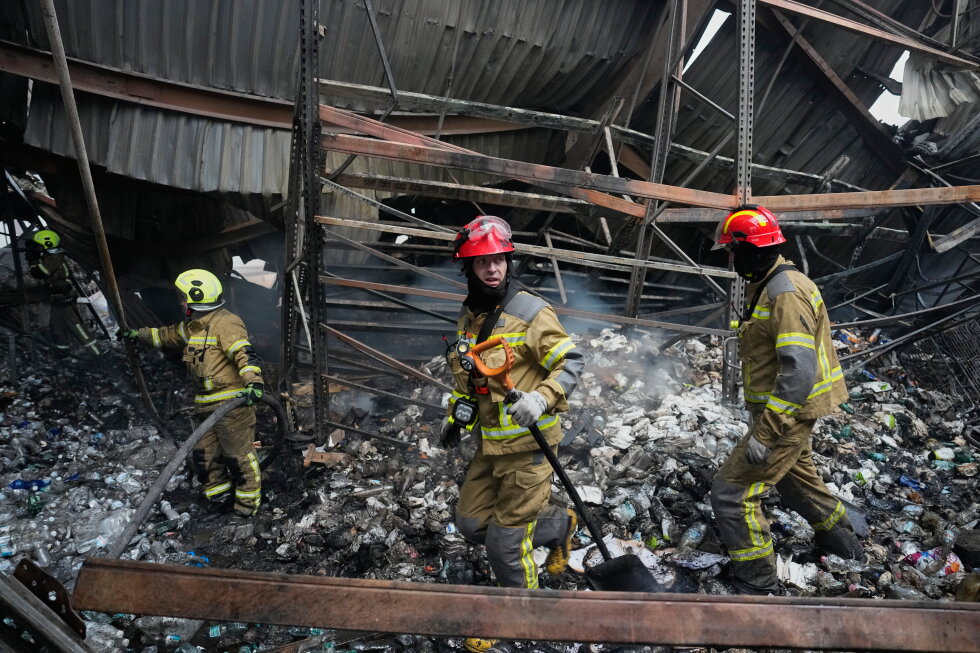
Why Russia’s ballistic missiles are increasingly getting through Ukrainian defenses
In the heart of Kyiv, Ukraine, every Russian ballistic missile launch creates a race against time. With flight times measured in minutes — and sometimes just seconds — air defense crews have barely any window to detect, track, and intercept these deadly, high-speed threats before they strike their targets.
This compressed timeline has left major Ukrainian population centers increasingly vulnerable to catastrophic strikes, as Ukrainian military officials confirm that only the American-made Patriot air defense system is capable of reliably stopping these steep-diving, supersonic projectiles. The stark reality, however, is that Ukraine currently operates far too few Patriot batteries and interceptor missiles to cover the entire country’s populated areas.
Ballistic missiles operate on a fundamentally different flight profile than the slower, aircraft-like cruise missiles Russia also uses extensively in its attacks. Launched like rockets, they arc high into the atmosphere before plunging toward their targets at multiple times the speed of sound, drastically cutting the window for defensive response. The most recent major barrage on Kyiv underscored this danger: strikes hit a commercial brewery, a civilian warehouse, and a national mail sorting facility, leaving at least 17 people dead and dozens injured, President Volodymyr Zelenskyy confirmed Wednesday.
Thomas Withington, an electronic warfare specialist at the UK-based Royal United Services Institute, compared the challenge of intercepting these missiles to catching a fast-moving ball. “When the warhead is hurled toward its target, it’s very, very steep and it’s going at a ridiculous speed,” he explained. “If the ball is going really fast, it’s harder to catch.”
Russia’s primary workhorse ballistic missile is the ground-launched Iskander-M, but the Kremlin has also deployed a range of other high-speed weapons that create identical interception challenges: the air-launched Kinzhal ballistic missile, modified S-300 and S-400 air defense missiles repurposed for ground strikes, and even the Zircon hypersonic anti-ship missile, whose extreme speed produces interception difficulties on par with traditional ballistic missiles.
### Patriots Remain the Only Working Defense
The PAC-3 variant of the Patriot system, the most advanced anti-missile model supplied to Kyiv by Western allies, was purpose-built to counter high-speed ballistic threats. Unlike older defensive systems that detonate explosives near incoming targets to disable them, the PAC-3 uses a maneuverable hit-to-kill interceptor that directly collides with incoming warheads to destroy them mid-flight. Even for the Patriot system, though, timing is critical: the technology must rapidly track the incoming projectile, calculate its projected flight path, launch an interceptor within minutes, and often completes the final engagement in just seconds.Ukrainian Air Force spokesman Yurii Ihnat confirmed that Patriots are currently the only system in Ukraine’s arsenal capable of intercepting Iskander-M, S-400, and Zircon weapons. While the U.S. and its allies field other capable anti-ballistic systems, including the land-based THAAD and sea-based Aegis defense platforms, none have been transferred to Ukrainian forces to date.
Even when Patriots are available, protection is not guaranteed. When a battery is deployed elsewhere, out of position, or running low on interceptors, most of Ukraine’s other existing air defense systems cannot fill the gap. Compounding this problem, Russia often mixes ballistic missile strikes with cruise missiles, explosive drones, and decoy targets to stretch defensive resources thin, forcing Ukrainian commanders to ration scarce interceptor missiles across multiple simultaneous threats. With too few batteries to cover every major Ukrainian city, large swathes of the country remain exposed.
### A Global Shortage That Cannot Be Fixed Quickly
The shortage of Patriot interceptors is not unique to Ukraine: the ongoing conflict in the Middle East, where U.S. and Israeli forces have expended large numbers of Patriot and THAAD interceptors to counter Iranian attacks, has stretched global inventories thin. An analysis by the Associated Press estimates that U.S. stockpiles of Patriot interceptors have dropped by at least 65% from pre-war levels, a claim the Pentagon has pushed back on, saying it retains a robust strategic arsenal.Closing the supply gap will take years, even with expanded production. Manufacturer Lockheed Martin delivered more than 600 PAC-3 MSE interceptors in 2025, and is ramping up capacity to reach an annual production rate of 2,000 interceptors by the end of 2030. NATO’s first European Patriot production facility is scheduled to open in Germany this September, but that new capacity will not make up for current shortfalls overnight.
Political uncertainty has further muddled efforts to increase Ukraine’s supply of defensive systems. At last month’s NATO summit held in Turkey, U.S. President Donald Trump announced the U.S. would grant Ukraine a license to produce Patriot systems domestically. Just three weeks later, however, Trump clarified that no final decision had been made. Even if a license is approved, defense officials and industry experts told the AP that establishing domestic Patriot production in Ukraine would take years of work before it can deliver operational interceptors.
### Ukraine Shifts Strategy: Targeting Launchers Instead of Just Intercepting Missiles
With defensive resources stretched thin, Ukraine is pursuing an alternative approach to reduce the threat: targeting Russian missile launchers and production infrastructure before missiles can even be launched — a strategy leaders describe as “shooting the archer instead of the arrow.”People familiar with ongoing diplomatic discussions told the AP that Zelenskyy has asked the Trump administration to help secure permission from Elon Musk’s SpaceX to expand the use of Starlink satellite communications for Ukrainian strike operations inside Russian territory. Musk has currently restricted Starlink access in Russian border regions to avoid escalating tensions, but expanded connectivity would allow Ukrainian surveillance drones to more accurately target mobile ballistic missile launchers and supporting infrastructure, reducing the number of incoming missiles that Patriot batteries need to intercept. The request has not been publicly confirmed by the White House, Ukrainian Embassy in Washington, or SpaceX.
Kyiv is also working on independent alternatives to Western air defense systems to reduce its reliance on imported Patriots. A key project under development is Freya, a lower-cost indigenous anti-ballistic defense system led by Ukrainian engineers. In July, Ukraine formed a coalition with nine other European countries to advance the joint development of shared mass-produced missile defense capabilities, with Zelenskyy stating that a fully operational system could be ready within 12 months. To date, Freya remains in the development phase, and it is unclear when it will be deployed for operational use.
In comments following the latest deadly ballistic missile attack on Kyiv, Zelenskyy emphasized the growing scope of the shortage: Ukraine received only one-third of the air defense missile deliveries in the first half of 2026 that it received in the same period a year earlier. He called on Western allies that are unwilling to immediately increase interceptor shipments to instead impose new, tougher sanctions on Russia’s ballistic missile production sector, noting that a large share of Russia’s missile manufacturing supply chain has yet to be targeted by existing international sanctions.
-

Watch: Small plane makes emergency landing on Florida highway
A heart-stopping incident unfolded recently in Florida, when a small general aviation aircraft was forced to make an unplanned emergency landing on a busy public highway, with the entire dramatic sequence captured on a passing motorist’s dashcam.
The recorded footage reveals the aircraft navigating low through the highway corridor, successfully clearing an overhead highway gantry by mere feet before touching down on the paved roadway. Prior to the landing, the flight instructor on board maintained steady composure, quickly contacting regional air traffic control to alert officials of the in-flight emergency and outline their intention to divert to the highway for an immediate landing.
As of the latest updates, no reports of serious injuries to either the aircraft’s occupants or motorists on the highway have been released, though the incident has prompted local transportation officials to temporarily close lanes to facilitate emergency response and aircraft recovery. Aviation safety investigators have launched a preliminary review to determine the root cause of the mechanical or operational issue that forced the unscheduled landing. The incident has renewed conversations around the protocols for small aircraft in-flight emergencies near densely populated highway corridors in the state.
-

Flávio Bolsonaro announces his running mate for Brazil’s October election in a bid against Lula
RIO DE JANEIRO – As Brazil counts down to its pivotal October presidential election, right-wing candidate Flávio Bolsonaro, son of former President Jair Bolsonaro, has finalized his leadership ticket by tapping federal deputy Alfredo Gaspar, a fellow member of the Liberal Party, for the vice presidential slot. The announcement on Wednesday comes after a months-long search complicated by widespread reluctance from centrist Brazilian parties to back Bolsonaro’s candidacy, with most choosing to stay on the political sidelines rather than throw their weight behind his challenge to incumbent President Luiz Inácio Lula da Silva.
Flávio Bolsonaro, a sitting senator, was officially confirmed as the Liberal Party’s presidential nominee last month, setting up a rematch of the 2022 election that pitted his father against Lula. Neither candidate is currently projected to secure an outright first-round majority, meaning the race is widely expected to advance to a runoff contest later this year.
Unlike his father’s 2022 campaign, which built broad coalitions with centrist blocs that often contributed vice presidential picks, the younger Bolsonaro has failed to lock in cross-ideological support. This isolation created unexpected hurdles in his search for a running mate, pushing him to select a candidate from within his own party ranks.
Gaspar, who has represented Alagoas in the Chamber of Deputies since 2023, brings a background in law enforcement to the ticket: before entering national politics, he worked as a public prosecutor and served as public security secretary for the northeastern Brazilian state of Alagoas. In introducing his pick, Flávio Bolsonaro praised Gaspar for his personal integrity, professional courage, and proven track record advancing public safety policy.
For his part, Gaspar framed his selection as a win for working-class Brazilians from the country’s underrepresented northeast. “I am a simple person, someone from the northeast, but someone with a life story marked by a great deal of hard work,” Gaspar said in his acceptance remarks, adding that he was honored by Bolsonaro’s trust and fully committed to their shared policy agenda.
The search for a running mate was far from smooth. Bolsonaro initially courted a high-profile pick, Tereza Cristina, a popular former agriculture minister who held a key role in his father’s presidential administration. But Cristina ultimately turned down the offer, and her party – which holds significant sway in Congress and has long-standing ties to the Bolsonaro political movement – has openly distanced itself from Flávio Bolsonaro’s candidacy, a shift that has surprised political analysts.
The failed courtship of Cristina highlights a broader political weakness for Bolsonaro: his movement has long struggled to build support among women voters, and a high-profile female running mate was seen as a key opportunity to expand his base.
Since he first announced his candidacy – an announcement that came following an explicit endorsement from his father – Flávio Bolsonaro has faced a cascade of setbacks that have eroded his standing with voters and allies alike.
The first major blow came in May, when he was forced to admit he had requested millions of dollars in funding from jailed banker Daniel Vorcaro to produce a biographical documentary about his father. The revelation stunned many of his existing political allies and sent support for his campaign dipping sharply.
Soon after, Bolsonaro embarked on a trip to Washington D.C., where he met with officials at the White House and U.S. State Department to highlight his family’s long-standing personal and political ties to former U.S. President Donald Trump. But the move backfired: many Brazilian voters, business leaders, and domestic politicians have pinned the blame for new 37.5% Trump-era tariffs on key Brazilian exports squarely on Bolsonaro’s outreach, turning the diplomatic trip into a political liability.
In June, the candidate faced another personal and political setback when his stepwoman, Michelle Bolsonaro, published a public video accusing him of personal disrespect. While the pair have since reconciled, the public feud generated negative headlines that further damaged Bolsonaro’s public image.
The general election is scheduled for October, with a runoff to follow in October if no candidate secures a majority of the vote. (Reporting from the Associated Press)
-

Pensioner extradited from Australia to NI accused of gross indecency with a child
After more than four decades since the alleged crimes were first reported to have taken place, a 75-year-old man has been returned to Northern Ireland from Australia to face 17 serious sexual offense charges. The accused is alleged to have committed the illegal acts between the end of the 1970s and the early 1980s across Northern Ireland. Breakdown of the charges includes 14 counts of indecent assault against an adult woman and three additional counts of gross indecency involving a child.
First taken into custody by Australian law enforcement in the state of Victoria back in 2023, the suspect completed his cross-continental extradition process and arrived back in Northern Ireland on Wednesday. Law enforcement cooperation was central to the operation, with the Police Service of Northern Ireland (PSNI) coordinating closely with both the UK Home Office and Australian federal and state authorities to track the man, secure his arrest, and arrange for his transfer back to Northern Ireland.
The 75-year-old is scheduled to make his first official court appearance at Laganside Magistrates’ Court on Thursday morning, where the legal process against him will formally open. Speaking on the conclusion of the extradition, Sergeant Davey of the PSNI’s International Policing Unit emphasized that the cross-border operation sends a clear message: police remain committed to pursuing individuals accused of severe offenses, no matter how much time has passed since the alleged crimes or how far across the globe they have relocated. Davey noted that the successful extradition demonstrates that jurisdiction does not bar law enforcement from holding accused offenders accountable.
-

Court hears Palestine Action defendant suffered from emotional turmoil before Elbit raid
As the high-profile trial of activists linked to Palestine Action over an alleged planned raid on an Israeli-owned arms facility enters its final stages, defense barristers have delivered compelling closing arguments that challenge the prosecution’s core claims, while highlighting severe mental health struggles for one of the defendants. The case centers on allegations of coordinated criminal damage and violent disorder tied to a planned break-in at the Elbit Systems plant in Filton, near Bristol, that was scheduled for August 2024.
Nine people originally faced charges connected to the alleged plot. Of these, 35-year-old William Plastow has already been acquitted of the violent disorder charge, and only faces a single remaining allegation of criminal damage. The eight remaining defendants – 33-year-old Julija Brigadirova, 53-year-old Hannah Davidson, 47-year-old Ian Sanders, 41-year-old Aleksandra Herbich, 30-year-old Teuta Hoxha, 33-year-old Sean Middlebrough, and 31-year-old Madeleine Norman – all deny all charges brought against them. Prosecutors allege the group coordinated the planned break-in by conducting preliminary reconnaissance of the site and purchasing raiding equipment, though none are accused of actually entering the factory premises during the incident.
In his closing address to the jury on Wednesday, Tom Copeland, the barrister representing Julija Brigadirova, outlined that his client was grappling with extreme mental and emotional distress – including a serious suicide attempt – at the time the alleged coordination is said to have occurred. Copeland argued that this profound personal crisis explains why Brigadirova’s involvement is absent from the evidence of pre-raid planning: during that period of her life, she simply was not in a position to participate in any coordinated plot. He pointed out that the prosecution’s characterization of Brigadirova as a “key player” in the operation relies entirely on unproven assumption, not tangible evidence. No records of financial transactions linked to the raid, nor any planning or coordination messages linked to Brigadirova’s Signal accounts, have been presented by the prosecution.
“If the prosecution is correct, you would have to call her the invisible coordinator,” Copeland told the jury. “She is not invisible – you can see her sitting in the dock today, she is a real human being with real struggles. The far more plausible explanation is that the prosecution has simply got this wrong, and that mistake is a serious one that cannot be overlooked.”
Prosecutors have pointed to a single July 24 message sent to Brigadirova from her friend Jasmine Cruickshank that asks, “Are you still up for the Bristol van trip next weekend?” The prosecution claims this message proves Brigadirova knew about the Filton action and planned to travel to the site for the raid. Copeland dismissed this argument as baseless, noting that prosecutors never called Cruickshank to testify to explain the context of the message, even though Cruickshank provided a character statement for Brigadirova that was admitted as agreed evidence. Copeland argued that it is unfair for the prosecution to use the out-of-context message against his client while declining to call its sender to answer questions about what it actually meant.
The jury also heard that Brigadirova traveled to Bristol with Cruickshank on August 4, took a selfie at the home of Cruickshank’s father after arriving, and did not return to Manchester in the van driven back by Cruickshank days later. Copeland further criticized the prosecution for downplaying his client’s mental health crisis, framing it only as “low mood” when in fact Brigadirova was hospitalized for four days following her suicide attempt, which was not the first such crisis she had experienced. Copeland suggested that the evidence is consistent with Brigadirova only accompanying friends to Bristol for emotional support during a difficult period in her life, not to participate in a coordinated raid. The first post-raid mention of Brigadirova in any evidence is a message she sent to a contact on the dating app Feeld, which simply said, “just stayed with friends down south, nothing special.”
Defense arguments for other defendants similarly centered on the prosecution’s lack of concrete evidence tying them to coordinated criminal activity. For Aleksandra Herbich, barrister Emma Fenn argued that her client’s role in the days before the alleged raid was so limited that it cannot amount to criminal participation. Fenn noted that the Palestine Action “Coordinator’s manual” requires all coordinators to remain contactable at all times – but Herbich handed her phone over to another defendant ahead of the action, directly contradicting the claim that she was a coordinator. Fenn told the jury that CCTV footage shows Herbich at Paddington Station on August 4 carrying a sushi-sized box, and that co-defendant Madeline Norman testified that the only activity she saw Herbich engaged in at the Bristol Airbnb where activists stayed was cooking large amounts of pasta.
“There is no evidence linking Herbich to any tools or equipment that could have been used for criminal damage or violent disorder,” Fenn said. “At most, she helped with basic cooking and cleaning. Cooking is not an intentional act that assists or encourages the serious offenses the prosecution has charged.”
For William Plastow, who already defeated the violent disorder charge, barrister Andrew Rose argued that the remaining criminal damage charge should also be thrown out, as it contains a fundamental logical contradiction. The prosecution’s case against Plastow rests on the fact that he purchased a number of items including rucksacks, protective gear and crowbars, then handed them over to another individual connected to the case, Charlotte Head. But Plastow testified that he had no knowledge of the Filton plot before the raid happened, and only first learned of the site from a news report the morning after the incident. Rose told the jury that under the judge’s directions, jurors can only convict if they are certain Plastow provided the equipment with the explicit intention that it be used to damage Elbit’s property as part of the Filton plot.
Rose pointed out that Plastow was never given the detailed, site-specific list of items needed for the Filton action, in line with Palestine Action’s stated “need-to-know” policy for operations. “Mr. Plastow was not someone who needed to know, and he did not want to know,” Rose explained. He further argued that since the judge already acquitted Plastow of violent disorder because there was insufficient evidence he knew violence would occur, it is logically inconsistent to claim he knew about the broader plan for criminal damage at Filton. The prosecution’s own case holds that anyone involved in the plot knew it would include both criminal damage and potential violent disorder. “If he had no knowledge of violent disorder, he could not have had knowledge of the criminal damage plan either,” Rose told the jury. “The acquittal on the first charge should mean the second charge is also dismissed.”
Following the completion of closing arguments from the defense team on Thursday, the judge sent the jury out to begin deliberations on the verdicts. The trial is ongoing.
As a public service note, suicide prevention support is available for those in crisis: people in the UK can contact Samaritans at jo@samaritans.org or 116 123, those in the US can reach the National Suicide Prevention Lifeline at 1-800-273-8255, and people in other countries can find local resources at befrienders.org.
-

Wildfire near Athens leaves rescuers scrambling to reunite hundreds of animals
As containment orders were lifted Wednesday for a destructive wildfire that ripped through mountain and coastal terrain west of Athens, Greece, one rescued puppy still waited to go home. Sasa, an alert mixed-breed dog with floppy ears, remains in temporary shelter alongside hundreds of other domestic and wild animals pulled from the path of the blaze by local volunteer rescuers.
The wildfire, which at its peak spread across five active fronts, has scorched more than 100 square kilometers of land and destroyed dozens of residential properties. It is just one of dozens of massive wildfires sweeping Europe during an unseasonably hot summer, a crisis that has put growing numbers of animals at risk and raised urgent alarm among animal welfare organizations across the continent. Even nations that typically experience mild, cool summers have faced large-scale blazes this year, amplifying the scope of the threat.
In Megara, the coastal town 40 kilometers west of Athens at the center of this latest fire, local rescue coordinator Elena Dede says volunteer teams managed to save more than 280 animals — most of them domestic dogs — while operating through extreme heat shifting, unpredictable fire paths, and high winds that amplified the blaze’s spread. Rescued animals including Sasa are currently housed in a repurposed indoor sports facility, each kept in collapsible wire enclosures with basic enrichment and access to fresh water.
Dede described the chaotic conditions rescuers faced, noting “There was so much heat and the fire was so aggressive. It was changing directions all the time.” While the volunteer effort has saved hundreds of lives, both rescuers and welfare advocates acknowledge that the current response system is stretched far beyond its limits.
Richard Parr, director of the U.K.-based Center for Wild Animal Welfare, called the on-the-ground work of firefighters and local volunteer groups “heroic,” but warned that rising global temperatures driven by climate change have dramatically increased risks for millions of animals across Europe. Currently, he explained, most animal rescue efforts during wildfires are unplanned, ad-hoc operations carried out by private citizens and small local charities. “The scale of the challenges they’re facing in terms of the number of animals affected and the areas of fire is gigantic and completely out of step,” Parr said.
His organization is now pushing the European Union to establish a dedicated, centrally funded EU animal rescue service that can coordinate large-scale responses across member states during climate-driven disasters. Parr also called on national and local governments to pre-emptively create designated “fire refuges” for wild and domestic animals across fire-prone regions, such as maintained ponds and rocky outcrops that can offer emergency shelter when blazes break out.
Back in Megara, the rescue effort faces a new logistical challenge: reuniting displaced animals like Sasa with their owners, and finding permanent placement for animals whose owners cannot be located. Dede says local authorities are working to cross-reference rescued animals with posted missing pet notices, and temporary foster homes are being lined up for animals waiting to be rehomed.
Even as the work continues, Dede acknowledges that the animals now in the shelter are the lucky ones. Rescuers worked through thick toxic smoke and extreme stress to carry out missions, and many animals remain unaccounted for. “It was really hard for every volunteer and every person involved to survive the smoke and the stress,” she said. “I will never forget the animals that we knew were left behind. I’m just hoping they were saved and ran free.”
-

Central Europe swelters and Slovakia and Austria hit their record high temperatures
A brutal new wave of extreme heat has swept across Central Europe this week, pushing temperature gauges past historic milestones in Slovakia and Austria and marking yet another alarming milestone in the region’s accelerating climate shift. On Wednesday, both nations recorded the highest daily temperatures ever documented on their territory, capping a summer defined by repeated, unprecedented heat extremes.
Slovakia’s new national high comes as the third time the country has broken its all-time heat record in just one summer. Data released by the Slovak Meteorological Institute confirms that the southern town of Kamenica nad Hronom hit 41.4 degrees Celsius (106.5 degrees Fahrenheit) during the latest heat surge, shattering previous marks set only weeks earlier. Prior to this week, the nation’s record stood at 41.3 C (106.3 F), also set in Kamenica nad Hronom on June 30, which itself broke a 41.0 C (105.8 F) record set the day before in Turna nad Bodvou. That back-to-back-to-back record-breaking streak has even toppled a long-standing 2007 high of 40.3 C (104.5 F) set in Hurbanovo, which stood as the national benchmark for 16 years before this summer’s relentless heat.
The extreme conditions are not limited to daytime temperatures. Overnight temperatures between Tuesday and Wednesday also hit a historic peak, with the southwestern town of Skalica recording a low of 28.4 C (83 F) — the warmest night ever recorded in Slovakia.
Neighboring Austria followed suit, breaking its own all-time heat record just one day after the previous milestone was set. Austria’s GeoSphere meteorological service confirmed that a reading of 41.2 C (106.1 F) was recorded in Bad Deutsch-Altenburg, a town located right on Austria’s border with Slovakia. That reading beat the previous national record of 41.0 C (105.8 F), which was set just 24 hours earlier. The news comes weeks after the Czech Republic and Hungary, two other Central European neighbors, also notched their own all-time national heat records earlier this hot season.
The string of simultaneous broken heat records across Central Europe aligns with a broader pattern of extreme climate across the entire continent this year. Europe is currently experiencing an exceptionally hot, dry summer that has turned vast stretches of forest and rural land into tinderboxes, sparking unprecedented wildfire seasons that have forced hundreds of thousands of people to evacuate their homes and popular tourist vacation spots.
Data from the European Union’s Copernicus Climate Change Service confirms that Europe is warming faster than any other continent on Earth. Since the 1980s, the continent’s average temperature has increased at twice the rate of the global average, a trend that scientists link to human-caused climate change and that has made extreme heat events far more frequent, more intense, and longer-lasting across the region.
-
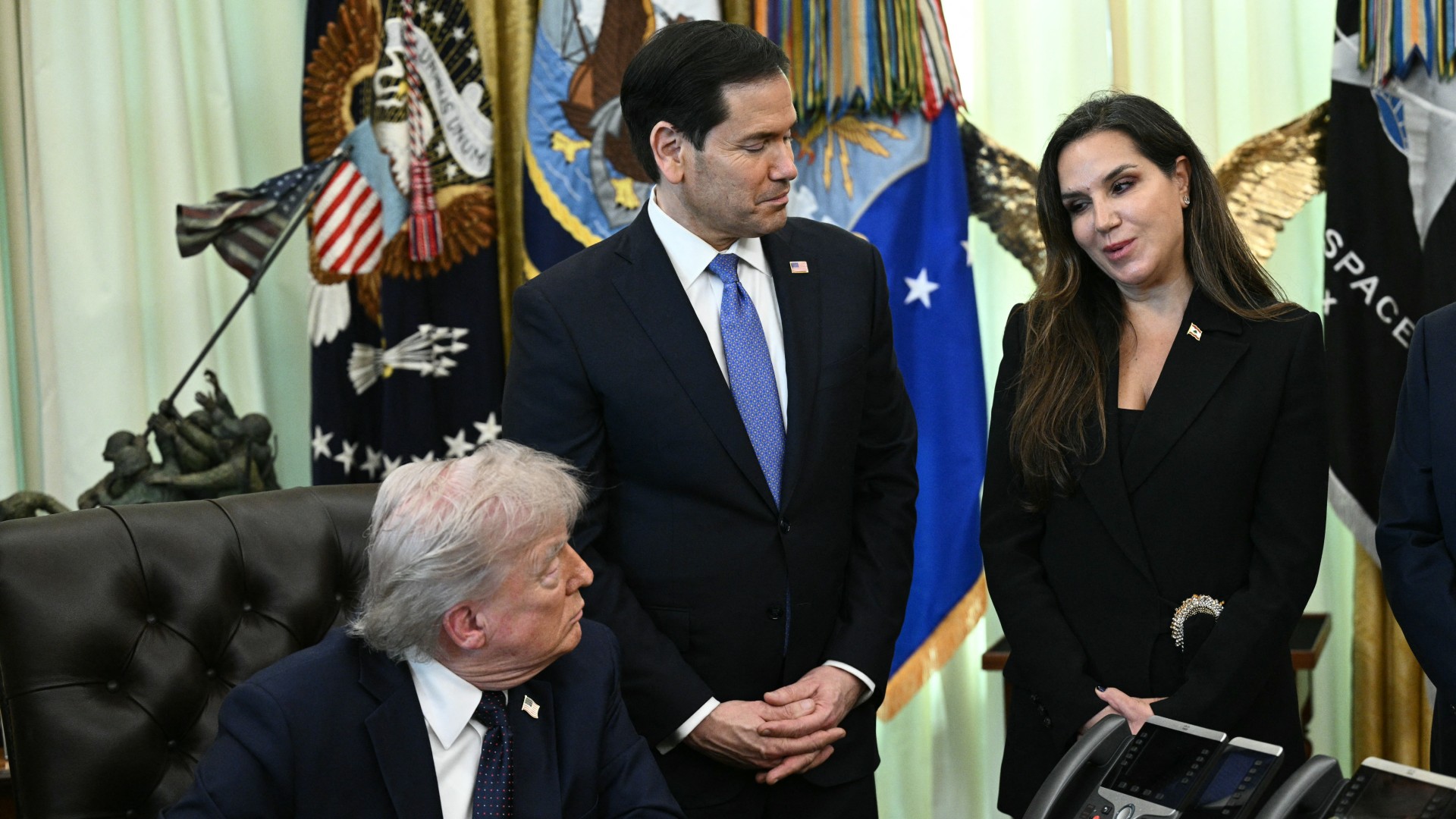
Exclusive: Trump demanded direct talks with Hezbollah but was denied
Exclusive reporting from Middle East Eye has uncovered new behind-the-scenes details of a surprising diplomatic gambit by former US President Donald Trump in late May, when he placed an unscheduled call to Lebanon’s ambassador to Washington demanding an immediate direct conversation with leaders of Hezbollah — a request that was ultimately turned down by Lebanese authorities. Multiple independent sources, including two Hezbollah-connected insiders and a senior Lebanese diplomatic official, have confirmed the sequence of events, which unfolded as a fragile ceasefire along the Lebanon-Israel border began to unravel.
Within days of the out-of-the-blue call on Lebanese Ambassador Nada Hamadeh Moawad, Trump took to his Truth Social platform on June 1 to announce that he had already spoken to Hezbollah through unnamed third-party intermediaries, and that the group had committed to halting all cross-border attacks against Israel. “Through highly placed representatives, I had a very good call with Hezbollah, and they agreed that all shooting will stop,” he wrote in the post. But new reporting directly contradicts this claim, laying bare the confusion and panic that gripped Lebanese official circles after Trump’s unexpected demand.
One insider close to Hezbollah described a frantic scramble among low-level Lebanese officials to track down a working contact number for any senior Hezbollah figure, even placing cold calls to random Shia religious leaders in a desperate attempt to fulfill the US president’s request. That account is disputed by a senior Lebanese diplomatic source, who confirms the core details of Trump’s call but denies any such frantic search took place. According to the diplomatic source, when Trump angrily demanded that Ambassador Moawad connect him to a Hezbollah representative, she immediately informed him that she lacked the authority to arrange that kind of contact.
Middle East Eye has reached out to the White House for official comment on the incident, and as of publication has not received a response. Following the exchange with Trump, Ambassador Moawad immediately notified Lebanon’s presidency of the request and sought guidance on how to proceed. Sources confirm that the presidential palace issued a clear directive: take no action and ignore Trump’s demand. Lebanese leaders feared that facilitating direct contact between the US president and Hezbollah would put the country’s presidency in a politically precarious position, as the Lebanese government had been working since April to position itself as the sole legitimate representative of Lebanon in all international negotiations tied to the border crisis.
The current crisis along the Lebanon-Israel border erupted in March, when the broader conflict between the US and Israel and Iran spilled over northward. Hezbollah launched rocket strikes into Israel in retaliation for the killing of Iranian Supreme Leader Ali Khamenei, and fighting has continued in fits and starts ever since. A ceasefire brokered in April as part of a US-Iran deal required an end to devastating Israeli airstrikes on Lebanese territory, and while the Lebanese state welcomed the truce, it moved quickly to assert its central role in negotiations, decouple its own border dispute from the broader US-Iran conflict, and launch direct talks with Israel under US mediation. For Lebanese leaders, a direct conversation between Trump and Hezbollah would undermine the presidency’s claim to be the sole representative of Lebanese interests, sources confirm.
A senior Lebanese security official added new context to the incident, confirming that Trump’s unsolicited request was just the latest in a long string of failed US attempts to open a direct communication channel with Hezbollah. “There have been many repeated offers from the United States, both previously and under the current administration, to open channels of communication with Hezbollah,” the official said. “They were all rejected. The political decision within the group has been not to open direct communication with the Americans.”
The most recent attempt before Trump’s call came through the CIA’s station in Beirut, where US officials asked a senior Lebanese security figure to mediate contact with the group. That request was rejected, as was an earlier attempt to open a channel through a former senior Lebanese security official prior to Trump’s public announcement. The US government officially designates Hezbollah as a terrorist organization, and has maintained a long-standing formal policy barring direct political engagement with the group.
Even more revealing, a senior Lebanese official confirmed that the US Embassy in Beirut had no advance knowledge of Trump’s plan to reach out directly to Hezbollah before he placed the call to Ambassador Moawad. After Trump’s public announcement, the embassy scrambled to contact its own informal intermediaries with ties to Hezbollah to verify whether any contact had actually taken place — and received a clear confirmation that no such communication had occurred.
After Trump’s announcement, unconfirmed circulating reports claimed that the contact had been arranged through Abdallah Safieddine, Hezbollah’s senior representative in Tehran, during US-Iran negotiations held in Islamabad. But a source familiar with the matter told Middle East Eye that Safieddine never even traveled to Islamabad for the talks, debunking that version of events entirely.
-
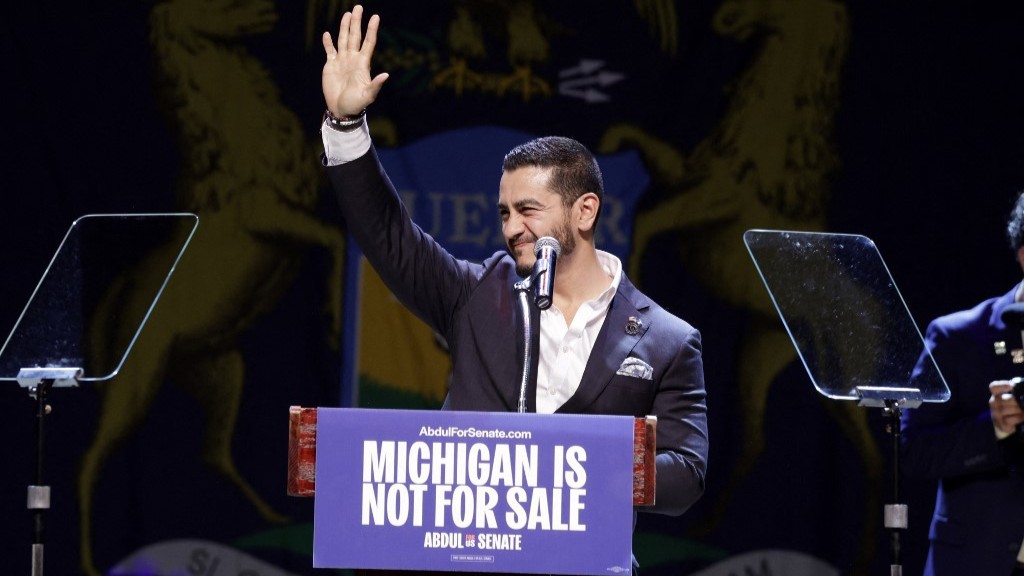
Abdul El-Sayed defeats Aipac-backed rival in Michigan Democratic Senate primary, NBC reports
In a seismic upset that has sent shockwaves through U.S. Democratic politics, progressive public health advocate Abdul El-Sayed has claimed the Democratic Party’s U.S. Senate nomination for Michigan, defeating centrist incumbent Congresswoman Haley Stevens in one of the costliest and most closely watched primary contests in modern American history.
NBC News projected El-Sayed’s victory late Tuesday, following a months-long bruising campaign that saw outside interest groups pour more than $60 million into the race — the bulk of that sum directed at blocking El-Sayed from advancing to the general election. With 92.9 percent of expected ballots counted by 8:30 a.m. BST Wednesday, the progressive challenger held a narrow but decisive lead, capturing 48.7 percent of the vote compared to Stevens’ 47.3 percent.
Within moments of the projection, former primary candidate Mallory McMorrow, a state legislator who dropped out of the race weeks before election day, threw her full support behind El-Sayed, unifying progressive factions ahead of the November general election.
The outcome stands as a major political defeat for high-profile pro-Israel lobbying groups, most notably the American Israel Public Affairs Committee (AIPAC), which poured more than $30 million into independent expenditure campaigns to boost Stevens and defeat El-Sayed, one of the Democratic Party’s most prominent and vocal pro-Palestinian voices.
As preliminary vote counts began trickling in early Wednesday, El-Sayed addressed cheering supporters at a Detroit watch party, framing the moment as a stepping stone rather than a final victory. “I wish I could tell you that I was declaring victory right about now,” he told the crowd, while already turning his attention to the general election matchup against former Republican Congressman Mike Rogers.
The 41-year-old former Detroit health director will now face Rogers in November, in a competitive general election race that could decide which party controls the U.S. Senate for the final two years of Donald Trump’s second presidential term. Directing his message to his November opponent, El-Sayed declared: “I know you’re listening, Mike. Mike, we are coming for you.”
El-Sayed’s projected primary win marks a defining watershed moment for both the progressive wing of the Democratic Party and Michigan’s large Arab American electorate. Voters from both groups coalesced around El-Sayed over months of grassroots organizing rooted in widespread opposition to Israel’s military campaign in Gaza and deep frustration with the Democratic Party’s longstanding alignment with pro-Israel advocacy groups.
Throughout the primary, El-Sayed repeatedly criticized AIPAC and its affiliated political action committees for attempting to “buy” the election through unprecedented levels of outside spending. Stevens, for her part, pushed back against claims that she was overly influenced by out-of-state interest groups, arguing that her long record of delivering policy results for Michigan voters made her the stronger candidate.
El-Sayed has repeatedly described Israel’s military operations in Gaza as a genocide — a framing that aligns with positions held by dozens of international human rights organizations and Palestinian advocates, but one that has been rejected by both Israeli officials and every recent U.S. presidential administration. The progressive candidate has also argued that the billions of dollars in annual U.S. military aid sent to Israel should instead be redirected to domestic priorities including expanding healthcare access, building more affordable housing, funding public education, and upgrading crumbling national infrastructure.
His policy positions on the Gaza conflict have resonated deeply with Michigan voters, many of whom organized grassroots opposition to former President Joe Biden during the 2024 Democratic primaries over his unwavering support for Israel’s military campaign.