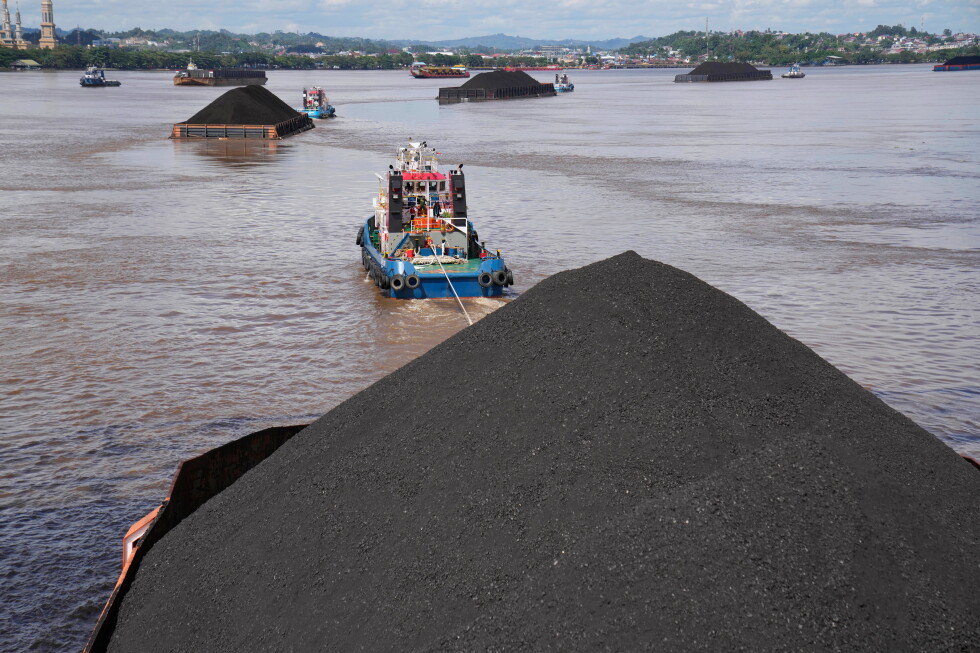
In an unexpected policy shift that has sent ripples through global resource markets, Indonesian President Prabowo Subianto announced Wednesday a sweeping overhaul of the nation’s trade rules for its most critical natural resources, granting a newly created state-owned enterprise full control over all exports of coal, palm oil, and iron alloys by September. The sudden move has drawn comparisons from analysts to a hostile government takeover of core industries in one of the world’s most resource-rich nations, with far-reaching consequences for global supply chains and major economic powers alike.
Prabowo framed the reform as a necessary correction to decades of systemic tax evasion by private exporters, telling lawmakers that unreported sales have cost the country as much as $908 billion in lost revenue. The policy is designed to shore up declining government foreign reserves, which have been depleted by global energy shocks stemming from the ongoing war in Iran. Beyond boosting public finances, the president said the new framework will crack down on illegal practices including under-invoicing, transfer pricing, and diversion of export earnings, while strengthening state oversight of strategic commodity trade.
The state entity tasked with taking over these export operations, PT Danantara Sumberdaya Indonesia, was officially registered just one day before Prabowo’s public announcement. The firm is 99% owned by Danantara, the sovereign wealth fund Prabowo launched in 2023, and the new structure will give the Indonesian government direct influence over global pricing for its key commodities. Yvonne Mewengkang, a spokesperson for Indonesia’s Ministry of Foreign Affairs, described the overhaul as a critical governance reform that will boost accountability and transparency in the country’s management of strategic resources.
Under the transition timeline laid out by Indonesian officials, private companies will be required to transfer all export and import transactions to the new state entity between June and August, with full state control in place by September. Coordinating Economic Minister Airlangga Hartarto noted that the government will provide detailed guidance to all foreign and domestic investors before June 1, emphasizing that the initial phase of the policy will focus primarily on improving trade reporting transparency. Still, many trade analysts have expressed skepticism that the government can pull off such a massive industry takeover in less than four months, warning of potential disruptions to established trade networks.
As the world’s top exporter of thermal coal for power generation and palm oil — a ubiquitous ingredient used in everything from cosmetics to transportation biofuels — and holder of the planet’s largest proven nickel reserves, a critical mineral for electric vehicle batteries and stainless steel production, Indonesia’s policy shift will be felt across every major global economy. Nickel’s central role in the global clean energy transition makes this move particularly consequential for industries racing to expand renewable energy capacity and electric vehicle manufacturing.
China, Indonesia’s largest trading partner and a dominant investor in the country’s critical mineral sectors, will face the most immediate impact from the policy change, experts agree. Li Shuo, a senior fellow with the Asia Society Policy Institute’s China Climate Hub, noted that Indonesia’s resources form the foundation of China’s global leading position in electric vehicles, batteries, and advanced industrial manufacturing. “Indonesia has become vital to China,” Li said, adding that “the relationship is evolving.” Lie Xie, a researcher with UK-based think tank Third Generation Environmentalism, said China is closely monitoring the nationalization move and assessing its potential impact on future bilateral cooperation, noting that “the future path that Indonesia is taking is highly important for China.”
The swift implementation timeline threatens to disrupt supply for China’s fast-growing clean technology sector, which relies heavily on Indonesian raw materials to meet booming global demand for renewable energy hardware. Even before the official announcement, the China Chamber of Commerce in Indonesia submitted a five-page protest letter to the Indonesian government, highlighting widespread investor concerns over an increasingly unpredictable business climate. The letter accused Indonesian regulators of “excessively stringent regulation, over-enforcement, and even corruption and extortion” that have “severely disrupted normal business operations” and eroded long-term investment confidence. Bhima Yudhistira, an economist with the Jakarta-based Center of Economic and Law Studies (CELIOS), said Prabowo moved forward with the takeover despite Chinese pushback, calling the sudden move “very, very shocking.”
Analysts say the policy shift is part of a deliberate strategy by the Prabowo administration to diversify foreign investment in Indonesia’s resource sectors by reducing China’s outsize influence, a move that could open new doors for American and other Western investors looking to secure alternative supply chains for critical minerals. “Such a move is a clear signal that U.S. investment is being attracted to come to Indonesia even more,” Yudhistira said, though he warned the takeover will likely force a renegotiation of nearly all existing contracts held by Chinese firms in the affected sectors, and will intensify the global race for critical resources between the United States and China. Yudhistira characterized the policy as an outright “hostile takeover” of core industries.
Whether the reform ultimately succeeds in attracting new foreign investment will depend heavily on how transparent the government is during implementation, according to Syahdiva Moezbar of the Centre for Research on Energy and Clean Air. Right now, many domestic and international private stakeholders remain unclear on how the new system will work, particularly for small-volume traders, specialized product exporters, and downstream processing industries. Eddy Martono, chairman of the Indonesian Palm Oil Association, said the full impact of Danantara’s takeover on the sector is still undefined, noting that “exporters usually already have their own established markets; we must ensure we do not lose these markets if they are not managed properly.”
Beyond China, other major importers of Indonesian coal, palm oil, nickel, and iron alloys including the United States, European Union, India, Japan, South Korea, and Southeast Asian neighbors Malaysia, Vietnam, and the Philippines will also face potential supply chain disruptions from the policy change. The reform is the latest in a series of moves by the Prabowo administration to expand state control over strategically important natural resources, including crackdowns on unlicensed mining, government takeovers of unauthorized plantations, and incentives to build out a domestic critical mineral refining industry.