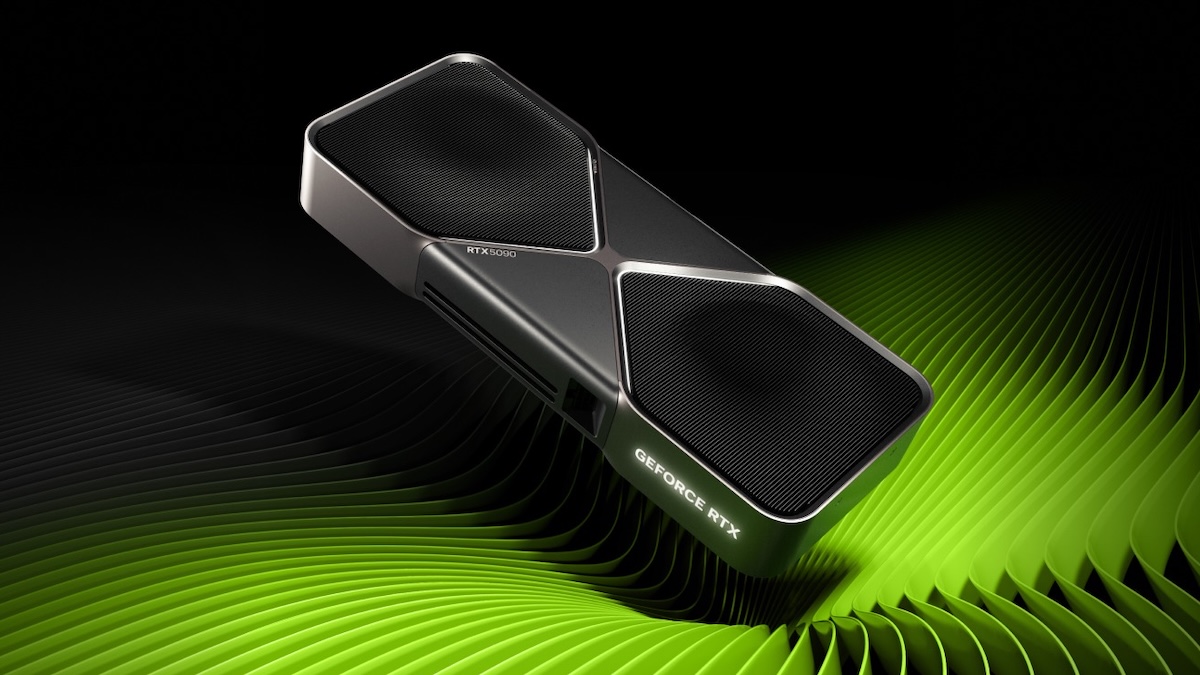
The ongoing technological rivalry between the United States and China entered a new, more tense phase this May, when Beijing implemented a sudden ban on imports of Nvidia’s RTX 5090D V2 – a customized graphics card built specifically for the Chinese market to comply with existing US export controls. The unexpected restriction, which took effect on May 15, the same day US President Donald Trump’s delegation left Beijing after high-level summit talks with Chinese President Xi Jinping, has delivered a fresh setback to Chinese domestic gamers and independent AI hobbyists, who relied on the chip for both leisure and small-scale development work.
First reported by the Financial Times, the RTX 5090D V2 was added to China’s banned import list during the summit. Built on Nvidia’s cutting-edge Blackwell architecture, the chip had only received approval for sale in the Chinese market back in August 2025, after years of incremental adaptations by Nvidia to navigate successive rounds of US export restrictions.
This ban compounds growing pressure on Nvidia, which already faces a Chinese government push to domestic firms to prioritize locally produced chips over the company’s premium H20 and H200 AI chips. Industry analysts estimate that the H200 line alone could generate more than $14 billion in annual revenue for the US semiconductor giant for the Chinese market. The timing of the ban is particularly striking: Nvidia CEO Jensen Huang joined Trump’s Beijing delegation at the last minute, which had stoked widespread market expectations that he could secure formal approval for continued H200 sales in the country.
Alongside the chip ban, the Trump-Xi summit produced a key breakthrough on AI governance talks. US Treasury Secretary Scott Bessent announced that Washington and Beijing have opened discussions to establish binding safety guardrails for advanced artificial intelligence. The core goal of these talks is to prevent the most cutting-edge AI models from falling into the hands of criminal organizations and terrorist groups, while preserving space for continued commercial technological development. Bessent noted that the US entered these talks from a position of strength, holding a clear technological lead over China in the AI sector. He added that cross-border working groups from both nations will soon launch formal consultations to craft shared safety standards that do not stifle innovation or industry growth.
Despite the growing tensions over semiconductor trade, US Trade Representative Jamieson Greer told reporters that chip export controls were not a central topic of negotiation during the bilateral summit. “This was not a major topic of discussion at the bilateral meeting. We did not talk about chip export controls at the meeting,” Greer stated, though he acknowledged that US chief executives in attendance raised individual corporate concerns during the summit. Greer also emphasized that any final decision on allowing H200 imports rests with Beijing.
Industry observers and commentators point out that the impact of the RTX 5090D V2 ban extends far beyond consumer gaming. While the card is marketed as a high-end gaming graphics processing unit (GPU), independent and hobbyist AI developers across China have relied on it to access Blackwell architecture computing power at a time when sales of Nvidia’s full-powered enterprise AI GPUs are blocked by US controls. Many of these developers use consumer-grade RTX cards to run and fine-tune open-source large language models (LLMs) such as Meta’s Llama series, Google’s Gemma, and China’s own DeepSeek from home-based workspaces.
“Although the RTX 5090D V2 appears to be a gaming graphics card, its actual uses go far beyond that,” explained a columnist for Hainan-based news outlet Kdnet.net. “Because access to Nvidia’s more powerful AI graphics processing units has been restricted, many Chinese AI developers have been using the RTX 5090D V2 to tap into the computing power of Nvidia’s Blackwell architecture for AI training and inference tasks. In other words, banning this card is equivalent to cutting off a back channel that allowed indirect access to Blackwell computing power while circumventing export controls.”
The columnist added that the move reflects a clear shift in China’s approach to the US-China chip war: “What is unfolding points in one clear direction. The US is using export controls to pressure China, while China has decided it no longer wants even downgraded versions of foreign chips, turning instead to homegrown alternatives. This episode marks a new phase in the US-China chip contest, though where it ultimately would lead remains to be seen.”
This latest restriction is the culmination of years of back-and-forth adaptation in the US-China semiconductor trade. The cycle began in October 2022, when the previous Biden administration introduced sweeping new export rules that banned sales of Nvidia’s top-tier A100 and H100 AI chips to China. Nvidia responded by launching downgraded, export-compliant variants – the A800 and H800 – specifically built for the Chinese market. In October 2023, Washington tightened restrictions further, adding the A800, H800, and consumer RTX 4090 graphics cards to the banned list. Nvidia again adjusted, launching the even more scaled-back H20 AI chip. After taking office, the Trump administration initially banned H20 exports in 2025, before later reversing course and approving exports of both the H20 and H200.
Even with US approval, however, Chinese government guidance urging domestic tech firms to prioritize local chips such as Huawei’s Ascend 910B has resulted in zero H200 imports to date. A nearly identical pattern has played out in the consumer graphics card segment: when Nvidia launched its flagship RTX 5090 in January 2025, it designed a downgraded RTX 5090D variant for China, but Washington blocked that shipment. A further adjusted, lower-spec version – the RTX 5090D V2 – launched in China last August, only to be banned by Beijing this May.
The ban opens up new market opportunities for Chinese domestic graphics card manufacturers, including Lisuan Technology, Moore Threads, and Biren Technology. But some analysts question whether Chinese consumers will readily shift to local alternatives. Consumer tech commentator Renjian Siliang, based in Henan, noted that for most mainstream 4K gaming use cases, the difference between the full-spec RTX 5090 and the downgraded 5090D V2 is barely noticeable, as Nvidia only cut non-core performance features. The gap becomes far more apparent, however, for 8K gaming, large 3D rendering workloads, and small-scale AI development work.
Critically, Chinese consumers still have access to Nvidia’s RTX 5080, which falls outside the scope of current US export controls. While the RTX 5090 is 30% to 68% faster than the 5080, the 5080 still outperforms the top Chinese-made graphics card by a factor of multiple times. The most advanced current offering from domestic producer Lisuan Technology, the LX 7G100, is only comparable to Nvidia’s last-generation RTX 4080, leaving a substantial performance gap for both enthusiast gamers and independent AI developers.