In a landmark move that marks the first foreign sanctions targeting a senior official under Tanzanian President Samia Suluhu Hassan’s administration, the United States has imposed entry bans on senior assistant police commissioner Faustin Jackson Mafwele over credible allegations of his involvement in gross human rights violations against two East African human rights activists.
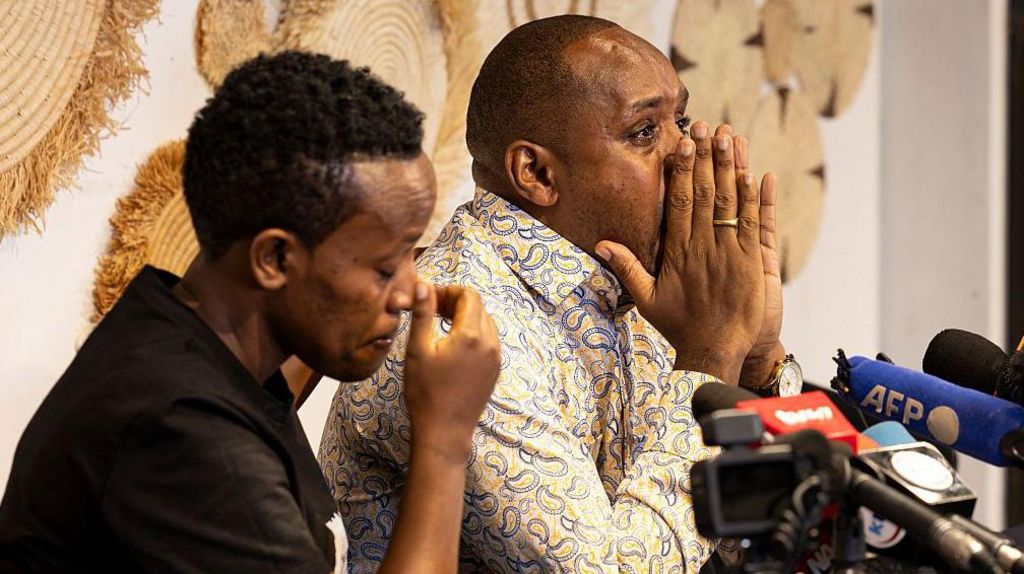
The allegations center on an incident from May last year, when Kenyan activist Boniface Mwangi and Ugandan activist Agather Atuhaire traveled to Tanzania to monitor the high-profile trial of prominent opposition leader Tundu Lissu. The pair were detained by Tanzanian authorities for multiple days before being released, and both have since detailed brutal abuse they endured in custody. Mwangi claims he was stripped naked, suspended upside down, beaten repeatedly on his feet, and subjected to sexual assault, while Atuhaire has alleged she was raped during her detention.
In a formal statement released late Thursday, U.S. Secretary of State Marco Rubio confirmed the designation of Mafwele, affirming that credible evidence ties the senior police official to the detention, torture, and sexual assault of the two activists. While the statement does not explicitly outline Mafwele’s direct role in the incident, Riley Barnes, U.S. Assistant Secretary of State for Democracy, Human Rights, and Labor, emphasized that the action is a critical step toward holding perpetrators of this heinous abuse accountable. The designation formally bars Mafwele from entering the United States.
Tanzania’s Foreign Affairs Minister Mahmoud Thabit Kombo told the BBC that the Tanzanian government has not yet received formal notification of the sanctions. Tanzanian police previously dismissed the activists’ abuse allegations as unfounded hearsay and personal opinion, and the BBC’s request for additional comment following the U.S. announcement has not yet garnered a response.
The sanctions come amid growing international scrutiny of Tanzania’s human rights record, which has deteriorated in recent years despite early hopes of reform under President Samia. Samia took office in 2021 following the death of hardline former President John Magufuli, and initially earned international praise for rolling back some of Maguufi’s most restrictive political policies. In recent years, however, political space has narrowed sharply, with documented crackdowns on opposition voices, civil society organizers, and independent freedom of expression.
Tensions escalated further following Tanzania’s disputed October general election last year, which saw Samia re-elected with 98% of the vote after all major opposition challengers were barred from running. The opposition dismissed the result as a blatant mockery of democratic process, and widespread post-election protests left hundreds dead. A government-appointed commission of inquiry announced last month that 518 people were killed during the unrest, including 191 shot to death, though the report refused to name the parties responsible for the killings. It instead blamed foreign-backed groups for inciting the violence, a claim rejected by opposition leaders and international human rights groups, who put the actual death toll even higher and accuse state security forces of gunning down unarmed protesters.
Tanzanian authorities have acknowledged using force against protesters, justifying the action by claiming groups were plotting a violent coup to overthrow the elected government. Samia has repeatedly defended the election as free and fair, echoing the commission’s claim that foreign actors orchestrated the unrest to destabilize her administration.
Global human rights organizations have long pushed for accountability over the activists’ 2024 detention. Amnesty International called for an urgent investigation immediately after the incident, labeling the arrest, incommunicado detention, torture, and forced deportation of the two activists a blatant violation of international human rights law. Human Rights Watch also highlighted the case in its 2025 country report on Tanzania, framing it as part of a broader systemic crackdown on dissent.
Just days before the sanctions were announced, a group of U.S. lawmakers publicly called for harsher punitive measures against Tanzania to push back against what they describe as accelerating democratic backsliding in the East African nation. Last December, the U.S. government already accused Tanzania’s government of systemic repression of religious freedom and free speech, noting that these actions have put U.S. citizens, tourists, and American commercial and strategic interests at risk, while threatening decades of productive security and development cooperation between the two nations. Tanzania has not yet issued a formal response to that December accusation.