作者: admin

  • Accused toilet spying doc Ryan Cho intending to plead guilty, court told

    Accused toilet spying doc Ryan Cho intending to plead guilty, court told

    An Australian junior doctor at the center of a major invasive privacy scandal that rocked multiple leading Melbourne hospitals has confirmed his intention to enter a guilty plea, a local court has confirmed.

    Ryan Cho, 29, was first taken into custody in July 2024 after staff at Melbourne’s Austin Hospital discovered a hidden mobile phone recording device inside an employee bathroom. Following his arrest, law enforcement officers executed a search warrant at Cho’s residence, where they seized multiple personal electronic devices. On these devices, investigators allegedly uncovered thousands of illicit intimate images of medical staff, organized by victim name and affiliated hospital, dating back to 2021.

    The alleged victims of Cho’s secret recordings work across three major Melbourne healthcare facilities: the Austin Hospital, the Peter MacCallum Cancer Centre, and the Royal Melbourne Hospital. Police have previously stated in court filings that hundreds of people were captured on camera while using the toilet or showering in the facilities’ employee restrooms, resulting in more than 900 separate criminal charges being filed against Cho after his arrest.

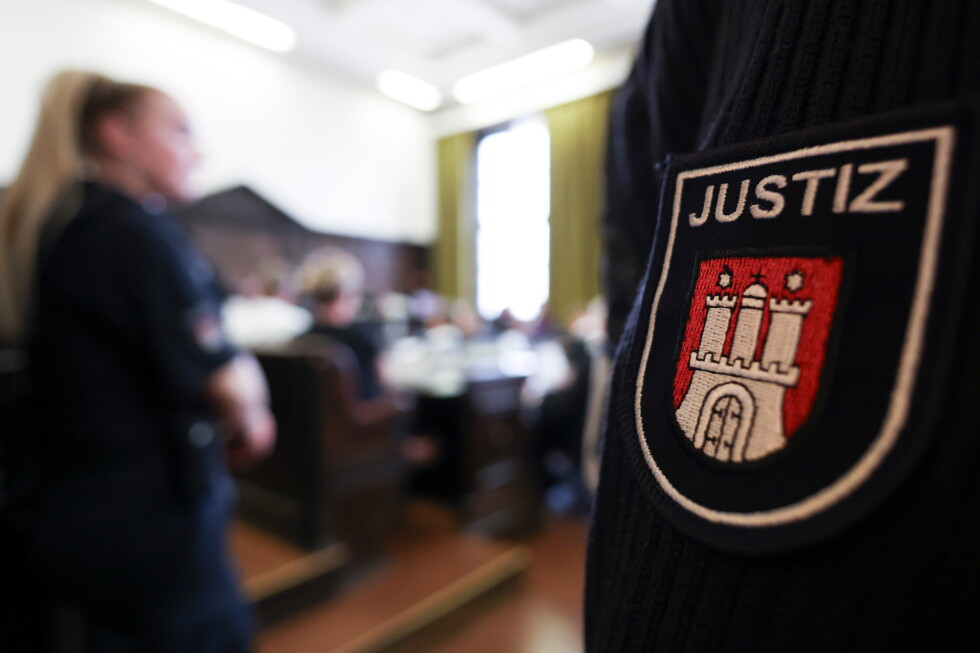
    Appearing before the Melbourne Magistrates Court on Friday afternoon, Cho covered his face with a face mask during the brief procedural hearing. Magistrate Michelle Mykytowycz told the court that the case has progressed to a guilty plea arrangement, though negotiations over the final number of charges that will go on the official record remain ongoing. “The matter’s resolved to a plea of guilty, it’s how the charges are going to be dealt with that remains under discussion,” Mykytowycz said.

    Kristina Kothrakis, Cho’s defense lawyer, confirmed that discussions between her legal team and prosecutors are continuing to finalize the scope of charges for the guilty plea. Prosecutors are currently in the process of contacting all alleged victims to inform them of the upcoming plea deal, per court instructions.

    Cho is scheduled to reappear before the Melbourne Magistrates Court on July 9, when he is expected to formally enter his guilty plea. Following the plea, the case will be transferred to the County Court of Victoria for sentencing proceedings.

  • At least 24 killed in two separate attacks in Honduras

    At least 24 killed in two separate attacks in Honduras

    On Thursday, two shocking acts of violence ripped through different regions of Honduras, leaving a minimum of 24 people dead and sending fresh ripples of concern across the Central American nation already grappling with a generations-long public safety crisis.

    The first and deadliest assault unfolded on a remote ranch located on the outskirts of Trujillo, in northern Honduras. Official reports confirm that at least 19 farm workers were gunned down in the attack. As of Friday morning, the full, final death toll for this incident remains unconfirmed. Edgardo Barahona, spokesperson for Honduras’ National Police, told the Associated Press that family members of the victims had already begun recovering and removing victims’ bodies from the crime scene before forensic teams could complete a full count. In a separate briefing with reporters, Honduran Security Minister Gerzon Velasquez offered a different account to Reuters, suggesting that many bodies were likely carried off by either the attackers’ associates or individuals with criminal connections before law enforcement could secure the site.

    A second, coordinated shooting took place just hours later in Omoa, a small coastal town sitting hard against Honduras’ northern border with Guatemala. Four active-duty police officers and one civilian were killed in this attack. Authorities confirmed the officers were en route to Omoa from the country’s capital, Tegucigalpa, as part of a pre-planned anti-gang operation when they were ambushed.

    To date, no suspects have been taken into custody in connection with either attack. Investigators have not yet established a clear motive for the mass killing of ranch workers in Trujillo, but the region has been a hotspot for simmering, long-running agrarian conflict that has occasionally spilled over into lethal violence for decades.

    In response to the back-to-back attacks, Honduras’ National Police released an official statement announcing that it would launch a “direct intervention” operation in both affected regions to restore order and advance investigations.

    The violence has cast renewed attention on Honduras’ persistent struggle with violent crime, rooted in widespread gang activity and the country’s strategic role in transnational drug trafficking routes between South American producers and North American consumers. While recent years have seen a gradual decline in the national homicide rate, the Inter-American Commission on Human Rights still ranks Honduras as holding the second-highest homicide rate in the Americas, outpaced only by one other nation in the region.

  • Truck crashes, sparks tunnel downpour in Sydney’s M5 Tunnel after triggering overhead sprinkler system

    Truck crashes, sparks tunnel downpour in Sydney’s M5 Tunnel after triggering overhead sprinkler system

    Early Friday morning, a routine commute through one of Sydney’s busiest underground traffic routes turned chaotic when a freight truck crashed into an overhead sprinkler system, unleashing an unexpected artificial downpour that snarled traffic across the city’s southwestern corridor.

    The incident unfolded just before 5 a.m., ahead of the city’s morning peak hour, when the truck collided with the fixed sprinkler infrastructure inside the M5 tunnel. The impact damaged multiple sprinkler heads, activating the system and flooding the underground roadway with cascading water that forced immediate traffic disruptions. The crash also prompted the temporary closure of General Holmes Drive at Mascot, adding further strain to already congested surrounding arterial roads.

    Emergency response teams and maintenance crews from Transport for NSW arrived at the scene within minutes to contain the situation and clear the blocked roadway, a spokesperson for the transport authority confirmed. By mid-morning, all southbound lanes through the tunnel had been cleared and fully reopened to traffic, with no lingering delays reported for motorists as of Friday lunchtime.

    The spokesperson added that the truck driver has been cooperating with authorities to investigate the cause of the collision. Full damage assessments are scheduled to take place after Friday evening’s peak travel period, when maintenance crews will carry out replacement work for the damaged sprinkler heads to avoid disrupting weekend and weekday commuter flows. Transport for NSW has advised all drivers planning to travel through the area to continue checking the official Live Traffic platform for the latest service updates and condition reports.

  • US used more missile interceptors defending Israel than its own forces did: Report

    US used more missile interceptors defending Israel than its own forces did: Report

    New data published by The Washington Post in a Thursday report has laid bare the starkly uneven burden of missile defense operations against Iran, showing the United States has expended far more advanced interceptor assets shielding Israel than Israel itself has deployed to protect its own territory.

    According to the report, the unprecedented scale of US interceptor usage is the root cause of the critical stock shortages previously documented by Middle East Eye and other regional news outlets. The gap in available munitions has already had ripple effects across the region: during the peak of active conflict, Gulf US allies saw their requests for emergency interceptor resupplies rejected, despite Israel stepping in to deploy Iron Dome batteries and personnel to defend the United Arab Emirates, a key regional partner.

    Breaking down the volume of deployments, The Washington Post confirmed the US launched more than 200 Terminal High Altitude Area Defence (THAAD) interceptors to counter Iranian attacks — a figure equal to roughly 50 percent of the Pentagon’s entire global stock of the advanced defense system. In addition to the THAAD deployments, US Navy vessels operating in the Eastern Mediterranean fired more than 100 Standard Missile-3 and Standard Missile-6 interceptors to down incoming threats.

    By comparison, Israel’s own interceptor usage was far lower. Israeli defense forces launched fewer than 100 Arrow interceptors and approximately 90 David’s Sling interceptors. Notably, the David’s Sling systems were also diverted to counter projectiles launched by Yemen’s Houthi movement and Lebanon’s Hezbollah, groups whose missile and drone arsenal is far less sophisticated than that of Iran.

    These numbers paint a clear picture of a “lopsided dynamic” at the heart of the US-Israel military alliance, the Post concluded. The revelation has sparked pushback from foreign policy analysts, with Trita Parsi, executive vice president of the Quincy Institute, describing the data as “stunning” in a post on the social platform X. “Very understandable that many view the Iran war as ‘Israel first’ when you see these statistics,” Parsi added. “The US depleted far more of its advanced missile defense interceptors inventory to defend Israel than Israel itself did.”

    The disclosure comes as Washington and Tehran hold indirect talks to finalize a proposal to end the conflict, with a fragile ceasefire currently holding across active front lines. Former US President Donald Trump has publicly threatened to resume full-scale attacks on Iran if the country does not accept his administration’s terms for a permanent ceasefire.

    But the depleted interceptor stockpiles leave the US in a strategically vulnerable position. Even before the conflict escalated, defense officials had publicly acknowledged that US interceptor inventories were already stretched thin, and the massive deployment for Israel leaves just 200 THAAD interceptors remaining in US stockpiles globally.

    The military dynamic of the conflict has centered on a race between two sides: the US and Israel have sought to destroy as many of Iran’s ballistic missiles and mobile launchers as possible inside Iranian territory, while Iran has aimed to exhaust the stockpiles of defense munitions held by the US, Israel, and their regional Gulf partners. A recent New York Times report corroborated that Iran has retained roughly 70 percent of its pre-war mobile missile launchers and 70 percent of its total ballistic missile stockpile, leaving it with substantial remaining strike capacity if conflict resumes.

    Compounding the strategic vulnerability, The Washington Post notes that if hostilities restart, the US will almost certainly be forced to take on an even larger share of missile defense duties for Israel. This additional burden stems from a recent decision by the Israeli military to take several of its own domestic missile defense batteries offline to conduct scheduled maintenance. One unnamed senior US official told the outlet that “the imbalance will likely be exacerbated if fighting restarts.”

  • Rubio embarks on another mission to ease tensions with allies during NATO meeting

    Rubio embarks on another mission to ease tensions with allies during NATO meeting

    As U.S. Secretary of State Marco Rubio departs for a critical NATO foreign ministers’ gathering in Helsingborg, Sweden, his core mission is clear: calm rising unease among Washington’s European allies over the Trump administration’s inconsistent approach to the transatlantic alliance and unclear plans for American troop levels across the continent.

    Friday’s gathering will coincide with separate briefings at NATO’s Brussels headquarters, where senior Pentagon leaders are set to outline the U.S. military’s long-term defense commitment to the 32-nation bloc. The meeting comes as a precursor to July’s NATO leaders’ summit in Istanbul, unfolding against a backdrop of sweeping global security uncertainty: the unresolved trajectory of the ongoing war in Iran, and stalled U.S. efforts to restart peace negotiations to end the two-year Russia-Ukraine conflict. Lingering friction also remains from President Donald Trump’s repeated public criticism of underfunding by European allies, and his controversial public interest in acquiring the autonomous Danish territory of Greenland, a NATO member asset.

    Rubio has emerged as the Trump administration’s go-to diplomat for de-escalating tensions at high-stakes allied gatherings, tasked with projecting a more measured, less confrontational tone than the president often delivers. This already marks his third such outreach mission in 2025, following February’s Munich Security Conference and a recent trip to Rome, where he met with Italian government leaders and Pope Leo XIV. That meeting came after Trump publicly attacked the American-born pontiff over his positions on street crime and U.S. policy in the Iran war.

    A major source of confusion for allies right now centers on contradictory signals about U.S. troop deployments in Europe. Ahead of his departure for Sweden, Rubio declined to answer questions about potential adjustments to the number of U.S. troops assigned to the NATO Force Model, the alliance’s core contingency defense plan for major European security crises. Just days before the meeting, the Trump administration first announced it would cancel planned deployments of thousands of troops to Poland and Germany. Then on Thursday, Trump posted a surprise reversal on social media, declaring the U.S. would deploy an additional 5,000 troops to Poland. To date, no clarification has emerged: it remains unclear whether the previously canceled deployment is being reinstated, whether the 5,000 troops represent an additive increase to rotational presence, or whether an overall drawdown of U.S. forces in Europe will still proceed from other theater locations. The Pentagon redirected all press queries to the White House, which has not issued an immediate response to requests for clarity.

    While Rubio reaffirmed his position as a self-described “strong supporter” of the transatlantic alliance, he did not soften the Trump administration’s core criticism of NATO’s response to the Iran war. He told reporters ahead of his flight from Miami that the entire administration, including the president, is “very disappointed” in the alliance’s inaction, a sentiment Rubio said should come as no surprise to any participating ally.

    In pointed remarks, Rubio called out NATO member Spain specifically for refusing to grant the U.S. access to its Spanish-based military bases for operations related to the Iran conflict. He also noted that many other allies have rejected calls to join a U.S.-led coalition to re-open and secure the Strait of Hormuz, the critical global oil shipping chokepoint that Iran has effectively closed to commercial traffic in recent months. “I know why NATO is good for Europe, but why is NATO good for America?” Rubio asked rhetorically during his pre-departure press briefing, answering his own question by pointing to the value of European bases for global U.S. power projection. “So, when that is the key rationale for why you’re in NATO, and then you have countries like Spain denying us the use of these bases, well, then, why are you in NATO?”

    Rubio added that while nearly all NATO allies formally back the U.S. position that Iran must not be permitted to develop a nuclear weapon, almost none have stepped up to back Trump’s preventive military action. “He’s not asking them to commit troops. He’s not asking them to send their fighter jets in. But they refuse to do anything, and so I think the president looks at that and says, ‘Hold on a second,’” Rubio said. “I think we were very upset about that. The president has made that very clear.”

    Top NATO officials have attempted to downplay the chaos around shifting U.S. troop plans, framing adjustments as part of long-planned reorientation that allies were notified of well in advance. NATO Secretary-General Mark Rutte told reporters Wednesday that European allies have been aware for a full year that the Trump administration planned to withdraw some U.S. troops from the continent. Rutte said it is reasonable to expect European and Canadian members to take on greater responsibility for conventional defense of the alliance, particularly in Europe. While Rutte affirmed the U.S. will remain engaged in transatlantic security, he acknowledged that over time Washington may reallocate military resources to other global hotspots.

    U.S. General Alexus Grynkewich, the commander of both U.S. and NATO forces in Europe, echoed that message this week, saying current security commitments will not leave Europe with a defense gap, but warned allies to prepare for additional incremental U.S. troop drawdowns over the coming years. The Trump administration has repeatedly made clear to European allies that in the long term, the continent will need to take full ownership of its own security, including defense support for Ukraine against Russian aggression.

  • Tanya Plibersek defends PM after on-air dismissal of national femicide inquiry

    Tanya Plibersek defends PM after on-air dismissal of national femicide inquiry

    A heated political debate has erupted in Australia over Prime Minister Anthony Albanese’s comments rejecting calls for a national royal commission into femicide, with the government’s top minister for domestic violence issues stepping forward to defend his position amid widespread public anger.

    The controversy began during a Monday radio interview on Hobart’s HIT 100.9FM, where host Christie Hayes—herself a prominent domestic violence advocate—pressed the Prime Minister on growing public demands for a national inquiry, coming off a grim week that saw four women killed in four consecutive days. When Hayes directly asked whether the government would commit to establishing a royal commission, Albanese pushed back on the utility of the formal inquiry.

    “There’s calls for a royal commission about everything,” the Prime Minister initially responded. After Hayes interjected to argue that the deaths of women at the hands of intimate partners qualified as a uniquely urgent issue, Albanese agreed on the severity of the crisis but questioned the value of a formal commission, asking, “But you’ve got to work out, what does a royal commission do besides fund lawyers?” He added that policymakers already know what solutions are needed to address the crisis, and argued the nation should prioritize immediate action over prolonged inquiry processes.

    Two days after the exchange, Hayes went public with her fierce criticism of the Prime Minister’s response, telling *The Mercury* she left the interview “shaking with anger” and accused Albanese of mansplaining the violence against women crisis to a survivor advocate.

    On Friday, Social Services Minister Tanya Plibersek—whose portfolio explicitly covers family, domestic and sexual violence policy—came to Albanese’s defense in an interview with ABC Radio National, pushing back against claims that the Prime Minister is disrespectful or unconcerned about the issue, calling that characterisation “unfair.”

    Plibersek drew on Albanese’s personal history to underscore his commitment to tackling the crisis, noting that the Prime Minister witnessed domestic abuse against his own mother during childhood, a trauma he has spoken of publicly on rare occasions. “It is something that we take seriously, from the Prime Minister, right through our government,” she said.

    The minister did acknowledge the devastating severity of the national crisis, conceding that many members of the public still fail to grasp the full lifelong harm that family violence inflicts on survivors and bereaved families. Speaking from her own experience engaging daily with people impacted by abuse, Plibersek said, “I don’t think you can overstate the toll this takes, the gap that’s left when we lose someone and the lifelong impact of experiencing violence. I don’t think you can overstate how important this is. The statistics are overwhelming.”

    Plibersek added that addressing femicide and domestic violence requires more than just government policy—it demands collective cultural change across all sectors of Australian society. “Violence is learnt as respect is learnt … We need to make sure that our schools, all of our sporting clubs, all of us work together with the same message, that violence and control in relationships is never OK,” she said. The minister also has personal proximity to the issue: her own daughter Anna Coutts-Trotter survived an abusive relationship as a teenager.

  • US to send 5,000 more troops to Poland, Trump says

    US to send 5,000 more troops to Poland, Trump says

    In a sudden reversal of a recent Pentagon decision, U.S. President Donald Trump announced Thursday that the United States will deploy an extra 5,000 troops to Poland. The announcement comes just seven days after the Department of Defense scrapped a planned deployment of 4,000 troops to the Eastern European nation, leaving defense analysts and European allies scrambling to interpret the shift in U.S. military posture on the continent.

    Breaking the news via his social platform Truth Social, Trump framed the new deployment as a gesture rooted in his close personal and political alignment with Polish President Karol Nawrocki. Trump endorsed Nawrocki during Poland’s 2025 presidential election, and the Polish leader has repeatedly positioned himself as one of Trump’s most vocal European supporters. The U.S. president offered no additional clarity on whether the 5,000 additional troops represent an expansion of the original canceled deployment, a revised iteration of that plan, or an entirely separate military operation.

    The revised troop plan arrives amid a broader restructuring of U.S. military presence across Europe, driven by the Trump administration’s signature “America First” policy agenda that has prioritized reducing overall U.S. defense commitments overseas. Earlier this month, Trump followed through on a threat to withdraw 5,000 U.S. troops from Germany amid a heated public dispute with German Chancellor Friedrich Merz over Washington’s approach to the ongoing conflict with Iran. Trump lashed out at Merz after the German leader suggested that U.S. negotiators had been “humiliated” during talks with Iranian officials, and the withdrawal moved forward quickly despite bipartisan pushback in Washington.

    To date, it remains unconfirmed whether the troops bound for Poland are the same forces being drawn down from Germany, or an entirely new contingent. Beyond tensions with Germany, Trump has openly criticized fellow NATO allies for refusing to back the U.S. in escalating pressure on Iran over shipping access through the Strait of Hormuz, a critical global energy chokepoint.

    The announcement comes ahead of a high-stakes NATO foreign ministers summit kicking off Friday in Stockholm, where U.S. Secretary of State Marco Rubio will lead the American delegation. Top of the agenda for Rubio is expected to be renewed demands for NATO member states to increase their own defense spending and share more of the alliance’s collective defense burden, a longstanding priority for the Trump administration.

    Ahead of the summit, BBC reporters pressed Rubio on unconfirmed intelligence reports suggesting the U.S. plans to reduce its total available troop commitments for collective defense in the event of an attack on any NATO member. Rubio would not confirm the reports, but confirmed that “some of those issues” would be on the summit’s negotiating table, adding that Trump remains “very upset and disappointed” with the alliance over its failure to meet U.S. demands for greater burden sharing.

    The U.S. Defense Department’s initial cancellation of the 4,000-troop deployment to Poland last week sparked widespread confusion across European capitals about U.S. security commitments. Defense Secretary Pete Hegseth later sought to calm those fears, framing the cancellation as nothing more than “a temporary delay” and reaffirming that the U.S. remains committed to maintaining a robust and credible military posture across Eastern Europe.

    Nawrocki, who secured Poland’s presidency with Trump’s public backing, has long positioned himself as a staunch ally of both Trump and U.S. security goals in Europe. In a January interview with BBC Radio 4’s *Today* programme, Nawrocki argued that Trump is the only global leader with the ability to confront Russian President Vladimir Putin and negotiate an end to the ongoing war in Ukraine. Despite Trump’s repeated public criticism of the NATO alliance and his fractious relationships with other European leaders, Nawrocki has consistently maintained that the United States remains the primary guarantor of collective security across Europe.

    Even within Trump’s own party, the administration’s shift on European troop deployments has drawn criticism. Multiple congressional Republicans have already spoken out against the planned withdrawal of 5,000 troops from Germany, warning that the drawdown risks sending a dangerous signal of weakened U.S. resolve to the Kremlin, which continues to maintain aggressive military posturing along NATO’s eastern border.

    Currently, the United States maintains its largest European military footprint in Germany, hosting more than 36,000 active-duty troops across the country. By comparison, the U.S. has roughly 12,000 troops deployed in Italy and an additional 10,000 across the United Kingdom.

  • Leading NGOs slam ‘Board of Peace’ for ‘failing’ to deliver Gaza aid pledges

    Leading NGOs slam ‘Board of Peace’ for ‘failing’ to deliver Gaza aid pledges

    On Thursday, three of the world’s most prominent international aid organizations issued a scathing rebuke of U.S. President Donald Trump’s “Board of Peace” for Gaza, declaring the initiative a clear failure due to ongoing, widespread Israeli obstruction of humanitarian aid deliveries into the besieged enclave. Speaking at a press briefing at United Nations headquarters in New York, leaders from Oxfam, Refugees International, and Save the Children US outlined the gaping chasm between the ceasefire agreement’s promises and the grim reality on the ground six months into the deal’s implementation.

  • Maree Vermont death: Accused killer Timothy Loosemore argues fatal fire was tragedy, not murder

    Maree Vermont death: Accused killer Timothy Loosemore argues fatal fire was tragedy, not murder

    A high-profile murder trial has gotten underway in Victoria’s Supreme Court, where a 62-year-old British national accused of killing his Airbnb host after she rejected his romantic advances has firmly maintained his innocence, framing her 2023 death in a devastating house fire as an unforeseen tragedy rather than intentional murder.

    The defendant, Timothy Loosemore, entered a formal not guilty plea to one count of murder for the death of 60-year-old Maree Vermont, who died at her rural property in Goldie, a small community roughly 60 kilometers north of Melbourne, on August 5, 2023.

    Court documents and opening statements outline how the pair first crossed paths earlier that year, when Loosemore – who was undertaking a cross-country cycling trip across Australia – booked a spare room in Vermont’s home through the popular short-term rental platform Airbnb. After their initial stay, Loosemore returned to reside on the property, trading labor on Vermont’s 16-hectare plot for accommodation and meals.

    On the night of August 5, emergency responders were called to Vermont’s property after reports of a raging inferno. Vermont’s body was recovered from the burned-out home, and Loosemore was promptly charged with murder, with prosecutors alleging he killed Vermont before intentionally starting the fire to cover up the crime.

    In his opening address to the jury on Thursday, Crown prosecutor Mark Gibson laid out the prosecution’s core narrative: the killing was driven by “anger and frustration” after Loosemore was unable to accept that Vermont had rejected his desire for a romantic relationship. Gibson told jurors that Vermont had been clear about her boundaries, making her lack of interest in a relationship with Loosemore known to him, her friends, and her family. “This case in large part is about four things; rejection, ego, perverse anger and a house called the Stone House,” Gibson said. Due to the extensive damage the blaze inflicted on Vermont’s remains, coroners have been unable to formally determine an exact cause of death, a detail the prosecution has framed as a direct result of the defendant’s alleged attempt to destroy evidence.

    Responding to the prosecution’s opening the following day, defence barrister Christopher Farrington did not dispute that a devastating, terrible tragedy had taken place, but pushed back hard against the claim that the incident amounted to murder. “Mr Loosemore did not assault Maree Vermont, Mr Loosemore did not kill Maree Vermont and Mr Loosemore did not burn down her house,” Farrington told the jury.

    Farrington argued that the evidence presented over the course of the trial would raise significant, reasonable questions about both the cause of Vermont’s death and the origin of the fire, noting that multiple plausible alternative explanations exist for how the blaze ignited. He added that the prosecution’s narrative of a murder motive rooted in unrequited love is unsupported by evidence, and that the available proof cannot meet the legal standard required to prove Loosemore intended to harm Vermont.

    “The defence simply does not accept that proposition” of a murder motive built on rejected romantic advances, Farrington said.

    Prosecutors have cited key physical evidence they say links Loosemore to the crime: scratch marks on his right cheek and blood stains found on his clothing in the aftermath of the fire. The trial, which is being closely watched in Victorian legal circles, is ongoing, with further testimony and evidence expected to be presented in the coming days.

  • Turkey liquidates nearly all US Treasuries as Iran war bites economy: Report

    Turkey liquidates nearly all US Treasuries as Iran war bites economy: Report

    In a dramatic move that underscores the severe economic pressures piling up on Ankara, Turkey offloaded nearly all of its U.S. Treasury securities in March, according to estimates from Bloomberg that draw on U.S. government data. The country liquidated roughly $14 billion in U.S. sovereign debt, slashing its total holdings to just $1.6 billion – a far cry from the $80 billion peak it hit a decade ago.

    This steep sell-off is rooted in a cascade of economic shocks triggered by the ongoing US-Israeli war on Iran, which has hit Turkey’s already fragile economy on multiple interconnected fronts. As a nation that imports nearly all of its energy needs, Turkey has been squeezed first by soaring global energy prices driven by regional conflict. Before the war began, roughly 14% of Turkey’s natural gas imports came from Iran; those deliveries have halted entirely following an attack on Iran’s key South Pars gas field, creating additional supply strains and cost pressures.

    The conflict has also spurred broader global inflation concerns that have pushed U.S. Treasury yields sharply higher. For Turkey, this shift translates directly to increased borrowing costs on international markets, and has made the country’s already high-risk debt far less appealing to foreign investors.

    Selling U.S. Treasuries is a standard step for emerging economies like Turkey looking to shore up their domestic currency. Nations typically draw on their holdings of U.S. debt to raise dollars, which they can then sell on foreign exchange markets to prop up the value of their own currency. Turkey’s lira has been caught in a years-long downward spiral, paired with persistent sky-high inflation that has eroded purchasing power across the country. Since the outbreak of the war on Iran, the lira has already depreciated roughly 5% against the U.S. dollar, making dollar-denominated energy imports even more costly.

    Turkish policymakers have openly acknowledged the deep uncertainty hanging over the country’s economic trajectory. In May, the Turkish Central Bank raised its 2026 inflation target from 16% to 24%, citing persistent elevated volatility. Leading global financial institutions JPMorgan and Deutsche Bank project that Turkish inflation will climb to 30% by the end of 2024.

    Separate reporting from Reuters added another context to the $8 billion portion of the sell-off: the country tapped those reserves to stabilize the lira after a Turkish court annulled the opposition party congress that elected Özgür Özel as head of the nation’s largest opposition party, removing him from his post and sparking short-term political volatility.

    While Turkey is a relatively small holder of U.S. debt compared to other major regional players – Saudi Arabia holds roughly $150 billion in U.S. Treasuries, while the United Arab Emirates holds around $114 billion – the trend of broad liquidation carries broader global implications. If a growing number of countries follow Turkey’s lead and offload U.S. sovereign debt, yields will continue to rise, pushing up borrowing costs for both the U.S. federal government and American consumers across the board.