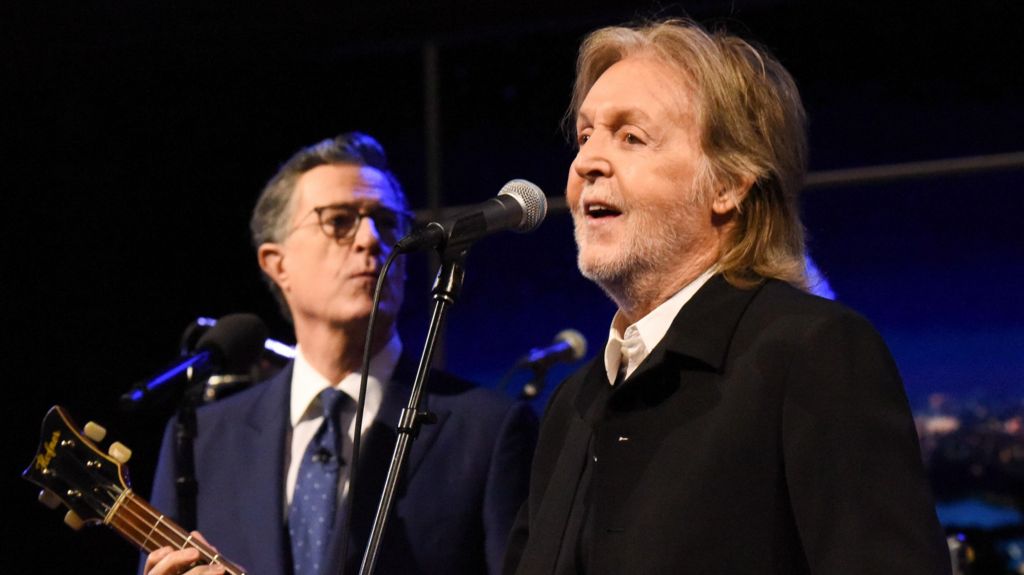
After three decades on air, Stephen Colbert hosted the final episode of CBS’s iconic *The Late Show* on Thursday night, closing out the program’s legendary run with a surprise, star-studded farewell headlined by former Beatle Sir Paul McCartney. First launched in 1993 with David Letterman at the helm, the late-night comedy franchise passed to Colbert in 2015, who went on to helm 11 seasons of sharp satire, celebrity interviews, and viral comedy segments before CBS announced its unexpected cancellation in July of the previous year.
Staying true to his signature dry wit, Colbert opened the finale with his trademark opening monologue, telling the packed audience at New York’s Ed Sullivan Theater that the episode would stick to its regular format rather than leaning into an over-the-top special tribute. For much of the hour, the identity of Colbert’s final guest remained a closely guarded secret, with A-list celebrities including Bryan Cranston, Paul Rudd, and Ryan Reynolds making playful cameos to jokingly campaign for the honor, only to be turned away by Colbert in a pre-planned comedic bit.
In one of the night’s most memorable gags, Colbert — a devout Catholic who had previously stated he dreamed of interviewing Pope Leo XIV for his final episode — introduced his guest as a visitor from the Vatican, only for a staffer to interrupt and reveal the pope had refused to leave his dressing room over unmet snack requests. The bit ended with a single arm emerging from behind the door marked “Pope Leo XIV” to toss out a hot dog, leaving Colbert feigning panic over his missing headliner.
That set up the night’s big reveal: Sir Paul McCartney, who joked he just “happened to be in the area”, stepped in as the final guest. The pair wandered through decades of history tied to the Ed Sullivan Theater, reminiscing about The Beatles’ groundbreaking 1960s appearances on the landmark *Ed Sullivan Show* and the band’s first U.S. tour. McCartney reflected on what America meant to the early Beatles, noting “the U.S. was where all the music we loved came from — all the rock ‘n’ roll, the blues, the whole thing. America was just the land of the free, the greatest democracy. Yes, that was what it was. That’s what it still is, hopefully.”
To close the show, Colbert and McCartney led the entire *Late Show* crew and staff onto the stage for a rousing performance of The Beatles’ classic “Hello, Goodbye”, before the pair headed backstage to turn off the theater lights for the final time.
The finale capped off weeks of tributes from across the entertainment industry. In the lead-up to the final taping, A-listers including Steven Spielberg, Tom Hanks, and Bruce Springsteen dropped by to honor Colbert’s 11-year tenure, while fellow late-night hosts Jon Stewart, Jimmy Fallon, Jimmy Kimmel, Seth Meyers, and John Oliver all came together to pay their respects. Out of respect for Colbert, both Fallon and Kimmel chose not to air new episodes of their own shows on the night of the finale.
Original host David Letterman, who has openly criticized CBS’s cancellation decision, returned as a guest the week prior, where the pair revived one of Letterman’s most beloved classic segments: throwing furniture and watermelons off the theater roof onto a giant CBS logo painted on the ground below.
Outside the Ed Sullivan Theater, hundreds of dedicated fans gathered one last time under the show’s glowing marquee, holding handwritten signs reading “Thank You Stephen” and “Colbert for President” to share their grief over the end of the show. Sarah Thompson, one fan in attendance, told the BBC that Colbert’s departure would leave “a big hole in America” because “you need to laugh at the end of the day.” Another superfan, Wendy Sloan, booked an eight-hour transatlantic flight from Amsterdam to New York, skipping sleep entirely just to make it to the finale, saying “I would have really done anything to be here today.”
CBS’s decision to cancel the long-running franchise sparked widespread speculation when it was announced, particularly because Colbert emerged as one of former U.S. President Donald Trump’s sharpest and most consistent critics on late-night television. Many political commentators suggested the cancellation could have been driven by political pressure, but CBS pushed back on these claims immediately, stating last year that the move was “purely a financial decision against a challenging backdrop in late night [television]” and “is not related in any way to the show’s performance, content or other matters.”