作者: admin

  • Calls mount for diplomacy in Middle East

    Calls mount for diplomacy in Middle East

    International pressure for diplomatic resolution is mounting as the Middle East plunges into one of its most severe security crises in recent years. The conflict, now entering its second week, has witnessed unprecedented military engagements between the United States, Israel, and Iran, resulting in significant civilian casualties and regional destabilization.

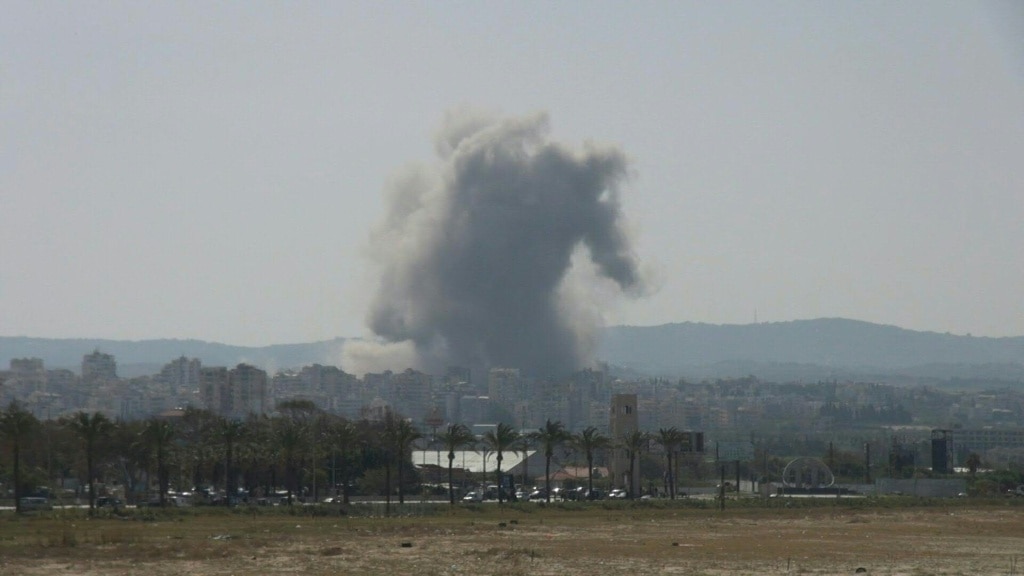
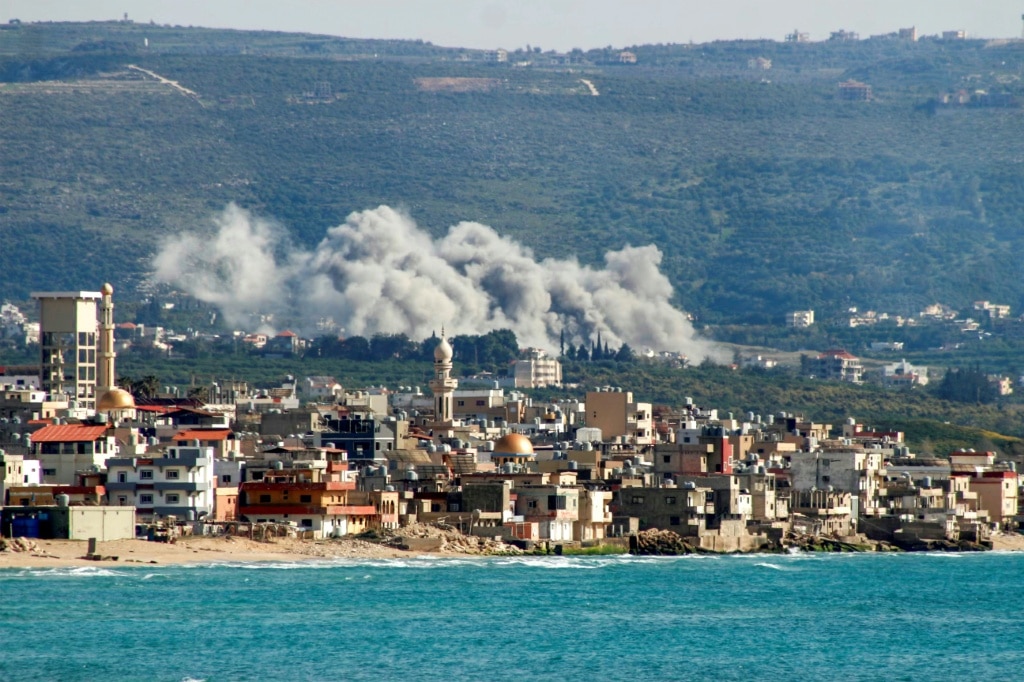
    According to the Iranian Red Crescent, coordinated US-Israeli operations have claimed 1,332 Iranian lives since February 28, with at least 20 additional fatalities and 30 injuries reported in recent strikes. Israel’s air force confirmed conducting 26 targeted strikes in Lebanon’s Dahieh area, allegedly against Hezbollah infrastructure while claiming precautionary measures to minimize civilian impact.

    The humanitarian dimension continues to worsen as displaced populations seek refuge across border regions. In Beirut, families displaced by Israeli airstrikes are sheltering along the coastal corniche, highlighting the growing refugee crisis.

    Global leaders are amplifying calls for de-escalation. Sri Lankan President Anura Kumara Dissanayake emphasized that “no civilian should die in wars” and urged all parties to demonstrate “firm commitment to peace” through social media channels. Turkish President Recep Tayyip Erdogan characterized the situation as having reached “alarming levels,” pledging to intensify multilateral diplomatic efforts to prevent irreversible escalation while reserving Turkey’s right to coordinate defensive measures with allies.

    Egyptian President Abdel Fattah El-Sisi cautioned that the conflict reflects fundamental miscalculations and warned of potential economic repercussions, including price manipulation during the crisis. He emphasized Egypt’s emergency preparedness while ensuring essential public needs remain uncompromised.

    Contrasting perspectives emerge from Washington, where President Donald Trump asserted Iran’s military capabilities are being “demolished at levels people have never seen before.” Meanwhile, Iranian Foreign Minister Abbas Araghchi rejected ceasefire possibilities following attacks during negotiation periods.

    The human cost continues to mount, with investigations underway regarding a suspected US strike on an Iranian girls’ school in Minab that killed numerous children. Iran has conducted mass funerals for at least 165 victims, including students, as regional powers continue military posturing.

  • Russia rains missiles and drones on Ukraine, killing six

    Russia rains missiles and drones on Ukraine, killing six

    Ukrainian officials reported a devastating wave of Russian aerial assaults overnight, resulting in significant civilian casualties and widespread damage across multiple regions. The attacks, which combined ballistic missiles, artillery, and drone strikes, represent one of the most extensive bombardments in recent weeks.

    In the eastern Kharkiv region, a residential apartment block in the Kyivsky district suffered catastrophic damage from a ballistic missile impact. Regional military administration head Oleg Synegubov confirmed that the five-story building was nearly obliterated, with an adjacent structure also sustaining substantial damage. Emergency crews recovered five fatalities from the rubble, while ten individuals sustained injuries—including three children aged six, eleven, and seventeen.

    Further south in the Dnipropetrovsk region, regional administrator Oleksandr Ganzha reported one civilian killed and another wounded during approximately twenty separate attacks targeting the Nikopol district. The assault employed a combination of drone warfare, artillery barrages, and rocket systems.

    The southern Zaporizhzhia region witnessed additional violence as a Russian drone strike injured an infant, according to regional head Ivan Fedorov. Meanwhile, in Chuguiv within the Kharkiv region, Mayor Halyna Minayeva confirmed two civilians were wounded when drones targeted a residential home in the city center.

    The coordinated attacks triggered nationwide air raid alerts throughout Ukraine, with the Polish air force subsequently scrambling military aircraft to secure airspace along its Ukrainian border—a standard precautionary measure during large-scale Russian offensive operations.

  • Hong Kong firm seeks $2 billion over Panama’s takeover of 2 key canal ports

    Hong Kong firm seeks $2 billion over Panama’s takeover of 2 key canal ports

    A major international arbitration battle has erupted between Panama and Hong Kong-based CK Hutchison Holdings after the Central American nation’s seizure of two strategic ports at the Panama Canal. The conglomerate’s subsidiary, Panama Ports Company, is seeking approximately $2 billion in compensation for what it describes as an “illegal takeover” of the critical maritime facilities.

    The dispute stems from Panama’s Supreme Court ruling that declared the company’s concession agreement unconstitutional, prompting the government to assume control of both Balboa and Cristobal ports last week. These facilities occupy strategic positions at either end of the vital Panama Canal waterway, which handles approximately 5% of global maritime trade.

    Panama Ports Company had operated the terminals since 1997 and successfully renewed its 25-year concession agreement just two years ago in 2021. The company’s Friday statement emphasized its determination to “assert all of their rights and damages they are due because of the radical breaches and anti-investor conduct of the Panamanian State.”

    The situation has drawn international attention, with both Beijing and Hong Kong governments expressing strong objections to Panama’s actions. The ports previously found themselves at the center of geopolitical tensions when former U.S. President Donald Trump accused China of effectively controlling the Panama Canal. The controversy intensified when CK Hutchison announced plans in March 2022 to sell the majority of its global port assets—including the Panama facilities—to a consortium involving U.S. investment giant BlackRock in a monumental $23 billion transaction. That deal has remained stalled amid political pressures.

    In a separate declaration, CK Hutchison condemned Panama’s seizure methods, alleging the government occupied the ports and appropriated company property and personnel “without transparency.” The corporation vowed to pursue all available legal avenues through both national and international judicial proceedings. The company also corrected previous statements from Panamanian officials, including Economy Minister Felipe Chapman, who had estimated the compensation claim at $1.5 billion.

  • In first week of war on Iran, Gulf states shutter energy production and oil soars

    In first week of war on Iran, Gulf states shutter energy production and oil soars

    The escalating military conflict between the US-Israel alliance and Iran has triggered an unprecedented energy crisis, with oil prices recording their most dramatic weekly surge in modern history. Brent crude, the international benchmark, skyrocketed 28 percent during the first week of hostilities to reach $92.66 per barrel by Friday, marking the most rapid price acceleration ever witnessed in global oil markets.

    The crisis centers on the effective closure of the Strait of Hormuz, the critical maritime chokepoint through which approximately 20% of global oil and gas shipments transit. MarineTraffic data reveals only nine commercial vessels have navigated the strait since Monday, as major insurers ceased providing war-risk coverage for the perilous passage.

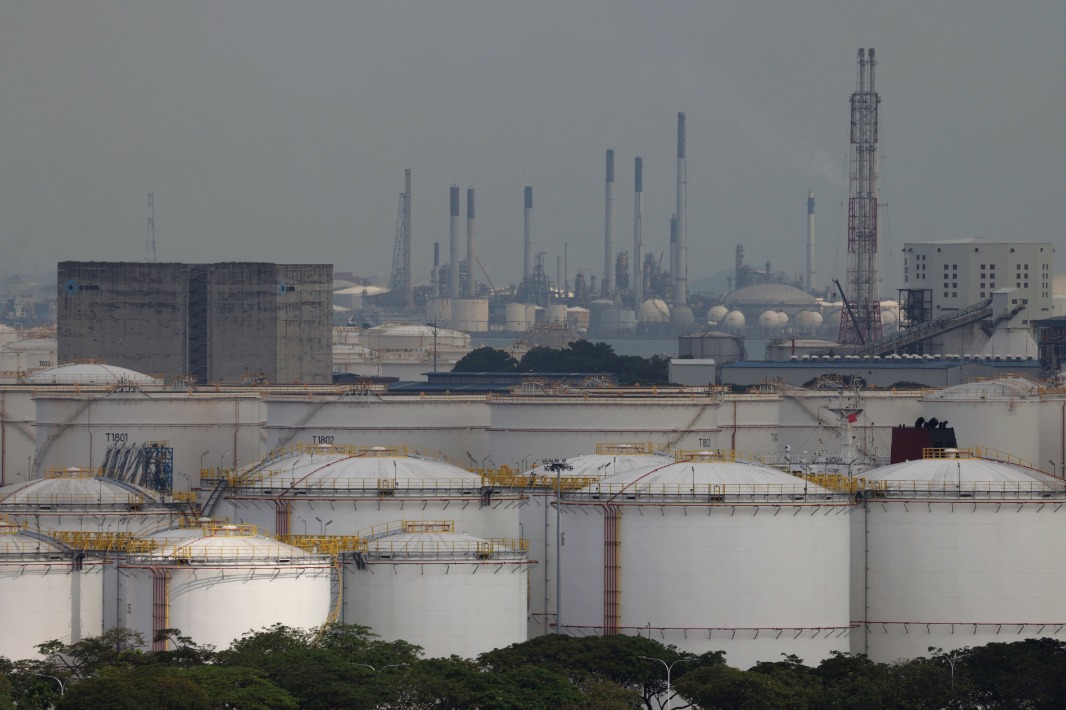
    Gulf energy facilities face multi-faceted disruptions. Kuwait, a leading OPEC producer, has halted production entirely due to exhausted storage capacity, with the UAE and Saudi Arabia approaching similar operational limits according to Kpler analytics. The physical conflict has directly targeted infrastructure, with Bahrain’s Sitra refinery—processing nearly 400,000 barrels daily—struck by Iranian missiles and visibly engulfed in flames via social media documentation.

    Qatar declared force majeure on liquefied natural gas exports, threatening the 20% global supply share it controls and sending European and Asian gas prices soaring. The collateral damage includes environmental hazards, with a tanker anchored off Kuwait leaking oil into Gulf waters after being struck Wednesday.

    The economic ramifications are spreading globally. US gasoline prices jumped 11% to $3.32 per gallon despite previous administration claims of energy independence. Qatari Energy Minister warned Brent could reach $150 per barrel, stating the conflict threatens to ‘bring down the economies of the world’ through supply chain disruptions and factory shutdowns.

    Geopolitical tensions intensified as Iran’s Revolutionary Guard challenged President Trump to escort tankers through the strait, highlighting Gulf states’ frustration with perceived US reluctance to replenish depleted air defense systems despite successfully intercepting Iranian drones and missiles. The conflict has exposed regional vulnerabilities as Gulf nations, having lobbied for diplomatic engagement with Iran, now bear the brunt of retaliatory attacks on their energy infrastructure and modern urban centers.

  • Taiwan ramps up space-defense drive amid Beijing threats

    Taiwan ramps up space-defense drive amid Beijing threats

    Taiwan is actively cultivating a network of international space-technology startups alongside domestic firms to develop advanced surveillance and defense systems for deployment in the Taiwan Strait. This strategic initiative is spearheaded by the Taiwan Accelerator Plus (TAcc+) program, managed by the Industrial Technology Research Institute (ITRI) and supported by the Ministry of Economic Affairs’ Small and Medium Enterprise and Startup Administration (SMESA). Since launching its International SpaceTech Startup Supporting Program in 2023, TAcc+ has onboarded 42 startups specializing in satellite technology, rocket engines, and geospatial equipment, fostering partnerships with Taiwan’s established Information and Communication Technologies (ICT) sector for manufacturing.

    A notable beneficiary is BaseTech, a local startup founded in 2021 that has received government funding. The company produces high-precision telescope mounts capable of tracking satellites from hundreds to 2,000 kilometers above Earth and monitoring swarms of military drones. Its flagship HawkView Monitoring System, as demonstrated by senior manager Henry Chen, can track over 300 targets simultaneously—from drones and aircraft to birds—at distances exceeding 15 kilometers, utilizing AI for automatic object scanning. The system also supports free-space optical (FSO) communication, a dual-use technology employing lasers for satellite-to-ground data transmission, which has civil and military applications.

    BaseTech’s systems are already deployed with the Taiwan Space Agency (TASA) and the nation’s Air Force and Navy, with the company now seeking European clients. This development aligns with a ‘hellscape’ defense strategy proposed by the Center for a New American Security, which envisions using vast numbers of drones and uncrewed systems to disrupt a potential invasion across the Strait through layered, technology-intensive defenses.

    Amid rising cross-strait tensions and uncertainties over U.S. military support, Taiwan is accelerating efforts to localize foreign space-defense technology. TAcc+ has facilitated international collaborations, resulting in memorandums of understanding and new orders for participants like UK-based HEX20 and U.S.-based Slingshot Aerospace. However, experts caution that ensuring resilient communications in conflict remains a challenge, prompting Taiwan to explore alternatives to U.S.-dependent systems, such as Eutelsat OneWeb’s low-Earth-orbit satellite services, recently approved for operation by Chunghwa Telecom.

  • Schwarber homers and Henderson gets 4 hits to lead United States over Britain 9-1 at WBC

    Schwarber homers and Henderson gets 4 hits to lead United States over Britain 9-1 at WBC

    The World Baseball Classic delivered a spectacle of international competition on Saturday, highlighted by dominant performances and dramatic late-game heroics across multiple venues.

    In Houston’s Pool B action, the United States secured a commanding 9-1 victory over Great Britain, improving to a perfect 2-0 record. Despite Britain’s early lead from Nate Eaton’s first-pitch home run off Tarik Skubal, Team USA’s offense exploded in the fifth inning. The turnaround began when Ernie Clement reached on an error, followed by Pete Crow-Armstrong’s double. Kyle Schwarber then unleashed a monumental 427-foot, two-run homer to right field, shifting momentum permanently in America’s favor. Gunnar Henderson contributed significantly with four hits and two RBIs, while Aaron Judge continued his powerful showing with a scorching RBI single that damaged the scoreboard.

    Meanwhile in Tokyo, defending champion Japan remained undefeated in Pool C with an intense 8-6 victory over South Korea. Shohei Ohtani homered for the second consecutive day, while Seiya Suzuki delivered two home runs and four RBIs. Despite falling behind 3-0 in the first inning, Japan mounted a relentless comeback, with Masataka Yoshida adding a homer and three RBIs to secure the hard-fought win.

    The Netherlands provided the day’s most dramatic moment with Ozzie Albies’ walk-off, three-run homer in the ninth inning to stun Nicaragua 4-3. With two outs and runners on base, Albies connected on the first pitch from reliever Angel Obando, completing an improbable comeback after Nicaragua had taken the lead in the eighth inning on Jeter Downs’ two-run homer.

    Other tournament action saw Puerto Rico remain unbeaten with a 4-3, 10-inning victory over Panama courtesy of Darell Hernaiz’s game-winning homer. Venezuela dominated Israel 11-3 behind Luis Arraez’s two homers, two doubles, and five RBIs. Taiwan recorded a mercy-rule 14-0 win over the Czech Republic, Canada defeated Colombia 8-2, and Italy blanked Brazil 8-0 behind Dante Nori’s two home runs.

  • Motorists stranded and military deployed after heavy rains pound Kenyan capital overnight

    Motorists stranded and military deployed after heavy rains pound Kenyan capital overnight

    NAIROBI, Kenya — Severe flooding triggered by relentless overnight rainfall has brought Kenya’s capital to a standstill, leaving motorists trapped for hours and prompting military deployment for emergency rescue operations. The crisis unfolded as torrential downpours that commenced Friday continued through the night, transforming major roadways into impassable waterways and submerging vehicles across the city.

    In response to the escalating situation, Kenyan military rescue units have been activated to support overwhelmed emergency services. The government’s intervention included the temporary suspension of toll fees on elevated highways to facilitate evacuation efforts. Kenya Red Cross response teams faced significant challenges reaching stranded residents due to severely compromised road infrastructure.

    Ahmed Idris, Secretary-General of Kenya Red Cross, confirmed via social media platform X that search and rescue operations were underway despite formidable obstacles. “Our teams are working tirelessly though severely constrained by the complete breakdown of road networks. We are prioritizing all efforts to reach those in critical need,” Idris stated.

    Social media platforms became flooded with visual evidence of the catastrophe, showing residential areas completely inundated and citizens wading through chest-high waters. The disaster has reignited public anger toward municipal authorities, with residents citing chronically inadequate drainage infrastructure as the primary cause of preventable flooding.

    Aisha Bajaber, a Nairobi resident, expressed the collective frustration on X: “Yet again our city drowns in floodwaters. When will officials address the complete absence of functional drainage systems?” This current emergency occurs within Kenya’s long-rains season, which traditionally begins in late February and has historically resulted in catastrophic consequences including lethal landslides, mudslides, and mass displacements affecting thousands of citizens.

  • Rising US fuel prices risk sparking domestic wildfire for Trump

    Rising US fuel prices risk sparking domestic wildfire for Trump

    American consumers are confronting a sharp increase in fuel costs as geopolitical tensions in the Middle East trigger a chain reaction affecting household budgets nationwide. The recent U.S.-Israel military action against Iran has provoked Tehran to effectively blockade the Strait of Hormuz, causing global oil prices to spike dramatically. This development has translated into an 11% surge in average U.S. gasoline prices within just one week, according to the latest data from the American Automobile Association.

    In Washington D.C., educator Sean Robinson expressed shock upon encountering the $3.27 per gallon price at his local station. “This significant jump will force me to reconsider my daily routines,” Robinson noted, indicating he would limit non-essential travel and entertainment expenses. This sentiment echoes across income brackets, with finance professional Toloria Washington describing the situation as pushing households into “survival mode” as families reassess spending priorities.

    The timing presents considerable political challenges for the Trump administration with midterm elections approaching. President Trump, who previously celebrated declining energy costs during his tenure, now faces voters grappling with renewed inflationary pressures. The Republican Party’s narrow congressional majority appears increasingly vulnerable as economic concerns mount.

    Economists warn that sustained energy price increases could compel the Federal Reserve to maintain elevated interest rates, potentially slowing economic growth. KPMG chief economist Diane Swonk characterized the situation as a “dueling mandate” for the central bank, balancing inflation control against employment objectives. While Fed Governor Christopher Waller suggested energy price impacts might be transient, many Americans already feel besieged by consecutive economic shocks.

    As November elections approach, analysts suggest voter frustration over diminishing purchasing power and shrinking middle-class stability could significantly influence political outcomes. The convergence of geopolitical conflict, economic pressure, and electoral politics creates a volatile landscape for both policymakers and citizens alike.

  • Venezuela inflation hit 475% in 2025, the world’s highest level

    Venezuela inflation hit 475% in 2025, the world’s highest level

    Venezuela has recorded the world’s highest inflation rate at 475% for 2025, according to figures released by the country’s central bank on Friday. This staggering number significantly surpassed the International Monetary Fund’s projection of 269.9%, highlighting the severity of the nation’s ongoing economic turmoil.

    The primary catalyst for this economic distress was identified as the tightening of U.S. sanctions throughout 2025, part of a ‘maximum pressure’ campaign by the Trump administration targeting the government of then-leader Nicolas Maduro. The economic situation remains precarious, with accumulated inflation for the first two months of 2026 already reaching nearly 52%. The central bank, which had not published official inflation data for over a year, declined to issue a forecast for the remainder of 2026.

    In a dramatic geopolitical shift, U.S. special forces deposed authoritarian socialist leader Maduro in a raid on Caracas on January 3rd. Following his ouster, Washington has moved to ease sanctions, and both nations have pledged to restore full diplomatic relations. A central component of this rapid diplomatic thaw includes plans to jointly develop Venezuela’s extensive oil and mineral reserves.

    Despite these political developments, ordinary Venezuelans continue to struggle under the weight of exorbitant prices for basic necessities. Food and beverage prices alone skyrocketed by 532% in 2025, while rent increased by 340% and healthcare costs rose by 445%. With average monthly incomes ranging between $100 and $300—far below what is needed to cover basic food requirements—citizens like 58-year-old accountant Alix Aponte express frustration, stating, ‘I have to hop from one supermarket to another. It shouldn’t be like this.’

    The current acting leader, Delcy Rodriguez—Maduro’s former deputy who was approved by Washington—has implemented a series of ambitious economic reforms. Her stabilization measures have included introducing greater fiscal discipline, halting the printing of money, relaxing exchange controls, and decriminalizing the use of the U.S. dollar, which has become Venezuela’s de facto currency. Rodriguez has also opened the vital oil sector to private investment and plans to overhaul mining laws to attract foreign capital.

    Economists are cautiously optimistic about the future, with Tamara Herrera of Sintesis Financiera consulting firm predicting inflation could fall to just over 100% this year. Economist Jesus Palacios noted, ‘Going forward, the inflation expectation is toward moderation,’ signaling potential economic improvement following years of hyperinflation that peaked at 130,000% in 2018 and pushed millions to emigrate.

  • Muted Iran war stance fits concerned onlooker China’s priorities

    Muted Iran war stance fits concerned onlooker China’s priorities

    As Middle East hostilities escalate, China has adopted a position of deliberate detachment, maintaining strategic distance from the regional conflict while carefully assessing implications for its global interests. Situated over 4,200 miles from the turmoil and without direct involvement, Beijing enjoys relative flexibility in calculating how U.S.-Israeli operations against Iran might affect its economic and security priorities.

    This conflict represents the most significant military campaign by China’s primary strategic rival since the Iraq War, unfolding in a region critical to China’s energy security and commercial expansion. Despite these high stakes, Beijing’s response has been notably measured—a reflection of both limited regional leverage and the fundamentally transactional nature of its relationship with Tehran.

    China’s doctrinal opposition to foreign intervention and regime change shaped its initial diplomatic response. In late February 2026, Beijing joined Moscow in requesting an emergency UN Security Council session, expressing ‘serious concern’ over missile strikes while urging respect for Iran’s territorial integrity. Concurrently, China implemented precautionary measures, advising its citizens in Iran to evacuate and warning nationals in Israel to enhance emergency preparedness.

    This combination of diplomatic protest and risk mitigation suggests Beijing prioritized contingency planning over conflict resolution. Unlike its strong support for Pakistan during the 2025 border conflict with India—where Chinese-supplied fighter jets and missiles were deployed—China maintains a more limited security relationship with Iran. While providing selective military and dual-use support including air defense systems, drone technology, and surveillance assistance over time, Beijing has carefully avoided formal security guarantees.

    The current conflict offers China valuable intelligence-gathering opportunities. With U.S. forces concentrated around Iran, Chinese satellites and intelligence platforms have actively monitored American and allied deployments near the Gulf of Oman—information potentially more valuable for China’s long-term Indo-Pacific strategy than for immediate battlefield impact.

    This pattern reveals China’s consistent approach: supporting partners within strict limits while avoiding entanglements. Despite rhetoric of ‘comprehensive partnership,’ China has never made decisive strategic investments in Tehran. Bilateral trade remains modest within China’s global portfolio, Iranian oil imports are useful but replaceable, and Belt and Road Initiative investments flow more substantially toward Gulf nations like Saudi Arabia and the UAE—economies now vulnerable to Iranian retaliation.

    The asymmetry is clear: Iran has long needed China more than China needed Iran. A weakened Iran—or even one with Western-aligned leadership—poses limited direct concern to Beijing. However, the broader strategic environment presents challenges as multiple Chinese partners face instability: Russia remains mired in Ukraine, Pakistan and Afghanistan confront escalating instability, and U.S. interventionism has intensified in Venezuela and Cuba.

    China’s response highlights its regional constraints: limited force projection, no defense commitments, and consistent avoidance of security guarantor responsibilities. Nonintervention represents not merely tactical caution but a defining feature of Beijing’s diplomatic identity.

    Looking ahead, Beijing will likely calibrate limited, deniable support to a weakened Iranian regime while avoiding overcommitment. Should the regime fall, China would probably pursue pragmatic engagement with whatever authority emerges, safeguarding economic interests through transactional relationships.

    The anticipated late-March U.S.-China meeting now carries added significance, though the atmosphere remains uncertain. President Xi Jinping would enter discussions amid large-scale U.S. military operations and while multiple Chinese strategic partners face challenges across various theaters.

    Ultimately, China positions itself as neither Iran’s patron nor a passive bystander, but rather a cautious opportunist operating within clear constraints—preserving flexibility while avoiding entanglement in a conflict beyond its control.