作者: admin

  • Stable energy, mineral supply chains urged

    Stable energy, mineral supply chains urged

    In a significant address to the United Nations Security Council on Thursday, China’s Permanent Representative Fu Cong issued a compelling call for international action to safeguard global energy and critical mineral supply chains against escalating disruptions. The ambassador’s urgent appeal comes amid mounting geopolitical tensions in the Middle East that have severely compromised maritime transportation routes and raised alarms about worldwide economic stability.

    Ambassador Fu highlighted how recurring conflicts in resource-rich regions like the Middle East and Africa have dramatically impaired normal production and transportation operations for essential energy resources and critical minerals. He emphasized that the current situation in the Strait of Hormuz—a vital corridor for energy shipments from Gulf nations—has become particularly concerning due to recent military activities and security threats.

    The Chinese diplomat urged all parties to immediately adhere to the fundamental principles of the UN Charter, resolve disputes through peaceful dialogue, and ensure the protection of non-military targets. He specifically stressed the critical importance of maintaining secure and unimpeded navigation routes for global commerce.

    Fu presented a comprehensive vision for international cooperation, noting that the global distribution of energy and critical minerals remains ‘highly uneven,’ creating inevitable supply-demand mismatches across nations. He advocated for establishing a fair and transparent global economic and trade order while building an inclusive, open supply chain system that promotes mutually beneficial cooperation and peaceful resource utilization.

    The ambassador strongly cautioned against politicizing or securitizing energy and mineral issues, warning against Cold War mentalities and the formation of exclusive blocs with geopolitical motivations. He asserted that global industrial and supply chains represent the natural outcome of economic globalization and market mechanisms, noting that political manipulation or artificial interference would only further destabilize international markets and ultimately backfire on those responsible.

    Fu emphasized that countries’ sovereign rights over natural resources must be fully respected, and developing nations should be empowered to leverage their resources for economic advancement rather than being confined to lower-value segments of global supply chains. He called on relevant countries to abandon outdated colonialist approaches, respect other nations’ development paths, and engage in equitable commercial cooperation without resorting to resource exploitation or military coercion.

    The ambassador also highlighted China’s leadership role as the world’s largest producer, consumer, and trader of minerals, referencing Beijing’s International Economic and Trade Cooperation Initiative on Green Mining and Minerals announced at last November’s G20 summit in South Africa. This initiative aims to advance sustainable development within the global mining sector while maintaining stable, fair, and mutually beneficial supply chains.

  • Professional managers key to rural vitalization

    Professional managers key to rural vitalization

    In a significant policy proposal emerging from China’s annual political gatherings, a leading economist has called for the systematic deployment of professional managers to revolutionize rural economic development. Zhou Li’an, a member of the National Committee of the Chinese People’s Political Consultative Conference and director of Peking University’s faculty of economics and management, argues that specialized “rural CEOs” could unlock sustainable growth by separating economic management from political governance.

    The proposal comes as China transitions from its successful poverty alleviation campaign to a comprehensive rural vitalization strategy aimed at narrowing the urban-rural development gap. Under the current system, village officials typically juggle both administrative duties and commercial development, often lacking specialized business expertise.

    “Village officials are more suited for political governance or traditional roles, but they are not good at economic management,” Zhou stated during the Two Sessions meetings. “You need professional people to do this professional work.”

    The concept draws inspiration from successful models in prosperous regions like Zhejiang province, where young, city-trained professionals have returned to the countryside to focus exclusively on commercial strategies. These specialists work on building brands, managing collective assets, and developing high-value industries that transcend traditional agricultural activities.

    Zhou’s comprehensive framework includes multiple strategic components: attracting private investment through clear profit incentives, developing integrated industry clusters that combine production, processing, logistics and services, and creating government-backed risk-sharing mechanisms. He particularly emphasized the need to move beyond homogeneous e-commerce competition toward value creation through regional branding and quality standards.

    The proposal has gained traction among economists as China formally recognized “rural collective economy managers” as a new profession in December 2025. China Agricultural University President Sun Qixin noted the critical shortage of professionals who combine technological expertise with business and management skills as rural industries increasingly integrate agriculture, manufacturing and services.

    Zhou also advocated for innovative approaches to rural e-commerce, suggesting that livestreaming studios should move from indoor settings directly into fields to broadcast crop growth and share local traditions. “This storytelling adds emotional value to the product’s selling process,” he explained, emphasizing that the future of rural e-commerce lies not in selling cheaper but in selling smarter.

  • Linfen aims to be a natl transformation model

    Linfen aims to be a natl transformation model

    Linfen, a resource-dependent city in China’s Shanxi province, is undergoing a remarkable economic transformation by strategically cultivating new quality productive forces. During the ongoing Two Sessions, Li Yunfeng, Party Secretary of Linfen and NPC deputy, revealed the city’s comprehensive development strategy focusing on three emerging economic sectors: digital economy, low-altitude economy, and micro-short drama economy.

    The digital economy has demonstrated explosive growth, reaching 18.25 billion yuan ($2.65 billion) in revenue during 2025—a staggering 62.8% year-on-year increase that ranks first provincially. The low-altitude economy has established substantial infrastructure including Class A service stations and eight major flight bases, with 23 supporting enterprises conducting over 3,000 service scenarios. Meanwhile, the micro-short drama industry has attracted 87 film production companies that produced 273 short dramas, with ambitious targets to attract 50 leading enterprises and produce over 500 micro-short dramas in 2026.

    This transformation represents a fundamental shift for a city that historically faced dual challenges of resource dependency and ecological pressure. Over the past decade, Linfen has consistently prioritized environmental protection, shutting down 9.15 million metric tons of coking capacity and 220,000 tons of crude steel capacity since the 14th Five-Year Plan period. The city has completed ultra-low emission transformations across its industrial base and achieved remarkable air quality improvements, with PM2.5 density dropping to 35.1 micrograms per cubic meter in 2025.

    Linfen’s cultural heritage has gained renewed attention following the global success of the video game ‘Black Myth: Wukong,’ which features scenes inspired by the region’s ancient Buddhist and Taoist culture. The city has launched innovative tourism initiatives including free shuttle buses and parking under its ‘Homecoming’ service brand, while planning deeper cultural-tourism integration through sports events, performances, and food directories.

    Looking toward the 15th Five-Year Plan period (2026-30), Linfen aims to establish itself as a national model for urban transformation and comprehensive reform. The city is committed to energy transition, industrial upgrading, and developing a new energy system while promoting low-carbon development in traditional industries. By 2030, Linfen targets the fundamental achievement of resource-based economic transformation and positioning as an ecological protection demonstration city in the Yellow River Basin.

  • SARs urged to make most of five-year plan

    SARs urged to make most of five-year plan

    Vice-Premier Ding Xuexiang has called upon Hong Kong and Macao to actively leverage the substantial opportunities emerging from China’s 15th Five-Year Plan (2026-30), emphasizing the need for robust efforts toward high-quality economic development. The senior leader, who serves on the Standing Committee of the Political Bureau of the Communist Party of China Central Committee, delivered these remarks during a joint engagement with national political advisers from both special administrative regions at the fourth session of the 14th National Committee of the Chinese People’s Political Consultative Conference (CPPCC).

    Ding affirmed that both cities have demonstrated comprehensive advancement across multiple sectors throughout the past year and are currently experiencing their most promising developmental phase. His address followed Premier Li Qiang’s Government Work Report, which reinforced the central government’s commitment to supporting Hong Kong and Macao in their deeper integration into national development strategies while contributing to the country’s overarching progress. The report further emphasized ambitions to transform the Guangdong-Hong Kong-Macao Greater Bay Area into an internationally recognized hub for scientific and technological innovation.

    Jonathan Choi Koon-shum, a Standing Committee member of the CPPCC National Committee, disclosed that Vice-Premier Ding articulated five key expectations for the SARs. These included mobilizing various sectors within Hong Kong, particularly the business community, to provide substantive input for the formulation and execution of the territory’s inaugural five-year plan. Ding additionally encouraged both regions to accelerate the cultivation of new quality productive forces and enhance collaborative ventures with mainland China in cutting-edge fields such as artificial intelligence, big data, and biomedicine.

    Ding emphasized Hong Kong’s distinctive advantage of having strong national backing while maintaining global connectivity, urging the city to assume a more prominent role within the Belt and Road Initiative. He also reiterated the importance of upholding the executive-led governance structure of the Hong Kong SAR and supporting the administration’s law-based governance, which he identified as fundamental to sustained stability and prosperity.

    CPPCC National Committee member Melissa Kaye Pang, former president of the Hong Kong Law Society, noted that Ding highlighted the necessity of advancing high-quality economic growth with particular focus on major innovation centers including the Northern Metropolis and the Hong Kong-Shenzhen Innovation and Technology Park. Another committee member from Hong Kong, Samuel Yung Wing-ki, expressed confidence that the Hong Kong SAR government would proactively address future challenges and developmental requirements, citing Ding’s recognition of China’s impressive trade performance in 2025 despite external pressures.

    Six CPPCC National Committee members from Hong Kong and Macao addressed the assembly, presenting insights on topics ranging from the establishment of Hong Kong as an international education hub and the enhancement of its technological innovation capabilities to positioning Macao as a critical conduit for international cultural and people-to-people exchanges.

  • Taiwan beats Vietnam 1-0 in Women’s Asian Cup match

    Taiwan beats Vietnam 1-0 in Women’s Asian Cup match

    PERTH, Australia — In a crucial Group C matchup at the Women’s Asian Cup, Taiwan secured a hard-fought 1-0 victory against Vietnam on Saturday, positioning themselves favorably for quarterfinal qualification with one group stage match remaining. The decisive moment arrived in the 26th minute when striker Su Yu-hsuan capitalized on a defensive opportunity. After Saki Matsunaga’s powerful strike rattled the crossbar, Su expertly headed the rebound into an unguarded net, securing what would become the match-winning goal.

    The victory marked a significant rebound for Taiwan, which suffered a 2-0 defeat against tournament favorites Japan earlier in the week. Throughout the match, Taiwan demonstrated offensive superiority, creating multiple scoring opportunities that could have extended their margin of victory. Vietnam, despite entering the contest with momentum from their opening victory against India, struggled offensively and failed to register a single shot on target throughout the ninety minutes. Their closest opportunity came from Thi Duyen Tran, whose first-half attempt sailed wide from inside the penalty area.

    The result leaves both teams level on three points from two matches, though Taiwan claims second place in the group standings on superior goal difference. Japan currently leads Group C and was scheduled to face India later Saturday. The tournament continues to break attendance records, with organizers announcing 250,000 tickets sold. The opening matches attracted 92,795 spectators—shattering the previous record of 59,910 set during the 2010 edition in China.

    In other tournament developments, Australia and South Korea have already advanced from Group A following the Matildas’ 4-0 victory over Iran. The two teams will meet Sunday to determine group supremacy. Defending champions China and three-time winners North Korea have both secured quarterfinal berths from Group B with consecutive victories, setting up a Monday showdown to decide the group winner.

  • Russian strike on Kharkiv apartment block kills seven

    Russian strike on Kharkiv apartment block kills seven

    A devastating Russian missile assault struck a residential district in Kharkiv, Ukraine, resulting in a significant loss of life and injuries. Ukrainian President Volodymyr Zelensky confirmed that at least seven individuals, including children, perished in the attack, with a minimum of ten others sustaining injuries.

    The offensive, which occurred on Saturday morning, targeted a five-story apartment building, causing extensive structural damage. Regional Governor Oleg Synegubov reported that rescue teams are actively conducting search and recovery operations amidst the rubble, with concerns that additional victims may be trapped beneath the debris.

    Among the fatalities were a 65-year-old woman, a 40-year-old man, and a 13-year-old girl. Subsequent reports from Synegubov indicated the discovery of four additional bodies, including a nine-year-old boy. The assault also damaged seven apartment complexes, power infrastructure, and an administrative building in the city.

    In a broader context, President Zelensky disclosed that overnight Russian aggression involved 29 missiles and 480 drones targeting critical energy facilities across Kyiv, Khmelnytskyi, and Chernivtsi regions, alongside railway infrastructure in Zhytomyr. The Ukrainian leader urgently appealed for enhanced international support and a decisive response from allied nations.

    Concurrently, the Polish Air Force activated protective measures, scrambling military jets to safeguard its airspace along the Ukrainian border, a standard protocol during large-scale Russian offensive operations.

    Additional regional impacts were reported in the Nikopol district, where one individual was killed and another wounded following approximately twenty separate attacks utilizing drones, artillery, and rockets. Further casualties included an infant injured in Zaporizhzhia and two individuals wounded in a drone attack on a residential property in Chuguiv.

  • At least 7 killed in Ukraine’s Kharkiv as Russian missile hits apartment building

    At least 7 killed in Ukraine’s Kharkiv as Russian missile hits apartment building

    KHARKIV, Ukraine — A Russian missile strike devastated a residential building in Ukraine’s second-largest city on Saturday, killing at least seven civilians and injuring ten others, including three children, according to Ukrainian officials. The attack on the five-story apartment complex in Kharkiv represents one of the deadliest recent assaults on civilian infrastructure.

    President Volodymyr Zelenskyy condemned what he described as ‘savage strikes against life’ and urgently called for enhanced international support. Ukrainian defense systems intercepted the majority of an extensive overnight barrage that included 29 missiles and 480 drones targeting energy facilities across multiple regions. Preliminary data indicates air defenses successfully downed 19 missiles and 453 drones, though nine missiles and 26 strike drones reached their targets at 22 locations nationwide.

    Emergency crews in Kharkiv continued search and rescue operations through the day, meticulously combing through rubble for potential survivors. The attack caused widespread infrastructure damage, with regional authorities reporting significant impacts on transportation networks. Ukraine’s state rail operator confirmed damage to central-western rail infrastructure forced route modifications across the country.

    The southern Odesa region witnessed massive fires at critical infrastructure facilities following drone attacks, requiring deployment of 80 firefighters to contain the blazes. Zelenskyy emphasized Russia’s continued targeting of residential and critical infrastructure necessitates sustained international military support, particularly enhanced air defense capabilities.

    The conflict’s dynamics have evolved with Russia’s domestic production of Iranian-designed Shahed drones, enabling attacks numbering in the hundreds per night—a significant escalation from earlier patterns. Meanwhile, Ukraine has responded to U.S. requests for assistance in Middle East defense against similar drone technology, deploying equipment and experts to support regional security efforts.

    The expanding Middle East conflict has diverted international attention from Ukraine while postponing planned U.S.-brokered negotiations between Moscow and Kyiv, further complicating diplomatic resolution efforts.

  • Visitors become entrepreneurs, discover opportunities in Yunnan

    Visitors become entrepreneurs, discover opportunities in Yunnan

    Yunnan Province in Southwest China is experiencing a remarkable socioeconomic transformation as growing numbers of visitors evolve into long-term entrepreneurs, drawn by the region’s unique business opportunities and exceptional quality of life. According to Wang Ning, Secretary of the Communist Party of China Yunnan Provincial Committee, this trend represents a significant shift in the province’s development narrative.

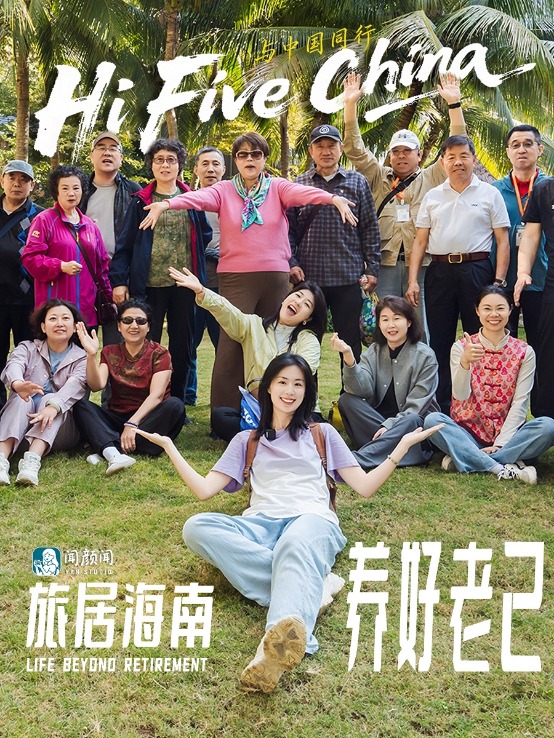
    The statistics underscore this phenomenon: during the recent Spring Festival holiday, Yunnan welcomed 53 million tourist visits. More notably, approximately 5.5 million tourists categorized as ‘sojourners’ have chosen extended stays exceeding two weeks throughout the past year. What distinguishes this trend is the conscious decision by many to establish permanent roots and launch business ventures within the province.

    Wang attributes this migration pattern to Yunnan’s distinctive charm characterized by ‘purity, beauty, novelty and uniqueness.’ The province’s pristine natural environment—from Ailao Mountain’s sea of clouds to Fuxian Lake’s blue waters—combines with rich cultural traditions to create an inspirational backdrop for entrepreneurial endeavors. This environment fosters reconnection with personal aspirations and fundamental life purposes, according to Wang.

    The economic impact is substantial. Yunnan’s coffee industry exemplifies this growth, expanding from under 10 billion yuan to nearly 100 billion yuan in just three to four years. This expansion has created opportunities for sojourners in coffee shop operations, plantation management, and livestreamed coffee sales.

    Traditional craftsmanship has experienced similar revitalization. Yi embroidery from Chuxiong, Jianshui purple pottery, and Heqing silverware have found renewed commercial viability through innovative approaches by young entrepreneurs. The province’s geographical advantage as China’s gateway to South and Southeast Asia, bolstered by the high-utilization China-Laos Railway, further enhances its business appeal.

    Personal narratives illustrate this trend. Zhang Yu and his wife transitioned from Shanghai’s fast-paced environment to Dali in 2019, initially renting a single courtyard that expanded to eight properties with approximately 100 rental units. Chen Yuxin relocated her Wonder Wander Coffee headquarters to Dali, experiencing annual fivefold growth while benefiting from local government support through resource-sharing tea parties. French chef Vincent Aguesse established a culinary presence in Kunming since 2015, creating fusion cuisine that combines Yunnan’s wild mushrooms with French techniques.

    Yunnan’s moderate climate, neither severely cold in winter nor unbearably hot in summer, provides additional appeal for health and wellness tourism alongside outdoor sports development. The provincial government recognizes this combination of natural assets, cultural richness, and strategic positioning as creating unique conditions where ‘everyone with a dream and the courage to explore can find their own place.’

  • Russell leads Mercedes 1-2 for Australian GP as Verstappen crashes

    Russell leads Mercedes 1-2 for Australian GP as Verstappen crashes

    In a stunning turn of events at Melbourne’s Albert Park, George Russell clinched pole position for Mercedes at the Australian Grand Prix, leading a remarkable team one-two finish alongside rookie teammate Kimi Antonelli. The qualifying session, however, was overshadowed by a shocking early exit for reigning world champion Max Verstappen.

    Russell delivered a masterful performance with a blistering lap time of 1:18.518 on soft tires, outpacing Antonelli by 0.293 seconds. The British driver expressed elation with his car’s potential, particularly praising his team’s exceptional garage work throughout the day.

    The session took a dramatic turn when Verstappen’s Red Bull violently collided with the barriers at Turn 1 during his first flying lap in Q1. The Dutch driver radioed his frustration, citing sudden rear axle locking that prematurely ended his qualifying attempt and likely his victory prospects.

    Antonelli’s performance proved equally spectacular given his earlier misfortune. The 19-year-old Italian miraculously qualified second despite writing off his Silver Arrow during final practice. Mercedes mechanics performed what Russell termed ‘heroic’ work to rebuild the damaged car within hours.

    Red Bull’s Isack Hadjar secured third position ahead of Ferrari’s Charles Leclerc, while McLaren’s Oscar Piastri and Lando Norris will start fifth and sixth respectively. The session marked the first full qualifying under Formula 1’s radical new technical regulations, presenting drivers with unprecedented energy management challenges.

    Several notable eliminations occurred throughout the session. Williams’ Carlos Sainz missed qualifying entirely after mechanical failure in third practice, while Aston Martin’s Lance Stroll also failed to appear due to persistent power unit vibrations. Both Cadillac drivers were eliminated in Q1 during the American team’s maiden Grand Prix weekend.

  • Deadly storms and tornadoes strike US state of Michigan

    Deadly storms and tornadoes strike US state of Michigan

    The state of Michigan is confronting severe devastation and assessing the aftermath of a violent storm system that unleashed multiple tornadoes across several communities. The extreme weather event, characterized by powerful rotational winds, carved a path of destruction through urban and residential areas, resulting in significant structural damage and tragic loss of life.

    Initial reports from emergency management officials describe widespread impacts, including homes completely leveled, commercial buildings sustaining critical damage, and essential infrastructure being severely compromised. The force of the tornadoes was potent enough to tear mature trees from the ground and hurl debris across considerable distances, creating hazardous conditions for residents and complicating rescue operations.

    First responders, including police, fire departments, and paramedic teams, are conducting coordinated search-and-rescue missions in the hardest-hit zones. The primary objectives are to locate and evacuate any individuals trapped in damaged structures and to provide immediate medical assistance to the injured. Local hospitals have been placed on high alert to manage an influx of patients.

    State Governor Gretchen Whitmer has officially declared a state of emergency for the affected counties, a procedural move that mobilizes additional state resources and unlocks federal disaster assistance funding. In public statements, the Governor urged residents to prioritize their safety, heed all warnings from authorities, and avoid traveling through damaged areas to allow emergency crews unimpeded access.

    The National Weather Service (NWS) has dispatched survey teams to the region to analyze the damage and determine the exact intensity and number of tornadoes, which will be rated on the Enhanced Fujita (EF) scale. Meteorologists had issued advanced warnings for the potential of severe convective storms, but the rapid development and precise trajectory of the tornadoes highlighted the persistent challenges in predicting such volatile weather phenomena with pinpoint accuracy.

    This event is part of a broader pattern of intense spring and summer storm activity across the United States, particularly in the Midwest and Great Lakes regions, which are increasingly experiencing severe weather outbreaks. Recovery efforts are expected to be a prolonged process, involving not just rebuilding infrastructure but also providing long-term support for displaced families and communities grappling with the psychological and economic toll of the disaster.