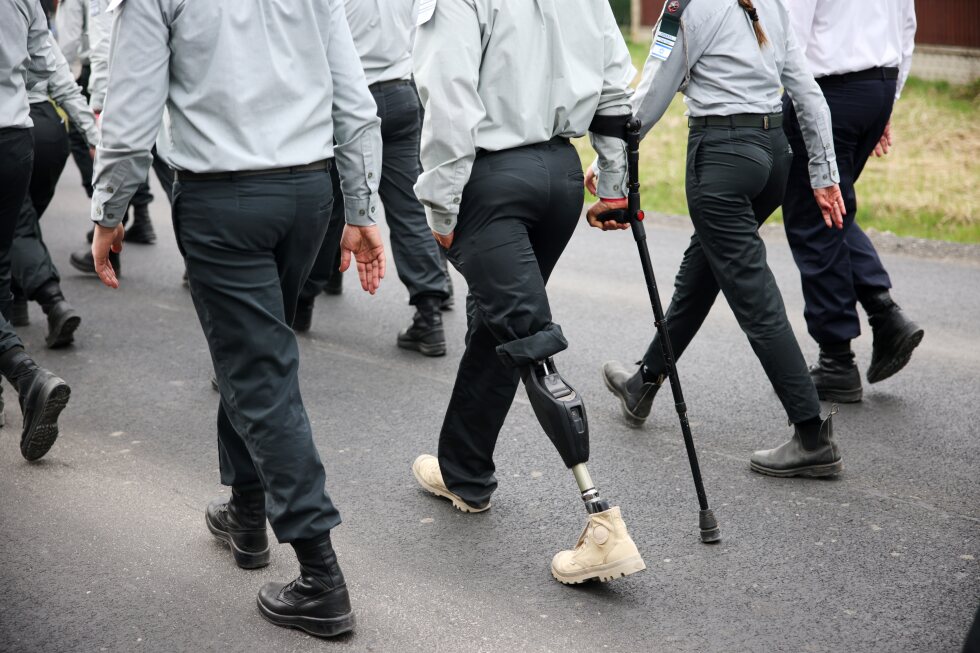
On Tuesday, Holocaust survivors from across the globe converged on the former site of the Auschwitz concentration camp in southern Poland to take part in the March of the Living, an annual pilgrimage to honor the memory of the 6 million Jews systematically murdered by Nazi Germany and its collaborators during the Second World War. This year’s observance fell on Holocaust Remembrance Day on the Jewish calendar, marking the 38th iteration of the event that draws participants from every corner of the world.
Fifty survivors joined this year’s march, with many making the journey to Poland from Israel despite significant travel disruptions. Organizers confirmed that airspace restrictions linked to the ongoing Iran conflict created logistical hurdles that did not stop survivors from attending the commemoration.
The 3-kilometer trek starts at the Auschwitz camp and ends at the adjacent Birkenau site, the largest of the Nazi death camps built during the occupation of Europe. It was at Birkenau where hundreds of thousands of Jews from across the continent were unloaded from deportation trains and immediately executed in purpose-built gas chambers. Today, both sites stand as preserved memorials to the atrocities of the Holocaust.
This year’s gathering comes at a moment of surging anti-Jewish hatred across the globe, a trend organizers and participants have warned echoes the conditions that allowed the Holocaust to unfold. Revital Yakin Krakovsky, deputy chief executive of the International March of the Living, the group that organizes the annual event, stressed that the lessons of the Holocaust have not been fully absorbed by the modern world. “Since Oct. 7, anti-Semitism has surged and is spreading everywhere,” she said. “The scale and normalization of this hatred echoes the dark times we have seen before and, today of all days, we know how it ended.”
Among the special guests at this year’s march were survivors of recent anti-Semitic attacks, including survivors of the December mass shooting at a Hanukkah celebration on Sydney, Australia’s Bondi Beach that left 15 people dead. Hannah Abesidon, whose father Tibor Weitzen — a 78-year-old Holocaust survivor — was killed in that attack, shared her family’s story with march participants. “My father didn’t make it because he was a Jew,” Abesidon said. “It starts with the Jews but it doesn’t end with the Jews,” she added, emphasizing the broader threat that unchecked prejudice poses to all global communities.
For nearly four decades, the March of the Living has brought together thousands of participants each year, including not just Holocaust survivors, but also Jewish youth, community leaders, and elected officials from across the world. The event remains one of the most high-profile global efforts to educate the public about the Holocaust and push back against rising anti-Semitism and historical revisionism.