Global economic watchdog the International Monetary Fund (IMF) has issued a stark, long-term forecast for Australia’s economy, warning that skyrocketing cost of living pressures will continue plaguing household budgets until the end of 2027, driven largely by volatile oil prices stemming from ongoing military conflict in the Middle East.
In its most recent regional economic outlook, the IMF projects that Australia’s inflation will stay well above the Reserve Bank of Australia (RBA)’s 2-3% target band for more than two years. Forecasts put national inflation at 4% in 2026, with only a gradual cooling to 3.2% by 2027. Alongside persistent price growth, the fund also predicts a marked slowdown in real GDP growth, which strips out inflation to measure underlying economic expansion. Real output is expected to dip to 2% in 2026 before falling further to 1.7% in 2027.
The root cause of this extended economic pressure, officials and analysts agree, is the disruption to global oil markets triggered by the Middle East conflict between US-aligned Israel and Iran, which has threatened traffic through the Strait of Hormuz — a strategic chokepoint that carries roughly one-fifth of the world’s daily oil supply. Six weeks before the conflict began, global crude traded at roughly US$56 (AU$80) per barrel; today, prices hover around US$100 (AU$143) per barrel. For Australian motorists, every US$10 per barrel increase in crude translates directly to an extra 10 cents per litre at the petrol pump, squeezing household budgets that are already stretched thin.
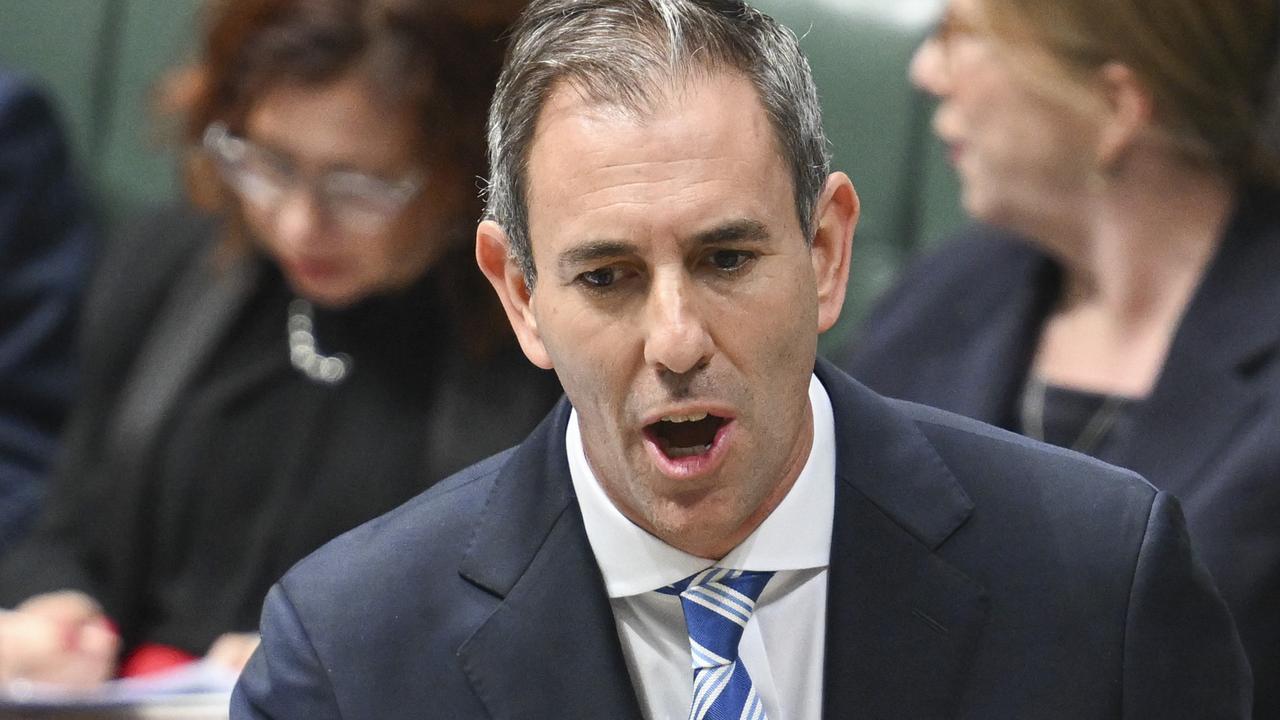
Treasurer Jim Chalmers has framed the crisis as an imported external shock, noting that Australian households are paying a steep price for instability thousands of kilometers away. “The costs and consequences of the conflict in the Middle East will be felt for some time, in Australia and around the world,” Chalmers said. Outlining the federal government’s policy response, he added: “We’re taking decisive action to address this global fuel challenge, by halving the fuel excise to help with the cost of living, holding petrol companies to account, working to secure more fuel and get it to where it’s needed in our economy, and engaging internationally.”
The IMF’s warning extends far beyond Australia, emphasizing that the conflict has already tested the resilience of the global economy that has only just begun recovering from a series of overlapping shocks in recent years. “The global economy has, to date, withstood a series of shocks, yet another one — this time a military conflict engulfing the Middle East since the end of February — is testing this resilience,” the fund said in its report. “The conflict has already inflicted humanitarian costs, damaged critical infrastructure, and severely disrupted maritime and air traffic in the affected region.”
For global economies including Australia, the spillover effects come through multiple channels: direct upward pressure on commodity prices, secondary ripple effects that push up long-term inflation expectations (which are particularly sensitive to shifts in energy and food prices), and market volatility triggered by risk-off investor sentiment.
Domestically, the RBA has signaled that the oil price shock could derail progress on taming inflation, forcing potential adjustments to interest rates that would add further pressure to Australia’s 1.5 million mortgage holders. RBA deputy governor Andrew Hauser acknowledged that policymakers lack high confidence that current interest rate settings are sufficiently restrictive to bring inflation down to target. “I wouldn’t say we have high confidence that we’ve set interest rates at the right level because you never do have that high confidence. But we’re going to have to monitor this new shock pretty carefully,” Hauser said. “I think it is easy to see that upside inflation pressure. More important for us now is to think through what the medium-term impact might be.” Hauser added that the current energy price spike from the Gulf conflict amounts to a “big income shock for Australia”, at a time when inflation is already “too high”.
Before the conflict erupted on February 28, Australia’s inflation had shown early signs of easing, with the Consumer Price Index falling to 3.7% in February, down 0.1 percentage point from January. But that progress is now at risk, and already the shock has gutted economic sentiment across both households and businesses. Two of Australia’s largest four banks have released new surveys showing dramatic drops in confidence in the weeks since the conflict began.
The monthly Westpac-Melbourne Institute Consumer Confidence Index plummeted 12.5% to 80.1 in April, a reading deep in pessimistic territory — any score below 100 signals that more consumers hold negative expectations for the future than positive. National Australia Bank’s (NAB) monthly business survey found an even starker drop: business confidence fell 29 points to minus 29 index points, marking the second largest monthly fall in the survey’s 37-year history. Only the 2008 Global Financial Crisis and the 2020 onset of the COVID-19 pandemic have seen steeper one-month drops in business confidence.
Gareth Aird, head of Australian economics at NAB, noted that while the shock has so far had limited impact on actual business activity, the collapse in sentiment signals significant uncertainty ahead. “The outbreak of the conflict in the Middle East saw business confidence fall 29 points to minus 29 index points, the second largest monthly fall in the survey’s history, with falls of this magnitude previously only seen in the GFC and the onset of Covid,” Aird said. “Business conditions fell only one point to six index points in March, reflecting that while the global news backdrop has impacted sentiment, it is still early days in terms of the flow through to activity.”