Decades of frozen diplomatic relations between Israel and Lebanon are set to see a rare breakthrough this Tuesday, as the two neighboring Middle Eastern nations prepare to sit down for their first direct in-person talks since 1993, hosted in Washington. The high-stakes meeting comes against a backdrop of spiraling regional turmoil, anchored by the Trump administration’s newly imposed naval blockade of Iranian ports that has raised the stakes of the ongoing U.S.-Iran standoff at the Strait of Hormuz.
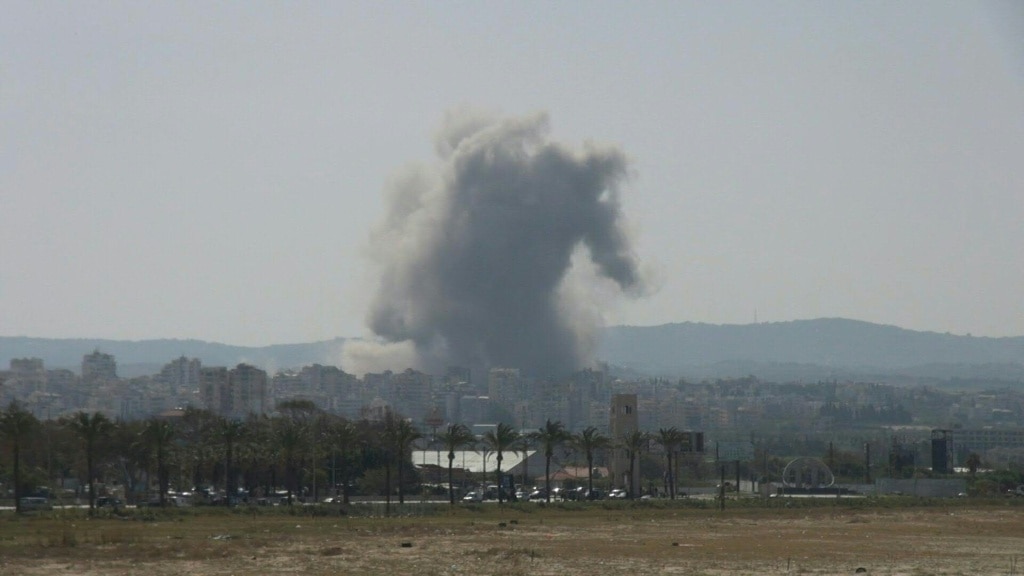
Ahead of the talks, Israeli Foreign Minister Gideon Saar struck a cautiously constructive tone, stating that Israel remains committed to pursuing peace and full normalization with Lebanon. However, he doubled down on the government’s longstanding position that the Iran-aligned militant group Hezbollah is the core obstacle to any lasting agreement. The decades-long technical state of war between the two countries erupted into open conflict after Hezbollah launched attacks on Israeli territory, pulling Lebanon into the broader regional crisis. The subsequent Israeli ground incursion and airstrikes—including a massive April 8 strike on central Beirut—have killed more than 2,000 people and forced over a million Lebanese residents to flee their homes, according to casualty and displacement figures.
Lebanese President Joseph Aoun has voiced hope that the Washington meeting will produce a workable truce agreement and pave the way for full formal negotiations between the two states, though expectations of a major breakthrough remain muted. Hezbollah’s leader Naim Qassem has already rejected the talks outright, labeling them a futile exercise and calling for them to be canceled before they even convene. The U.S. Secretary of State Marco Rubio will mediate the discussions, which will feature the Israeli and Lebanese ambassadors to the United States as the lead negotiators.
While the international community turns its attention to the Israel-Lebanon border crisis, the Trump administration has ramped up pressure on Tehran with a strict naval blockade covering all vessels entering or exiting Iranian ports and coastal areas along the Strait of Hormuz. The strategic waterway, which carries roughly one-fifth of the world’s global oil supply during peacetime, had already been effectively closed to commercial traffic by Iranian military actions prior to the U.S. blockade, disrupting global shipping networks.
Despite the sweeping announced restrictions, maritime tracking data from analytics firm Kpler shows that at least two vessels operating out of Iranian ports successfully transited the strait on Monday, suggesting gaps in the enforcement of the new blockade. Iranian military leaders have condemned the U.S. move as an act of outright piracy, issuing a stark warning that if the security of Iranian harbors is threatened, all ports across the Persian Gulf and Arabian Sea will no longer be safe. Security analysts note that the blockade is intended to cut off critical oil export revenue for Iran while also pressuring China—Tehran’s largest crude oil buyer—to leverage its influence to force Iran to reopen the Strait of Hormuz. The Chinese government has already issued a sharp rebuke, calling the blockade dangerous and irresponsible, particularly after Trump threatened to sink any vessel attempting to enter or leave Iranian ports.
Surprisingly, the heightened standoff at the strait has not shaken global market confidence: Asian equity markets rallied this week, and global oil prices have continued a downward trend, defying widespread expectations of a price spike from supply disruptions. France and Britain have announced plans to co-host a video conference this Friday for nations willing to contribute to a purely defensive security mission to reopen and secure navigation through the Strait of Hormuz.
Notably, the fragile two-week ceasefire between the U.S. and Iran that took effect last Wednesday remains intact despite the escalation, even after an initial round of U.S.-Iran talks hosted in Pakistan failed to produce any breakthrough. President Trump told reporters outside the Oval Office that Iranian representatives have reached out to Washington since the inconclusive Islamabad meeting, claiming that Tehran is very eager to reach a new deal. Pakistani Prime Minister Shehbaz Sharif confirmed Monday that full diplomatic efforts are ongoing to secure a lasting end to hostilities, and senior Pakistani sources told AFP Tuesday that Islamabad is working to arrange a second round of direct talks between U.S. and Iranian negotiators.
Speaking in a phone call with French President Emmanuel Macron, Iranian President Masoud Pezeshkian reiterated that Tehran will only continue diplomatic negotiations within the framework of international law. Macron for his part urged both Tehran and Washington to restart stalled talks to end the U.S.-Iran war, which Trump launched after accusing Iran of pursuing a nuclear weapons program—an allegation Iran has repeatedly denied. Trump has insisted any final agreement must permanently block Iran from acquiring a nuclear device.
Recent media reports have shed light on the gaps in the nuclear negotiation position: U.S. negotiators have proposed a 20-year full suspension of Iran’s uranium enrichment program, while Iran has only offered a five-year pause, a proposal U.S. officials have already rejected. Diplomatic activity is also picking up among other global powers: Russian Foreign Minister Sergey Lavrov met with Chinese counterparts in Beijing on Tuesday, just hours after he held talks with his Iranian counterpart. Moscow has put forward a proposal to store Iran’s enriched uranium on Russian territory as part of any potential nuclear deal, while Chinese President Xi Jinping has vowed that Beijing will play a constructive role in advancing peace talks across the Middle East.