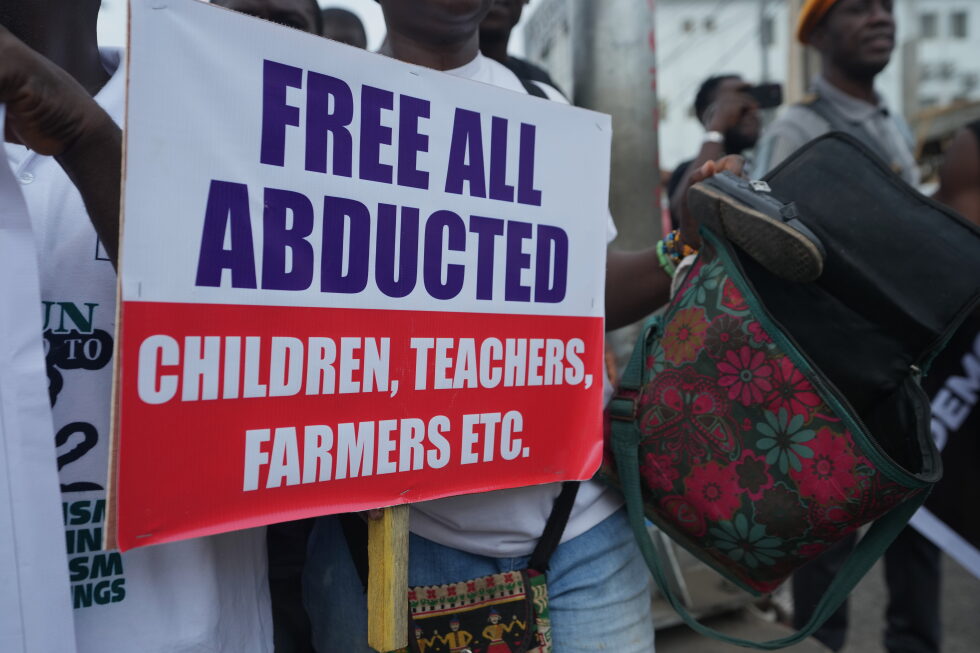
ABUJA, Nigeria – A new report from Lagos-based intelligence firm SBM Intelligence has laid bare the staggering human and economic cost of Nigeria’s ongoing kidnapping crisis, revealing that criminal groups extracted more than $5.8 million in ransom payments between July 2025 and June 2026, as abduction rates soared nearly two-thirds from the previous 12-month period. The data paints a grim picture of a country grappling with overlapping security threats that have left thousands of civilians captive and shattered countless families, even as the government partners with the United States to curb the violence.
作者: admin
-

After US settlement, EU says Meta must ‘protect our kids too’
In the wake of a groundbreaking multi-state settlement that forces Meta to implement sweeping new restrictions on teenage use of its Facebook and Instagram platforms, the European Union has issued a clear call for the tech giant to extend equivalent child safety protections to young users across the bloc.
Last month, the European Commission already ruled that Meta violated the bloc’s Digital Services Act (DSA) — a landmark regulatory framework designed to curb harmful practices by large technology companies operating in the EU’s 27 member states. At that time, regulators ordered the company to draft concrete proposals to reduce risks to minors using its platforms.
European Commission spokesperson Thomas Regnier told reporters Thursday that EU regulators have held new discussions with Meta following the U.S. settlement, which Brussels has monitored “very closely.” “The ball is in Meta’s court,” Regnier said. “Meta knows what we are expecting from them. Now it is for the company to offer these commitments in the European Union to protect our kids here too.”
Regnier confirmed that EU investigators are probing Meta over the same harmful design features that were the focus of the U.S. legal action, and regulators are pushing to secure “at least equally good protection for our kids here in the European Union.” Specific demands from Brussels include mandatory, built-in screen time management tools and robust, default parental controls for minor accounts.
EU regulators have long flagged risks to children from specific Meta platform features, including infinite scrolling functionality, algorithmically-driven highly personalized content feeds that promote compulsive use, and automatic video playback. Regulators issued a nearly identical warning to rival short-form video platform TikTok back in February.
Meta has publicly stated that it disputes the EU’s DSA violation finding, but has committed to engage “constructively” with regulators to address their concerns. If the company fails to meet the bloc’s demands, EU rules allow regulators to impose fines of up to 6% of Meta’s total global annual revenue, a penalty that could run into billions of dollars.
The U.S. settlement, which resolved a years-long landmark lawsuit brought by a coalition of U.S. states in California, requires Meta to pay up to $16.7 billion in damages and implement a far-reaching set of new safety rules for underage users. These include an automatic block on platform access during nighttime hours and a default daily cumulative usage cap of two hours across all of Meta’s apps. The agreement marks the strictest set of child safety obligations Meta has ever agreed to, coming after years of sustained criticism from parents, child health experts and policymakers over the impact of social media on adolescent mental health and development.
Parallel to its ongoing DSA investigation, the EU is also considering broader age restrictions on social media access, a move driven by multiple member states that want to follow Australia’s lead on strict child online protection rules. Last month, an expert panel convened by the EU presented its recommendations to European Commission President Ursula von der Leyen. Von der Leyen is scheduled to outline proposed new restrictions in a major policy speech on September 16, with a formal draft legislative proposal expected before the end of the year.
The panel, which includes doctors, academic researchers, youth representatives and parents, recommended a complete ban on screen use for infants and toddlers. For children under 12, the panel advised that only age-appropriate social media platforms should be allowed, all under direct adult supervision. For adolescents aged 13 to 18, the panel recommended gradually expanding autonomous access only to platforms that have already implemented mandatory core child safety features.
“This is not about whether children can access social media. It is about whether and when social media can access our children,” von der Leyen said last month, emphasizing that the burden of proof falls to technology companies to “prove that their services do no harm.”
-
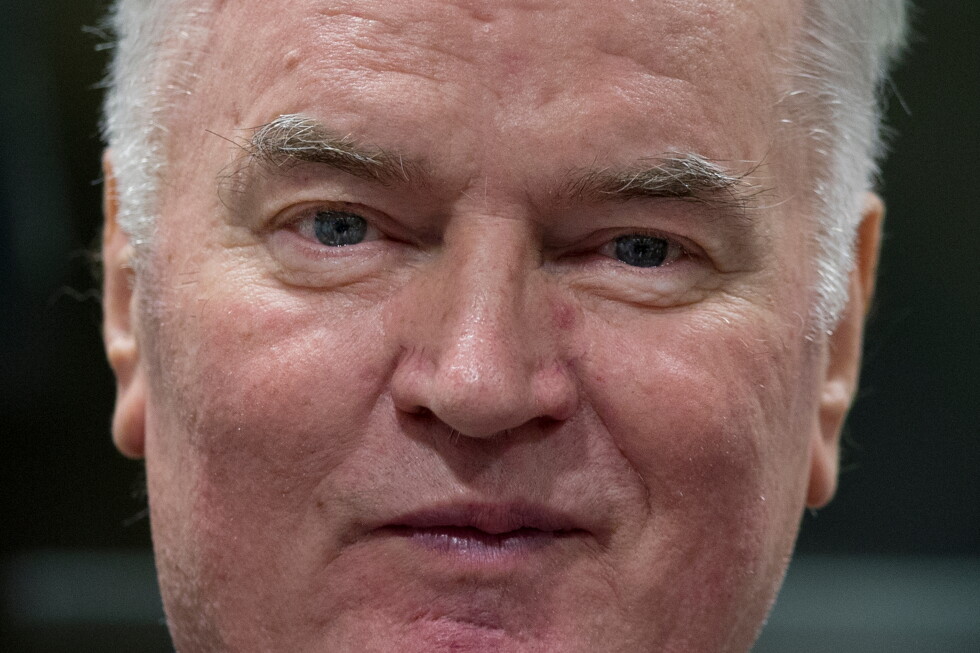
Ratko Mladic, ex-Bosnian Serb warlord who oversaw atrocities in Bosnia, dies in prison at 84
In a development that has reopened bitter wounds across the Balkans, convicted Bosnian Serb war criminal Ratko Mladic, the 84-year-old former military leader held responsible for some of the worst European atrocities of the 1990s, has reportedly died while in United Nations prison custody. Multiple regional state broadcasters, including Serbia’s public service network RTS and the official television service of Bosnia’s Serb entity, first broke the news of Mladic’s passing Wednesday, noting he died at a U.N.-administered prison hospital facility based in The Hague, Netherlands.
An anonymous family member, who requested withholding their identity due to the highly sensitive political and social nature of Mladic’s case, confirmed the initial reports to the Associated Press. The source also shared that Mladic’s son, Darko Mladic, was already traveling to the Netherlands to coordinate next steps. As of initial reporting, however, spokespeople for the international U.N. tribunal system have stated they cannot immediately verify the death, leaving room for formal confirmation in the coming hours.
Mladic’s name remains permanently tied to the 1995 Srebrenica massacre, the worst act of ethnic cleansing on the European continent since World War II, where more than 8,000 Bosniak Muslim men and boys were systematically executed under his military command. He was also found guilty of orchestrating the 44-month siege of Sarajevo that killed more than 10,000 civilians during the 1992-1995 Bosnian War. After evading capture for more than a decade following the end of the conflict, Mladic was arrested by Serbian authorities in 2011 and transferred to The Hague to stand trial. In 2017, he was convicted of genocide, crimes against humanity, and war crimes by the U.N. International Residual Mechanism for Criminal Tribunals, which sentenced him to life imprisonment.
-
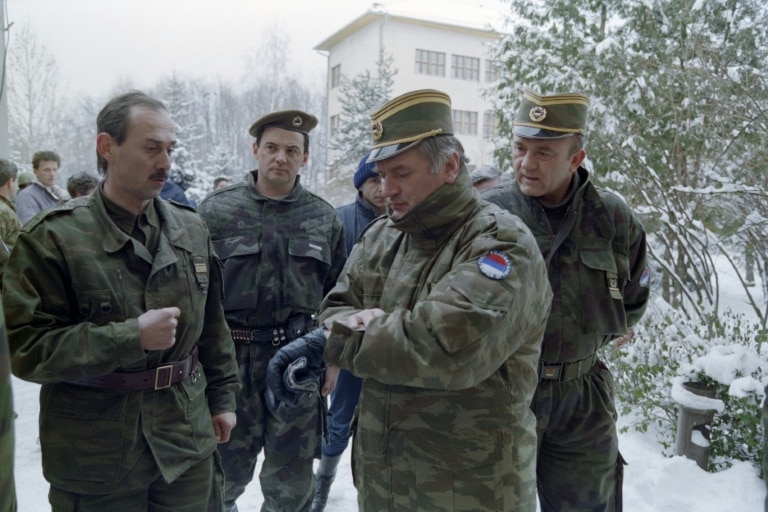
‘Butcher of Bosnia’ Ratko Mladic dead: Serbian state media
Ratko Mladic, the former top military commander of Bosnian Serb forces whose role in the 1995 Srebrenica massacre earned him the notorious moniker the “Butcher of Bosnia”, has passed away, Serbia’s state-owned public broadcaster RTS announced on Thursday. The 80-year-old had been serving a full life sentence at a United Nations detention facility in The Hague, Netherlands, after being convicted of genocide, multiple war crimes, and crimes against humanity for his central role in orchestrating the Srebrenica slaughter — the worst episode of mass killing Europe has witnessed since the conclusion of World War II.
In the months leading up to his death, Mladic had experienced multiple strokes that left his health in severe decline. Serbian government officials and members of Mladic’s family had repeatedly submitted formal requests to the international tribunal in The Hague, calling for his compassionate release on medical grounds. All of these appeals were ultimately rejected by judicial authorities, who ruled that Mladic should serve out his full sentence behind bars.
Mladic stood as one third of a brutal power bloc that drove ethnic violence through the Balkans during the breakup of the former Yugoslavia. The political wing of the faction was led by Slobodan Milosevic, the former president of Yugoslavia, and Radovan Karadzic, the founder and former leader of the unrecognized Bosnian Serb state. When communism collapsed across Eastern Europe, the former Yugoslavia fractured along ethnic lines, plunging the region into a devastating four-year war between 1992 and 1995. By the time the conflict ended, official casualty counts put the total death toll at roughly 100,000, with an additional 2.2 million people forced to flee their homes and become displaced persons.
No atrocity during the conflict gained more global infamy than the Srebrenica massacre. In July 1995, Mladic’s Serb forces swept into Srebrenica, a small town in eastern Bosnia that had been formally designated a UN-protected safe haven for vulnerable Bosnian Muslim civilians. Over the course of several days, Mladic’s troops systematically rounded up and executed more than 8,000 Bosnian Muslim men and boys, burying their remains in mass unmarked graves across the surrounding countryside. For decades after the massacre, forensic teams have continued to recover and identify remains from these mass graves, providing long-awaited closure to surviving family members.
Mladic evaded capture for more than 16 years after the end of the Bosnian war, living in hiding in Serbia before he was finally arrested by Serbian security forces in 2011. He was extradited immediately to The Hague to face trial before the International Criminal Tribunal for the former Yugoslavia, and was found guilty on all counts in 2017. His final appeal to overturn the conviction was rejected by the UN appeals court in 2021, which upheld his life sentence.
-
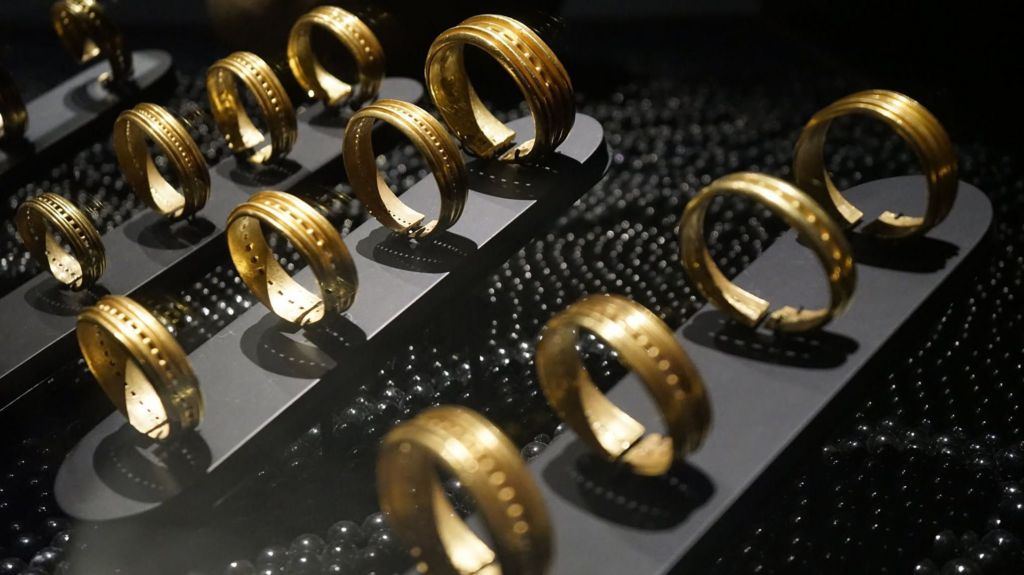
Thieves steal Bronze Age artifacts from Spanish museum in four-minute heist
In an audacious, meticulously planned early-morning robbery that has shocked the Spanish town of Villena, thieves have stolen a substantial portion of one of Europe’s most significant prehistoric gold collections from the MUVI Villena Museum, located in the province of Alicante.
The stolen artifacts are part of the world-famous Treasure of Villena, a one-of-a-kind Bronze Age assemblage totaling nearly 10 kilograms of gold that includes ceremonial bowls, ornate vessels, decorative bracelets, and gold rings dating back to approximately 1000 BC. Alongside the gold pieces, the full collection also includes rare silver, iron, and amber artifacts, comprising more than 60 prehistoric objects in total: 29 bracelets, 11 bowls, three decorative bottles, and a range of other assorted archaeological finds. The entire collection was first uncovered in 1963 by archaeologist Jose María Soler, who found it hidden inside a large vessel buried in the bed of a dried-out river just outside Villena, making it an irreplaceable piece of regional and global cultural heritage.
According to local authorities and Spanish media reports, the heist was executed with strategic diversion and remarkable speed. At around 5:15 a.m. local time (3:15 a.m. GMT), thieves triggered an alarm at a nearby municipal sports center, drawing responding police officers away from the museum location. Just five minutes later, the MUVI Villena Museum’s own security alarm activated. Investigations indicate the raiders spent only four minutes inside the exhibit hall, removing the targeted objects and escaping before law enforcement could reach the building. A spokesperson for the Villena town council described the operation as “super fast and super professional”, emphasizing that all the museum’s security systems functioned as designed during the break-in, rejecting any claims of systemic security failure.
While police are still conducting a full inventory to confirm the exact number and value of stolen pieces, museum officials have confirmed that gold rings, bowls, and bracelets are among the items taken. Villena Mayor Fulgencio Cerdán told Spanish national newspaper El Pais that thieves “stole a large part of the treasure”, specifically removing nearly all of the gold held in the collection. For the small Valencian town, the loss is devastating. “The town is devastated,” Cerdán said in comments to reporters. “They’ve taken most of the treasure. I’m even trembling. The truth is that for those of us from Villena, this destroys us. It’s part of our heritage, of our cultural wealth.”
This heist marks the latest in a growing string of high-profile museum robberies across Europe over the past year. In October 2025, a bold daytime robbery at Paris’ Louvre saw thieves escape on scooters with jewelry valued at $102 million after just eight minutes inside the museum. Just last week, Italy’s Ministry of Culture announced the theft of four “extraordinarily valuable” works by Renaissance master Antonello da Messina from a museum in Sicily. Earlier this month, Italian police announced the recovery of stolen paintings by renowned modern artists Renoir, Cezanne, and Matisse — works worth an estimated $10.4 million that were stolen from the Magnani-Rocca Foundation museum near Parma in a previous heist.
Spanish law enforcement has launched a full investigation into the Villena museum robbery, with authorities working to trace the stolen artifacts and identify the perpetrators behind the brazen raid.
-
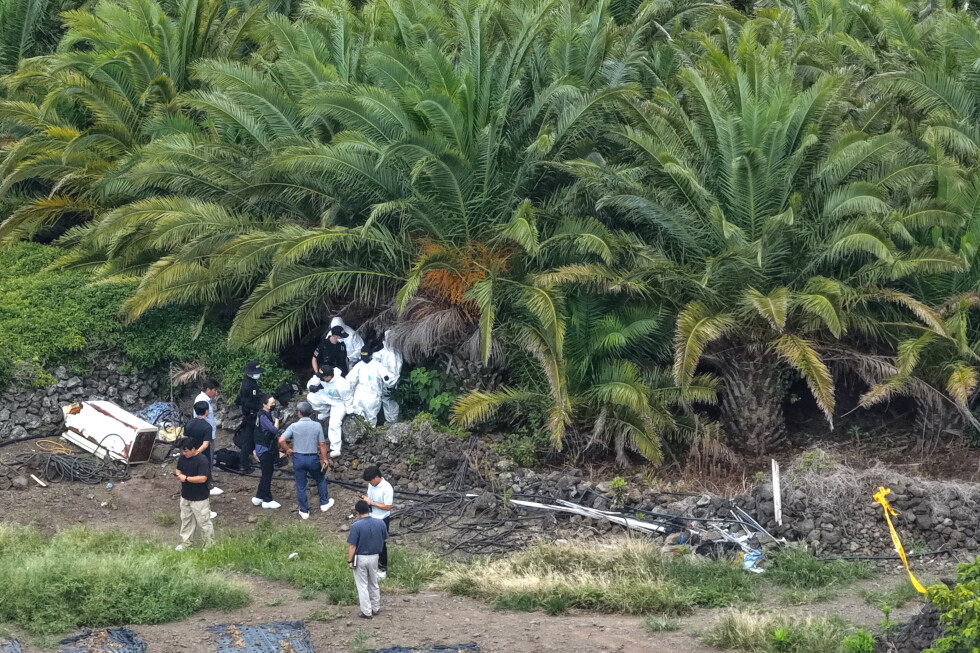
South Korean police scandal over missing person cases deepens public distrust
A damaging police scandal centered on falsified case documents has rocked South Korea’s law enforcement community, exposing critical gaps in internal oversight and sending public trust in national police to historic lows. The controversy unfolded after four missing people were found dead in recent days on Jeju Island, the country’s top tourist resort, with two of the deaths tied to alleged misconduct by a serving police officer identified only by his family name, Bu.
The timing of the scandal is particularly sensitive, as South Korea prepares to implement a major restructuring of its criminal justice system that will transfer full investigative authority from prosecutors to police. Amid mounting public outcry, President Lee Jae Myung issued a direct directive at a weekly Cabinet meeting Tuesday, ordering the prime minister to develop comprehensive proposals for sweeping police reform.
Investigations into Bu’s conduct reveal two clear instances of alleged document fraud in missing person cases. In the first, Bu closed the case of 37-year-old Jang Mi-ran, who disappeared more than three months ago, without ever confirming her safety. He allegedly lied to Jang’s boyfriend, claiming he had spoken to her by phone and that she had explicitly requested her location remain private. It was only after Jang’s family discovered the falsification earlier this month, shared her photograph online, and issued a public appeal for information that the case gained widespread national media attention. Jang’s body was recovered Monday from a local palm tree farm on Jeju.
Bu is also accused of using the same deceptive tactic to close a second missing person case from last month involving a 60-year-old man. The man’s body was found Saturday, also on Jeju Island. Police took Bu into custody on Monday and launched a full review of all 298 missing person cases he has managed since 2023, as investigators work to uncover the motive behind his alleged mishandling of the two high-profile cases.
In testimony before a parliamentary committee Monday, acting National Police Agency Commissioner Yoo Jae-seong issued a formal public apology for the incident. “We feel deeply sorry for causing concerns to the public over the handling of missing person cases in Jeju,” Yoo stated. He acknowledged the fiasco stems from both individual error and deep-rooted systemic failure: a now-suspended policy that allowed frontline officers to close missing person reports independently without any mandatory review or approval from supervisory staff. Both Interior and Safety Minister Yun Hojung and Jeju Provincial Police Chief Ko Pyeong-ki have issued separate public apologies for the institutional failures that allowed the misconduct to occur.
This scandal is not the first blow to South Korean police’s reputation in 2024. Earlier this year, the force faced fierce public condemnation over the brutal killing of a high school girl, after it was revealed that the suspect’s father, a serving police officer, and other colleagues were accused of tampering with evidence to reduce the suspect’s potential charges and sentencing.
In a Tuesday editorial, major South Korean newspaper JoongAng Ilbo summed up widespread public frustration, writing: “Public anxiety has grown as flaws in the policing system have emerged, while confidence in the police has plummeted. People are entitled to wonder where they can turn when even reporting a disappearance does not ensure an investigation.”
Beyond the damage to national law enforcement’s reputation, the four deaths have sparked fears for Jeju’s multibillion-dollar tourism industry. The island, located off the southern coast of the Korean Peninsula and nicknamed the “Hawaii of Korea” for its dramatic volcanic coastlines and lush tropical scenery, draws millions of domestic and international visitors annually. Two additional bodies were found on the island in recent days — one Sunday and one Monday — both of whom had been reported missing, though Bu was not involved in handling their cases. Social media platforms across South Korea have been flooded with warnings about Jeju’s safety, alongside unsubstantiated rumors and criticism of local authorities.
Jeju provincial officials have moved quickly to mitigate damage to the island’s brand, noting that as of yet there has been no significant drop in tourist arrivals. On Thursday, Jeju Governor Wi Seong-gon unveiled a package of new public safety measures to restore public confidence, including the development of a standardized integrated emergency response protocol for missing person cases, installation of additional security cameras across high-traffic and remote areas of the island, and expanded joint patrols pairing police with civilian volunteer groups.
“ We will concentrate all our efforts on protecting the everyday lives of Jeju residents and visitors and upholding public confidence in Jeju as a safe destination,” Wi told reporters at a Thursday press conference.
-
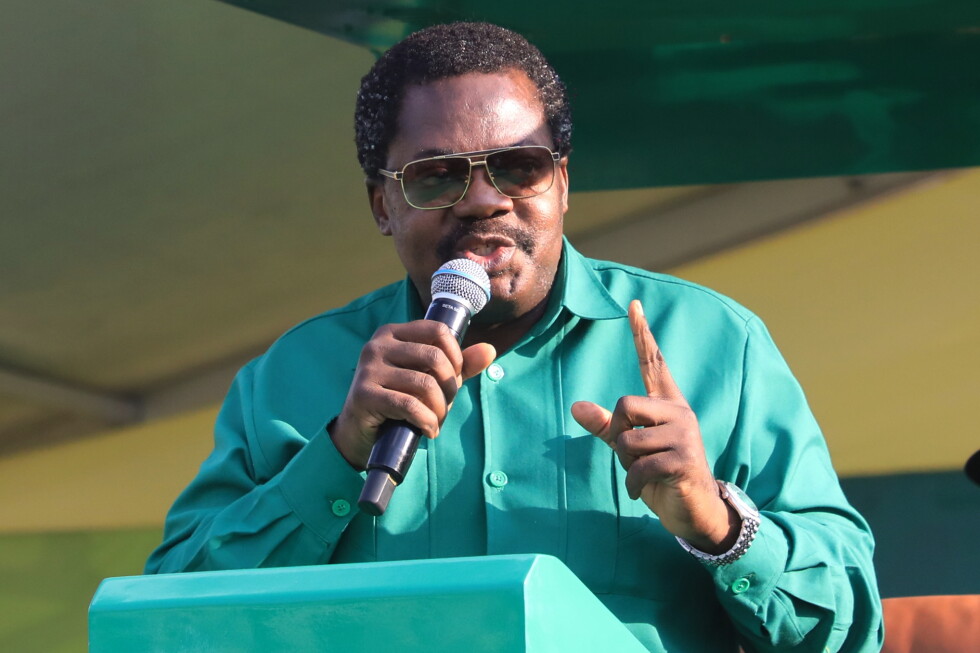
Tanzania’s resigning vice president expelled from the governing party, deepening test to democracy
Political tensions have surged in Tanzania following a high-stakes move by the country’s long-ruling Chama cha Mapinduzi (CCM) party, which has formally expelled former Vice President Emmanuel Nchimbi just days after his resignation — a decision that analysts say will put to the test the East African nation’s long-held reputation as a haven of relative regional peace and stability.
CCM Secretary-General Asha-Rose Migiro announced the disciplinary action against Nchimbi Wednesday evening, telling reporters the party voted to punish the outgoing vice president for indiscipline. To fill the upcoming vacancy, the ruling party has nominated Energy Minister Deogratius Ndejembi to serve as deputy to President Samia Suluhu Hassan, with the appointment set to take effect once Nchimbi steps down on September 4.
The current political upheaval is widely viewed as the latest aftershock from the deeply contentious October 2024 presidential election, a poll that saw widespread unrest after key opposition candidates were disqualified from running. In response to resulting protests, security forces were deployed across the country, and national internet access was shut down for multiple days — a step Hassan later publicly apologized for, vowing the measure would never be repeated during her tenure.
The president’s main opposition challenger, Tundu Lissu, remains in prison on treason charges that he and his supporters argue are politically motivated, a point that has drawn sustained international criticism of the Hassan administration.
Nchimbi’s surprise resignation has sent shockwaves through Tanzanian political circles, where the CCM has overseen decades of unbroken rule and broad public support for stable governance. In his brief public statement after stepping down, Nchimbi confirmed his resignation would go into force September 4, and added that he would continue to live as “a good citizen” of Tanzania. But independent political analysts note his departure is no ordinary personnel shift: multiple sources close to internal party discussions say Nchimbi broke with Hassan over her administration’s governance approach, particularly over the brutal government crackdown on opposition protests that took place during and immediately after the October election.
An official post-election public inquiry commissioned to probe the unrest documented at least 518 deaths linked to the election-related violence. Commission chair Mohamed Chande Othman told reporters when the report was released in April that the actual death toll is almost certainly higher, as many families buried victims privately without registering their deaths at morgues. The commission’s final report called for a full independent investigation into security forces’ use of firearms, with multiple witnesses testifying that some victims were shot and killed while inside their own homes, posing no immediate threat to officers.
CCM, Tanzania’s ruling party in various iterations, has held uninterrupted power since the country gained independence from the United Kingdom in 1961. The party is deeply integrated into the Tanzanian state, holding effective control over the country’s entire national security apparatus and maintaining a rigid internal structure that sees leadership transitions occur only every five to 10 years.
Hassan’s own rise to the presidency followed a rare unplanned peaceful transition in 2021, when she stepped up from the vice presidency after sudden death of her predecessor, John Pombe Magufuli, early in his second term. That orderly transfer of power reinforced Tanzania’s standing as a politically stable, peaceful state in a region that has seen repeated political upheaval — a core selling point that has long cemented CCM’s broad popularity, particularly among rural Tanzanian voters.
This report was contributed by Rodney Muhumuza from Kampala, Uganda, and an anonymous Associated Press correspondent in Dar es Salaam, Tanzania, who requested anonymity due to ongoing security risks for journalists working in the country.
-
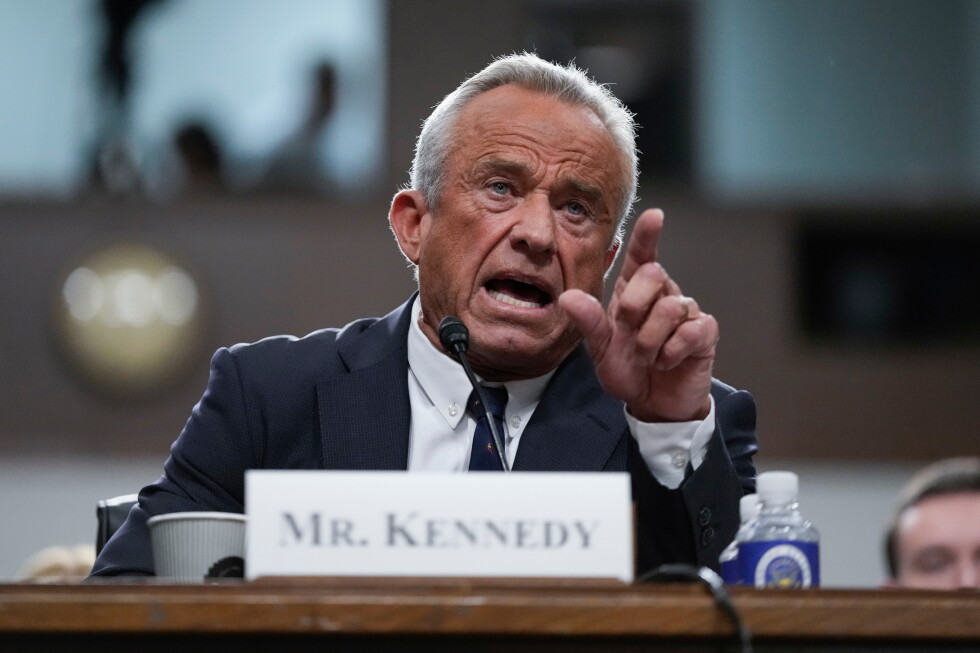
Exclusive: RFK Jr. said a Samoa trip had nothing to do with vaccines. New documents refute that
WASHINGTON, D.C. — Newly uncovered correspondence has thrown into sharp question the truthfulness of U.S. Health and Human Services Secretary Robert F. Kennedy Jr.’s 2024 confirmation testimony, directly contradicting his repeated claims that his 2019 trip to Samoa had no connection to vaccines.
When Kennedy appeared before Senate lawmakers last year to secure confirmation for his cabinet post — one he secured only after winning over skeptical Republican supporters — he denied multiple times that vaccines were the impetus for his visit to the Pacific island nation ahead of a devastating 2019 measles outbreak that killed 83 people, most of them children under five. Kennedy, who was one of the most high-profile anti-vaccine activists in the U.S. before taking office, told senators the trip was solely meant to roll out a digital health record system to improve local care delivery.
But documents obtained jointly by The Associated Press and The Guardian through a freedom of the press lawsuit against the U.S. State Department tell a different story. Dated January 20, 2019, the newly released letter on the letterhead of Kennedy’s former anti-vaccine nonprofit Children’s Health Defense (CHD) is addressed directly to Samoa’s then-prime minister Tuilaepa Sailele Malielegaoi. In it, Kennedy explicitly requests permission to lead a team to Samoa to investigate the country’s measles, mumps and rubella (MMR) vaccination program following the 2018 deaths of two children who had recently received MMR shots. The word “vaccine” or “vaccination” appears eight times across the text.
The 2018 child deaths, later confirmed by Samoan authorities to be the result of improper vaccine preparation by two nurses who ultimately pleaded guilty to manslaughter, prompted the Samoan government to pause all MMR vaccinations for 10 months. That pause sent vaccination rates plummeting across the country, creating the conditions for the deadly measles outbreak that emerged later in 2019. The letter reveals Kennedy speculated the deaths stemmed from vaccine manufacturing or lot issues, and proposed a “detailed health informatics assessment” of the country’s MMR program to examine his hypothesis.
“Adverse health events associated with vaccines” are rarely investigated quickly or thoroughly globally, Kennedy wrote, adding that existing health systems are not designed to rapidly trace connections between adverse diagnoses and specific vaccination events. Tuilaepa responded a month later welcoming the assessment and Kennedy’s planned visit, which went forward in May and June 2019. Previous reporting has confirmed Kennedy met with local anti-vaccine activists during the trip, and public health experts have widely noted that Kennedy’s high-profile visit emboldened anti-vaccine sentiment that slowed Samoa’s outbreak response.
In a statement responding to questions about the newly released documents, the Department of Health and Human Services repeated Kennedy’s original claim that the Samoa visit was “unrelated to vaccines.” The department called any suggestion that Kennedy lied to Congress “not only false but outright defamatory,” noting Kennedy was not under oath during his confirmation hearing. However, U.S. law classifies knowingly providing false material testimony to Congress as a felony punishable by prison time regardless of oath, even though prosecutions for the offense are extremely rare.
Neither the White House, Kennedy himself, nor current and former Samoan government officials responded to requests for comment on the new disclosures.
The revelation adds to a growing pattern of broken promises from Kennedy on vaccine policy, which dogged his confirmation from the start. To win confirmation, Kennedy pledged to maintain existing vaccine policies and keep in place the membership of the federal government’s key vaccine advisory committee. Once in office, he removed all 17 existing committee members and replaced them with hand-picked advisers aligned with his anti-vaccine views. Sen. Bill Cassidy, the Republican chair of the Senate health committee and a staunch vaccine proponent whose critical support secured Kennedy’s confirmation, has since publicly acknowledged Kennedy broke his commitments, saying “The commitments that were made to me have been violated.”
Now, Democratic lawmakers are pushing for accountability. Sens. Ron Wyden of Oregon and Edward Markey of Massachusetts, both Democrats who grilled Kennedy on the Samoa trip during his confirmation hearing, have accused Kennedy of lying to Congress. Wyden, the ranking member of the Senate Finance Committee, has promised to push Republican leadership to refer the matter to the U.S. Department of Justice for investigation, and pledged that Democrats would hold Kennedy fully accountable if their party reclaims control of the Senate in the upcoming fall elections. “There are consequences for lying to Congress,” Wyden said.
Legal experts note lawmakers could use the new disclosures as justification for congressional hearings, a formal investigation, or even an impeachment inquiry. But such action is widely considered unlikely in the current Republican-led Congress, which aligns closely with the priorities of the Trump administration that appointed Kennedy.
-
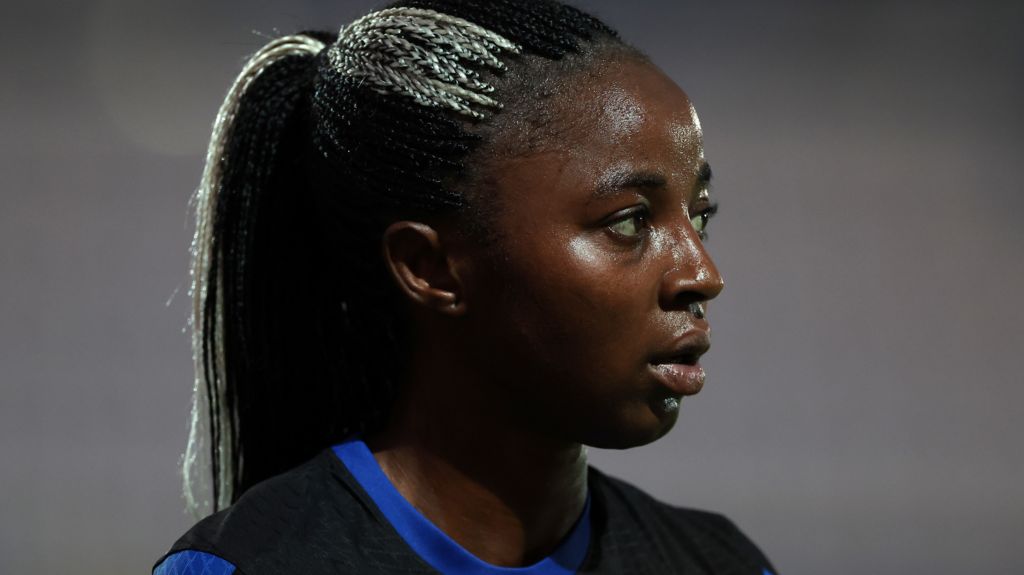
Anger in Cameroon over femicide after eight women killed in a week
A gruesome spike in the killing of women across Cameroon has ignited widespread public anger, with activists, opposition figures and even a top national sports star pushing authorities to take urgent action to curb the rising tide of gender-based violence.
Over the first four months of this year alone, official data records at least 50 women murdered across the country, putting 2026 on track to outpace last year’s total of 77 femicide deaths. The most recent high-profile incident unfolded earlier this week in the capital Yaoundé, where a 44-year-old woman was found stabbed to death in a local hotel. A 22-year-old suspect has since been taken into police custody in connection with the killing.
The violence has drawn condemnation from across Cameroonian society, with one of the nation’s most prominent female athletes, international footballer Nchout Njoya Ajara, emerging as a leading voice demanding change. In a forceful rebuke of the ongoing crisis, Ajara argued that being a woman in Cameroon should never amount to a death sentence. “In the face of the tragic wave of femicides that has hit our country in recent days, silence is complicity,” she stated.
Most of the recorded femicide cases across the country are linked to domestic violence, with incidents reported in every region from urban centers to rural communities. The main opposition party, the Cameroon Renaissance Movement (CRM), has blasted the ruling government for what it calls dangerous inaction on the crisis, saying it is appalled by the repeated tragedy of domestic femicides that continue to claim lives.
Government officials have acknowledged the scope of the problem, with Women’s Empowerment and Family Minister Marie-Thérèse Abena Ondoa condemning the worrying upward trend in killings. In a public address shared via state media, Ondoa confirmed that the administration is moving to address the crisis, pointing to a long-drafted bill designed to strengthen protections for women against all forms of gender-based violence. The legislation is currently under review by the prime minister’s office, she said.
But women’s rights advocates and civil society organizations say the government has dragged its feet on turning the proposed protections into enforceable law, and doubt the bill will move forward during the final parliamentary session of the year scheduled for November. Viviane Tathi, whose organization tracks and documents femicide cases across Cameroon, told the BBC that the session is already reserved almost entirely for budget debates, leaving little time for priority social legislation. “We are worried because the November parliamentary session focuses on budgetary debates…So, we don’t know by what magic this bill will be passed,” Tathi explained. She has joined other activists in calling for the creation of a dedicated specialized court to handle family disputes, the root cause of most domestic violence and femicide cases in the nation.
-

All Blacks name Carter to replace Moorby against Springboks in 2nd test
Ahead of the second test of a four-match series between New Zealand’s All Blacks XV and South Africa’s Springboks at Cape Town Stadium this weekend, the All Blacks have unveiled three significant adjustments to their starting lineup, including a tactical swap that sees promising winger Leroy Carter step into the starting left wing position.
Carter’s promotion comes after Josh Moorby, who scored the All Blacks’ second try in last Saturday’s opening test at Johannesburg’s Ellis Park, was dropped to the reserve bench. That opening match ended in a 33-16 win for New Zealand over the world-champion Springboks, putting the All Blacks in a strong position to secure at least a share of the series with a second victory this weekend.
Two of the All Blacks’ changes are enforced, rather than tactical, after starting loosehead prop Ethan de Groot and lock Josh Lord collided heads while executing a double tackle in the first test. Both players are unavailable for selection for Saturday’s match, opening starting spots for George Bower and Tupou Vaa’i respectively. Bower, who delivered a strong impact performance coming off the bench in the opening test, will make his first test start since 2022. His addition is expected to strengthen the All Blacks’ scrum, which was consistently pushed back by South African front row pressure in the first test. Vaa’i’s shift into the starting lock spot created a vacancy at blindside flank, which will be filled by Simon Parker. Two new players, prop Xavier Numia and lock Patrick Tuipulotu, have been added to the matchday reserve squad to round out the All Blacks’ adjustments.
South Africa has already announced its own adjusted starting lineup, with four changes headlined by the return of captain Siya Kolisi to the run-on side following a hamstring injury that kept him sidelined for the first test.
In a last-minute officiating adjustment, referees Angus Gardner and Nika Amashukeli have swapped assignments for the remaining tests in the series. Amashukeli was originally scheduled to referee Saturday’s second test, but has not yet recovered from an illness. Gardner, who was originally set to lead officiating for the third test in Johannesburg, will now take over Saturday’s match, while Amashukeli will step into Gardner’s original role for the third Johannesburg test. Gardner most recently oversaw the All Blacks’ narrow 41-35 win over the Lions in a midweek match on Tuesday, giving him recent on-field experience with the New Zealand side ahead of this weekend’s test.