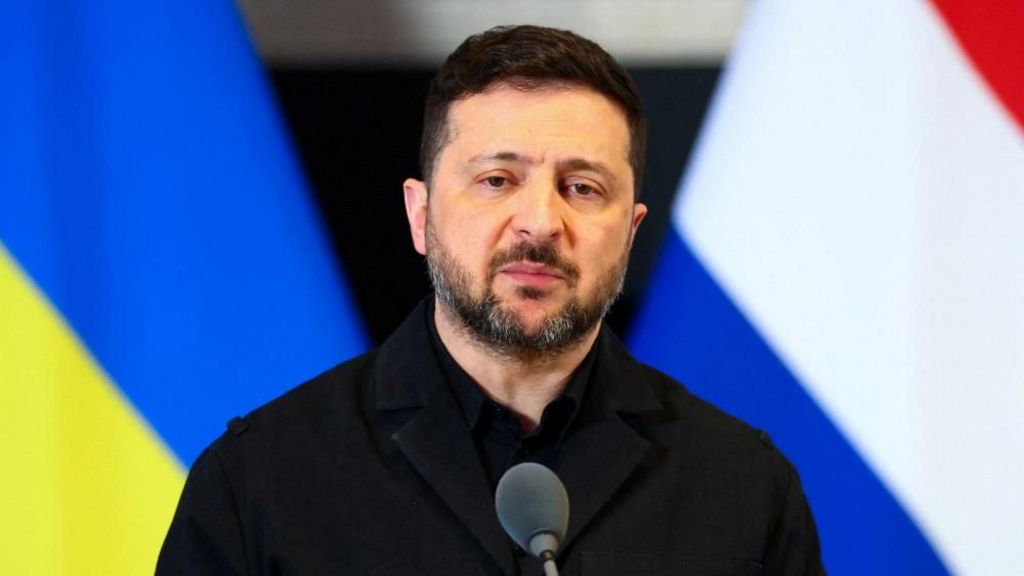
On Sunday, UK Prime Minister Keir Starmer is set to host a high-stakes meeting at 10 Downing Street, bringing together Ukrainian President Volodymyr Zelensky, French President Emmanuel Macron, and German Chancellor Friedrich Merz to discuss continued European military and political support for Kyiv amid Russia’s ongoing full-scale invasion. The summit marks the second gathering of the three major European powers (known as the E3) with Zelensky since last December, as diplomatic momentum on the conflict shifts back to European capitals following the stall of U.S. mediation efforts.
Hours before the leaders convened, Ukraine confirmed a new Russian drone attack on a spent nuclear fuel storage facility adjacent to the closed Chornobyl nuclear plant in northern Ukraine. Ukrainian state nuclear operator Energoatom reported that the strike partially damaged the storage building and sparked a fire that was quickly extinguished by emergency crews. No casualties were reported, and official monitoring confirmed radiation levels remain within normal, safe limits. Despite the lack of a radiological incident, both Energoatom and Zelensky condemned the attack as a deliberate violation of nuclear safety norms. Zelensky labeled the strike “vile” in a social media post, emphasizing that the targeted site qualifies as extremely critical energy infrastructure.
The Chornobyl attack is part of a broader wave of Russian airstrikes across Ukraine that has intensified in recent days. In the southeastern region of Zaporizhzhia, local authorities reported that a separate Russian strike on a rural village killed at least three civilians, marking the second consecutive day of deadly attacks in the area—two civilians were also killed in Russian bombardments there on Saturday. Zelensky added context to the scale of recent Russian aggression, noting that over the past seven days, Moscow has launched 88 missiles, more than 3,200 drones, and 1,800 precision-guided bombs against targets across 13 Ukrainian regions.
The latest exchange of cross-border strikes follows two consecutive Ukrainian drone attacks on the St. Petersburg region in Russia last week, timed to coincide with Putin’s flagship annual economic forum. Ukrainian strikes hit targets on the opening and final days of the event, with Russian authorities describing the second attack as “unprecedented.” The strikes, which reached more than 1,000 kilometers from Ukrainian territory, demonstrate how far Ukraine’s domestic defense industry has advanced since Russia’s 2022 invasion, allowing Kyiv to regularly strike deep within Russian borders.
Sunday’s Downing Street meeting comes at a pivotal moment for Western support for Ukraine. The E3 group—comprising the UK, France, and Germany—remains among Kyiv’s most steadfast international backers. The UK and France currently lead the “coalition of the willing” initiative, which aims to craft binding security guarantees for Ukraine as a foundation for any future peace negotiation process. The last E3-Zelensky meeting was held in London last December, at a time when the United States was aggressively pushing for a rapid ceasefire deal between Moscow and Kyiv. Since that gathering, however, U.S. mediation efforts have stalled, and Washington’s foreign policy focus has shifted to escalating conflict in the Middle East.
Diplomatic progress hit a new roadblock late last week, when Russian President Vladimir Putin rejected Zelensky’s public call for face-to-face peace negotiations. Speaking on the final day of the St. Petersburg economic forum, Putin argued that a ceasefire would only allow Ukraine to rebuild its military forces and strengthen its position for future combat, repeating his longstanding stance that Russia will only end its offensive once it achieves its stated territorial and political goals. In his open letter calling for direct talks, Zelensky had argued that it would be irresponsible for Ukraine to simply wait for the United States to refocus its attention on the war, signaling that Kyiv is looking to European allies to take a leading role in moving the peace process forward in the interim.