作者: admin

  • South Africa’s president unveils crackdown on illegal migration

    South Africa’s president unveils crackdown on illegal migration

    Against a backdrop of surging anti-migrant tensions, soaring public frustration over record-high unemployment, and planned anti-foreigner marches, South African President Cyril Ramaphosa has addressed the nation to roll out a sweeping five-point plan to curb undocumented migration across the country.

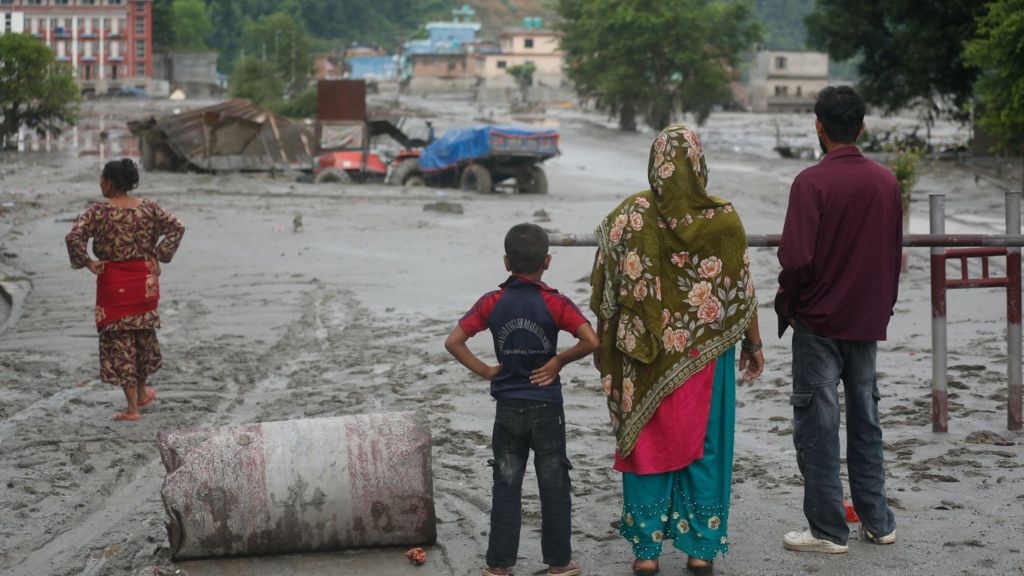
    The unfolding crisis has already prompted multiple African nations to organize evacuation operations for their citizens, as violent intimidation pushes thousands of migrants to flee their homes or voluntarily return to their countries of origin. Over the past week alone, around 140 migrants boarded government-arranged buses bound for Malawi and Mozambique, following a wave of door-to-door harassment in the Overberg region of Western Cape that left two Mozambican nationals dead in Mossel Bay. Hundreds of displaced migrants sought temporary shelter in community halls, coastal areas and nearby mountain ranges, while in Durban, dozens of foreign nationals have spent weeks camped outside the city’s home affairs department, relying on phone updates of Ramaphosa’s address as they live in constant fear for their personal safety.

    Ramaphosa’s new strategy targets five core areas of the crisis: holding violators of immigration law accountable, strengthening border control infrastructure and enforcement, rooting out systemic corruption within the country’s immigration bureaucracy, closing existing legal loopholes that enable undocumented entry and stay, and building collaborative partnerships with other African nations to address cross-border migration challenges.

    Among the most significant new measures is the introduction of prison time for employers that knowingly hire undocumented workers. Currently, businesses caught violating this rule only face small financial penalties, and exploitative employers often take advantage of undocumented migrants by paying wages far below the national minimum wage. To enforce this new rule, the administration plans to hire 10,000 additional labor inspectors to conduct targeted compliance checks across all sectors.

    The president also announced plans to speed up deportation proceedings for undocumented migrants by establishing dedicated immigration courts, and to roll out a universal biometric national register to eliminate widespread identity theft enabled by the outdated green paper ID system, which will be phased out entirely as the country transitions to a fully digital national ID system for all residents. Other imminent changes include moving all refugee reception centers from inland population centers to official border posts, introducing national quotas for foreign employment across every economic sector, and launching a full registration drive for all informal township grocery stores, commonly known as spaza shops, many of which are owned and operated by foreign migrants. These small businesses have repeatedly been targeted during past waves of xenophobic violence in South Africa.

    In his national address, Ramaphosa acknowledged that undocumented migration has placed unfair additional strain on South Africa’s already stretched public services, a core grievance cited by anti-migrant groups that have set a June 30 deadline for all undocumented migrants to leave the country. However, he issued a sharp warning against vigilantism and extrajudicial action, emphasizing that only authorized government officials are permitted to enforce immigration law.

    “No other person is allowed, for example, to confront someone in the street to demand proof of nationality,” Ramaphosa said, adding that the government would not tolerate groups exploiting public anxiety over illegal migration to advance personal, political or criminal agendas. He also cautioned against the spread of misinformation about foreign nationals on social media, stressing that “there is no space for xenophobia, racism, sexism, Afrophobia or any other forms of intolerance in South Africa.”

    “Our country – like many others throughout history – is a product of migration. It is the reason for our diversity and contributes to our vibrancy,” he added.

    Official data places the total foreign-born population of South Africa at more than three million, roughly 5% of the country’s total population, though independent estimates suggest the number of undocumented residents is far higher. Ramaphosa noted that illegal migration routes have become increasingly intertwined with transnational organized crime, adding that the Border Management Authority intercepted more than 450,000 attempted illegal entries into the country in the past 12 months alone.

    Some political analysts have linked the recent resurgence of anti-migrant sentiment to upcoming local government elections scheduled for November. To coordinate regional cooperation on the new policy, Ramaphosa announced he will dispatch special envoys to capitals across Africa to outline the reforms, noting that regional peace and economic development are critical to reducing irregular migration pressures on South Africa.

    Closing his 30-minute address, Ramaphosa struck an optimistic tone, saying the package of reforms would help the country build a “secure, lawful, compassionate and prosperous” nation. “South Africa has overcome far greater challenges than this. We have overcome division. We have overcome conflict. We have overcome injustice. We will overcome this challenge too,” he said.

    South Africa currently holds one of the highest unemployment rates in the world, with roughly 33% of the workforce out of a job, and youth unemployment exceeding 60%, a statistic that has fueled widespread public frustration over competition for jobs and public resources.

  • China’s Xi to visit North Korea after meetings with Trump, Putin

    China’s Xi to visit North Korea after meetings with Trump, Putin

    Just weeks after hosting back-to-back summits with U.S. President Donald Trump and Russian President Vladimir Putin, Chinese President Xi Jinping is scheduled to arrive in Pyongyang on Monday for a high-profile meeting with North Korean leader Kim Jong Un. This visit comes at a pivotal moment for regional and global geopolitics, as Washington’s diplomatic efforts to denuclearize North Korea remain firmly deadlocked.

    For decades, China has stood as North Korea’s largest trading partner by a significant margin, and has long served as Pyongyang’s primary provider of both diplomatic backing and economic assistance to the country of 26 million people. During last month’s Beijing summit between Xi and Trump, the White House confirmed that the two leaders reaffirmed their shared commitment to the goal of complete denuclearization on the Korean Peninsula. Chinese Foreign Ministry spokesperson Mao Ning outlined the agenda for Xi’s meeting with Kim on Friday, stating the pair will exchange in-depth views on the future of bilateral relations and pressing regional issues of shared concern, with the aim of advancing greater stability for the Korean Peninsula and global peace at large.

    However, just 24 hours ahead of Xi’s arrival, Kim Jong Un’s influential sister issued a stark reminder of Pyongyang’s non-negotiable stance: North Korea’s nuclear weapons program remains a “line of no retreat” that the country will not abandon under any circumstances.

    Regional diplomacy experts note that Beijing’s core priority in the region has shifted in recent years, amid growing tensions between China and the United States. “China has always prioritized stability on the Korean Peninsula, and right now it has to carefully manage its broader relations and long-running differences with the U.S.,” explained Minseon Ku, a professor of diplomacy at DePaul University, in an interview with Agence France-Presse. “It is likely Beijing has already come to accept North Korea as a de facto nuclear state, but Xi will almost certainly convey to Kim that China values regional stability above all other outcomes.”

    Seong-Hyon Lee, a visiting scholar at the Harvard University Asia Center, echoed this analysis, pointing out that Beijing is moving away from attempting to force Pyongyang to abandon its nuclear program and toward a strategy of guaranteeing the durability of the North Korean regime. “China’s broader regional strategy benefits from a stable, heavily armed, aligned buffer state that occupies the military attention and resources of the U.S. and its regional allies,” Lee noted.

    Since the collapse of the 2019 summit between Kim and Trump, which fell apart over disagreements on the scope of denuclearization and the scale of sanctions relief, Pyongyang has repeatedly and publicly declared its status as an irreversible nuclear weapons state. During his first term in office, Trump met with Kim three times, but his October 2024 comment that he was “100 percent” open to another meeting with the North Korean leader has gone unanswered by Pyongyang.

    In recent months, Kim has gained greater diplomatic and material leverage from the ongoing war in Ukraine. After committing thousands of North Korean troops to fight alongside Russian forces in Ukraine, Pyongyang has secured critical military technology, food, and economic support from Moscow. This growing Russia-North Korea alignment has led some analysts to speculate that Xi’s visit is, in part, an effort to push back against Moscow’s expanding influence in Pyongyang. But DePaul University’s Ku pushed back on that framing, arguing that “overall, Moscow cannot match China’s historic role and influence in North Korea.” She added, “Russia and North Korea have a far more equal dynamic than China and North Korea: Moscow needs Kim’s support for its war in Ukraine just as much as Pyongyang needs Russian technology and food aid.”

    The last meeting between Xi and Kim took place in September 2025, when Kim joined Putin as a guest of honor at a Beijing military parade marking the 80th anniversary of the end of World War II and the defeat of imperial Japan. Analysts say that high-profile appearance highlighted Kim’s rising global standing, placing him alongside the leaders of the two largest Eurasian powers in a moment of international attention.

    Against a backdrop of growing U.S. geopolitical competition and an increasingly unpredictable Washington under the second Trump administration, Xi has hosted a steady stream of global leaders in recent months as Beijing works to shore up its network of regional and global alliances. Simultaneously, ongoing conflicts in the Middle East have diverted much of Washington’s attention and military resources, leaving the Trump administration with little progress to show on North Korea policy, particularly on the nuclear file, despite earlier high-profile summits with Kim.

    Notably, North Korea is the only country in the world that maintains an official, binding military alliance with China. “The U.S. is currently engaged in aggressive actions that threaten core Chinese interests, including global energy supply routes,” explained Vladimir Tikhonov, a professor of Korean Studies at the University of Oslo. “It appears Xi is seeking to consolidate his alliance with Pyongyang in large part to counter these U.S. moves.”

    Analysts also point out that North Korea serves as a strategic counterweight to U.S. allies in the region, including South Korea and Japan, at a time when Beijing is increasing pressure on the self-ruled island of Taiwan, which China claims as its sovereign territory. Relations between China and Japan, already strained for years, have deteriorated further recently after Japanese Prime Minister Sanae Takaichi, a prominent security hawk, suggested last year that Tokyo could intervene militarily if China attempts to take control of Taiwan by force.

    “As China’s international influence continues to grow, Beijing is likely seeking to draw Pyongyang more actively into its broader diplomatic orbit to advance its regional strategic goals,” noted Lim Eul-chul, a leading North Korea expert at South Korea’s Kyungnam University.

  • Trump abruptly ends NBC interview after clash over ‘rigged election’ claim

    Trump abruptly ends NBC interview after clash over ‘rigged election’ claim

    A high-profile interview with former U.S. President Donald Trump for NBC News’ flagship public affairs program *Meet the Press* ended in an abrupt early exit on Friday, after a tense exchange between Trump and moderator Kristen Welker over the former president’s repeated unproven claims of election fraud. Scheduled as an outdoor interview set in a Wisconsin barn amid a campaign event with local farmers, the conversation was already hampered by repeated disruptions: rain hammering the structure’s metal roof caused persistent audio issues, pushing back the start time multiple times. Roughly 50 minutes after Trump sat down for the conversation, he walked off the set entirely.

    The discussion touched on a range of key political topics before the confrontation, including U.S. foreign policy regarding Iran. Trump pushed back against suggestions that U.S. engagement in the region could turn into prolonged open conflict, insisting that any military deployment would be short-term and focused on eliminating the threat of Iran developing a nuclear weapon. “We’re there for a few months and the threat is largely over,” he told Welker.

    Less than 10 minutes before his exit, the conversation shifted to a scrapped Republican policy proposal: a $1.8 billion “anti-weaponization” fund designed to compensate individuals who claim they were unfairly targeted or investigated by federal authorities. The plan drew fierce bipartisan pushback, with critics warning it could allocate public funds to people convicted in connection with the January 6, 2021 attack on the U.S. Capitol. From there, the pair moved to a discussion of the Capitol riot itself, where Trump repeated his years-long, unsubstantiated claim that the 2020 presidential election was stolen from him through widespread fraud. Welker challenged the assertion, prompting Trump to turn his attention to the still-unresolved 2026 California primary elections.

    Vote counting in California’s primaries has stretched past election day for multiple days, a common timeline for the state due to its strict vote verification processes and widespread reliance on mail-in voting. Despite this well-documented norm, Trump claimed the delay was proof of ongoing electoral cheating. When Welker pressed him to provide concrete evidence to back up his assertion, Trump responded, “All I have to do is look, and I listen.” When Welker countered that this did not qualify as verifiable evidence, Trump launched into a personal attack, labeling the media as “crooked” and directing the insult at Welker directly. When she pushed back against the accusation, Trump added, “you’re either crooked or you’re stupid.”

    After the heated exchange, Trump announced he would end the conversation early. “Sorry, let’s call it quits because I’ve had enough. Thank you darling, have a good time,” he said. Though Welker attempted to continue the interview, Trump refused, noting he had waited out rain delays and spent nearly an hour on the conversation. “I’ve sat in the rain with you for an hour, on and off in the rain, and I’ve given you enough time,” he said. “You ought to straighten out your press, because you know what? A country can never be great with a dishonest press.” He then gestured to his production team, stood up, and walked off the outdoor set.

    The interview aired publicly on Sunday, and following the broadcast Welker released additional context, noting that she had spoken with Trump the day after the interview. Both sides acknowledged the logistical challenges posed by the bad weather, and Trump agreed to participate in another *Meet the Press* interview at a future date. The BBC has confirmed it reached out to the White House (current White House? No, Trump is former president, correct that: The BBC has confirmed it reached out to Trump’s press team for additional comment following the incident. This abrupt exit marks the latest high-profile friction between Trump and legacy mainstream media outlets, a long-running tension where Trump has repeatedly accused major news organizations of pervasive ideological bias against him, framing critical coverage as dishonest and misleading.

  • Brazil right back Wesley is out of the World Cup with a thigh injury, and Éderson is replacing him

    Brazil right back Wesley is out of the World Cup with a thigh injury, and Éderson is replacing him

    MORRISTOWN, N.J. — With less than seven days remaining until Brazil kicks off its 2026 FIFA World Cup group stage campaign against Morocco, the South American powerhouse has been forced to implement a last-minute injury-induced adjustment to its 26-player squad. Veteran right back Wesley has been withdrawn from the roster, with 26-year-old midfielder Éderson tapped as his official replacement, the Brazilian Football Confederation announced Sunday.

    The injury occurred during Brazil’s pre-tournament friendly against Egypt held in Cleveland Saturday night. Wesley was forced to leave the pitch early in the contest after suffering a muscle strain in his left thigh. Follow-up diagnostic imaging confirmed the damage was severe enough to rule the defender out of the entire World Cup, ending his bid to compete for soccer’s most prestigious global prize before the tournament even officially began.

    In a public statement confirming the roster change, the confederation highlighted the popular defender’s standing within the national team setup: “Wesley is an athlete deeply loved by every member of this group, and he will always remain a part of this squad that is chasing Brazil’s sixth World Cup title.”

    Éderson is already en route to Brazil’s U.S.-based training camp to link up with his teammates ahead of the opening match. Brazil is scheduled to play its first group stage fixture this coming Saturday at the Meadowlands Sports Complex in East Rutherford, New Jersey, just a short distance from the announcement’s location in Morristown.

    This late roster change is not the only injury concern plaguing Brazil’s pre-tournament preparations. Star forward Neymar, the 34-year-old attacking talisman, remains sidelined with a nagging calf injury and did not travel with the rest of the squad for the Cleveland friendly against Egypt. The team has not yet released an update on whether Neymar will be fit enough to feature in the tournament opener against Morocco.

  • South Africa’s president acknowledges rising tensions over migration

    South Africa’s president acknowledges rising tensions over migration

    CAPE TOWN, South Africa – As anti-immigrant demonstrations and anti-foreigner sentiment spread across Africa’s most industrialized economy, South African President Cyril Ramaphosa has pledged to address widespread public concerns over unauthorized migration, following multiple reports of targeted xenophobic violence that have drawn condemnation from neighboring nations. In a nationally televised address dedicated exclusively to the escalating crisis, Ramaphosa acknowledged the deep social and economic tensions that have pushed migration to the top of the national political agenda, a moment that comes after protest groups demanding stricter border controls issued a June 30 deadline for all undocumented foreign nationals to leave the country and formally requested negotiations with the sitting government.

    South Africa carries a long, painful history of violence rooted in anti-migrant anger, most infamously a 2008 wave of xenophobic assaults that left more than 60 foreign-born residents dead, according to documentation from international human rights organizations. In recent months, organizations calling for a sweeping government crackdown on unauthorized immigration have gained significant public traction through a rolling series of nationwide protests, framing the presence of undocumented migrants as a direct strain on South Africa’s already struggling public systems. Protesters argue that unauthorized workers are worsening the country’s already record-breaking unemployment rate, which already sits at cripplingly high levels, while adding unmanageable pressure to overburdened public health and education services that struggle to serve South Africa’s 62 million citizens.

    In his address, Ramaphosa conceded that the frustrations driving these protests hold legitimate weight. “Many South Africans are raising difficult but legitimate questions,” he stated. “These concerns are real. They deserve to be heard, and they deserve to be addressed.” But the president drew a clear line between public grievance and vigilantism, emphasizing that the government would not tolerate private groups taking enforcement of immigration law into their own hands. “Only authorized government officials can act against violations of our law,” he added, issuing a warning that a number of activist groups were deliberately inciting social unrest and stoking intercommunal tension.

    There are currently no official government statistics quantifying the total number of undocumented migrants residing in South Africa, but independent estimates place the population between 2 million and 5 million. For decades, South Africa’s status as the most economically developed nation in Southern Africa has made it a magnet for migrant workers fleeing economic instability and political unrest across the continent, with large migrant communities hailing from neighboring states including Zimbabwe, Mozambique and Lesotho, as well as further afield nations such as Nigeria, Ghana, Malawi and Ethiopia.

    In recent weeks, multiple source countries have spoken out after confirming their citizens have been targeted in violent xenophobic attacks. Last month, Ghana completed the repatriation of roughly 300 of its citizens from South Africa, and announced it would offer additional voluntary return trips for any Ghanaian nationals facing threats to their safety. Earlier this week, the Mozambican government confirmed that five of its citizens were killed in suspected xenophobic attacks in Mossel Bay, a coastal town on South Africa’s southern shore.

    Since South Africa’s current coalition government took office in 2024, immigration policy has been a central priority for the administration. Government data shows that more than 100,000 undocumented migrants have been deported over the past two years, and Ramaphosa confirmed Sunday that border enforcement officials turned away roughly 450,000 people attempting to cross into South Africa without valid documentation over the past 12 months. The president admitted that South Africa’s previous migration management framework suffered from critical “weaknesses,” and pledged that the current government would take “decisive” action to reform the system. Even as he promised action, Ramaphosa issued a national appeal for unity, urging South Africans not to turn against one another amid the ongoing debate over migration policy.

  • Denmark says soccer star Christian Eriksen ‘conscious’ after collapsing on field again in match

    Denmark says soccer star Christian Eriksen ‘conscious’ after collapsing on field again in match

    ODENSE, Denmark — A frightening echo of a 2021 medical emergency unfolded at Odense’s Nature Energy Park on Sunday, as Danish soccer star Christian Eriksen collapsed for the second time on an international pitch during a friendly fixture against Ukraine, leaving the global soccer community holding its breath. The 34-year-old midfielder, who already survived a life-threatening cardiac arrest at the 2020 European Championships, was seen clutching his chest with both hands during an off-the-ball play in the 65th minute of the match. Moments later, he fell to the turf, immediately surrounded by concerned teammates and opponents, with Ukraine’s coaching staff rushing to flag for medical support.

    The Danish Football Association confirmed in an update posted to X shortly after the incident that Eriksen remained conscious and was in stable condition given the circumstances. In a more detailed statement released 10 minutes after the initial alert, Denmark team physician Morten Boesen shared that the player had left the playing field on his own power, and that the pacemaker he has relied on since 2021 was functioning as intended. “He was briefly unconscious, but he regained consciousness very quickly, and we were able to establish contact with him right away,” Boesen explained. “He is now heading to hospital for extensive testing to identify what triggered this latest incident. We are maintaining constant communication with Christian and the hospital’s medical team, and he asked me to pass along a message to all his teammates: he is okay.”

    The referee officially abandoned the match in the 79th minute, when Denmark held a 2-1 lead, following consultations with both national team coaching staff and player groups. As Eriksen received on-site treatment, the stadium fell silent at first before a steady, loud chant of “Eriksen, Eriksen” rose from the stands to support the fan favorite. After the match was called off, players from both Denmark and Ukraine formed a collective circle around the two head coaches in one half of the pitch to discuss the situation, before both squads walked a lap of the field to acknowledge the crowd’s support, with several players visibly emotional.

    Sunday’s incident brings back traumatic memories of Eriksen’s first on-field collapse, which shocked global soccer during Denmark’s opening Euro 2021 group stage match against Finland in Copenhagen. At that time, Eriksen was clinically dead for five minutes before prompt emergency medical intervention saved his life. After being fitted with an implantable cardioverter defibrillator, the midfielder made a remarkable return to professional soccer just 259 days later. He went on to play for English clubs Brentford and Manchester United before signing with German side VfL Wolfsburg in 2025, where he is under contract through the 2026-27 season. Neither Denmark nor Ukraine have secured qualification for the upcoming 2026 FIFA World Cup.

  • One killed and five wounded in shooting attack in central Israel

    One killed and five wounded in shooting attack in central Israel

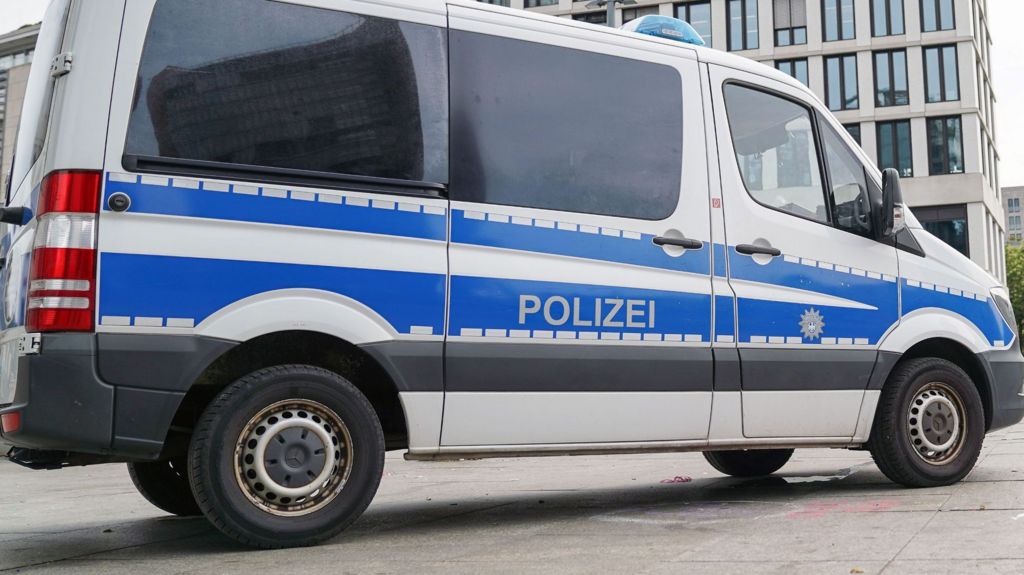
    A string of coordinated shooting incidents in central Israel has left one civilian dead and five others injured, triggering a large-scale manhunt, military deployments across the occupied West Bank, and sharp political rhetoric from both Israeli and Palestinian factions, official sources confirmed Sunday. The violence unfolded across three separate locations close to the West Bank city of Qalqilya, according to initial reports from Israeli law enforcement and emergency response teams. The fatality was identified as a 35-year-old Israeli national, while the wounded include multiple civilians with injuries ranging from moderate to life-threatening. One man in his 40s was rushed to a nearby hospital in critical condition, medical officials confirmed. Two additional victims were treated at a gas station adjacent to the Israeli town of Kochav Yair, with one suffering serious harm, while a fifth and sixth casualty were recorded near Tzur Yitzhak, another central Israeli settlement. In an official statement released shortly after the attacks began, Israeli police noted that large security detachments remained deployed across the incident sites, with active searches ongoing, and issued a public appeal for residents to maintain heightened vigilance amid ongoing uncertainty. Early official accounts from the Israeli military indicated that forces had killed one suspect – a Palestinian citizen of Israel from the central Israeli city of Tayibe – while a second possible attacker was wounded and escaped the initial dragnet. However, police later revised this account, confirming that only a single shooter was involved in the attacks, and that the gunman was shot dead by security forces after a widespread manhunt. Investigators have since recovered the weapon used in the assault: a makeshift “Carlo” submachine gun, a commonly improvised variant of the Carl Gustav that is frequently used by Palestinian armed groups. In the wake of the violence, Israeli military chief of staff Eyal Zamir issued new operational directives for expanded activities across the occupied West Bank. Israeli military forces subsequently moved to surround multiple Palestinian villages and sealed off a key nearby West Bank border crossing, tightening restrictions on movement in the area. Israeli Prime Minister Benjamin Netanyahu confirmed that he had convened a top-level security assessment meeting and was closely monitoring developments related to what he described as the “deadly shooting attack.” Far-right Israeli National Security Minister Itamar Ben Gvir drew immediate controversy with a hardline public statement posted to the social platform X, calling for the execution of any attacker taken alive. “If the terrorist is caught alive he will be executed. This is the law and we will demand its implementation,” Ben Gvir wrote. “Jewish blood is not in vain. Whoever murders a Jew will see the hanging rope.” The armed Palestinian group Hamas quickly claimed the attacks as a legitimate response to ongoing Israeli actions in the region, framing the violence as a reaction to Israeli aggression against Gaza, what the group described as ongoing “crimes of Judaisation,” extrajudicial killings of Palestinians, Israeli settlement expansion, military raids, and daily attacks against Palestinian communities in the West Bank and East Jerusalem. “The occupation – no matter how far it goes in its oppression and crimes – will not succeed in stopping the rise of resistance in the valiant West Bank,” the group said in an official public statement. A second major Palestinian armed faction, Palestinian Islamic Jihad, echoed this framing, describing the shooting as a “natural consequence of the criminal policies pursued by the war criminal government of the Zionist entity.” The attack comes amid a months-long surge in violence across Israel and the occupied Palestinian territories, stoking widespread concerns of further escalation ahead.

  • Eriksen conscious after collapsing in Denmark game

    Eriksen conscious after collapsing in Denmark game

    In a shocking incident that has sent ripples through the global football community, Danish midfielder Christian Eriksen collapsed during a friendly international match against Ukraine, before quickly regaining consciousness and leaving the pitch under his own power, Denmark’s Football Association has confirmed.

    The 34-year-old experienced the medical event in the 65th minute of the contest, forcing officials to pause play before ultimately calling off the match entirely. This is not the first high-profile cardiac scare for Eriksen, who suffered a life-threatening cardiac arrest on the pitch during Denmark’s Euro 2020 group stage match against Finland in 2021. Following that incident, Eriksen was fitted with an Implantable Cardioverter Defibrillator (ICD), a small pacemaker-like device designed to correct life-threatening abnormal heart rhythms.

    Speaking after the incident, Morten Boesen, the Danish national team’s chief doctor, reassured fans that Eriksen is in stable condition. “Christian is doing well and walked off the pitch by himself,” Boesen stated. “As I see it, the pacemaker responded exactly as it was supposed to. He was briefly unconscious, but regained consciousness very quickly, and we were quickly able to communicate with him. He will now undergo further examinations at the hospital to identify what triggered this latest episode.”

    The ICD implantation allowed Eriksen to make a widely celebrated “miracle” return to professional football in 2022, eight months after his 2021 cardiac arrest. He signed with Brentford to restart his club career, before spending three seasons with Manchester United. Last summer, Eriksen made the move to German Bundesliga side Wolfsburg, where he turned out 34 times for the club through the 2025-26 season. Wednesday’s incident came during what was supposed to be his 151st appearance for the Danish national team.

    Boesen added that team officials remain in constant contact with Eriksen and the hospital team overseeing his care, and that the midfielder has already reached out to reassure his teammates. “But Christian is doing well, and he asked me to send his regards to all the players and tell them that he was OK,” Boesen said. Further updates on Eriksen’s condition are expected as more information from his hospital assessments becomes available.

  • Zverev ends wait for Grand Slam title with French Open triumph

    Zverev ends wait for Grand Slam title with French Open triumph

    After years of crushing near-misses and heartbreaking defeats on tennis’ biggest stages, 29-year-old Alexander Zverev has written the final chapter of his long-running Grand Slam drought, claiming his first ever major title at the 2025 French Open following a tense four-hour-and-16-minute five-set final against Italy’s Flavio Cobolli on Sunday.

    The world No. 3 and tournament second seed sealed a 6-1, 4-6, 6-4, 6-7 (5/7), 6-1 victory to become the first German man to lift a Grand Slam trophy since Boris Becker claimed the 1996 Australian Open, a milestone that capped a remarkable personal journey for Zverev on the clay of Court Philippe Chatrier. For the German, Roland Garros has been a ground of both triumph and agony: he suffered a career-threatening season-ending ankle injury here during a 2022 semi-final clash against Rafael Nadal, and fell in another brutal five-set defeat to defending champion Carlos Alcaraz in last year’s final. This year, the Paris clay finally gave him the happy ending he chased for nearly a decade.

    “This court is so special to me in so many ways… but now finally, it’s a happy end,” Zverev shared during his trophy acceptance speech. Addressing his support team, he added, “We’ve been through losses, we’ve been losers at times as well in the most important moments. But at the end of the day, we’re Grand Slam champions now, and that’s what counts.”

    Zverev entered this final as the experienced campaigner, marking his fourth appearance in a Grand Slam title match after 10 previous defeats in Slam quarter-finals and semi-finals, plus three prior final losses. His most devastating near-miss came at the 2020 US Open, where he held a two-set lead and a championship point against Dominic Thiem, only to collapse in a reverse that haunted him for six years. In a poignant full-circle moment, the now-retired Thiem watched from the stands as Zverev finally put that memory to rest.

    For his 24-year-old opponent Cobolli, the tournament already marked a career breakthrough. Ranked 10th in the tournament, the Italian was bidding to become the first Italian man to claim the French Open title since Adriano Panatta 50 years prior, and had never even advanced to a Grand Slam semi-final before this week. His path to the final opened up after semi-final opponent Matteo Arnaldi withdrew due to illness, and despite falling short of the title, his run guarantees he will break into the world’s top 10 for the first time next week.

    “It’s not easy for me to talk right now,” Cobolli said after receiving his runner-up trophy from Panatta. “I’m happy for you, but I’m also sad because I was close and I feel it. So now you’ve achieved your dream, let me win the next time.”

    The match played out exactly as the contrast in experience suggested, with Cobolli succumbing to early nerves in the opening set. The Italian piled up 16 unforced errors in just 39 minutes, dropping the first set 6-1 as he struggled to cope with the pressure of his first ever major final. He found his rhythm in the second set, though, reeling off three consecutive holds of serve before stealing a break from Zverev in the seventh game. Zverev, who had been untroubled on serve up to that point, dropped the set with a series of scrappy mistakes including two double faults, evening the match at one set apiece and sending the crowd into a frenzy.

    The high-stakes third set saw Cobolli give up a 30-0 lead in the 10th game, dropping four straight points to cede the set to Zverev. Refusing to fold, Cobolli broke Zverev immediately in the opening game of the fourth set, and though he couldn’t close out the set when serving for it at 5-4, he rallied to win a tight tie-break 7-5 to force a deciding fifth set.

    After a short delay when Cobolli left the court before the final set, Zverev struck early, breaking the Italian’s serve in the very first game. When Cobolli missed a break-back chance and dropped his serve again to fall 3-0 behind, the match was all but decided. Zverev fended off three late break chances in the fourth game before closing out the win, falling to the clay in celebration after Cobolli shanked an overhead on Zverev’s second championship point.

    The path to the title was made easier by the absence of several top contenders: defending champion Alcaraz withdrew due to injury, while Novak Djokovic and Jannik Sinner both made shock early exits from the tournament. Though Zverev notched 54 unforced errors across the match, his experience and mental fortitude shone through when it mattered most, finally shedding the unwanted label of one of the best male players to never win a Grand Slam.

  • Zverev beats Cobolli in tense Paris final for first Grand Slam

    Zverev beats Cobolli in tense Paris final for first Grand Slam

    After three heartbreaks in major finals and years of near-misses, 29-year-old Alexander Zverev has fulfilled a lifetime of expectation, capturing his maiden Grand Slam singles title at the 2025 French Open with a tense 6-1 4-6 6-4 6-7(5-7) 6-1 victory over first-time finalist Flavio Cobolli on Parisian clay. The landmark win makes Zverev the first German man to lift a Grand Slam singles trophy since Boris Becker claimed the 1996 Australian Open, and ends a two-year streak of major titles being split exclusively between Carlos Alcaraz and Jannik Sinner.

    Entering the final as the overwhelming betting favorite following Sinner’s shocking second-round exit and Alcaraz’s injury-related withdrawal, Zverev carried the heavy weight of expectation into his fourth major championship match. The German got off to a blistering start, dropping just one game in the opening 35 minutes as his powerful baseline groundstrokes exploited a nervous Cobolli, who had never advanced past the French Open third round before this breakout tournament. When Cobolli settled into the match and snatched the second set with a late break of serve, Zverev quickly regained control, breaking the Italian in the tenth game of the third set to move two sets to one.

    The match’s dramatic turning point came in a chaotic fourth set that tested Zverev’s mental and physical stamina to breaking point. The second seed twice dropped his serve, coughed up a string of costly double faults, and required medical attention to treat cramping with electrolyte injections, forcing him to dig deep to stay in the contest. Serving for the set at 5-4, Cobolli failed to close out the win, then wasted his first set point on the tiebreak with a messy forehand volley error before bouncing back to force a deciding fifth set.

    Both players struggled with nerves in the decider, with the match swinging between thrilling baseline exchanges and tense, error-prone exchanges that left spectators on the edge of their seats. Zverev managed to limit his unforced errors just enough to grab an early double break, jumping out to a 3-0 lead as the 24-year-old Cobolli, playing in the biggest match of his career by far, ran out of competitive gas. When Cobolli sent a closing smash long on Zverev’s second match point, the German collapsed backwards onto the red clay, burying his face in his hands to release years of pent-up emotion after three previous final losses.

    Zverev’s path to tennis stardom was written nearly from birth. Born into a family of professional tennis players, he grew up touring alongside his older brother Mischa, a 2017 Australian Open quarterfinalist, and caught the attention of all-time great Roger Federer as a precocious teen talent. He has ranked consistently inside the world top 10 for nearly a decade, collecting dozens of top ATP Tour titles, but a Grand Slam win always eluded him: early in his career, he was blocked by the enduring dominance of the Big Three of Federer, Rafael Nadal, and Novak Djokovic, before the emergence of Sinner and Alcaraz created a new barrier to major glory. Technical flaws in his second serve and a tendency to play passively against top competition also derailed his previous runs, leaving many analysts questioning whether he would ever break through for his first major.

    For Cobolli, a former Roma football academy prospect who switched full-time to tennis as a youngster, the run to the French Open final marks a stunning breakthrough that few predicted. Despite the tough final loss, the 10th seed framed his run as just the opening chapter of his career, saying, “I started playing when I was young and I never expected this kind of result. Now that I’m here, I just want to make something special possible. For me, it’s not done, it’s only the start.” With a powerful baseline game, deft touch at the net, and elite athleticism, the Italian has already proven he can compete with the best of the men’s game, and his breakout performance in Paris signals the arrival of a new contender in men’s tennis.