One hundred days into the ongoing regional conflict that has roiled the Middle East, no path to a lasting ceasefire has emerged, as a fresh escalation at the strategic Strait of Hormuz and continued deadlock in diplomatic talks have deepened uncertainty across the region and global markets.
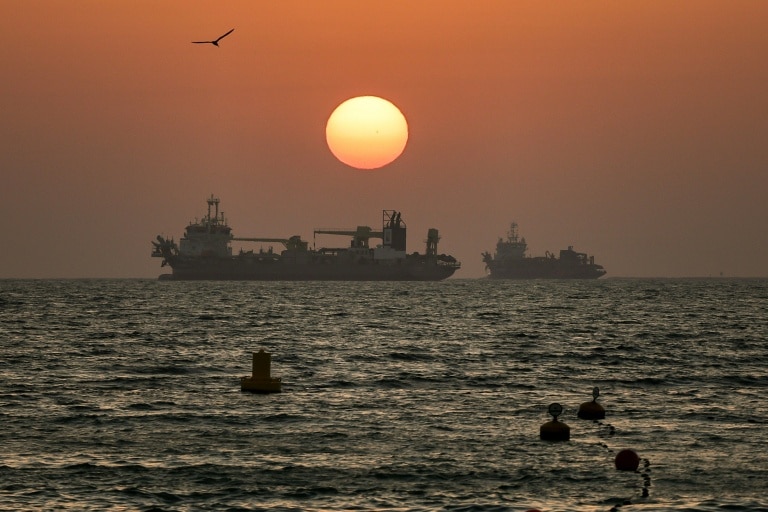
On Sunday, the U.S. Central Command (CENTCOM) confirmed it had intercepted and destroyed two Iranian drones that posed a direct threat to international commercial shipping moving through the Strait of Hormuz, one of the world’s most critical energy chokepoints. This latest confrontation followed a earlier pattern of tit-for-tat exchanges: a prior U.S. drone interception and strikes on Iranian radar sites prompted Tehran to launch a barrage of missiles at U.S. Gulf allies Bahrain and Kuwait just one day prior.
The 100-day milestone arrived alongside renewed diplomatic efforts led by Pakistan, which has stepped in as a neutral mediator after weeks of indirect negotiations between Washington and Tehran that have been repeatedly interrupted by cross-border threats and sporadic armed exchanges. Pakistan’s Interior Minister Mohsin Naqvi traveled to Tehran on Saturday to deliver a special confidential message from Pakistani Army Chief General Syed Asim Munir — who has spearheaded Pakistan’s mediation efforts after an initial round of indirect talks in Islamabad — to Iran’s Supreme Leader, alongside a separate communication from Pakistan’s prime minister.
Parallel to the Tehran-Washington talks, Lebanon’s top military commander General Rodolphe Haykal also traveled to Pakistan over the weekend to meet with Munir, as Beirut pushes for a resolution to the separate parallel conflict on Lebanese soil between the Israeli military and Iran-backed Hezbollah. Iran has insisted that any regional peace agreement must include provisions to end fighting in Lebanon, and a source familiar with Haykal’s trip confirmed the visit was directly tied to the ongoing Pakistani-mediated negotiations between Tehran and Washington.
Despite these new diplomatic overtures, core sticking points have left talks firmly deadlocked. Iranian Supreme Leader military advisor Mohsen Rezaei told CNN earlier that negotiations with the U.S. remain at an impasse, calling on former U.S. President Donald Trump to break the deadlock while demanding the release of approximately $24 billion in Iranian assets frozen by U.S. sanctions. Washington, however, is considering redirecting those frozen funds to compensate U.S. Gulf allies for damage caused by recent Iranian strikes, a senior source familiar with Treasury Secretary Scott Bessent’s policy position confirmed.
Iranian top diplomat Abbas Araghchi described negotiations with the Trump administration as uniquely cumbersome in a CNN interview published Sunday, noting that shifting U.S. negotiating positions and contradictory public statements have made consistent progress impossible. “The main problem of negotiating with this administration is that you have to face so many changing positions, moving the goal posts, different statements, contradictory remarks,” he said.
Fighting on the Lebanese front flared back up on the 100th day of the war, after Prime Minister Benjamin Netanyahu announced Israeli forces had struck a Hezbollah militant command center in Beirut’s southern suburbs, a core Hezbollah stronghold. The strike was framed as a response to fresh fire directed at Israeli territory. Lebanon’s state-owned National News Agency reported the strikes damaged two residential apartments in separate buildings, and AFP correspondents on the ground saw widespread panic as residents fled the area, while Lebanese military units deployed to secure the perimeter. Araghchi had previously warned that any Israeli strike on Beirut would trigger a full-scale resumption of regional hostilities.
Beyond the front lines and negotiating rooms, the prolonged conflict has pushed ordinary Iranians into deepening economic and psychological distress. With soaring inflation and collapsing purchasing power, many residents describe daily life as barely survivable. “I really have gone numb,” 32-year-old Ahvaz-based fitness trainer Elaheh told AFP. “Daily life? It’s a joke. Everything is horrible. We only try to survive.”
Thirty-five-year-old chef Farhad echoed that despair, noting economic hardship had already taken hold before the current conflict escalated, and conditions have only grown worse. “Things that just a few months ago you might have considered buying have now become dreams and fairy tales,” he said. Farhad added that the constant cycle of drone strikes and missile exchanges has become a grim new normal, leaving the region trapped in a permanent state of uncertainty. “I feel like this situation is going to stay like this for a while; a sort of suspended, up-in-the-air state where those guys fire a few missiles, these guys launch a few drones,” he said.
The ongoing volatility has already rattled global commodity and energy markets, and has piled additional domestic political pressure on Trump ahead of upcoming U.S. midterm elections, with voters closely scrutinizing the administration’s handling of the crisis.