作者: admin

  • Pakistan’s interior minister is in Tehran as the US downs more Iranian drones over Hormuz

    Pakistan’s interior minister is in Tehran as the US downs more Iranian drones over Hormuz

    Diplomatic efforts to de-escalate the months-long Middle East conflict gained new momentum Sunday, as Pakistan’s top interior official arrived in Tehran to broker renewed negotiations between Iran and the United States — even as U.S. forces downed two additional Iranian drones threatening international shipping in the strategic Strait of Hormuz. This mediation push comes as the U.S. administration ramps up pressure on Iran to reach a comprehensive agreement that would end the broader regional conflict, which has roiled global energy markets and pushed vulnerable food-importing nations to the brink of a widespread hunger crisis. While a preliminary ceasefire for the main Iran-Israel-U.S. conflict took hold April 8, negotiators have yet to lock in a permanent end to hostilities, leaving the region on edge.

    According to Iran’s state-run Islamic Republic News Agency (IRNA), Pakistani Interior Minister Mohsin Naqvi is carrying a formal message from Pakistan’s Army Chief Field Marshal Asim Munir to Iran’s newly installed Supreme Leader Ayatollah Mojtaba Khamenei. Khamenei, who assumed leadership after his father was killed in the opening day of the U.S.-Israeli bombardment campaign against Iran on February 28, has not appeared in public since taking power. Official Iranian media confirmed Naqvi held introductory talks with Iranian Interior Minister Eskandar Momeni Saturday evening, followed by a separate meeting with Iranian Foreign Minister Abbas Araghchi Sunday morning. No details of the message’s content have been released publicly.

    Pakistani authorities have confirmed Islamabad is leading a regional mediation bloc with backing from Qatar, Turkey, and Egypt, working to bridge longstanding gaps between Washington and Tehran. The coalition’s core goals are to reduce cross-border and maritime tensions and secure the full reopening of the Strait of Hormuz, the world’s most critical chokepoint for global oil and liquefied natural gas exports. The ongoing closure of the strait has already sent energy prices soaring worldwide, triggering widespread economic disruption.

    Even as diplomatic efforts move forward in Tehran, the fragile U.S.-brokered ceasefire between Israel and the Iranian-backed Lebanese militant group Hezbollah has failed to hold, threatening to scuttle broader regional peace talks. Hezbollah has publicly rejected the U.S.-mediated deal reached last week in Washington, demanding that any ceasefire in Lebanon be tied to broader negotiations between Iran and the U.S. to end the overall conflict.

    Over the weekend, the Israeli military launched a series of airstrikes across southern Lebanon, targeting more than 150 alleged Hezbollah military positions including rocket launch pads and command and control centers. Early Sunday, Israeli defense systems intercepted five projectiles fired from Lebanon into northern Israel, with all unexploded ordnance landing in unpopulated open areas. While Hezbollah did not immediately claim responsibility for the projectile launches, the group confirmed it carried out targeted attacks on Israeli military personnel deployed in southern Lebanon. The Israeli military confirmed two of its soldiers were killed in Saturday’s clashes in the border region.

    Israeli forces currently occupy large swathes of southern Lebanon as part of their latest ground offensive. Israeli Prime Minister Benjamin Netanyahu, who faces national elections later this year, has insisted he will continue the offensive until Hezbollah is permanently removed as a threat to Israel’s northern border. Iran has repeatedly stated that any lasting regional truce must include an end to hostilities in Lebanon.

    In a parallel development, Lebanese Army Commander General Rodolphe Haikal traveled to Pakistan Saturday at the invitation of Pakistan’s army chief. The Lebanese military has not released any details on the purpose of the visit, nor confirmed whether it is tied to Pakistan’s ongoing mediation efforts between Washington and Tehran.

    In the Persian Gulf, hostilities continued over the weekend: the U.S. military confirmed it shot down two Iranian drones Sunday, following a larger exchange of fire Saturday that saw Tehran launch missiles and drones targeting U.S. assets in the region. In response to Saturday’s attacks, U.S. forces struck Iranian coastal surveillance radar sites along the Strait of Hormuz. U.S. Central Command confirmed the downed drones posed an immediate threat to commercial and military maritime traffic transiting the strait.

    IRNA reported that Iran’s Islamic Revolutionary Guard Corps claimed Saturday’s attacks targeted two key U.S. positions: the Ali Al Salem Air Base that hosts U.S. forces in Kuwait, and the U.S. Navy’s Fifth Fleet based in Bahrain. The U.S. military confirmed there were no casualties among American personnel in Saturday’s attacks. Earlier this month, an Iranian drone strike heavily damaged the main passenger terminal at Kuwait International Airport, killing one person and injuring dozens more.

    The U.S. has maintained a strict naval blockade of Iranian ports in response to Iran’s control of the strait. The spike in global energy prices triggered by the closure of the corridor has created significant political headwinds for President Donald Trump’s Republican Party ahead of November’s midterm congressional elections.

  • The Nigerian army frees 360 abducted people in northeastern Borno state

    The Nigerian army frees 360 abducted people in northeastern Borno state

    ABUJA, Nigeria – In a significant blow to jihadist insurgency in Nigeria’s restive northeast, the Nigerian Army announced Sunday that it has freed 360 people held captive by the militant group Boko Haram in southern Borno State. The liberation operation targeted the Mandara Mountains, a rugged terrain long recognized as one of the extremist organization’s key entrenched strongholds.

    Among the freed hostages were dozens of children, all abducted from scattered civilian communities across Borno State, according to an official statement from the military. Army spokesperson Haruna Sani confirmed that two infants died from exhaustion after the rescue, their health already broken by the harsh conditions of prolonged captivity and the difficult crossing of mountainous terrain during extraction efforts.

    “All remaining rescued abductees have been successfully evacuated to secured locations, where they are receiving urgent medical care and targeted humanitarian support,” Sani said, framing the operation as a major operational victory that delivers a crippling blow to the terrorist network.

    Nigeria has grappled with a worsening, multi-layered security crisis for more than a decade, particularly across its northern regions. Long-standing insurgency by Boko Haram and its splinter faction, the Islamic State West Africa Province (ISWAP) – which pledged allegiance to the Islamic State group – has been compounded by widespread kidnappings for ransom, illegal mining operations, and attacks on civilian communities by armed gangs that have stretched state security resources thin.

    Just one month prior, Nigerian forces partnered with the United States military to carry out a joint offensive that killed 175 ISWAP fighters, marking another high-profile win against the insurgency. Data from the United Nations estimates that more than 10 years of extremist unrest in northeast Nigeria has killed thousands of civilians and displaced millions more from their homes.

    Despite repeated public pledges from President Bola Tinubu’s administration to curb insecurity and protect Nigerian citizens, independent security analysts continue to argue that the federal government has fallen short of deploying the resources and strategic action needed to resolve the long-running crisis.

  • Over 1.2 million people attend Pope’s mass in Madrid

    Over 1.2 million people attend Pope’s mass in Madrid

    On the second day of his seven-day national tour, Pope Leo XIV drew a crowd of more than 1.2 million worshippers and visitors to central Madrid Sunday, where he led an open-air mass calling for a revitalization of Catholic faith across the traditionally Catholic European nation.

    Spanish King Felipe VI and Queen Letizia joined the throngs of devotees who packed Cibeles Square and its surrounding streets, waving both Spanish and Vatican flags, for a service rich in centuries of religious tradition. In his homily, the pontiff urged Spaniards to reject framing religion as a static relic of history, urging them instead to engage with it as a living, enduring guide for modern life. “Spaniards should not look at religion as a museum of the past to be visited, but a school of faith from which to draw even today,” Pope Leo told the assembled crowd.

    Spain has long been regarded as a core stronghold of Catholicism in Western Europe, but like many of its regional neighbors, it has seen a sharp decline in regular religious observance in recent decades. A survey released last month by Spain’s autonomous government research body the Centre for Sociological Research found that just 56 percent of Spaniards now identify as Catholic, a dramatic drop from the 90 percent figure recorded in the 1970s.

    Authorities and event organizers mounted a massive logistical and security operation to manage the historic gathering. After the conclusion of the mass, Pope Leo led a traditional procession along a route lined with white and yellow carnations, the official colors of the Vatican flag, matching the turnout estimates that pegged attendance at more than 1.2 million in the square and surrounding areas.

    Attendees from across the globe shared perspectives on the pontiff’s visit, with many highlighting his message of unity amid growing global and domestic division. Nico Aldeanueva, a 28-year-old traveler from Philadelphia, United States, described the pope as a unifying voice at a time of fractured discourse across political, social and cultural lines. “We have, it seems like, never-ending conflict and for the time being here you get to hit pause and get to enjoy the moment and feel the faith,” Aldeanueva said.

    Sixty-four-year-old Ana Milagros, a local attendee waving a Vatican flag, called the U.S.-born pontiff approachable and sincere, noting his efforts to bridge deep divides across Spanish politics, society and the economy. “The pope is trying with this visit… to help all of us,” she said.

    The Sunday mass marked the second day of Pope Leo’s week-long visit to Spain. On Saturday, an estimated 500,000 people, the vast majority young worshippers, gathered with the pope outside Real Madrid’s Santiago Bernabéu stadium for an overnight prayer vigil. The tour opened with an official ceremonial reception at Madrid’s Royal Palace, where Pope Leo called for an end to divisive rhetoric and oversimplified public discourse, while praising Spain’s left-wing government for its commitment to global peace and cross-national solidarity amid heightened geopolitical tensions between the government, his native United States and Israel over ongoing Middle East conflicts.

    Later Sunday, the pope is scheduled to meet leading figures from Spanish culture, sport and business at a local arena to foster ongoing dialogue between Catholic faith and modern civil society. On Tuesday and Wednesday, he will travel to Barcelona, where a key highlight of his visit will be the blessing of the newly completed tower of the Sagrada Familia basilica, a construction that officially makes the site the tallest church in the world. The tour will conclude with a focus on global migration during stops in the Canary Islands Thursday and Friday, a major arrival point for irregular migrants crossing the Atlantic, where thousands of people have died attempting to reach European shores.

  • UK’s Starmer hosts Zelenskyy, Macron and Merz to discuss support for Ukraine

    UK’s Starmer hosts Zelenskyy, Macron and Merz to discuss support for Ukraine

    LONDON – A high-stakes diplomatic meeting focused on the future of Western backing for Ukraine is set to take place in the British capital this Sunday, where Prime Minister Keir Starmer will host senior leaders from Ukraine, France and Germany to coordinate ongoing support for Kyiv amid the grinding war with Russia.

    The summit brings together Ukrainian President Volodymyr Zelenskyy, French President Emmanuel Macron and newly installed German Chancellor Friedrich Merz, representing the E3 – Europe’s three most prominent heavyweight powers that have stood at the forefront of international support for Ukraine ever since Russia launched its full-scale invasion in February 2022. Both the United Kingdom and France currently lead the ‘coalition of the willing’ initiative, which works to deliver binding security guarantees for Ukraine as part of any future negotiated peace settlement.

    Sunday’s talks come on the heels of a major development on the battlefield: a large-scale Ukrainian drone assault that targeted Saint Petersburg, Russia’s second-largest city, highlighting Kyiv’s steadily improving capacity to strike targets deep within Russian territory. The attack, carried out on Saturday, left three people with minor injuries according to local governor Alexander Beglov, who urged residents across the city to remain indoors for their safety during the incident.

    The strike hit less than 24 hours after Saint Petersburg wrapped up its flagship annual economic forum, a event Russian President Vladimir Putin had used to frame the war in Ukraine as a distant conflict disconnected from everyday life in Russia. The assault delivered a public embarrassment for the Kremlin, undermining that narrative for both domestic and international audiences.

    This exchange of long-range strikes comes as the overall front line in the war remains largely deadlocked, with mass drone deployments blunting any large-scale territorial advances from either side. Both Moscow and Kyiv have increasingly turned to deep strike operations to gain a strategic advantage more than four years after Russia’s full-scale invasion began, with no clear diplomatic or military end to the conflict in sight.

    The meeting also follows a sharp rejection of diplomatic outreach from Putin, who turned down Zelenskyy’s recent public proposal for direct face-to-face negotiations in a neutral third country on Friday. Putin told reporters he saw “no point” in holding such talks at this time.

    Separately, fresh violence was reported on Sunday morning when a Russian strike on the Ukrainian town of Balabyne, located in the southern Zaporizhzhia region, killed three civilians and wounded one more as they waited at a local bus stop. Ivan Fedorov, head of the region’s military administration, confirmed the attack in a post on his official Telegram channel.

    This ongoing coverage of the Russia-Ukraine conflict is tracked by the Associated Press at https://apnews.com/hub/russia-ukraine.

  • Huge crowds throng Madrid streets for Pope’s open-air mass

    Huge crowds throng Madrid streets for Pope’s open-air mass

    On the second day of his landmark official visit to Spain — the first papal trip to the country in 15 years — Pope Leo XIV drew an estimated 1.2 million pilgrims and well-wishers to the streets of Madrid Sunday for an open-air mass at the iconic Plaza de Cibeles, Vatican officials confirmed. Among the thousands of congregants gathered in the central square were Spain’s reigning monarchs, King Felipe VI and Queen Letizia, who formally welcomed the pontiff to the Royal Palace during opening ceremonies on Saturday. As Pope Leo processed through central Madrid ahead of the service, massive crowds lined the route, waving Vatican and Spanish flags, shouting blessings, and tossing flower petals in his path, with local authorities deploying a large-scale security operation to oversee the event and the subsequent procession through the city center. The Chicago-born pontiff’s visit comes amid growing global attention to his firm anti-war stances, which have already drawn public criticism from U.S. President Donald Trump. On Saturday, during his initial welcome, Pope Leo highlighted Spain’s vocal opposition to ongoing global conflicts and its policy of support for migrant communities, praising the nation’s consistent commitment to upholding international law. That position aligns with recent high-profile diplomatic clashes between Spanish Prime Minister Pedro Sánchez’s socialist government and the Trump administration over the U.S.-Israeli military campaign against Iran, as well as disputes between Madrid and Tel Aviv over the ongoing conflict in Gaza. Even before Sunday’s mass, large crowds turned out across Madrid to greet the pontiff on Saturday. Later that evening, an estimated 500,000 attendees — the vast majority of them young people — joined Pope Leo for a hours-long prayer vigil near Real Madrid’s Santiago Bernabéu Stadium that extended into the night. Addressing the gathered youth, the pontiff issued a stirring call to action: “In the face of the emptiness of indifference and compliance, before the violence of war and lies, you must be the sparks of a new humanity.” Beyond the public masses and processions, Pope Leo’s itinerary includes two unprecedented and highly anticipated events: an address to the full Spanish parliament, marking a rare papal address to a national legislative body in Europe, and a closed meeting with survivors of clerical sexual abuse within the Catholic Church. Later this week, the Pope will travel to the Canary Islands alongside Prime Minister Sánchez to hold a memorial honoring thousands of migrants who have lost their lives while attempting to cross the Mediterranean Sea to reach European shores.

  • 1 million turn out for pope’s Mass in Spain and iconic procession along flower-carpeted route

    1 million turn out for pope’s Mass in Spain and iconic procession along flower-carpeted route

    On a bright spring Sunday in central Madrid, more than 1.2 million worshippers and onlookers flooded Plaza Cibeles and the surrounding city streets to join Pope Leo XIV for a celebratory Mass marking the Catholic feast of Corpus Domini, the centerpiece of his week-long pastoral visit to Spain. The gathering highlighted one of the country’s most beloved expressions of popular Catholic devotion: the elaborate, hand-laid flower carpets that line the route of traditional Corpus Domini processions.

    When Pope Leo arrived at the plaza, navigating the perimeter in his popemobile past crowds stacked several rows deep behind security barricades, the throng erupted in cheers, shouting out “This is the pope’s youth!” in a warm display of support. The pope, who touched down in Madrid Saturday to kick off his first visit to the country in 15 years, has centered his trip on reviving Spain’s deep-rooted Catholic heritage and drawing younger generations back to faith, at a time when the country is increasingly marked by secularization.

    A day before the public Mass, an estimated 600,000 young Catholics gathered for a vigil with the pontiff, where attendees knelt in shared silent prayer for several minutes. The turnout served as a striking counterpoint to narratives of declining religious engagement among Spanish youth. During the event, Irati Valda and Javier Hormazal, a young couple who shared that they would marry on June 13, were escorted close to the pope to receive a personal blessing. “To see so many young people together, it’s incredible. Half a million people in silence, this is something you will only live once,” Valda shared with reporters after the encounter. In an address to the gathered crowd, Pope Leo encouraged young attendees to explore religious callings: “Let me take the opportunity to tell all of you: Don’t ever be afraid of thinking about a vocation to the priesthood or religious life, or other services in the church!”

    Sunday’s procession route, stretching half a kilometer through central Madrid, was lined with 16 handcrafted flower carpets prepared by a team of florists from Spain’s Galicia region. Organizers confirmed the displays used more than 30,000 blooms, most in the yellow and white of the Holy See flag, and featured iconic symbols including the keys of the Holy See.

    The tradition of laying flower carpets for Corpus Domini processions — which are intentionally trampled by the procession as an act of offering to the Eucharist — dates back more than 200 years in Spain, and similar practices have spread to Latin America, where artisans often pair floral designs with intricate sand artwork. Poland’s Corpus Domini flower carpet tradition already holds UNESCO intangible cultural heritage status, and Galicia is currently working to secure the same designation for Spain’s variation as part of a multinational nomination.

    Public religious celebrations remain a deeply embedded part of cultural life across most of Spain, drawing practicing Catholics, non-believers, and international tourists alike. Beyond Corpus Domini, the country’s most famous religious events include the dramatic Holy Week processions held in the final week of Lent, where robed penitents and brotherhoods parade ornate sacred statues through city streets accompanied by marching bands. Many regions also host annual fiestas honoring local patron saints, and popular pilgrimages like the Pentecost El Rocío pilgrimage in Andalusia draw more than a million attendees each year, who travel on horseback and in decorated wagons to venerate a revered icon of the Virgin Mary.

    Shortly after his arrival Saturday, Pope Leo opened his visit by urging the Spanish people to bridge growing political and social divides and work toward national unity. Following Sunday’s Mass and procession, the pontiff is scheduled to hold a private meeting with members of his Augustinian religious order and deliver an address to leading Spanish cultural figures.

    This coverage from the Associated Press was contributed to by visual journalist Helena Alves, with support for AP’s religion reporting provided through a collaboration with The Conversation US, funded by Lilly Endowment Inc. The AP retains full editorial responsibility for all content.

  • With rising crime on their minds, Peruvians to vote for president yet again

    With rising crime on their minds, Peruvians to vote for president yet again

    Peru is set to select its ninth head of state in a decade on Sunday, as voters weigh two ideologically opposed candidates in a tightly contested runoff election dominated by widespread anxiety over rising violent and organized crime. Conservative Keiko Fujimori, daughter of the late disgraced former president Alberto Fujimori, and nationalist congressman Roberto Sánchez, a close ally of imprisoned former president Pedro Castillo, advanced to the runoff after topping an April first-round field of 35 candidates. Notably, neither candidate secured even 20% of the first-round vote, and pollsters still show roughly 30% of the electorate remains undecided heading into the final vote.

    Voting is compulsory for all Peruvian citizens between the ages of 18 and 70, with more than 27 million registered voters nationwide. Roughly 1.2 million of those registered voters will cast ballots from abroad, with the largest groups voting from the United States and Argentina. Given the close split in voter support, election observers expect Sunday’s final results to be extremely close, echoing the first-round uncertainty that saw electoral officials take more than a full month to officially confirm Fujimori and Sánchez as the top two finishers. Many political analysts warn a final official outcome could take days to emerge this round as well.

    Official first-round results put Fujimori at 17% of the vote, with Sánchez trailing at 12%, and a mid-June Ipsos national poll found support for the two candidates remains nearly identical, with undecided voters still holding the balance of power. Fujimori carries the dual legacy of her father’s 1990s administration, which is credited with defeating the violent Shining Path insurgency but tainted by widespread authoritarian corruption. After her parents separated in 1994, she stepped into the role of Peru’s first lady at a young age, and this marks her fourth bid for the presidency.

    For Sánchez, his closest political ties are to Pedro Castillo, the populist former president ousted and imprisoned following a 2022 attempted dissolution of congress. Castillo’s turbulent 16-month term saw more than 70 cabinet reshuffles, leaving many voters wary of his close affiliation with the candidate. The 57-year-old, who often wears a wide-brimmed peasant hat gifted to him by Castillo, draws his strongest support from rural Peruvian communities. He has sought to ease investor concerns about his presidency, explicitly ruling out nationalization of foreign-owned mining and gas assets, and has openly welcomed continued Chinese investment in Peru’s key natural resource sectors.

    Crime and public safety have emerged as the defining issue of the campaign, with recent data underscoring the depth of public anxiety. A 2025 national survey from Peru’s National Institute of Statistics and Informatics found that 84% of urban residents fear they will fall victim to a crime over the coming 12 months, with extortion identified as one of the fastest-growing threats. Policy experts trace the growing power of organized criminal groups to massive profits from decades of illegal gold mining operations in the Andes and Amazon regions, which have allowed networks to expand their influence across the country.

    Both candidates have centered their campaigns on aggressive crime-fighting pledges, though their approaches differ sharply. Fujimori, 51, has run on a hard-line platform that echoes her father’s counter-insurgency successes. Her policy proposals include deploying new digital tracking tools to target extortion rings, militarizing Peru’s border regions, increasing the presence of police and military personnel in high-crime areas, and mandating that incarcerated people work to “repay society” for their crimes. During the only pre-runoff debate, she defended her father’s record, telling voters a vote for her would restore the safety that would let Peruvians leave their homes without fear of attack.

    By contrast, Sánchez has focused his security platform on rooting out corruption within Peru’s national police force, while advancing reforms that allow the military to formally support domestic security operations. With the entire country watching Sunday’s vote, the election will not only shape Peru’s response to its growing crime crisis but also set the course for the nation’s economic and political future after a decade of constant executive turnover.

  • Health workers at the epicenter of Congo’s Ebola outbreak labor with little pay or rest

    Health workers at the epicenter of Congo’s Ebola outbreak labor with little pay or rest

    In the gold-mining town of Mongbwalu, located in the eastern Democratic Republic of the Congo’s Ituri province, a devastating Ebola outbreak of the rare Bundibugyo strain has spread unchecked for weeks, overwhelming local healthcare workers who already face systemic challenges that threaten both their work and their lives. At the heart of the response is Mongbwalu General Referral Hospital, where medical director Dr. Richard Lokudu has spent every working hour treating a steady stream of infected patients — even responding to suspected case alerts in the dead of night — yet he has received almost no compensation for his frontline work.

    This outbreak, which health authorities trace back to Mongbwalu’s bustling mining sector, caught regional officials completely off guard after spreading silently through communities for more than a month before detection. Today, it has become one of the deadliest Ebola events the country has faced in recent years, with Congolese health officials confirming 452 total cases and 82 deaths as of reporting. A single day this week saw 71 new infections, a marker that officials say confirms widespread active transmission across local communities.

    Mongbwalu’s unique economic and living conditions have created the perfect environment for Ebola, which spreads through close contact with infected bodily fluids including blood, sweat, feces, and vomit, to multiply rapidly. Thousands of migrant gold miners flock to the town to work in dangerous, cramped pit and cave mines, then reside in overcrowded informal camps with limited access to clean water, sanitation, or basic health guidance. Compounding this risk is widespread community skepticism about the virus, with many residents distrusting medical authorities and avoiding care — a trend that has already cost the lives of multiple frontline health and response workers who were exposed while trying to contain the spread.

    For the workers on the ground, the daily struggle extends far beyond the risk of infection. Many have gone months without pay or promised hazard allowances, even as they sacrifice all personal time to respond to the crisis. “During the first week, we did not even have time to go home and eat. The second week was the same. We only eat once a day, what amounts to breakfast in the evening,” explained Alice Bamuhinga, a nurse at the Mongbwalu hospital. Dr. Lokudu echoes the frustration of his colleagues, noting that frontline teams deserve fair compensation and regular pay for the risks they take. “It is one thing to be far away and hear statistics being reported, but what is happening on the ground is enormous. People are sacrificing their rest and comfort for this cause. There should be recognition that they deserve compensation,” he said. To date, the Congolese government has not responded to requests for comment on the delayed payments.

    The outbreak is also being fought with almost no dedicated resources, years of underinvestment in the country’s public health system have left regional facilities ill-equipped to handle a large-scale infectious disease event. Unlike more common Ebola strains, the Bundibugyo variant has no approved vaccines or targeted treatments, leaving clinicians only able to manage patients’ symptoms as they wait for outcomes. When the outbreak was first officially confirmed by the Congolese Ministry of Health on May 15, local hospitals had no ability to test for the specific strain — a gap that allowed the virus to gain a critical foothold, according to World Health Organization Director-General Tedros Adhanom Ghebreyesus. International aid groups have scrambled to deploy support to the region, but critical supplies including personal protective equipment, masks, gloves, boots, and symptom-managing medications were in acute short supply in the critical early weeks of the response.

    “There has been an erosion of the health system. There has not been investment in the health system, and this has been going on for years,” said Heather Kerr, country director for the International Rescue Committee in Congo.

    Even as the outbreak worsens, frontline workers continue to navigate barriers that extend beyond resource gaps. Ongoing conflict between the Congolese government, the Rwanda-backed M23 rebel group, and Islamist militant factions has restricted movement into affected communities, leaving many response teams unable to reach remote areas to investigate new case alerts. “Despite the alerts we receive and the teams we have on site, we lack the means to travel into the field. As a result, there are alerts we are unable to investigate,” Dr. Lokudu explained.

    For many local residents, the outbreak has already brought irreversible loss. Asero Jeanne, a 52-year-old Mongbwalu resident, lost two of her five children to Ebola within two weeks after community misinformation led her family to avoid hospital care at first. Neighbors told the family anyone who sought treatment at the hospital would die immediately, and the family initially mistook her daughter’s symptoms for malaria. After three weeks of shifting between home care and delayed hospital treatment, her daughter died, followed days later by her son. Jeanne ultimately contracted the virus herself but survived, one of at least five confirmed recoveries reported by the Congolese government. “I saw about 20 people die. I watched them being taken to the morgue, yet God is allowing me to leave here alive. I thank the doctors,” she said.

    In response to the growing crisis, Tedros announced a $518 million international response plan Friday to contain the outbreak, noting that “containing Ebola depends on political commitment, sustained financing, and the trust and engagement of communities.” For frontline workers like Dr. Lokudu, however, the immediate need remains clear: fair pay, adequate resources, and the support required to stop an outbreak that is currently spreading faster than their existing capacity to treat it.

  • Steve Rosenberg: Lasting image of Russia’s economic forum is plume of smoke over St Petersburg

    Steve Rosenberg: Lasting image of Russia’s economic forum is plume of smoke over St Petersburg

    The 2026 St. Petersburg International Economic Forum (SPIEF), Russia’s flagship annual economic and diplomatic event, opened and closed this week against a backdrop of unexpected conflict and high-stakes diplomatic drama that overshadowed the carefully curated image of economic resilience the Kremlin sought to project.

    On Wednesday, the opening day of the forum, a massive plume of thick black smoke rose high above the St. Petersburg skyline, visible to every delegate arriving at the city’s waterfront expo center. The smoke came from a Ukrainian drone strike that hit unspecified infrastructure in the area, local officials confirmed, marking a dramatic incursion deep into Russian territory that coincided with the forum’s high-profile sessions. A second drone attack hit the region on the forum’s closing day, amplifying the sense of ongoing vulnerability.

    Even amid the chaos of the strikes, the forum played host to the kind of surreal, symbolic moments that underscored the disconnect between the curated narrative inside the conference halls and reality outside. Walking the exhibition floor, attendees encountered a performer dressed as Koshchei the Deathless, the immortal villain from Russian folklore, performing street magic for passersby — pulling coins from thin air, reassembling broken glasses, and generating puffs of smoke from his fingertips. “Russians are unpredictable people,” the performer told onlookers. “We do things no one expects.”

    The most shocking unexpected development of the week came not from a street magician, however, but from Kyiv. Shortly after the first drone strike, Ukrainian President Volodymyr Zelensky published an open letter to Russian President Vladimir Putin that included a taunting critique of Russia’s battlefield setbacks and Putin’s age, before extending an offer to meet for face-to-face peace negotiations in a neutral third country.

    Putin’s response was anything but unpredictable. The Kremlin leader, who has repeatedly rejected direct talks with Zelensky since the full-scale invasion began, dismissed the offer out of hand, criticizing the letter’s tone as “rude.” “It’s not the author of the letter I need to respond to,” Putin said during his plenary address at SPIEF. “It’s our soldiers on the frontline… I say to them: keep at it, brothers!” The comment made clear that Putin has no intention of ending the war on any terms other than Russia’s full compliance with his original demands.

    In his address to assembled delegates, Putin stuck to a familiar script, projecting unwavering confidence and projecting strength. “There are wars and sanctions. But the economy is developing,” he claimed. “Everything is stable.” Inside the conference hall, surrounded by supportive business owners, allied foreign dignitaries, and government officials, the performance held together. Outside the bubble of the forum, however, a different picture emerges.

    Russia has now been at war for five years, sustaining massive battlefield casualties that have strained both the country’s military and its domestic population. Ukrainian long-range drones now regularly strike targets hundreds of kilometers inside Russia’s borders, including major cities far from the front lines. When the outlet asked senior Russian officials about the war and its trajectory, nearly all fell back on pre-approved Kremlin talking points. When asked whether the five-year-long conflict would end soon, Alexander Zhukov, deputy speaker of Russia’s lower parliament the Duma, simply replied: “I can only respond in the words of our president. He said this situation must be resolved soon.”

    Economically, the country is far from the stable, growing powerhouse Putin described. While outright collapse has not materialized, as many Western analysts initially predicted, ongoing sanctions and war spending have created significant strain across most sectors. Growth has stalled, and many independent Russian economists warn of broad stagnation and even decline in key industries. The war continues to suck up massive amounts of both human capital and federal budget resources. During a recent reporting trip to Russia’s Lipetsk region, small business owners described ongoing struggles to stay operational amid restricted access to global markets and supply chain disruptions.

    Even some pro-business Russian figures acknowledged the headwinds. “Interest rates are a bit too high,” Kirill Dmitriev, Putin’s special envoy for foreign investment, admitted in an interview on the SPIEF sidelines. “We believe rates should be lower to attract more investments.” Still, Dmitriev pushed back on critics, arguing that “Russia’s economy has proved resilient over the last five years: something that many Western analysts believed was impossible.” A small number of domestic businesses have even found new openings amid the shifts: as international travel has become difficult and unwelcoming for most Russians, domestic tourism has grown, prompting new investment in domestic resort and tourist infrastructure.

    Unlike the stage magician performing at the forum, the Kremlin cannot conjure new revenue out of thin air to close growing budget gaps created by war spending. It did, however, manage to attract a high-profile American guest that it leveraged for PR. Rodney Mims Cook Jr, chair of the U.S. Commission of Fine Arts who is overseeing the controversial renovation of the White House State Ballroom, brought a personal greeting from former U.S. President Donald Trump to Putin. Russian state media trumpeted his visit as the first official U.S. delegation to attend SPIEF in a decade. But the U.S. State Department quickly distanced itself from the visit: U.S. Secretary of State Marco Rubio said he was unaware of any official U.S. delegation attending the event, and noted the attendees were not high-ranking government officials.

    Wandering the forum’s exhibition halls, one of the most striking installations was a giant “nevalyashka” — the traditional Russian roly-poly tumbler doll that wobbles when pushed but never falls over. The installation perfectly summed up the narrative Russian authorities want to project to the world: that despite five years of war and sweeping international sanctions, Russia remains standing, cannot be knocked off balance, and will outlast its opponents. It is a deliberately defiant image. But for foreign investors looking for stable, long-term opportunities to put capital to work, the constant wobbling that comes from ongoing conflict and geopolitical isolation is unlikely to make for an appealing sales pitch.

  • Afghanistan strikes with 3 quick wickets, but India stays on top at 475-6 on Day 2

    Afghanistan strikes with 3 quick wickets, but India stays on top at 475-6 on Day 2

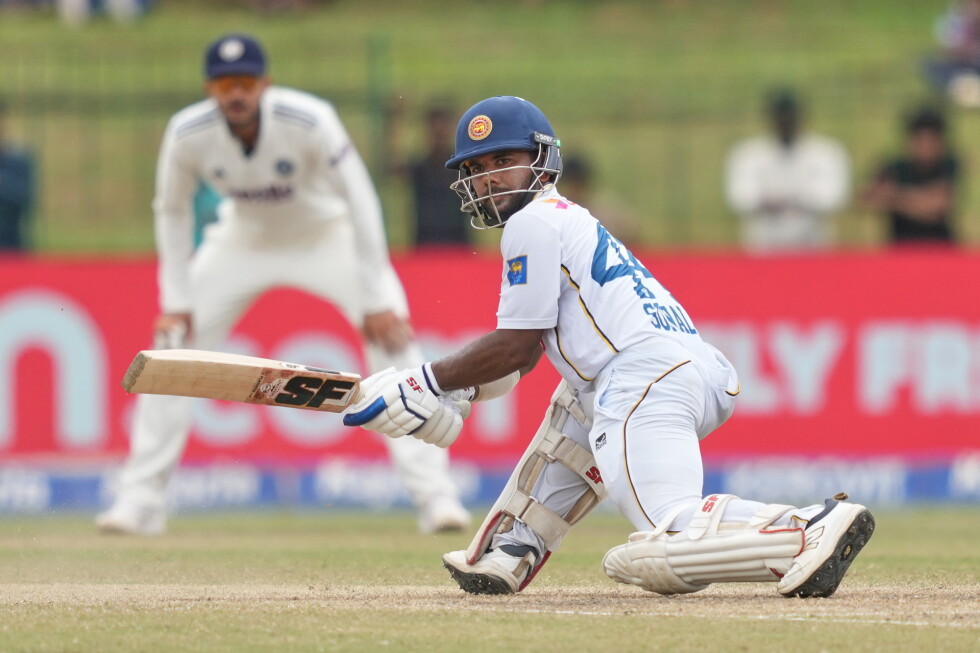
    The one-off Test cricket match between India and Afghanistan entered its second day at New Chandigarh’s Maharaja Yadavindra Singh International Cricket Stadium on Sunday, with India maintaining a dominant position despite a late morning surge from the Afghan bowling attack that claimed three Indian wickets in the opening session.

    When the first session came to a close, India’s first innings total stood at 475 for six wickets, having extended their Day 1 score of 368 for three by 107 runs through the first morning of play. Afghan pace bowler Mohammad Saleem emerged as the standout performer for his side, picking up two additional key wickets to finish the session with an impressive four wickets for 109 runs.

    On the opening day of the match, Indian captain Shubman Gill had combined with Lokesh Rahul – who notched up an unbeaten century – to post a solid partnership, with Gill also reaching a hundred himself ahead of the close of play. When play resumed on Sunday, Gill added 23 more runs to his overnight total before he edged a delivery behind to the wicketkeeper off Saleem’s bowling. The Indian skipper departed for a match-defining 126, an innings decorated with 15 boundaries and one six.

    Gill’s wicket came after he shared a game-changing 169-run fourth wicket stand with wicketkeeper-batter Rishabh Pant that cemented India’s control of the contest. Pant went on to put on 36 quick runs with lower-order batter Dhruv Jurel, but the pair fell in the space of just six deliveries shortly before the lunch break. Saleem removed Jurel for 19 with a pinpoint delivery to claim his fourth wicket of the innings, while Pant was caught at the long boundary off skipper Hashmatullah Shahidi’s bowling for just eight.

    At the first session break, all-rounder Washington Sundar remained unbeaten on 14, with debutant spinner Manav Suthar yet to get going on nine not out. This fixture marks only the second time India and Afghanistan have faced off in Test match cricket. The pair first met in Bengaluru for Afghanistan’s historic maiden Test appearance, where the Indian side claimed a dominant victory by an innings and 262 runs. India had gotten off to a strong start from the get-go in this match, winning the pre-game coin toss and electing to bat first on a good batting pitch, finishing their first day of play well placed at 368 for three wickets.