作者: admin

  • Mexico City attempts record-breaking wave

    Mexico City attempts record-breaking wave

    As soccer fever builds across the globe ahead of the upcoming FIFA World Cup, one of Latin America’s most populous urban centers is stepping into the global spotlight with an ambitious, crowd-powered challenge. Mexico City has launched an attempt to claim the Guinness World Record for the world’s largest human wave, tying the lighthearted, community-focused event directly to the ongoing countdown to the sport’s biggest international tournament.

    Organizers of the attempt have said the event is designed to harness the excitement and collective energy of Mexican soccer fans ahead of the World Cup, turning a simple stadium tradition into a celebration of national pride and global sporting unity. While details on the exact number of participants required to break the existing record have not been fully disclosed in early announcements, the attempt is expected to draw thousands of participants from across the capital city, uniting casual fans, local communities, and passionate soccer supporters in one coordinated, massive movement.

    The human wave, a staple of spectator culture in stadiums around the world, involves successive groups of spectators raising their arms in sequence to create a rolling wave of movement that travels across the crowd. Breaking the existing record will require precise coordination and a massive turnout, but organizers and participants alike have expressed confidence that Mexico City’s passionate fan base will deliver a performance strong enough to top the current global mark, adding a memorable milestone to the pre-World Cup celebrations.

  • Australia women and South Africa men win rugby sevens world series

    Australia women and South Africa men win rugby sevens world series

    The final leg of the World Rugby Sevens Series delivered a weekend of dramatic upsets, standout individual performances and historic triumphs at Stade Atlantique in Bordeaux, France, over the weekend.

    In the women’s overall title decider, Australia produced a last-gasp turnaround to secure the crown, outlasting the season-long leading New Zealand Black Ferns 26-19 in a high-stakes final. Australian star winger Maddison Levi, who only returned to the pitch for the semifinals after sustaining a left knee injury the previous week in Valladolid, emerged as the match-winner. Levi crossed for two tries to push her season-leading try tally to 64, and delivered two game-changing try-saving tackles from behind on New Zealand’s Katelyn Vaha’akolo to defuse late Black Ferns momentum.

    Levi’s opening first-half try gave Australia a 14-7 halftime advantage. After Vaha’akolo cut Australia’s lead to just two points, tries from Faith Nathan and Levi sealed the victory for Australia, securing the side its fifth women’s World Rugby Sevens Series title across the 13 editions of the competition. New Zealand had dominated the entire regular season, but Australia won the final two legs of the three-stage championship decider to edge out the Black Ferns by four points in the overall standings.

    “It’s been our most consistent season,” Levi said after the match. “We’ve been in every single final. Even win or lose, we’re building as a program, we’re creating depth and trust. Going out there and beating a pretty amazing New Zealand side, they’re always tough, so it’s pretty awesome to help the girls.”

    In the men’s competition, South Africa’s Blitzboks retained their overall men’s World Rugby Sevens Series crown by reaching the semifinal stage, even though they failed to progress to the Bordeaux tournament final after falling to host nation France. France capitalized on their home advantage to make history, claiming their first home World Rugby Sevens tournament title in 21 years with a 14-5 final victory over New Zealand.

    The French side had fallen 21-26 to New Zealand in the pool stage two days earlier, but pulled off a stunning upset in front of a home crowd, with Celian Pouzelgues scoring the match-winning try with just 31 seconds left on the clock. Rayan Rebbadj kicked the conversion after France’s opening try, and the match remained tight through the second half: after Pouzelgues was sin-binned for a high tackle, New Zealand’s Jayden Keelan scored to pull the Kiwis ahead 7-5. A second Pouzelgues try was ruled out early in the second half, but France kept pressing, and when New Zealand playmaker Akuila Rokolisoa was yellow-carded for deliberately kicking the ball away after the final whistle, the host side broke through, with Pouzelgues slipping a tackle near the posts to score the decisive try.

    In the overall men’s standings, South Africa finished first, with New Zealand in second and Spain clinching a best-ever third place finish. Host France ended the tournament seventh overall. To cap off the weekend, World Rugby named South Africa’s Tristan Leyds the men’s World Rugby Sevens Player of the Year, while New Zealand’s Jorja Miller claimed the women’s award for the second consecutive season.

  • Israel strikes south Beirut after intercepting Hezbollah launches

    Israel strikes south Beirut after intercepting Hezbollah launches

    Fresh cross-border violence has sent tensions soaring between Israel and Lebanon’s Iran-backed militant group Hezbollah, after Israel carried out targeted airstrikes on Beirut’s southern suburbs Sunday, responding to what it says were rocket launches by Hezbollah targeting Israeli civilian areas.

    Sunday’s strikes marked only the third time that southern Beirut—an area long considered a core Hezbollah stronghold—has been hit by Israeli attacks since mid-April, a zone that had remained relatively quiet amid months of routine cross-border fire exchanges between the two sides. In an official confirmation of the operation, Israeli Prime Minister Benjamin Netanyahu’s office stated the military had just targeted a Hezbollah militant command center in Beirut’s Dahiyeh district, launching the assault in direct response to Hezbollah fire directed at Israeli territory.

    A separate statement from the Israel Defense Forces (IDF) elaborated on the operation, noting that after Hezbollah fired projectiles toward civilian communities inside Israel, the IDF executed a “precise strike” against a key Hezbollah command post. The military added that it had taken multiple proactive steps to minimize civilian harm before the attack, including the use of precision-guided munitions and advanced aerial surveillance to reduce unintended civilian casualties. Lebanon’s state-run National News Agency (NNA) confirmed the strikes hit two residential apartments located in separate multi-story buildings. An Agence France-Presse (AFP) photographer on the ground documented visible damage to two apartments in one residential building on a narrow Beirut side street, while widespread traffic gridlock formed as panicked local residents attempted to evacuate the suburb, and Lebanese military units deployed to secure the affected area.

    Earlier on Sunday, air raid sirens triggered across northern Israel, and the IDF confirmed it had successfully intercepted two projectiles that had crossed the border from Lebanese territory. Hezbollah has not issued an immediate public response to the Beirut strikes, though the group did confirm separate offensive operations targeting Israeli military personnel along the Lebanese border earlier the same day.

    This latest escalation comes just days after indirect negotiations in Washington, where Lebanese and Israeli diplomatic representatives presented a conditional ceasefire proposal that would have required Hezbollah to halt all cross-border fire and withdraw its fighters from positions near the Israeli-Lebanese border. The proposal collapsed after Hezbollah rejected the terms, demanding that Israel fully withdraw from all contested Lebanese territory before any ceasefire can take effect. Even before Sunday’s strike, Israeli officials had explicitly warned they would target southern Beirut if Hezbollah resumed attacks on northern Israel.

    The current unrest in Lebanon grew out of the broader Middle East conflict, when Hezbollah opened the border front on March 2, launching rockets at Israel in a show of support for its regional patron Iran. Tehran has since maintained that any comprehensive agreement to end the wider regional conflict—currently paused by a separate ceasefire reached in April—must also include an end to hostilities along the Israel-Lebanon border.

    Iranian officials have already issued sharp threats of retaliation over Sunday’s strikes. Iranian parliamentary speaker and chief negotiator Mohammad Bagher Ghalibaf accused the United States of giving Israel a “green light” to carry out the Beirut attack, warning that “our armed forces, as always, are free to act” in response. Ebrahim Rezaei, spokesman for the Iranian parliament’s national security commission, echoed the threat, promising a “decisive and painful response” to the Israeli operation.

    Iran’s position tying the Lebanon conflict to the broader regional war has significantly complicated diplomatic efforts led by the United States to de-escalate tensions. In an interview aired Sunday on U.S. network NBC’s *Meet the Press*, recorded one day before the strike, U.S. President Donald Trump called on Israel to adopt more targeted military tactics. “I’d like to see a more surgical attack on Hezbollah,” he said. “I’d like to see Lebanon have a better life.”

    Sunday’s violence extended far beyond the capital, with the NNA reporting a wave of additional Israeli strikes across multiple locations in southern Lebanon. The attacks come one day after Lebanese authorities confirmed at least five people, including a Lebanese army general, were killed in separate Israeli strikes across the region.

    On Sunday, the IDF also issued a mandatory evacuation warning for most of the coastal city of Tyre and its surrounding outskirts. The city currently shelters thousands of internally displaced people who fled earlier fighting near the border, and it has faced heavy sustained bombardment since hostilities began. An AFP correspondent on the ground reported that Lebanese civil defense teams evacuated roughly 500 families from school buildings that had been repurposed as emergency shelters, moving them to the city’s Christian quarter, which was not included in the evacuation order.

    Further north near the coastal city of Sidon, public funerals were held Sunday for four people killed in an Israeli airstrike a day prior: three members of one extended family and a local rescue worker. Lebanon’s ministry of health reports that at least 131 rescue workers have been killed by Israeli strikes since the conflict began. “We do not carry rockets, our only weapon is the bread we deliver to people,” Qassem Foani, a fellow rescuer, told AFP. “They went and gave the family bread, but as they were leaving, a drone struck them.”

    According to updated counts from Lebanon’s health ministry, Israel’s wide-ranging air campaign and ground invasion of southern Lebanon have killed more than 3,600 people in the country since hostilities escalated earlier this year.

  • Last-minute visas and moving training camp: Iran’s road to the World Cup

    Last-minute visas and moving training camp: Iran’s road to the World Cup

    When Iran secured its spot in the 2026 FIFA World Cup back in March 2025, few could have predicted the unprecedented set of obstacles that would confront the national squad ahead of the tournament. More than 12 months on, Iran’s participation has emerged as one of the most politically charged and complex narratives of this year’s competition, coming amid ongoing conflict triggered by joint US-Israeli military strikes that killed Iran’s supreme leader. Against this backdrop of active regional war, the Iranian team has navigated a cascade of crises, from securing entry to tournament host territory to finalizing a safe training base ahead of their opening group-stage fixture.

    After weeks of diplomatic delay, US authorities finally approved travel visas for all Iranian players this past Friday. However, multiple senior members of the team’s support staff, including Mehdi Taj, the head of the Iranian Football Federation, have been denied entry clearance. The US State Department confirmed to the BBC that visas had been issued for all players and essential non-playing personnel required to compete, but added that the country would not permit Iran to “abuse this system to sneak terrorists into the United States under false pretences.”

    Complicating logistics further, Iranian ambassador to Mexico Abolfazl Pasandideh confirmed that the visa terms imposed on players require them to enter and exit US territory on the same day as each of their matches. In response to these restrictions and the escalating regional conflict, FIFA approved a request from Iran to relocate its pre-tournament base camp from the originally planned site in Tucson, Arizona to Tijuana, Mexico. The Iranian squad’s plane touched down at Tijuana International Airport on June 7, marking the team’s official arrival in North America for the competition. All three of Iran’s group-stage matches are still scheduled to take place across the US: fixtures against New Zealand and Belgium will be held in Los Angeles, while their matchup against Egypt is set for Seattle.

    The current strained dynamic between Iran and the US is rooted in more than 40 years of hostile relations, dating back to the 1979 seizure of the US embassy in Tehran and the subsequent hostage crisis that ended formal diplomatic ties between the two nations. For decades, elite football has stood as one of the only rare platforms for direct, public engagement between the two countries. The most iconic of these encounters came at the 1998 World Cup in France, where Iran claimed a historic 2-1 victory over the US in a match loaded with global political symbolism. Dubbed the “Mother of All Games” by observers due to the charged geopolitical backdrop, the fixture drew worldwide attention and remains one of the most memorable matches in World Cup history. Before kickoff, Iranian players presented their US counterparts with white roses as a gesture of peace, a moment widely celebrated as a rare instance of sport transcending bitter political division. The two sides met again at the 2022 Qatar World Cup, where the US secured a 1-0 win to advance to the knockout round. This year, the expanded 48-team tournament format has left open the possibility of a third matchup between the two nations in the knockout stage, a prospect that would carry stakes far beyond athletic competition amid the ongoing conflict.

    Beyond external diplomatic and logistical hurdles, the Iranian squad also faces unprecedented internal division back home, with national consensus around the team fractured in a way unseen at previous tournaments. Historically, the national side has been one of the only unifying national institutions, capable of drawing widespread support across Iran’s deep political and social divides. During the 2014 and 2018 World Cups, the team enjoyed broad backing from Iranians of all political leanings, both inside the country and in the global diaspora. That dynamic shifted dramatically ahead of the 2022 Qatar World Cup, held in the wake of the death of Mahsa Amini in morality police custody and the nationwide anti-government protests that followed, met with a violent crackdown by Iranian authorities. The team found itself caught in the middle of intense domestic political debate: many Iranians expected players to publicly express solidarity with protesters, while others argued that football should remain separate from political conflict.

    The 2026 tournament comes just six months after another widespread crackdown on anti-government protests, where human rights organizations estimate thousands of demonstrators were killed by state forces. Today, public opinion toward the team remains deeply split: some Iranian supporters still view the squad as a unifying symbol of national pride that stands apart from political division, while an increasing number of critics argue that the team is too closely aligned with the ruling political establishment to be separated from state power. Even so, support for Team Melli has by no means disappeared. Football remains overwhelmingly the most popular sport in Iran, and millions of Iranians both at home and abroad are expected to follow the team’s progress throughout the tournament.

    On the pitch, Iran is chasing an unprecedented milestone in this 2026 World Cup. The squad has qualified for seven men’s World Cups throughout its history, but has never advanced past the group stage. With the tournament’s new expanded format creating more pathways to knockout stage progression, Iranian players and fans believe this could finally be the year they break their historic duck. The big question hanging over the team’s campaign, however, is whether football will remain the central focus. World Cups have always mirrored the geopolitical realities of their era, but it is hard to recall any other national side arriving at a major tournament facing such a toxic convergence of diplomatic isolation, active cross-border military conflict, persistent visa uncertainty, and deep domestic political division among its own fanbase.

  • Zelensky meets allies in UK after strike hits Ukraine nuclear site

    Zelensky meets allies in UK after strike hits Ukraine nuclear site

    On a high-stakes diplomatic trip Sunday, Ukrainian President Volodymyr Zelensky touched down in London to hold urgent defense-focused talks with top leaders from the United Kingdom, France and Germany, just hours after a new wave of Russian cross-border strikes left five civilians dead and damaged a nuclear storage facility at the Chernobyl disaster site.

    In a social media statement confirming his arrival, Zelensky outlined two core priorities for the talks: securing accelerated shipments of additional ammunition for Ukraine’s frontline air defense systems, which are strained by daily Russian bombardment across Ukrainian territory, and coordinating new, stronger collective pressure measures against Moscow to force an end to the full-scale invasion that launched more than three years ago.

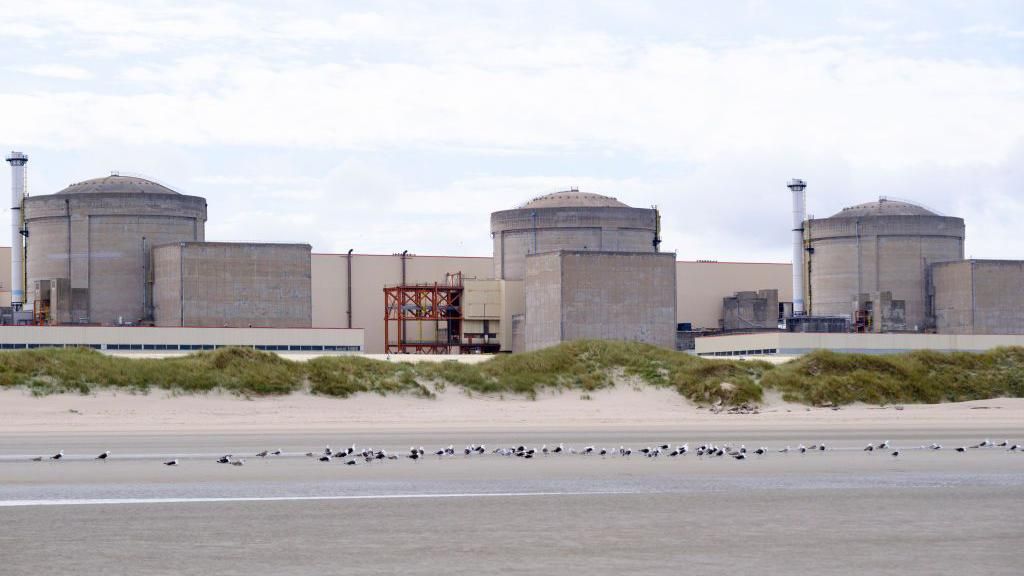
    Hours ahead of Zelensky’s London arrival, Russian forces launched a multi-wave assault combining drones and other long-range munitions across Ukraine. According to Ukrainian nuclear officials, one Russian munition struck a spent nuclear fuel storage facility located within the exclusion zone surrounding the long-decommissioned Chernobyl nuclear power plant, the site of the 1986 catastrophic nuclear disaster. Ukraine’s state-run nuclear energy operator Energoatom confirmed the strike partially destroyed the facility’s fuel reception building, but added that radiation monitoring readings remained well within safe, normal limits following the attack.

    Zelensky, who early confirmed the strike was carried out by an Iranian-designed Shahed drone supplied to Russia, noted that while radiation levels have not spiked, the attack demonstrates a dangerous escalation in Moscow’s willingness to target critical nuclear infrastructure. “There is certainly an increase in Russia’s brazenness, which long ago went off the charts,” he said in a social media post.

    The United Nations’ nuclear watchdog, the International Atomic Energy Agency (IAEA), responded quickly to the incident, saying it was deploying an expert inspection team to Chernobyl to assess the full extent of the damage and verify safety conditions. The agency called the strike on the facility “deeply concerning.” The storage facility, located roughly 12 kilometers from the original 1986 disaster site in a remote, unpopulated forested area, is purpose-built to hold spent nuclear fuel from Ukraine’s three operating commercial nuclear power plants.

    The Sunday strikes extended beyond the Chernobyl exclusion zone, with deadly attacks on civilian areas across multiple Ukrainian regions. In southern Ukraine’s Zaporizhzhia region, Russian shelling hit a public transport stop, killing at least two civilians, while a separate drone strike in the area killed a 56-year-old minibus driver. In central Ukraine’s Dnipropetrovsk region, two more civilian men were killed in additional Russian attacks, regional governor Oleksandr Ganzha confirmed via Telegram.

    Ukrainian forces also launched a reciprocal drone strike on Russian territory, killing a civilian woman and injuring her husband in a car attack in Russia’s border Belgorod region, local Russian authorities confirmed. The tit-for-tat strikes mark an escalation in the mutual cross-border drone campaign that has intensified over recent months, amid a broader stalemate in peace negotiations.

    More than three years into the war, which began with Russia’s full-scale invasion in February 2022, U.S.-led diplomatic efforts to end the conflict remain stalled, with international focus largely diverted by the ongoing conflict in the Middle East. Russian President Vladimir Putin has repeatedly rejected direct peace negotiations proposed by Zelensky, and Russian forces currently hold roughly one-fifth of Ukrainian territory, including the Crimean Peninsula annexed in 2014, most of the eastern Donbas regions of Donetsk and Luhansk, and large swathes of southern Zaporizhzhia and Kherson. The war has left hundreds of thousands dead and forced millions of Ukrainians to flee their homes.

  • DR Congo friendly to be played behind closed doors

    DR Congo friendly to be played behind closed doors

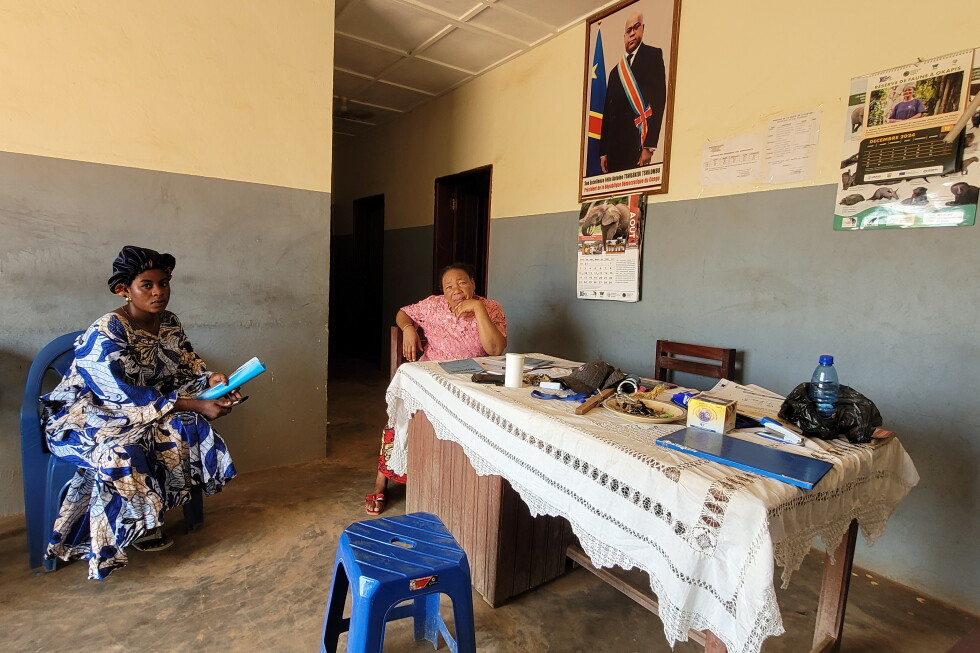
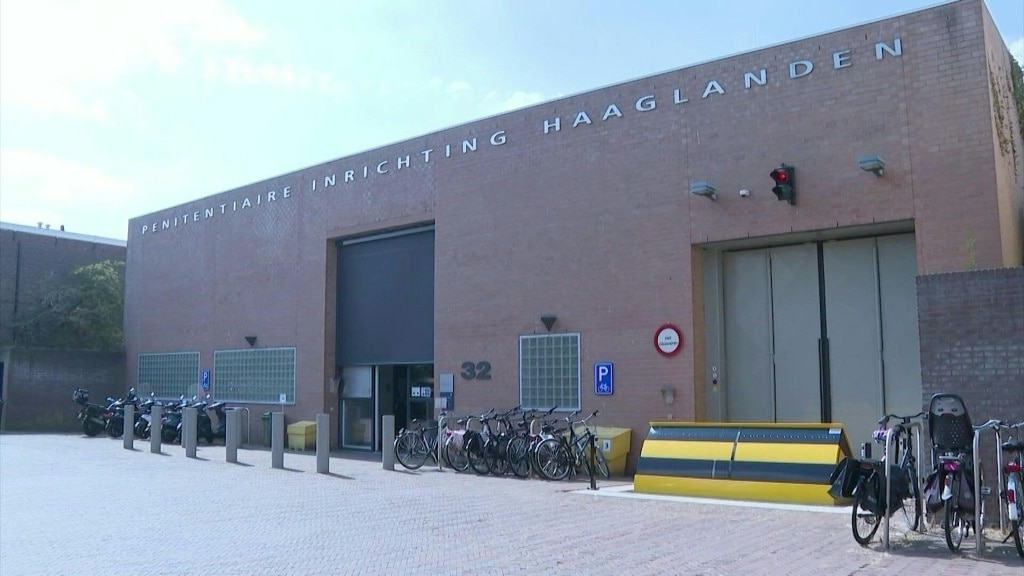
    As the 2026 FIFA World Cup approaches, DR Congo’s final pre-tournament warm-up fixture against Chile has undergone a last-minute reshuffle, shifting to a closed-door setup in the French city of Orleans following widespread public health concerns tied to an ongoing Ebola outbreak in the central African nation. The match, set to kick off at 16:00 BST this Tuesday, was originally slated to be held in La Linea de la Concepcion, a Spanish border town. However, local authorities ultimately blocked the match from proceeding at that venue, with the mayor issuing an official decree framing the cancellation as a necessary precautionary measure to protect public health.

    The 2026 World Cup, co-hosted by the United States, Mexico and Canada, has put in place strict entry requirements for all delegates coming from DR Congo: all squad members and team officials must complete a 21-day stay outside the country and remain completely free of Ebola symptoms before they are granted entry to the U.S. for the tournament. According to reporting from BBC Sport, none of DR Congo’s senior players – every one of whom currently plies their trade for club teams outside of DR Congo – have traveled back to their home country in recent weeks. However, a number of the national team’s non-playing support staff and traveling fan contingent have made the journey from DR Congo to join the squad ahead of the World Cup, which has triggered the ongoing public health precautions.

    Currently, the DR Congo squad is wrapping up their final preparations at a training base in Marbella, Spain. This follows a 10-day pre-camp in Belgium, where the side earned a credible 0-0 draw in a friendly test against Denmark ahead of their first World Cup appearance in half a century. This tournament marks a historic milestone for DR Congo: it is the first time the nation has qualified for the World Cup since 1974, when it competed under the former name Zaire and finished at the bottom of its group after three opening-round losses to Scotland, Brazil and Yugoslavia.

    For the 2026 tournament, DR Congo has based its pre-tournament operations in Houston, Texas, where it will kick off its Group K campaign against Portugal on June 17. After the opening match, the team will travel to Guadalajara, Mexico, for their second group-stage fixture against Colombia, before returning to U.S. soil to play their final group game against Uzbekistan in Atlanta.

    The Ebola outbreak that has sparked these precautions is centered in eastern DR Congo, and is caused by the rare Bundibugyo strain of the virus. As of the latest public health updates, no licensed vaccine currently exists for this specific Ebola variant, and the World Health Organization has confirmed that it could take as long as nine months to develop and approve an effective vaccine for public use.

  • Mexicans chase a world record wave – but is the trend even Mexican?

    Mexicans chase a world record wave – but is the trend even Mexican?

    Forty years after the stadium spectator wave cemented its global reputation under the name ‘Mexican wave’ during the 1986 FIFA World Cup hosted in Mexico, Mexico City is stepping forward to claim a new world record for the largest collective wave in history.

    The current Guinness World Record for the biggest wave has stood for nearly 18 years: it was set at a NASCAR racing event in Tennessee, United States, in 2008, when 157,574 spectators joined together to create the sweeping, rippling crowd movement that has become a staple at sporting events worldwide. To beat that mark, Mexico City organizers picked an unconventional non-stadium venue that would allow the wave to spread continuously across thousands of participants: Paseo de la Reforma, the city’s world-famous tree-lined arterial boulevard modeled after European grand thoroughfares.

    On Saturday, thousands of enthusiastic participants lined both sides of the iconic avenue. Dressed in the Mexican national men’s football team’s signature bright green jerseys in many cases, the crowd went through multiple practice rounds before making their official record attempt. Chants of “Mexico! Mexico!” rang out across the avenue as thousands raised their arms in unison to carry the ripple down the length of the road. For now, official adjudicators from Guinness World Records are still reviewing data from the attempt to confirm whether Mexico City has successfully taken the crown from the 2008 NASCAR record.

    Beyond the record attempt, the event reignites a long-running conversation about the origins of the beloved crowd tradition. While the global name ‘Mexican wave’ ties the phenomenon closely to Mexico thanks to its 1986 World Cup breakthrough, many credit American entertainer George Henderson, widely known as Krazy George, with creating and directing the first full stadium wave. Henderson says he first launched the movement during a 1981 Major League Baseball game between the Oakland Athletics and New York Yankees in California.

    Recalling the moment, Henderson explained that the Athletics had dropped two straight away games, and by the third inning he was eager to try something completely new to energize the crowd. He worked with fans across three sections of the stadium to explain the concept. The first two attempts fell flat, but the third successfully rolled all the way around the stadium, and the fourth produced a steady, continuous ripple. ‘The place was going crazy,’ Henderson recalled. The game was broadcast nationally, so the concept quickly spread to fans of other sports across North America. It was not until the 1986 World Cup in Mexico, however, that the wave was broadcast to a massive global audience, turning it into an international staple of spectator culture – and earning it the widespread ‘Mexican wave’ name outside North America.

    The uniquely collective nature of the wave has even drawn the attention of scientific researchers curious about crowd behavior. In 2002, a team of physicists from the Hungarian Academy of Sciences’ statistical and biological physics group decided to map the mechanics of the stadium wave, publishing their findings in the leading academic journal *Nature*. Lead researcher Illes Farkas told NPR the team was drawn to the project because crowd behavior in a wave offers a clear parallel to particle movement in physical systems.

    The team’s analysis uncovered clear, consistent patterns: most spontaneous human waves travel clockwise around stadiums at a speed of roughly 12 meters, equal to about 20 spectator seats, per second. Shockingly, they also found that a self-sustaining wave only needs between 25 and 35 initiating participants to get rolling in a large stadium. The mathematical model the team used to explain the wave’s spread was not newly developed for the research – it was the same framework already used to describe how forest fires spread and how electrical signals propagate through heart tissue.

    Beyond the physics, sports writer Chris Hunt, author of *World Cup Stories*, told the BBC that the wave also carries varied cultural meanings depending on context. While it is most commonly seen as a symbol of collective joy and excitement among spectators, it can also signal boredom when a match is slow or uneventful. ‘When a match drags and nothing interesting is happening on the pitch, fans feel it’s a way to make the most of the money they paid for their tickets,’ Hunt explained. Context also dictates whether a wave is likely to appear at all: a tense goalless draw in the final minutes of a World Cup final will almost never see a wave, while a lopsided friendly match with the home team leading handily is far more likely to spark the familiar ripple.

  • March in France for girl whose killing sparked outcry over lapses

    March in France for girl whose killing sparked outcry over lapses

    On a scorching Sunday afternoon in the small southwestern French town of Fleurance, a sea of 6,000 people dressed in white filled the streets, gathering for a silent march to honor the life of 11-year-old Lyhanna, whose suspected murder at the hands of a repeat accused child abuser has sparked nationwide outrage over systemic failures in France’s justice system.

    Lyhanna disappeared near Fleurance on May 29, and her body was recovered by investigators just last week. She was last seen climbing into a car driven by the prime suspect in the case, 41-year-old Jerome B. — the father of one of Lyhanna’s classmates, a man who had previously worked at local schools and faced four separate prior allegations of child rape and sexual abuse, none of which resulted in a conviction. Jerome B. was arrested and charged with abduction before Lyhanna’s body was found, and he remains in custody as investigations continue.

    The grieving family of the young victim led the procession through Fleurance, with Lyhanna’s father and local community members carrying a lead banner emblazoned with the words “Lyhanna. Never again! We love you, we miss you.” Lyhanna’s mother followed a few steps behind, accompanied by her son, while the crowd fell completely silent, many holding white flowers to honor the victim. Per the family’s explicit request, no national political figures participated in the march, though local elected representatives joined the gathering. The public anger over the case has already reached the highest levels of the French government: President Emmanuel Macron last week publicly condemned the “unacceptable” lapses that allowed Jerome B. to remain free despite multiple child abuse allegations, while Justice Minister Gerald Darmanin took the unusual step of issuing a formal apology to Lyhanna’s family, saying he was “furious” at the systemic failures in how the justice system handled prior complaints against the suspect.

    For many marchers, the tragedy hit close to home, and many shared that they joined to push for long-overdue changes to how France handles child sexual abuse cases. Karine Camus, a 41-year-old marcher who was a victim of sexual violence for a decade, said “It could have happened to my family, to my son, to my daughter,” adding that young victims must be encouraged to speak out about their abuse. Manola Martin, a pensioner who was raped when she was 17, said she attended the march to stand up for her daughters and granddaughters, echoing a widely shared sentiment when she said “Unfortunately, the justice system does nothing for these people.”

    Anger over the case spilled over outside the march as well: at the entrance to the nearby village of Montestruc-sur-Gers, where Jerome B. lived with his family, the village entry sign was covered Sunday with a white sheet marked with the slogan “death penalty for paedophiles.” The case has sent a deep shockwave through the tight-knit community of 6,000 residents, sparking renewed national calls for reform of how French authorities handle and investigate allegations of child sexual abuse.

  • US says shot down Iran drones as war reaches 100th day

    US says shot down Iran drones as war reaches 100th day

    One hundred days into the ongoing regional conflict that has roiled the Middle East, no path to a lasting ceasefire has emerged, as a fresh escalation at the strategic Strait of Hormuz and continued deadlock in diplomatic talks have deepened uncertainty across the region and global markets.

    On Sunday, the U.S. Central Command (CENTCOM) confirmed it had intercepted and destroyed two Iranian drones that posed a direct threat to international commercial shipping moving through the Strait of Hormuz, one of the world’s most critical energy chokepoints. This latest confrontation followed a earlier pattern of tit-for-tat exchanges: a prior U.S. drone interception and strikes on Iranian radar sites prompted Tehran to launch a barrage of missiles at U.S. Gulf allies Bahrain and Kuwait just one day prior.

    The 100-day milestone arrived alongside renewed diplomatic efforts led by Pakistan, which has stepped in as a neutral mediator after weeks of indirect negotiations between Washington and Tehran that have been repeatedly interrupted by cross-border threats and sporadic armed exchanges. Pakistan’s Interior Minister Mohsin Naqvi traveled to Tehran on Saturday to deliver a special confidential message from Pakistani Army Chief General Syed Asim Munir — who has spearheaded Pakistan’s mediation efforts after an initial round of indirect talks in Islamabad — to Iran’s Supreme Leader, alongside a separate communication from Pakistan’s prime minister.

    Parallel to the Tehran-Washington talks, Lebanon’s top military commander General Rodolphe Haykal also traveled to Pakistan over the weekend to meet with Munir, as Beirut pushes for a resolution to the separate parallel conflict on Lebanese soil between the Israeli military and Iran-backed Hezbollah. Iran has insisted that any regional peace agreement must include provisions to end fighting in Lebanon, and a source familiar with Haykal’s trip confirmed the visit was directly tied to the ongoing Pakistani-mediated negotiations between Tehran and Washington.

    Despite these new diplomatic overtures, core sticking points have left talks firmly deadlocked. Iranian Supreme Leader military advisor Mohsen Rezaei told CNN earlier that negotiations with the U.S. remain at an impasse, calling on former U.S. President Donald Trump to break the deadlock while demanding the release of approximately $24 billion in Iranian assets frozen by U.S. sanctions. Washington, however, is considering redirecting those frozen funds to compensate U.S. Gulf allies for damage caused by recent Iranian strikes, a senior source familiar with Treasury Secretary Scott Bessent’s policy position confirmed.

    Iranian top diplomat Abbas Araghchi described negotiations with the Trump administration as uniquely cumbersome in a CNN interview published Sunday, noting that shifting U.S. negotiating positions and contradictory public statements have made consistent progress impossible. “The main problem of negotiating with this administration is that you have to face so many changing positions, moving the goal posts, different statements, contradictory remarks,” he said.

    Fighting on the Lebanese front flared back up on the 100th day of the war, after Prime Minister Benjamin Netanyahu announced Israeli forces had struck a Hezbollah militant command center in Beirut’s southern suburbs, a core Hezbollah stronghold. The strike was framed as a response to fresh fire directed at Israeli territory. Lebanon’s state-owned National News Agency reported the strikes damaged two residential apartments in separate buildings, and AFP correspondents on the ground saw widespread panic as residents fled the area, while Lebanese military units deployed to secure the perimeter. Araghchi had previously warned that any Israeli strike on Beirut would trigger a full-scale resumption of regional hostilities.

    Beyond the front lines and negotiating rooms, the prolonged conflict has pushed ordinary Iranians into deepening economic and psychological distress. With soaring inflation and collapsing purchasing power, many residents describe daily life as barely survivable. “I really have gone numb,” 32-year-old Ahvaz-based fitness trainer Elaheh told AFP. “Daily life? It’s a joke. Everything is horrible. We only try to survive.”

    Thirty-five-year-old chef Farhad echoed that despair, noting economic hardship had already taken hold before the current conflict escalated, and conditions have only grown worse. “Things that just a few months ago you might have considered buying have now become dreams and fairy tales,” he said. Farhad added that the constant cycle of drone strikes and missile exchanges has become a grim new normal, leaving the region trapped in a permanent state of uncertainty. “I feel like this situation is going to stay like this for a while; a sort of suspended, up-in-the-air state where those guys fire a few missiles, these guys launch a few drones,” he said.

    The ongoing volatility has already rattled global commodity and energy markets, and has piled additional domestic political pressure on Trump ahead of upcoming U.S. midterm elections, with voters closely scrutinizing the administration’s handling of the crisis.

  • Pioneering Australian doctor Richard Scolyer dies after brain cancer battle

    Pioneering Australian doctor Richard Scolyer dies after brain cancer battle

    Renowned Australian oncologist and melanoma research pioneer Professor Richard Scolyer has passed away at the age of 59, three years after receiving a devastating diagnosis of glioblastoma, one of the most aggressive forms of brain cancer. Globally celebrated for revolutionizing the treatment of advanced skin cancer, Scolyer leaves behind a legacy of scientific breakthrough that has saved tens of thousands of lives around the world.

    Three years ago, when Scolyer received his terminal diagnosis, the professor refused to surrender to what conventional medicine framed as an inevitable death sentence. For context, standard treatment protocols for glioblastoma — immediate surgical removal followed by chemotherapy and radiation — have remained largely unchanged for more than 20 years, with most patients sharing Scolyer’s diagnosis surviving less than 12 months. Rejecting the idea of accepting his fate without a fight, Scolyer partnered with his long-time collaborator and friend Professor Georgina Long to test a world-first experimental approach to his treatment, drawing on the groundbreaking research the pair had spent decades developing for advanced melanoma.

    As co-directors of Melanoma Institute Australia, Scolyer and Long spent 10 years transforming outcomes for advanced melanoma patients through their work on combination immunotherapy. Prior to their breakthroughs, less than 10% of patients with late-stage melanoma survived; today, half of all patients can expect an effective cure, thanks to their research that proved combining immunotherapy drugs and administering them before surgical removal of tumours dramatically improves results. It was this same framework that Scolyer and Long adapted to treat his inoperable brain tumour, making Scolyer the first brain cancer patient in the world to receive pre-surgery combination immunotherapy paired with a personalized cancer vaccine tailored to the unique genetic markers of his tumour.

    Though Scolyer and Long knew the odds of a full cure were minuscule, they saw the experimental treatment as a chance to advance global understanding of brain cancer care, even if it only prolonged Scolyer’s life. Initial scans after treatment revealed a promising positive immune response in Scolyer’s brain, a result that has already spurred the launch of an early-stage clinical trial in the United States to replicate and expand on these preliminary findings.

    In a moving open letter Scolyer wrote to be released after his death, the professor reflected on a career driven by a core belief: all people have a responsibility to work to leave the world a better place for future generations. “I wanted to keep contributing, even in my darkest hour,” he wrote. “I pen this letter as a final goodbye to all those I have had the immense privilege of loving, sharing life’s adventures with, working alongside and meeting during what can only be described as a life filled with happiness, optimism, opportunity and passion.”

    Scolyer’s contributions to global cancer research earned him widespread recognition across his career. In 2024, he was named Australian of the Year alongside Long, a title that cemented his status as a national treasure and one of the country’s most respected medical minds. Beyond his research, he often cited mentoring the next generation of pathologists as one of his proudest professional achievements.

    Paying tribute to Scolyer, esteemed Australian melanoma surgeon John Thompson AO remembered him as a brilliant, down-to-earth scientist who embodied the spirit of bold medical innovation. “This was science in action!” Thompson said. “He will be remembered as a truly great Australian.”

    In his final letter, Scolyer expressed gratitude for the support of his wife, fellow pathologist Katie Nicholl, and their three children, who stood by him throughout his cancer journey. He also thanked the Australian public for the outpouring of love he received while documenting his treatment publicly, noting that he had chosen to share his experience honestly, without sugarcoating the challenges of his diagnosis. In a final call to action for the global medical community, he urged fellow scientists to continue pushing boundaries and taking brave risks in cancer research, while calling on governments around the world to increase funding for life-saving medical innovation. “We can and should continue to push boundaries to propel the cancer field forward,” he wrote.

    Scolyer is survived by his wife Katie and their three children.