作者: admin

  • Miss Jasmine on the Pleatau

    Miss Jasmine on the Pleatau

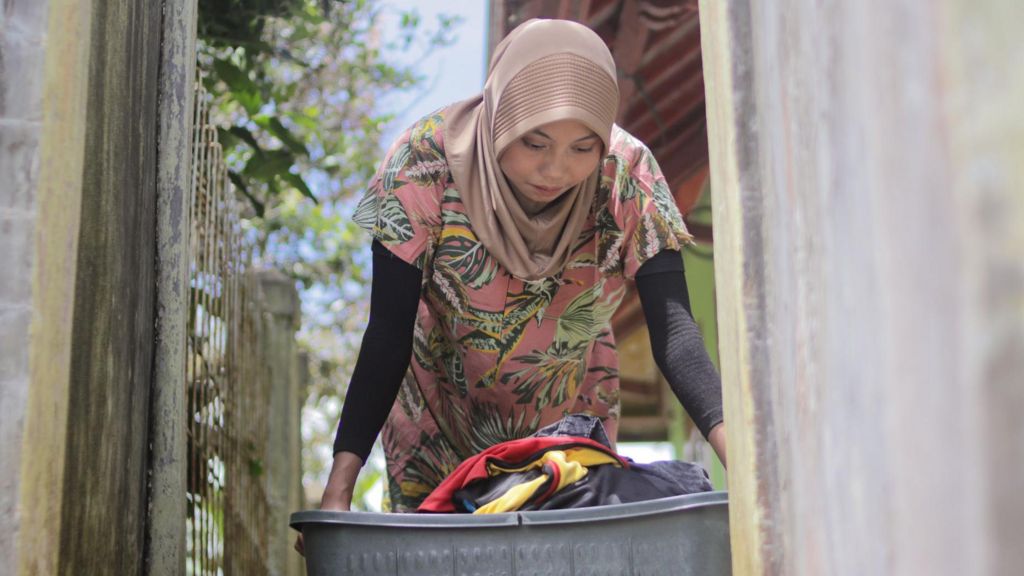
    In the high-altitude classrooms of Lhasa, a transformative educational initiative is taking root through the dedication of 20 volunteer teachers from Jiangsu province. Among them, Xu Xiaoqin has earned the affectionate nickname ‘Miss Jasmine’ from her students at Lhasa-Jiangsu Experimental School, symbolizing the fragrant impact of cross-regional educational cooperation.

    This teaching corps represents a significant interprovincial support program designed to bridge educational disparities between China’s developed coastal regions and plateau areas. The Jiangsu educators bring innovative teaching methodologies, advanced curricular resources, and fresh pedagogical perspectives to Tibetan classrooms, creating an enriching learning environment that combines eastern educational expertise with local cultural context.

    The program extends beyond conventional knowledge transfer, focusing on sustainable educational development through teacher training programs, digital learning resources, and shared educational infrastructure. These efforts aim to create lasting educational improvements rather than temporary interventions, with teachers spending extended periods embedded within the local educational ecosystem.

    Students at the experimental school have demonstrated remarkable engagement with the new teaching approaches, showing particular enthusiasm for interactive learning methods and multimedia educational tools introduced by the Jiangsu team. The initiative has also fostered cultural exchange, with teachers incorporating elements of Tibetan culture into their lesson plans while sharing perspectives from Jiangsu’s advanced educational system.

    This educational assistance program forms part of broader regional development strategies that emphasize knowledge transfer and capacity building as key components of regional development. The ‘Miss Jasmine’ phenomenon illustrates how personalized connections between educators and students can become powerful symbols of interregional cooperation and educational innovation.

  • German philosopher and social critic Jürgen Habermas dies at 96

    German philosopher and social critic Jürgen Habermas dies at 96

    Jürgen Habermas, the preeminent German philosopher and towering intellectual figure whose critical theories shaped post-war European thought, has died at age 96. His publisher Suhrkamp announced his passing on Saturday, marking the end of an era for contemporary philosophy and social criticism.

    Born in Düsseldorf in June 1929, Habermas’s early life unfolded under the shadow of Nazi Germany. His father, a local chamber of commerce leader, joined the Nazi Party in 1933, and the young Habermas was enrolled in the Hitler Youth organization, though he remained too young for combat deployment during World War II.

    After the war, Habermas embarked on an academic journey that would establish him as a leading voice of the Frankfurt School. He earned his doctorate from Marburg University before joining the University of Frankfurt’s Institute of Social Research, where he worked alongside Max Horkheimer and Theodor Adorno in developing critical theory—a framework challenging capitalist society’s transformation of active citizens into passive consumers.

    Throughout the 1960s, Habermas supported student movements at West German universities while developing his distinctive critique of mass media commodification. He argued that industrialized culture systematically undermined meaningful public discourse, a concern that informed his seminal 1981 work, The Theory of Communicative Action, which proposed that human societies are sustained through rational dialogue rather than political or economic power.

    Habermas’s intellectual courage extended to historical controversies. During the 1980s Historians’ Debate, he confronted conservative scholars who questioned the Holocaust’s uniqueness as a German phenomenon. Later, during German reunification, he criticized the rapid absorption of East Germany, warning against nationalist resurgence and advocating for European unity as a safeguard against historical rivalries.

    His personal experience with a cleft palate, requiring multiple childhood operations, profoundly influenced his theories about language and communication. This physical challenge informed his understanding of dialogic rationality and the fundamental human capacity for communicative action that defined his philosophical legacy.

  • Cuban protesters ransack Communist office as energy crisis deepens

    Cuban protesters ransack Communist office as energy crisis deepens

    In a rare display of public dissent, protesters in the central Cuban city of Moron ransacked a Communist Party office following rallies against severe food shortages and persistent power outages. The Cuban Interior Ministry (Minint) confirmed five arrests after a small group vandalized the building overnight into Saturday, starting fires with furniture from the reception area.

    The demonstrations occur amid mounting economic pressures exacerbated by a prolonged US oil blockade. President Miguel Díaz-Canel revealed in a national broadcast that no fuel has entered the country for three months due to these sanctions. The energy crisis has crippled essential services including hospital operations, public transportation, and education systems.

    While initial reports from state-run newspaper Invasor indicated the protest began peacefully, it escalated into acts of vandalism targeting multiple government facilities. Social media footage circulated showing protesters hurling rocks through windows while shouting “liberty” as fires burned in the streets.

    The unrest coincides with confirmed diplomatic talks between Havana and Washington to address longstanding differences. However, the situation remains tense as the Trump administration continues its pressure campaign, having previously threatened a “friendly takeover” and blocked Venezuelan oil shipments that once supplied half of Cuba’s energy needs.

    Cuban authorities have deployed specialized forces to investigate what they term “acts of vandalism,” highlighting the unusual nature of such public dissent in a country where protest rights, while constitutionally granted since 2019, remain undefined in practice.

  • Treasure hunter freed from jail after refusing to turn over shipwreck gold

    Treasure hunter freed from jail after refusing to turn over shipwreck gold

    After a decade behind bars, deep-sea treasure hunter Tommy Thompson has been released from prison, leaving the whereabouts of 500 missing gold coins from a historic shipwreck shrouded in mystery. The 73-year-old explorer, who located the legendary SS Central America wreck in 1988, spent years as a fugitive before his eventual capture and imprisonment.

    The SS Central America, famously known as the ‘Ship of Gold,’ met its tragic fate in 1857 during a hurricane off the coast of South Carolina. The vessel was transporting approximately 30,000 pounds of freshly minted San Francisco gold intended to establish banking reserves on the East Coast. The catastrophic sinking at a depth of 7,000 feet claimed 425 lives and significantly contributed to the financial panic of 1857.

    Thompson’s remarkable discovery of the wreckage yielded thousands of gold bars and coins, with subsequent sales generating approximately $50 million in 2000. However, 161 investors who had contributed $12.7 million to fund the recovery operation filed lawsuits in 2005, alleging they had been defrauded of their promised returns. Later estimates suggested the recovered treasure might have been worth up to $400 million.

    The treasure hunter’s legal troubles escalated when he vanished in 2012 to avoid court appearances. After three years as a fugitive, living under assumed names in Florida hotels while using cash payments and public transportation to evade detection, Thompson was finally apprehended in 2015.

    His imprisonment stemmed from criminal contempt charges for refusing to disclose the location of the missing coins. While civil contempt sentences typically continue indefinitely until compliance with court orders, the presiding judge recently determined that Thompson would never reveal the coins’ whereabouts, leading to his release and concluding one of the most extraordinary treasure hunting sagas in American history.

  • Fear grips Iranians as missiles fall and loyalist forces roam the streets

    Fear grips Iranians as missiles fall and loyalist forces roam the streets

    Beneath the ongoing aerial conflict between the US-Israeli alliance and Iran, a profound internal crisis is unfolding within Iranian urban centers. In the fortnight since the demise of Supreme Leader Ali Khamenei, a palpable climate of apprehension has taken root among civilians, who now find themselves caught between external military threats and an increasingly aggressive domestic security apparatus.

    Pro-government paramilitary units and security forces have established a pervasive presence nationwide. These elements, including the Basij volunteer militia, now routinely stage orchestrated rallies, erect countless checkpoints, and directly confront citizens on public streets. This strategic mobilization has been openly encouraged by Iranian officials; Parliament Speaker Mohammad Bagher Ghalibaf publicly urged loyalists to demonstrate their ‘presence in the streets’ via social media, a directive analysts interpret as an effort to project unwavering control after a significant leadership vacuum.

    The human impact of this strategy is severe and widespread. Personal accounts gathered from multiple cities describe a terrifying reality. Seema, a 42-year-old mother from Yazd, recounted being trapped in her car with her young son by motorcyclists chanting pro-regime slogans, who proceeded to violently assault her vehicle. In Tehran, residents like Ali describe an ‘oppressive’ and ‘toxic’ atmosphere, where young, armed volunteers man checkpoints to interrogate citizens with ‘pointless questions.’ The recent Quds Day rallies, an annual pro-Palestine event, were further stage-managed, with participants reportedly bused in to create an illusion of massive popular support for television broadcasts.

    Simultaneously, Iranian security officials have issued stark warnings against any form of dissent. National Police Chief Ahmad Reza Radan explicitly threatened to treat anyone protesting at the ‘enemy’s request’ as an enemy combatant. This has effectively ceded control of public spaces to regime loyalists, leaving ordinary Iranians feeling silenced and endangered. The situation is compounded by the fact that these very checkpoints and security installations have become secondary targets in the international conflict, with Israeli strikes hitting such positions in Tehran, raising the grim specter of civilian casualties.

    This convergence of external war and internal crackdown has generated complex and conflicting emotions among the populace. While many express deep-seated anger towards the regime’s repressive tactics, there is also growing disillusionment with foreign military action, which is seen as indifferent to civilian lives. As one Tehran resident, Ghazaleh, starkly summarized, citizens feel ‘trapped between two groups of criminals,’ where neither the Islamic Republic nor its international adversaries prioritize the welfare of the Iranian people. The prevailing fear is that the nation may endure the devastation of war only to emerge with an even more brutal and entrenched government.

  • American flag raised at US Embassy in Venezuela for the 1st time since 2019

    American flag raised at US Embassy in Venezuela for the 1st time since 2019

    CARACAS, Venezuela — In a significant diplomatic development, the United States officially reopened its embassy in Caracas on Saturday, marking the first time the American flag has flown over the compound since 2019. The ceremony signals a notable warming in bilateral relations following the dramatic capture of former President Nicolás Maduro by U.S. forces in January.

    The embassy reopening follows multiple supportive statements from U.S. President Donald Trump toward acting President Delcy Rodríguez, Maduro’s successor, who has actively pursued continued dialogue with the American administration. U.S. Embassy officials emphasized the historical significance of the moment, noting the flag raising occurred “exactly seven years after it was taken down” in a social media statement.

    The event attracted immediate attention from local residents, many expressing optimism about the development. “It’s a good thing, really, what a joy,” said Caracas resident Luz Verónica López. “Other countries must come back too because that’s what we need; progress, to move forward with good relations with the rest of the world, as it should be.”

    Another witness, Alessandro Di Benedetto, described the positive atmosphere among those observing the ceremony: “I found several people here surprised and happy because today they raised the U.S. flag at the embassy. This is positive; this is another step.”

    Despite this diplomatic progress, substantial segments of Venezuelan society and political leadership maintain strong criticism of Trump’s administration. Concerns persist regarding the forceful removal and subsequent imprisonment of Maduro and his wife in New York, alongside growing American influence in Venezuela’s crucial oil industry.

  • Fatal shooting near Sawgrass delays fan entry

    Fatal shooting near Sawgrass delays fan entry

    A deadly shooting incident near TPC Sawgrass golf course disrupted spectator access during the third day of the prestigious Players Championship tournament in Florida. According to St Johns County Sheriff’s Office, two individuals were fatally shot at approximately 10:30 PM local time on Friday, with the violent incident occurring less than one mile from the championship venue.

    The alleged perpetrator, identified as Christian Barrios, reportedly fled onto the golf course premises following the shooting. After an extensive manhunt, law enforcement authorities apprehended Barrios in Nassau County at around 8:00 AM on Saturday following a vehicle pursuit.

    Sheriff Robert Hardwick provided details of the suspect’s movements, indicating that Barrios had “made contact” with PGA Tour staff members during his attempted escape. “We believe he picked up a radio belonging to the PGA Tour, not one of our radios, and we know he dropped it after that,” Hardwick stated. “Our canines used it as a scent when they came in there.”

    The scheduled 7:30 AM gate opening for spectators was consequently delayed until 9:00 AM due to what tournament organizers described as “operational considerations” related to the security situation. Despite the access restrictions for fans, third-round competition at the PGA Tour’s flagship event commenced according to the original timetable.

    Meanwhile, Swedish golfer Ludvig Aberg maintained his tournament leadership position after two rounds, having delivered an impressive nine-under-par 63 performance on Friday prior to the security incident.

  • Russian sports minister defends return of flag, anthem to Paralympics

    Russian sports minister defends return of flag, anthem to Paralympics

    The reinstatement of Russian national symbols at the Paralympic Games has ignited significant diplomatic tensions, with Sports Minister Mikhail Degtyarev vigorously defending the decision to allow Russian athletes to compete under their flag and anthem for the first time since 2014. This development comes despite strong opposition from Ukraine and several European nations amid ongoing military conflict between Russia and Ukraine.

    Six Russian athletes are participating under their national insignia at the Milan-Cortina Winter Paralympics, marking a notable shift in the International Paralympic Committee’s stance. Minister Degtyarev, who also leads Russia’s Olympic committee, asserted in an official statement that Russian competitors have experienced overwhelming support at international events. He emphasized that the display of national symbols provokes no negative reactions among spectators and participants.

    The Russian official condemned recent incidents of protest, specifically referencing German athletes who turned their backs during medal ceremonies involving Russian winners. Degtyarev characterized such behavior as ‘appalling’ and ‘unsportsmanlike,’ while maintaining that these actions represent isolated occurrences from a vocal minority.

    Despite diplomatic boycotts and audible spectator disapproval during the opening ceremony, Russian athletes have demonstrated competitive success, securing nine medals including five golds and climbing to fifth position in the overall medal standings. The controversy emerges against the backdrop of Russia’s previous exclusion from international competitions, initially due to doping violations and subsequently reinforced following the 2022 offensive in Ukraine.

    Ukraine’s delegation has vehemently criticized the IPC’s decision, labeling it as ‘disappointing and outrageous’ and asserting that the reinstatement effectively amplifies Russian war propaganda. The Paralympics conclude Sunday with closing ceremonies amid ongoing geopolitical tensions surrounding Russian participation.

  • Royal College of Art center launched in Shanghai

    Royal College of Art center launched in Shanghai

    Shanghai has cemented its position as a global design education hub with the inauguration of the RCA Shanghai Centre, a groundbreaking collaborative initiative between Donghua University and the United Kingdom’s prestigious Royal College of Art. The launch ceremony on March 14, 2026, marked a significant advancement in international educational cooperation within China’s design sector.

    This strategic platform represents the first of its kind in China, establishing a comprehensive framework for cross-border design education innovation. The center will leverage world-class educational resources to cultivate exceptional talent, directly supporting Shanghai’s ambitious development as an international ‘City of Design’ and fashion capital.

    Donghua University President Xiang Yanxun emphasized the center’s transformative potential, stating it would ‘inject new momentum’ into Shanghai’s creative industries through superior educational resources and innovative approaches. The initiative aligns with China’s broader educational opening policies and international collaboration strategies.

    Royal College of Art President Christoph Lindner recognized Shanghai’s emerging status as a major global hub for creative education and cutting-edge industries. ‘Building on a shared vision for development,’ Lindner noted, ‘our institutions will jointly address environmental challenges and navigate the AI era through creative thinking.’

    The partnership extends beyond traditional design education, incorporating sustainability considerations and technological adaptation strategies. The center will serve as a nexus for academic exchange, research collaboration, and industry innovation, positioning Shanghai at the forefront of global design education evolution.

  • Kennedy Center head steps down after tumultuous year

    Kennedy Center head steps down after tumultuous year

    In a significant leadership shakeup at one of America’s premier cultural institutions, Richard Grenell has resigned from his position as head of the recently renamed Donald J Trump and John F Kennedy Memorial Center for the Performing Arts. The former U.S. ambassador to Germany, known for his close affiliation with President Donald Trump, departs after a year marked by substantial organizational changes, artist withdrawals, and declining attendance figures.

    President Trump announced the transition via his Truth Social platform, revealing that Matt Floca, the center’s current vice-president of facilities operations, would assume leadership responsibilities. Floca, who joined the institution in January 2024 during the Biden administration, brings extensive experience in facilities and construction management to the role.

    The leadership change occurs as the iconic performing arts venue prepares for an extensive two-year renovation project commencing in July. President Trump has secured over $250 million in funding for the reconstruction, frequently criticizing the center’s physical condition while promising to create “the finest facility of its kind anywhere in the World.”

    The administration’s relationship with the cultural institution has been complex since Trump’s return to the White House. Shortly beginning his second term, the president installed himself as chairman of the center after replacing several board members with political allies. This reconstituted board subsequently approved the institution’s controversial renaming in December, despite legal questions regarding the necessity of congressional approval for such changes.

    Under Grenell’s tenure, the center experienced significant programming shifts, with Trump criticizing previous offerings as excessively “woke.” This stance led to performance cancellations by prominent artists including the cast of Hamilton, composer Stephen Schwartz of Wicked fame, and Doug Varone and the Dancers.

    Once confirmed by the center’s board of directors, Floca will oversee the massive renovation project while managing the institution’s ongoing operational challenges during this transitional period.