作者: admin

  • Trump urges UK and other nations to send warships to Strait of Hormuz

    Trump urges UK and other nations to send warships to Strait of Hormuz

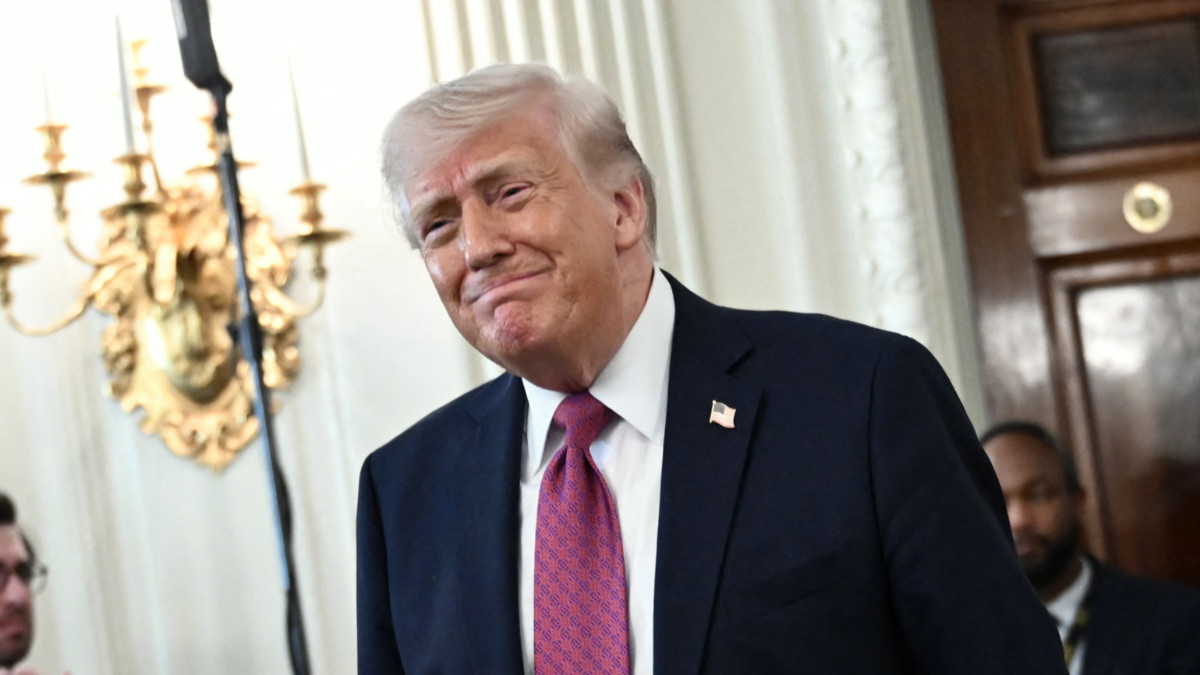
    Former US President Donald Trump has issued a forceful appeal for a multinational naval coalition to secure the strategic Strait of Hormuz, following a series of attacks on commercial shipping that have disrupted global oil supplies. In posts on his Truth Social platform, Trump specifically called upon the United Kingdom, China, France, Japan, and South Korea to deploy warships to safeguard this critical maritime corridor.

    The urgency of Trump’s request stems from escalating hostilities between the US-Israel alliance and Iran, which have transformed the world’s busiest oil shipping channel into a conflict zone. Since the war began on February 28th, UK Maritime Trade Operations has documented at least 16 attacks on vessels in and around the strait, through which approximately 20% of global oil shipments typically pass.

    Tehran has explicitly stated its intention to maintain a blockade of the waterway as part of its military strategy. Iranian officials have warned that any tanker bound for the US, Israel, or their partners constitutes a legitimate target. This declaration came alongside intensified attacks on energy infrastructure throughout the Gulf region.

    Trump’s rhetoric remained characteristically combative, asserting that while “100% of Iran’s military capability” had been destroyed, the nation still posed a threat through potential drone attacks, mine deployments, or close-range missile strikes. He promised continued US military action, including bombing Iranian shoreline positions and engaging Iranian vessels, while offering “a lot” of support to nations participating in the proposed coalition.

    The UK Ministry of Defence responded cautiously, indicating they were discussing “a range of options to ensure the security of shipping in the region” with allied nations. This diplomatic language contrasted sharply with Trump’s previous comments, in which he stated he “couldn’t care less” whether allies contributed more to the war effort and accused UK Prime Minister Keir Starmer of seeking to “join wars after we’ve already won.”

    International reactions revealed further complexities. French President Emmanuel Macron previously expressed willingness to deploy warships for escort missions, but only after the most “intense phase of the conflict” had concluded. Meanwhile, Liberal Democrat leader Ed Davey urged Prime Minister Starmer to resist pressure from Trump, emphasizing that deployment decisions should be based solely on UK national interests and subject to parliamentary approval.

    The strategic implications are substantial. Currently, not even the US Navy is escorting tankers through the narrow shipping lane, reflecting the dangerous operational environment. The effective closure of the strait and attacks on energy infrastructure have already triggered significant increases in global oil prices, demonstrating the economic vulnerability created by the regional conflict.

  • One-party Vietnam holds parliamentary election

    One-party Vietnam holds parliamentary election

    Vietnam conducted its parliamentary elections on Sunday to select members of the National Assembly, the country’s highest legislative body that primarily functions to endorse decisions made by the ruling Communist Party. The Southeast Asian nation of 100 million people presents a paradox: it boasts impressive economic achievements with eight percent growth last year while maintaining a repressive one-party system that frequently imprisons dissenting voices.

    Out of 864 candidates competing for 500 parliamentary seats, merely 65 are not affiliated with the Communist Party—a decrease from 74 non-party candidates in the previous election five years ago. The capital city of Hanoi displayed patriotic red-and-yellow banners celebrating what authorities term the “national festival” where citizens “eagerly cast ballots.”

    However, in a political landscape where major policies and projects are predetermined by senior party cadres, many Vietnamese citizens exhibit considerable ambivalence toward the electoral process. Phuong Anh, a 25-year-old administrative worker from Da Nang, expressed a common sentiment: “I don’t vote because I think my vote doesn’t matter.” She added that many people in her social circle share this perspective, feeling compelled to accept whoever assumes power due to the system’s inherent structure.

    Quynh Anh, a 24-year-old office worker in Ho Chi Minh City, represented a different viewpoint, stating she might participate this year “because I have never done it before.” While not particularly enthusiastic, she described the election as “a new experience that I haven’t had, so I’m curious to try it and see what it’s like.”

    Political analysts note that the new parliament’s initial responsibilities when it convenes next month will include confirming top leaders previously selected during the party’s twice-a-decade congress in January. Top leader To Lam was reaffirmed as general secretary and is widely anticipated to assume the presidency as well—a position requiring formal approval by lawmakers.

    Nguyen Khac Giang of the ISEAS–Yusof Ishak Institute in Singapore characterized the National Assembly as “more or less a window-dressing institution” where no significant surprises are expected. However, he noted that “top personnel selections—particularly the prime minister and the president—will carry significant implications for the ongoing reform process.”

    Lam has implemented substantial changes during his nearly two-year leadership, reducing bureaucratic red tape and advancing major infrastructure investments to stimulate economic growth. The party consolidated behind his ambitious vision at the January congress, electing several of Lam’s allies to its highest decision-making body. Notably, the party did not publicly announce the other main “pillars” of Vietnam’s collective leadership structure beyond Lam’s reappointment as general secretary. The president, prime minister, and head of the national assembly will all require confirmation through lawmakers’ votes, with Lam potentially becoming the first individual to secure the top two positions directly through a party congress rather than through succession following a predecessor’s death.

  • Ukrainian athletes talk about ‘unpleasant’ Paralympics after return of Russian flag at Milan Cortina

    Ukrainian athletes talk about ‘unpleasant’ Paralympics after return of Russian flag at Milan Cortina

    CORTINA D’AMPEZZO, Italy — The 2024 Milan Cortina Winter Paralympics have become a stage for geopolitical tensions as Ukrainian athletes express profound discomfort with the reinstatement of Russian national symbols at the games. This marks the first appearance of the Russian flag and anthem at a major international sporting event since the nation’s 2022 invasion of Ukraine.

    The symbolic return occurred despite Ukraine’s boycott of both opening and closing ceremonies. The situation reached a poignant moment during Saturday’s Para cross-country mixed relay, where Ukrainian and Russian teams competed simultaneously. Ukraine secured silver while Russia finished sixth.

    Ukrainian skier Iryna Bui, speaking through a translator, described the experience as “painful and unpleasant” given the ongoing conflict between their nations. Bui, who won silver in women’s Para biathlon sprint pursuit standing, expressed shock at seeing “this flag that is soaked in blood of Ukrainians” displayed at an international competition.

    The International Paralympic Committee granted wildcard entries to Russian athletes, ending their neutral status period resulting from previous doping violations and military conflicts. This decision has signaled Russia’s potential full return to Olympic circles ahead of the 2028 Summer Games in Los Angeles.

    Ukrainian team captain Hryhorii Vovchynskii, who is married to Bui, questioned the ethics of allowing a nation actively at war with Ukraine to participate. He reported that Ukrainian athletes have attempted to mentally block the Russian presence, with some support from athletes of other nations.

    Meanwhile, Russian athletes expressed national pride in their reinstatement. Para alpine skier Varvara Voronchikhina described seeing the Russian flag as “really special,” while snowboarder Filipp Shebbo called it “perfect” for Russian athletes who had “been waiting for this for a long time.”

    The games unfolded against the backdrop of Europe’s largest conflict since World War II, now entering its fifth year with millions estimated casualties. Ukrainian athletes described competing under constant stress while maintaining communication with families in war-torn Ukraine, seeing their athletic achievements as a way to bring positive moments to their compatriots.

  • Dowman makes history as Arsenal strike late, Chelsea beaten

    Dowman makes history as Arsenal strike late, Chelsea beaten

    In a dramatic Premier League showdown on Saturday, Arsenal secured a crucial 2-0 victory over Everton, significantly bolstering their championship campaign. The match, held at Emirates Stadium, witnessed 16-year-old Max Dowman etch his name into football history by becoming the youngest goalscorer the league has ever seen.

    The encounter remained intensely competitive until the final moments, with Everton’s defense proving remarkably resilient against Arsenal’s offensive strategies. The deadlock was ultimately broken in the 89th minute through a fortunate sequence. Swedish striker Viktor Gyokeres capitalized on a critical error by Everton goalkeeper Jordan Pickford, who misjudged Dowman’s cross, allowing Gyokeres to tap the ball into an undefended net.

    The climax arrived during stoppage time when Dowman executed a spectacular full-pitch sprint following an Everton corner that resulted in a rapid counter-attack. With composure belying his age, the teenager navigated into the box and delivered a precise finish, securing both his historic personal achievement and three vital points for his team.

    This triumph propels Arsenal to a formidable 10-point advantage over second-place Manchester City, who were scheduled for a later fixture against West Ham. The Gunners, pursuing their first domestic title in over two decades, now enter a pivotal period featuring a Champions League decider against Bayer Leverkusen and a League Cup final clash with Manchester City.

    Meanwhile, Chelsea’s aspirations for a top-four finish suffered a significant setback with a 1-0 home defeat to Newcastle. Anthony Gordon’s first-half strike proved decisive, compounding a disappointing week for Liam Rosenior’s squad following their heavy European loss to Paris Saint-Germain. The result leaves Chelsea three points adrift of Champions League qualification rivals while having played additional matches.

    In other league action, Brighton secured a narrow 1-0 victory over Sunderland to break into the top half of the table, while Burnley’s relegation concerns deepened after a goalless draw with Bournemouth did little to improve their precarious standing.

  • Trump says other countries ‘must take care’ of Hormuz

    Trump says other countries ‘must take care’ of Hormuz

    President Donald Trump has issued a call for nations dependent on oil shipments through the Strait of Hormuz to assume primary responsibility for securing the critical maritime passage, while offering substantial U.S. military support. The declaration comes amid escalating tensions that have driven global oil prices up by 40% following Iranian attacks on Gulf energy infrastructure and shipping channels.

    Speaking through social media on Saturday, Trump stated that while the United States had ‘completely decimated Iran’ both militarily and economically, the task of safeguarding the strategic waterway should become an international endeavor. ‘The Countries of the World that receive Oil through the Hormuz Strait must take care of that passage, and we will help — A LOT!’ the President announced, adding that Washington would coordinate multinational efforts to ensure operational efficiency.

    Trump specifically named China, France, Japan, South Korea, and Britain as nations he expects to contribute naval assets to secure the strait, through which approximately 20% of global crude oil and liquefied natural gas normally transits. Iranian drone strikes and mining operations have effectively paralyzed maritime traffic through the narrow 54-kilometer channel.

    The President outlined a dual strategy combining international naval presence with aggressive U.S. military action, vowing to ‘bomb the hell out of the shoreline’ and continuously engage Iranian vessels attempting to disrupt shipping. This follows Friday’s extensive U.S. bombing campaign against military targets on Iran’s Kharg Island, which handles nearly all of the country’s crude exports.

    Despite Trump’s assertions of Iran’s military defeat, he acknowledged Tehran’s continued capacity for asymmetric warfare in the region. ‘It’s easy for them to send a drone or two, drop a mine, or deliver a close range missile somewhere along this Waterway, no matter how badly defeated they are,’ he noted.

    European allies have begun mobilizing naval assets, though they emphasize defensive postures. French President Emmanuel Macron visited an aircraft carrier dispatched to the Mediterranean, characterizing the mission as defensive, while a British warship departed for the eastern Mediterranean following a drone attack on the UK’s Akrotiri base in Cyprus.

  • War in the Middle East: latest developments

    War in the Middle East: latest developments

    The Middle East conflict has entered a dangerous new phase with multiple fronts of escalation, according to latest developments verified by international agencies. Regional tensions have intensified following a series of drone and missile attacks targeting critical infrastructure across several nations.

    In a significant maritime security development, former US President Donald Trump has called upon multiple nations including China, France, Japan, South Korea, and Britain to deploy naval assets to secure the Strait of Hormuz, a vital global oil transit corridor. This request comes amid heightened threats to energy infrastructure throughout the region.

    Airport and military facilities have become prime targets in the escalating conflict. Kuwait’s international airport sustained drone strikes that damaged its radar systems, while a separate attack on a Kuwaiti airbase housing US military personnel resulted in injuries to Kuwaiti staff and significant property damage. Simultaneously, the United Arab Emirates reported attacks on its energy installations in Fujairah and its consulate in Iraqi Kurdistan, marking the second assault on the diplomatic compound within a week.

    The missile warfare between Iran and Israel has reached unprecedented levels. Iranian state television confirmed new missile launches toward Israel, while Jordan’s military reported intercepting 79 out of 85 projectiles targeting its territory. Explosions were heard over Jerusalem as Israel’s defense systems activated against incoming threats.

    Casualty figures continue to mount with Lebanon’s health ministry reporting 826 fatalities, including 106 children and 65 women, with an additional 2,009 wounded in ongoing hostilities with Hezbollah. An alleged US-Israeli strike on Isfahan’s industrial sector reportedly killed 15 people, though independent verification remains pending.

    Diplomatic channels show increasing strain as Turkey’s Foreign Minister Hakan Fidan accused Iran of denying responsibility for ballistic missile launches toward Turkish territory despite technical evidence. Meanwhile, Iran’s envoy to Ukraine dismissed Kyiv’s support for US and Gulf allies in countering drones as ‘a joke’ in comments to AFP.

    UN Secretary-General Antonio Guterres, during his Beirut visit, emphasized that diplomatic options remain available to resolve the Israel-Hezbollah conflict while urging international support for Lebanon. In a notable development, Hamas publicly appealed to Iran to refrain from targeting neighboring countries while acknowledging Tehran’s right to self-defense against Israel and the United States.

    Oil operations from Iran’s Kharg Island continue normally despite recent attacks on the export hub, according to regional officials. The situation remains fluid with the US embassy in Baghdad also reporting a drone strike, as confirmed by Iraqi security sources and witnessed by AFP journalists.

  • AP Exclusive: Turkey’s Foreign Minister Hakan Fidan talks diplomacy efforts as regional war rages

    AP Exclusive: Turkey’s Foreign Minister Hakan Fidan talks diplomacy efforts as regional war rages

    In an exclusive interview with The Associated Press, Turkish Foreign Minister Hakan Fidan disclosed that while no formal initiative exists to restart U.S.-Iran negotiations, Tehran appears receptive to back-channel diplomacy. The remarks come as Turkey intensifies efforts to maintain neutrality in the escalating Middle East conflict.

    Fidan, a former intelligence chief who now serves as one of President Recep Tayyip Erdogan’s most trusted advisors, acknowledged that current conditions remain unfavorable for conventional diplomacy. He revealed Iranian officials feel “betrayed” after being attacked during active nuclear negotiations with the United States for the second time. Despite this, Fidan stated, “I think they are open to any sensible back-channel diplomacy.”

    Turkey’s delicate balancing act faces continued challenges, including the interception of three Iranian-origin missiles by NATO defenses over Turkish territory. While Iranian officials denied targeting Turkey, Fidan confirmed available evidence indicates the missiles originated from Iran. Nevertheless, he ruled out military retaliation, emphasizing that NATO’s defensive systems proved effective and Ankara’s “primary objective” remains avoiding direct involvement in the conflict.

    Regarding Iran’s leadership situation, Fidan provided insights into the power transition following the death of Ayatollah Ali Khamenei. While unable to confirm the severity of wounds sustained by new Supreme Leader Ayatollah Mojtaba Khamenei, Fidan confirmed he remains “alive and functioning.” The foreign minister suggested a temporary power vacuum had been filled by the Revolutionary Guards’ high command.

    Fidan also addressed Turkey’s strained relations with Israel, dismissing speculation that Turkey could become Israel’s next target. He criticized Israeli Prime Minister Netanyahu’s government for consistently identifying regional enemies to advance its political agenda. The minister further accused Israel of territorial ambitions in Syria rather than genuine security concerns, predicting continued Middle East instability until this approach changes.

    Despite these tensions, Turkey continues pursuing an active role in postwar Gaza arrangements. Fidan confirmed Turkey’s participation in the U.S.-backed Board of Peace and expressed willingness to contribute troops to an international stabilization force, though acknowledging Israeli opposition currently prevents this involvement. He emphasized the urgency of establishing an administration committee comprising independent Palestinian administrators to begin governance work in Gaza.

  • Wales end three-year Six Nations drought by blowing away Italy in Cardiff

    Wales end three-year Six Nations drought by blowing away Italy in Cardiff

    CARDIFF, Wales — In a stunning reversal of fortune, Wales emphatically broke their 1,099-day Six Nations drought with a commanding 31-17 triumph over Italy at Principality Stadium on Saturday. The victory marked their first championship win since March 2023 and shattered a national record 15-match losing streak in the tournament.

    The Welsh squad transformed recent narrow defeats against Scotland and Ireland into an unexpectedly dominant bonus-point performance. Displaying physical intensity and ruthless efficiency, Wales established an overwhelming 21-0 halftime advantage that expanded to 31-0 before Italy managed to register points on the scoreboard.

    Wales’ defensive organization proved particularly impressive, with the scramble defense denying multiple Italian scoring opportunities. Italy had two potential tries disallowed, one held up over the line, and another prevented by a crucial ankle-tap tackle.

    Despite lineout challenges, Wales effectively capitalized on penalty opportunities. Workhorse winger Ellis Mee earned a critical kick-chase penalty that positioned No. 8 Aaron Wainwright for the opening score. Utilizing the set-piece platform effectively, Wales subsequently drove Wainwright across for his second try.

    Captain Dewi Lake completed another lineout drive to touch down, while fly-half Dan Edwards maintained perfect kicking form, converting all four attempts and maintaining a tournament record of nine successful kicks from nine attempts.

    The second half began with continued Welsh dominance as Edwards sliced through fatigued Italian defense to score, convert his own try, and add a drop goal for a remarkable 31-0 lead.

    Italy dominated the final thirty minutes with replacement players Tommaso Di Bartolomeo and Tommaso Allan crossing for consolation scores, but Wales’ defensive resilience continued to shine through critical interventions from multiple players.

    The outcome potentially saves Wales from finishing with the tournament’s wooden spoon, depending on England’s result against France in the concluding match.

  • Miss Jasmine on the Pleatau

    Miss Jasmine on the Pleatau

    In the high-altitude classrooms of Lhasa, a transformative educational initiative is taking root through the dedication of 20 volunteer teachers from Jiangsu province. Among them, Xu Xiaoqin has earned the affectionate nickname ‘Miss Jasmine’ from her students at Lhasa-Jiangsu Experimental School, symbolizing the fragrant impact of cross-regional educational cooperation.

    This teaching corps represents a significant interprovincial support program designed to bridge educational disparities between China’s developed coastal regions and plateau areas. The Jiangsu educators bring innovative teaching methodologies, advanced curricular resources, and fresh pedagogical perspectives to Tibetan classrooms, creating an enriching learning environment that combines eastern educational expertise with local cultural context.

    The program extends beyond conventional knowledge transfer, focusing on sustainable educational development through teacher training programs, digital learning resources, and shared educational infrastructure. These efforts aim to create lasting educational improvements rather than temporary interventions, with teachers spending extended periods embedded within the local educational ecosystem.

    Students at the experimental school have demonstrated remarkable engagement with the new teaching approaches, showing particular enthusiasm for interactive learning methods and multimedia educational tools introduced by the Jiangsu team. The initiative has also fostered cultural exchange, with teachers incorporating elements of Tibetan culture into their lesson plans while sharing perspectives from Jiangsu’s advanced educational system.

    This educational assistance program forms part of broader regional development strategies that emphasize knowledge transfer and capacity building as key components of regional development. The ‘Miss Jasmine’ phenomenon illustrates how personalized connections between educators and students can become powerful symbols of interregional cooperation and educational innovation.

  • German philosopher and social critic Jürgen Habermas dies at 96

    German philosopher and social critic Jürgen Habermas dies at 96

    Jürgen Habermas, the preeminent German philosopher and towering intellectual figure whose critical theories shaped post-war European thought, has died at age 96. His publisher Suhrkamp announced his passing on Saturday, marking the end of an era for contemporary philosophy and social criticism.

    Born in Düsseldorf in June 1929, Habermas’s early life unfolded under the shadow of Nazi Germany. His father, a local chamber of commerce leader, joined the Nazi Party in 1933, and the young Habermas was enrolled in the Hitler Youth organization, though he remained too young for combat deployment during World War II.

    After the war, Habermas embarked on an academic journey that would establish him as a leading voice of the Frankfurt School. He earned his doctorate from Marburg University before joining the University of Frankfurt’s Institute of Social Research, where he worked alongside Max Horkheimer and Theodor Adorno in developing critical theory—a framework challenging capitalist society’s transformation of active citizens into passive consumers.

    Throughout the 1960s, Habermas supported student movements at West German universities while developing his distinctive critique of mass media commodification. He argued that industrialized culture systematically undermined meaningful public discourse, a concern that informed his seminal 1981 work, The Theory of Communicative Action, which proposed that human societies are sustained through rational dialogue rather than political or economic power.

    Habermas’s intellectual courage extended to historical controversies. During the 1980s Historians’ Debate, he confronted conservative scholars who questioned the Holocaust’s uniqueness as a German phenomenon. Later, during German reunification, he criticized the rapid absorption of East Germany, warning against nationalist resurgence and advocating for European unity as a safeguard against historical rivalries.

    His personal experience with a cleft palate, requiring multiple childhood operations, profoundly influenced his theories about language and communication. This physical challenge informed his understanding of dialogic rationality and the fundamental human capacity for communicative action that defined his philosophical legacy.