作者: admin

  • Jürgen Habermas, influential German philosopher, dies at 96

    Jürgen Habermas, influential German philosopher, dies at 96

    BERLIN — Jürgen Habermas, the preeminent German philosopher whose groundbreaking theories on communication and rationality reshaped modern sociological thought, has passed away at age 96. His publisher, Suhrkamp Verlag, confirmed his death on Saturday in Starnberg, a tranquil town near Munich.

    Habermas emerged as one of the most consequential intellectual figures of the postwar era, developing comprehensive frameworks that bridged philosophy, sociology, and political theory. His seminal two-volume masterpiece, “Theory of Communicative Action,” established revolutionary concepts about how human interaction and discourse form the foundation of modern society.

    The philosopher’s intellectual journey was profoundly shaped by Germany’s historical reckoning with Nazism. Born in 1929 in Duesseldorf, Habermas was 15 when the Nazi regime collapsed—an experience he described as catalytic to his philosophical awakening. He later reflected on the profound shock of recognizing the “politically criminal system” in which he had been raised, a realization that propelled his examination of societal structures.

    Throughout his career, Habermas maintained vigorous engagement with political discourse while navigating complex relationships with various movements. During the left-wing student protests of the late 1960s, he adopted a characteristically nuanced position—engaging with activists while cautioning against what he termed “left-wing fascism,” a phrase he later acknowledged might have been “slightly out of place.” Despite initial tensions, he ultimately recognized the movement’s role in driving Germany’s “fundamental liberalization.”

    In the 1980s, Habermas became a central figure in the Historians’ Dispute (Historikerstreit), vigorously challenging conservative historians like Ernst Nolte who sought to contextualize Nazi atrocities through comparative analysis with Soviet crimes. Habermas argued persuasively that such comparisons risked diminishing the unique horror of the Holocaust and undermining Germany’s ethical reckoning.

    The philosopher remained politically active throughout his life, supporting Chancellor Gerhard Schröder’s center-left government in 1998 while offering pointed criticism of Angela Merkel’s leadership. He characterized her administration as “technocratic” and lamented its “paralyzing effects on public opinion,” describing her policies as creating a “foam blanket” that sent citizens into political slumber.

    A passionate advocate for European integration, Habermas frequently criticized German leaders for their “limited interest” in building “a politically effective Europe.” He enthusiastically endorsed French President Emmanuel Macron’s reform vision in 2017, praising his distinctive approach to European discourse.

    Habermas’s personal experiences profoundly informed his philosophical work. Born with a cleft palate that required multiple childhood surgeries, he developed unique insights into language’s essential role in human connection. He described spoken language as “a layer of commonality without which we as individuals cannot exist,” while simultaneously recognizing “the superiority of the written word” in concealing oral imperfections.

    Habermas is survived by two of his three children, Tilmann and Judith, following the passing of his wife Ute Habermas-Wesselhoeft last year and daughter Rebekka in 2023. His intellectual legacy endures as a towering contribution to contemporary thought, having fundamentally transformed our understanding of communication, democracy, and modern society.

  • 9.41 billion cross-regional trips made during 2026 Spring Festival travel rush

    9.41 billion cross-regional trips made during 2026 Spring Festival travel rush

    China’s transportation networks witnessed unprecedented activity during the 2026 Spring Festival travel period, with official data revealing a staggering 9.41 billion cross-regional journeys completed nationwide. This remarkable figure establishes a new benchmark in the history of China’s seasonal migration patterns, demonstrating both the massive scale of domestic mobility and the recovery of travel enthusiasm following recent global challenges.

    The Spring Festival travel rush, known locally as ‘Chunyun,’ represents the world’s largest annual human migration event. The 2026 iteration saw hundreds of millions of Chinese citizens traversing the country to reunite with families for the Lunar New Year celebrations. Transportation hubs across China operated at maximum capacity, with railways, highways, airways, and waterways all experiencing substantial passenger volume increases compared to previous years.

    Photographic evidence from Yinchuan Railway Station in Northwest China’s Ningxia Hui autonomous region captured the immense crowds on February 23, 2026, as travelers hurried to board trains. The scene represented a microcosm of the nationwide phenomenon, with similar congestion observed at major transportation centers throughout China.

    The record-breaking travel numbers reflect several underlying developments: significant infrastructure investments in China’s transportation networks, growing economic prosperity enabling more citizens to travel long distances, and the cultural importance of family reunification during traditional holidays. Authorities implemented comprehensive crowd management strategies and deployed additional transportation resources to accommodate the massive surge in passenger movement.

    This transportation milestone occurred alongside other significant spring developments across China, including early blooming kapok flowers in Guangzhou, the premature return of migratory birds to Xingkai Lake, and the inauguration of Beijing E-Town’s pioneering smart elderly care robotics station.

  • Rapeseed festival boosts rural vitalization in Sichuan

    Rapeseed festival boosts rural vitalization in Sichuan

    The sixth annual Rapeseed Flower Cultural Festival commenced on Friday in Zhaohua district, Guangyuan, Sichuan province, marking a significant development in China’s rural revitalization strategy. This innovative event transcends traditional agricultural exhibitions by creating an integrated platform that combines contract farming agreements, cultural heritage presentations, immersive field experiences, and digital commerce initiatives.

    During the opening ceremony, COFCO Oils & Oilseeds (Guangyuan) Co Ltd solidified procurement partnerships with multiple regional suppliers, establishing a strengthened framework for local rapeseed production and distribution. Unlike conventional tourism-focused festivals, the Zhaohua event strategically leverages the region’s agricultural resources to build a comprehensive industrial chain around rapeseed cultivation and processing.

    The festival’s multidimensional approach demonstrates how rural communities can effectively merge cultural preservation with economic development. By incorporating livestream e-commerce capabilities alongside traditional farming practices, organizers have created a sustainable model that benefits local farmers while promoting regional specialty products to broader markets. This initiative represents a sophisticated evolution in how agricultural regions can harness their natural and cultural assets to drive meaningful economic transformation.

  • Iranians grapple with whether to flee the country because of the war

    Iranians grapple with whether to flee the country because of the war

    KAPIKOY BORDER CROSSING, Turkey — Merve Pourkaz, a 32-year-old hairdresser from Iran’s eastern city of Golestan, made the arduous 1,500-kilometer journey to this alpine border crossing after explosions rocked her neighborhood. Her destination: the relative safety of Van, Turkey. ‘If they permit me, I’ll remain in Van until the war concludes,’ she told The Associated Press. ‘Otherwise, I may return home to face whatever fate awaits.’

    Pourkaz represents one of approximately 3.2 million Iranians internally displaced since the outbreak of the U.S.-Israel conflict with Iran, according to UN estimates. While many seek refuge within Iran’s borders or in neighboring nations, a counter-movement sees citizens returning from abroad to protect familial homes and loved ones.

    Current migration patterns reveal complexity: UN data indicates only about 1,300 Iranians cross into Turkey daily, with some days witnessing more returnees than departures. However, neighboring countries and European nations are developing contingency plans amid concerns that prolonged conflict could trigger a full-scale migration crisis.

    This duality of movement is embodied by individuals like Leila Rabetnezhadfard, 45, who abandoned wedding preparations in Istanbul to return to her family in Shiraz, southern Iran. ‘How could I feel secure in Istanbul while my family endures wartime conditions?’ she questioned, citing practical constraints including limited housing space, medical needs, and high costs.

    The International Organization for Migration reports that while large-scale exodus hasn’t materialized, significant internal displacement continues toward rural areas near the Caspian Sea. Salvador Gutierrez, IOM’s mission chief in Iran, attributes this to ‘people prioritizing family unity, safety concerns, and logistical limitations.’

    Experts warn that infrastructure collapse could change this calculus dramatically. ‘If Tehran, a metropolis of 10 million, loses water supply, population movement becomes inevitable,’ noted Alex Vatanka of the Middle East Institute. Such development could strain borders with Pakistan, Afghanistan, Turkmenistan, Azerbaijan, Armenia, Turkey, and Iraq.

    Turkey, having absorbed millions during Syria’s civil war under its previous open-door policy, has adopted a different approach. Reports indicate preparations for border ‘buffer zones’ and temporary settlements, complemented by enhanced border security including 380 kilometers of concrete barriers and numerous observation posts.

    European officials simultaneously grapple with the potential renewal of the 2016 EU-Turkey migration agreement, which provided €6 billion for refugee support in exchange for border control. This comes amid rising anti-immigrant sentiment in Europe and fresh displacement crises elsewhere in the region, including over 800,000 displaced in Lebanon.

    Humanitarian organizations express alarm over dwindling resources. ‘We face potential grave humanitarian consequences precisely when funding has been severely reduced,’ stated Ninette Kelley of the World Refugee & Migration Council, highlighting concerns about global readiness for another large-scale displacement event.

  • Indigenous women tour Ecuador oil field as warning against Amazon drilling expansion

    Indigenous women tour Ecuador oil field as warning against Amazon drilling expansion

    In Ecuador’s northern Amazon region, a delegation of approximately 30 Indigenous women embarked on an educational journey dubbed a ‘toxitour’ to witness the environmental consequences of decades of hydrocarbon extraction. The women, representing seven distinct Indigenous communities from across Ecuador’s Amazon basin, gathered in Nueva Loja (historically known as Lago Agrio) from March 6-8, 2026, to share experiences and document the ecological damage.

    Julia Catalina Chumbi, a 76-year-old Shuar leader from Pastaza province, expressed profound dismay upon encountering oil-contaminated streams and gas flares burning above the rainforest canopy. ‘Everything is contaminated, even the air,’ she observed quietly, noting that local communities can no longer safely drink from rivers and must purchase bottled water due to pollution concerns.

    The tour included visits to operational oil fields, including the Libertador field operated by state-owned Petroecuador, where participants observed polluted waterways, compromised vegetation, and absent wildlife. Salome Aranda, a 43-year-old Kichwa woman from Morete Cocha, noted that while access restrictions prevent such observations in her own territory, the tour confirmed her concerns about disappearing animals and failing crops near extraction sites.

    This initiative occurred against the backdrop of Ecuador’s proposed ‘hydrocarbon road map,’ a $47 billion expansion plan that would open new Amazon regions to oil and gas development. Many proposed concessions overlap with Indigenous territories in Pastaza and Napo provinces, raising concerns about further environmental degradation and violations of Indigenous rights to free, prior, and informed consent.

    Following the tour, participants developed strategies to resist potential new oil concessions in their territories. Dayuma Nango, vice president of the Association of Waorani Women, affirmed her commitment to protecting Waorani lands, stating: ‘Our forest is our mother. That’s why we protect it.’ The experience culminated in International Women’s Day demonstrations in Puyo, where participants highlighted environmental rights violations and declared their determination to resist oil expansion ‘even if it costs us our lives.’

  • Trump seeks to close $1.6 trillion revenue gap with raft of new tariffs

    Trump seeks to close $1.6 trillion revenue gap with raft of new tariffs

    The Trump administration has initiated a comprehensive trade investigation strategy to recover approximately $1.6 trillion in lost tariff revenue following a Supreme Court decision that invalidated the president’s previous import taxes. This revenue was considered crucial for offsetting the substantial costs associated with recent tax cuts.

    Rather than utilizing emergency powers that enabled immediate tariff implementation, the administration is now employing Section 301 of the 1974 Trade Act—a more complex legal framework requiring extensive consultations, public hearings, and industry input. This approach allows affected U.S. companies to seek exemptions and potentially contest the tariffs, creating uncertainty about the ultimate revenue recovery.

    Two major investigations have been launched: the first examines 16 economies including the EU, China, South Korea, and Japan for allegedly subsidizing excessive factory capacity that disadvantages U.S. manufacturing. The second investigation targets dozens of countries including the EU, China, Mexico, Canada, Australia, and Brazil for potentially permitting goods produced through forced labor practices.

    According to economic experts, the administration faces significant challenges in recreating the previous tariff structure. While the 10% temporary tariff currently in effect can only last 150 days, the new investigations cover approximately 70% of imports initially and nearly all imports under the second probe. This breadth suggests the primary objective is revenue generation rather than addressing specific trade concerns.

    Multiple economic studies, including those from the Federal Reserve Bank of New York and Harvard University, indicate that American companies and consumers ultimately bear the cost of tariffs—contrary to the administration’s assertion that foreign countries fund U.S. government services. The Congressional Budget Office estimates the tax cut legislation will add $4.7 trillion to the national debt over a decade, with tariffs previously projected to offset about $3 trillion of that cost.

  • Pulpit to Pentagon: the evangelicals who see Iran war as God’s plan

    Pulpit to Pentagon: the evangelicals who see Iran war as God’s plan

    Amid escalating military tensions between the United States, Israel, and Iran, a distinctive theological framework is increasingly influencing American political and military perspectives. Prominent Christian leaders are interpreting the conflict through an apocalyptic lens, with figures like John Hagee of Christians United for Israel describing the warfare as divinely ordained fulfillment of biblical prophecy. ‘Prophetically, we’re right on cue,’ Hagee declared in a recent sermon, while artist-activist Sean Feucht referenced ‘end-time open doors’ in Iran following potential regime change.

    This worldview finds its roots in 19th-century Protestantism when American preachers adopted more literal biblical interpretations. The theological movement known as dispensationalism—which divides human history into distinct ages governed by divine plan—has evolved into modern Christian Zionism. This ideology maintains strong support for Israel based on Genesis’ covenant narrative, believing current events signal the approaching ‘end times’ preceded by a period of tribulation centered in Israel.

    The 1967 Six-Day War marked a critical turning point, with Israel’s territorial victories reinforcing evangelical beliefs about divine intervention. The capture of Jerusalem particularly fueled expectations of temple rebuilding and end-times scenarios, popularized through cultural phenomena like the ‘Left Behind’ series that sold over 80 million copies.

    Recently, this ideology has penetrated government structures with concerning implications. The Military Religious Freedom Foundation reports over 200 complaints regarding military commanders presenting the Iran conflict as part of divine plan to personnel. The 2025 appointment of former Arkansas Governor Mike Huckabee—a prominent Christian Zionist who led Holy Land tours—as ambassador to Israel further signals this theological framework’s growing political influence. Huckabee has publicly emphasized the Genesis 12 paradigm: ‘Those who bless Israel will be blessed, those who curse Israel will be cursed.’

    This alignment represents a significant evolution from earlier decades when Jewish organizations hesitated to partner with conversion-focused Christians. Post-9/11 anti-Islam sentiment and increasing international criticism of Israel’s Palestinian policies gradually fostered this unlikely alliance, now manifesting in highest levels of American governance and military strategy.

  • Opposition leader Bobi Wine says he left Uganda after going into hiding after disputed election

    Opposition leader Bobi Wine says he left Uganda after going into hiding after disputed election

    KAMPALA, Uganda — In a dramatic development within Uganda’s political landscape, opposition leader Bobi Wine has confirmed his departure from the country to evade what he describes as a military-led manhunt following the disputed presidential election held on January 15.

    The prominent opposition figure, legally named Kyagulanyi Ssentamu, emerged from weeks of concealment through a video message posted on social media platform X this Saturday. Appearing with visible stubble, Wine announced his successful exit from Uganda while maintaining secrecy regarding his current whereabouts.

    This flight from his homeland comes amid escalating tensions with Uganda’s military establishment, particularly with General Muhoozi Kainerugaba, the nation’s army chief and son of long-serving President Yoweri Museveni. General Kainerugaba has repeatedly utilized social media to issue threatening statements against Wine, labeling him a ‘terrorist’ and ‘baboon’ while suggesting he faces unspecified criminal charges.

    The official election results declared President Museveni victorious with 71.6% of the vote, outcomes that Wine and his supporters vehemently reject as fraudulent. Wine’s campaign had been marked by extraordinary security measures, including appearances in helmet and flak jacket at rallies where government security forces maintained a conspicuous presence.

    In his video address, Wine expressed gratitude to his supporters: ‘Fellow Ugandans and friends of Uganda all over the world, by the time you see this video I will have left the country for some critical engagements outside Uganda. I thank all of you fellow Ugandans who have concealed and protected me for all this time when the regime was looking for me.’

    The 81-year-old Museveni is scheduled to be sworn in for his seventh term in May, potentially extending his leadership toward five decades. While supporters credit his administration with maintaining relative stability that has made Uganda a refuge for hundreds of thousands fleeing regional violence, opposition figures increasingly condemn what they perceive as escalating authoritarianism.

  • Cocaine worth €5.25m seized and two arrested

    Cocaine worth €5.25m seized and two arrested

    Irish law enforcement authorities have made a major breakthrough in combating organized crime with the interception of cocaine valued at approximately €5.25 million (£4.56 million). The significant narcotics seizure occurred in County Monaghan on Friday following a coordinated multi-agency operation.

    An Garda Síochána executed simultaneous search warrants targeting multiple vehicles and a commercial establishment believed to be connected to drug trafficking activities. The operation resulted in the apprehension of two suspects: a male in his fifties and a female in her forties, both currently detained under drug trafficking legislation.

    The confiscated substances have been transferred to Forensic Science Ireland (FSI) for comprehensive chemical analysis to determine purity, composition, and potential origin. This procedural step is critical for building evidence for subsequent prosecution cases.

    This intelligence-driven intervention was conducted under Operation Tara, a strategic initiative launched in July 2021 specifically designed to dismantle sophisticated drug trafficking networks operating across Ireland. The operation involved specialized units including the National Drugs and Organised Crime Bureau, with tactical support provided by the Dublin Crime Response Team.

    International cooperation played a vital role in the operation’s success, with assistance provided by the Customs Revenue Service and notably, the Belgian Federal Maritime Police, indicating the transnational nature of the investigation. Local Monaghan Garda units also contributed essential regional expertise to the operation.

    Operation Tara represents Ireland’s concentrated nationwide strategy against drug distribution networks, focusing on disrupting every aspect of illegal drug operations from importation and cultivation to street-level distribution and financial proceeds.

  • Trump says US military actions in Iran will last ‘as long as necessary’

    Trump says US military actions in Iran will last ‘as long as necessary’

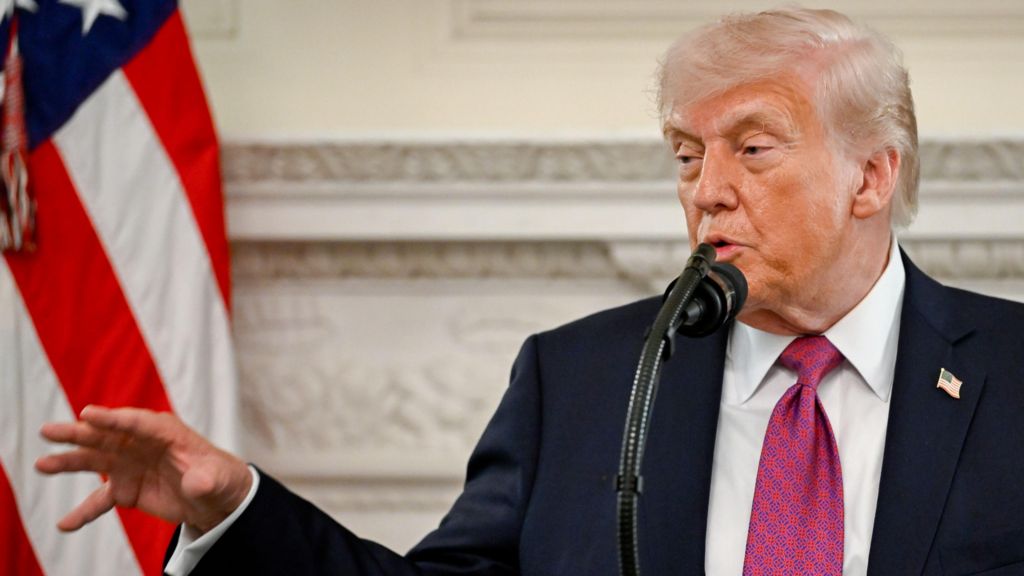
    President Donald Trump declared on Friday that American military operations in Iran would continue indefinitely, offering no specific timeline for resolution while asserting that campaign objectives were being met ahead of expectations.

    During a press briefing at the White House, Trump faced repeated questioning from journalists seeking clarity on the duration of ongoing combat operations. “I can’t tell you that,” the President responded when pressed for a definitive timeframe. Emphasizing the unpredictable nature of military engagements, he added, “I won’t give you a time, but we are way ahead of schedule.”

    The statement comes amid growing international concern over escalating tensions in the Persian Gulf region. Military analysts note that the administration’s refusal to establish a clear endpoint marks a significant departure from previous conflict management approaches, where timelines and exit strategies were more explicitly defined.

    This development occurs against the backdrop of complex geopolitical dynamics, including recent sanctions debates at the United Nations Security Council and increasing domestic scrutiny over the human and financial costs of prolonged military engagement. The President’s remarks suggest a commitment to maintaining operational flexibility while acknowledging the inherent uncertainties of modern warfare.