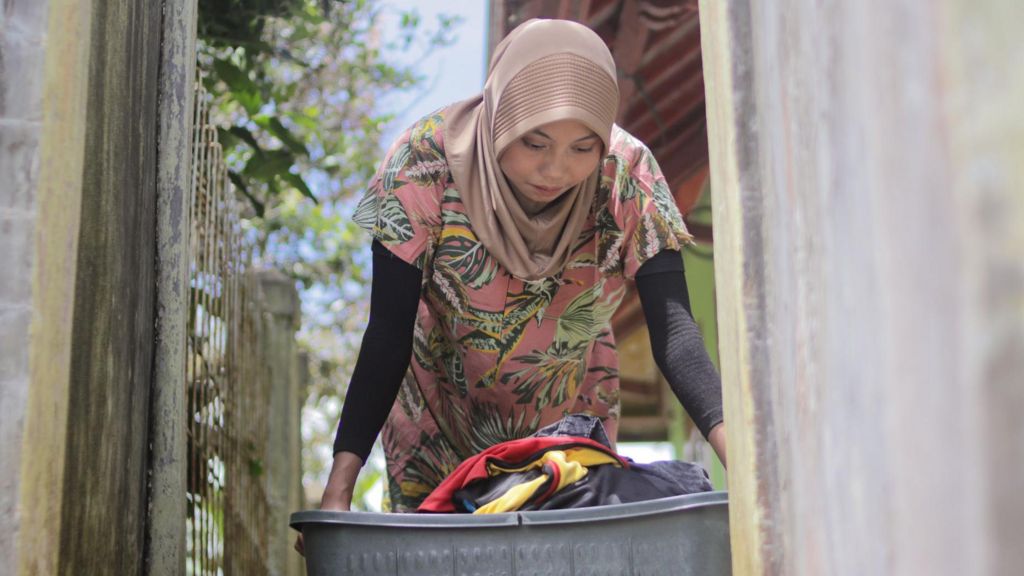
After more than two decades of stalled negotiations and persistent grassroots advocacy, Indonesia’s parliament has finally enacted a groundbreaking law that formally recognizes and protects the rights of the nation’s 4.2 million domestic workers, a workforce overwhelmingly made up of women.
For years, this critical segment of the Indonesian labor force existed in a legal gray area: prior to this new legislation, domestic workers were not officially classified as workers under national labor regulations, leaving them vulnerable to exploitation, abuse, and poverty with no formal recourse. An estimated 90% of all domestic workers in Indonesia are women, many of whom have long faced systemic marginalization in informal work arrangements that lack basic social protections.
The Domestic Workers Protection Law, which was first introduced to legislative chambers back in 2004, delivers sweeping new guarantees for domestic workers across the country. Under the new framework, workers will be legally entitled to paid rest days, public health insurance coverage, and formal pension benefits. The legislation also bars recruitment and placement agencies from withholding any portion of workers’ wages as placement fees, and imposes an outright ban on child domestic labor, making it illegal to hire any person under the age of 18 for full-time domestic work.
Emotional reactions greeted the final passage of the bill, with many long-time advocates and domestic workers describing the moment as the fruition of a decades-long fight for dignity. “It feels like a dream,” Ajeng Astuti, a domestic worker, told BBC Indonesian. “This is our 22-year struggle as marginalized women to gain protection.” Jumiyem, a domestic worker based in Yogyakarta, echoed that sentiment, saying “We’ve been longing for this [law], and now we can feel it.”
The legislation faced repeated setbacks over its 22-year journey to passage: after its initial introduction in 2004, the bill hit one legislative roadblock after another, with parliamentary discussions put on hold for more than a decade before being revived for debate in 2020. Now that the bill has been signed into law, national regulators have one year to develop detailed implementing regulations that will lay out how the new protections will be enforced across the country.
Before the new law, even as domestic workers played an unseen but foundational role in Indonesian households and the broader national economy, millions remained completely outside the protection of existing labor laws. Most worked in informal arrangements with no written employment contract, many logging 12-hour or longer workdays for substandard wages, and reports have documented children as young as 12 being pushed into full-time domestic work.
While human and labor rights organizations have widely praised the law as a historic step forward for worker protections, they caution that the work to secure dignity for domestic workers is far from finished. Lita Anggraini, a representative of Jala PRT, one of Indonesia’s leading domestic worker advocacy groups, told AFP that widespread public education campaigns will be critical to inform employers of their new legal obligations under the law.
Advocacy groups point to ongoing systemic abuse that the new law must address: between 2021 and 2024, Jala PRT documented more than 3,300 reported cases of violence against domestic workers, including instances of severe physical assault and ongoing psychological abuse. The new legal framework marks the first major national effort to curb these abuses and bring millions of marginalized workers under the protection of the law.