作者: admin

  • Pulpit to Pentagon: the evangelicals who see Iran war as God’s plan

    Pulpit to Pentagon: the evangelicals who see Iran war as God’s plan

    Amid escalating military tensions between the United States, Israel, and Iran, a distinctive theological framework is increasingly influencing American political and military perspectives. Prominent Christian leaders are interpreting the conflict through an apocalyptic lens, with figures like John Hagee of Christians United for Israel describing the warfare as divinely ordained fulfillment of biblical prophecy. ‘Prophetically, we’re right on cue,’ Hagee declared in a recent sermon, while artist-activist Sean Feucht referenced ‘end-time open doors’ in Iran following potential regime change.

    This worldview finds its roots in 19th-century Protestantism when American preachers adopted more literal biblical interpretations. The theological movement known as dispensationalism—which divides human history into distinct ages governed by divine plan—has evolved into modern Christian Zionism. This ideology maintains strong support for Israel based on Genesis’ covenant narrative, believing current events signal the approaching ‘end times’ preceded by a period of tribulation centered in Israel.

    The 1967 Six-Day War marked a critical turning point, with Israel’s territorial victories reinforcing evangelical beliefs about divine intervention. The capture of Jerusalem particularly fueled expectations of temple rebuilding and end-times scenarios, popularized through cultural phenomena like the ‘Left Behind’ series that sold over 80 million copies.

    Recently, this ideology has penetrated government structures with concerning implications. The Military Religious Freedom Foundation reports over 200 complaints regarding military commanders presenting the Iran conflict as part of divine plan to personnel. The 2025 appointment of former Arkansas Governor Mike Huckabee—a prominent Christian Zionist who led Holy Land tours—as ambassador to Israel further signals this theological framework’s growing political influence. Huckabee has publicly emphasized the Genesis 12 paradigm: ‘Those who bless Israel will be blessed, those who curse Israel will be cursed.’

    This alignment represents a significant evolution from earlier decades when Jewish organizations hesitated to partner with conversion-focused Christians. Post-9/11 anti-Islam sentiment and increasing international criticism of Israel’s Palestinian policies gradually fostered this unlikely alliance, now manifesting in highest levels of American governance and military strategy.

  • Opposition leader Bobi Wine says he left Uganda after going into hiding after disputed election

    Opposition leader Bobi Wine says he left Uganda after going into hiding after disputed election

    KAMPALA, Uganda — In a dramatic development within Uganda’s political landscape, opposition leader Bobi Wine has confirmed his departure from the country to evade what he describes as a military-led manhunt following the disputed presidential election held on January 15.

    The prominent opposition figure, legally named Kyagulanyi Ssentamu, emerged from weeks of concealment through a video message posted on social media platform X this Saturday. Appearing with visible stubble, Wine announced his successful exit from Uganda while maintaining secrecy regarding his current whereabouts.

    This flight from his homeland comes amid escalating tensions with Uganda’s military establishment, particularly with General Muhoozi Kainerugaba, the nation’s army chief and son of long-serving President Yoweri Museveni. General Kainerugaba has repeatedly utilized social media to issue threatening statements against Wine, labeling him a ‘terrorist’ and ‘baboon’ while suggesting he faces unspecified criminal charges.

    The official election results declared President Museveni victorious with 71.6% of the vote, outcomes that Wine and his supporters vehemently reject as fraudulent. Wine’s campaign had been marked by extraordinary security measures, including appearances in helmet and flak jacket at rallies where government security forces maintained a conspicuous presence.

    In his video address, Wine expressed gratitude to his supporters: ‘Fellow Ugandans and friends of Uganda all over the world, by the time you see this video I will have left the country for some critical engagements outside Uganda. I thank all of you fellow Ugandans who have concealed and protected me for all this time when the regime was looking for me.’

    The 81-year-old Museveni is scheduled to be sworn in for his seventh term in May, potentially extending his leadership toward five decades. While supporters credit his administration with maintaining relative stability that has made Uganda a refuge for hundreds of thousands fleeing regional violence, opposition figures increasingly condemn what they perceive as escalating authoritarianism.

  • Cocaine worth €5.25m seized and two arrested

    Cocaine worth €5.25m seized and two arrested

    Irish law enforcement authorities have made a major breakthrough in combating organized crime with the interception of cocaine valued at approximately €5.25 million (£4.56 million). The significant narcotics seizure occurred in County Monaghan on Friday following a coordinated multi-agency operation.

    An Garda Síochána executed simultaneous search warrants targeting multiple vehicles and a commercial establishment believed to be connected to drug trafficking activities. The operation resulted in the apprehension of two suspects: a male in his fifties and a female in her forties, both currently detained under drug trafficking legislation.

    The confiscated substances have been transferred to Forensic Science Ireland (FSI) for comprehensive chemical analysis to determine purity, composition, and potential origin. This procedural step is critical for building evidence for subsequent prosecution cases.

    This intelligence-driven intervention was conducted under Operation Tara, a strategic initiative launched in July 2021 specifically designed to dismantle sophisticated drug trafficking networks operating across Ireland. The operation involved specialized units including the National Drugs and Organised Crime Bureau, with tactical support provided by the Dublin Crime Response Team.

    International cooperation played a vital role in the operation’s success, with assistance provided by the Customs Revenue Service and notably, the Belgian Federal Maritime Police, indicating the transnational nature of the investigation. Local Monaghan Garda units also contributed essential regional expertise to the operation.

    Operation Tara represents Ireland’s concentrated nationwide strategy against drug distribution networks, focusing on disrupting every aspect of illegal drug operations from importation and cultivation to street-level distribution and financial proceeds.

  • Trump says US military actions in Iran will last ‘as long as necessary’

    Trump says US military actions in Iran will last ‘as long as necessary’

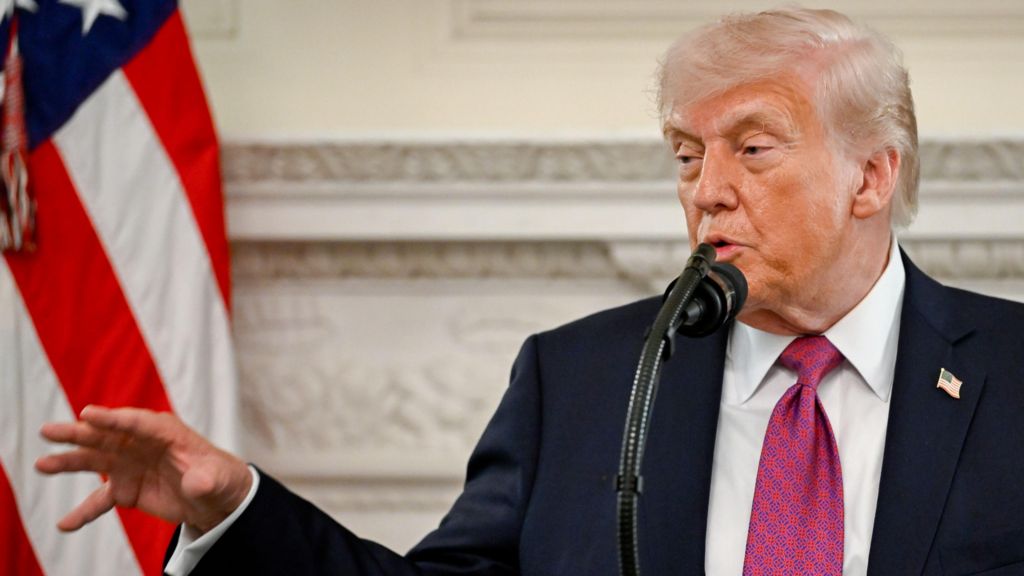
    President Donald Trump declared on Friday that American military operations in Iran would continue indefinitely, offering no specific timeline for resolution while asserting that campaign objectives were being met ahead of expectations.

    During a press briefing at the White House, Trump faced repeated questioning from journalists seeking clarity on the duration of ongoing combat operations. “I can’t tell you that,” the President responded when pressed for a definitive timeframe. Emphasizing the unpredictable nature of military engagements, he added, “I won’t give you a time, but we are way ahead of schedule.”

    The statement comes amid growing international concern over escalating tensions in the Persian Gulf region. Military analysts note that the administration’s refusal to establish a clear endpoint marks a significant departure from previous conflict management approaches, where timelines and exit strategies were more explicitly defined.

    This development occurs against the backdrop of complex geopolitical dynamics, including recent sanctions debates at the United Nations Security Council and increasing domestic scrutiny over the human and financial costs of prolonged military engagement. The President’s remarks suggest a commitment to maintaining operational flexibility while acknowledging the inherent uncertainties of modern warfare.

  • China’s rail network sets new Spring Festival travel records

    China’s rail network sets new Spring Festival travel records

    China’s national railway network has achieved unprecedented operational milestones during the recently concluded 40-day Spring Festival travel period, setting remarkable new benchmarks in passenger volume and cargo transportation. According to official data released by China State Railway Group on March 14, 2026, the system handled an extraordinary 538 million passenger journeys between February and March, representing a substantial 4.8% increase compared to the previous year’s figures.

    The record-breaking transportation effort also extended to freight services, with national railways moving 424 million metric tons of cargo during the same period, marking a 2.1% year-on-year improvement. Both metrics established new historical records for the Spring Festival travel rush, demonstrating the system’s expanding capacity and efficiency.

    Rail infrastructure operated at unprecedented levels throughout the holiday season, with nationwide networks running an average of 12,861 passenger train services daily. The single-day peak reached an impressive 14,037 trips, while overall transport capacity surged by 8.3% compared to the previous year’s performance.

    Company officials attributed this exceptional performance to strategic infrastructure expansions implemented throughout 2025, including the commissioning of several major high-speed rail corridors. The newly operational Guangzhou-Zhanjiang, Baotou-Yinchuan, and Xi’an-Yan’an high-speed railways significantly enhanced network connectivity, while additional Fuxing bullet trains augmented fleet capacity.

    Enhanced coordination across transportation resources—including railway lines, station facilities, locomotives, and rolling stock—combined with optimized scheduling protocols contributed substantially to maximizing operational efficiency. The digital infrastructure supporting these operations also received significant upgrades, with the 12306 online ticketing system processing a record 23.115 million ticket sales on February 9 alone, establishing a new single-day transaction benchmark for the Spring Festival period.

  • Hezbollah’s ‘existential’ war against Israel could be its last

    Hezbollah’s ‘existential’ war against Israel could be its last

    Lebanon’s Hezbollah movement finds itself locked in what its leadership describes as an existential confrontation with Israel—a conflict that analysts warn could potentially dismantle the Iranian-backed organization permanently. The escalation follows Hezbollah’s retaliatory strikes against Israel, initiated in response to the assassination of Iranian Supreme Leader Ayatollah Ali Khamenei in joint U.S.-Israeli operations.

    The current hostilities mark a dramatic deterioration of the fragile 2024 ceasefire that had previously contained cross-border tensions. Israel has intensified its military campaign with sustained airstrikes, ground incursions into Lebanese territory, and mass evacuation orders affecting hundreds of thousands of civilians along the border region.

    Hezbollah Deputy Secretary-General Naim Qassem characterized the struggle as fundamental to the organization’s survival, declaring, “This is an existential battle… we will not permit the enemy to achieve its objective of eliminating our presence.” An anonymous source within the group indicated Hezbollah had committed its full resources to the conflict, framing the outcome as binary: either the group’s destruction or Israel’s complete withdrawal from Lebanese territory.

    The timing of Hezbollah’s escalation appears strategically linked to broader regional dynamics. According to internal sources, the organization had prepared for renewed conflict for months, awaiting a shift in the geopolitical landscape that materialized with expanded U.S.-Israeli operations against Iran.

    Despite absorbing significant losses during the previous conflict—including approximately 500 casualties and substantial damage to its military infrastructure—Hezbollah has reconstituted its forces. Military expert Hassan Jouni observes that both sides perceive the current confrontation as decisive: “For Israel, this is the final battle against Hezbollah,” noting uniquely favorable conditions including supportive U.S. administration policies and Iran’s diminished regional influence.

    The Lebanese government faces mounting domestic criticism over Hezbollah’s unilateral actions. President Joseph Aoun has accused the group of prioritizing “Iranian regime’s calculations” over national interests, while Beirut has formally prohibited Hezbollah’s military activities—a directive the organization has effectively ignored.

    As diplomatic efforts stall, with Israel rejecting negotiation proposals and demanding Hezbollah’s disarmament, analysts like academic Ali Mourad suggest the group is fighting simultaneously on two fronts: for its survival in Lebanon and as an instrument of Iranian regional strategy. Mourad concludes pessimistically: “Hezbollah is finished as a regional power and as a strategic weapon for Iran… this war will not end in victory for the group.”

  • Pensioner dies after being hit by bus

    Pensioner dies after being hit by bus

    A tragic traffic incident in the coastal town of Bray has resulted in the death of a pedestrian following a collision with a bus. The fatal accident occurred on Station Road at approximately 6:00 PM local time on Thursday evening.

    According to Gardaí (Irish police), the male victim sustained serious injuries during the impact and was immediately transported to St. Vincent’s University Hospital in Dublin for emergency treatment. Despite medical efforts, the man succumbed to his injuries and passed away on Friday evening.

    Irish law enforcement authorities have confirmed that a comprehensive technical examination of the accident scene has been conducted by forensic investigators. The investigation aims to determine the precise circumstances that led to the collision. A post-mortem examination will be performed to establish the exact cause of death, which is standard procedure in such cases.

    The incident has prompted local authorities to review safety measures along Station Road, a thoroughfare that experiences significant vehicular and pedestrian traffic. Community representatives have expressed condolences to the victim’s family while calling for enhanced road safety initiatives.

    This marks the latest in a series of road traffic fatalities across the Republic of Ireland, highlighting ongoing concerns regarding pedestrian safety and public transportation infrastructure. Gardaí continue to appeal to any witnesses who may have observed the events leading to the collision to come forward with information.

  • Pakistan’s president says Afghan Taliban forces crossed a ‘red line’ with drone attacks on civilians

    Pakistan’s president says Afghan Taliban forces crossed a ‘red line’ with drone attacks on civilians

    Tensions between Pakistan and Afghanistan’s Taliban government have dramatically escalated into open hostilities, with both sides exchanging aerial attacks across their shared border. The conflict reached a critical turning point when Afghan drones struck Pakistani territory, prompting President Asif Ali Zardari to declare that Kabul had “crossed a red line” and brought “grave consequences upon itself.

    The recent violence represents the deadliest fighting between the neighboring nations to date, with Pakistan reporting intercepted drones causing civilian injuries in Quetta and other areas. Simultaneously, Afghanistan alleges Pakistani airstrikes killed six civilians and wounded fifteen in Kabul and eastern regions. Kabul claims its air force subsequently targeted military installations near Islamabad and northwestern Pakistan in retaliation.

    Pakistan maintains its operations specifically target Pakistani Taliban militants and their support networks, denying any intentional strikes against civilians. Islamabad has characterized the situation as an “open war,” raising international concerns about regional stability amid broader Middle East tensions.

    Complicating the conflict, Afghanistan alleges Pakistani aircraft struck fuel depots belonging to private airline Kam Air near Kandahar airport, which reportedly supplies both civilian and United Nations flights. Pakistan counters that the Afghan Taliban government provides sanctuary to militant groups operating across the porous border, including those allied with India—a charge Kabul denies.

    The human cost continues to mount, with seven Pakistani police officers killed by a roadside bomb in Lakki Marwat district on Friday. Despite diplomatic efforts by China and Turkey to broker a ceasefire, the violence shows no signs of abating. Chinese Foreign Minister Wang Yi has urged peaceful resolution, warning that military action exacerbates tensions and threatens regional stability. China’s special envoy is currently shuttling between both nations promoting restraint, while Afghanistan’s foreign minister has expressed preference for dialogue over military conflict.

    Previous mediation attempts, including a Qatari-brokered ceasefire in October that temporarily reduced tensions, and subsequent talks in Turkey, have failed to produce a lasting agreement.

  • US embassy in Iraq hit as Mideast War enters third week

    US embassy in Iraq hit as Mideast War enters third week

    The Middle East conflict entered its third week with escalating violence, marked by a drone strike on the U.S. Embassy in Baghdad and significant disruptions to global energy supply lines. Iranian forces issued warnings to Emirati civilians to avoid port areas, coinciding with visible clouds of black smoke rising from Fujairah—a critical Emirati port housing oil storage and export terminals.

    This embassy attack represents the second assault since February 28, when U.S. and Israeli operations against Iran ignited widespread regional hostilities. The ongoing warfare has reportedly claimed over 1,200 lives in Iran and displaced approximately 3.2 million people, according to UN estimates. Despite superior U.S. and Israeli military capabilities, Iran continues its offensive operations, targeting at least ten neighboring nations and effectively blocking the strategic Strait of Hormuz to maritime traffic.

    The economic repercussions have been immediate and severe, with crude oil prices surging more than 40% since the conflict’s inception. Iranian media has threatened that U.S.-linked energy facilities would be “immediately destroyed” if Iranian oil infrastructure were targeted, though Teheran confirmed no damage to facilities on Kharg Island following U.S. strikes.

    President Trump announced plans for U.S. Navy escorts through the Strait of Hormuz to restore oil exports, while the Pentagon reported striking over 15,000 targets in Iran during the past two weeks. Israel’s military claimed responsibility for 7,600 strikes, primarily targeting Iran’s missile program.

    The conflict has expanded beyond the Gulf region, with Turkey reporting NATO forces intercepting ballistic missiles launched from Iran. Lebanon has been drawn into the hostilities, with Israeli strikes killing healthcare workers and targeting Hezbollah strongholds. Qatar intercepted missiles above Doha, while Saudi Arabia reported downing dozens of drones.

    Notably, Hamas urged Iran to exercise restraint regarding neighboring countries, creating a rare diplomatic rift between the allies. Within Iran, the Revolutionary Guards have threatened severe crackdowns on anti-government protests, maintaining an internet blackout since the conflict began.

  • Yunnan trains offer stools for standing passengers without seats

    Yunnan trains offer stools for standing passengers without seats

    In an innovative approach to passenger comfort, China Railway Kunming Group has implemented a novel solution for travelers holding standing-room tickets on trains across Yunnan province. The initiative provides complimentary plastic stools to passengers without assigned seating, significantly enhancing journey quality during peak travel periods.

    The service gained attention when a passenger identified as Ms. Wang utilized one such stool during her approximately four-hour trip from Kunming to Xishuangbanna Dai Autonomous Prefecture on Wednesday. According to reports from Yunnan Radio and Television Station, the simple addition transformed her travel experience, providing unexpected comfort despite her lack of formal seating.

    Photographic evidence circulating online shows neatly stacked plastic stools readily available within train carriages, demonstrating the practical implementation of this passenger-focused service. The initiative has generated substantial positive feedback across Chinese social media platforms, where netizens have applauded the railway group’s attention to passenger welfare and creative problem-solving.

    This development represents a significant improvement in addressing the common challenge of overcrowded trains during high-demand periods. Rather than simply selling standing tickets without additional support, the railway operator has acknowledged the discomfort of extended standing and implemented a low-cost but high-impact solution that demonstrates thoughtful passenger consideration.

    The timing of this initiative coincides with increased regional travel within Yunnan, a popular tourist destination known for its diverse ethnic cultures and tropical landscapes. The service particularly benefits travelers making shorter journeys between destinations within the province, where standing tickets are more frequently issued due to high passenger volume.