作者: admin

  • EU orders Meta to restore WhatsApp access for rival AI chatbots

    EU orders Meta to restore WhatsApp access for rival AI chatbots

    BRUSSELS – In a landmark move targeting Big Tech market power in the fast-expanding artificial intelligence sector, European Union antitrust regulators issued a mandatory interim order on Tuesday requiring Meta Platforms to reinstate full access to the WhatsApp platform for competing AI chatbot developers, a requirement that will stay in effect for the duration of an ongoing antitrust investigation into the tech giant’s restrictive business practices.

    The European Commission, the EU’s 27-nation executive body and primary competition enforcement authority, framed the intervention as a proactive step to protect emerging competition in the AI assistant market before irreversible harm to market dynamics can occur. The regulator launched its investigation into Meta’s WhatsApp AI policies last year, after flagging concerns that the company had violated EU competition rules by blocking third-party AI developers from offering their own AI assistant services on the popular messaging platform, effectively locking the market for Meta’s in-house chatbot.

    The probe centered on updated terms of service Meta rolled out for business customers that use AI-powered tools to engage with consumers via WhatsApp. After regulators raised objections, Meta attempted to resolve the investigation by offering to grant access to competitors for a fee. But the offer failed to allay regulatory concerns, with the Commission threatening in April to force Meta to allow free access for rival developers. Teresa Ribera, the Commission’s Executive Vice-President in charge of competition policy, told reporters Tuesday that Meta’s proposed pricing was so prohibitive that it remained “not economically sustainable for competitors” to operate on the platform.

    Under the terms of the new order, Meta must open the paid WhatsApp Business platform to competing AI chatbot providers for no charge. The interim measure will remain in force until either the conclusion of the full antitrust investigation or June 2029, whichever comes first – the investigation currently has no set deadline for completion. Non-compliance with the order could expose Meta to heavy penalties, with fines reaching as high as 10% of the company’s global annual revenue.

    Meta immediately announced it would challenge the order, calling the Commission’s decision an overreach of regulatory authority. “The European Commission has decided that OpenAI and some of the largest companies in the world can use the paid-for WhatsApp Business product for free,” the company said in an official statement. “This is regulatory overreach subsidized by the many European companies that pay.”

    Tuesday’s action marks a notable shift in the Commission’s approach to Big Tech antitrust enforcement. For years, the regulator faced widespread criticism that its multi-year investigations into major tech platforms moved far too slowly to curb abusive market power, allowing anti-competitive practices to become entrenched before regulators could intervene. In response, the Commission has increasingly turned to interim measures in fast-moving markets where consumer and competitive harm can accumulate rapidly. Ribera emphasized that this urgency is particularly warranted in the AI sector, which is evolving at an unprecedented pace.

    “AI markets are developing exceptionally fast, and AI assistants are expected to become an important way for consumers all across Europe to access and use AI,” Ribera said. “Therefore, when the damage can happen quickly and there is a risk of companies being forced to leave the market, we need to use our tools.”

  • Who is the Somali referee barred from entering the US for the World Cup?

    Who is the Somali referee barred from entering the US for the World Cup?

    For Omar Artan, a Somali referee who climbed from war-battered local neighbourhood pitches to the cusp of football’s grandest stage, the 2026 FIFA World Cup was supposed to be the crowning achievement of a remarkable career. It was set to be a moment of national pride: Artan, 34, would become the first Somali to ever serve in an on-pitch role at the World Cup finals, a beacon of hope for a young generation in a country fractured by decades of conflict. But that dream has been shattered, after U.S. border officials denied Artan entry into the country despite him holding a valid diplomatic passport and approved single-entry visa.

    Artan’s journey to the World Cup officiating panel is one of relentless grit against overwhelming odds. His playing career came to an early end following a leg injury, and he first picked up a referee’s whistle by accident: during a chaotic local match in Mogadishu, a dispute over the original official led both teams to ask Artan to step in. He accepted the role, and quickly carved out a space for himself in Somali football, honing his skills in informal and semi-organized fixtures at a time when the country’s football institutions operated with almost no structure or international support.

    A formative figure in Artan’s early career was Osman Jama Dirac, the former head of refereeing in Somalia, who provided not just technical coaching but also personal support to up-and-coming officials. “He was like a father to us,” Artan recalled of Dirac, who was killed in 2017, just as Artan was on the cusp of breaking into international officiating. “He was preparing me to become an international [referee]. He would have been proud to see a Somali reaching this level.”

    Artan earned his place on the FIFA listed referees roster in 2018, and steadily rose through the ranks of African continental football. In 2024, he made history as the first Somali to referee a match at the Africa Cup of Nations (Afcon), and by November of that year, the Confederation of African Football (CAF) named him the top male referee on the continent. He capped off this run by officiating the second leg of the 2025 African Champions League final, and in April 2026, FIFA included him in the 52-referee panel for the 2026 World Cup – a milestone celebrated by Somalia’s president Hassan Mohamud, who hailed Artan as “a symbol of inspiration for the new generation of Somalis.”

    In the months leading up to the tournament, Artan threw himself into rigorous preparation, training daily to meet the physical, mental and technical standards required of a World Cup referee. “Preparation for the World Cup is not small work… physically, mentally, and in knowledge,” he explained before departing. “In World Cup football you are dealing with world-class referees at the highest level. You have to reach that standard and stay there.”

    Artan traveled to the U.S. via Istanbul, Turkey, to attend the mandatory pre-tournament referee seminar hosted at FIFA’s Miami training hub – a requirement for all on-pitch officials, even those who would later officiate matches held in co-host nations Canada and Mexico. But upon his arrival in Miami, Artan ran into immigration barriers tied to a travel restriction policy first introduced by the Donald Trump administration, which lists Somalia as a restricted country.

    Artan told the New York Times he was held for questioning by border officials for 11 hours, with much of the interrogation focused on the Somali militant group al-Shabab. Ultimately, he was denied entry over unspecified “vetting concerns” and placed on a flight back to Turkey, where he currently remains, and is expected to return to Mogadishu this Wednesday.

    In a statement to the BBC, the U.S. State Department defended its process, noting it welcomes “legitimate travellers” to the World Cup and adjudicates each visa application individually “after rigorous review and thorough vetting,” with “national security and public safety” cited as core considerations.

    FIFA has confirmed it is unable to intervene in the case, as immigration and visa decisions fall exclusively under the authority of host nation governments. “FIFA is not involved in host country immigration processes, including visa adjudications, and has been informed by authorities that Mr Artan’s status will not be changed at present,” the global governing body said in a Monday statement. “A host government ultimately determines who receives a visa and who is admitted into their country.”

    The Somali government has launched diplomatic efforts to reverse the decision, but current indications suggest Artan will not take part in the 2026 tournament. Artan has responded to the setback with measured grace, expressing gratitude for the outpouring of support from the global football community and reaffirming his commitment to his refereeing career. “I would like to thank FIFA and CAF for all their support and I promise to keep my refereeing levels up as I concentrate on the future,” he told Reuters. “I wish my colleagues all the best success during the World Cup and I look forward to joining them again in future competitions.”

    Six referees from Africa will still take part in the 2026 World Cup, which kicks off Thursday and runs through July 19, representing Algeria, Egypt, Gabon, Mauritania, Morocco and South Africa. But for Artan and Somalia, what was set to be a groundbreaking, hope-filled milestone has been cut short by U.S. immigration policy.

  • Scrapping of Franco-German fighter jet leaves allies at odds on defence future

    Scrapping of Franco-German fighter jet leaves allies at odds on defence future

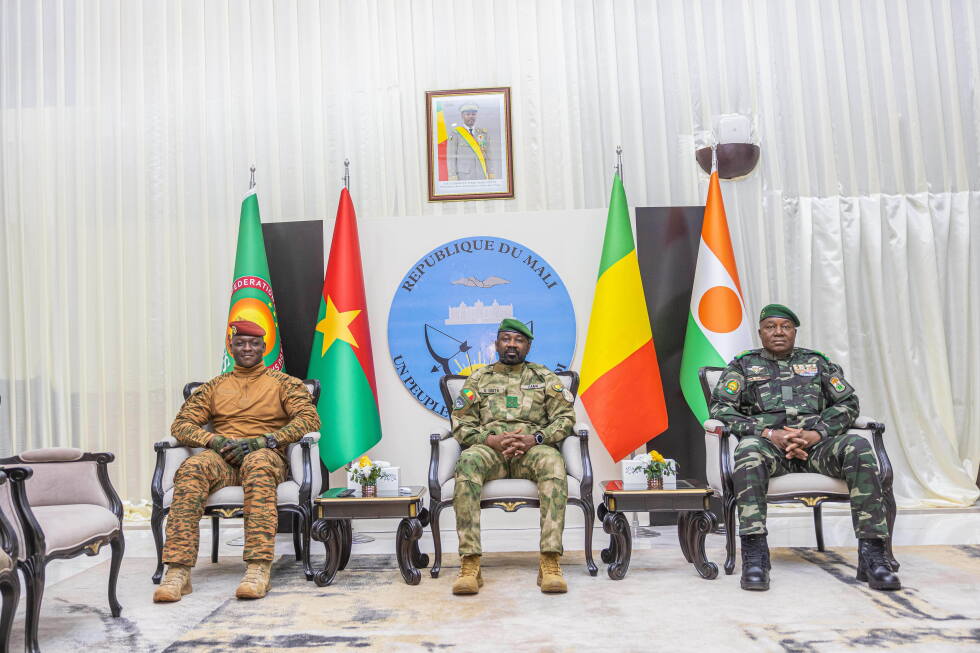
    Europe’s high-profile ambition to build a homegrown next-generation fighter jet as a cornerstone of independent collective defence has collapsed after Germany formally pulled out of the flagship joint programme with France, throwing into doubt the future of European military cooperation at a moment of heightened geopolitical tension.

    Once hailed as a landmark demonstration of Europe’s ability to pursue unified strategic action and reduce dependence on uncertain outside allies, the next-generation fighter component of the wider Future Combat Air System (FCAS) initiative has instead become a stark symbol of intractable Franco-German discord. The termination of the project comes as transatlantic relations remain strained, and Russia continues its full-scale military aggression against Ukraine, creating a geopolitical context that makes the breakdown of the partnership particularly consequential for European security.

    First conceived in 2017 during the joint leadership of former German Chancellor Angela Merkel and newly elected French President Emmanuel Macron, the FCAS programme was designed from its inception to reset Franco-German relations, pool limited European defence budgets, and advance the goal of a sovereign European defence posture. At the programme’s launch, Macron framed the effort as a peaceful, carefully planned revolution for European security, a vision aligned with his longstanding push for European strategic autonomy to reduce reliance on potentially unreliable international partners.

    The broader FCAS initiative includes multiple interconnected components, from advanced jet engines and next-generation sensor systems to a shared digital “combat cloud” intelligence network, but the manned next-generation fighter jet always remained the programme’s centrepiece. Spain joined the partnership after its founding, with Germany’s defence interests represented by aerospace giant Airbus, while France’s defence sector was led by iconic aircraft manufacturer Dassault Aviation.

    According to German officials, core non-fighter elements of the FCAS programme will continue forward, though details of what that ongoing collaboration will look like remain unclear. What is well-documented, however, is the steady escalation of disagreements that ultimately sank the fighter jet project: rifts emerged over leadership of the programme, the distribution of development work, and fundamental differing design requirements between the two nations.

    Prominent German defence analyst Nico Lange has pinned the primary responsibility for the collapse on Dassault Aviation, noting that the French firm pushed aggressively for a leading role that German industry was unwilling to cede. “FCAS is not synonymous with European defence… there will be many other good projects,” Lange noted in a post on social media platform X. Dassault Aviation has not yet issued a public comment on the termination.

    Beyond industrial disputes, there were deep mismatches in what each country needed from the new jet. Royal United Services Institute (Rusi) air power analyst Christoph Bergs explained that France sought a small, lightweight aircraft capable of operating from the country’s Charles de Gaulle aircraft carrier, while Germany prioritized a larger jet built to establish dominant air superiority.

    Shifts in Germany’s defence policy also changed the negotiating dynamic significantly. Following Russia’s 2022 full-scale invasion of Ukraine and years of pressure from former U.S. President Donald Trump for European nations to increase their own defence spending, Germany made a dramatic U-turn from its decades-long posture of relatively restrained defence investment, approving a massive 100 billion euro special defence fund. This increase in domestic resources left German industry far less willing to make concessions that it viewed as misaligned with its national interests, Bergs explained.

    By early 2025, the head of Germany’s ruling Christian Democratic Union, Chancellor Friedrich Merz, had become an open critic of the programme, publicly questioning whether a costly manned fighter jet would even be necessary 20 years from now amid rapid advances in uncrewed aerial technology. A summit meeting between Merz and Macron last week proved to be the final turning point: Merz proposed ending work on the fighter jet component, and the two leaders reached a shared conclusion that the involved industrial partners could not bridge their differences.

    Germany publicly announced the decision on Monday, while the Élysée Palace’s subsequent statement conveyed clear disappointment. “The leaders expressed regret that the industries involved hadn’t been able to make it work,” the statement read. The French presidency added that Paris remains committed to Franco-German defence and security cooperation, framing it as essential for both nations and their European partners.

    While Bergs described the timing of the collapse as deeply inopportune against the backdrop of ongoing war in Europe and tense transatlantic relations, he also noted that the termination creates an opening for participating nations to reassess their defence priorities in light of rapid technological advances that have reshaped air power since the programme was first launched in 2017.

  • Air Canada pilot accused of flying without correct licence

    Air Canada pilot accused of flying without correct licence

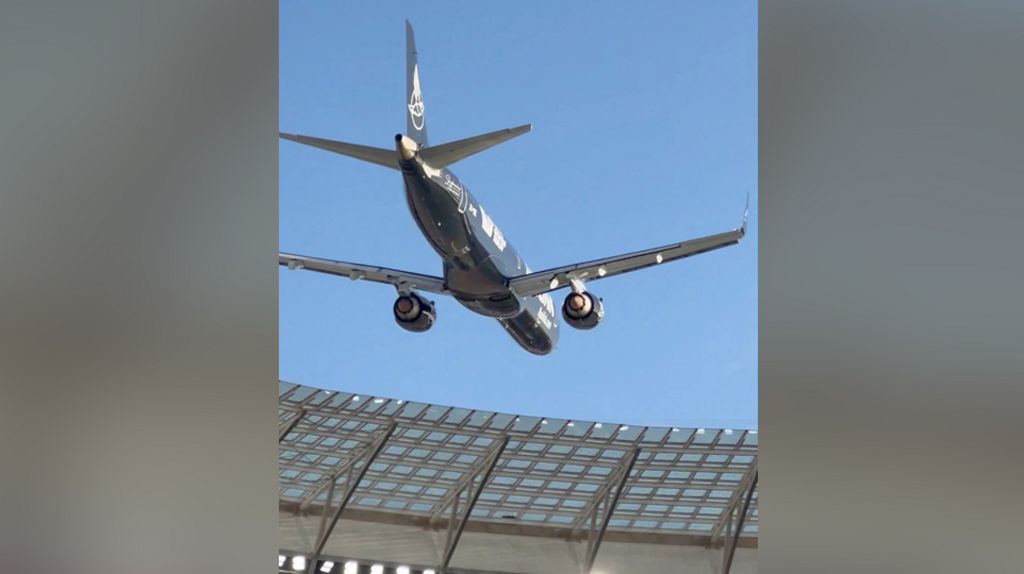
    A major scandal has erupted in Canadian commercial aviation after authorities revealed a former Air Canada captain allegedly operated thousands of commercial flights carrying passengers while lacking a mandatory top-tier flying credential required for his role. According to official and airline statements, the pilot did hold a valid basic pilot licence, but failed to secure the critical Airline Transport Pilot Permit – a mandatory qualification that all promoted captains must obtain by passing a rigorous sequence of written and practical assessments. Air Canada confirmed that as soon as internal oversight processes uncovered the discrepancy, the pilot was immediately removed from all active flight duties, and the airline proactively reported the entire incident to Canada’s national civil aviation regulator, Transport Canada. To reassure the traveling public, the carrier emphasized that at no point was passenger safety compromised. All Air Canada pilots, including the accused individual, undergo mandatory standardized competency assessments every six months to confirm they meet all flight proficiency requirements, the airline added. Stressing that it treats regulatory non-compliance issues with the highest degree of seriousness, Air Canada also noted that it launched a full company-wide audit of all active pilots’ credentials following the discovery. The audit, which has now been completed, found no other instances of missing or invalid certification across the airline’s pilot corps. According to a report from ABC News, which cited unnamed official sources, the ex-Air Canada pilot has been arrested on fraud-linked criminal charges, and was subsequently released from custody to await upcoming legal proceedings. Neither Canadian law enforcement officials nor Air Canada have released the name of the accused pilot, nor have they disclosed the full details of the specific criminal charges he is facing. The BBC has confirmed it reached out to Air Canada to request additional comment on the ongoing case. The incident has sparked renewed questions about pilot credential verification processes in Canadian commercial aviation, even as Air Canada moved quickly to contain potential public concern over safety standards.

  • Murder of Lyhanna, 11, enrages France and turns up heat on government

    Murder of Lyhanna, 11, enrages France and turns up heat on government

    A wave of national outrage has swept across France after the brutal murder of 11-year-old Lyhanna, a case that has exposed catastrophic failures in the country’s justice system and left President Emmanuel Macron’s government grappling with unprecedented political pressure. More than 60,000 protesters marched in cities across the nation on Monday, demanding the resignation of top government official Justice Minister Gérald Darmanin over systemic missteps that many believe directly contributed to the young girl’s senseless death.

    The accused killer, 41-year-old Jérome Barella, who is the father of one of Lyhanna’s friends, had been repeatedly reported to French law enforcement as a suspected sex offender long before Lyhanna’s disappearance. The first formal complaint was lodged in August of last year by the mother of 10-year-old Rosa, who claimed Barella had sexually abused her daughter on multiple occasions. Medical examinations confirmed the abuse had occurred, yet in the nine months that followed the filing of that complaint, investigating authorities never once summoned Barella for questioning.

    Lyhanna was last seen leaving her school in southwestern France six days before her body was discovered last Thursday on a rural farm roughly 10 kilometers from her hometown of Fleurance. Barella was taken into police custody three days after Lyhanna went missing. While he has denied any involvement in the child’s death, he admitted to driving her to a local swimming pool on the day she disappeared, and has since exercised his right to remain silent when questioned by an investigating judge. Further investigations have revealed that Barella was named as a suspect in multiple other alleged sexual abuse cases in recent years, a red flag that legally should have elevated the Rosa complaint to high-priority status — a step that was never taken.

    For the vast majority of the angry French public, the conclusion is clear: if investigators had even contacted Barella after the initial abuse complaint, he would have known he was under surveillance, and Lyhanna’s murder would almost certainly have been prevented. In response to the public fury, Rosa’s mother has announced through her legal team that she is filing a civil lawsuit against the French state and against Darmanin personally, holding both accountable for their roles in the systemic failures that led to the tragedy.

    Darmanin, a senior leader of Macron’s ruling Renaissance party, has publicly acknowledged that the Lyhanna case exposed “shocking and unacceptable failings in the services of the state,” but has rejected all calls to step down from his post. The minister and the broader government are now caught between a rapidly radicalizing public and the country’s judicial establishment, which has pushed back hard against attempts to frame magistrates as the sole scapegoats for the failure.

    The Higher Magistrature Council (CSM), France’s top judicial oversight body, issued a statement deploring that thousands of hardworking magistrates were being unfairly discredited by the affair, claiming the case was being “instrumentalised by people who have decided in advance that magistrates are the guilty parties.” The CSM also argued that French magistrates, who lead criminal investigations in the country’s justice system, have long been starved of the funding and staffing needed to properly process the huge volume of pending cases.

    Darmanin pushed back against that claim during testimony before a Senate committee on Tuesday, asserting that a lack of resources was not the root cause of the failure in the Lyhanna case. “What is missing in this story is not a new law; it’s not more money; it’s not better IT. It’s the need to prioritise allegations of rape,” Darmanin told lawmakers. “The principle of precaution should have been applied to take Mr Barella out of circulation and determine whether the allegations against him were true. We had all the elements. Nine months later it is quite incomprehensible that he was never taken into custody.”

    In the wake of the tragedy, Darmanin has ordered state prosecutors to immediately review an estimated 70,000 unresolved sexual abuse complaints involving minor victims that are currently backlogged in the French system. Prime Minister Sébastien Lecornu has also announced plans to toughen pending child protection legislation currently moving through parliament, which would increase the maximum penalty for serial child rapists from 20 years in prison to a potential life sentence. As the nation mourns Lyhanna, demands for sweeping reform of France’s troubled justice system continue to grow, with no clear end to the political standoff in sight.

  • Michael Olise could be France’s attacking star at the World Cup

    Michael Olise could be France’s attacking star at the World Cup

    As two-time World Cup champion France prepares to kick off its pre-tournament friendly campaign against Senegal on June 16 in New Jersey, a surprise star is stepping into the spotlight to lead Les Bleus’ attacking line, outshining even the sport’s biggest names ahead of the global competition.

    Unlike high-profile superstars Kylian Mbappé and reigning Ballon d’Or winner Ousmane Dembélé, 24-year-old Bayern Munich winger Michael Olise carries a quiet, unassuming demeanor — but his on-pitch impact has been anything but understated. He enters the World Cup in red-hot form, fresh off a stunning hat trick against Northern Ireland that pushed his senior international goal tally to seven across just 17 appearances for France.

    In a recent tune-up match where Didier Deschamps fielded his full first-choice attacking unit featuring Mbappé, Dembélé and breakout young talent Désiré Doué, it was Olise who emerged as the standout performer. Deschamps heaped praise on the in-form winger following the match, highlighting both his clinical finishing and relentless work ethic that have made him an invaluable member of the squad.

    “He’s been shining brightly this season at Bayern and he’s done great things for us. He’s brimming with confidence, he’s so decisive,” Deschamps said of Olise. “On top of that, as an attacking player he also has a remarkable capacity for hard work.”

    Olise’s signature attacking move — a sharp, sudden cut inside from the right flank followed by a curled effort on goal — proved deadly against Northern Ireland. After burying two close-range finishes inside the penalty box, he cut inside from his wing, changed direction with his trademark blistering speed, and bent a sublime strike into the top-left corner of the net. This deft, rapid skill has become his calling card, and it helped him net 22 goals for Bayern Munich during the 2025-26 domestic season.

    Deschamps first noticed Olise’s elite potential during the 2024 Paris Olympic Games, where Olise played under French and Arsenal legend Thierry Henry for France’s Olympic squad. Olise notched two goals and five assists throughout the tournament, leading Les Bleus to the Olympic final and cementing his status as a player worth promoting to the senior national side.

    For Olise, the Paris Games remain a career-defining experience. “It was the best football experience of my life, because it allowed people to get to know me,” he said, crediting Henry for shaping his understanding of the game and helping him unlock his potential at the international level.

    Despite his rapid success, Olise’s reserved personality initially slowed his adjustment to the senior national team, according to Deschamps. The France manager noted it took four or five matches for the shy winger to settle in and show his true quality on the pitch.

    “He’s not a very expressive character. He’s rather introverted, but he’s very endearing,” Deschamps added.

    Olise’s first senior international goal — a perfectly bent free kick into the top corner against Croatia in the 2025 Nations League — gave a clear preview of the clinical skill he would bring to the squad. His journey to the top of international football is also an underdog story: born in London, he was released by both Chelsea and Manchester City in his youth before launching his professional career with EFL Championship side Reading. He earned the league’s Young Player of the Season award during his time with Reading, earning a transfer to Premier League side Crystal Palace in 2021. Three impressive seasons at Palace convinced Bayern Munich to sign him for a 60 million euro ($65 million) transfer, and he has thrived at the German giant, scoring 42 goals in 103 appearances across all competitions while adding consistent goal-scoring to his already elite passing range.

    Olise’s match-winning performance against Northern Ireland also drew attention to a recent slump in form for France’s star man Kylian Mbappé, who failed to score for the second consecutive friendly after a 2-1 loss to Ivory Coast last Thursday. Deschamps acknowledged that Mbappé squandered multiple clear chances and was far from his clinical best, but played down any concerns about the forward’s form ahead of the World Cup.

    “It’s true that he had several chances and wasn’t efficient,” Deschamps said. When asked about Mbappè’s dry spell, the manager joked, “He told me he’s holding back for the United States. So that suits me.”

    Mbappé currently sits on 56 international goals for France, just two strikes away from breaking Olivier Giroud’s all-time senior goal record for the national team, a milestone he is widely expected to hit during the World Cup tournament in North America.

  • I have right papers and visa – barred referee Artan

    I have right papers and visa – barred referee Artan

    The 2026 FIFA World Cup, co-hosted by the United States, Canada and Mexico, has been hit by another high-profile controversy after Somali referee Omar Artan – set to make history as the first Somali official to work a World Cup finals – was denied entry to the US and removed from the tournament’s officiating roster.

    Artan, a FIFA-listed referee since 2018 with prior experience officiating at the 2025 Africa Cup of Nations, says he completed an grueling 11-hour immigration interview at Miami International Airport before being detained in a holding cell for several hours and ultimately repatriated on a flight back to Istanbul. The referee told reporters he carried all required documentation, including a specifically issued diplomatic passport arranged after earlier travel complications and a valid US visa aligned with World Cup requirements.

    “I am very, very disappointed,” Artan told the New York Times. “I’m just simply a referee who’s trying to live his dream – the biggest dream of my life, to come to the World Cup. I think that they have a problem with my country.”

    To date, US immigration authorities have not released any public explanation for the entry denial. Somalia is one of the Muslim-majority nations included in a travel restriction first implemented by the Trump administration, and President Trump reaffirmed his anti-immigrant stance toward Somalis just months ago, telling reporters Somali immigrants should “go back to where they came from.”

    FIFA confirmed Artan’s removal from the roster in an official statement earlier this week, noting that global governing body has no authority over host country immigration processes. “Fifa can confirm that match official Omar Abdulkadir Artan will be unable to train and officiate at the Fifa World Cup 2026 after he was denied entry into the United States,” the statement read. “Fifa is not involved in host country immigration processes, including visa adjudications, and has been informed by authorities that Mr Artan’s status will not be changed at present.”

    Senior advisors with Somalia’s Ministry of Youth and Sports and embassy officials based in Nairobi have both corroborated Artan’s account, confirming all of his travel documentation was valid and issued in accordance with US entry requirements for World Cup officials.

    Andrew Giuliani, who leads the White House Task Force for the 2026 World Cup, defended US Customs and Border Protection’s decision in comments to BBC World Service. “While I can’t go into the derogatory information on that I can tell you it was the right decision by customs and border patrol and I support that decision,” Giuliani said.

    The structure of the 2026 tournament leaves Artan no alternative path to participate: FIFA’s lead referee official Pierluigi Collina has centralized all 52 referees and 88 assistant referees at a training and preparation hub in Miami, requiring all on-pitch officials to remain based in Florida for the duration of pre-tournament preparations and the event itself. Allowing Artan to only officiate matches held in Canada or Mexico is not permitted under tournament logistics rules.

    Artan’s exclusion is just the latest in a string of disruptions that have marred the lead-up to the 2026 World Cup, which kicks off June 11 and runs through July 19. Just one day after Artan’s removal, Iran’s national football federation announced that all of its allocated fan tickets for the team’s group stage matches had been revoked by tournament organizers.

    Prominent British football pundit and former England striker Ian Wright has labeled the ongoing string of issues a “World Cup of chaos” in a viral Instagram video. “Every few hours, it’s another story about fans denied, player denied, officials denied, journalists denied, now refs,” Wright said. “I’m laughing but it’s not funny. The most expensive tickets ever, expensive accommodation, transport through the roof. Is this how the hosts behave for the greatest game, the greatest tournament in the world? I feel for the American fans who are desperate for this – how embarrassing for this must be for them.”

  • Ghanaian women defy odds to get Cambridge degrees

    Ghanaian women defy odds to get Cambridge degrees

    This week, a story of resilience against systemic educational inequality will reach a landmark milestone, as three Ghanaian women who once faced near-certain secondary school dropout due to poverty are set to graduate with Master of Philosophy degrees in Education from the University of Cambridge.

    Each of the three women — 26-year-old Fadila Issah, 25-year-old Francisca Arhinful, and 29-year-old Jemimah Mensah — navigated extreme financial barriers to reach one of the world’s most prestigious higher education institutions, supported by two mission-aligned organizations working to expand educational access for marginalized African girls: the UK-based international education charity Camfed, and the Mastercard Foundation Scholars’ Program, which covered the full cost of their postgraduate studies at Cambridge’s Faculty of Education.

    For Issah, growing up in the Savelugu community of northern Ghana, the path to graduation has been especially groundbreaking. Northern Ghana reports some of the lowest female secondary school completion rates in the country, and until 2017, most Ghanaian high schools charged tuition fees that put education out of reach for low-income rural households, who also faced additional boarding costs for students studying outside their home communities. Issah earned top marks throughout her early schooling, but her family’s already precarious financial situation collapsed after her father — who had prioritized her education despite the family often struggling to afford food — suffered an accident that left him unable to work. Issah took on two part-time jobs to keep her studies going, until a Camfed teacher-mentor noticed her determination and stepped in to cover tuition, textbooks, and clothing costs. It was a life-changing intervention. “I felt like I was dreaming. I could stop working and dedicate my time to study,” Issah said. Today, she makes history as the first person from her home community to earn a degree from Cambridge, and she plans to pay that opportunity forward: “I hope to help girls in similar situations realise their dreams.”

    Arhinful’s journey began in Ghana’s central Ajumako District, where her family could not cover the cost of high school. They arranged for her to live with an aunt who they hoped would sponsor her education, but it was Camfed that ultimately stepped in with a full scholarship, along with access to the Camfed Association — a global network of young women who share similar experiences of overcoming poverty through education. “It really improved my self-esteem and encouraged me to keep going,” Arhinful explained.

    For Mensah, educational access was interrupted at age 14, when she dropped out of secondary school to help her mother run the family’s small catering business, their only source of income. “I dreamed of going back [to education], but I didn’t know when it would happen,” she said. “For people like me, that was normal.” Her path opened up when a free public high school opened near her community, allowing her to resume her studies and work toward her long-held academic goals.

    All three women first earned funding for their undergraduate degrees in Ghana through Camfed’s support programs. The organization then nominated them for the Mastercard Foundation Scholars’ Program, which provided full funding for their one-year postgraduate studies at Cambridge.

    Founded jointly in Cambridge and Zimbabwe, Camfed works across six African nations — Ghana, Kenya, Malawi, Tanzania, Zambia, and Zimbabwe — to address systemic poverty and gender inequality through expanded access to girls’ education. The scope of the challenge the organization confronts is stark: Unesco data shows that four out of 10 African girls fail to complete secondary education, and fewer than one in 10 of the continent’s poorest children finish secondary school.

    Committed to lifting up other marginalized girls facing the same barriers they once did, the three graduates have already completed training to serve as Camfed learner guides — peer mentors who teach life skills and wellbeing curricula to students across Africa, with a specific focus on supporting vulnerable girls to stay enrolled in school. Their graduation marks not just a personal achievement, but a testament to the impact of targeted educational aid in unlocking potential that systemic inequality too often leaves untapped.

  • Sea drone rescues US army helicopter crew near Strait of Hormuz

    Sea drone rescues US army helicopter crew near Strait of Hormuz

    In a groundbreaking first for U.S. military operations, an uncrewed surface sea drone executed the successful rescue of two U.S. Army soldiers after their AH-64 Apache attack helicopter crashed in waters near the Strait of Hormuz on Monday, senior U.S. officials confirmed to CBS News, a media partner of the BBC.

    The crash unfolded as the twin-turboshaft attack helicopter, manufactured in the U.S., conducted a routine patrol of regional waters off the coast of Oman. U.S. Central Command (Centcom) confirmed shortly after the incident that both crew members were extracted safely within roughly two hours of the crash and remain in stable medical condition. The rescue was officially timed at 19:33 EDT (23:33 GMT) Monday, per Centcom’s official Tuesday statement.

    The operation marked a historic milestone for U.S. forces: it is the first time an uncrewed surface vessel has completed a combat rescue of downed personnel in U.S. military history, officials told CBS. The rescue mission was coordinated by U.S. Naval Forces Central Command and the 82nd Airborne Division, with backup support from U.S. Air Force and Navy units, including Task Force 59 of the U.S. 5th Fleet, the same formation that operated the rescue drone, military sources added.

    Task Force 59 launched a specialized initiative in 2024 focused on integrating unmanned systems with manned operational teams to strengthen maritime security across the volatile Middle East region, a strategic waterway that carries roughly a fifth of the world’s oil trade. While officials have not released details on the specific model of drone used in the rescue, a U.S. official told ABC News the vessel has a speedboat-style design optimized for fast maneuvering in coastal waters.

    Investigators have not yet determined the cause of the crash, with multiple possible scenarios still under active review. Authorities have not ruled out mechanical failure, other technical malfunctions, or even hostile fire from Iranian forces, Centcom confirmed, adding that a full investigation into the incident is ongoing.

    U.S. President Donald Trump told reporters early this week that both crew members are “fine” and a full public report on the crash and rescue will be released once the investigation concludes. The BBC has requested additional comment from Centcom to elaborate on the details of the operation.

    The crash and landmark rescue come amid heightened tensions in the Strait of Hormuz region, where U.S. military forces regularly conduct freedom of navigation patrols and maritime security operations amid long-running friction with Iran.

  • Apple and Brussels blame each other for delaying European Union rollout of Siri AI

    Apple and Brussels blame each other for delaying European Union rollout of Siri AI

    A public dispute has erupted between Apple and the European Commission over who is responsible for the delayed rollout of Apple’s highly anticipated AI-powered Siri upgrade to European users, with both sides trading sharply conflicting accounts of the impasse. The standoff centers on the European Union’s landmark Digital Markets Act (DMA), a sweeping regulatory framework designed to curb anti-competitive behavior by large Big Tech “gatekeepers” and open up their platforms to rival services. The controversy unfolded just one day after Apple unveiled its updated AI-enhanced Siri at its annual worldwide developers conference, where the company announced the tool would not be available to iPhone and iPad users in the EU when it launches later this year, offering no firm timeline for a regional launch. In its public statements following the announcement, Apple pinned the delay squarely on the DMA. The tech giant claimed that the European Commission’s “extreme interpretation” of the regulation would force it to grant competing virtual assistants unfiltered “direct access” to user data, eliminating critical privacy protections that Apple built into its systems. Apple added that it had developed a proposed workaround and a gradual 18-month rollout plan to address regulatory concerns, but the commission rejected this proposal out of hand. But European Commission spokesman Thomas Regnier pushed back forcefully against Apple’s narrative during a regular press briefing in Brussels on Tuesday, seeking to set what he called the “record straight” on the delay. Regnier emphasized that the decision to withhold Siri AI from the EU market rests entirely with Apple, arguing that no provision of the DMA blocks the company from rolling out new products and services to European consumers. Contrary to Apple’s account, Regnier said Apple did not present a workable compliant solution to regulators — instead, the company simply requested an 18-month full exemption from DMA requirements for the new Siri AI tool. Regnier rejected that request as incompatible with the core goals of the regulation, noting that an exemption would give Siri AI an unfair competitive advantage over rival AI agents, including those developed by Google, by denying equal opportunity for European iPhone users to choose between competing services. Drawing a sharp comparison to underscore the commission’s stance, Regnier framed the DMA as non-negotiable, comparing the rejection of an exemption to a police officer not allowing a driver to ignore posted speed limits. The clash highlights growing tensions between major U.S. Big Tech firms and European regulators as the DMA, one of the world’s most stringent tech regulations, comes into full force, forcing firms to make major adjustments to their operating models to comply with new open market and competition rules.