
In a significant move to enhance work-life balance, the UAE has implemented a new law effective from 2025, allowing public holidays to be shifted to the start or end of the week when they fall mid-week. This innovative policy enables residents to enjoy longer, uninterrupted breaks. The system was first tested during the 2025 Eid Al Etihad holiday, which was moved to create a four-day weekend for UAE National Day celebrations. Looking ahead to 2026, this flexible approach is set to benefit residents further, with seven religious, national, and general occasions offering extended weekends, including a six-day break. Key holidays include Eid Al Fitr, Arafah Day, Eid Al Adha, the Hijri New Year, the Prophet’s Birthday, and UAE National Day. Notably, Islamic holidays are subject to moon sighting, with astronomical calculations providing likely dates for planning purposes. The year begins with a public holiday on January 1, 2026, which could be transferred to create a three-day weekend. Eid Al Adha, expected to fall between May 26 and May 29, could result in a six-day break when combined with the weekend. The UAE National Day, celebrated on December 2 and 3, may also be adjusted to form a four-day weekend. This progressive approach underscores the UAE’s commitment to improving residents’ quality of life while respecting cultural and religious traditions.
作者: admin
-

Palestinian groups urge UN mandate for Gaza mission
Palestinian factions, including Hamas, have strongly emphasized that any international mission in Gaza must operate under a United Nations mandate. This demand comes as the UN Security Council prepares to vote on a US-drafted resolution aimed at establishing a ‘Board of Peace’ and an international stabilization force in the Gaza Strip. The factions argue that a mission outside UN authority could lead to external domination over Palestinian decision-making and turn humanitarian aid into a tool of pressure, thereby undermining Palestinian institutions and the UN agency for Palestinian refugees. They insist that any mission must coordinate exclusively with official Palestinian institutions to avoid compromising Palestinian sovereignty. Additionally, the groups are calling for international mechanisms to hold Israel accountable for its violations of the ceasefire agreement, including the humanitarian crisis caused by Israel’s control of Gaza’s crossings. The US-drafted resolution, which follows a recent ceasefire brokered by the US, includes provisions for a potential future Palestinian state and the disarmament of Hamas. However, experts like Arhama Siddiqa of the Institute of Strategic Studies Islamabad argue that the resolution fails to address the core issue of Israel’s occupation and the denial of Palestinian self-determination, making it unlikely to gain credibility on the ground.
-
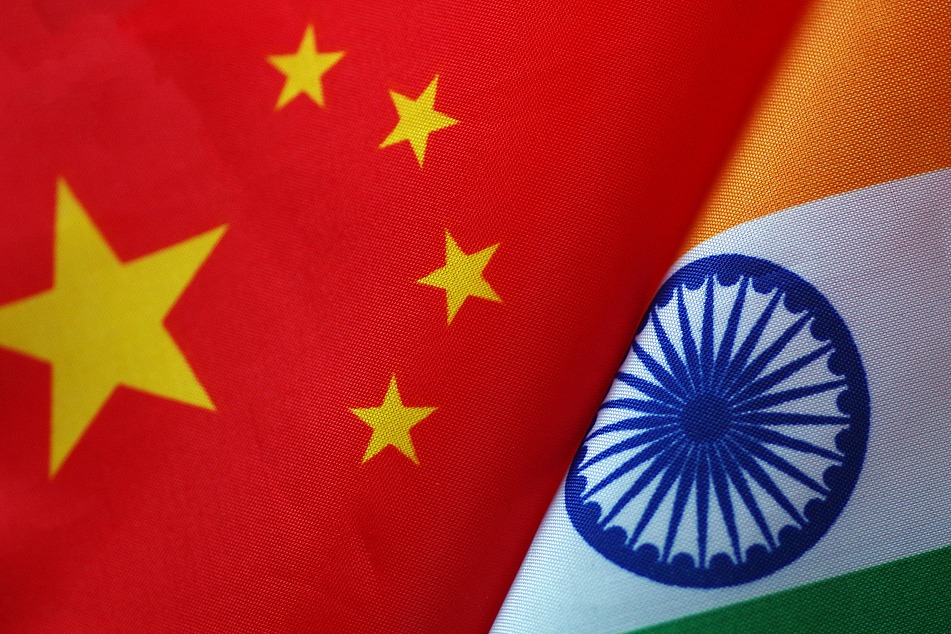
Experts call on India, China to bridge communication gap
In a bid to mend strained relations, experts and media leaders from India and China have emphasized the need to bridge the communication gap between the two nations. The call was made during a special plenary session at the 31st annual conference of the Asian Media Information and Communication Centre, held in Mumbai in October. The session focused on promoting dialogue to improve bilateral ties, with participants stressing the importance of rebuilding trust to reduce negative perceptions. Padma Rani, a senior professor at the Manipal Institute of Communication, highlighted the role of multilateral organizations like BRICS, G20, and the Shanghai Cooperation Organisation in aligning views on global issues. She advocated for consistent dialogue and non-official exchanges between experts, think tanks, and civil society members to address the trust deficit. Wang Xiangwei, a professor at Hong Kong Baptist University, reflected on the cultural differences in communication styles between the two nations, noting that these differences could serve as bridges rather than barriers. He lamented the lack of accredited journalists in each other’s countries, which has led to negative portrayals in the media. Biplab Loho Choudhury, chairman of the Indian Communication Congress, recalled Rabindranath Tagore’s vision of a ‘common Asian viewpoint’ and urged the two nations to embrace an Asian way of thinking. Ji Li, a professor at Wuhan University, highlighted a project encouraging young journalists to report on sustainable development goals, aiming to shift media narratives from confrontation to cooperation. K.G. Suresh, vice-president of the Indian Communication Congress, called for more academic exchanges to shape perceptions, while Wang suggested partnerships between media organizations to reduce dependency on Western sources and foster empathy through shared bylines.
-

Seoul rat complaints double in 3 years
The South Korean capital of Seoul has witnessed a significant rise in public complaints regarding rat sightings, with reports nearly doubling over the past three years. According to data revealed by Representative Kim Wi-sang of the People Power Party, a total of 9,280 complaints were filed by residents between 2020 and July 2025. While annual reports remained below 2,000 until 2023, the figure surged to 2,181 in 2024, with 1,555 complaints already recorded by July 2025. The districts of Gangnam, Gwanak, and Mapo were identified as the most affected areas. Experts attribute this increase to climate change, which has altered the urban ecosystem, extending rats’ breeding seasons and improving their survival rates during warmer winters. Representative Kim emphasized the need for enhanced pest control and urban management systems to prevent a potential surge in the rat population, which could lead to severe public health issues. The Seoul Metropolitan Government also highlighted that redevelopment projects, construction activities, and extreme weather events, such as heatwaves and heavy rainfall, have displaced rats from their natural habitats, driving them into urban areas. Despite the rise in sightings, the city noted a decline in rat-borne diseases like leptospirosis and hemorrhagic fever with renal syndrome, with no fatalities reported in recent years.
-

Looming danger
As economic challenges persist and job opportunities dwindle, an increasing number of Indonesians are becoming ensnared in Southeast Asia’s expanding web of online scams and human trafficking networks. Analysts caution that without robust law enforcement and comprehensive strategies, this alarming trend is set to continue. Recent reports highlight the severity of the issue, with the Indonesian embassy in Yangon, Myanmar, confirming communication with 148 trafficking victims stranded in Myawaddy, a notorious hub for scam operations near the Thai border. These individuals were identified following multiple reports involving hundreds of nationals, including 58 located in the former KK Park complex. Embassy officials are working with local authorities to verify identities, relocate victims to safer areas, and facilitate their repatriation. This development follows another major case handled by the embassy, which involved 83 Indonesians fleeing the same complex. In less than two weeks, the consulate addressed 231 new trafficking cases. Meanwhile, Cambodian authorities recently arrested 106 Indonesians, including 36 women, on charges related to online scams. The practice of luring job seekers with fraudulent overseas offers and coercing them into criminal activities remains rampant, despite a five-year crackdown on organized syndicates. Interpol estimates that these networks generate up to $3 trillion annually, expanding their reach beyond Southeast Asia into Europe, Africa, and the Middle East. Indonesia’s Foreign Ministry has recorded a 250 percent increase in nationals involved in Cambodia’s cyber scam centers between 2023 and 2024. Since 2020, 10,000 Indonesians have been trapped in scam and trafficking networks, with only 1,500 identified as victims. Many are lured by promises of quick profits, and some even return to these operations after repatriation. Economic pressures and high unemployment rates, particularly among educated youth, exacerbate the issue. Experts emphasize the need for stronger state intervention and law enforcement to break this cycle. The recent 47th ASEAN Summit in Kuala Lumpur addressed transnational crimes, with member states pledging enhanced coordination to combat these growing threats.
-
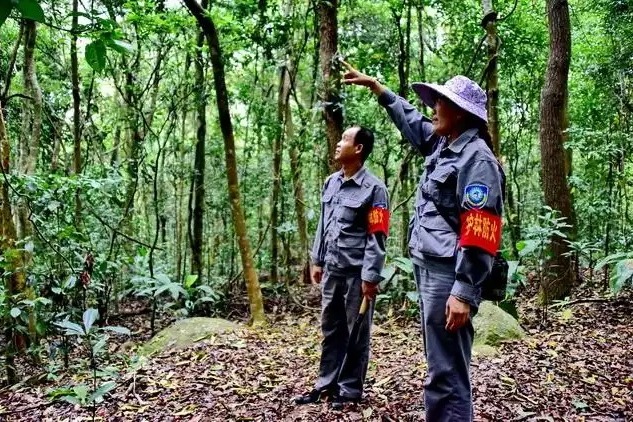
China moves to accelerate modernization of state forestry farms
In a significant move to bolster ecological conservation and sustainable development, Chinese authorities have introduced comprehensive guidelines aimed at accelerating the modernization of state forestry farms. The initiative, jointly released by the National Development and Reform Commission (NDRC) and other government departments, seeks to enhance the ecological quality and functionality of these farms while promoting green development and improving local livelihoods. By 2030, the plan envisions the establishment of a preliminary modernized state forestry farm system, characterized by high-quality natural resources, stable ecological functions, and a thriving green economy. By 2035, a more advanced system is expected to be in place, serving as a cornerstone for national ecological security, advancing forest and grassland industries, and supplying premium ecological products. The NDRC has pledged to collaborate with other departments to strengthen policy support, upgrade essential infrastructure, and coordinate efforts to expedite the construction of this modernized forestry framework. This initiative underscores China’s commitment to balancing ecological preservation with economic growth, ensuring a sustainable future for its vast forest resources.
-

Autonomous vehicles charting new path
A transformative shift is underway in Jinan, the capital of Shandong province, as autonomous vehicles take to the streets, marking a significant leap in China’s smart transportation ambitions. Ding Pingshun, a seasoned bus driver with 22 years of experience, now finds himself in a new role as a safety officer for self-driving buses. ‘It’s quite a change from driving manned buses to monitoring autonomous ones,’ Ding remarked as he observed a self-driving bus navigating Huanghe Avenue in Jinan’s autonomous driving demonstration area. This bus, part of a pilot initiative by Jinan Public Transport Group, has been rigorously tested on a 6.4-kilometer route since June 2025. The route, which includes traffic lights, pedestrian crossings, and complex maneuvers like U-turns and lane changes, is monitored by an onboard system that provides real-time alerts based on proximity to nearby objects. Measuring 5.5 meters in length, the bus is equipped with nine seats and relies entirely on Chinese-made components, from its body to its control software. Advanced sensors, including HD cameras, lidar, and radar, enable the vehicle to navigate independently. ‘The bus has performed exceptionally well, making decisions to detour or stop when encountering obstacles,’ Ding noted, emphasizing his role as a monitor rather than an active driver. The test route is open to the public, with eight slots available for weekend reservations, allowing families to experience this futuristic mode of transportation. Beyond road tests, the project integrates smart infrastructure, such as a low-carbon green charging station where the bus autonomously parks at a V2G charger. A robotic arm, developed by State Grid’s Jinan power supply company, inserts the plug in about 40 seconds, showcasing the seamless automation of the system. Wang Shuai, deputy station head, explained, ‘Our self-developed arm uses pure vision recognition to identify vehicles and enable smart charging, significantly boosting efficiency.’ Similar initiatives are spreading across China. In Guangzhou, 19 autonomous minibuses began operating on five routes on November 3, 2025, in preparation for the 15th National Games. In Chengdu, six-meter-long self-driving buses were tested in May, alongside the release of a white paper on integrated vehicle-road-cloud systems. In Wuhan, robotaxis crossed the Yangtze River via bridges last year, launching commercial inter-river services. Experts predict 2025 to be a pivotal year for smart city-vehicle synergy under the ‘vehicle-road-cloud integration’ framework, with a rise in functional autonomous vehicles such as logistics and sanitation trucks, reshaping urban landscapes.
-

Zelenskyy will visit Turkey in a new bid to end the Russia-Ukraine war
Ukrainian President Volodymyr Zelenskyy announced on Tuesday his upcoming visit to Turkey, aiming to reignite negotiations to end Russia’s nearly four-year-long invasion of Ukraine. This diplomatic effort follows earlier low-level talks between Ukraine and Russia in Istanbul, which primarily focused on prisoner exchanges but failed to achieve broader progress. International peace initiatives, led by the U.S., have also yet to yield significant breakthroughs. Zelenskyy’s visit to Turkey on Wednesday comes after his stop in Spain, where he sought additional support for Ukraine’s defense efforts. In a social media post, Zelenskyy emphasized Ukraine’s commitment to accelerating the end of the war, stating, ‘We are preparing to reinvigorate negotiations and have developed solutions to propose to our partners.’ However, Kremlin spokesman Dmitry Peskov clarified that no Russian representatives would attend the talks in Turkey, though Moscow remains open to dialogue. The U.S. has intensified pressure on Russia, with heavy sanctions targeting its oil industry set to take effect on Friday. These measures aim to cripple Russia’s war economy by targeting major oil companies like Rosneft and Lukoil, while also threatening secondary penalties for violators, including major importers like China and India. Amid these developments, Zelenskyy continues to bolster Ukraine’s military capabilities, signing agreements to acquire advanced weaponry from France, including Rafale warplanes and drones. On the ground, Ukrainian forces launched a surprise attack on energy infrastructure in the occupied Donetsk region, causing significant damage and power outages. Meanwhile, Russian strikes in Ukraine’s Kharkiv and Dnipro regions resulted in civilian casualties and infrastructure destruction. Both sides continue to exchange drone and missile attacks, underscoring the ongoing intensity of the conflict.
-

Eminem sues Australian beach brand ‘Swim Shady’
Renowned US rapper Eminem, legally known as Marshall B Mathers III, has initiated legal proceedings against Australian beachwear company Swim Shady, alleging that its name bears an uncanny resemblance to his iconic rap alias, Slim Shady. In September, Eminem’s legal team filed a petition with the US Patent and Trademark Office, urging the cancellation of the trademark granted to Swim Shady. The company is required to respond to the petition by next week, as per US law. Eminem’s attorneys argue that the Sydney-based brand has created a ‘false association’ with the rapper, potentially diluting the distinctiveness of his trademark. Swim Shady, which registered its name in September 2023 and officially launched in 2024, specializes in portable beach umbrellas, swim bags, and other beach accessories. The company has defended its intellectual property, stating it will vigorously protect its brand. Eminem has also filed an opposition to the brand’s name in Australia, where he only secured a trademark for Slim Shady in January 2025. The rapper’s legal team emphasized that the name Slim Shady has become ‘distinctive and famous,’ exclusively linked to his illustrious rap career. Swim Shady, represented by Sydney-based intellectual property firm Meyer West IP, maintains that it was founded to produce stylish and effective sun protection products tailored to Australia’s harsh climate. The legal battle echoes a similar case last year involving US pop star Katy Perry and Australian designer Katie Perry, where an Australian court ruled in favor of the local designer. Eminem’s rise to fame in 2000 with his hit single ‘The Real Slim Shady’ solidified his status as a hip-hop icon, earning him a Grammy for best rap solo performance.
-

Azerbaijani youth has a passion for Chinese language and culture
Ravanov Eldar, a young Azerbaijani student, has emerged as a symbol of the growing cultural and educational ties between China and Azerbaijan. His journey began with a deep fascination for Chinese language and culture, which led him to participate in the prestigious ‘Chinese Bridge’ Chinese Proficiency Competition. Held annually, the competition attracts participants from over 100 countries, and Eldar’s exceptional performance earned him the Excellence in Style Award at the global finals.
Eldar’s connection to China deepened when he enrolled at Tianjin University, China’s first modern university, for a one-year preparatory language program. As the youngest international student on campus, he immersed himself in Chinese culture, participating in over 20 campus events and even hosting the New Year Gala and Cultural Festival. ‘The university’s inclusive culture and diverse events made it my eternal alma mater,’ Eldar shared.
Currently pursuing Electronic Information Engineering at the University of Science and Technology of China in Hefei, Eldar aims to bridge his language skills with technological expertise. His vision is to connect Azerbaijan’s oil and gas resources with China’s manufacturing and computing strengths. ‘I want to tell stories in Chinese and solve real-world problems with what I’m learning,’ he said.
Eldar’s journey reflects the broader trend of strengthened bilateral relations between China and Azerbaijan. In April 2025, Azerbaijan’s prime minister visited China, culminating in the announcement of a comprehensive strategic partnership. Eldar credits his father’s encouragement for his decision to learn Chinese, noting that Azerbaijan was one of the earliest supporters of the Belt and Road Initiative.
Beyond language, Eldar has developed a profound interest in Chinese traditional culture, particularly historical texts like the Book of Changes and the Analects of Confucius. ‘Whenever I face challenges, Confucius’ sentences resonate with me,’ he said.
With the recent visa-free agreement between China and Azerbaijan, Eldar believes more Azerbaijani students will follow in his footsteps. ‘This policy makes our exchanges easier, and I’m confident it will inspire others to explore China’s rich culture and opportunities,’ he added.