作者: admin

  • Ghanaian women defy odds to get Cambridge degrees

    Ghanaian women defy odds to get Cambridge degrees

    This week, a story of resilience against systemic educational inequality will reach a landmark milestone, as three Ghanaian women who once faced near-certain secondary school dropout due to poverty are set to graduate with Master of Philosophy degrees in Education from the University of Cambridge.

    Each of the three women — 26-year-old Fadila Issah, 25-year-old Francisca Arhinful, and 29-year-old Jemimah Mensah — navigated extreme financial barriers to reach one of the world’s most prestigious higher education institutions, supported by two mission-aligned organizations working to expand educational access for marginalized African girls: the UK-based international education charity Camfed, and the Mastercard Foundation Scholars’ Program, which covered the full cost of their postgraduate studies at Cambridge’s Faculty of Education.

    For Issah, growing up in the Savelugu community of northern Ghana, the path to graduation has been especially groundbreaking. Northern Ghana reports some of the lowest female secondary school completion rates in the country, and until 2017, most Ghanaian high schools charged tuition fees that put education out of reach for low-income rural households, who also faced additional boarding costs for students studying outside their home communities. Issah earned top marks throughout her early schooling, but her family’s already precarious financial situation collapsed after her father — who had prioritized her education despite the family often struggling to afford food — suffered an accident that left him unable to work. Issah took on two part-time jobs to keep her studies going, until a Camfed teacher-mentor noticed her determination and stepped in to cover tuition, textbooks, and clothing costs. It was a life-changing intervention. “I felt like I was dreaming. I could stop working and dedicate my time to study,” Issah said. Today, she makes history as the first person from her home community to earn a degree from Cambridge, and she plans to pay that opportunity forward: “I hope to help girls in similar situations realise their dreams.”

    Arhinful’s journey began in Ghana’s central Ajumako District, where her family could not cover the cost of high school. They arranged for her to live with an aunt who they hoped would sponsor her education, but it was Camfed that ultimately stepped in with a full scholarship, along with access to the Camfed Association — a global network of young women who share similar experiences of overcoming poverty through education. “It really improved my self-esteem and encouraged me to keep going,” Arhinful explained.

    For Mensah, educational access was interrupted at age 14, when she dropped out of secondary school to help her mother run the family’s small catering business, their only source of income. “I dreamed of going back [to education], but I didn’t know when it would happen,” she said. “For people like me, that was normal.” Her path opened up when a free public high school opened near her community, allowing her to resume her studies and work toward her long-held academic goals.

    All three women first earned funding for their undergraduate degrees in Ghana through Camfed’s support programs. The organization then nominated them for the Mastercard Foundation Scholars’ Program, which provided full funding for their one-year postgraduate studies at Cambridge.

    Founded jointly in Cambridge and Zimbabwe, Camfed works across six African nations — Ghana, Kenya, Malawi, Tanzania, Zambia, and Zimbabwe — to address systemic poverty and gender inequality through expanded access to girls’ education. The scope of the challenge the organization confronts is stark: Unesco data shows that four out of 10 African girls fail to complete secondary education, and fewer than one in 10 of the continent’s poorest children finish secondary school.

    Committed to lifting up other marginalized girls facing the same barriers they once did, the three graduates have already completed training to serve as Camfed learner guides — peer mentors who teach life skills and wellbeing curricula to students across Africa, with a specific focus on supporting vulnerable girls to stay enrolled in school. Their graduation marks not just a personal achievement, but a testament to the impact of targeted educational aid in unlocking potential that systemic inequality too often leaves untapped.

  • Sea drone rescues US army helicopter crew near Strait of Hormuz

    Sea drone rescues US army helicopter crew near Strait of Hormuz

    In a groundbreaking first for U.S. military operations, an uncrewed surface sea drone executed the successful rescue of two U.S. Army soldiers after their AH-64 Apache attack helicopter crashed in waters near the Strait of Hormuz on Monday, senior U.S. officials confirmed to CBS News, a media partner of the BBC.

    The crash unfolded as the twin-turboshaft attack helicopter, manufactured in the U.S., conducted a routine patrol of regional waters off the coast of Oman. U.S. Central Command (Centcom) confirmed shortly after the incident that both crew members were extracted safely within roughly two hours of the crash and remain in stable medical condition. The rescue was officially timed at 19:33 EDT (23:33 GMT) Monday, per Centcom’s official Tuesday statement.

    The operation marked a historic milestone for U.S. forces: it is the first time an uncrewed surface vessel has completed a combat rescue of downed personnel in U.S. military history, officials told CBS. The rescue mission was coordinated by U.S. Naval Forces Central Command and the 82nd Airborne Division, with backup support from U.S. Air Force and Navy units, including Task Force 59 of the U.S. 5th Fleet, the same formation that operated the rescue drone, military sources added.

    Task Force 59 launched a specialized initiative in 2024 focused on integrating unmanned systems with manned operational teams to strengthen maritime security across the volatile Middle East region, a strategic waterway that carries roughly a fifth of the world’s oil trade. While officials have not released details on the specific model of drone used in the rescue, a U.S. official told ABC News the vessel has a speedboat-style design optimized for fast maneuvering in coastal waters.

    Investigators have not yet determined the cause of the crash, with multiple possible scenarios still under active review. Authorities have not ruled out mechanical failure, other technical malfunctions, or even hostile fire from Iranian forces, Centcom confirmed, adding that a full investigation into the incident is ongoing.

    U.S. President Donald Trump told reporters early this week that both crew members are “fine” and a full public report on the crash and rescue will be released once the investigation concludes. The BBC has requested additional comment from Centcom to elaborate on the details of the operation.

    The crash and landmark rescue come amid heightened tensions in the Strait of Hormuz region, where U.S. military forces regularly conduct freedom of navigation patrols and maritime security operations amid long-running friction with Iran.

  • Apple and Brussels blame each other for delaying European Union rollout of Siri AI

    Apple and Brussels blame each other for delaying European Union rollout of Siri AI

    A public dispute has erupted between Apple and the European Commission over who is responsible for the delayed rollout of Apple’s highly anticipated AI-powered Siri upgrade to European users, with both sides trading sharply conflicting accounts of the impasse. The standoff centers on the European Union’s landmark Digital Markets Act (DMA), a sweeping regulatory framework designed to curb anti-competitive behavior by large Big Tech “gatekeepers” and open up their platforms to rival services. The controversy unfolded just one day after Apple unveiled its updated AI-enhanced Siri at its annual worldwide developers conference, where the company announced the tool would not be available to iPhone and iPad users in the EU when it launches later this year, offering no firm timeline for a regional launch. In its public statements following the announcement, Apple pinned the delay squarely on the DMA. The tech giant claimed that the European Commission’s “extreme interpretation” of the regulation would force it to grant competing virtual assistants unfiltered “direct access” to user data, eliminating critical privacy protections that Apple built into its systems. Apple added that it had developed a proposed workaround and a gradual 18-month rollout plan to address regulatory concerns, but the commission rejected this proposal out of hand. But European Commission spokesman Thomas Regnier pushed back forcefully against Apple’s narrative during a regular press briefing in Brussels on Tuesday, seeking to set what he called the “record straight” on the delay. Regnier emphasized that the decision to withhold Siri AI from the EU market rests entirely with Apple, arguing that no provision of the DMA blocks the company from rolling out new products and services to European consumers. Contrary to Apple’s account, Regnier said Apple did not present a workable compliant solution to regulators — instead, the company simply requested an 18-month full exemption from DMA requirements for the new Siri AI tool. Regnier rejected that request as incompatible with the core goals of the regulation, noting that an exemption would give Siri AI an unfair competitive advantage over rival AI agents, including those developed by Google, by denying equal opportunity for European iPhone users to choose between competing services. Drawing a sharp comparison to underscore the commission’s stance, Regnier framed the DMA as non-negotiable, comparing the rejection of an exemption to a police officer not allowing a driver to ignore posted speed limits. The clash highlights growing tensions between major U.S. Big Tech firms and European regulators as the DMA, one of the world’s most stringent tech regulations, comes into full force, forcing firms to make major adjustments to their operating models to comply with new open market and competition rules.

  • First war crimes complaint against Sudan’s paramilitary forces filed in Kenya

    First war crimes complaint against Sudan’s paramilitary forces filed in Kenya

    NAIROBI, Kenya — In a groundbreaking push for global accountability, 12 survivors of alleged atrocities tied to Sudan’s ongoing civil war have submitted a formal complaint to Kenyan prosecutors, demanding investigations into widespread torture, sexual violence, and other grave crimes allegedly carried out by members of Sudan’s Rapid Support Forces (RSF). This filing marks the first known attempt to prosecute RSF members outside of Sudan’s borders, opening a new chapter in efforts to end impunity for war crimes in the conflict that has plunged the country into catastrophe.

    The RSF, a powerful paramilitary force that has been locked in a brutal open conflict with Sudan’s regular military since April 2023, has faced repeated accusations of war crimes and crimes against humanity from global human rights bodies and international observers. The complaint, filed by Switzerland-based international legal advocacy group Legal Action Worldwide, documents horrific abuses allegedly committed by RSF members between April 2023 and March 2025, when the paramilitary controlled Khartoum and much of its surrounding areas.

    Survivors detail being held in dehumanizing detention conditions, with little to no access to adequate food, clean water, or functional sanitation. They allege systemic physical abuse including beatings, burnings, suffocation, electric shocks, and widespread sexual violence including rape. Multiple survivors told investigators they were forced to remove and transport the bodies of deceased detainees from RSF detention facilities. The legal filing asks Kenya’s Director of Public Prosecutions to approve formal charges against 10 named RSF members, several of whom are suspected to currently reside within Kenya’s borders.

    The case carries unique diplomatic and political weight: the RSF has long maintained documented ties to the Kenyan government, and Kenyan President William Ruto previously hosted RSF leader Gen. Mohamed Hamdan Dagalo for peace negotiations, a decision that sparked sharp international diplomatic tension. The Associated Press has reached out to the RSF for comment on the allegations, but no response has been issued as of yet.

    Legal Action Worldwide founder Antonia Mulvey argues that Kenya is uniquely positioned to hear the case under its 2008 International Crimes Act, which grants domestic courts jurisdiction over severe international crimes regardless of where they were committed. “For Kenya, despite the sensitivity of the matter, it is an opportunity to lead in the fight against impunity,” Mulvey said in an interview. “Authorities can now demonstrate the strength of the country’s investigative, prosecutorial, and judicial institutions in addressing the most serious international crimes, regardless of where they are committed.”

    Survivors have little chance of seeing justice inside Sudan, Mulvey explained, as the country’s collapsed justice system is currently “inaccessible, unavailable, and ineffective” across large swathes of territory controlled by the warring parties. She added that the International Criminal Court’s existing jurisdiction over Sudan is limited exclusively to crimes committed in the Darfur region, leaving abuses in and around Khartoum unaddressed by the global court.

    Willis Otieno, the Kenyan-based lawyer who submitted the complaint to national prosecutors, confirmed that multiple lines of evidence indicate several persons of interest in the case have established ties to Kenya, and that the country’s existing legal framework is fully equipped to handle the investigation and prosecution. Otieno expressed confidence in Kenya’s Office of the Director of Public Prosecutions, noting: “We have faith that the office will act. For now, let’s treat them with that goodwill.”

    The RSF traces its origins to the notorious Janjaweed Arab militias that carried out widespread ethnically motivated atrocities against East and Central African communities in Sudan’s western Darfur region in the early 2000s. Since the 2023 outbreak of full-scale war, the group has been repeatedly accused of mass atrocities including targeted killings, gang rape, and ethnic cleansing across Sudan, including a devastating October 2025 assault on the Darfur city of el-Fasher that killed more than 6,000 people in just three days. UN-appointed independent experts have labeled the offensive as bearing all the “hallmarks of genocide.” The United States’ Biden administration has formally designated the RSF’s abuses as genocide and imposed targeted sanctions on Dagalo and other senior RSF commanders.

    Since the war began, the Armed Conflict Location & Event Data Project, a U.S.-based independent conflict monitoring organization, estimates that at least 59,000 people have been killed in the fighting. The group has warned that the actual death toll is almost certainly far higher, as widespread insecurity blocks accurate reporting of casualties across most of Sudan. The conflict has spawned the world’s worst current humanitarian crisis, according to United Nations data: roughly 34 million Sudanese — nearly two-thirds of the country’s entire population — require urgent life-saving humanitarian assistance.

    Reporting for this story was contributed by Magdy from Cairo, Egypt.

  • Pope Leo wades into Spain’s culture wars over soccer and the Catalan language in Barcelona

    Pope Leo wades into Spain’s culture wars over soccer and the Catalan language in Barcelona

    On Tuesday, U.S.-born Pope Leo XIV touched down in Barcelona for the second leg of his week-long visit to Spain, stepping straight into two of the nation’s most long-running and divisive cultural flashpoints. Days before his arrival, the pontiff had already sparked anger among FC Barcelona’s loyal fanbase with an unapologetic reveal: his soccer allegiance lies not with their beloved local club, but with their bitter historic rival, Real Madrid.

    Aboard the papal flight bound for Spain, when asked about his sporting preferences, Pope Leo clarified: “The pope is for all teams, but Prevost is for Real Madrid” — a reference to his birth name Robert F. Prevost. Real Madrid’s official social media channels quickly shared the clip of the exchange, with fans joking online that the club is “the team of God.” Popular Spanish sports commentator Tomás Roncero of leading daily AS doubled down on the partisan tone in a viral video, claiming “the pope can’t be for Barça because it is a sinful club … in his heart he is of a pure and clean club like Madrid.”

    Prior to arriving in Catalonia, the pope’s schedule in Madrid further cemented his public connection to the capital’s iconic club. He toured Real Madrid’s trophy-laden museum alongside club president Florentino Pérez, who gifted him a custom team jersey emblazoned with his full name. Thousands of Catholic worshippers also gathered at Real Madrid’s home stadium for a papal rally, where performers clad in the Holy See’s white and yellow colors juggled soccer balls for the crowd. In remarks at the event, Pope Leo declared, “Today the Church in Madrid has scored a great goal to always be remembered!”

    For many Catalans and fans of non-Madrid clubs across Spain’s regionally diverse country, Real Madrid is far more than just a soccer team. It is widely viewed as a symbol of conservative central Spanish power, long tied to the national government and the Catholic Church as one of the core institutional pillars of the unified Spanish state — a framing that stings particularly in regions like Catalonia with strong separatist sentiment and distinct local identities.

    That context made the pope’s soccer loyalty a sore point even before he arrived in Barcelona. Standing outside the iconic Sagrada Familia basilica — where Pope Leo will lead a major public Mass on Wednesday, the centerpiece of his Catalan stop — local office worker and lifelong Barça fan Eduard Modroño expressed disappointment. “A figure as important as he is shouldn’t take sides. Now that he has said that he supports Real Madrid, well, I am sorry, he has messed it up,” Modroño told reporters.

    The second, far more politically charged controversy revolves around language use. Catalan, a tongue spoken by roughly 10 million people mostly in northeastern Spain, was brutally suppressed under Francisco Franco’s 20th-century fascist dictatorship. Decades after Franco’s death, Catalans remain fiercely protective of their language, and the fight to preserve its public status has been a core driver of the region’s independence movement, which reached a peak with a failed 2017 secession bid that remains a raw national wound.

    Many Catalan activists and residents had publicly called on the pope to prioritize Catalan over Spanish during his public remarks in Barcelona, ahead of his onward journey to the Canary Islands. In a small but symbolic gesture to defuse tensions ahead of his visit, Pope Leo opened his first public address at Barcelona’s cathedral with introductory remarks in Catalan, alternating between the language and Spanish throughout his homily.

    “Beloved brothers and sisters, it is with great pleasure that I start my visit holding the midday prayer at this cathedral,” he said in Catalan. Previous popes including John Paul II and Benedict XVI made small nods to Catalan during their 1982 and 2010 visits to the city, and the Spanish king regularly uses the language when visiting the region — though it remains rare for non-Catalan national politicians from central Spain to do so.

    Even so, the gesture of a few opening words in Catalan has failed to satisfy many local residents and separatist politicians. During a brief meeting with the pope at the Spanish parliament on Monday, Míriam Noqueras of the pro-independence party Junts told him in English: “Speaking the language of the land that welcomes you is a wonderful act of love and respect. I hope you enjoy your visit to Catalonia, my nation.”

    Barcelona’s archbishop Juan José Omella has sought to play down expectations, explaining that the pope prepared his remarks with full awareness of Catalonia’s linguistic history, but has no illusions about his own limited fluency. “The pope knew beforehand that he is coming to a country (Catalonia) where people speak a very old language that has never been lost through the centuries,” Omella told reporters. “He knows this and has prepared his speeches and his homily, while keeping in mind that he can only do so much and doesn’t want to end up looking silly in a language he doesn’t speak.”

    For many locals, the language question outweighs even the soccer controversy. Even Modroño, the Barça fan who criticized the pope’s Real Madrid allegiance, says the failure to speak more Catalan is a bigger grievance. “It is a lack of respect not to speak entirely in Catalan,” he said.

  • The Philippines protests China’s floating ‘structure’ on the disputed South China Sea shoal

    The Philippines protests China’s floating ‘structure’ on the disputed South China Sea shoal

    Tensions have flared again in the long-running South China Sea territorial dispute, after Philippine authorities announced Tuesday that Manila has filed an official diplomatic protest against what it calls China’s deployment of a manned floating structure at the contested Scarborough Shoal. Philippine officials warn the installation could be the first step in Beijing’s plan to convert the uninhabited atoll into a fortified artificial island base, mirroring past Chinese infrastructure development in other disputed parts of the waterway.

    According to the Philippine Department of Foreign Affairs, the structure was first detected by the country’s military and coast guard patrols. The department confirmed it had submitted the formal protest, but offered no additional details on the structure’s exact size, location, or purpose at the time of the announcement.

    China has quickly rejected Manila’s concerns, reaffirming its long-stated position that it holds “indisputable sovereignty” over Scarborough Shoal, which Beijing refers to as Huangyan Island, and all surrounding waters. Chinese Ministry of Foreign Affairs spokesperson Lin Jian stated in Beijing that any activities China carries out on the island — including scientific research — fall fully within the legitimate rights of a sovereign nation. Lin also called on Manila to end what he described as unauthorized maritime incursions and provocative actions, and to stop inflating public discussion of the territorial issue.

    The latest standoff at Scarborough Shoal comes against a backdrop of more than a decade of unresolved friction between the two nations over the atoll. In 2012, Chinese naval and coast guard vessels deployed to the shoal to assert control after a weeks-long tense standoff with Philippine government ships. In response to that move, Manila brought its broader South China Sea territorial disputes with Beijing to an international arbitration tribunal based on the 1982 United Nations Convention on the Law of the Sea.

    The 2016 arbitration ruling delivered a sweeping victory to the Philippines, invalidating China’s expansive territorial claims that covered nearly the entire South China Sea. However, Beijing refused to recognize the tribunal’s legitimacy from the start, declined to participate in the proceedings, and has repeatedly dismissed the ruling as a politically motivated fabrication it claims was orchestrated by the United States in coordination with Manila.

    Philippine military leaders have made clear they will not accept any effort to convert Scarborough Shoal into a militarized artificial island, pointing to China’s well-documented history of infrastructure development in other disputed parts of the South China Sea. Starting more than a decade ago, Beijing began converting unoccupied disputed reefs in the Spratly Islands archipelago into fully functional artificial island bases equipped with missile defense systems and military-grade airstrips. The pattern of development stretches back to the mid-1990s, when Chinese forces first established a presence on Mischief Reef — another contested feature within the Philippines’ internationally recognized exclusive economic zone — by erecting small stilt huts that Beijing initially framed as temporary shelters for fishing vessels. The Philippines protested that seizure at the time, and the site has since been developed into a large fortified Chinese outpost.

    “We will not allow an incident from the past to happen again, where a small structure was built and later on, it grew into an artificial island,” said General Romeo Brawner, chief of staff of the Armed Forces of the Philippines, emphasizing Manila’s firm stance on the latest development at Scarborough Shoal.

    The South China Sea is one of the world’s most strategically important and contested waterways, with multiple governments laying overlapping claims to various features and waters. Beyond the Philippines and China, Vietnam, Malaysia, Brunei, and Taiwan also assert territorial claims to parts of the sea. In recent years, confrontations between Chinese and Philippine coast guard and naval forces have grown more frequent and intense, as both sides step up patrols and activity in disputed areas.

    The United States, which has a decades-old mutual defense treaty with the Philippines — its oldest regional ally in Asia — has repeatedly issued public warnings that it is legally obligated to come to the Philippines’ defense if Filipino military forces, ships, or aircraft come under armed attack anywhere in the disputed South China Sea waters.

  • Netanyahu’s axis-vs-axis bet risks deeper, deadlier rifts

    Netanyahu’s axis-vs-axis bet risks deeper, deadlier rifts

    In February 2026, on the cusp of Indian Prime Minister Narendra Modi’s historic visit to Israel, Israeli Prime Minister Benjamin Netanyahu presented one of the most far-reaching foreign policy blueprints of his decades-long tenure to his cabinet: a sweeping, interconnected ‘hexagon of alliances’ designed to counter what he terms ‘radical axes’ across the Middle East and broader Eurasian region.

    At the heart of this proposed framework sits a core triangular partnership between Israel, India, and Greece — three nations that have steadily deepened defense, technology, and security collaboration in recent years, while sharing overlapping concerns about growing regional volatility and shifting power dynamics. Netanyahu positioned Israel as the central anchor of the network, identifying India as the initiative’s most critical partner: a rising global economic and military power that serves as a strategic bridge between Asia and the Eastern Mediterranean. Beyond the core trio, the doctrine calls for inclusion of additional Mediterranean states such as Cyprus, alongside moderate Arab nations, key African powers, and a handful of unnamed Asian countries.

    The origins of Netanyahu’s new doctrine do not emerge from a geopolitical vacuum. It was developed in direct response to the recent emergence of a new alignment between Pakistan, Saudi Arabia, Turkey, and Egypt, a bloc widely referred to in geopolitical circles as the ‘Islamic NATO.’ That grouping gained formal momentum in September 2025, when Pakistan and Saudi Arabia signed a binding Strategic Mutual Defense Agreement. Confronted with this expanding rival bloc, Netanyahu’s initiative seeks to build a counter-architecture unified by shared technological prowess, deep economic interdependence, and common commitments to democratic governance.

    In his public remarks, Netanyahu left no ambiguity about the alliance’s stated purpose: it is intended to form ‘an axis of nations that see eye-to-eye on the reality, challenges, and goals against the radical axes, both the radical Shia axis, which we have struck very hard, and the emerging radical Sunni axis.’ This dual-front framing marks a notable shift in Israel’s public posture, positioning the country not merely as a defensive actor responding to regional threats, but as a lead organizer shaping a new regional order.

    The bilateral foundations of the initiative already hold tangible weight. India stands as Israel’s largest single export market for defense equipment, a statistic that reflects deep, long-standing strategic trust between the two nations. India’s vast, fast-growing tech ecosystem also complements Israel’s global reputation for innovation, creating natural synergies for joint collaboration. For Prime Minister Modi, who has overseen the deepening of security ties with Israel while carefully preserving India’s long-standing warm relations with Iran and key Arab states, the visit carried significant symbolic weight. To date, however, New Delhi has deliberately avoided committing to the hexagon as a formal, binding alliance.

    The Israel-Greece partnership, the third leg of the core triangle, is similarly rooted in years of growing collaboration. The trilateral cooperation framework between Israel, Greece, and Cyprus was first established in 2016, and held its latest round of high-level meetings in Israel in December 2025. While originally focused on energy infrastructure and cross-regional connectivity, the grouping has steadily expanded its scope into security and defense coordination, much of it oriented around shared concerns over Turkish regional ambitions. In 2025 alone, Athens finalized a $760 million deal to acquire 36 PULS rocket artillery systems from Israeli defense manufacturers.

    Despite the initiative’s sweeping ambition, it faces significant structural and geopolitical obstacles that threaten to derail its transformation from a doctrinal vision to a functional alliance. India’s position remains the most delicate and uncertain. Netanyahu’s push to cast India as the key pivot of the counter-bloc has left New Delhi in a geopolitical quandary. While deeper military and strategic ties with Israel and Mediterranean partners strengthen India’s foothold in West Asia, formal alignment would risk forcing New Delhi into open confrontation with Iran, a nation with which India has shared deep historical and economic ties for decades. India has also been expanding its own strategic partnership with Saudi Arabia, a country Netanyahu implicitly identifies as part of the rival bloc. India’s long-standing commitment to strategic autonomy sits uneasily with membership in an explicitly anti-bloc coalition, analysts note.

    A formal, NATO-style pact is widely seen as improbable due to the divergent national interests and competing geopolitical priorities of all prospective members. For example, while Greece has deepened defense ties with Israel, it has also recently pursued cautious diplomatic rapprochement with Turkey. As fellow NATO members, Athens cannot afford to permanently antagonize Ankara, a reality that complicates its full participation in an explicitly anti-Turkish aligned bloc.

    Critics also push back against Netanyahu’s core framing of the Middle East as a binary landscape divided between cohesive ‘radical’ and ‘moderate’ blocs. Rather than uniting behind a single ‘radical Sunni axis,’ many Sunni-majority states have pursued ad-hoc diplomatic coordination in response to Israeli regional actions, including joint statements condemning Israeli strikes on Syria and the ongoing Gaza conflict. Netanyahu’s binary division, critics argue, erases the far more fluid, multipolar nature of modern regional geopolitics.

    Regardless of whether the hexagon of alliances ultimately evolves into a durable geopolitical bloc, the unveiling of the doctrine itself offers meaningful insight into Israel’s shifting strategic posture. It signals that after years of operating primarily through unilateral military action across the region, Israel now seeks to reposition itself as a coalition-builder rather than a lone actor. The doctrine reflects a core Israeli strategic conviction that the post-Gaza regional order will be defined by competing, bloc-based alliance systems, and that Israel must lock in its position before the new regional architecture solidifies to its disadvantage.

    Netanyahu’s ‘axis vs. axis’ framing carries tangible risks: it could harden existing regional polarization, giving Israel’s rivals greater incentive to deepen their own coordination. At the same time, it reflects a clear strategic recognition that in an increasingly fragmented global order, bilateral partnerships alone are no longer sufficient to guarantee national security — interconnected institutional and geopolitical networks have become indispensable.

    Ultimately, whether the hexagon crystallizes into a lasting alliance or remains an aspirational strategic vision will depend far more on the choices of its prospective members than on Netanyahu’s ambition. India, in particular, holds the key. To date, New Delhi has maintained deliberate ambiguity about the initiative, signaling that while the core idea has strategic appeal, India will only participate on its own terms — or not at all.

  • Analysis: Chinese President Xi’s silence on nuclear arms is a gift to North Korea’s Kim Jong Un

    Analysis: Chinese President Xi’s silence on nuclear arms is a gift to North Korea’s Kim Jong Un

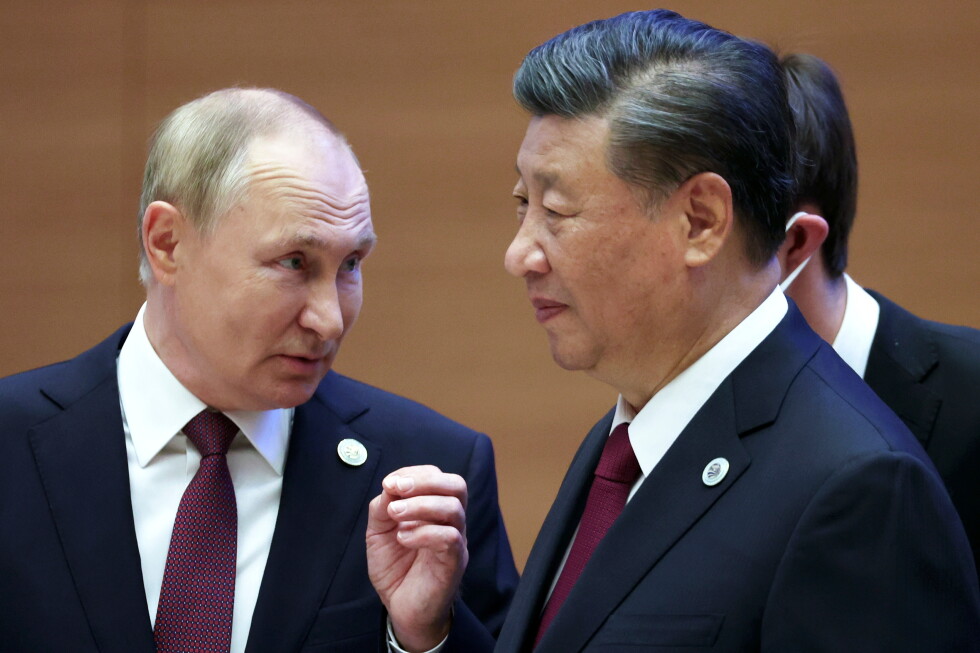
    During Chinese President Xi Jinping’s high-profile two-day visit to Pyongyang this week, his first meeting with North Korean leader Kim Jong Un in seven years, an unusual omission has drawn sharp international attention: neither Chinese nor North Korean state media made any public mention of North Korea’s advancing nuclear weapons program, a top priority for U.S. policymakers and regional allies. For years, this silence suggests, a quiet shift in China’s long-stated position on the Korean Peninsula nuclear issue has come to fruition, reshaping regional security dynamics.

    Before denuclearization negotiations between Washington and Pyongyang collapsed entirely in 2019, the United States and its regional partners South Korea and Japan held out hope that Beijing — as Pyongyang’s closest diplomatic and economic backer — would use its unique leverage to push North Korea to abandon its nuclear ambitions. For years, Beijing routinely publicly committed to the goal of “denuclearization” of the Korean Peninsula, a framework that positioned the country as a key stakeholder in diplomatic efforts, offering sanctions relief and political recognition in exchange for disarmament.

    That narrative has now fundamentally changed. Unlike Xi’s 2019 visit to North Korea, during which Chinese media explicitly quoted the president saying China would play a constructive role in advancing Korean Peninsula denuclearization, no such language appeared in state media coverage of this year’s summit. Analysts say this omission is no accidental editorial choice, but a deliberate strategic signal that Beijing has adjusted its priorities for the region.

    From Beijing’s perspective, the silence reflects a pragmatic reassessment of North Korea’s nuclear progress. Since Kim Jong Un took power in 2011, Pyongyang has rapidly expanded its nuclear capabilities: just last week, Kim inaugurated a new facility for producing nuclear weapons material and vowed to grow the country’s nuclear arsenal “at an exponential rate.” South Korean President Lee Jae Myung recently confirmed that North Korea now produces enough fissile material annually to build 10 to 20 nuclear bombs, and is nearing the completion of intercontinental ballistic missile (ICBM) technology capable of striking the U.S. mainland. Kim has enshrined North Korea’s status as a nuclear weapons state in the country’s constitution, framing the arsenal as the ultimate guarantee of sovereignty against foreign intervention. Chinese observers have increasingly concluded that diplomatic efforts to reverse this progress are no longer practical.

    Beijing’s top regional priority has long been stability on the Korean Peninsula, rather than rigid adherence to denuclearization as a first-step demand. A collapse of the Pyongyang regime, Chinese policymakers fear, would trigger a humanitarian crisis that could send millions of refugees across China’s long shared border with North Korea. For years, Beijing’s wording of “denuclearization of the entire Korean Peninsula” was carefully crafted to also include demands for the removal of U.S. nuclear-powered security commitments and capabilities deployed to protect South Korea. In recent months, Chinese analysts say, Beijing has explicitly reordered its priorities: stabilizing the Korean Peninsula comes first, with denuclearization pushed to a secondary goal.

    For Kim Jong Un, this silence is a clear diplomatic victory. The North Korean leader has long demanded that the international community recognize North Korea as a legitimate nuclear weapons state, a status he says is key to securing the lifting of crippling United Nations sanctions. The absence of public criticism from China, Pyongyang’s most important partner, marks a major step toward that goal.

    For Washington, Seoul and Tokyo, however, the shift is unwelcome news. After last month’s summit between U.S. President Donald Trump and Xi Jinping, the White House said the two leaders had reaffirmed their shared commitment to North Korean denuclearization — but China’s official readout only stated that the two sides had discussed the nuclear issue, without any mention of a shared commitment. North Korean senior official Kim Yo Jong, Kim Jong Un’s sister, went a step further, dismissing the U.S. readout as “false information” and declared that any U.S. push for North Korean disarmament was an “anachronistic dream.”

    Some regional security analysts point to an additional layer of Chinese strategy: Beijing may seek to maintain North Korea as a key actor within its sphere of influence, using the unresolved nuclear issue as leverage in its broader geopolitical competition with the United States. “By tacitly accepting North Korea’s nuclear status, Beijing strengthens its position as an indispensable stakeholder in any future negotiations,” explained Seong-Hyon Lee, a senior fellow at the George H.W. Bush Foundation for U.S.-China Relations.

    Even so, analysts emphasize that China’s acceptance of North Korea’s nuclear expansion has clear limits. “While Xi’s visit signals a ‘strategic embrace of Kim,’ it is ‘not a blank check for North Korea,’” noted Leif-Eric Easley, a professor at Seoul’s Ewha Womans University. North Korea’s ongoing rapid expansion of nuclear and missile capabilities is already testing the boundaries of what Beijing will tolerate, as it pushes the United States and its regional allies to harden their deterrence posturing, destabilizing the status quo China seeks to protect.

  • Australian Services Union to push for historic 35pc pay rise for community, disability support workers

    Australian Services Union to push for historic 35pc pay rise for community, disability support workers

    Thousands of frontline community and disability support workers across Australia are one step closer to receiving the most substantial pay adjustment in over a decade, as one of the nation’s largest labor organizations has launched an ambitious wage push to address long-standing underpayment and workforce retention crises in the sector.

    The Australian Services Union (ASU), which counts roughly 185,000 workers across support services, transportation, tourism and information technology among its membership, is set to submit a formal claim for a 35 percent pay increase to the Fair Work Commission (FWC) this Wednesday. This marks the largest wage demand the sector has seen in 14 years, covering thousands of full-time, part-time and casual community and disability support employees.

    According to ASU leaders, the 35 percent increase is far more than a simple pay adjustment—it is a long-overdue recognition of the dramatically shifting nature of support work over the past 14 years. Angus McFarland, secretary of the ASU’s New South Wales and Australian Capital Territory branch, emphasized that the job has grown far more complex, intensive and high-stakes than it was a decade and a half ago. Workers today are supporting a growing caseload of clients with far more intricate and acute needs, all while managing heavier workloads with increasingly limited resources.

    “Our members are the glue that holds communities together across NSW and the ACT,” McFarland explained. “They walk alongside people through crisis, trauma, poverty and profound disadvantage, supporting them through the darkest periods of their lives. Right now, these workers are being squeezed from all sides, and their wages simply do not match the size of their workload or the impact of their work.”

    Currently, the average annual salary for a full-time worker in this group sits around $AU80,000. That average drops significantly for the large cohort of part-time and casual employees, who make up a large share of this female-dominated sector. If the ASU’s claim is approved by the FWC, the pay increases will be funded through a combination of state and federal government budgets.

    The wage claim comes on the heels of a recent restructuring of the Social, Community, Home Care and Disability Services (SCHADS) Award by the FWC last week, which closed a long-standing wage theft loophole in the National Disability Insurance Scheme (NDIS). Union leaders argue that addressing systemic underpayment is not just a win for workers—it will also fix a critical workforce crisis that is undermining service quality across the sector.

    McFarland noted that the sector has long struggled with crippling staff turnover, describing it as a “leaky bucket” where workers leave in droves because they feel undervalued and undercompensated. Constant staff churn places additional unmanageable pressure on remaining employees, and costs employers significant time and money on continuous recruitment and training. If the wage increase is approved, the union projects it will boost employment numbers, improve retention, and deliver better outcomes for the communities that rely on these critical services. “Fair pay will mean secure jobs, less staff turnover, better services and stronger communities for the people of NSW and the ACT,” McFarland added.

  • Japanese city captures bear that caused fear and school closures

    Japanese city captures bear that caused fear and school closures

    For four days, a roaming wild bear threw daily life into chaos in Utsunomiya, a half-million-resident city located just north of Tokyo, forcing widespread school closures and putting residents on high alert before authorities successfully captured the animal on Tuesday.

    The first sighting of the bear was reported Saturday near a public park in the city, according to local government officials. Over the subsequent 48 hours, residents sent dozens of tips to the city about the bear’s movements, with unconfirmed sightings logged near key public facilities including a city library, multiple primary and secondary schools, and a community center. To protect residents, city administrators made the decision to shut down all city-run public schools for both Monday and Tuesday, and canceled all classes at a local university campus where the bear was spotted early Tuesday.

    Local officials moved quickly to alert the public to the roaming hazard: they issued repeated safety warnings via social media platforms and deployed a public announcement vehicle to cruise residential neighborhoods, broadcasting guidance on how to stay safe. The core advice urged residents to remain indoors inside buildings or locked vehicles if they encountered the bear, to keep all doors and windows secured, and to avoid putting household garbage out overnight — a common attractant for foraging wild bears.

    After tracking the bear to a private plot of land Tuesday afternoon, a veterinarian tranquilized the animal with a dart, confirmed city official Ryuhei Irie. No human injuries were reported during the entire four-day incident. To pinpoint the bear’s location before the capture, the city deployed a drone to survey the area after the animal was spotted on the university campus, narrowing down its position for the capture team.

    Officials are currently working to confirm that no other bears entered the Utsunomiya urban area, though initial assessments point to the single wandering animal being the sole source of all sightings.

    This Utsunomiya bear incident is far from an isolated event. It is the latest in a growing string of human-bear conflicts across Japan, driven by a rising bear population expanding into human-populated areas as rural communities see their human populations age and shrink. Just one week prior, a different bear attacked four people in a residential neighborhood in Fukushima, located in northeastern Japan, leaving all victims with moderate injuries.

    Back in March, the Japanese government released its latest national wildlife assessment, putting the country’s total bear population at approximately 57,800. In response to the increasing frequency of urban and suburban encounters, national officials have approved a bear population management roadmap that authorizes systematic culls to reduce conflict risks.