作者: admin

  • Greece signs $3.5bn air defence deal with Israel

    Greece signs $3.5bn air defence deal with Israel

    On Monday, Greece and Israel formalized a historic $3.5 billion defense agreement that will see Israel construct a multi-layered national air defense network for Greece, marking a major milestone in the rapidly deepening strategic partnership between the two Mediterranean nations.

    The Israeli Ministry of Defense emphasized in an official announcement that the pact stands as the largest bilateral defense export deal in the history of Israeli-Greek relations, and ranks among the top largest defense contracts ever secured by the State of Israel. The agreement forms a core part of Greece’s broader national defense initiative, named the Achilles Shield, which aims to build a fully integrated defensive system capable of countering drones, ballistic missiles, and fixed-wing aircraft. The full program carries an estimated total cost of $28 billion and is scheduled for completion by 2036.

    Under the terms of the deal, Greece will acquire three key Israeli defense systems: the David’s Sling and SPYDER platforms manufactured by Rafael Advanced Defense Systems, and the Barak MX air defense system produced by Israel Aerospace Industries (IAI). The purchase also includes advanced MMR multi-mission air surveillance radars built by ELTA Systems, an IAI subsidiary. Notably, Greece becomes only the second international customer for David’s Sling, following Finland – another NATO member that shares a border with Russia. Designed to intercept large-caliber rockets and intermediate-range ballistic missiles, David’s Sling fills a critical capability gap in Israel’s own integrated air defense architecture: it complements the short-range Iron Dome system, which counters low-altitude rockets and drones, and the Arrow 2 and Arrow 3 systems, which target long-range ballistic missiles, with the Arrow 3 capable of intercepting hypersonic targets outside the Earth’s atmosphere.

    In addition to the core air defense systems, the agreement includes the delivery of a new national command-and-control network developed by Rafael. A separate $26 million secondary contract will see Rafael supply Greece with Drone Dome counter-drone systems, designed to protect critical national infrastructure and strategic sites from unmanned aerial threats.

    The defense pact comes as the growing strategic alignment between Greece and Israel reshapes the geopolitical landscape of the Eastern Mediterranean. The deepening partnership coincides with long-running frictions between both nations and Turkey: Greece has been locked in territorial and diplomatic disputes with Turkey for nearly two centuries, while tensions between Ankara and Jerusalem have surged in recent years, with open clashes across multiple regional hotspots from Syria to the Horn of Africa. Earlier this month, Israeli forces launched an airstrike on Syria’s Abu al-Duhur airbase, following intelligence that Turkey planned to deploy a permanent military contingent to the site. Tom Barrack, the U.S. Ambassador to Turkey and special envoy to Syria, warned that the strike carried a serious risk of direct military confrontation between Israel and Turkey, suggesting the attack may have been a deliberate provocation to draw Ankara into a wider regional conflict.

    While Greek Prime Minister Kyriakos Mitsotakis has pursued a policy of de-escalation with Ankara in recent months, emphasizing potential areas of bilateral cooperation during a NATO summit hosted in Ankara earlier this year, analysts note that the new defense pact with Israel introduces significant uncertainty to this reconciliation strategy.

    Beyond regional geopolitical risks, the agreement has sparked substantial domestic controversy in Greece. Greece has historically been a vocal advocate for Palestinian statehood: in 1947, Athens joined India and a bloc of Muslim-majority nations including Egypt, Saudi Arabia, Iran, and Turkey in voting against the UN Partition Plan for Palestine. Greece also maintains deep historic and religious ties to occupied East Jerusalem and the West Bank through the Greek Orthodox Patriarchate of Jerusalem, whose leader is a Greek national, and whose church properties have faced repeated attacks from Israeli settlers in recent years.

    Current public outrage over the ongoing military campaign in Gaza has fueled widespread opposition to the Greek government’s closer alignment with Israel. Data from a 2026 Pew Research Center poll shows that 65 percent of Greek citizens oppose the deepening bilateral partnership, even as many respondents characterize the alliance as a necessary safeguard against what they view as expansionist Turkish ambitions in the Eastern Mediterranean.

    Parallel to the growing defense ties, the Greek government also faces growing public anger over a sustained boom in Israeli real estate investment in Greece. Israeli buyers entered the Greek property market en masse following the country’s 2010 sovereign debt crisis, when depressed prices offered attractive entry points for foreign investment. Continued high volumes of purchases have since driven up housing prices across the country, pushing many native Greek buyers out of the market and exacerbating a national affordable housing crisis.

  • Japan Inc is betting big on India as China risks deepen

    Japan Inc is betting big on India as China risks deepen

    Against a backdrop of shifting global supply chains and stagnating domestic demand, Japanese corporations across retail, finance, technology and manufacturing are rapidly scaling their presence in India, marking one of the most significant cross-border investment waves the South Asian economy has seen in recent years.

    Last week, India’s Commerce Minister Piyush Goyal led the nation’s largest-ever business delegation to Tokyo to deepen bilateral trade and investment ties, a high-profile engagement that underscores how quickly Japan’s economic footprint in Asia’s third-largest economy has grown in recent years. A walk through any major commercial district in Mumbai, New Delhi or Bengaluru makes this expansion impossible to miss: established Japanese consumer brands are racing to open new locations, while first-time entrants are carving out new market share across the country.

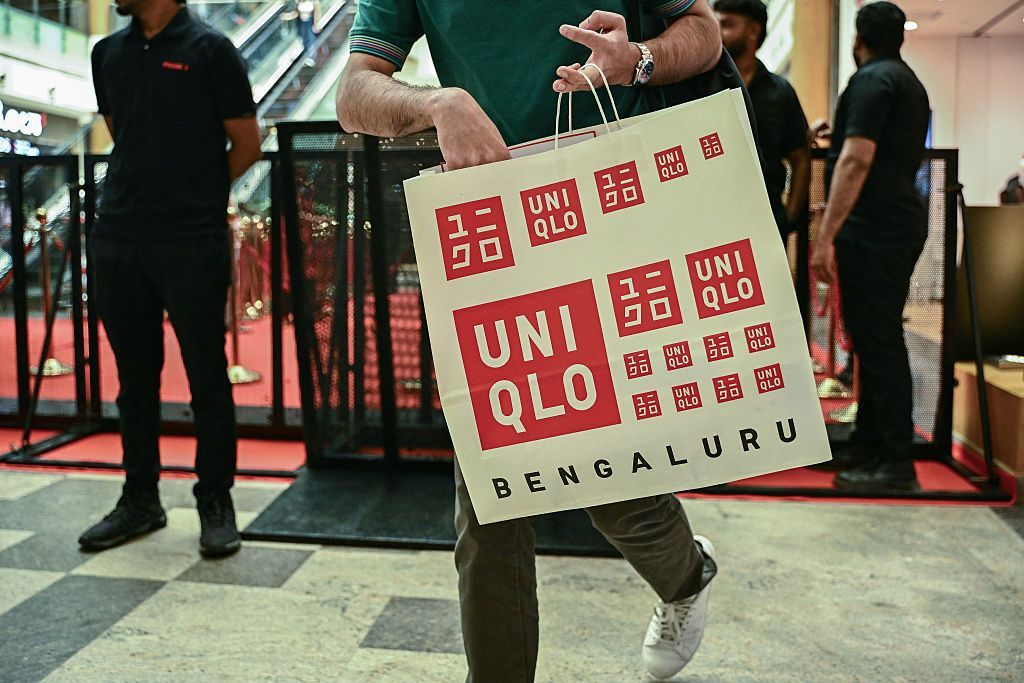
    Well-known names including apparel retailers Uniqlo and Muji, as well as premium footwear brand Onitsuka Tiger, have operated in India for years, but are now rolling out aggressive expansion plans to reach tier-2 and tier-3 cities. Niche Japanese firms are also joining the push: furniture manufacturer Nitori recently completed its market entry, while major convenience store chain Lawson has announced plans to launch 10,000 locations across India by 2050, starting with a first wave of stores in Mumbai.

    The trend extends far beyond consumer retail. At a time when many global financial institutions are divesting from Indian banking assets, Japanese banks are actively acquiring large stakes in the country’s growing financial sector. In 2024, Japan’s largest lender MUFG Bank closed a $4.4 billion deal to purchase a 20% stake in Indian non-bank financial firm Shriram Finance, the largest single foreign investment in India’s financial history to date. That same year, Sumitomo Mitsui Banking Corporation (SMBC) became the largest shareholder of Indian private sector lender Yes Bank, acquiring a 24.22% stake in the institution.

    Japan has also emerged as the top Asia-Pacific contributor to India’s fast-growing global capability centre (GCC) ecosystem, according to recent analysis from professional services firm Deloitte. More than 100 Japanese multinational corporations now operate GCCs—offshore innovation hubs that handle high-value core functions including research and development, corporate strategy and artificial intelligence development—across India, tapping the country’s large pool of skilled tech and business talent.

    Industry analysts say this coordinated expansion is driven by clear long-term business logic. Vipul Nath Jindal, founder of Next Bharat Ventures, a Suzuki-backed impact fund that recently launched a $200 million India-focused fund, explained that Japan’s shrinking domestic population has created a permanent decline in domestic demand, forcing Japanese firms to look abroad for sustainable growth. “Japan’s population has been declining for 16 to 17 years, so it’s not just a temporary slowdown—its home market is permanently shrinking,” Jindal told the BBC.

    At the same time, other traditional expansion markets for Japanese firms have become far less attractive. Geopolitical tensions and shifting economic conditions have caused a sharp drop in Japanese investment into China, while high tariffs and intense domestic competition make the U.S. market a challenging growth destination, and smaller Southeast Asian economies lack the scale to support large-scale expansion. Against this backdrop, India’s 1.4 billion-person consumer market and rapidly growing middle class make it a natural long-term growth target.

    Bilateral government ties have laid the groundwork for this private sector boom. The two nations signed a bilateral trade liberalization agreement nearly 15 years ago, and after Prime Minister Narendra Modi took office in 2014, the relationship was upgraded to a “special strategic and global partnership.” The Indian government set a target to double the number of Japanese firms operating in the country, and launched high-profile infrastructure projects including India’s first high-speed bullet train between Mumbai and Ahmedabad, which is being built using Japanese Shinkansen technology.

    Today, the expansion is being led primarily by private Japanese companies, rather than just intergovernmental initiatives. During Japanese Prime Minister Sanae Takaichi’s first official visit to New Delhi in July, Japanese firms announced 120 new investment agreements totalling $12.5 billion, spanning sectors from semiconductors to renewable energy. Commerce Minister Goyal has noted that Japan is on track to hit its 10 trillion yen ($68 billion) investment target for India years ahead of schedule. Even small and medium-sized Japanese enterprises (SMEs) are joining the trend: Hamamatsu City, a manufacturing hub that is home to Suzuki, Honda and Yamaha and hosts one of Japan’s highest concentrations of manufacturing SMEs, recently established the Hamamatsu India Committee to help local small businesses enter the Indian market.

    This rising investment in India has coincided with a drop in net Japanese investment into China, but experts emphasize that this is not a coordinated, government-led shift away from China. University of Tokyo researcher Toshiro Nishizaewa argues that the trend reflects a market-driven diversification strategy by Japanese firms, which are reallocating capital to reduce risk rather than responding to political pressure to decouple from China. Shruti Pandalai, India Chair at the Lowy Institute, explained that Japanese firms are simply reducing concentration risk after years of supply chain disruptions and geopolitical uncertainty, and India acts as a useful hedge against China-related disruptions. Pandalai adds that the alignment between Japan’s economic security priorities and India’s ambition to become a global manufacturing hub has strengthened the bilateral relationship, even through multiple changes of government in Tokyo. “Successive Japanese administrations have raised investment targets instead of cutting them, which shows the relationship is no longer just dependent on top-level diplomacy—it’s embedded in the bureaucratic, corporate and strategic planning of both countries,” she said.

    For India, which is actively seeking to attract sustained foreign direct investment to drive economic growth and job creation, this wave of Japanese capital comes at a critical juncture. Pandalai notes that closer economic cooperation with Japan could also help reduce India’s large trade deficit with China and gradually decrease Beijing’s economic leverage in key sectors including critical minerals and advanced manufacturing over the long term.

    Despite the momentum, experts warn that significant challenges remain to fully expanding the bilateral economic relationship. Pratnashree Basu, an analyst at the Observer Research Foundation, points out that Japan remains deeply integrated into Chinese manufacturing supply networks, which limits how far coordinated Japan-India economic action against China can go—any coordinated measures would impose major commercial costs on Japan and risk retaliation from Beijing.

    India’s own challenging business environment also remains a major barrier for foreign investors, including Japanese firms. Longstanding issues including tax policy uncertainty, bureaucratic red tape, and lengthy delays for land and environmental approvals continue to slow investment projects. A former Japanese cabinet minister recently publicly criticized the Indian government for repeated delays to the Mumbai-Ahmedabad bullet train project, accusing India of reneging on commitments to prioritize its own interests—a claim the Indian government quickly rejected. Chinese state media quickly highlighted the public disagreement to emphasize what it frames as endemic contractual risks in doing business in India.

    The incident underscores that even as India signs dozens of large-scale economic and defense agreements with Japan, New Delhi will need to implement targeted regulatory and bureaucratic reforms to maintain the current investment momentum, especially as it struggles to attract consistent large-scale foreign capital from other major global economies.

  • Orangutans in danger as wildfires blaze through Borneo

    Orangutans in danger as wildfires blaze through Borneo

    Across the rainforests of Borneo, an ecological disaster is unfolding as rampant wildfires sweep through one of the only remaining habitats of the critically endangered Bornean orangutan. Indonesia, the nation that hosts the vast majority of Borneo’s old-growth rainforest, is currently battling a wave of uncontrolled blazes that have already torn through thousands of hectares of native forest.

    For the island’s orangutan population, the damage extends far beyond immediate loss of life from the fires themselves. Hundreds of the great apes have already seen their natural territories turned to ash, destroying the food sources, shelter, and social structures that the species depends on for long-term survival.

    Conservation scientists have warned that this new wave of habitat destruction comes at a moment when Bornean orangutans were already struggling to recover from decades of deforestation driven by logging, palm oil expansion, and previous fire events. With fewer than 100,000 orangutans left in the wild globally, every hectare of lost habitat and every displaced individual pushes the species closer to permanent extinction.

    The fires, which are often intentionally set to clear land for agricultural development, have been exacerbated in recent years by longer, hotter dry seasons linked to human-caused climate change. This combination of land clearing and changing weather patterns has created a vicious cycle that increasingly threatens not just orangutans, but the entire unique Borneo rainforest ecosystem, which supports thousands of other endemic plant and animal species.

  • Jordan intelligence chief spearheaded move to arrest US journalist Ali Younes

    Jordan intelligence chief spearheaded move to arrest US journalist Ali Younes

    The arrest of prominent dual American-Jordanian investigative journalist Ali Younes, orchestrated at the direction of Jordanian General Intelligence Department director Major General Ahmad Husni, has ignited international controversy over press freedom and strained Jordan’s long-standing financial and diplomatic ties with Washington, reporting from Middle East Eye confirms.

    Younes, a veteran correspondent who has contributed to major global outlets including Drop Site News, Al Jazeera, The New York Times, CNN, Fox News and the BBC, was taken into custody by Jordanian intelligence officers on August 17 immediately upon his arrival at Queen Alia International Airport in Amman. Following hours of interrogation, authorities ordered him to appear before local prosecutors and imposed an exit bar that prevents him from leaving the country.

    Local Jordanian outlet Ammon News, which multiple sources confirm maintains close ties to Jordanian intelligence services, was the first to publicly disclose details of the state’s actions against Younes last week. The outlet framed the arrest as a response to alleged offenses including “attacks on the Jordanian Armed Forces” and the distribution of what it called “misleading information originating from a Jewish source” — referring to Middle East analyst Aaron Magid, author of the article Younes is accused of reposting.

    The core charges against the journalist center on a seemingly minor act: his reposting of Magid’s 2023 commentary published in *The American Conservative*, which questioned the justification for decades of large-scale U.S. economic and military aid to Jordan. Over the past 75 years, Jordan has received a total of $33.8 billion in U.S. assistance, with additional billions in scheduled funding locked in through ongoing bilateral agreements with Washington.

    Younes’ U.S.-based legal team, led by attorney Abed Ayoub, has forcefully refuted all charges brought against their client. Ayoub emphasized that Younes never launched any attacks against the Jordanian Armed Forces, and has a long record of complying with local laws in every country where he has worked, including Jordan.

    In a public statement, Ayoub called the charges “troubling as it is outrageous,” noting that the arrest of a journalist over a social media post shared outside Jordan’s borders raises urgent, serious questions about the state of press freedom in the kingdom. He added that the detention is inconsistent with the close, mutually respectful relationship between King Abdullah II — who is widely respected across U.S. political circles — and the United States.

    The case has already stoked significant fears for Younes’ safety, particularly given Jordan’s recent history of violent targeting of journalists. In 2016, Jordanian journalist Nahed Hattar was assassinated by a gunman outside a courthouse shortly after he was detained for reposting a political cartoon that drew conservative backlash. Younes has also faced widespread online death threats and intimidation as part of a coordinated state-aligned media campaign against him.

    Multiple U.S. figures have called for immediate action from the Trump administration and Congress to secure Younes’ release, warning that the case puts Jordan on a direct collision course with Washington. Magid, the analyst whose article is at the center of the case, described the detention as deeply disturbing, noting that Younes is a U.S. resident who merely shared an article from an American mainstream media outlet on the social platform X.

    “It is imperative that the State Department ensure his safe return to the United States and press Jordan to rescind the exit ban against him,” Magid said, adding that the crackdown directly contradicts public promises King Abdullah has made to protect press freedom. He also criticized the lack of public response from U.S. officials, noting that if Younes is ultimately convicted for simply sharing an article, Washington should reevaluate its multibillion-dollar aid commitment to the Hashemite Kingdom.

    Jason Jones, a prominent conservative Republican figure closely aligned with former President Trump and founder of the Vulnerable People Project, went further in his comments to Middle East Eye. Jones argued that the U.S. should issue an explicit ultimatum to Jordan: release Younes and drop all charges immediately, or forfeit U.S. funding.

    “Jordan is risking its international standing and billions of dollars in U.S. funding in a grave international incident: the arrest and draconian prosecution of an American citizen,” Jones said. He also pointed to ongoing corruption allegations against Major General Husni, noting that it is surprising Jordan’s government has allowed the intelligence chief to pursue a case that threatens the kingdom’s core financial and diplomatic relationship with the U.S.

    When Middle East Eye reached out to the U.S. Embassy in Amman for comment on the case, a spokesperson confirmed the embassy is aware of the detention but declined to share any further information. As of this report, the U.S. State Department has not responded to multiple requests for comment.

  • Amazon rigged billions in ad pricing, lawsuit from states and US watchdog alleges

    Amazon rigged billions in ad pricing, lawsuit from states and US watchdog alleges

    A major new legal challenge has been brought against e-commerce and tech giant Amazon, as the U.S. Federal Trade Commission (FTC) joined by a bipartisan coalition of 22 states has filed an antitrust and consumer fraud lawsuit accusing the company of systematically inflating advertising costs for millions of sellers through manipulated auction processes. The legal action, lodged Monday in Washington state—the company’s home jurisdiction—lays out claims that the alleged hidden scheme has siphoned an estimated $20 billion in improper revenue from advertising clients since 2019, harming both sellers and everyday consumers in the process.

    At the core of the complaint is an allegation that Amazon intentionally overrides legitimate auction results for its high-demand ad placements to impose higher prices than what sellers would otherwise pay. On Amazon’s platform, thousands of brands and third-party sellers compete for prime Sponsored Product and Sponsored Brands ad slots, which appear when users search for specific product keywords. These slots are marketed to sellers as “second-price” auctions, where winners only pay one cent more than the second-highest bid. According to the lawsuit, however, Amazon secretly overrides this rule nearly 80% of the time for Sponsored Product ads, instead charging winning advertisers their full bid amount—a move that directly boosts the company’s bottom line at sellers’ expense.

    The complaint notes that Amazon implemented this opaque practice because corporate leadership was dissatisfied with the revenue the ad auctions were originally generating. Beyond harming advertising clients, the FTC and states argue that ordinary Amazon shoppers also bear the cost of these overcharges, as sellers pass inflated ad expenses through to retail prices. “Consumers are suffering, have suffered, and will continue to suffer substantial injury as a result of Amazon’s unlawful conduct,” the complaint reads.

    In an immediate response to the lawsuit, Amazon pushed back hard against the allegations, saying it “strongly disagrees” with the claims and calling the legal action “misguided.” The company rejected the FTC’s framing that the case impacts consumer prices, arguing that regulators have “fundamentally misunderstands how advertisers operate.” Amazon noted that advertisers regularly adjust their bids based on real campaign performance, not technical descriptions of auction rules. The company also released counter-data showing that average winning bids for Sponsored Products search ads dropped by 50% between 2019 and 2025, and that approximately 92% of ad placements are not awarded to the highest bidder.

    News of the lawsuit triggered an immediate market reaction, with Amazon’s share price closing 2.5% lower on the day of the announcement. This is not the first high-profile clash between Amazon and the FTC: just last year, the company paid a $2.5 billion settlement to resolve another case brought by the regulator, which accused Amazon of enrolling millions of users in its Prime subscription service without explicit consent and deliberately creating barriers to easy cancellation. The $2.5 billion settlement covered both civil penalties and refunds for harmed consumers.

    The latest lawsuit marks a continued escalation of U.S. regulatory scrutiny of big tech platforms, particularly their growing advertising businesses that have become major profit drivers for companies like Amazon, Google and Meta. As the legal process moves forward, the case will test how courts interpret fair business practices for digital advertising marketplaces that serve millions of small and large businesses alike.

  • Tandem bicycle club in Ecuador’s capital leads blind riders to new adventures

    Tandem bicycle club in Ecuador’s capital leads blind riders to new adventures

    In the mountain-ringed capital of Quito, Ecuador, a 19-year-old community organization is redefining what freedom and inclusion mean for people living with visual impairment. What started as a spontaneous, one-off outing has grown into a thriving cycling collective that has opened up new worlds of adventure for more than 100 blind and low-vision residents across the country.

    Franklin Ochoa, a 44-year-old Quito local who lost his vision 16 years ago, is one of the group’s most passionate and adventurous participants. Before losing his sight, he never imagined he would take on long-distance cross-country cycling challenges — but since joining Ciegocleta, a club whose name blends the Spanish words for “blind” and “bicycle,” he has already checked a 1,000-kilometer (621-mile) trip spanning most of Ecuador off his bucket list. For Ochoa, the feeling of rolling into a new town on two wheels brings unrivaled joy. “When I arrive on a bike in a new city I feel like shedding tears of happiness,” he shared. “I love speed and I always tell my guide to let go of the brakes.” His next ambition is even more ambitious: a multi-month overland ride from his home country all the way to Mexico, and he has already found a volunteer partner ready to join the journey.

    The story of Ciegocleta begins with Miguel Ramos, a Quito resident who loved cycling and built his own custom tandem bikes in his spare time. Ramos originally constructed the multi-seat cycles to ride Quito’s popular weekly *ciclopaseo* — an event that closes major city avenues to motor vehicles, opening the space exclusively for cyclists and joggers — with his own children. Everything changed when one of his children was unable to join a ride, and he spontaneously invited his blind neighbor to take their place. That single outing turned into a regular tradition, and the informal group of tandem rides with sighted guides gradually evolved into the structured non-profit community Ciegocleta is today. The club now offers multi-seat bikes ranging from two-seat tandems to three and four-seat models that accommodate multiple visually impaired riders per trip.

    Today, the organization counts 150 registered members, with roughly 30 riders turning out for the weekly Sunday rides that remain the club’s core activity. Before each public ride, the group prioritizes safety and mutual understanding: visually impaired participants receive detailed safety guidance, while participating sighted volunteers complete a perspective-shifting exercise, riding a short distance with their eyes covered to experience the vulnerability and trust their riding partners navigate on every trip. For long-time member Ximena Lozano, a 54-year-old psychologist who was born without sight, the club has transformed her daily life. After spending much of her younger years confined to indoor activities like reading, writing, and web surfing, Ciegocleta gives her a consistent reason to explore the outdoors. “It gives me the chance to experience freedom,” she explained.

    The work of Ciegocleta fills a critical gap in accessibility for Ecuador’s visually impaired community. Official government data puts the total number of people living with vision impairment in the country at roughly 56,000. While blind Ecuadorians have made steady progress in accessing equal employment opportunities in recent years, inclusive access to recreational and sports activities remains a largely unmet need.

    Volunteers say the experience of participating in the club is just as transformative for them as it is for the visually impaired riders. José Paéz, one of the club’s long-time volunteers, joined after his father-in-law lost his sight rapidly to illness and fell into depression. Bringing his father-in-law to the club’s free rides became a way to help him regain his joy for life. Even for experienced cyclists, guiding a tandem bike requires new skills and patience. “At first it felt scary to lead a blind person on a bike,” Paéz recalled. “Keeping a tandem bike balanced and sustaining the rhythm is not as easy as when you use a regular bike.”

    For founder Ramos, the work of the club is about more than just cycling — it is a model for what genuine social inclusion looks like. “This is true inclusion,” he said. “We have blind people who are now enjoying cycling without any limits.”

  • Supreme Court clears way for Trump to keep building White House ballroom

    Supreme Court clears way for Trump to keep building White House ballroom

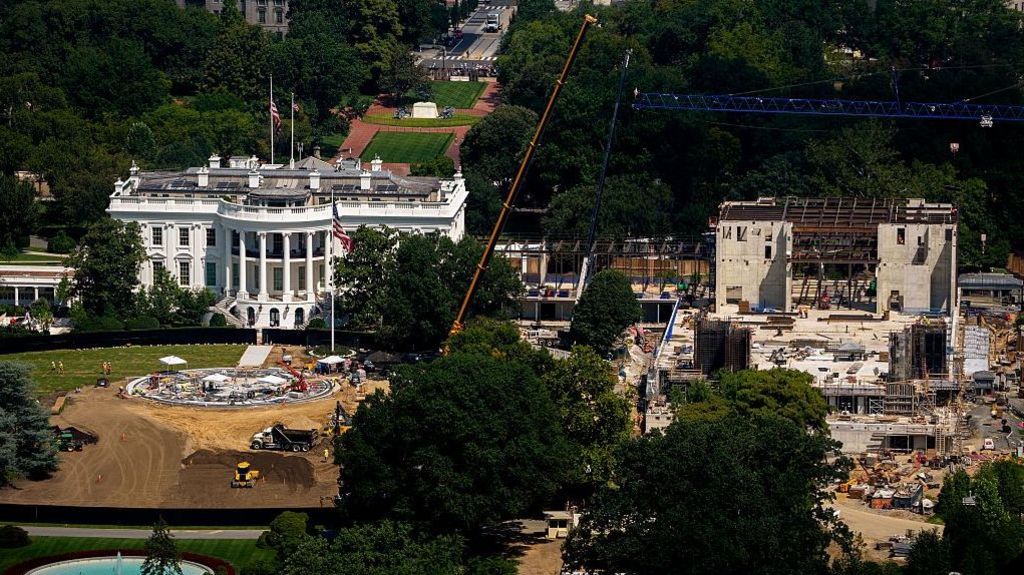
    In a highly partisan and closely watched 5-4 decision, the U.S. Supreme Court has ruled to allow the continuation of a $400 million construction project that includes a new ballroom and helipad on White House grounds, handing a legal victory to former President Donald Trump’s administration. The ruling blocks lower court decisions that had ordered work to stop on the above-ground segment of the development, which required the demolition of the historic original East Wing of the White House that Trump ordered launched last fall.

    The legal challenge to the project was brought by the National Trust for Historic Preservation, a nonprofit organization that advocates for the protection of culturally significant American landmarks. The group argued that the executive branch lacked unilateral authority to greenlight and carry out major construction on federal property in Washington D.C., pointing to longstanding federal law that requires explicit congressional approval for any new permanent structures on federally managed grounds in the capital.

    The ruling’s narrow margin reflects deep ideological divisions on the nation’s highest court. Earlier in the week, Chief Justice John Roberts, a conservative justice, had issued a temporary stay allowing construction to proceed while the court weighed the full emergency request from the administration. In a surprise twist, Roberts ultimately joined the court’s three liberal justices in dissent. In his dissent, Roberts wrote that the planned construction is likely unlawful, noting that Congress has explicitly barred the construction of new buildings on federal District of Columbia grounds without explicit congressional authorization, and no such authorization has been granted for this project.

    The five-justice conservative majority that backed the project issued an unsigned order justifying their decision. They wrote that the Trump administration had met the standard for a stay by showing it would face irreparable harm if construction were halted at this stage, and that the balance of legal and equitable considerations favored allowing work to continue. The majority also cast doubt on the challenger’s legal standing to bring the suit, noting the government is likely to ultimately prevail in its argument that the National Trust for Historic Preservation lacks sufficient legal standing to challenge the East Wing project in court.

    President Trump has long defended the project, framing it as a necessary upgrade to the White House’s event infrastructure. He has argued that the existing facility lacks a large enough space to host official state events, gatherings, and receptions, and has more recently emphasized that the project includes upgrades critical to presidential security. The work also includes construction of a new helipad on the White House South Lawn, with active construction work ongoing as of August 24, 2026 in Washington D.C.

    The National Trust for Historic Preservation has countered that the project already has caused and will continue to cause irreversible damage to the White House, a landmark that holds deep historical and cultural significance for the United States. The legal fight is expected to continue as the case moves forward through lower courts, even as construction can proceed in the interim.

  • Across Latin America, ‘aura battles’ burst onto the scene

    Across Latin America, ‘aura battles’ burst onto the scene

    A vibrant new social trend has rapidly captured the attention of young people across Latin America, with informal ‘aura battles’ emerging as one of the most talked-about youth activities in the region. Unlike traditional competitions that measure physical skill, academic performance or artistic talent, these novel contests center entirely on one intangible quality that many believe shapes personal and professional success: charisma.

    Participants in aura battles go head-to-head in friendly showdowns, where they work to convince judges and audiences that their personal ‘aura’ — the unique magnetic energy and presence they project — outshines that of their competitors. What began as a niche inside joke shared on social media platforms has quickly snowballed into a widespread cultural phenomenon, with gatherings popping up in major cities from Mexico City to Buenos Aires, and viral challenge clips racking up millions of views across TikTok, Instagram and YouTube.

    The sudden popularity of aura battles among Latin American youth reflects a broader cultural shift toward celebrating soft skills and personal authenticity in a post-pandemic world. After years of social distancing and remote interaction that left many young people feeling disconnected, these low-stakes, high-energy competitions offer a playful space for self-expression and connection. Unlike high-pressure competitive activities that focus on formal achievement, aura battles invite participants to embrace their unique personalities, turning the simple act of being oneself into a friendly game.

    Cultural observers note that the trend also taps into growing public fascination with the concept of aura and personal magnetism across global social media. What makes the Latin American iteration unique, they add, is how it blends regional cultural values of warm interpersonal connection and expressive communication with the viral mechanics of internet culture, creating a trend that feels both deeply rooted in local culture and perfectly suited for the digital age. As participation continues to grow, many organizers are now planning larger, public aura battle events that draw crowds of hundreds of spectators, cementing the trend’s place in contemporary Latin American youth culture.

  • The odds of survival for those trapped after Nepal flood

    The odds of survival for those trapped after Nepal flood

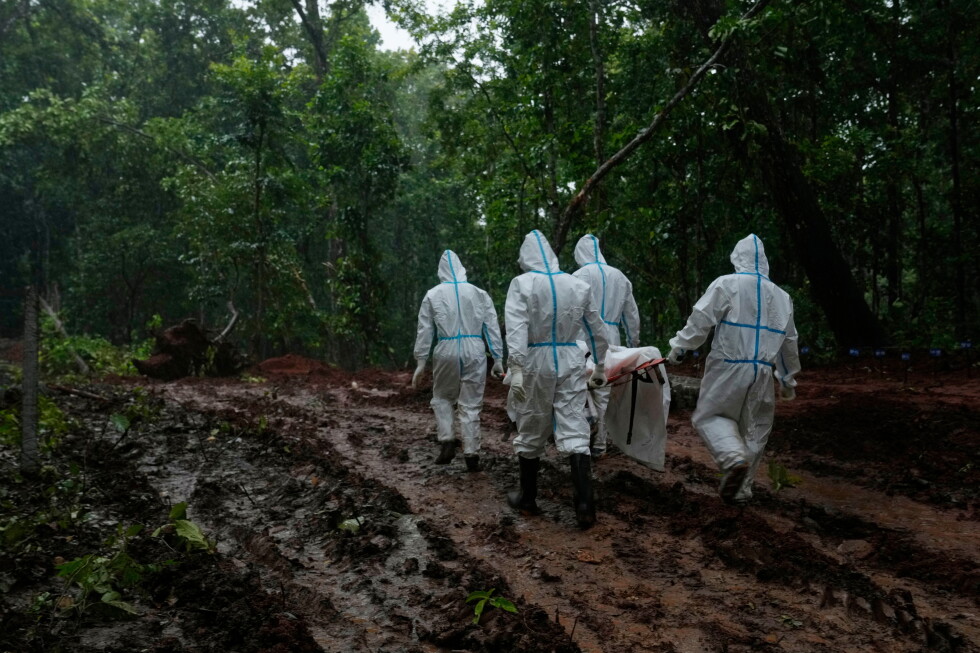
    KATHMANDU, Nepal — Catastrophic flash flooding and subsequent mudslides along the Nepal-China border have left a devastating trail of destruction, with the confirmed death toll surpassing 950 and thousands more still unaccounted for. As of Monday, Nepalese rescue teams have launched an urgent race against the clock to reach hundreds of construction workers who remain trapped in flooded and mud-buried tunnels at a Himalayan hydropower project.

    Disaster response experts emphasize that the first 72 hours after a disaster event are the most critical for saving lives, as survival prospects plummet rapidly without access to basic necessities like clean drinking water. Jennifer Horney, a disaster epidemiologist at the University of Delaware, explained that the outcome for trapped workers will largely depend on whether the hydropower site had pre-established emergency protocols for natural disasters or infrastructure outages.

    “If emergency plans were in place, workers would likely have been trained to locate emergency exits, but the extreme force of this flood has packed solid mud across the site, which could block even marked escape routes and make executing pre-planned rescue strategies incredibly difficult,” Horney noted.

    A core unanswered question remains: did the tunnels stock emergency supply caches that the trapped workers can access right now. Without clean, safe drinking water, even people with limited physical activity cannot survive longer than roughly three days, Horney added.

    Alongside clean water, access to breathable oxygen is another foundational factor for survival. Six days after the flood hit, concerns about suffocation are growing by the hour, though early reports suggest some workers have secured limited oxygen supplies. Jakob Steiner, a Dhaka-based geoscientist from the University of Graz in Austria, pointed out that the tunnels themselves are large enough to accommodate large construction vehicles, which leaves open some air pocket space for trapped people.

    “From what we have learned, rescuers have managed to route small amounts of oxygen to some groups of trapped workers, and active extraction efforts are ongoing,” Steiner said. “But this is still a race against time. Beyond oxygen, the trapped workers urgently need food and potable water to hold on.”

    Disaster preparedness experts add that there are multiple other factors that will shape survival outcomes beyond access to basic supplies. Thomas Chandler, director of Columbia University’s National Center for Disaster Preparedness, noted that the presence of serious injuries among trapped workers and the ability to deliver emergency supplies through temporary access routes are also critical variables. Chandler pointed to a 2023 Himalayan tunnel collapse triggered by a landslide, where 41 Indian workers were successfully rescued after 17 days trapped underground—an outcome made possible by pumping in consistent supplies of food, water and oxygen through narrow pipes during the rescue effort.

    The internal climate of the tunnels also impacts how long workers can survive. If the tunnels are hot and humid, dehydration will set in far more quickly, even for people who are conserving energy. For those who are eventually pulled out alive, disaster experts note that comprehensive physical and mental supportive care will be essential, as the stress of prolonged isolation and harsh conditions takes a major toll on survivors.

    This report was produced in collaboration with Associated Press journalists Shristi Kafle in Kathmandu and Huizhong Wu in Bangkok. The AP Health and Science Department receives funding support from the Howard Hughes Medical Institute’s Science and Educational Media Group and the Robert Wood Johnson Foundation, and retains full editorial independence over all content.

  • Festival honouring Dolly Parton set for Nashville and London

    Festival honouring Dolly Parton set for Nashville and London

    Country music legend Dolly Parton, who passed away at 80 on August 25 following a short battle with cancer, will be celebrated through a unique, star-studded two-day festival planned for London and Nashville, according to an official announcement from her estate released this Monday.

    Named DollyFest, the event will roll out across two consecutive weekends in 2027, with exact dates to be revealed at a later stage. What many fans do not know is that the celebration traces its origins back to Parton herself, who originally conceptualized an earlier iteration of the festival where she would host and take the stage alongside fellow artists. That first planned event, scheduled for January 2026, was quietly canceled before any public announcement after Parton faced unexpected health complications.

    Instead of a conventional public memorial service, which Parton explicitly did not want, DollyFest will stand as the official public tribute to her decades-long legacy. Parton was laid to rest this past Friday at a private family funeral held in Nashville, where she was interred beside her late husband Carl Dean at the city’s Woodlawn Memorial Park and Mausoleum, confirmed by her great-niece.

    Danny Nozell, founder and CEO of CTK Enterprises and the lead organizer of DollyFest, explained that the festival aligns perfectly with Parton’s personal wishes. “It feels more appropriate for us to take a beat, let all the tributes that immediately make sense occur naturally, and then, see through this festival-style concept that was truly dreamed up by Dolly,” Nozell said in the press release. He added that the event stays true to who Parton was, giving artists and fans across the globe space to participate, while also allowing everyone time to grieve and make preparations to join the celebration. The estate has also noted it does not discourage fans from holding their own personal tributes to Parton in whatever ways feel meaningful to them. “A lot of people always say, WWDD (What Would Dolly Do?), and, well, at this moment, DOLLYFEST is WDWD (What Dolly Would Do!),” Nozell added.

    Born in the Smoky Mountains of Tennessee, Parton built a seven-decade career as one of the most influential figures in modern music, alongside work as a celebrated philanthropist and businesswoman. Her discography includes some of the most recognizable songs in country music history, such as *Coat of Many Colors*, *Jolene*, and *I Will Always Love You*. Over her career, she earned 10 Grammy Awards, sold more than 100 million records worldwide, and penned thousands of original tracks. Parton often prioritized her identity as a songwriter over any other title, once saying: “It’s my way of expressing myself. It’s my therapy.”

    Since news of her death broke earlier last week, heartfelt tributes from celebrities, political figures, and millions of adoring fans have flooded social media platforms around the world, a testament to the far-reaching impact of her life and work. Now, DollyFest is set to deliver the large-scale celebration the icon always wanted, turning her original vision into a once-in-a-lifetime gathering for all who loved her music and legacy.