作者: admin

  • Hong Kong files charges over deadliest fire in decades

    Hong Kong files charges over deadliest fire in decades

    One year after the deadliest residential blaze in recent global history killed 168 people in Hong Kong, authorities have officially filed manslaughter and corruption charges against multiple individuals and firms linked to safety failures at the public housing estate. The unprecedented inferno, which broke out in November 2023, swept through seven of the eight high-rise residential towers at Wang Fuk Court, leaving thousands of residents homeless and triggering a months-long joint investigation by local police and Hong Kong’s Independent Commission Against Corruption (ICAC).

    When the blaze erupted, the estate was undergoing major renovation work, and investigators quickly uncovered a pattern of systemic safety negligence and alleged corrupt misconduct. Official public hearings into the disaster confirmed that nearly all critical life-saving fire safety systems failed on the day of the fire, a breakdown traced directly to avoidable human error. According to charge sheets reviewed by Agence France-Presse, manslaughter charges have been brought against the directors of the main construction contractor and the independent consulting firm overseeing the renovation, a certified fire safety inspector, and both of their companies. In total, seven individuals who held varying responsibilities for the renovation project face an expanded slate of charges including fraud, money laundering, and tax evasion beyond the manslaughter counts.

    All defendants made their first court appearance on Wednesday, where they confirmed to the presiding judge that they understood all charges leveled against them. During the hearing, prosecutors formally stated that the accused unlawfully caused the deaths of all 168 victims, who included ordinary residents and one responding firefighter. For the first time since the disaster, the full list of victims’ names was read out in open court, bringing the human cost of the tragedy into public record. The proceedings were then adjourned to September 2024 for further pre-trial processes.

    In a press briefing held after the court appearance, law enforcement officials outlined the scope of their investigation, noting that a total of 35 people had been arrested in connection with the fire in a joint operation between police and ICAC. “We suspect this terrible incident was driven by individuals putting personal profit above all else, with complete disregard for the safety of residents’ lives and property,” stated Hazel Law, principal investigator for ICAC.

    Investigators confirmed that the accused conspired to defraud government regulators by submitting falsified inspection reports for the renovation project. Police added that the contractor and consulting firms are suspected of egregious breaches of their duty of care, resulting in gross negligence across the construction work. Two key factors have been identified as driving the fire’s rapid and deadly spread: substandard, non-fire-retardant safety netting installed during the renovation, and a discarded cigarette that investigators have confirmed was the original source of ignition.

    Prosecutors further revealed that fire alarm systems for all seven affected towers had been intentionally deactivated during the renovation work, a decision that “greatly shortened the window of time residents had to evacuate” the burning buildings. Required fire-retardant protective netting was replaced with cheaper non-compliant material in most locations, and foam boards used for ongoing renovation work covered external windows, providing an additional fuel source that allowed the fire to spread quickly into occupied residential units. The blaze, which stands as the deadliest residential building fire worldwide since 1980, left thousands of residents displaced, with all relocated to temporary public housing in the months following the disaster.

  • Three Indian sailors missing after US says it hit tanker in Gulf of Oman

    Three Indian sailors missing after US says it hit tanker in Gulf of Oman

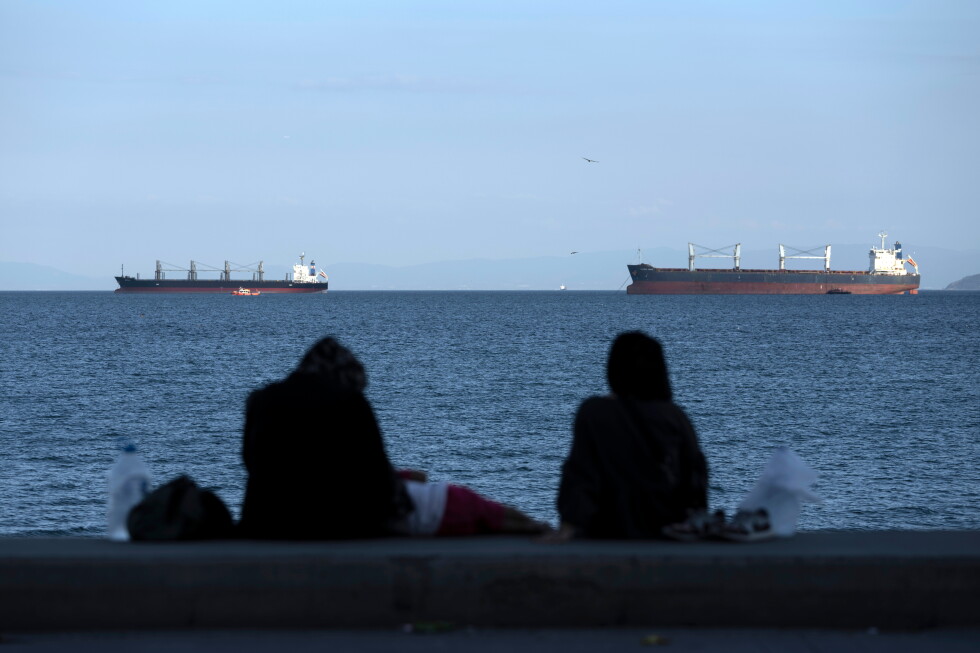
    Escalating maritime enforcement actions amid a months-long regional conflict have put the U.S. military at the center of a new diplomatic incident, after U.S. Central Command (Centcom) announced it had disabled a Palau-flagged oil tanker carrying an Indian crew in the Gulf of Oman over accusations it violated an American blockade on Iranian oil shipments.

    In a public post on the social platform X, Centcom confirmed that a U.S. military aircraft launched precision-guided munitions at the engine room of the vessel, identified as the Settebello. The strike was carried out, the command said, after the ship’s crew ignored repeated orders to halt and comply with inspections from U.S. forces operating in the area. Centcom also published footage it claims shows the damage to the tanker’s engine compartment following the attack.

    Indian government officials have confirmed that three Indian nationals among the Settebello’s crew remain missing, while 21 other Indian crew members have been safely rescued from the disabled vessel. In an official statement, New Delhi condemned the incident, saying that “the targeting of commercial shipping and civilian infrastructure in the region must end.” Following the attack, Indian authorities summoned the deputy chief of the U.S. diplomatic mission in New Delhi to raise formal objections, multiple government sources confirmed to the BBC.

    This strike marks the second time in one week that U.S. forces have targeted a Palau-flagged oil tanker with an Indian crew in the Gulf of Oman. Earlier this week, Centcom carried out a similar strike on the Marivex, another vessel accused of violating the blockade. All 24 crew members of that vessel were eventually rescued by Omani military forces, Indian officials confirmed.

    The U.S. imposed the full naval blockade on access to Iranian ports in mid-April, after Iran blocked traffic through the Strait of Hormuz — a critical global chokepoint through which roughly 20% of the world’s daily oil and natural gas supplies pass. Since the blockade went into effect on April 13, Centcom reports that U.S. forces have disabled a total of eight vessels that violated the blockade, and redirected 134 other ships to comply with the restrictions.

    The incident comes as broader regional tensions between the U.S. and Iran remain at a boiling point, with no sign of de-escalation despite a recent temporary ceasefire. On Wednesday, former U.S. President Donald Trump issued a harsh new threat against Iran, saying the U.S. would strike the country “hard” if Tehran did not move quickly to sign a negotiated peace deal. Trump accused Iranian leaders of dragging out negotiations to deceive the U.S., saying they were “playing Americans for suckers.”

    Trump’s comments came just days after an American helicopter was shot down on Monday, an incident that broke the fragile ceasefire agreed to by both sides in April. That ceasefire was initially scheduled to last two weeks, but has been repeatedly violated by both sides in recent weeks. Iran has accused the U.S. of being the first to break the terms of the truce.

    The current full-scale conflict in the Middle East traces back to February 28, when the U.S. and Israel launched coordinated surprise strikes on Iran that killed the country’s supreme leader. Iran responded immediately with large-scale missile and drone attacks against Israel and U.S. ally states across the Gulf region. Fighting spread rapidly across the Middle East, with Lebanon officially joining the conflict in March.

  • New York to keep security tight for NBA finals game between Knicks and Spurs

    New York to keep security tight for NBA finals game between Knicks and Spurs

    New York City is bracing for a tense high-stakes NBA Finals Game 4 between the New York Knicks and San Antonio Spurs on Wednesday, with city officials enforcing strict, New Year’s Eve-level security measures across the Madison Square Garden area after a chaotic Monday watch party near Bryant Park devolved into widespread violence and mass arrests.

    The heightened security framework, which will keep the surrounding neighborhood blocked off in a so-called “frozen zone” similar to restrictions put in place for former President Donald Trump’s attendance at Monday’s Game 3, has sparked a heated public feud between city leaders and Knicks ownership, even as officials defend the crackdown as a necessary public safety precaution.

    Monday’s Game 3, which ended in a narrow 115-111 Spurs win that cut the Knicks’ series lead to 2-1, brought tens of thousands of elated and disappointed fans onto the streets of Midtown Manhattan. Thousands of fans without arena tickets gathered for an official city-sponsored public watch party at Bryant Park, a few blocks from Madison Square Garden. What began as a collective celebration of the Knicks’ first NBA Finals appearance since 1999 quickly spiraled out of control: crowds overwhelmed the area, blocking vehicle traffic, climbing atop parked cars and scaling building scaffolding to catch a glimpse of the game screens. The chaos escalated into multiple brawls, with attendees throwing glass projectiles at one another. By the end of the night, the New York Police Department (NYPD) arrested 21 people in what department officials described as an “incredibly reckless” turn by fans.

    The most shocking incident to emerge from the chaos was a brutal group assault on a 39-year-old visiting Spurs fan, who was attacked while walking back to his midtown hotel. Video of the assault quickly went viral across social media. According to NYPD accounts, multiple suspects punched and kicked the victim across his body before forcibly tearing his Spurs jersey off his frame. The NYPD’s Crime Stoppers unit has since launched a public manhunt to identify and apprehend the remaining suspects.

    Reaction to the violence has been swift and widespread across the sports and political spheres. San Antonio Spurs star Victor Wembanyama called the assault “unacceptable,” while Texas Senator Roland Gutierrez directly called out New York Mayor Zohran Mamdani, saying “We don’t do this to your people.” High-profile Knicks celebrity fan Ben Stiller, a frequent courtside presence during the 2026 Finals, also pushed back against the violence, emphasizing that fan passion should never cross into harassment or harm.

    “Being a Knick fan doesn’t mean being disrespectful to Spurs fans in any way…we get caught up during the games but we gotta show respect to our fellow humans,” Stiller said.

    Mamdani echoed Stiller’s sentiment, framing the strict new security measures as a necessary step to protect public safety ahead of Wednesday’s ticketed watch party inside Madison Square Garden, which is expected to draw 1,000 attendees.

    “As we prepare to watch together, let me be clear: this is a historic, joyful moment for our city. We will not allow it to be disrupted by violence,” Mamdani said at a press conference Tuesday. “Couldn’t agree more. We’ll win this series on the court … not by targeting, harassing, or attacking Spurs fans.”

    NYPD Commissioner Jessica Tisch confirmed that security for Game 4 will match the stringent protocols seen during Times Square’s New Year’s Eve celebration. All attendees will go through mandatory security screenings, and the NYPD has advised fans to arrive early and leave personal bags at home to reduce entry delays. Even though former President Trump will not attend Wednesday’s game, the full “frozen zone” perimeter that was put in place for Trump’s Game 3 visit will remain in effect, keeping surrounding streets largely closed off to vehicle and foot traffic.

    The continued restrictions have sparked sharp criticism from Knicks owner James Dolan, who has slammed Mamdani and Tisch as “New York City’s biggest party poopers” and argued the safety measures are an unnecessary overreach that will dampen the historic celebratory mood for fans. Dolan claimed the initial restrictions were framed as a response to Trump’s visit, but the extension of the lockdown for Game 4 proves the measure was never tied to the former president’s attendance.

    “We now know that these restrictions were never about the President. It was just a convenient excuse to restrict how and when Knicks fans celebrate,” Dolan said in a public statement.

    Pushing back on Dolan’s criticism during Tuesday’s press conference, Mamdani countered that the scope of the upcoming watch party justifies the heightened security framework. Many local fans have also echoed Dolan’s frustration, noting that the sweeping restrictions will put a damper on the excitement of the Knicks’ first finals berth in 27 years, after a generations-long drought that left New York fans starved for championship contention.

    After Monday’s loss, the series stands at 2-1 in favor of San Antonio, with Game 4 set to tip off Wednesday at Madison Square Garden.

  • Motorcycle taxi drivers in Congo rally for Ebola awareness as attacks hinder response

    Motorcycle taxi drivers in Congo rally for Ebola awareness as attacks hinder response

    In the heart of the latest Ebola outbreak in the Democratic Republic of the Congo, dozens of local motorcycle taxi drivers have launched a community-focused public awareness caravan to combat dangerous misinformation that has fueled violent attacks on frontline health workers. The initiative, held Tuesday, unfolded in Bunia and Rwampara, two urban centers in Ituri province — the epicenter of the current outbreak which accounts for over 90% of all confirmed cases nationwide.

    Clad in crisp white T-shirts emblazoned with the slogan “Stop Ebola”, the drivers paraded through city streets, displaying illustrated public health guides that outline key preventive measures for the viral disease. As of late Tuesday, Congolese health authorities had confirmed at least 598 cases of Ebola across affected regions, with 115 recorded deaths. Cases have also been documented in neighboring North Kivu and South Kivu provinces, and a small number of infections have been detected across the international border in Uganda.

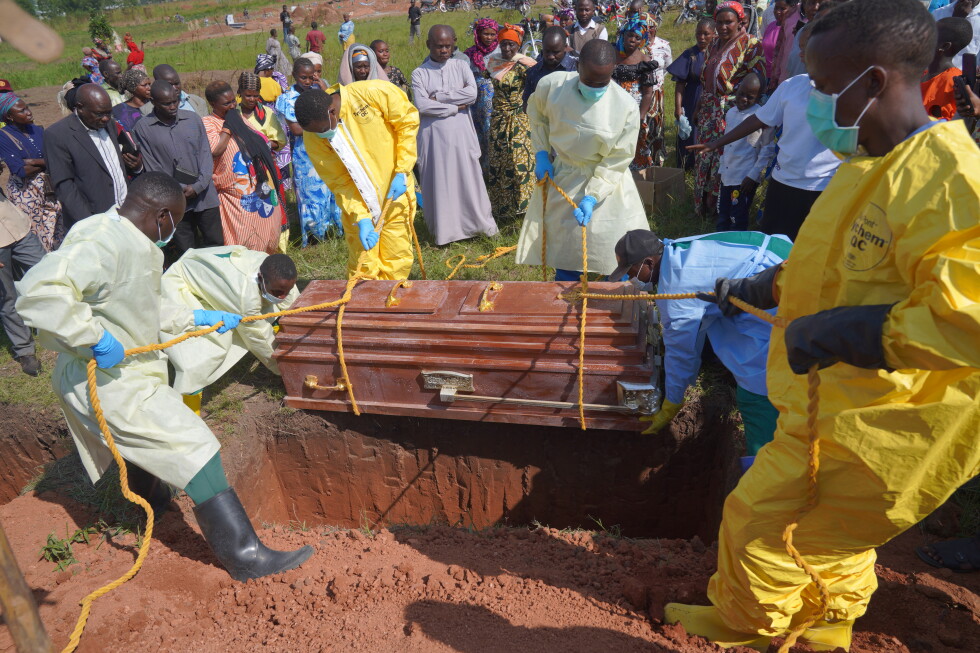
    What makes this outbreak particularly challenging for global and local health authorities is the deep-seated skepticism and rampant misinformation that has taken root in many local communities. Many residents reject the existence of the outbreak entirely, while others fiercely oppose the strict burial protocols health workers implement to limit viral spread after an Ebola death. This resistance has erupted into open violence: Marie Roseline Darnycka Belizaire, the World Health Organization’s emergency director for Africa, confirms that more than 520 separate incidents have disrupted health worker operations, including at least three targeted attacks on health centers in Ituri alone, sparked by resident demands for the return of deceased patients’ bodies.

    Organizers of the awareness caravan say that engaging local motorcycle taxi drivers is a strategic response to this violence. These drivers are embedded in daily community life, regularly transporting both sick and healthy residents across towns and rural areas, making them trusted messengers for accurate public health information. “Response teams have been attacked in some areas, and that is one reason why we chose to involve motorcycle taxi drivers,” explained Jacques Maliro, WHO’s Risk Communication and Community Engagement Officer and a lead organizer of the campaign. “They are an important group because they transport both sick and healthy people, so they too need to be informed and engaged.”

    Misinformation has discouraged residents from following life-saving public health guidelines and seeking early medical care, officials say. At the start of the outbreak, some local churches even told congregations that Ebola is a hoax, and that divine faith eliminates the need for professional medical care. For Josue Mbabona, one of the motorcycle drivers participating in the caravan, the outbreak is a devastating personal reality: he has already lost three family members to the virus. “Those who do not believe in it need to understand that it is real,” Mbabona said.

    The outbreak response has been hampered by multiple overlapping crises beyond community resistance. Decades of ongoing conflict involving dozens of separate rebel and militant groups — some linked to neighboring Rwanda and the extremist Islamic State — have left many rural communities completely cut off from outside aid, leaving frontline health workers unable to access at-risk populations. Frontline workers also face grueling conditions, laboring for long hours with little pay and almost no rest. Critical supply shortages further complicate response efforts: this week, local residents and officials in Bunia reported widespread shortages of clean water for the frequent handwashing public health officials recommend to slow viral transmission.

    Complicating matters further, the current outbreak is caused by the rare Bundibugyo Ebola strain, which lacks any approved vaccine or targeted treatment — a key difference from the more common Zaire strain that has caused most of the 16 previous Ebola outbreaks recorded in Congo. Currently, three vaccine candidates are in active development, and Africa’s top public health agency announced last month that it aims to roll out approved vaccines and treatments for Bundibugyo virus by the end of 2024. For residents in affected areas, the urgent need for a vaccine is clear: “The vaccine needs to be available so that we can protect ourselves, move forward, and return to normal life,” said David Kasimwa, a student who joined the awareness caravan. “This disease has disrupted many activities: We are no longer able to travel freely because we are afraid,” he added.

    The outbreak has already triggered international policy shifts: multiple countries have implemented new travel restrictions and enhanced entry screening for travelers arriving from affected regions, though the World Health Organization has repeatedly declined to recommend broad, region-wide travel bans. On Tuesday, U.S. Secretary of State Marco Rubio called on European nations to tighten their own entry restrictions for travelers from affected African countries, warning that failure to act could result in stricter U.S. entry requirements for all travelers arriving from Europe — even during the upcoming FIFA World Cup. There are very few direct daily flights between Africa and the United States, but more than 300 direct flights connect Europe and the U.S. on a daily basis.

  • Trump: ‘I love the inflation’

    Trump: ‘I love the inflation’

    In a stunning, unscripted remark that sent ripples through political and economic circles, former U.S. President Donald Trump publicly declared “I love inflation,” a comment that defies mainstream economic consensus and contradicts decades of political messaging around price stability. The unusual statement comes as American households continue to grapple with persistent cost-of-living increases that have eroded purchasing power for low- and middle-income families across the country. In the same public appearance, Trump dropped another unanticipated bombshell regarding U.S. energy policy toward Iran, confirming that the United States has been extracting millions of barrels of oil from Iranian reserves without Tehran’s awareness until his public disclosure. “Tehran didn’t know until right now,” Trump stated, confirming the unannounced action that escalates long-running tensions between Washington and Tehran. Foreign policy experts have already raised alarms over the reveal, noting that unacknowledged seizure of energy resources risks amplifying regional instability in the Middle East and could prompt retaliatory measures from Iran that roil global energy markets. The dual comments have drawn sharp criticism from economic analysts who point to widespread public hardship linked to high inflation, as well as from national security specialists who warn that public disclosure of covert operations undermines strategic messaging and puts U.S. interests at greater risk in the region.

  • Rights groups call for release of detained pro-Gaza activists in Libya

    Rights groups call for release of detained pro-Gaza activists in Libya

    Nearly two months after 10 international pro-Palestinian activists were taken into custody by forces loyal to prominent Libyan military commander Khalifa Haftar in eastern Libya, global human rights organizations are escalating calls for their immediate and unconditional release. The activists, who hail from Spain, Poland, the United States, Argentina, Uruguay, Portugal, Tunisia and Italy, were arrested in late May while participating in the Global Sumud Convoy, a grassroots humanitarian initiative organized to deliver critical assistance to the blockaded population of the Gaza Strip.

    Of the 200 activists that made up the cross-border convoy, all but 10 were forcibly deported from eastern Libyan territory following the operation by the Libyan Arab Armed Forces (LAAF), Haftar’s primary military wing. In protest of their arbitrary detention and repeated denial of access to legal counsel and family communications, the 10 detainees launched a hunger strike that ran from June 1 through at least June 4, according to public statements from rights monitors.

    Amnesty International has confirmed that the activists are currently being held in pre-trial custody as investigators pursue charges of “unauthorized assembly.” If convicted on these counts, the campaigners could face up to six months of prison time and substantial financial fines. Mahmoud Shalaby, regional researcher for Amnesty International, issued a harsh rebuke of the detentions, describing the targeting of Gaza-focused humanitarian campaigners on what he called “bogus charges” as outright disgraceful.

    “No one should be punished for undertaking peaceful humanitarian action and trying to stop human rights abuses,” Shalaby said in an official statement. He added that the LAAF must not only release the activists immediately and without preconditions, but also grant them prompt, regular access to family members, their respective consular representatives, legal teams and any necessary medical care while they remain in custody.

    The detentions unfold against a backdrop of longstanding political division that has fractured Libya since the 2011 NATO-backed overthrow of longtime authoritarian ruler Muammar Gaddafi. Today, the country is split between two competing centers of power: a UN-backed unity government based in the capital Tripoli that controls western Libya, and Haftar’s self-governing administration in the east, which is backed by regional allies including the United Arab Emirates and Egypt.

    The Global Sumud Convoy, a land-based initiative connected to the high-profile sea flotillas that have long challenged Israel’s blockade of Gaza, was first launched by North African activists before drawing international participants. The convoy carried a substantial cache of humanitarian supplies: seven ambulances, 20 mobile housing units, 10 aid trucks, and it included among its participants medical professionals, engineers, educators and independent legal observers.

    After entering the 5+5 security zone near the contested coastal city of Sirte – a buffer zone established under the terms of Libya’s October 2020 national ceasefire agreement – the group was intercepted by LAAF forces. The activists had entered the zone in hopes of negotiating safe passage to continue their journey toward Gaza.

    While many participants and observers have praised the convoy’s core mission of breaking the 17-year Israeli blockade on Gaza and highlighted the organizers’ unwavering commitment to the humanitarian cause, some veteran activists who have taken part in previous Gaza solidarity initiatives argue the mission suffered from critical planning oversights that led to the current crisis.

    Felipe, a 29-year-old Chilean-Palestinian activist who has participated in multiple previous sea-based Gaza flotillas, told Middle East Eye that the convoy’s leadership bore partial responsibility for the detention outcome. During the group’s two-week stay in Tripoli prior to entering eastern Libya, Felipe said it became increasingly clear that organizers had made little to no contingency plans for the risk of detentions or armed confrontation with LAAF forces.

    “If we were not able to go through east Libya, we should not have kept pressuring them because we were going to shift the narrative from Israel to Libya,” Felipe explained. “We were waiting in the desert for nine days doing nothing.”

  • SpaceX’s historic IPO by the numbers

    SpaceX’s historic IPO by the numbers

    As Elon Musk’s aerospace and technology conglomerate SpaceX prepares for its long-awaited initial public offering on the public stock markets this Friday, industry analysts and investors across the globe are already calling it the most influential debut in modern IPO history. The landmark listing is poised to reshape how the public and financial community view private space innovation, with a series of staggering key numbers underscoring its unprecedented scale.

    At the top of the list is the $75 billion capital raise target SpaceX has set for the new share offering. That figure is three times larger than the previous global IPO record, which was set by Saudi energy giant Saudi Aramco when it went public in 2019 with a $25.6 billion raise.

    Based on pre-IPO pricing, the company’s total market valuation comes in at $1.765 trillion. This valuation includes two of Musk’s other high-profile ventures that SpaceX absorbed back in February: his artificial intelligence startup xAI and the X social media platform, formerly known as Twitter. If the valuation holds after listing, SpaceX will secure its spot as the eighth most valuable publicly traded company on the planet, slotting in just behind the world’s largest tech giants.

    Looking back at the company’s 2025 operational performance, SpaceX posted total annual revenue of $18.6 billion, representing a 33% year-over-year increase. A majority of that revenue, 61% to be exact, came from Starlink, SpaceX’s satellite internet constellation that delivers broadband connectivity to residential and commercial users around the world from low Earth orbit.

    Despite that strong top-line growth, SpaceX reported a net loss of $4.9 billion for 2025. The deficit stems from the company’s aggressive capital spending, particularly on its AI development initiatives, which absorbed nearly $10 billion in expenditures over the past year alone. Industry observers note that operating losses are not an indicator of failure for high-growth technology firms; they often reflect large-scale strategic investment in long-term expansion and product development.

    For Musk personally, a successful IPO could deliver a historic milestone. Currently, Forbes estimates Musk’s total personal net worth at $791 billion. If SpaceX’s share price rises in line with optimistic projections after listing, he will become the first trillionaire in recorded human history.

    In terms of corporate control, Musk will retain an 82% stake in SpaceX’s voting rights after the IPO. While new public investors will hold minority equity stakes, the company’s structure of special “super-voting” shares allows Musk to keep nearly complete decision-making authority – a common arrangement for tech companies founded by high-profile entrepreneurs who want to retain long-term strategic control.

    Finally, SpaceX has projected that the cumulative total value of all the markets it operates across – including commercial launch services, satellite internet, artificial intelligence, and private space exploration – amounts to $28.5 trillion. To put that figure in context, the entire United States’ total gross domestic product for 2025 was approximately $30.36 trillion, highlighting the massive long-term growth opportunity the company is targeting.

  • Norm-breaking SpaceX IPO a source of elation, angst on Wall Street

    Norm-breaking SpaceX IPO a source of elation, angst on Wall Street

    Elon Musk’s aerospace and technology firm SpaceX is on the cusp of making financial history this week, as its nontraditional initial public offering (IPO) prepares to break industry records while dividing Wall Street between enthusiastic bulls and skeptical bears. The highly anticipated listing, which is set to close investor orders on Wednesday, finalize pricing on Thursday, and begin trading on the Nasdaq exchange this Friday, is on track to become the largest IPO in global market history if it hits its fundraising target of $75 billion.

    Market observers report overwhelming early investor demand for SpaceX shares, far outpacing already elevated expectations for the offering. With more than 555 million shares priced at an expected $135 each, the company is targeting a valuation of roughly $1.8 trillion, which would place it among the most valuable public companies in the United States. Unlike most traditional IPOs that reserve less than 10% of shares for retail investors, around one-third of SpaceX’s offering is allocated to everyday market participants, many of whom are long-time supporters of Musk.

    Industry analysts attribute the massive hype surrounding the IPO to two key factors: Musk’s reputation as a visionary tech entrepreneur, and the public’s enduring fascination with space exploration. “No question that there is a ton of hype around it. Nothing captures the imagination like space,” noted Matthew Kennedy, a strategist at Renaissance Capital. Eva Ardos, chief investment strategist at ERShares which holds pre-IPO SpaceX shares, called the level of excitement around the offering “unlike anything else we’ve seen before in the IPO market.” Kim Forrest, chief investment officer at Bokeh Capital Partners, added that Musk’s well-honed marketing acumen has given SpaceX a unique “cool factor” that sets it apart from other large tech listings.

    After the IPO, Musk will retain more than 82% of the company’s voting power, locking in his full control over the firm’s long-term strategic direction. That means the entire $1.8 trillion valuation rests entirely on investor confidence in Musk’s ability to deliver on his ambitious goals, which include building a permanent colony on Mars, orbiting space-based data centers, and scaling up the company’s artificial intelligence operations that recently merged with Musk’s xAI.

    While excitement runs high, many market analysts and fund managers have raised pointed questions about SpaceX’s path to profitability. The company reported $18.7 billion in 2025 revenue, a 33% year-over-year increase, but still posted a net loss of $4.9 billion for the year. While the company’s mature Starlink satellite internet division is widely expected to turn consistent profits long-term, its large-scale investments in cutting-edge AI and next-generation rocket development are projected to continue producing significant losses for years to come.

    Independent research firm Morningstar has estimated SpaceX’s fair value at roughly $780 billion, less than half the $1.8 trillion valuation the company is targeting. Some critics have even questioned whether the outsized allocation to retail investors is a deliberate attempt to offload a speculative asset to Musk’s loyal but inexperienced follower base. “Is this true democratization, the likes of which have never been seen on Wall Street before? Or is it a cynical attempt to unload an extraordinarily expensive and highly speculative venture on a gullible public?” asked David Morrison, senior market analyst at Trade Nation. Forrest, for her part, has already ruled the stock out for her firm’s portfolios.

    Even with these concerns, many analysts note that recent multi-billion-dollar AI infrastructure contracts with Google and AI startup Anthropic provide a solid near-term revenue foundation that could support the valuation. Beyond SpaceX itself, the outcome of this IPO is widely seen as a bellwether for the broader IPO market, particularly for high-profile unlisted tech firms including Anthropic and OpenAI, which are preparing for their own public offerings in the near future.

    “This has a real possibility of chilling IPO issuance if SpaceX performs poorly, or kicking off a new IPO rebound if it trades well,” Kennedy explained. Peter Cardillo, chief market economist at Spartan Capital Securities, added that strong investor uptake would signal broad market confidence in long-term tech innovation, saying “if people are willing to pay that price and invest for the future, that’s a good sign for the market.”

  • Brother’s memory inspires Williams for World Cup opener

    Brother’s memory inspires Williams for World Cup opener

    Football has long served up moments of poetic, unexpected coincidence, and for South Africa national team captain Ronwen Williams, the 2026 FIFA World Cup will deliver one of the most remarkable such occasions. When Bafana Bafana steps onto the pitch for the tournament’s opening match against co-hosts Mexico in Mexico City’s iconic Estadio Azteca, it will mirror the opening fixture of the 2010 World Cup – the tournament that marked South Africa’s historic first time hosting football’s biggest global event.

    For Williams, this opening match carries far more personal weight than just a poetic callback to 2010. Just two months before the 2010 World Cup kicked off on home soil, the 18-year-old emerging goalkeeper lost his older brother Marvin in a devastating car crash. Grief-stricken, Williams briefly considered walking away from the sport he loved entirely. Now, 16 years later, that choice to stay in the game has led him to this unprecedented moment: leading his country out as captain in the opening match of the world’s most-watched sporting tournament.

    In an interview with BBC World Service’s Newsday, Williams opened up about the overwhelming emotion of the opportunity. “He had so much high hopes for me,” Williams said of his brother. “To know I’ll be leading out my team in the opening game, I can’t put it into words. It gives me chills. Sometimes I find myself just laying at night thinking about it. I always say the two most important games at the World Cup are the opening and the final, and Bafana Bafana is going to be part of one.”

    While the loss of his brother left a permanent gap, Williams has been surrounded by unwavering family support throughout his rise. He recalled the intimate family celebration after Belgian head coach Hugo Broos named him captain shortly after taking the role in 2021, saying the joy and pride his family felt then has only multiplied exponentially ahead of the 2026 tournament. Broos, a 74-year-old veteran manager who won the 2017 Africa Cup of Nations with Cameroon, inherited a South African side in the doldrums when he took over. His first major decision was naming Williams skipper, and the pair have since orchestrated a remarkable turnaround for Bafana Bafana: a third-place finish at the 2023 Africa Cup of Nations, and a top spot in their 2026 World Cup qualifying group that booked South Africa’s fourth ever appearance at the tournament.

    Williams credits Broos with rebuilding not just the team, but the nation’s belief in Bafana Bafana. “Broos has united the country after bringing belief and love back to the team and South Africa itself,” Williams explained. “Two, three years ago we were crying for supporters to come out and support us. And he mentioned that it goes hand in hand with performance, with results. When we started picking up the results, that’s when the belief came back. Now people can’t wait for Bafana Bafana to play. Buying our merch, sending us the well wishes. He’s been amazing, exceptional.”

    Despite the momentum behind the team, Williams remains grounded as South Africa prepares for Group A play against Mexico, Czech Republic and South Korea. The team have never advanced past the group stage in their three previous World Cup appearances, even picking up four points in both the 2002 and 2010 tournaments. For the expanded 48-team 2026 tournament co-hosted by Canada, Mexico and the United States, just making it to the knockout round (the last 32) would mark a historic milestone for South African football. Williams says his team’s priority is clear: “I think we need to be realistic about our chances. The most important thing is to get out of the group. The mentality that we need to have is: can we compete? Can we show up? Can we perform?”

    Williams, who also captains South African club side Mamelodi Sundowns to a recent CAF Champions League title, has built his reputation as a formidable penalty saving specialist – a skill that could prove critical if South Africa advances to a knockout round. At the 2023 Afcon, he delivered two legendary shootout performances: saving four out of five penalties against Cape Verde in the quarterfinals, then two more against DR Congo in the third-place playoff, cementing his team’s best continental finish since 2000. Those performances earned him the 2024 African Goalkeeper of the Year award and a surreal nomination for the prestigious Yashin Award at the Ballon d’Or ceremony.

    Far from shying away from the pressure of penalty shootouts, Williams embraces the moment. “I enjoy it. There’s no pressure on the goalkeeper,” he said. “You analyse, you watch. When it comes to penalty shootouts, I try and pick up a lot of trends. Sometimes it goes with just the feeling that you have on the field. Penalties present a moment to shine.”

    He cites 2022 World Cup champion Emiliano Martinez as a major influence, calling the Argentine goalkeeper a hero for his decisive shootout performance in the 2022 final. While Martinez’s gamesmanship drew criticism, Williams notes that goalkeepers have always had a different mindset than outfield players. “You have to be [a bit different],” he explained. “Diving at someone’s feet, saving a ball that’s coming, I don’t know at what speed, it’s not normal. You need to be a bit crazy. Most goalkeepers are the jokesters in the team.”

    Williams also pushes back on the common football cliche that goalkeepers make poor captains, arguing that modern rules allow keepers to assign an on-field player to handle quick discussions with referees, eliminating the inefficiency critics point to. For Williams, captaincy is a role he was born for: he describes his leadership style as bringing “stability” to the squad, calling himself the “glue” that holds the team together – a role he has filled since he started playing in local leagues as a young boy. “I think that I was made for it. I cherish the captaincy, the responsibility that comes with it,” he said.

    When Williams walks out onto the Estadio Azteca pitch in front of 73,000 fans for the 2026 World Cup opener, all eyes will be on the South African captain. It will be the culmination of 16 years of perseverance through grief, doubt, and hard work – and a chance to finally write the new chapter of South African football that Williams has spent his entire career working toward.

  • Israeli settlers attack Christian village as West Bank violence escalates

    Israeli settlers attack Christian village as West Bank violence escalates

    In a fresh escalation of ongoing settler violence across the Israeli-occupied West Bank, Israeli settlers targeted the ancient Palestinian Christian village of Taybeh early Tuesday, setting fire to swathes of local agricultural land. Local sources confirmed no casualties were reported in the overnight incursion, which took place in areas adjacent to the village, located east of Ramallah. This attack marks the latest in a string of repeated assaults on Taybeh that has stretched over months, triggered by the construction of a new Israeli settlement on land the village has long claimed.

    Taybeh is no stranger to such violence. Last year, settlers set fire to the village’s centuries-old Church of Saint George and its adjacent historic graveyard, an act that drew rare public criticism from Mike Huckabee, the U.S. ambassador to Israel — a well-known vocal advocate for expanding Israeli settlements in the occupied territories. Even after that rebuke, however, attacks on the majority-Christian community have continued unabated. Tuesday’s assault also included settlers opening fire on residential homes and throwing incendiary Molotov cocktails, according to on-the-ground reports shared by Middle East Eye.

    Established more than 3,000 years ago during the Canaanite period, Taybeh counts roughly 1,340 residents, 90 percent of whom identify as Christian, per 2017 census data from the Palestine Central Bureau of Statistics. The village’s fertile, expansive grazing lands have long supported a local economy centered on sheep herding, but this valuable land has also drawn aggressive encroachment from Israeli settlers, who have steadily seized village territory with the explicit backing of the Israeli military.

    While settler violence against Palestinian communities has been a persistent reality in the occupied West Bank for decades, experts and international bodies have documented a dramatic, unprecedented surge in attacks since the start of the 2023 Gaza war. Today, settlers carry out near-daily assaults across the region, ranging from property vandalism and arson to forced displacement of Palestinian communities and violent physical attacks, many of which involve the use of firearms.

    Coinciding with Tuesday’s attack on Taybeh, the UN Independent International Commission of Inquiry on the Occupied Palestinian Territory released a landmark report detailing the sharp, sustained escalation of settler violence that has put Palestinian communities at severe risk. The commission’s investigation concludes that the Israeli government directly facilitates these attacks through a combination of direct funding, logistical support, and military protection for settlers.

    “Violence by settlers is the direct outcome of Israeli policies that support, enable and protect their actions,” said Srinivasan Muralidhar, chair of the UN commission, in a statement accompanying the report. “The relentless, daily assaults by Israeli settlers against Palestinians are intolerable – and must end. Israel must stop supporting this violence and ensure that its security forces safeguard the Palestinian civilian population.”

    The report’s data underscores the severity of the crisis: in 2025 alone, Israeli settlers killed seven Palestinians and injured 832 more, representing a 130 percent increase in casualties compared to 2024. This deadly trend has continued into 2026, with attacks occurring on an almost daily basis. Data from the Palestinian Authority’s Colonization and Wall Resistance Commission puts the total death toll from settler violence at 50 Palestinians since October 2023, 15 of which have occurred in the first half of 2026.

    The UN commission also found that Israeli judicial and law enforcement bodies routinely grant settlers impunity for violent acts against Palestinians, enabling the cycle of violence to continue without accountability. The commission’s final recommendation calls for unified international action to pressure Israel to comply with its obligations under international law, including immediate decisive steps to dismantle illegal settlements and outposts and bring an end to settler violence permanently.