作者: admin

  • Kenya signs landmark health deal with US despite data fears

    Kenya signs landmark health deal with US despite data fears

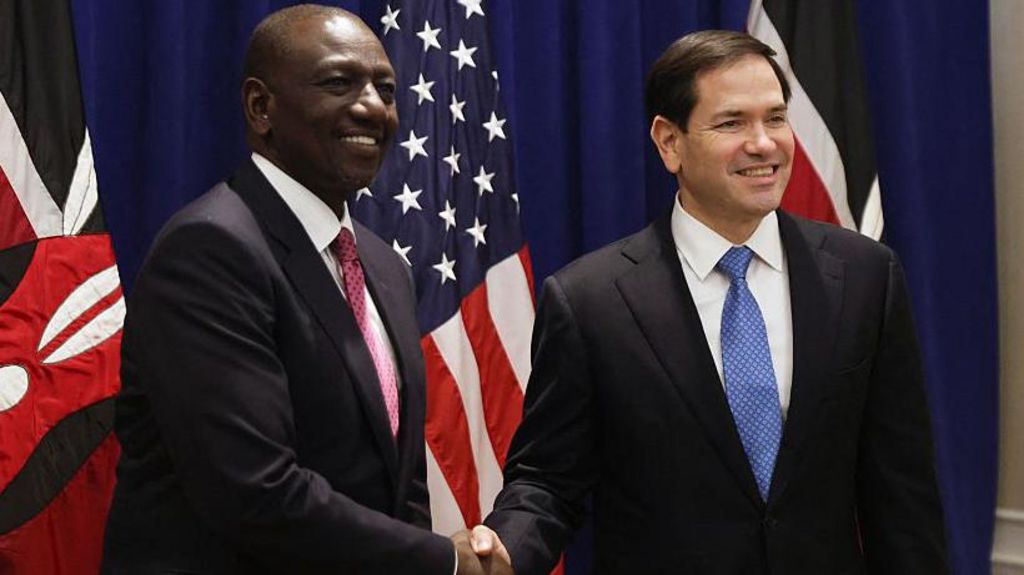
    In a significant departure from traditional aid models, the United States and Kenya have formalized a groundbreaking five-year health agreement valued at $2.5 billion. This pact represents the inaugural implementation of the Trump administration’s restructured foreign assistance approach, which prioritizes direct government-to-government partnerships over conventional channels.

    The comprehensive health initiative allocates $1.7 billion from US contributions alongside Kenya’s $850 million commitment, establishing a framework where Nairobi will progressively assume greater financial responsibility. The collaboration specifically targets HIV/AIDS, malaria, tuberculosis prevention and treatment, alongside maternal healthcare, polio eradication, and infectious disease outbreak preparedness.

    US Secretary of State Marco Rubio, during the signing ceremony with Kenyan President William Ruto, emphasized the strategic nature of the partnership, acknowledging Kenya as a “longstanding American ally” and praising its international contributions, particularly regarding peacekeeping operations in Haiti. The agreement forms part of the broader “America First Global Health Strategy” introduced in September, which conditions assistance on bilateral negotiations aimed at reducing perceived inefficiencies in traditional aid distribution.

    Despite official assurances, the arrangement has generated substantial debate regarding data privacy protections. Concerns have emerged that the partnership might grant US authorities access to sensitive Kenyan health databases containing patient information. Health Minister Aden Duale has actively addressed these apprehensions, clarifying that only de-identified, aggregated data would be shared under strict adherence to Kenyan legal protections.

    The agreement emerges against the backdrop of substantial reductions in US foreign aid, including the dismantling of USAID and billions in assistance cuts to developing nations initiated during Trump’s first presidential day. These reductions have previously triggered medication shortages across multiple recipient countries.

    US officials indicate this Kenya arrangement serves as a prototype for similar health partnerships with other African nations aligned with US foreign policy objectives, with additional agreements anticipated before year’s end.
  • Flying Tigers legacy honoured in California

    Flying Tigers legacy honoured in California

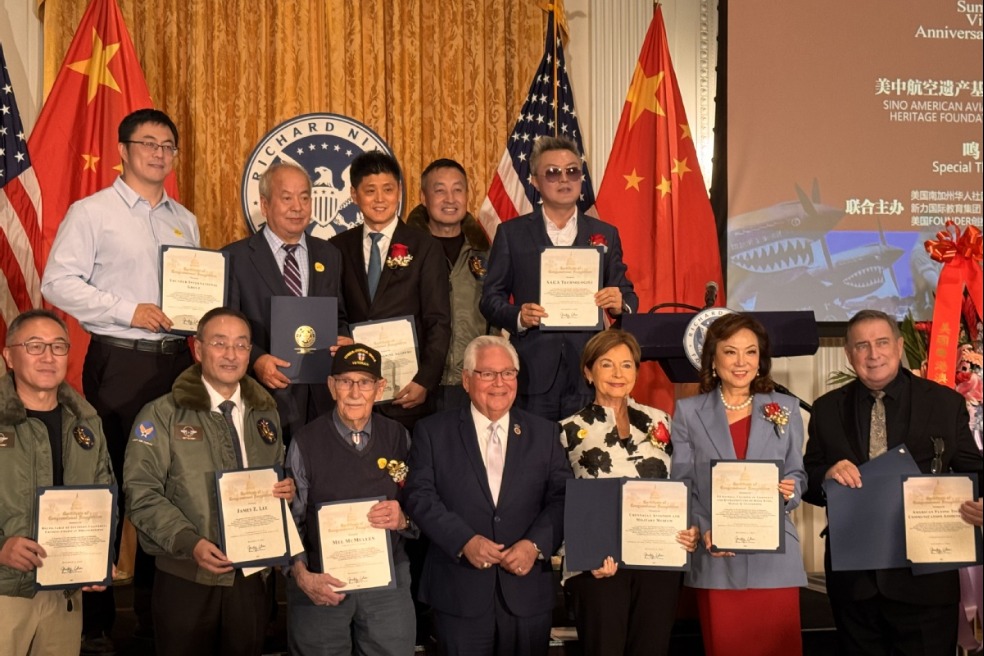
    YORBA LINDA, California — A significant gathering at the Richard Nixon Presidential Library and Museum this week paid tribute to the legendary Flying Tigers, commemorating the 80th anniversary of World War II’s conclusion and reflecting on pivotal moments in Sino-American relations. The event brought together descendants of veterans, community leaders, and officials who emphasized the enduring relevance of wartime cooperation between the nations.

    Nell Chennault Calloway, granddaughter of Flying Tigers commander General Claire Lee Chennault, addressed attendees with a powerful message about historical guidance. “History is our best guide. It records our past and offers inspiration for the future,” she stated, connecting the Flying Tigers’ legacy to President Nixon’s groundbreaking 1972 China visit and the subsequent normalization of relations under President Carter.

    Calloway highlighted Nixon’s famous toast to Premier Zhou Enlai, noting that despite differences, common interests continue to transcend divisions. “The relationship between our two countries remains the most important bilateral relationship in our world today,” she asserted, urging remembrance of sacrifices made by soldiers, civilians, and diplomats during WWII.

    Jeffrey Greene, chairman of the Sino-American Aviation Heritage Foundation, elaborated on the historical significance of the Flying Tigers’ campaign. “What happened in China 80 years ago brought the two nations close together in a way that no other event could,” Greene told the assembly. He recounted the bravery of American volunteer pilots and Chinese civilians who rescued downed airmen despite facing deadly retaliation.

    California State Senator Bob Archuleta framed the Flying Tigers’ story as a contemporary lesson for global challenges. “History proves that we can accomplish more through cooperation than conflict, and through mutual respect rather than division,” he stated, emphasizing the importance of people-to-people diplomacy.

    The commemoration also honored centenarian Flying Tigers veteran Mel McMullen and Zhang Sujiu, daughter of China’s “Peace General” Zhang Zhizhong, recognizing them as living connections between historical cooperation and present possibilities.

    The event was jointly organized by the American Flying Tigers Communication Association, the Sino-American Aviation Heritage Foundation, and the Chennault Aviation and Military Museum, serving as a poignant reminder of what bilateral cooperation can achieve when nations choose partnership over confrontation.

  • Why Somali migrants may still aim for US despite travel restrictions

    Why Somali migrants may still aim for US despite travel restrictions

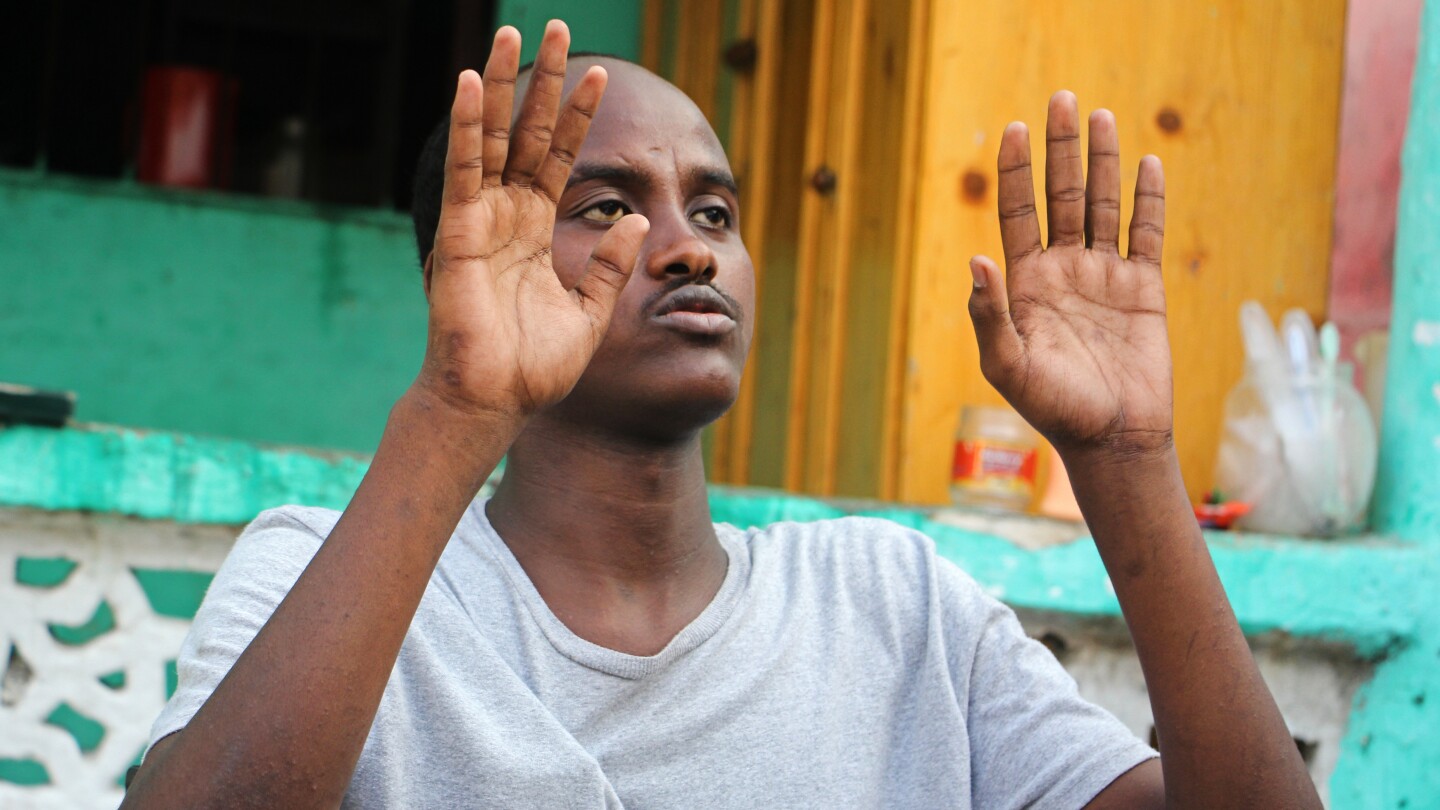
    MOGADISHU, Somalia — Mohamed Abdi Awale’s harrowing quest for a better life in Western nations culminated in unimaginable suffering, yet his resolve remains unbroken. Recently repatriated from Libya among 165 Somali migrants, Awale represents the countless individuals risking everything despite increasingly restrictive immigration policies.

    Awale’s 5,000-kilometer odyssey began in Mogadishu, traversing Kenya, Uganda, South Sudan, and Sudan before his capture near the Sudan-Libya border. In the Sahara oasis town of Kufra, smugglers subjected him to systematic torture, filming the brutality to extort $17,000 from his desperate family. “Torture became normal,” Awale recounted. “They beat you until you fainted. Some people lost their minds. Others didn’t survive.”

    His mother, Hawo Elmo Rage, turned to social media when confronted with the ransom demand, pleading with the global Somali diaspora to save her son. “They told me to send the money or they would take his life,” she explained.

    After his release, Awale’s ordeal continued as his vehicle broke down en route to the Mediterranean coast, forcing a grueling two-week trek through the desert where starvation and dehydration nearly claimed their lives. Subsequent detention in Libyan prisons near Sirte and Tripoli preceded his eventual repatriation in November.

    Awale joins approximately 3.5 million internally displaced Somalis and hundreds of thousands who have fled the country’s three-decade civil war. While most refugees remain in neighboring countries like Kenya, many aspire to reach Western nations despite mounting obstacles.

    The Trump administration’s travel ban targeting Somalia and eleven other nations, implemented in June, forced Awale to redirect his ambitions toward Europe. Additional restrictions announced this week further complicate immigration prospects for Somalis. Despite these barriers and anti-immigrant rhetoric from the White House, Awale clings to his childhood dream of eventually reaching the United States. “My dream was America, but I felt like Trump closed that door,” he reflected. “Maybe after Trump’s term ends.”

    His mother, while fearful for his safety, acknowledges his pursuit of opportunity: “I want him to stay. But I know he wishes for a better life. I pray God gives him a safe future—not the dangerous one he found.”

  • Football players and officials arrested as part of probe into Turkey’s betting scandal

    Football players and officials arrested as part of probe into Turkey’s betting scandal

    Turkish football faces its most significant integrity crisis in years as Istanbul prosecutors launched sweeping arrests targeting prominent figures across the sport’s hierarchy. Early morning raids on Friday resulted in 35 detentions from a list of 46 suspects, including players from Turkey’s most celebrated clubs.

    The investigation has ensnared high-profile athletes including Fenerbahce’s Mert Hakan Yandas and Metehan Baltaci of reigning champions Galatasaray. Prosecutors revealed that Baltaci, an international youth team alumnus, had wagered on matches involving his own team, while Yandas allegedly placed bets through intermediaries.

    Club management figures were equally impacted, with arrests including Ankaraspor’s chairman, Antalyaspor’s vice-chairman, and former leadership of Adana Demirspor. The net also caught media personalities and officials, with renowned commentator and former referee Ahmet Cakar and active referee Zorbay Kucuk among those detained.

    The probe originated in October when the Turkish Football Federation initiated scrutiny of over 150 referees suspected of sports betting. The investigation rapidly expanded to encompass players, administrators, and broadcasting professionals, resulting in temporary bans for more than 100 players last month, including 25 from the top division.

    Financial analysis played a crucial role in the investigation, with seven suspects detained specifically after authorities identified suspicious transaction patterns in their banking records. All arrests were conducted under Turkey’s law for preventing disorder in sports, which criminalizes competition manipulation with penalties ranging from one to three years’ imprisonment—enhanced when offenses connect to betting markets involve officials or affect professional leagues.

    Both UEFA and FIFA regulations explicitly prohibit betting by players, referees, and club officials on any football matches worldwide. Turkish Football Federation president Ibrahim Haciosmanoglu has pledged comprehensive reforms, vowing to protect the sport from ‘scandal, decay and corrupt relationships’ through rigorous enforcement actions.

  • Full moon seen across China

    Full moon seen across China

    China Daily Information Co (CDIC) has reinforced its copyright protection measures, asserting exclusive ownership over all content published across its digital platforms. The comprehensive notice explicitly prohibits unauthorized republication or utilization of any materials—including textual articles, photographic images, and multimedia information—without obtaining formal written consent from CDIC.

    The company specifies technical requirements for optimal user experience, recommending display resolutions of 1024*768 or higher for proper content rendering. CDIC maintains multiple regulatory credentials, including Online Multimedia Publishing License 0108263 and Registration Number 130349, underscoring its compliance with China’s digital content regulations.

    Beyond content protection protocols, the notice provides organizational information regarding career opportunities—specifically highlighting expatriate employment positions—and invites potential advertising partnerships. The company encourages audience engagement through designated follow channels while maintaining structured communication protocols for general inquiries and business development.

  • Expo on AI machines, electronics opens in Macao, pursuing global opportunities

    Expo on AI machines, electronics opens in Macao, pursuing global opportunities

    MACAU – The 2025 Global Artificial Intelligence Machines and Electronics Expo (AIE) commenced Thursday in Macao, positioning the special administrative region as a crucial nexus for international technological collaboration. The landmark event, running concurrently in Macao and neighboring Zhuhai in Guangdong Province, has attracted participation from more than 1,000 domestic and international enterprises alongside buyers representing over 30 countries and regions.

    The expo’s strategic focus emphasizes strengthening cooperative ties within the Guangdong-Hong Kong-Macao Greater Bay Area while simultaneously creating pathways for global market integration. A highlight of the event is the Macao Innovation and Technology Pavilion, which brings together more than 50 local companies and four universities to demonstrate cutting-edge research and commercial applications across artificial intelligence, smart healthcare, and Internet of Things technologies.

    Wang Ning, President of the China Electronics Chamber of Commerce which organized the event, characterized the expo as an emerging global platform for electronic products and intelligent manufacturing. “This gathering facilitates essential connections that allow participants to integrate into worldwide industrial supply chains while fostering meaningful international partnerships,” Wang stated during an interview.

    The four-day event, which continues through Saturday, features extensive exhibition spaces showcasing humanoid robots, automated systems, and next-generation electronics. Visitors have been engaging with interactive displays, including photo opportunities with advanced humanoid robots that represent the forefront of AI embodiment technology. Industry analysts view the event as a significant milestone in Macao’s ongoing transformation into a technology and innovation hub within the Greater Bay Area’s comprehensive development strategy.

  • UAE schools warn long winter break could lead to ‘learning regression’

    UAE schools warn long winter break could lead to ‘learning regression’

    Educational leaders across the United Arab Emirates are raising concerns about potential academic setbacks during the country’s extended winter vacation period. With students embarking on a four-week break from December 8, 2025, to January 4, 2026, school administrators emphasize the delicate balance between necessary rest and maintaining educational momentum.

    Principals from multiple institutions have expressed that while downtime is crucial for student wellbeing, complete academic disengagement can result in significant learning regression. Research indicates that prolonged breaks may cause students to lose approximately 20-30% of their term gains in fundamental subjects like mathematics and literacy.

    Natalia Klykova, Principal of Woodlem British School in Ajman, explained their balanced approach: “We deliberately avoid traditional homework assignments, instead providing optional, curiosity-driven activities. These include brief daily reading sessions, practical kitchen measurements, nature observation journals, and pattern recognition exercises.”

    At Gems Founders School in Dubai, Executive Principal Matthew Burfield referenced OECD findings documenting measurable declines in academic achievement following extended holidays. “While we make digital learning platforms available,” Burfield noted, “we respect family diversity and avoid imposing rigid frameworks during vacation time.”

    Curriculum specialists advocate for “low-pressure academic continuity” through simple daily routines. Shanthi Subramanian, Head of Curriculum at The Oxford School Dubai, recommends integrating education into everyday activities: “Reading for pleasure for 10-15 minutes daily, involving children in budgeting and measurement tasks, and engaging educational board games can maintain cognitive engagement without pressure.”

    Schools are preparing for a supportive return in January 2026, implementing soft-start days, structured revision sessions, and wellbeing check-ins to help students readjust over an anticipated three-to-five day transition period.

  • Security experts say India made ‘right call’ in dropping mandatory rollout of govt app

    Security experts say India made ‘right call’ in dropping mandatory rollout of govt app

    In a significant policy reversal, the Indian government has abandoned its controversial plan to mandate smartphone manufacturers to preinstall the state-developed Sanchar Saathi cybersecurity application. The decision follows substantial public outcry and expert warnings about potential privacy violations and security vulnerabilities associated with forced installation.

    The Sanchar Saathi platform, developed by India’s Department of Telecommunications, was designed to combat mobile-related crimes by enabling users to block lost or stolen devices, verify mobile device authenticity, and monitor SIM cards registered under their identity. The system integrates with national telecom databases to address SIM-swapping fraud and identity theft crimes.

    Cybersecurity experts universally praised the government’s reversal while acknowledging the application’s legitimate security purposes. Agam Chaudhary, Founder and CEO of Two99, explained that preinstalled applications typically operate with privileged system-level access that users cannot revoke, creating potential backdoors for unauthorized data collection. ‘In cybersecurity, control equals safety,’ Chaudhary emphasized. ‘The less control a user has over their own device, the more fragile the ecosystem becomes.’

    Technical analysis revealed the application required extensive permissions including access to call logs, SMS messaging capabilities, camera functions, device storage, and network connectivity. Morey Haber, Chief Security Advisor at BeyondTrust, noted that such broad access could enable the collection of rich metadata regardless of privacy policy limitations—a concern previously raised about social media platforms like TikTok.

    Obaidullah Kazmi, Founder & CTO of CREDO Technology Services, characterized the withdrawal as ‘the right call,’ stating that ‘security tools handling sensitive data must be built on transparency and trust rather than compulsion.’

    The voluntary approach appears successful thus far, with telecommunications ministry data indicating approximately 14 million users have voluntarily downloaded the application, reporting roughly 2,000 fraud cases daily. Experts suggest this demonstrates that security and privacy need not be mutually exclusive when users maintain autonomy over their digital environments.

  • Chinese zoologists reveal molecular landscape of aging monkeys

    Chinese zoologists reveal molecular landscape of aging monkeys

    In a groundbreaking study published in Nature Methods, researchers from China’s Kunming Institute of Zoology have unveiled the most comprehensive molecular mapping of aging in non-human primates to date. The research team, spearheaded by prominent scientist Kong Qingpeng, conducted an extensive multi-omics analysis of rhesus macaques, creating an unprecedented resource for understanding the biological mechanisms of aging.

    The investigation focused on 17 female rhesus monkeys ranging from 3 to 27 years old, with samples collected from 30 distinct organ systems including the skin, digestive tract, cardiovascular network, and immune-related organs. Through sophisticated analysis across three molecular dimensions—transcriptomics, proteomics, and metabolomics—the team identified critical patterns in how different organs age at varying rates.

    Researchers discovered that organs age at dramatically different paces, with twelve organs showing accelerated aging patterns including the thymus, spleen, gastrointestinal tract, kidneys, and ovaries. Conversely, eleven organs demonstrated slower aging trajectories, including the brain, liver, skin, and adrenal glands. The study pinpointed translation efficiency—the process of converting mRNA into proteins—as a fundamental molecular mechanism underlying these differential aging rates, with fast-aging organs showing significant decline in this crucial cellular function.

    The research builds upon previous findings that identified a critical aging acceleration point between 16-19 years in rhesus monkeys, equivalent to 48-57 human years. This alignment with human aging patterns reinforces the value of rhesus monkeys as ideal models for human aging research. All molecular data from this comprehensive study has been made publicly available, providing an invaluable resource for the global scientific community’s ongoing efforts to understand and potentially intervene in the aging process.

  • UAE’s national museum highlights Sino-Arab links, cultural exchanges

    UAE’s national museum highlights Sino-Arab links, cultural exchanges

    The United Arab Emirates unveiled its prestigious Zayed National Museum to the public on Wednesday, strategically timed to coincide with the nation’s 54th National Day celebrations. The inauguration ceremony featured captivating Emirati cultural performances within the museum’s architectural marvel in Abu Dhabi.

    Mohamed Khalifa Al Mubarak, Chairman of Abu Dhabi’s Department of Culture and Tourism, delivered a significant address emphasizing the profound historical connections between China and the Arab world. He highlighted how these centuries-old exchanges have substantially enhanced mutual understanding between Eastern and Western civilizations.

    The museum’s exhibits and narrative framework extensively document the Silk Road connections that facilitated not only trade but also intellectual and cultural exchanges between Arab and Chinese civilizations. Al Mubarak articulated that the wisdom derived from these historical interactions provides contemporary societies with practical insights for fostering harmonious civilizational engagement in the modern global landscape.

    This cultural institution stands as a testament to the UAE’s commitment to preserving and presenting its rich heritage while simultaneously acknowledging the international influences that have shaped its development. The emphasis on Sino-Arab relations reflects the growing importance of cultural diplomacy in strengthening international partnerships beyond economic and political dimensions.