作者: admin

  • Scientists discover a deep whale graveyard that is teeming with life

    Scientists discover a deep whale graveyard that is teeming with life

    Beneath more than 22,000 feet of frigid, pitch-black water in the southeastern Indian Ocean, researchers have made a landmark deep-sea discovery: the largest, deepest, and oldest whale necropolis ever documented, where diverse marine communities have thrived for millions of years feeding on the sunken remains of massive cetaceans.

    Whale falls, as these sites are informally called, form naturally when the bodies of dead whales sink to the abyssal sea floor. What would be a grim end for the massive mammals becomes a life-sustaining oasis for deep-sea organisms, which rely on the concentrated energy and unique chemical composition of whale bones to survive in an environment where food is extremely scarce.

    Lead researcher Xikun Song, a deep-sea biologist with the Chinese Academy of Sciences’ Institute of Deep-sea Science and Engineering, explained that the size of whale carcasses and the unique chemical makeup of their bones are what allow these complex underwater ecosystems to develop. Song, who participated in the expedition that uncovered the site, also noted that the extreme inaccessibility of the deep ocean makes locating these rare graveyards an extraordinary challenge for marine scientists.

    Over the course of multiple research dives conducted by deep-sea submersibles in 2023, the international research team mapped the full extent of the site, collected biological and fossil samples, and documented the scope of the discovery. The team identified five distinct whale carcass sites and fossils, including well-preserved whale skulls from beaked whales and baleen whales. Radiocarbon and geological dating confirmed the oldest of these remains date back more than 5.3 million years, making this the oldest confirmed whale graveyard ever found.

    When the team examined the remains, they found a thriving, diverse community of marine organisms calling the whale bones home. Countless species, from brittle stars and jellyfish to tubeworms, sea cucumbers, squat lobsters, and saltwater clams, have made these sunken carcasses their feeding and breeding grounds. According to the team’s findings, published Wednesday in the peer-reviewed journal *Nature*, many of these organisms may represent entirely new species that have never been formally documented by science.

    Outside experts not involved in the research say the find reshapes what we know about deep-sea ecosystem development. Stephen Godfrey, a paleontologist at the Calvert Marine Museum in Maryland, called the volume of specimens uncovered at the site “astounding.”

    Study authors have outlined multiple factors that allowed the whale bones to remain preserved for millions of years in the deep ocean. The dense structure of large whale bones allows them to withstand degradation from bone-eating worms, while the site’s deep location protects remains from being completely buried by sediment and loose particulate matter. A thin, naturally occurring mineral coating from surrounding seawater also sealed the bones, slowing decomposition significantly over millennia.

    The team has also put forward multiple hypotheses to explain why so many whale remains accumulated in this specific location. It is possible the whales were native to the region and died of natural causes, while some may have succumbed to exhaustion or illness related to deep diving. The site’s natural V-shaped geography may also have acted as a natural funnel, guiding sunken whale carcasses to this concentrated resting area over millions of years.

    Researchers emphasize that discoveries like this are critical to expanding our understanding of life in Earth’s most extreme environments. Study co-author Giovanni Bianucci, a paleontologist at the University of Pisa in Italy, explained that studying these deep-sea whale graveyards helps scientists unpack how life adapts to extreme conditions: perpetual darkness, extremely low oxygen levels, and crushing water pressure thousands of times greater than what is experienced at the ocean surface.

    The Associated Press’ Health and Science Department receives funding support from the Howard Hughes Medical Institute’s Department of Science Education and the Robert Wood Johnson Foundation. AP retains sole editorial responsibility for all content.

  • Norway crown princess’s son to stay in custody before rape verdict, says court

    Norway crown princess’s son to stay in custody before rape verdict, says court

    In a high-profile legal decision that has gripped Norway and drawn new scrutiny to the country’s royal household, Oslo’s Court of Appeal has rejected a bid to release Marius Borg Høiby, the son of Crown Princess Mette-Marit, from pre-verdict custody, reversing a lower court’s ruling that would have freed him ahead of his upcoming rape trial verdict.

    Høiby, 29, has been held in custody since early February 2026, when he was detained ahead of trial on 40 separate criminal charges, including four counts of rape, multiple counts of assault, violation of a restraining order, drug possession, and traffic offenses. He has consistently denied the most severe allegations, including all rape and relationship violence charges, though he has admitted to some lesser offenses. The case against Høiby first emerged in August 2024, when he was arrested at an ex-girlfriend’s apartment in Oslo’s upscale Frogner neighborhood, where a restraining order barred him from contacting her.

    The release request came amid a devastating health update for Høiby’s mother, 52-year-old Crown Princess Mette-Marit, who has lived with a rare, incurable form of pulmonary fibrosis since 2018. Last week, her medical team confirmed her condition has deteriorated sharply over the past three months, placing her on a waiting list for a life-saving lung transplant. Per Norwegian transplant protocol, placement on the list indicates doctors estimate the patient has less than 12 months to live without the procedure. Pulmonary fibrosis causes progressive scarring of lung tissue, restricting breathing and oxygen flow through the bloodstream.

    Høiby’s legal team argued that their client should be granted temporary release to be by his mother’s side during her health crisis. “Sitting inside when I know Mum is so sick is unbearable,” Høiby told Oslo District Court earlier this week. On Monday, the lower court sided with the defense, ruling that while there was a small risk of reoffending, Høiby had remained drug-free in custody, and continued detention would be “disproportionately intrusive.”

    That ruling was quickly appealed by prosecutors, and on Wednesday the higher court rejected the release order entirely. The Court of Appeal found that the risk of Høiby reoffending and making prohibited contact with the Frogner ex-girlfriend remained “virtually unchanged” from its previous May 13 assessment, with no new evidence to justify altering his custodial status.

    “We are very, very disappointed on behalf of our client. One can imagine how he feels,” Ellen Holager Andenæs, one of Høiby’s two defense attorneys, told local Norwegian media outlets after the ruling. Prosecutors have requested a seven-year and seven-month prison sentence for Høiby, and the three judges presiding over the six-week trial are set to deliver their full verdict on all 40 charges next Monday.

    Though Høiby was born before Mette-Marit married Crown Prince Haakon, the heir to the Norwegian throne, and is not an official member of the royal family, he has been raised within the royal household. The ongoing legal proceeding, compounded by recently revealed details of a three-year friendship between Mette-Marit and disgraced deceased sex offender Jeffrey Epstein, has created significant public controversy and cast a shadow over the Norwegian royal institution.

    The royal family has remained visible amid the dual crises: Crown Prince Haakon and Crown Princess Mette-Marit visited Høiby in Oslo prison last Sunday, shortly after her transplant waiting list placement was made public. The couple’s two children, Princess Ingrid Alexandra and Prince Sverre Magnus, visited Høiby hours after Mette-Marit was admitted to hospital last Thursday. Høiby was granted a temporary furlough from custody on Monday to meet with his mother’s medical team at the royal family’s Skaugum estate outside Oslo.

    Norway’s elderly monarchs, 89-year-old King Harald V and 88-year-old Queen Sonja, have largely stayed out of the recent crises, though during a public royal engagement on Tuesday, Queen Sonja confirmed to reporters that “the situation is serious” regarding the crown princess’s health.

  • An underground detector in China unveils its first major findings about mysterious ghost particles

    An underground detector in China unveils its first major findings about mysterious ghost particles

    NEW YORK — One of the most ambitious particle physics experiments of the decade has delivered its first groundbreaking data, bringing scientists closer to unraveling one of the biggest unsolved mysteries of the universe: the nature of neutrinos, the nearly massless ‘ghost particles’ that permeate every corner of space. On Wednesday, the international collaboration behind China’s Jiangmen Underground Neutrino Observatory (JUNO) published its first major findings in the journal *Nature*, marking a major milestone in global particle physics research.

    Located 700 meters (2,297 feet) underground to block out interfering cosmic radiation, the massive spherical JUNO detector began its official data collection phase in August this year. The observatory was built to study neutrinos — ultra-tiny subatomic particles that originated in the Big Bang, travel close to the speed of light, and pass trillions strong through the human body every second without any measurable harm. For decades, neutrinos have baffled researchers: their near-zero mass makes them extremely difficult to detect, despite their ubiquity in the universe.

    Instead of directly observing ancient cosmic neutrinos, JUNO focuses on studying antineutrinos — the antimatter counterparts of neutrinos — produced by fission reactions in two nearby operating nuclear power plants. When antineutrinos collide with particles inside the detector, the interaction generates a faint flash of light that researchers can capture and analyze to map the particles’ properties.

    From just two months of initial data collection, the JUNO team has already produced some of the most precise measurements ever recorded of a key neutrino behavior: the phenomenon of neutrino oscillation, in which the particles shift between three distinct ‘flavors’ — electron, muon, and tau — as they travel through space. These early measurements confirm that the observatory is functioning at the sensitivity its designers projected, even earlier than many project members expected.

    While the initial results have not yet settled the central question that drove the construction of JUNO — determining the exact mass ordering of the three neutrino flavors — researchers say the data proves the detector can deliver on its core promise. Physicists currently know that two of the three flavors have similar masses, while the third differs significantly, but they have not confirmed whether the outlier is lighter or heavier than the other two. Resolving this mass ordering question will reshape fundamental understandings of cosmology and the formation of the early universe.

    “The initial results already demonstrate that JUNO will be able to probe the subtle differences that separate the neutrino flavors and their mass hierarchies,” explained Liangjian Wen, study co-author and member of the JUNO international collaboration. Outside physicists not involved in the research also expressed enthusiasm about the milestone. Kate Scholberg, a particle physicist at Duke University, noted that the first data release builds major excitement for future discoveries from the observatory.

    JUNO’s findings will eventually be cross-checked by two other cutting-edge neutrino experiments currently under development: Japan’s Hyper-Kamiokande and the United States’ Deep Underground Neutrino Experiment (DUNE). Both facilities are scheduled to begin data collection within the next 10 years, using different experimental approaches to verify JUNO’s conclusions and advance global research into neutrino properties.

    This reporting, produced by the Associated Press Health and Science Department, receives support from the Howard Hughes Medical Institute’s Department of Science Education and the Robert Wood Johnson Foundation, with the AP retaining full editorial control over all content.

  • Iran targets US bases across the Middle East after strikes near Hormuz

    Iran targets US bases across the Middle East after strikes near Hormuz

    On Wednesday, Iran initiated a broad series of drone and missile strikes targeting multiple United States military installations scattered across the Middle East, launching the assault in direct retaliation for recent American military operations near the Strait of Hormuz, one of the world’s most strategically critical maritime chokepoints.

    Iran’s highest joint military authority, the Khatam al-Anbiya Central Headquarters, confirmed the operation in an official statement distributed by the country’s state-run media outlets. The command emphasized that the attacks were a direct response to what it labeled unprovoked American aggression against targets in southern Iran. The statement also carried a stark warning to Washington: if the United States continues its military actions against Iranian soil and interests, Iran will respond with even more extensive and destructive strikes in the future.

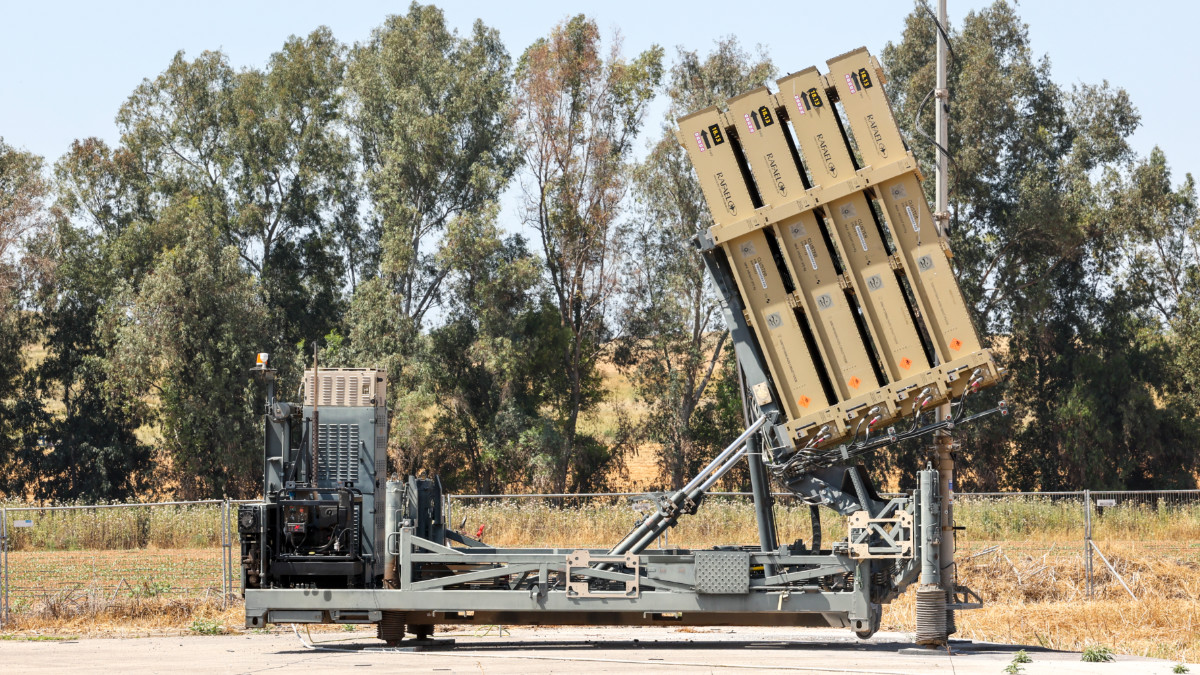
    According to the Islamic Revolutionary Guard Corps (IRGC), Iran’s elite military force, the operation specifically targeted the regional headquarters of the US Fifth Fleet based in Bahrain, alongside multiple US military facilities located in Kuwait and Jordan. The IRGC also claimed that the strike campaign successfully hit 21 distinct US targets across the Middle East, encompassing both key air bases and naval installations.

    Footage obtained by Middle East Eye, an independent regional news outlet, showed a bright flash of light near the US military compound in Bahrain timed to coincide with the reported attacks. However, US officials have pushed back against Iran’s claims of a successful operation, downplaying any major damage or accurate hits. A senior anonymous official speaking to the Financial Times confirmed that multiple Iranian missiles and drones were launched toward targets in Bahrain and Kuwait, but stressed that there was no conclusive evidence that any of Tehran’s projectiles hit their intended objectives. The official further added that there is no proof any US facility in Jordan was damaged or struck during the assault.

    This is not the first time US officials have downplayed the impact of Iranian attacks on American interests; in past incidents, initial official statements minimizing damage have later been contradicted by independent media reports revealing extensive destruction to infrastructure. Local authorities across the region offered conflicting details on the attack’s outcome. Jordanian officials confirmed that their national air defense systems successfully intercepted multiple incoming projectiles launched by Iran. Meanwhile, emergency response protocols were activated in both Bahrain and Kuwait, and air raid sirens sounded across populated areas of the Gulf states as the attack unfolded.

    The Iranian strike campaign came just hours after the United States carried out what it described as defensive self-defense strikes against Iranian military infrastructure. The American strikes were launched in response to the downing of a US Apache attack helicopter over the Strait of Hormuz. Local Iranian media reported multiple explosions across sites in southern Iran, including Qeshm Island, Bandar Abbas, Jask, and Sirik. The IRGC released a statement noting that the American strikes damaged a telecommunications tower in the coastal city of Sirik and destroyed two large water storage tanks at the targeted site, but inflicted no other major damage.

    US defense officials clarified that the selection of targets for Wednesday’s American strikes was designed specifically to limit civilian casualties while reducing Iran’s capacity to threaten international commercial shipping and US military assets operating throughout the Gulf region. The escalating exchange of strikes has raised fresh concerns across the international community about a broader regional conflict unfolding amid already heightened tensions between Washington and Tehran.

  • ‘People can change’: Scandal-hit Platner on Maine primary win

    ‘People can change’: Scandal-hit Platner on Maine primary win

    In a surprising turn of events that has upended expectations for Maine’s U.S. Senate race, Graham Platner, a Democratic candidate whose primary campaign was roiled by high-profile controversies, has emerged victorious in the state’s party primary. His win now sets him up as the Democratic Party’s official nominee heading into the critical November midterm elections, where he will compete for the open Senate seat representing Maine.

    Platner’s path to the nomination was far from smooth. For weeks leading up to primary day, his campaign faced constant scrutiny and public backlash over a series of unflattering revelations that dominated local political headlines. Many political analysts had predicted that the cascading scandals would derail his bid for the nomination, with opponents and pundits alike arguing that the controversies would make voters unwilling to throw their support behind him. But in a post-victory statement, Platner pushed back against that narrative, leaning into a message of personal redemption that appeared to resonate with primary voters. “People can change,” Platner told supporters after the results were finalized, framing his campaign as a testament to the possibility of personal growth and second chances.

    The outcome of the primary has already shifted the dynamics of the general election race. Political strategists across the state are now re-assessing their projections for November, as Platner’s ability to overcome scandal to win the nomination signals an unpredictable race ahead. While Democrats will now unify behind Platner as their official nominee, the lingering questions from the primary campaign are expected to remain a central point of attack for his general election opponent. Regardless of what comes next, Platner’s primary win stands as a reminder that even the most troubled campaigns can defy political odds when candidates connect with voters on messages of change and redemption.

  • Belfast girds for more violence after stabbing suspect held

    Belfast girds for more violence after stabbing suspect held

    Belfast entered a state of heightened alert Wednesday, preparing for a second consecutive night of anti-immigrant unrest that has already displaced local families, damaged property and spread across parts of the United Kingdom, with authorities blaming far-right actors for amplifying tension online following a recent knife attack.

    The unrest erupted Tuesday evening shortly after a 30-year-old Sudanese refugee, Hadi Alodid, appeared before Belfast Magistrates’ Court on charges of attempted murder, possession of a bladed article in public, and making threats to kill. The attack left a 40-something victim with severe injuries, including the loss of an eye, according to court documents. Alodid, who arrived in the UK in 2023 via Paris and Dublin and holds a UK residence permit valid through 2028, had no prior contact with Northern Ireland police and was remanded in custody until a case hearing on July 8.

    Within hours of the court proceeding, masked rioters took to Belfast’s streets, setting vehicles and buildings ablaze and forcing terrified families to evacuate their homes. During the disorder, police had to evacuate a two-month-old infant and their family to safety, Northern Ireland Police Chief Jon Boutcher told reporters. He described the rioters, most of whom were identified as young men, as “mindless idiots” whose actions amounted to “a huge act of self-harm” against Belfast’s community.

    By Wednesday morning, multiple schools had suspended classes, local businesses had shut early in anticipation of further unrest, and transport authorities canceled all evening bus and train services across the area. Police announced they would deploy an additional 200 officers to the streets to contain potential violence, after just three people were arrested in connection with Tuesday’s riots, one of whom has already been formally charged. The unrest spilled over to the Scottish city of Glasgow as well, where three arrests were made after clashes left two police officers and three members of the public injured.

    The stabbing victim’s family issued an urgent appeal for calm, rejecting attempts by extremist groups to exploit the attack for political gain. In a statement shared via a local politician’s Facebook page, they said: “We do not want this terrible tragedy to be used to divide people or fuel hostility.”

    Graphic video footage of the stabbing, which captured members of the public intervening to stop the attack (one person using a hurling stick), spread widely across social media platforms despite official calls to stop sharing the content. Dozens of far-right and self-described “patriot” accounts reposted the footage to organize new anti-immigration protests, calling on supporters to demonstrate against immigration in local communities.

    Anna Turley, chair of Britain’s ruling Labour Party, slammed online platforms and prominent figures for stoking the unrest, specifically naming X owner Elon Musk as one of the “bad faith actors” inflaming division. Musk has recently reposted content from high-profile anti-immigration activist Stephen Yaxley-Lennon, better known as Tommy Robinson, adding his own comment that “Only by protesting REPEATEDLY and LOUDLY will there be any change!!” He also shared a post from Rupert Lowe, leader of fringe hard-right group Restore Britain, that declared “millions must go” in reference to immigrants.

    Turley emphasized that public figures bear responsibility to avoid fomenting hate that puts vulnerable communities at risk: “Musk has a responsibility, everyone in public and civil life has a responsibility to call for calm and not to stoke grievance or hatred… that puts vulnerable people and our communities at risk.” UK media regulator Ofcom has also intervened, confirming it sent formal correspondence to online service providers this week warning against allowing platforms to be used to stir up racial hatred, provoke violence and violate UK criminal law.

    For immigrant communities already settled in Belfast, the current atmosphere is one of deep fear. Anselme Shima, a 48-year-old originally from the Democratic Republic of Congo who has lived in Northern Ireland since 2013, told reporters he was uncertain whether it was safe to send his two children to school amid the unrest. “This situation is terrifying,” he said.

    The violence comes at a time of already elevated social tension across the UK, where immigration has become an increasingly divisive hot-button political issue that has fueled the growing popularity of hard-right party Reform UK, led by Nigel Farage. Just last week, skirmishes broke out in southern England following public anger over the police handling of the December murder of 18-year-old white student Henry Nowak, who was killed by British Sikh man Vickrum Digwa. Anti-immigration clashes also erupted in Southampton in early June over the same case, where Digwa had falsely claimed Nowak had racially abused him before the killing.

  • Trump and Iran trade new threats after strikes exchanged

    Trump and Iran trade new threats after strikes exchanged

    Fresh rounds of mutual strikes between the United States and Iran have reignited open hostility, with senior leaders from both nations trading sharp, escalatory threats that have thrown fragile ceasefire negotiations into serious doubt.

    The latest cycle of violence began on Monday, when an Iranian drone struck a US Army Apache attack helicopter patrolling the Strait of Hormuz, a vital global shipping chokepoint that has remained effectively closed to most commercial traffic since large-scale conflict broke out in late February. Both crew members on board survived the incident and were rescued by an unmanned American sea drone, according to official US accounts. While US officials confirm an Iranian drone carried out the attack, one anonymous senior official told CBS News it remains unclear whether the strike was deliberate. Notably, Iran has not officially claimed responsibility for downing the helicopter, per semi-official Iranian outlet Mehr News Agency.

    In response to the helicopter incident, US Central Command (Centcom) launched targeted airstrikes on Tuesday against Iranian military infrastructure near the Strait of Hormuz, hitting Iranian defense systems, ground control stations and radar sites. Centcom framed the operation as a “proportional response” to the attack, but Iran’s Islamic Revolutionary Guard Corps (IRGC) dismissed the strikes as “vicious.” The IRGC confirmed the US strikes hit targets near the cities of Jask, Sirik and Qeshm Island, reporting only minor damage to a telecommunications tower and two water tanks.

    Hours after the US strikes, the IRGC launched retaliatory attacks targeting 21 sites at US military bases in the region, including installations in Bahrain and Jordan. Kuwait’s military also confirmed it intercepted an incoming projectile linked to the Iranian retaliatory wave. A senior unnamed US official told Reuters nearly all Iranian missiles and drones launched in the counterattack were intercepted by allied defense systems, with no US casualties reported.

    On Wednesday, US President Donald Trump amplified tensions in a series of posts on his Truth Social platform, departing sharply from his remarks just one day earlier, when he told reporters the US and Iran were in the “final throes” of reaching a “very, very good deal.” Trump claimed Iran’s military was a “complete and total mess,” asserting much of its naval and air force capabilities no longer exist and that the country had been “completely defeated.” He accused Tehran of dragging its feet on negotiating a mutually beneficial agreement, warning “now they will have to pay the price!!!” In separate comments to Fox News, Trump clarified the Iranian drone that hit the Apache struck while flying at very low altitude and did not explode on impact.

    Iranian officials have pushed back sharply on Trump’s claims and condemned the US for undermining diplomatic progress. Earlier this week, Iranian Foreign Minister Abbas Araghci reiterated that Iran would “leave no attack or threat unanswered,” arguing the US has already suffered “defeats on the battlefield.” On Wednesday, Iranian foreign ministry spokesman Esmaeil Baqai accused the US of sabotaging the diplomatic process through contradictory public messaging, repeated shifts in negotiating positions and ongoing ceasefire violations. He added that Iran now must re-assess its path forward, noting any viable diplomatic process requires a baseline of stability that the US has failed to uphold.

    The current conflict traces its origins to February 28, when the United States and Israel launched a sweeping series of strikes on Iran that killed the country’s supreme leader. Iran responded immediately with attacks on Israel and US-aligned states across the Persian Gulf, and fighting escalated rapidly across the Middle East, drawing Lebanon into the conflict in March. In April, the two sides agreed to a two-week ceasefire, and while full-scale large-scale hostilities did not resume, both sides have exchanged intermittent fire. Negotiators have held multiple fraught discussions, including a high-stakes meeting in Pakistan, aimed at forging a lasting peace deal, though the latest escalation has thrown those talks into disarray.

  • Yohei Kono, who apologized for Japan’s wartime sexual abuses of ‘comfort women,’ dies at 89

    Yohei Kono, who apologized for Japan’s wartime sexual abuses of ‘comfort women,’ dies at 89

    TOKYO — Yohei Kono, a towering figure in Japanese politics whose landmark 1993 apology to wartime sexual slavery victims cemented his legacy as a vocal advocate for reckoning with Japan’s 20th-century military history, has passed away at the age of 89. The office of Kono’s son, former Japanese Foreign Minister Taro Kono, confirmed the veteran statesman died of natural causes linked to old age on Monday.

    Born in January 1937, Kono entered Japanese politics in 1967, following the death of his father Ichiro Kono, a prominent lawmaker within Japan’s long-governing Liberal Democratic Party (LDP). Over his 42-year political career before retiring in 2009, Kono held a string of the country’s most influential positions, including Chief Cabinet Secretary, President of the LDP, and Speaker of Japan’s lower house of parliament — the more powerful chamber of the country’s bicameral national legislature.

    Kono’s most defining contribution to Japanese and regional history came in 1993, when as Chief Cabinet Secretary he delivered an unprecedented formal apology to the tens of thousands of “comfort women” forced into sexual slavery by Japan’s wartime military across occupied Asia. The apology followed an official Japanese government investigation that confirmed the military’s direct role in operating frontline brothels and coercing women into sexual servitude. This groundbreaking statement laid the groundwork for the broader 1995 apology for wartime atrocities issued by then-Prime Minister Tomiichi Murayama.

    Internationally, both the Kono Statement and the Murayama Statement were widely seen as critical steps toward Japan acknowledging its wartime aggression and reconciling with neighboring countries that suffered under Japanese occupation. For decades, the statements served as a cornerstone for improved diplomatic relations between Japan and its Asian neighbors China and South Korea, which were among the nations most impacted by Japan’s pre-1945 imperial expansion.

    However, the commitments made in the Kono Statement have faced persistent backlash from Japanese nationalist and conservative political factions, who argue Japan should abandon focus on what they frame as “negative history” to rebuild national pride. Pressure to water down or erase the apology grew significantly during the tenure of nationalist former Prime Minister Shinzo Abe, with multiple high-profile attempts to revise the original statement. Kono remained unflinching in his defense of his 1993 remarks, repeatedly warning that any effort to whitewash established historical facts would ultimately damage the international reputation of the Japanese people.

    Beyond his work on historical reconciliation, Kono placed consistent priority on building and maintaining constructive, friendly relations with China, South Korea, and other Asian nations that endured Japanese wartime atrocities. Even long after his formal retirement from electoral politics in 2009, Kono remained active in diplomatic outreach, almost annually leading cross-party and business delegations to China to help stabilize bilateral relations during periods of tension. Earlier this year, he was still planning a new visit to Beijing, amid a sharp downturn in Tokyo-Beijing relations that followed a controversial statement from current Prime Minister Sanae Takaichi. In November, Takaichi claimed a hypothetical Chinese military operation against Taiwan would justify a deployment of Japanese troops, prompting fierce pushback from Beijing.

  • Australia begins the Women’s T20 World Cup as No. 1 with India surging

    Australia begins the Women’s T20 World Cup as No. 1 with India surging

    As the 10th edition of the Women’s T20 World Cup prepares to get underway across England this week, the world’s top women’s cricket teams are set to clash for the sport’s most coveted short-format global title, with an unprecedented surge in fan interest and growth marking a new watershed moment for women’s cricket.

    Dominance is a word that has become synonymous with Australia’s women’s cricket program across the history of white-ball world championships. The country’s national side has claimed 13 world titles across all white-ball formats, more than the combined total of every other competing nation. Entering this tournament as the top-ranked side in the world, Australia is favored to lift a seventh T20 World Cup trophy, even as the team navigates a generational reset after ending a five-year global trophy drought that stretched back to 2017. Six-time champion Alyssa Healy has stepped back from the leading lineup, handing the captaincy to Sophie Molineux, with Beth Mooney taking over wicketkeeping duties and rising star Georgia Voll locked in as opening batter. Australia’s strength remains formidable: Voll and Mooney rank as the world’s top two batters in T20 cricket, all-rounder Ellyse Perry is chasing her seventh world title, and allrounder Annabel Sutherland is widely tipped as a contender for player of the tournament. Still, Australia faces a brutal test in Group A, where one of Australia, India, or South Africa will fail to advance to the semifinals — a result Australia has never suffered in the history of the tournament.

    Chasing their first T20 World Cup title, India enters the tournament riding a wave of momentum and renewed confidence, fueled by massive investment that has closed the gap on long-dominant sides. Fresh off the men’s team claiming back-to-back T20 World Cups, the Indian women won their first ODI World Cup in November 2024, and in February this year, they notched a historic milestone: their first T20 bilateral series win over Australia since 2017, and their first series victory on Australian soil in a decade. “There’s a belief in the team now that we can beat anybody in this world,” Indian seam bowler Arundhati Reddy said of the side’s newfound confidence. Much of India’s progress traces back to the launch of the Women’s Premier League (WPL) in 2023, modeled after the wildly successful men’s Indian Premier League, eight years after Australia launched the Women’s Big Bash League. The franchise competition has cultivated a bold, aggressive batting style among India’s top players including Jemimah Rodrigues, Richa Ghosh, and veteran captain Harmanpreet Kaur, who is leading India at her 10th T20 World Cup, and came closest to lifting the trophy in the 2020 tournament final.

    South Africa, the third contender in Group A’s battle for semifinal spots, has also built a strong contender after reaching the last three world finals across T20 and ODI formats. To address the team’s overreliance on in-form captain Laura Wolvaardt — who boasts an average of 54 across 13 innings in 2025 — the Proteas have convinced two legendary veterans to come out of retirement: 37-year-old fast bowler Shabnim Ismail, who still dominates batters in global franchise competitions, and former captain Dane van Niekerk, who stepped away in controversy ahead of the 2023 T20 World Cup. Rounding out Group A are Pakistan, Bangladesh — making their first appearance at a women’s T20 World Cup hosted in England — and the Netherlands, who are competing in the tournament for the first time as qualifiers.

    The 2025 tournament marks the first edition of the Women’s T20 World Cup expanded to 12 teams, split into two groups. Group B is set to feature three former world champions: second-ranked hosts England, New Zealand, and the West Indies, joined by Ireland, Scotland and Sri Lanka. The tournament opens Friday in Birmingham with a match-up between England and Sri Lanka.

    England has received a major boost ahead of the tournament, with star captain Nat Sciver-Brunt cleared to play after a calf tear forced her to sit out recent home series wins over New Zealand and India. Sciver-Brunt will not bowl until the later stages of the tournament, but her availability at the crease eases widespread fitness concerns that dogged England at the last edition of the tournament. Coach Charlotte Edwards, who captained England to victory at the inaugural 2009 T20 World Cup, has made squad fitness a core priority for this tournament.

    New Zealand, the 2024 defending champion, brings 10 players from its title-winning side into this year’s tournament, led by top-ranked allrounder and new captain Melie Kerr. The tournament will mark the final international event for veteran stars Suzie Bates, Sophie Devine and Lea Tahuhu, who share nearly 900 international caps between them. “To have our three most senior players all finishing their careers at the same tournament is a rare and special occasion,” coach Ben Sawyer said.

    The West Indies enter the tournament on a high, after claiming a tri-nations series win over Ireland and Pakistan last week, bouncing back from consecutive home series sweeps by Sri Lanka and Australia. The side is led by captain Hayley Matthews and veteran leg-spinner Afy Fletcher. Sri Lanka’s squad is headlined by trailblazing batter Chamari Athapaththu, who has indicated the 10th edition may not be her last tournament. Ireland, making their fifth appearance at the T20 World Cup, will be looking to break a 17-match losing streak, while Scotland warmed up for the tournament with a home tri-nations series win over Bangladesh and the Netherlands.

    The top two teams from each group advance to the semifinals scheduled at The Oval, with the final set to take place at Lord’s on July 5, capping 33 matches played across 24 days. Every knockout fixture has been scheduled with a reserve day to account for weather disruptions.

    Off the pitch, the 2025 tournament continues the rapid growth trajectory of women’s cricket. Ticket sales passed the previous tournament record of 136,546 set at the 2020 edition in Australia weeks ago, and have now surpassed 160,000, with on-track projections pointing to a total of 200,000 tickets sold by the end of the tournament. Prizemoney has also received a 10% increase from the 2024 tournament, rising to a total of $8.76 million, with the champion side taking home $2.34 million.

  • US inflation surges to three-year high of 4.2%

    US inflation surges to three-year high of 4.2%

    U.S. consumer inflation accelerated to its fastest annual pace in three years during May, climbing to 4.2% and extending a three-month consecutive upward trend that is putting growing financial pressure on American households, according to new data from the Bureau of Labor Statistics (BLS).

    The latest reading marks a notable jump from April’s 3.8% inflation rate, with skyrocketing energy costs accounting for the vast majority of the overall increase. Geopolitical tensions stemming from the U.S.-Israel conflict with Iran have created ripple effects across global energy markets, directly driving the acceleration that is now squeezing household budgets nationwide.

    The last time U.S. inflation outpaced this current reading was in April 2023, when the country was still working to absorb the massive energy market disruption triggered by Russia’s full-scale invasion of Ukraine.

    Data from the BLS shows overall energy prices — including natural gas for heating and electricity for homes and businesses — are up nearly 25% compared to May of last year. Motor gasoline accounts for the single largest share of that increase. Separate figures from the American Automobile Association (AAA) confirm the spike: the national average price for a gallon of regular unleaded gasoline now stands at $4.15, a dramatic 39% jump from the $2.98 average recorded on February 28, the date President Donald Trump ordered military strikes against Iran.

    In direct response to those strikes, Iran has effectively closed the Strait of Hormuz, the strategic global chokepoint through which roughly one-fifth of the world’s total oil and natural gas supplies are shipped each day. The closure has choked off global energy supply, pushing crude and refined product prices sharply higher in markets around the world, with American consumers feeling the impact immediately at gas pumps.

    Beyond energy, the BLS noted broad-based price growth across other key sectors of the U.S. economy. Airfares, personal services, medical care, recreational goods and services, and communication services all saw notable price increases during the month.

    The Consumer Price Index, the benchmark measure used to calculate annual inflation, tracks changes in the price of a broad basket of consumer goods and services compared to the same period one year prior. The U.S. Federal Reserve has a long-term target of keeping inflation anchored at 2%, so the current 4.2% reading is more than double that goal.

    Persistently higher inflation raises the probability that the Federal Reserve will move to raise benchmark interest rates in the coming months. Higher interest rates are designed to cool consumer and business spending, which in turn eases upward pressure on prices, but the policy move also typically raises borrowing costs for mortgages, auto loans, and credit cards, adding extra financial strain to households.