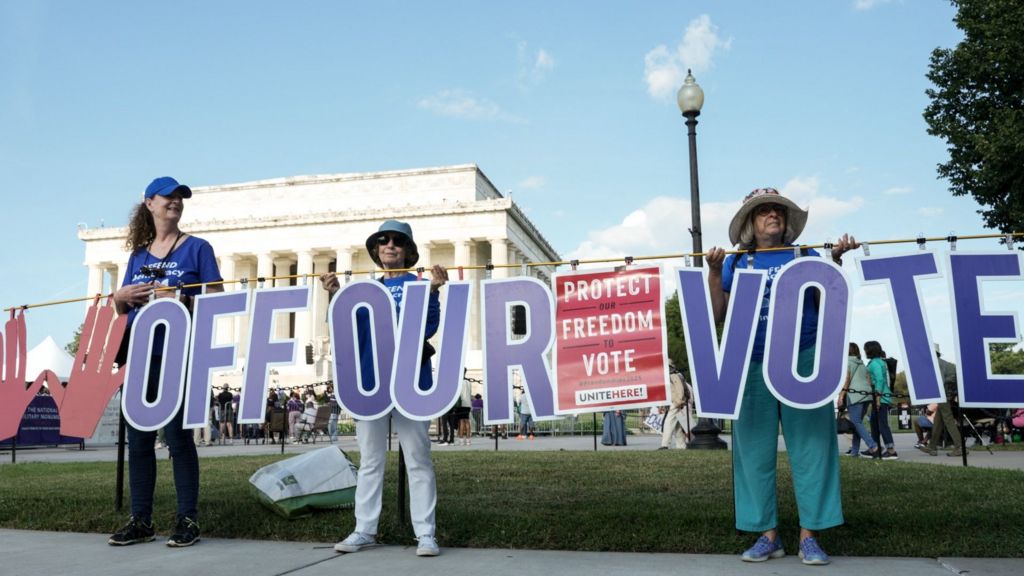
Six decades have passed since Martin Luther King Jr. stood on the steps of the Lincoln Memorial and delivered his transformative ‘I Have a Dream’ speech, a moment that redefined the American civil rights movement. Today, thousands of activists, community organizers, and ordinary citizens gathered once again in the U.S. capital for the annual March on Washington commemoration, but this year’s gathering carried a renewed sense of urgency around a core promise of King’s work: equal access to the ballot box.
Attendees marched through the streets of Washington D.C., carrying signs and sharing personal stories about persistent barriers to voting that remain entrenched across the country, from restrictive voter ID laws to gerrymandering, and cuts to early voting access. For many participants, the 63rd anniversary was not just a moment to reflect on how far the nation has come in advancing racial equality and democratic rights, but also a stark reminder of how much work remains unfinished. Speakers and marchers alike emphasized that the fight for voting rights is the direct continuation of the struggle King led in 1963, arguing that any celebration of his legacy must include concrete action to protect and expand access to voting for all marginalized communities.
Unlike the historic 1963 march that drew national attention to segregation and unequal rights, this year’s gathering comes amid a series of recent legal and political setbacks for voting rights advocates. Federal voting rights legislation has stalled in Congress in recent years, and multiple states have enacted new restrictions on voting since 2020. Marchers called on federal and state policymakers to reverse these changes, pass sweeping national voting rights protections, and uphold the core democratic principle that every eligible voter deserves a voice, regardless of their race, zip code, or political affiliation.