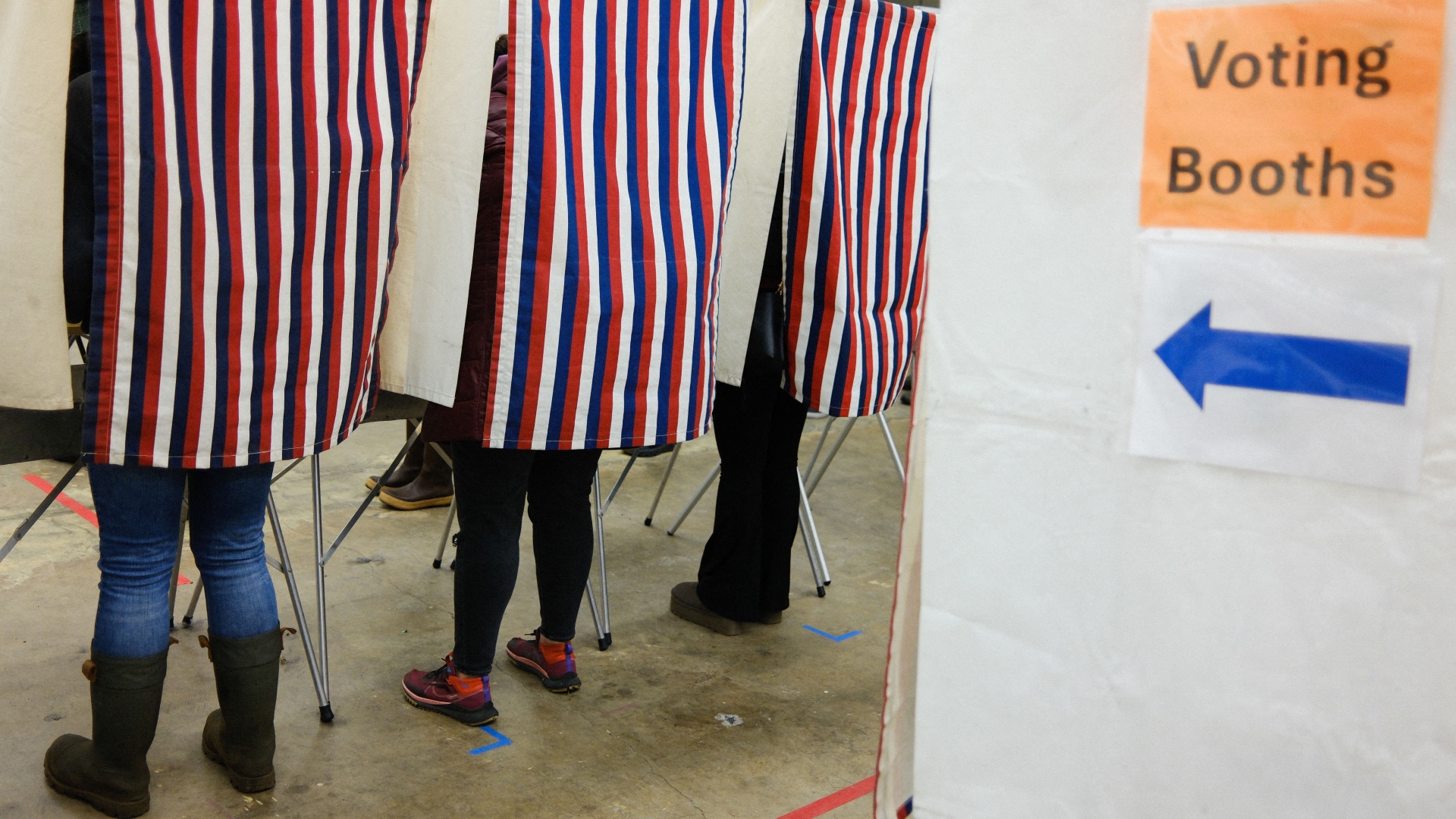
Across every partisan demographic, American voters have made their widespread frustration with the status quo unmistakable in nearly every public and private conversation in the months leading up to the 3 November midterm elections. Defying decades of historical precedent for low turnout in non-presidential election cycles, pre-Election Day early voting has already drawn a record-breaking 56 million participants, a landmark figure that signals an electorate hungry for systemic change. Compounding the ruling party’s uphill battle, incumbent President Donald Trump currently holds a lower approval rating than any of his three immediate predecessors at the equivalent point of their first-term midterm campaigns. Bipartisan polling data and internal forecasts from Republican election analysts overwhelmingly indicate that the Democratic Party is on track to reclaim control of the U.S. House of Representatives, flip a narrow majority in the Senate, and secure the largest share of state governorships across the 50 U.S. states. Despite these projected electoral shifts, legislative insiders and political analysts warn that sweeping, landmark policy changes are highly unlikely to materialise in the new Congress, even as the balance of narrative power and procedural leverage on Capitol Hill will undergo a dramatic transformation.
Rina Shah, a former Republican congressional advisor, outlined to Middle East Eye that a Democratic-controlled Senate would not seek to fully roll back the Trump administration’s existing policy portfolio, but instead deploy a targeted, strategic refusal to advance new White House priorities. A core early priority for liberal senators would be to block the Trump administration’s push to install a slate of conservative judges to federal courts, a move that follows a series of recent judicial rulings that ordered the release of multiple critics of Israel from immigration detention after Secretary of State Marco Rubio revoked their U.S. visas and green cards. Shah explained that full Senate majority control grants the party authority over the legislative calendar, committee leadership appointments, and all confirmation processes, allowing Democratic leaders to slow-walk or reject presidential nominees for ambassador and national security posts, launch oversight hearings with full subpoena power, and embed binding conditions into must-pass appropriations bills and the annual National Defense Authorization Act to place new restrictions on U.S. arms sales, overseas troop deployments, and executive war-making authority.
President Trump’s long track record of wielding the presidential veto means he will almost certainly strike down any standalone legislation that conflicts with his policy agenda. Even so, Shah noted that forcing these bills to a veto stage serves a deliberate political purpose: it compels Republican lawmakers to cast public votes on high-profile issues, laying the foundational framing for the 2028 presidential election campaign. The real legislative leverage for Senate Democrats, she emphasised, lies in so-called “must-pass” pieces of legislation such as federal government funding packages and defence authorisation bills, which the president cannot veto without taking direct public ownership of a disruptive government shutdown or a lapse in critical national security funding. Trump has already demonstrated his willingness to trigger two full government shutdowns during his first term in high-stakes standoffs with Democratic lawmakers, but analysts note that a third shutdown tied to core voter priorities of affordability and public safety would carry far greater electoral consequences for his 2028 re-election prospects.
To override presidential vetoes, offset potential partisan defections on divisive policy issues, and even secure the two-thirds majority required to convict a sitting U.S. president or cabinet member in an impeachment trial, Senate Democrats would need to win a 60-seat filibuster-proof supermajority – a threshold that all current projections confirm is unachievable in this 2026 midterm cycle. This mathematical reality means that Democratic leaders will be forced to pursue targeted negotiations and bipartisan compromise to win over a handful of moderate Republican lawmakers to advance their legislative priorities.
Jennifer Hendrixson White, a former senior staffer for the U.S. House Foreign Affairs Committee and current visiting scholar at the Carnegie Endowment for International Peace’s American Statecraft Programme, told MEE that the success of Democratic legislative efforts will hinge entirely on how party leaders frame policy debates and position proposed bills for floor votes. She noted that Senate Republicans, who hold six-year terms that extend well past the remaining duration of Trump’s current term, are far more willing to challenge the president’s agenda than they were in the early months of his first administration. If lawmakers centre their proposals around reclaiming the Article One constitutional responsibilities of the legislative branch – the core system of checks and balances designed to constrain unilateral presidential power – they can draw bipartisan support from Republicans who are eager to reassert congressional authority over executive overreach.
To secure a narrow 51-seat Senate majority, Democrats will need to defend all 47 of their currently held seats and flip four Republican-held districts, with Texas, Maine, North Carolina and Alaska widely viewed as the most likely pickup targets, while Iowa and Ohio remain fiercely competitive toss-up races. There is near-universal consensus among election forecasters that Democrats will easily retake the U.S. House of Representatives, but the Senate carries outsized institutional weight, as its six-year terms insulate senators from the shorter two-year electoral cycles that define House membership and the four-year presidential term. A recent YouGov survey of competitive Senate races published on Monday shows most contests running neck-and-neck, but with Democrats holding a consistent aggregate advantage, while 75 percent of bettors on the prediction market Polymarket have placed wagers on a full Democratic sweep of both congressional chambers. High-profile Republican figures including former New Jersey Governor Chris Christie and former House Speaker Kevin McCarthy also publicly stated on ABC News on Sunday that they expect the Democratic Party to win control of both chambers, with Christie additionally projecting that Democrats will secure 27 of the 36 available governorship seats up for election this cycle.
Voters across the entire political spectrum have expressed widespread shared frustration over soaring cost of living, and widespread disapproval of the Trump administration’s aggressive domestic and foreign policies – including highly publicised violent confrontations between immigration enforcement agents and civilian communities, and the ongoing nine-month joint U.S.-Israeli military campaign against Iran that has no clear end in sight. These priorities directly contradict the core 2024 campaign pledges Trump made to voters, which centred on delivering widespread affordability, public safety, and a full end to all ongoing U.S. foreign wars.
Even on highly polarising issues such as the traditionally unconditional U.S. security partnership with Israel, analysts note that tangible policy shifts will be gradual, but will begin with sustained, open debate on the Senate floor. David McCuan, a political science professor at Sonoma State University, explained to MEE that a major emerging priority for the new Democratic caucus will be pushing to conditionalise U.S. military aid to Israel, a policy debate that is far more politically viable than attempting to pass formal sanctions on the ongoing Iran war. He noted that the rising political power of progressive left figures such as Michigan’s incoming Democratic leader Abdul El-Sayed and independent Senator Bernie Sanders will give Democrats the narrow margin of votes they need to force these long-suppressed policy debates onto the legislative agenda. Wajahat Ali, a *Daily Beast* columnist and author of *Go Back to Where You Came From*, emphasised that Israel’s plummeting unfavourability ratings among U.S. voters, particularly young liberal demographics, can no longer be sidelined by party leadership. He warned that unwavering pro-Israel hawkishness will become a non-negotiable litmus test issue for any Democratic politician with national presidential aspirations, and that party leaders and major donors face an imminent choice between doubling down on unqualified support for Israel, or evolving their positions to align with the shifting priorities of the broader U.S. electorate. Since the 7 October 2023 Hamas-led attacks in southern Israel and the subsequent Israeli military assault on Gaza that the United Nations and leading Holocaust scholars have formally labelled a genocide, U.S. public approval of Israel has fallen to the lowest recorded level in national polling history.
Hendrixson White noted that the Trump administration has proven far more resistant to traditional congressional political pressure than previous presidential administrations, and warned that a key risk for the new Democratic Congress is wasting limited legislative time on non-binding symbolic statements that do not force tangible action from the White House, rather than advancing substantive policy priorities or rigorous oversight. She raised concerns that excessive focus on anti-corruption investigations could distract the party from the core economic issues that drove voters to the polls in 2026. Critics of the Trump administration have long demanded formal congressional investigations into a wide range of alleged improprieties, including a $100 million private jet gifted to the president by the Qatari government, his long-documented ties to convicted child sex trafficker Jeffrey Epstein, and the undisclosed personal financial benefits his son-in-law Jared Kushner accrued while serving as an unpaid White House Middle East peace negotiator. Trump, his immediate family, and all members of his cabinet have repeatedly denied all allegations of wrongdoing.
McCuan, who regularly briefs foreign diplomats on U.S. election outcomes and their policy implications, argued that a Democratic-controlled Senate is far more likely to prioritise a forward-looking policy agenda than to focus exclusively on retrospective accountability measures. He cited decades of peer-reviewed political science research showing that midterm elections function first and foremost as a public backlash against the sitting president, rather than a narrow referendum on specific administrative missteps. This means Senate Democrats will need to roll out a proactive, voter-focused policy platform that is explicitly designed to position the party for victory in the 2028 presidential election cycle. Given the structure of the U.S. political calendar, prospective 2028 presidential candidates are already required to launch formal exploratory committees to gauge public support, raise campaign funds, and hire full campaign staff, meaning the 2028 election cycle will effectively begin the day after the 2026 midterms conclude. McCuan stressed that the Democratic agenda will need to centre directly on kitchen-table voter priorities: reducing household costs for groceries, gasoline, and diesel fuel, rather than dedicating the majority of legislative time to impeachment proceedings or punitive investigations. Ali, however, expressed deep scepticism of Democratic congressional leadership, arguing that Senate Majority Leader Chuck Schumer and House Minority Leader Hakeem Jeffries lack the strategic vision to meet the current political moment, citing their history of opposing Medicare for All, attacking progressive socialist candidates, accepting large campaign donations from the pro-Israel lobbying group AIPAC, and holding undisclosed private meetings with Jared Kushner. He warned that the projected Democratic midterm gains do not represent a permanent national political realignment toward the Democratic Party, but a temporary, short-term electoral backlash against the excesses of the MAGA movement that will expire quickly if the party fails to deliver tangible results for working-class voters. The 120th U.S. Congress will be formally sworn into office on 3 January 2027.