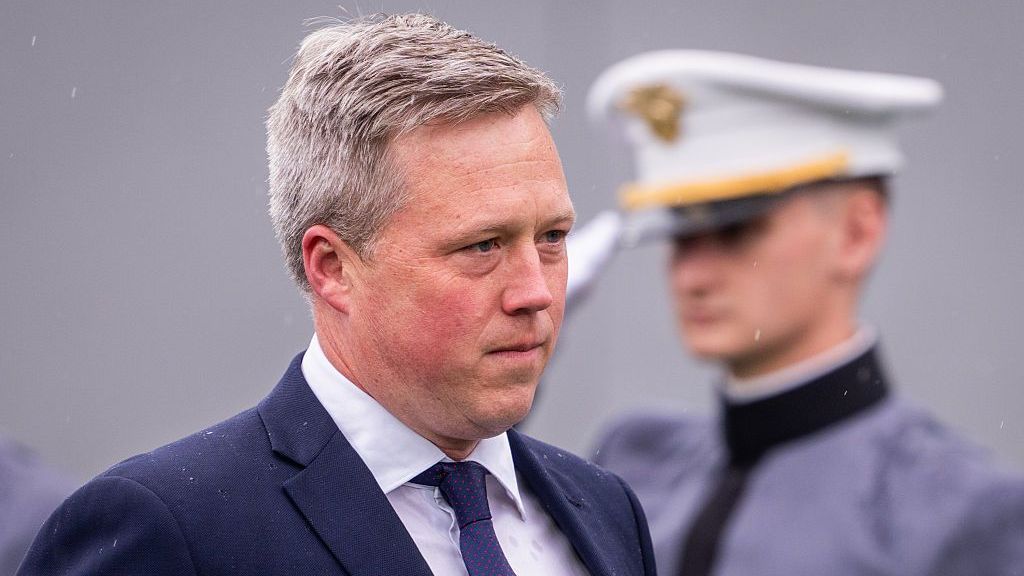
A major shakeup continues to unfold across the top ranks of the US military, as the nation’s top civilian leader for the US Army, Secretary Dan Driscoll, has formally stepped down from his post after just 18 months in office. The departure was first confirmed by CBS News, US media partner of the BBC, which traced the resignation back to months of growing tensions between Driscoll and Defense Secretary Pete Hegseth.
At 41 years old, Driscoll made history as the youngest person ever to hold the Army Secretary role. He was widely known in Washington circles as US President Donald Trump’s so-called “drone guy,” a nickname he earned for his strong, public advocacy for integrating emerging unmanned and digital battlefield technologies into military operations. In an official statement shared with CBS, the White House praised Driscoll’s tenure, noting he was “highly effective” at advancing the administration’s “Make America Strong Again” agenda and provided “outstanding leadership” during military operations.
Driscoll’s exit is not an isolated event: it marks the latest in a growing wave of high-profile departures among senior military and defense leaders since Hegseth took leadership of the Pentagon. Hegseth has already removed more than a dozen top uniformed and civilian defense officials, including the chief of naval operations and the vice-chief of staff of the US Air Force. Earlier this year in April, Navy Secretary John Phelan stepped down abruptly, and other recent departures include former Army Chief of Staff Randy George, Army Gen. David Hodne and Maj. Gen. William Green. While full details of the behind-the-scenes friction between Driscoll and Hegseth remain undisclosed, CBS reports that Driscoll shared a close personal friendship with George, who was pushed to resign by Hegseth.
The position of Army Secretary is the highest civilian leadership role for the US military’s ground branch, with oversight over roughly a million active-duty, National Guard and reserve soldiers across the globe. Driscoll brought first-hand military experience to the role: he commissioned as an Army officer in 2007, led a cavalry platoon and deployed to Iraq on a five-month tour in 2009. Beyond his work on military technology, Driscoll held other key roles during his 18 months in office:
He took a leading role last year in high-level diplomatic negotiations aimed at ending the ongoing Russia-Ukraine war, making multiple overseas trips and holding direct talks with Ukrainian President Volodymyr Zelensky. He is also a long-time close ally and personal friend of Vice-President JD Vance, with the pair having met while attending Yale Law School together. During his tenure, Driscoll was a central figure in the Trump administration’s decision to deploy National Guard troops to cities across the US, and he also served temporarily as acting director of the Bureau of Alcohol, Tobacco, Firearms and Explosives. The BBC has reached out to the White House, Pentagon and US Army for additional comment on the resignation, with no additional response as of press time.