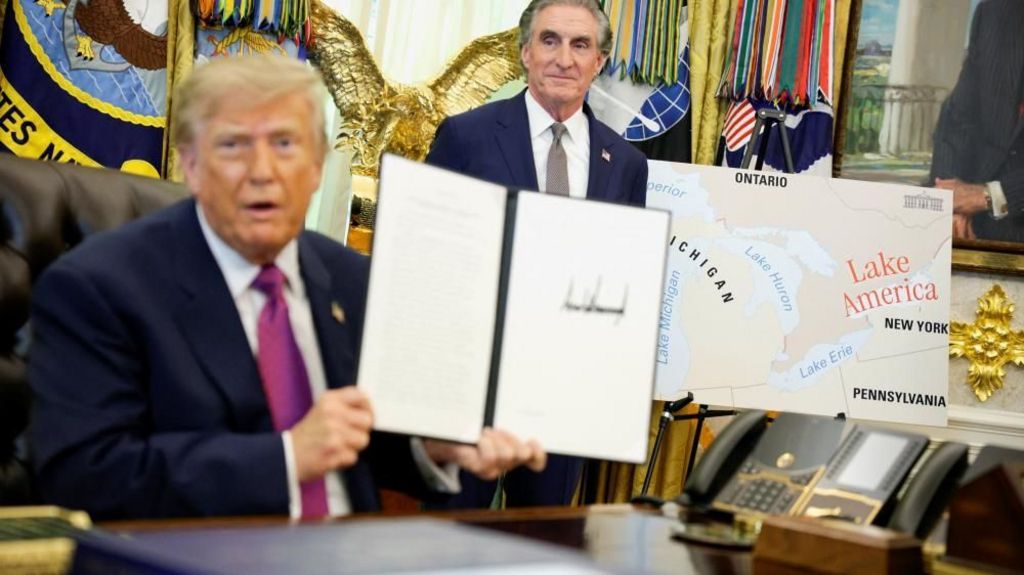
A fresh escalation in the escalating trade conflict between the United States and Canada has taken an unexpected turn, after US President Donald Trump signed an executive order that seeks to rename Lake Ontario — one of the five cross-border Great Lakes shared by the two North American nations — to “Lake America”.
The controversial move comes just days after high-stakes trade negotiations between the two countries collapsed late last week. In the wake of the failed talks, the Trump administration imposed a steep 50% tariff on $20 billion worth of Canadian imports, a move that has sent shockwaves through bilateral trade relations. Canada has already announced it will implement matching “dollar for dollar” retaliatory tariffs on equivalent American goods starting next month, raising fears of a prolonged trade dispute.
This name change push is not out of the blue: Trump has repeatedly floated and threatened the renaming proposal on social media throughout the ongoing trade tensions. In public remarks Thursday, the president confirmed the order was “official, effective immediately,” adding that his administration had completed and filed all required administrative documentation to formalize the change. He also issued a directive ordering the US Department of the Interior to update the federal Geographic Names Information Service, the official national database of geographic names, to incorporate the new title.
This is not the first time Trump has moved to rename a shared international body of water since his return to the White House. Shortly after taking office in 2025, he signed a similar executive order renaming the Gulf of Mexico to the “Gulf of America”. That move was immediately rejected by the Mexican government, which argued that no single country has the authority to unilaterally re-name a shared transboundary water body, a position that has been widely supported by international geographic bodies.
Canadian officials have already pushed back firmly against the latest proposal. Earlier this week, Canadian Industry Minister Melanie Joly made the country’s position clear in public comments, stating bluntly: “We’ll always call it Lake Ontario.” The unilateral name change has sparked ridicule and condemnation from Canadian policymakers, who argue it is a pointless provocation amid an already tense trade standoff, with no basis in international law or geographic convention.
Analysts note that the unilateral order is largely symbolic, as it only applies to official US government records, and has no bearing on how the lake is referred to internationally or by Canada. But the move underscores the escalating friction between the two longtime trading partners, which has now spilled over into geographic naming disputes after the collapse of trade talks.