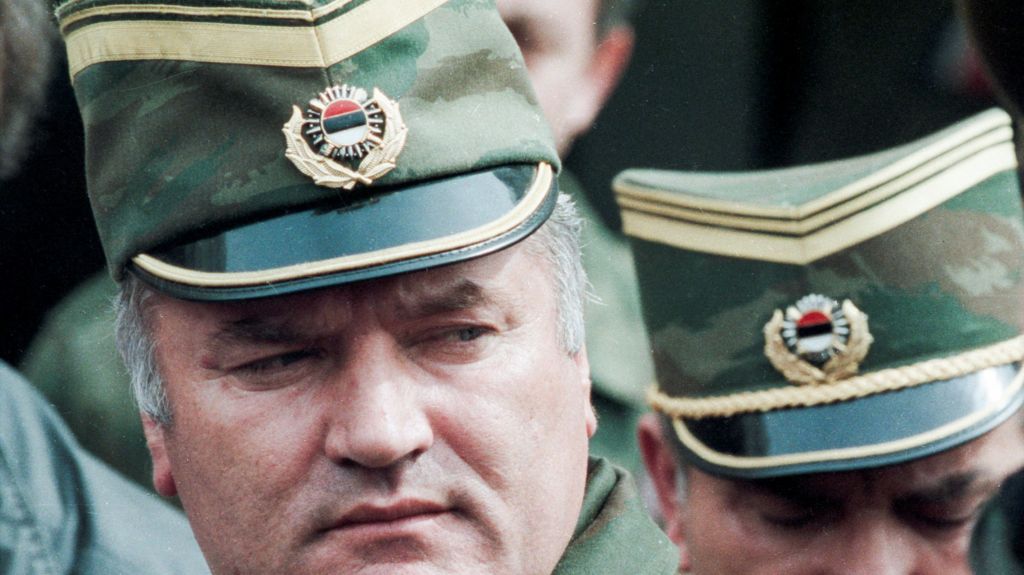
The death of Ratko Mladić, the Bosnian Serb military commander infamously labeled the “Butcher of Bosnia” for his role in the 1990s Balkan Wars, has pulled the world’s attention back to one of the darkest chapters of European conflict since World War II. Mladić, who was convicted of genocide and multiple other war crimes by an international tribunal, died while serving his life sentence in a European prison.
Veteran BBC correspondent Allan Little, who covered the entire dissolution of the former Yugoslavia and encountered Mladić in the opening months of the Bosnian War, shared his searing, firsthand memories of the violence and human cost that unfolded alongside the commander’s campaign.
Little recalls that during the darkest nights of the conflict, orange flames from systematically burned settlements painted the landscape, the only visible light across the dark valleys of Bosnia. These fires were the visible signature of the ethnic cleansing campaign that Mladić’s forces waged across the region. Local men, carrying outdated weapons passed down through generations alongside centuries-old intergroup fears and distrust, patrolled their homes in shadow, bracing for violence that would upend their communities permanently.
He vividly recounts one morning when a procession of 40,000 displaced people emerged from a dense forest. Two days prior, they had been driven from their homes by a sudden unprovoked Serb military advance, fleeing with only the small possessions they could carry. Most walked the long, brutal path to safety; others were crammed into the backs of aging farm carts pulled by donkeys. Among the exhausted crowd was an 80-year-old man, who looked close to collapse after the journey. He told Little he had been separated from his wife during the trek, and had no idea if she had survived. When Little asked if he was Croat or Muslim — the simplistic ethnic labeling that came to define coverage of the war — the man answered simply, “I am a musician.” That reply has haunted Little for decades, a reminder that the conflict’s dehumanizing ethnic labels erased the full, complex humanity of thousands of ordinary people who were reduced to targets solely because of their background.
Little met Mladić himself in the first sweltering summer of the war, at the Lukavica barracks on Sarajevo’s southern edge. The compound was flooded with loose weapons and aggressive, menacing paramilitary fighters. A Kalashnikov rifle cost just $200 on the open market there; a single hand grenade sold for $1 — the same price as a single fresh egg in the besieged city of Sarajevo at the time. When Little shook Mladić’s hand, the commander held the grip tight, pulling Little close, still buzzing with adrenaline from a recent trip to the front lines in central Sarajevo. Mladić held Little’s gaze for minutes as he claimed to be the defender of brotherhood and unity across the former Yugoslavia, saying he dreamed of a world without weapons or war. Even then, Little writes, Mladić came across as unflinchingly fanatical — a dangerous fanatic whose ideology would unleash unspeakable suffering.
In the years that followed, forces under Mladić’s command carried out the worst war crimes seen on European soil since the Nazi regime. They gave the global lexicon of war the chilling term “ethnic cleansing,” perpetrating mass murder, systematic sexual violence, forced expulsion of entire communities, and the systematic burning of hundreds of villages. The ultimate goal of this campaign was to carve out an ethnically pure Serbian territory across parts of Bosnia and Croatia. The campaign culminated in the 1995 Srebrenica massacre, where more than 8,000 Bosniak Muslim men and boys were systematically killed — a crime the International Criminal Tribunal for the former Yugoslavia ruled constituted genocide.
For Little, the war hit close to home just two days after he encountered the displaced 80-year-old musician on a muddy roadside. His colleague and friend, 25-year-old cameraman Tihomir Tunukovic, a talented young filmmaker from Zagreb who had worked alongside Little for 18 months, was killed by a Serb gunner positioned on a ridge overlooking the road Tunukovic was driving. Little and his team carried Tunukovic’s body back across rutted mountain trails to the coastal city of Split for burial, and the grief of that loss connected them directly to the cycle of vengeance that drove the war’s endless cycle of violence.
While Mladić never pulled the trigger that killed Tunukovic or the tens of thousands of other civilians who died during his campaign, Little writes, the culture of unaccountable violence that Mladić fostered under his command directly enabled the mass loss of life that defined the Bosnian conflict. His death closes a grim chapter in modern European history, but the scars of the atrocities he oversaw remain deeply etched across the Balkans and the collective memory of a continent.