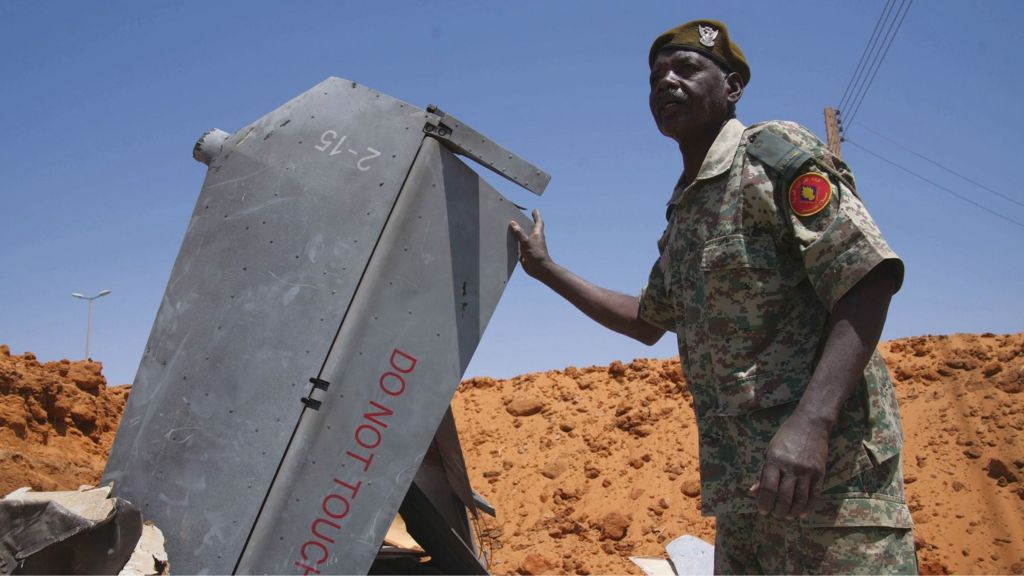
After nearly four years of devastating civil conflict between Sudan’s regular army and the paramilitary Rapid Support Forces (RSF), a urgent diplomatic debate has unfolded at the United Nations Security Council over expanding a long-standing regional arms embargo to cover the entire country. Washington’s top senior envoy for African affairs, Massad Boulos, has called on the global body to approve the expansion, arguing that unregulated arms flows – particularly of drones and drone-related technologies – are fueling the intensifying war and threaten to destabilize the entire broader region.
Boulos stressed that the Security Council cannot afford inaction, urging members to move quickly to cut off all external financial and military backing to both warring parties. For months, observers have documented a sharp escalation in drone strikes across Sudan, with both the Sudanese Armed Forces, led by Gen Abdel Fattah al-Burhan, and the RSF, commanded by Mohamed Hamdan Dagalo, repeatedly accused of deploying the unmanned aerial vehicles against civilian and military targets.
The ongoing conflict, which erupted in April 2023 after a fallout between the two former coup allies over a transition to civilian rule, has already left tens of thousands of people confirmed dead and forced more than 14 million Sudanese to flee their homes, creating one of the world’s worst humanitarian disasters. The 20-year-old arms embargo that currently only applies to the restive western region of Darfur is set to expire next month if the Security Council does not vote to extend and expand it.
However, the US-backed proposal faces immediate and staunch opposition from two permanent Security Council members, Russia and China. Both countries argue that a full nationwide arms embargo would undermine the operational effectiveness of Sudan’s sitting army, a position echoed by Sudan’s own UN envoy, who added that the measure would ultimately weaken rather than strengthen protection for vulnerable civilian populations. Currently, the army holds control over most of Sudan’s central and eastern territories, while the RSF maintains its headquarters in Darfur and holds large swathes of the country’s southern regions.
As the Security Council debate got underway, local sources confirmed that the Sudanese army launched a fresh drone attack on RSF positions in Nyala, the largest city in Darfur. Nyala’s airport has emerged as one of the RSF’s key logistics hubs, and the strike came just hours after a large cargo aircraft landed at the facility, according to on-the-ground reports.
UN officials used the council meeting to sound the alarm over the growing human cost of the conflict’s expanding drone campaign. Rosemary DiCarlo, the UN Under-Secretary-General for Political and Peacebuilding Affairs, told council members that civilians are already enduring the unrelenting consequences of what is one of the gravest humanitarian crises of the current era. She confirmed that drones operated by both warring sides have repeatedly targeted civilian infrastructure, including public markets, schools, fuel depots, and critical water supply networks. Between January and June of this year alone, the UN has verified that at least 1,100 civilians have been killed in drone strikes across the country. While the full death toll from the entire conflict remains unconfirmed, DiCarlo noted that independent estimates suggest the total is likely in the hundreds of thousands.
She added that the persistent use of advanced, sophisticated weaponry by both sides is clear evidence that both factions continue to receive large-scale external military support, a claim backed by independent arms researchers and human rights groups.
Tom Fletcher, the UN’s top humanitarian chief, also reinforced the warning, telling the council that fighting in recent weeks has been defined by the heavy, widespread use of drones. The situation in Darfur in particular remains catastrophic, where ethnic violence that first erupted 20 years ago has reignited with brutal force. UN independent experts have documented that atrocities committed by RSF fighters during and after their capture of the key Darfuri city of el-Fasher last October bear the clear “hallmarks of genocide.”
Noting that the existing Darfur-only embargo has done little to stem the flow of weapons into the region, which has seen some of the conflict’s bloodiest fighting, Boulos laid out the full US proposal, which includes increasing the number of independent UN experts tasked with monitoring compliance with the arms ban. He also called on the council to take decisive action to rein in external actors that are fueling the conflict, warning that continued unregulated support risks dragging neighboring regional powers deeper into the fighting, turning a national civil conflict into a wider regional war.
Sudan’s military leader, Gen Abdel Fattah al-Burhan, has dismissed the proposal out of hand. Speaking at a police graduation ceremony in the capital Khartoum on Monday, Burhan said that ongoing discussions of new sanctions and a nationwide embargo would neither impact the army’s operations nor weaken its commitment to victory.
Independent investigations by human rights groups have confirmed that weapons from a wide range of international sources are flowing to both sides of the conflict. Amnesty International previously published research documenting that weapons manufactured in Serbia, Russia, China, Turkey, Yemen, and the United Arab Emirates (UAE) have all been recovered from battlefields across Sudan. The UAE has repeatedly been accused of being the primary supplier of arms and military support to the RSF, which is also alleged to sell illicit gold extracted from Sudanese mines through UAE markets to fund its war effort. Both the UAE and the RSF have repeatedly denied all of these allegations.
On the other side, Sudan’s military has made extensive use of Turkish and Iranian-built drones, and receives political and other backing from regional powers including Egypt, Qatar, and Saudi Arabia. The current conflict began after the two former allies, who had together seized power in a 2021 military coup that ousted Sudan’s transitional civilian government, fell out over the terms of an internationally backed plan to transition the country back to civilian democratic rule.