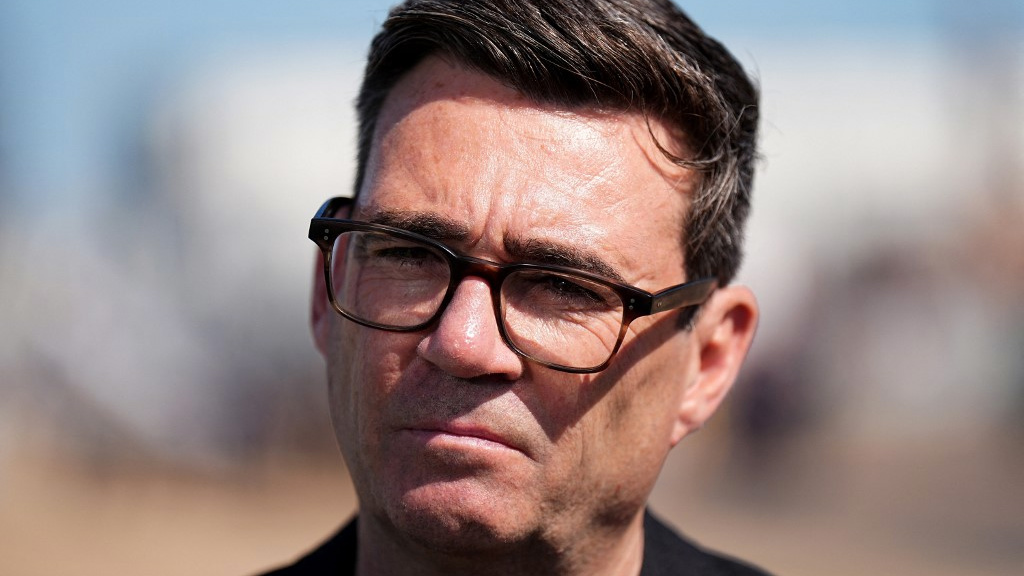
When Andy Burnham campaigned to become Britain’s prime minister, he centered his platform on a sharp pivot to domestic priorities, promising a break from the previous Keir Starmer administration’s foreign policy approach that had alienated much of the party’s base. But barely seven days into his tenure, a sudden dramatic escalation of tensions between the United States and Iran has forced the new leader to confront an unexpected geopolitical crisis that immediately throws his policy agenda off course and tests his political judgment.
In the lead-up to taking office, Burnham had already signaled a clear break from Starmer’s stance on Middle Eastern affairs. He issued a public apology for Labour’s early backing of Israel’s military campaign in Gaza and announced his government would explore banning imports of goods produced in Israeli-occupied settlements. Political observers widely framed the remarks as a calculated move to win back disillusioned Labour voters who had abandoned the party over its perceived unwavering pro-Israel policy amid the Gaza humanitarian crisis. No one anticipated, however, that a major US-Iran escalation would arrive before Burnham could advance any of his promised domestic reforms.
As the new government moved to rapidly assess its position, Burnham immediately opened diplomatic consultations with key Gulf allies over the weekend. In a phone call with United Arab Emirates President Mohammed bin Zayed Al Nahyan, the prime minister thanked the UAE leadership for its ongoing support for the roughly 200,000 British citizens residing in the country amid rising regional unrest. He also spoke with Qatari Emir Tamim bin Hamad Al Thani, where he commended the two nations’ deep defense partnership—a cooperation that saw British fighter jets deploy to defend Qatar against Iranian missile strikes earlier this year. Finally, Burnham reaffirmed UK backing for Kuwait against potential Iranian attacks in a call with Kuwaiti Emir Sheikh Meshal.
The central political and diplomatic challenge for Burnham, however, remains his fraught relationship with US President Donald Trump. Earlier this year, Trump and former prime minister Starmer entered a very public falling out after Starmer delayed approval for US forces to use British military bases to launch strikes against Iranian missile sites. Trump responded with relentless public criticism and mockery of Starmer on social media, creating an extremely tense dynamic between the two allies.
Complicating Burnham’s choice is stark public opposition: a YouGov poll released just last week found a majority of British voters oppose allowing the US to use UK military bases to launch attacks on Iranian targets. To avoid a high-profile clash with Trump that would overshadow the start of his premiership, Burnham would have to openly contradict the will of the British public. Ultimately, the new prime minister opted to maintain Starmer’s original policy, granting the US access to RAF Fairford, a Royal Air Force base in Gloucestershire, to carry out strikes on Iranian missile infrastructure.
Critics have already argued Burnham failed his first major test of standing up to the White House. The prime minister pushed back on these accusations in a weekend interview, declining to say he trusts Trump and insisting he will not hesitate to publicly call out the US president when their positions diverge. While the decision has helped Burnham avoid an immediate public confrontation with Washington, it has opened the UK up to new security risks.
The Burnham government maintains that US strikes on Iranian missile sites are defensive in nature, meaning Britain is not party to any offensive military action against Iran. That interpretation is rejected outright by Tehran. The Islamic Revolutionary Guard Corps (IRGC) last week labeled Britain an “accomplice” to US aggression and warned that it considers British military bases in the region legitimate military targets.
In response to Iran’s threat, new British Defence Secretary Wes Streeting affirmed that the UK is “ready to respond to any attacks Iran wishes to wage against this country or our allies and we will continue to do that.” Streeting clarified that “we have not joined and will not join offensive US military action in Iran. That’s an area where we have not agreed with the United States. But when it comes to securing maritime freedom and free commercial shipping in the Strait of Hormuz, that’s where we are absolutely aligned.”
Over the weekend, US Defense Secretary Pete Hegseth held a call with Streeting, where he reportedly urged the UK to host a London summit for a new multinational maritime coalition tasked with protecting commercial shipping through the Strait of Hormuz, a critical global chokepoint for energy trade. Hegseth also confirmed he would attend the summit if it moves forward. The proposal faces significant headwinds, however: major European nations have so far been reluctant to join the effort, fearing it will draw them deeper into the escalating conflict.
The previous Starmer government had committed to deploying British naval assets to the strait only after a lasting ceasefire was in place. But Streeting announced over the weekend that the UK is now prepared to lead a naval mission “when the conditions are right.”
It remains uncertain whether the proposed summit will actually take place, but analysts warn the Burnham government could struggle to resist growing US pressure to deepen British involvement in the conflict if hostilities continue to escalate. If the UK does expand its role, it will face renewed criticism from opposition groups including the Green Party, which has opposed granting the US access to British bases for strikes on Iran from the start.
Green Party leader Zack Polanski slammed Burnham’s position in comments Sunday, saying: “The illegal war in Iran should do a lot more than ‘concern’ Andy Burnham. And if he’s not holding back – when is he going to tell Donald Trump that the UK wants nothing to do with this war and to ban the US military from UK soil?”
Burnham also faces growing unrest within his own party: many Labour backbenchers who supported his bid for the premiership have already called on him to take a much firmer stance against Israel’s actions in Gaza, and are likely to oppose deeper involvement in the US-Iran conflict. Last week alone, 80 cross-party MPs and peers—including dozens of Labour politicians—issued an open letter urging Burnham to formally recognize Israel’s actions in Gaza as genocide, impose sanctions on Israel, and ban all trade that supports illegal Israeli settlements.
The issue of UK-Israel military cooperation also creates internal tension: last year, while serving as Starmer’s health secretary, Wes Streeting privately accused Israel of committing war crimes and backed imposing sanctions on the country. Now, Streeting is facing growing calls from within his own party to suspend Britain’s long-running secret military agreement with Israel.
Chris Doyle, director of the Council for Arab-British Understanding, predicted in an assessment that Burnham will largely maintain the cautious path set by his predecessor. “I think Prime Minister Burnham will continue to navigate a similar policy to his predecessor, namely that he will not wish to have British forces engage actively on any war on Iran and will continue to allow limited use of RAF Fairford and Diego Garcia,” Doyle said. On the topic of the UK’s potential role in the Strait of Hormuz, Doyle added: “There may be some sort of role in terms of de-mining and escorting in a very defensive capacity, but not one that is offensive. I think that’ll be where they draw the line.”
For the Burnham government, which campaigned on putting domestic issues front and center, the sudden escalation of Middle Eastern conflict has already created an unavoidable early crisis. What the new prime minister hoped would be a first week focused on his domestic agenda has instead become a high-stakes balancing act: caught between majority public opposition to deeper involvement, pressure from the left of his own party to take a harder line against both the US and Israel, and relentless pressure from Washington to back the US campaign against Iran. For a new administration eager to set its own agenda, the crisis has already emerged as a severe early political and diplomatic headache that will not fade anytime soon.