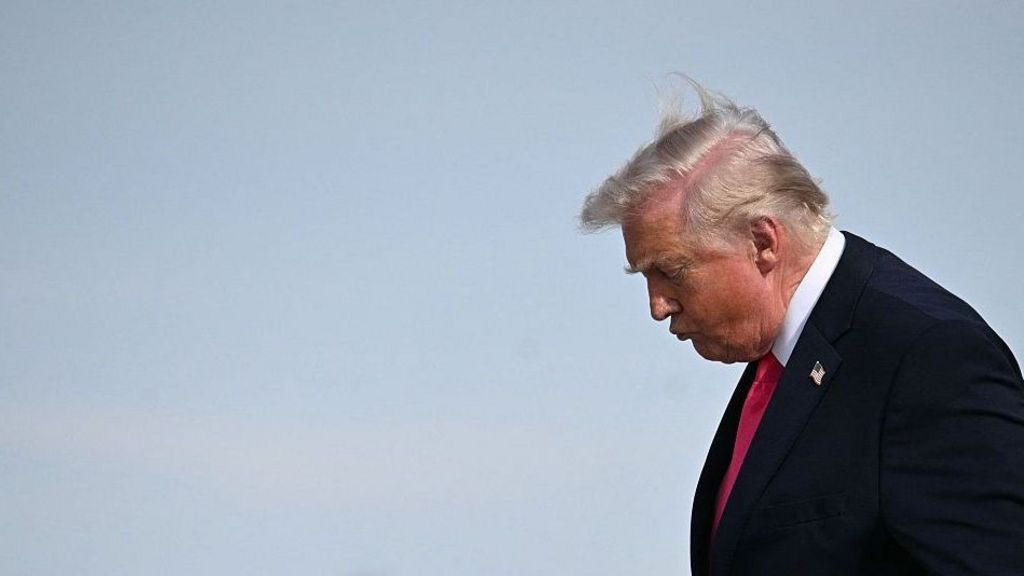
With two years remaining in his presidential term, Donald Trump – the figure who has redefined the contours of U.S. political life over the past decade – now faces a high-stakes 2026 midterm contest that will decide partisan control of both chambers of Congress, at a moment of deep vulnerability for his Republican Party. Exit polling and pre-election surveys uniformly flag the soaring cost of living as the top priority for voters heading to the polls, driven by steep spikes in food and fuel prices tied in large part to Trump’s sweeping global tariff regime and the ongoing, unpopular military conflict with Iran. After securing a decisive 2024 presidential victory that delivered strong initial approval ratings, Trump has seen his public standing plummet to historic lows in recent months, prompting a relentless cross-country campaign push that has included dozens of headline campaign rallies. Unusually, the president has deployed significant time and resources to states that have long been considered unassailable Republican territory, including Iowa and Kansas, during his final pre-election weekend blitz. The Republican National Committee has also poured hundreds of millions of dollars in campaign ad spending into these previously safe jurisdictions, most notably the closely contested Kansas Senate race. Carrie Dann, Managing Editor of nonpartisan election analysis outlet the Cook Political Report, told the BBC that this unusual level of investment in a reliably red state is a clear red flag for the GOP: “When they start pouring millions in hard-earned American campaign dollars into a state they should win handily, that’s definitive proof their internal polling shows they are in serious trouble. The spending in Kansas will far outstrip any pre-election projections Republicans made months ago – this is a party running entirely on the defensive.” At nearly every campaign stop, Trump has made a direct appeal to voters to cast their ballots as if his name appeared on the midterm ballot, a plea he repeated during his Sunday rally in Kansas, where recent polling shows the once-safe Republican Senate seat is now fully competitive for Democratic contenders. This framing cuts to the core of a defining question for the 2026 cycle: is Trump still a net electoral asset for the Republican Party, as he was during the 2022 midterms, when nearly all GOP candidates scrambled to secure his coveted endorsement? The answer is far more ambiguous in 2026. The ongoing war with Iran has delivered a severe financial shock to U.S. households: the average price of a gallon of diesel, which stood at $3.75 before the conflict began in February, surged to an all-time high of $6.52 by September. Inflation has also climbed from 3% on the day Trump took office to 3.7% today, with independent economists calculating that the administration’s broad tariff policies are responsible for a measurable portion of that elevated rate. These economic headwinds have left the GOP exposed in a swathe of traditional red states across the American heartland, including Texas, Ohio, and Kansas, where Trump won by double-digit margins as recently as 2024. Stephen Hawkins, Global Director of Research at polling firm More in Common, noted that the most competitive Senate races of the cycle are unfolding in exactly the regions where Republicans have historically dominated: “We are seeing states that Trump carried by 10, 12, even 15 points just two years ago now have Democratic candidates with fully viable paths to victory.” Interviews with voters across Iowa, a 2024 Trump win hit hard by spiking fuel and fertilizer costs, laid bare the deep rifts in Republican support. Self-identified Republican Paul Ross, speaking outside a packed college football game, acknowledged that Trump’s current standing is actively hurting GOP candidates: “With the way things are right now, I think a lot of people will be less likely to vote Republican, even other people in my party – it’s genuinely detrimental.” Fellow Iowa voter Zach Shimp echoed that sentiment, adding that Trump’s profile is driving up Democratic turnout in a state that would otherwise be safely red. Rose Heming, another local resident, summed up widespread frustration: “He got us stuck in this war, and grocery and gas prices are sky high, we can barely keep up.” Crucially, however, widespread economic discontent has not translated into a corresponding surge in positive sentiment for the Democratic Party. Pre-election national polling, including a widely cited NBC survey released on the final Sunday before voting, puts Trump’s approval rating at 38% – a historic low for a sitting president – but finds that only 29% of voters hold a positive view of the Democratic Party. Many disaffected Republican voters remain deeply aligned with the GOP’s core conservative, Christian values, and say they will never cross party lines to vote for a Democratic candidate, even amid cost-of-living pain. Tim McKinnon, an Iowa Trump 2024 voter, explained: “We don’t love all his overseas military interventions, but an extra dollar per gallon of gas isn’t going to change our core beliefs. We didn’t vote for a perfect politician, we voted for the set of values he stood for.” For Democrats, the narrow path to victory means that any gains on Tuesday will not stem from broad public adoration for their party, but from the fact that many frustrated voters view them as a marginally less bad alternative to the status quo. The party is already looking ahead to the 2028 presidential contest, where it faces significant internal fractures that spilled into public view during the 2026 cycle, most notably in Michigan over the final campaign weekend. Party strategists are treating midterm results as a critical test to measure whether they can expand their competitive footprint into traditionally red states like Texas, elevate rising young stars including Georgia Senator Jon Ossoff and Texas state legislator James Talarico, and make inroads with rural conservative voters. Even in states where Trump and GOP surrogates have spent millions framing Democratic candidates as dangerous communists, many voters say the economic crisis overrides those culture war appeals. Nicole Williams, a Detroit small business owner who runs her own hairdressing salon, said: “I don’t care if they call it socialist, I just want my cost of living to go down – anything is better than what we have right now.” Fellow Michigan voter Gwen Jackson added that residents are fed up with partisan attacks and ready for tangible change. Historical midterm trends, which almost universally see the sitting president’s party lose congressional seats, combined with current polling aggregates, have left many Democratic operatives confident they will flip control of the U.S. House of Representatives. Veteran Democratic strategist Mary Anne Marsh argued that every Republican lawmaker who declined to push back against Trump’s policies will face consequences at the polls. A Democratic House majority would give the party power to launch sweeping oversight investigations into the Trump administration, and potentially move to impeach senior cabinet officials – most notably Defense Secretary Pete Hegseth, over the handling of the Iran war – even as Trump has repeatedly demonstrated a willingness to bypass congressional authority and govern via executive order to advance his agenda. Flipping the U.S. Senate is a far steeper climb for Democrats, who need a net gain of four seats to take control if they hold their existing vulnerable seat in Michigan, or a net gain of five seats if Michigan falls to the GOP. The most competitive battleground races, all within typical polling margins of error, are unfolding in Michigan, Texas, Ohio, Iowa, Maine, Alaska, and North Carolina. Election analysts warn that historical polling errors have consistently overestimated Democratic support and undercounted Republican turnout for Trump-backed candidates, and the president has repeatedly raised unsubstantiated claims about election integrity in the lead-up to voting, raising the real possibility he will challenge results if the GOP suffers unexpected losses. The 2026 midterms serve as the final national electoral test before the 2028 presidential election, which will define the future of U.S. politics in a post-Trump era, and offer voters a formal public referendum on the performance of the Trump administration after two years in office.
Americans head to the polls for elections that could define Trump’s closing chapter