标签: South America

南美洲

  • New Brazil law allows separated couples joint custody over pets

    New Brazil law allows separated couples joint custody over pets

    As family structures and social attitudes toward companion animals shift across the globe, Brazil has become the latest country to update its legal framework to reflect the central role pets play in modern family life. Under landmark new legislation passed by the Brazilian Congress, courts across the nation will now have the authority to formalize shared custody arrangements for pets when separating couples cannot reach a private agreement on caregiving responsibilities.

    Lawmakers behind the reform emphasized that the new rule directly responds to evolving social norms over recent decades, noting that a growing share of households—particularly those with fewer or no children—view their pets as full members of the family rather than disposable property. Legislative records accompanying the bill explain that when a couple splits without a prearranged agreement for their pet, a judge will outline a clear shared custody schedule and order both parties to split the animal’s ongoing care expenses equitably.

    The legislation includes key eligibility guardrails to protect animal welfare: shared custody will only be approved if the pet has spent most of its life with the couple, and will be automatically denied if one party has a criminal record or a documented history of domestic violence that puts the animal at risk. This regulatory change comes amid a rising tide of pet custody disputes in Brazilian courts, a trend lawmakers say made the legal update necessary.

    Brazil’s pet population underscores the widespread impact of this reform: data from Instituto Pet Brasil shows the nation of 213 million people is home to roughly 160 million companion animals, meaning the new law will touch millions of households across the country.

    Brazil’s reform joins a growing global movement to reclassify the legal status of pets. Currently, the United Kingdom still legally treats dogs as inanimate property, on par with cars, houses, and other personal belongings—so pet custody cases there only result in a ruling on single ownership. France led legal reform in the region back in 2014, when it updated its laws to reclassify pets as “living and feeling beings” rather than moveable goods, opening the door for shared custody rulings in divorce proceedings. Australia has yet to pass any formal national legislation guiding courts on pet living arrangements after a relationship split. Most recently, Spain saw a high-profile shared custody ruling in 2021, when a Madrid judge granted joint custody to a separated couple fighting over their dog, Panda, ruling both parties were equally responsible co-caretakers for the animal.

  • Immigrants seeking asylum are ordered to countries they’ve never been to, but end up stuck in limbo

    Immigrants seeking asylum are ordered to countries they’ve never been to, but end up stuck in limbo

    Across the United States, thousands of asylum seekers who built stable lives while waiting for their claims to be adjudicated now face an unprecedented and uncertain future, after receiving sudden deportation orders to distant nations they have no connection to. From an Afghan refugee who fled Taliban rule and resettled in upstate New York to a Cuban restaurant worker in Texas arrested following a minor traffic collision, the impacted migrants come from every corner of the globe. A Mauritanian resident of Michigan was ordered to Uganda; a Venezuelan mother in Ohio faces removal to Ecuador; dozens of Bolivian, Ecuadorian, and other migrants have been sent to Honduras.

    Advocacy group Mobile Pathways, which advocates for full transparency in U.S. immigration proceedings, confirms these cases are part of a far larger policy push: more than 13,000 legally residing asylum seekers have received so-called third-country deportation orders, sending them to nations where nearly all have no familial, cultural, or social ties. Yet despite the Biden White House’s aggressive push to expand immigrant expulsions, very few of these orders have actually been carried out. Instead, thousands of migrants are trapped in a sprawling immigration limbo: they cannot argue their asylum claims in U.S. courts, have lost their legal right to work, and live in constant fear of being suddenly detained and deported to a country they have never even visited.

    Immigration rights advocates say this uncertainty is no accident. According to Cassandra Charles, senior staff attorney at the National Immigration Law Center, which has challenged the mass third-country deportation policy, the administration’s core goal is to instill widespread fear in migrant communities. The threat of removal to an unfamiliar, potentially dangerous nation, Charles argues, is designed to pressure asylum seekers to abandon their claims and voluntarily return to their home countries — even if those home countries put their lives at risk.

    In mid-March, an internal shift was revealed. An email from top Immigration and Customs Enforcement (ICE) legal leaders to Department of Homeland Security (DHS) field attorneys, obtained by The Associated Press, ordered a halt to new third-country deportation motions in asylum cases. No explanation was provided for the order, which has not been publicly released, and DHS declined repeated requests to confirm whether the pause is permanent. All existing deportation cases, however, are moving forward, leaving thousands still in legal purgatory.

    One Guatemalan asylum-seeker, speaking to reporters on condition of anonymity to avoid retaliation, described the crippling fear her case has sparked. In 2024, she crossed the U.S.-Mexico border with her 4-year-old daughter after being held captive and repeatedly sexually assaulted by gang members, later discovering she was pregnant from one of her attacks. She had regained hope after arriving in the U.S., she said — until an ICE attorney requested her deportation not to her home country of Guatemala, but to one of three distant nations: Ecuador, Honduras, or Uganda. She had never even heard of Ecuador or Uganda before her hearing, she said. “When I arrived in this country, I was filled with hope again and I thanked God for being alive,” she said, tears in her eyes. “When I think about having to go to those other countries, I panic because I hear they are violent and dangerous.”

    The third-country deportation push first launched last summer, when ICE attorneys — who act as prosecutors in the U.S. immigration court system — received instructions to file “pretermission” motions that terminate asylum claims and clear the way for removal to third nations. Sarah Mehta, an immigration policy analyst at the American Civil Liberties Union, notes that these motions do not argue that the migrant does not have a valid asylum claim — they simply seek to dismiss the entire case and remove the person to another country entirely. The pace of orders accelerated sharply in October, after a precedent-setting ruling from the Justice Department’s Board of Immigration Appeals. The three-judge panel, two of whom were appointed by former Florida Attorney General Pam Bondi and one a holdover from the first Trump administration, ruled that asylum seekers could be removed to any third nation the U.S. State Department certifies will not persecute or torture them. The ruling cleared legal barriers to the policy, and the administration rapidly expanded the practice.

    Mobile Pathways data shows more than 13,000 asylum seekers have now had their cases canceled and received third-country deportation orders. More than half of these orders target Honduras, Ecuador, or Uganda, with the remainder spread across more than 30 other nations. Theoretically, deported migrants are allowed to pursue asylum claims in the receiving third countries, though many of these nations have underfunded, barely functional asylum systems that can barely handle their own existing claims backlogs.

    Despite the thousands of orders, actual deportations have been far rarer than the administration anticipated. Rights groups Refugees International and Human Rights First’s Third Country Deportation Watch tracker estimates that fewer than 100 of the 13,000 ordered migrants have actually been deported. In a statement to the AP, a DHS spokesperson defended the policy, framing the third-country arrangements, known as Asylum Cooperative Agreements, as “lawful bilateral arrangements that allow illegal aliens seeking asylum in the United States to pursue protection in a partner country that has agreed to fairly adjudicate their claims.” The spokesperson added that DHS is “using every lawful tool available to address the backlog and abuse of the asylum system,” pointing to the roughly 2 million pending asylum cases clogging the U.S. immigration court system.

    But the policy has hit unforeseen logistical, legal, and diplomatic barriers that have slowed deportations to a crawl. For example, Mobile Pathways data shows thousands of migrants have been ordered deported to Honduras, but the bilateral agreement between Washington and Tegucigalopa only allows the Central American nation to accept 10 such deportees per month over a 24-month period. Even more striking, dozens of migrants ordered deported to Honduras do not speak Spanish — the country’s official language — with native languages ranging from English to Uzbek to French.

    Uganda, which has received hundreds of deportation orders for asylum seekers, has yet to take in a single deportee, according to a top Ugandan government official. Okello Oryem, Uganda’s minister of state for foreign affairs, told the AP that U.S. authorities have delayed deportations while conducting cost-benefit analyses, noting that small groups of one or two deportees per flight are not economically viable. “You can’t be doing one, two people at a time,” Oryem said. “Planeloads — that is the most effective way.”

    Many immigration advocates suspect the March halt to new deportation motions signals a shift in strategy, rather than an end to the policy. “Right now they haven’t been able to remove that many people,” the ACLU’s Mehta said. “I do think that will change. They’re in a hiring spree right now. They will have more planes. If they get more agreements, they’ll be able to send more people to more countries.” Until that shift, thousands of asylum seekers will remain trapped between two systems, stripped of the right to work and build lives in the U.S., with no clear timeline for when — or if — they will be sent to an unfamiliar country halfway across the world.

    The Associated Press reporting on this story included contributions from correspondents Garance Burke in San Francisco, Joshua Goodman in Miami, Rodney Muhumuza in Kampala, Uganda, Marlon González in Tegucigalpa, Honduras, and Molly A. Wallace in Chicago.

  • US lifts sanctions on Venezuela’s acting President Delcy Rodríguez

    US lifts sanctions on Venezuela’s acting President Delcy Rodríguez

    On Wednesday, the United States formally removed sanctions against Venezuela’s interim acting president Delcy Rodríguez, according to a public notice published on the Treasury Department’s Office of Foreign Assets Control (OFAC) official website. This latest sanctions rollback marks the most recent step in Washington’s formal recognition of Rodríguez as a legitimate governing authority in Venezuela, coming two and a half months after U.S. military forces captured former Venezuelan president Nicolás Maduro and his wife in Caracas, the country’s capital, on January 3.

    Following their capture, the couple was extradited to New York City to face federal drug trafficking charges, and both have entered not guilty pleas in court. The lifting of sanctions clears regulatory barriers that previously barred Delcy Rodríguez from engaging in formal commercial and diplomatic dealings with U.S. firms and investors, opening new pathways for bilateral collaboration between the interim Venezuelan government and Washington.

    Though Rodríguez did not explicitly reference the now-rescinded sanctions targeting her personally in her public comment, she framed the U.S. decision as a promising milestone for bilateral ties between the two nations. In a statement posted to her official Telegram channel shortly after OFAC’s announcement, Rodríguez said, “We value President Donald Trump’s decision as a step toward normalizing and strengthening relations between our countries. We trust that this progress will allow for the lifting of current sanctions against our country, enabling us to build and guarantee an effective bilateral cooperation agenda for the benefit of our people.”

    This policy reversal represents a notable shift from the Trump administration’s first term, when both Delcy Rodríguez and her brother, National Assembly president Jorge Rodríguez, were placed under U.S. sanctions for their alleged roles in eroding democratic governance in Venezuela. The siblings, along with other close allies of Maduro, were added to OFAC’s sanctions blacklist in September 2018, just months after Maduro won a controversial re-election that was widely dismissed as illegitimate by the international community. The vote was boycotted by major opposition parties, and dozens of opposition candidates were barred from running for office. At the time of the 2018 designation, the Treasury Department said in an official statement that “Maduro has given Delcy Eloina Rodríguez Gomez and Jorge Jesus Rodríguez Gomez senior positions within the Venezuelan government to help him maintain power and solidify his authoritarian rule.”

    Following Maduro’s removal from office in January’s U.S.-led military operation, the current Trump administration has opted to pursue collaboration with Delcy Rodríguez rather than align with traditional Venezuelan opposition factions. Since taking over as interim head of state, Rodríguez has overseen implementation of a Washington-backed phased economic recovery plan for the oil-rich nation. She has actively courted international investment, rolled out reforms to open Venezuela’s markets to private capital, and committed to binding international arbitration and greater regulatory transparency for foreign businesses.

    Last month, the Trump administration formalized its recognition of Rodríguez’s authority by backing her claim as the “sole Head of State” of Venezuela during ongoing civil proceedings in U.S. federal court. The lifting of sanctions on Delcy Rodríguez is part of a broader rollback of punitive measures targeting Venezuela’s key economic sectors. In March, OFAC issued a sweeping general license that allows state-owned oil giant Petróleos de Venezuela S.A. (PDVSA) to sell crude oil directly to U.S. buyers and on global commodity markets, a dramatic policy shift after years of near-total U.S. restrictions on dealings with the Venezuelan government and its critical oil sector.

    Despite Maduro’s ouster and detention, his legal status as Venezuela’s sitting president remains unaltered under Venezuelan domestic law. Within hours of the January 3 operation, Venezuela’s ruling party-aligned Supreme Court declared Maduro’s absence from office “temporary,” a ruling that eliminates the legal requirement to hold a snap presidential election and preserves the official immunity Maduro holds under international law as a sitting head of state. The court’s order installed Delcy Rodríguez as interim president for an initial 90-day term, with a provision allowing the National Assembly — which is controlled by the ruling party and led by her brother Jorge — to extend the appointment to a maximum of six months. That initial 90-day term is set to expire this Friday.

  • A road accident in Colombia involving several vehicles kills at least 2 people and injures 19

    A road accident in Colombia involving several vehicles kills at least 2 people and injures 19

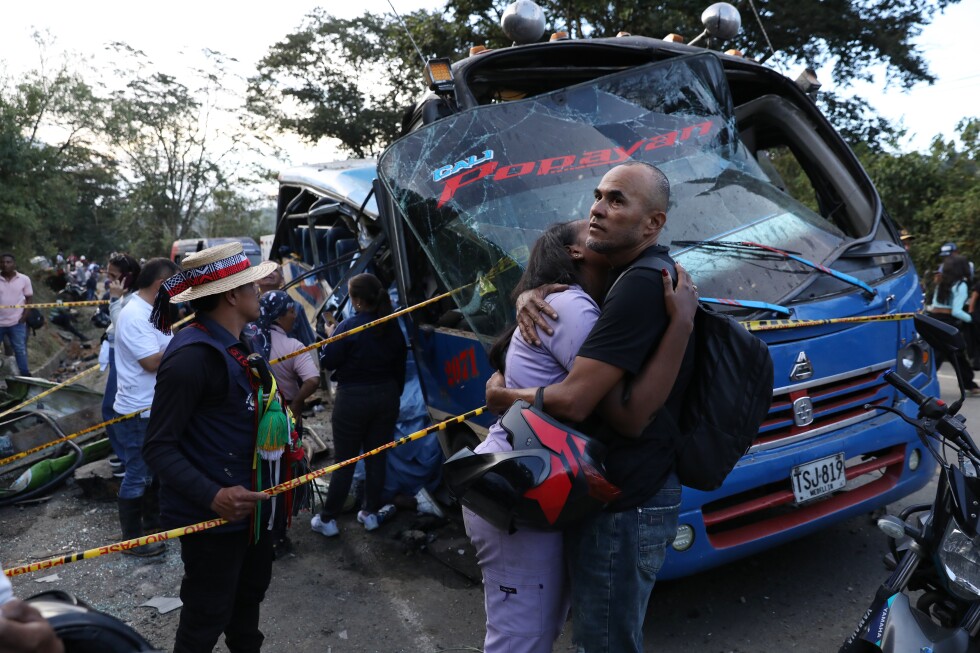
    A devastating early-morning collision at a highway toll station in central Colombia has left at least two people dead and 19 others injured, local regional authorities confirmed Wednesday. The multi-vehicle crash unfolded approximately 31 miles north of Colombia’s capital city Bogotá, on a heavily traveled artery in the Cundinamarca department, according to regional governor Emilio Rey, who shared details of the incident on social platform X.

    Rey explained that the chain reaction crash was triggered when a milk delivery truck suffered total brake failure, barreling into the line of stopped vehicles waiting to pay tolls. The out-of-control truck slammed into six passenger vehicles and one motorcycle already positioned at the booth, sparking a series of powerful explosions that engulfed multiple vehicles in intense fire. Eyewitness accounts and footage from the crash site confirm multiple blasts that left most of the involved vehicles completely destroyed by flames.

    Local media footage captured chaotic, harrowing scenes at the site: bystanders tearfully worked to extract trapped survivors from mangled wreckage, while thick black smoke billowed from burning vehicles. Hollman Osma, one witness who was at the toll booth when the crash occurred, described the sudden, shocking event to local news outlet Noticias Caracol. “I saw when the truck went through the toll booth, then there was an explosion, it overturned, and there were strong explosions and vehicles burning,” Osma said. “There was absolutely nothing that could be done.”

    In response to the disaster, emergency services mobilized a large contingent to the crash area: at least 11 ambulances, alongside teams of firefighters and law enforcement officers, were dispatched to conduct search and rescue operations and transport the injured to medical facilities. All injured victims are currently receiving care at hospitals in surrounding communities, though Governor Rey has not yet released further information on the severity of their injuries or their current prognosis. As of Wednesday afternoon, the highway remained fully closed to through traffic while investigators work to document the crash site and clear wreckage from the road.

  • Marina Silva steps down as Brazil’s environment minister to run for Congress

    Marina Silva steps down as Brazil’s environment minister to run for Congress

    SAO PAULO — One of the world’s most respected climate advocates, Brazil’s Environment Minister Marina Silva, announced Wednesday that she will depart her cabinet post in President Luiz Inácio Lula da Silva’s administration to compete in Brazil’s upcoming national congressional election this fall.

    Per Brazil’s strict election regulations, any cabinet official seeking elected office must resign from their government position no later than six months before the October 4 vote, clearing the way for her transition. João Paulo Ribeiro Capobianco, a career environmentalist who has served as executive secretary of the Ministry of Environment and Climate Change, will step into the role to succeed Silva.

    In a public statement shared to her Instagram account, Silva framed her departure as the completion of a core mandate: “I fulfilled the tasks assigned to me, which involved rebuilding and moving forward Brazil’s environmental policy following years of decline.” A veteran legislator who first won a congressional seat in 1994 and was re-elected most recently in 2022, Silva added that she will return to her legislative mandate and actively campaign for Lula’s re-election bid this year.

    This departure marks the end of Silva’s second tenure leading Brazil’s environmental policy under Lula, and for the second time in her career, she leaves behind a historic drop in Amazon deforestation. When she retook the ministerial post in 2023, the country was grappling with a near-doubling of forest loss that occurred during the four-year administration of former President Jair Bolsonaro, who held office from 2019 to 2022. After taking office, Silva pledged to eliminate all illegal deforestation in Brazil by 2030, and data from her tenure shows policies rolled out under her leadership have already cut Amazon forest loss by more than 50%.

    Marcio Astrini, executive director of the Climate Observatory, a leading coalition of Brazilian environmental nonprofits, called Silva’s progress transformative. “If nothing exceptionally negative happens, we should have, if not the lowest, one of the lowest deforestation rates in the Amazon’s recorded history,” Astrini said. He added that Silva’s administration also delivered robust protections for the Cerrado savanna biome and implemented sustained, effective policies to curb the severe forest fires that ravaged the region in 2023 and 2024 amid extreme drought conditions.

    Bolsonaro, who is currently serving a 27-year prison sentence for his role in the 2022 coup attempt, centered his environmental policy on advancing agribusiness interests that opposed the creation of protected Indigenous and conservation territories and pushed for the legalization of illegally grabbed public forest land. His administration froze all new designated protected areas, gutted the budget and authority of federal environmental enforcement agencies, and transferred oversight of forest management to the agriculture ministry, which is historically aligned with agribusiness. By the year ending July 2021, Amazon deforestation under Bolsonaro hit a 15-year peak, with only a minor slowdown in destruction recorded in the following 12 months.

    Astrini noted that Silva moved quickly to reverse these changes upon her return to office: she reorganized the structure of the Environment Ministry and federal protection agencies, and restructured the Amazon Fund — the world’s largest dedicated rainforest conservation initiative, which she originally helped design during her first tenure as minister. The restructured fund secured record new international contributions, funding expanded on-the-ground enforcement operations that had been halted under Bolsonaro.

    “The environmental sector started working again in Brazil,” Astrini said. “That was the first major achievement: She put the house in order.”

    Silva was also the key driving force behind Brazil’s successful bid to host the 2025 UN Climate Change Conference (COP30) in the Amazon city of Belém, and remains the most authoritative voice on Brazil’s national climate agenda. Still, Astrini acknowledged that even with Silva’s leadership, the Lula administration has faced major pushback on environmental protection from congressional factions. Last year, lawmakers passed a bill to streamline environmental licensing for large strategic infrastructure projects, cutting a process that previously took six to seven years and required multiple layers of approval down to just 12 months. Lula has also pushed forward with plans to approve exploratory offshore oil drilling at the mouth of the Amazon River, an ecologically critical region that scientists warn is highly vulnerable to oil spill damage. Silva was publicly critical of both measures, but lacked the political capital to block them.

    Born in the Amazon region and a former rubber tapper in her youth, Silva has a decades-long track record of environmental leadership. During her first tenure as environment minister under Lula’s initial two presidential terms from 2003 to 2008, she oversaw the creation of dozens of new protected conservation areas, built the country’s world-leading satellite deforestation monitoring system, and launched large-scale crackdowns on illegal environmental crime. She also helped design and launch the original Amazon Fund during that first term.

    Silva resigned from her first ministerial post in 2008 after high-profile clashes with Lula, who was shifting policy to court agribusiness interests during his second term. The two political figures reconciled years later, and Silva threw her support behind Lula’s successful 2022 election campaign that ousted Bolsonaro, clearing the way for her return to the environment ministry.

    This reporting on climate and the environment from The Associated Press receives financial support from multiple private foundations. AP retains full editorial control over all content. More information on AP’s philanthropic partnership standards, a list of supporters, and funded coverage areas is available at AP.org.

  • Brazil judge blocks Sugarloaf Mountain zipline

    Brazil judge blocks Sugarloaf Mountain zipline

    One of Rio de Janeiro’s most iconic natural landmarks, Sugarloaf Mountain, has been the center of a years-long environmental and legal battle that took a dramatic new turn this week, when a Brazilian judge ruled to block a controversial zipline construction project on the UNESCO World Heritage Site.

    The proposed adventure attraction planned four parallel ziplines stretching 755 meters between the 396-meter peak of Sugarloaf Mountain and nearby Morro da Urca, running alongside the historic cable car route that has connected the two landforms since 1912. Developers marketed the project as a high-thrill tourist addition, promising visitors speeds of up to 100 kilometers per hour on the downhill descent.

    First launched four years ago, the initiative sparked immediate and sustained pushback from local communities and environmental activists across Brazil. Opponents argued that the construction of zipline access platforms required extensive rock excavation at the mountain’s peak, causing permanent, irreversible damage to the sensitive protected ecosystem and geological landscape of the heritage site. In response, the site management company and project developers claimed excavation would be limited to existing developed areas to minimize disruption, and had already secured formal approval from both the Rio de Janeiro City Council and Brazil’s National Historical and Artistic Heritage Institute (IPHAN).

    The project faced repeated construction halts through years of legal challenges, and was 95% complete when Brazil’s high court ruled in January 2026 to allow work to restart, arguing that halting construction at that late stage would cause more environmental harm than finishing the project. That ruling has now been fully overturned by this week’s court decision.

    In his ruling, the judge emphasized that Sugarloaf Mountain holds inestimable cultural and natural value not only for Brazilians, but for people across the globe. As part of the ruling, both IPHAN and the project developer were ordered to pay 30 million Brazilian reals (approximately $5.77 million USD) in environmental damages for harm already caused during construction.

    Activist leaders who spearheaded the campaign against the zipline called the ruling a landmark victory for environmental protection of Brazil’s natural heritage. Gricel Osorio Hor-Meyll, one of the lead organizers of the opposition campaign, confirmed the outcome to AFP, describing the decision as a huge win for conservation.

    Despite the court’s ruling, the legal fight over the project is far from over. Developers have announced they plan to appeal the decision, leaving the future of the nearly completed attraction uncertain while the case moves through Brazil’s appellate courts.

  • Chile’s new President José Antonio Kast brings openly religious views to a changing country

    Chile’s new President José Antonio Kast brings openly religious views to a changing country

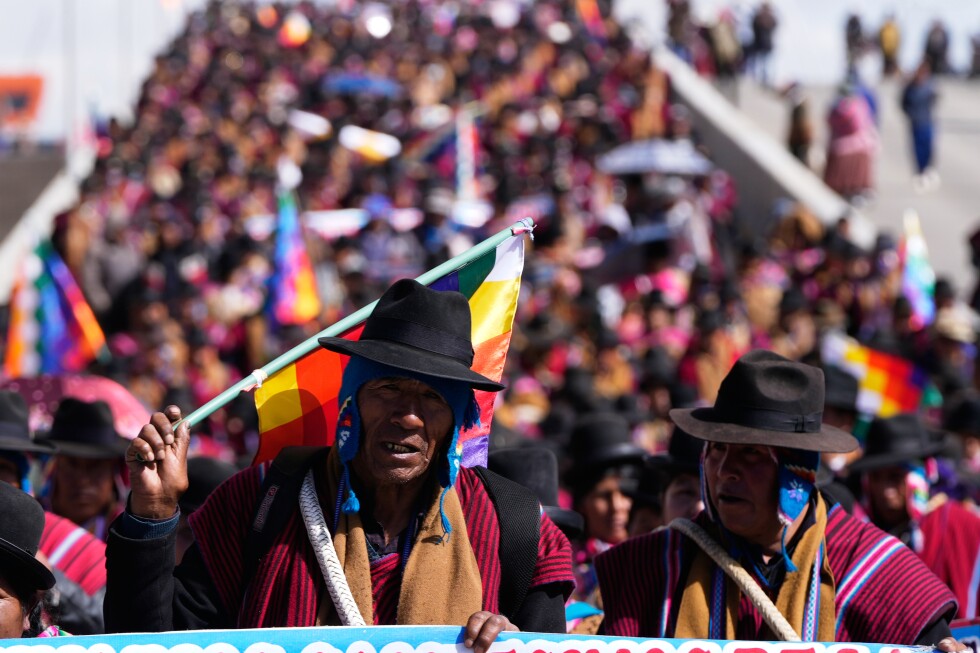
    When Chile’s newly inaugurated President José Antonio Kast took office on March 11, he cemented the latest chapter of a growing rightward political shift across Latin America — and brought open, devout religious conservatism to the forefront of the region’s most secular major nation.

    The 60-year-old former lawmaker, a father of nine and practicing Catholic deeply embedded in the international Schoenstatt apostolic movement, has built his political brand around unapologetic conservative values that have put progressive advocacy groups on high alert. Kast, who first ran for president in 2021 and lost to Gabriel Boric, secured a 58% majority in his 2025 campaign by centering pledges to crack down on rising crime and deport undocumented immigrants. But his long-held positions on social issues — opposition to abortion, same-sex marriage, and even the sale of emergency contraception dating back to 2009 — have defined concerns about what his presidency will mean for marginalized groups and social progress in Chile.

    Kast’s ascent dovetails with a broader regional trend that has brought conservative leaders including El Salvador’s Nayib Bukele and Argentina’s Javier Milei to power in recent years, each riding popular discontent with established left-leaning governance to advance agendas focused on security and economic restructuring. Kast’s policy alignment also overlaps in key areas with that of former U.S. President Donald Trump, whose administration openly welcomed his electoral victory.

    To understand how Kast’s faith intersects with his politics, it is necessary to first contextualize Chile’s shifting religious landscape. Across Latin America, Catholic affiliation has plummeted over the past three decades: a 2024 Latinobarómetro report found the regional share of Catholics fell from 80% in 1995 to just 54% in 2024. In Chile, the shift is even starker: only 45% of the population identifies as Catholic today, while 37% claim no religious affiliation and 12% identify as Protestant.

    Luis Bahamondes, a religion scholar at the University of Chile, explained that the Catholic Church, once one of Chile’s most trusted institutions in the 1990s, saw public confidence collapse amid widespread social transformation and a string of high-profile sexual abuse scandals. “It became one of the most questioned institutions and one of the least trusted,” Bahamondes noted. Still, he added, conservative social values rooted in religious tradition remain deeply embedded in Chilean culture. Chile was the last Latin American nation to legalize divorce, doing so only in 2004, and resistance to comprehensive school sex education persists today. “There are still concepts that resonate strongly in Chilean society — such as family and marriage — which carry a strong religious weight,” Bahamondes said. “There is often talk of a crisis of Catholicism, but what is in crisis is the institution, not the belief itself.”

    That disconnect between institutional Catholicism and persistent personal belief is exactly where Kast’s connection to the Schoenstatt movement resonates. Founded in Germany in 1914 at the outbreak of World War I, Schoenstatt is a Catholic apostolic movement centered on devotion to the Virgin Mary, which first arrived in Chile’s coastal city of Valparaíso in 1947. The movement has since expanded across the country, building more than 20 shrines and counting roughly 10,000 followers, including Kast and his wife.

    Rev. Gonzalo Illanes, director of the Schoenstatt movement in Chile, emphasized that the group is not a political organization, but rather a faith formation community built on three core pillars: personal spiritual development, the integration of faith into daily life, and devotion to the Virgin Mary. While the movement shares Kast’s position that life must be protected from conception to natural death, it remains committed to open dialogue with those who hold different views, Illanes said. “Schoenstatt, like the Catholic Church, is not a political movement but a space for formation, faith and transcendence,” he explained. “The challenge is how to move forward. Not to stop talking.”

    For Kast’s supporters, his open faith is a key source of confidence, not a cause for concern. Jorge Herrera, a Schoenstatt member and Catholic who voted for Kast, called the new president a capable leader with a clear plan for Chile that the country desperately needed. “He’s a president who gives me a lot of confidence,” Herrera said. “I share his values.” He echoed Schoenstatt’s core belief that every person has a unique divine mission, and noted that while he aligns with Kast’s anti-abortion stance, it was the president’s broader economic and security vision that won his support.

    Kast’s appeal even extends to conservative circles beyond Chile’s borders. In Mexico, where a left-leaning national government has overseen abortion decriminalization in more than half of the country’s states, conservative activists see Kast as a welcome model. “It gives me confidence that he publicly acknowledges being inspired by a Christian faith,” said Rodrigo Iván Cortés, president of a Mexican conservative advocacy group. “That does not mean that he wants to impose his faith on others, but simply that he professes it.”

    But for progressive and rights advocacy groups, Kast’s inauguration brings well-founded fears of gradual erosion of hard-won social rights. Unlike Argentina’s Milei, who immediately implemented sweeping rollbacks such as a ban on gender-affirming care for minors, Kast is not expected to reverse existing policies overnight. But researchers warn that a slowdown in progress, weakening of supportive public policies, and growing legitimacy for anti-rights rhetoric could still cause lasting harm.

    “There are valid reasons for concern, though not necessarily for an immediate rollback as seen with Milei,” said Cristian González Cabrera, an LGBTQ-rights researcher at Human Rights Watch. “The risk with Kast could be more gradual: slowing progress, weakening public policies and legitimizing anti-LGBTQ+ rhetoric.”

    For reproductive rights advocates, early signals from Kast’s administration are already worrying. One of his first actions in office was a 3% across-the-board budget cut, and his new cabinet includes openly religious leaders heading the women’s and health ministries. Catalina Calderón, chief advocacy officer at the Women’s Equality Center, pointed to recent cuts to social and reproductive rights programs under Milei in Argentina as a warning sign for Chile. “Across the region, we have seen that when leaders from the political wing to which Kast belongs take office, one of the first things that happens is a rollback of individual rights and women’s rights,” Calderón said. “How that [religious] vision could shape the administration is something that should be watched closely.”

  • Lionel Messi shines in what could be his last Argentina home game, a 5-0 farewell friendly win

    Lionel Messi shines in what could be his last Argentina home game, a 5-0 farewell friendly win

    BUENOS AIRES, Argentina — Ahead of the 2026 men’s FIFA World Cup co-hosted by the United States, Mexico, and Canada, Lionel Messi delivered a performance for the history books on Tuesday night, turning what is widely expected to be his final home appearance for Argentina’s national side into a masterclass in a lopsided 5-0 friendly win over Zambia.

    The 38-year-old Argentine icon, who led his nation to a third World Cup title in Qatar 2022, got the match off to a blistering start, setting up Manchester City striker Julián Álvarez for an early opener in just the fourth minute at Buenos Aires’ iconic La Bombonera stadium. Before halftime, Messi added a goal of his own in the 43rd minute, capping a first-half dominant display that sent the sold-out crowd into a frenzy. The entire stadium rose to its feet in a prolonged standing ovation for Messi, with fans chanting and cheering to urge their star to lead Argentina to another world title this summer.

    Two more goals from defenders Nicolás Otamendi and Valentín Barco rounded out the 5-0 scoreline for the defending champions. The commanding win comes as a much-needed confidence boost for Argentina, which left fans and analysts with lingering concerns after a flat, underwhelming 2-1 win over Mauritania last Friday. Ahead of the Zambia friendly, head coach Lionel Scaloni issued a clear warning: a repeat of lackluster performances would lead to major changes to his 26-man World Cup squad, which must be finalized and submitted by May 30.

    For this critical pre-tournament home test, Scaloni opted to field a starting lineup largely mirroring the side that claimed the 2022 World Cup trophy with a dramatic final win over France. The most notable absence was midfielder Rodrigo De Paul, who was sidelined as he continues to recover from a muscle injury, following a poor showing against Mauritania last week.

    Argentina, a three-time World Cup winner with titles in 1978, 1986, and 2022, will kick off their 2026 World Cup campaign in Group J on June 16 against Algeria. They will then face off against Austria on June 22 before wrapping up group stage play against Jordan on June 27.

  • Lula keeps Alckmin as his running mate for Brazil’s general election in October

    Lula keeps Alckmin as his running mate for Brazil’s general election in October

    BRASILIA, Brazil – In a move that resolves weeks of speculation over his 2026 election ticket, Brazilian President Luiz Inácio Lula da Silva announced Tuesday that incumbent Vice President Geraldo Alckmin will once again join his ticket as the running mate for his October re-election campaign, sticking with his former political rival turned key governing partner despite pressure to shift to a more right-leaning pick.

    The 80-year-old leftist incumbent faced mounting calls from some conservative-leaning coalition blocs to select a running mate from a larger right-wing party to broaden electoral appeal ahead of the general vote. But Lula’s longstanding commitment to Alckmin, a 73-year-old center-right politician who has become one of his most trusted cabinet allies, won out. Speaking during a regular Cabinet meeting in the federal capital Brasilia, Lula confirmed that Alckmin will step down from his concurrent role as Minister of Industry to comply with Brazil’s strict electoral regulations.

    “Our partner Alckmin will have to leave the Industry Ministry. He will have to leave because he will be candidate for vice president once again,” Lula told attendees of the gathering.

    Brazil’s electoral code mandates that all sitting cabinet ministers seeking elected office in the October general election must resign their government positions no later than April 6. Alckmin is not the only cabinet member departing to pursue a campaign: multiple other administration officials have already announced their plans to step down to run for seats in Congress and state governorships across the country.

    The partnership between Lula and Alckmin is one of the most unusual cross-ideological alliances in modern Brazilian politics. The pair first faced off in the 2006 presidential election, when Alckmin ran as the main opposition candidate against Lula and ultimately lost the runoff by a comfortable margin. Before entering national government, Alckmin – a soft-spoken Catholic politician who is popularly known as “Dr. Alckmin” among Brazilian voters – built a decades-long political career as a three-term governor of São Paulo, Brazil’s most populous and economically powerful state.

    Alckmin co-founded the center-right Brazilian Social Democracy Party three decades ago, but left the party in 2022 to run alongside Lula on a unified anti-Jair Bolsonaro ticket, joining the Brazilian Socialist Party to formalize the alliance. That cross-ideological pairing proved pivotal to Lula’s narrow 1-point victory over the far-right incumbent Bolsonaro that year, as Alckmin’s conservative and centrist roots helped win over swing voters uneasy with Bolsonaro’s polarizing leadership.

    During Lula’s current term, Alckmin has emerged as a central behind-the-scenes figure in key policy and diplomatic wins for the administration. He led Brazilian trade negotiations on tariff adjustments with the United States, and played a key role in finalizing the long-stalled free trade agreement between Mercosur, South America’s leading trade bloc, and the European Union – a deal that has been more than 20 years in the making.

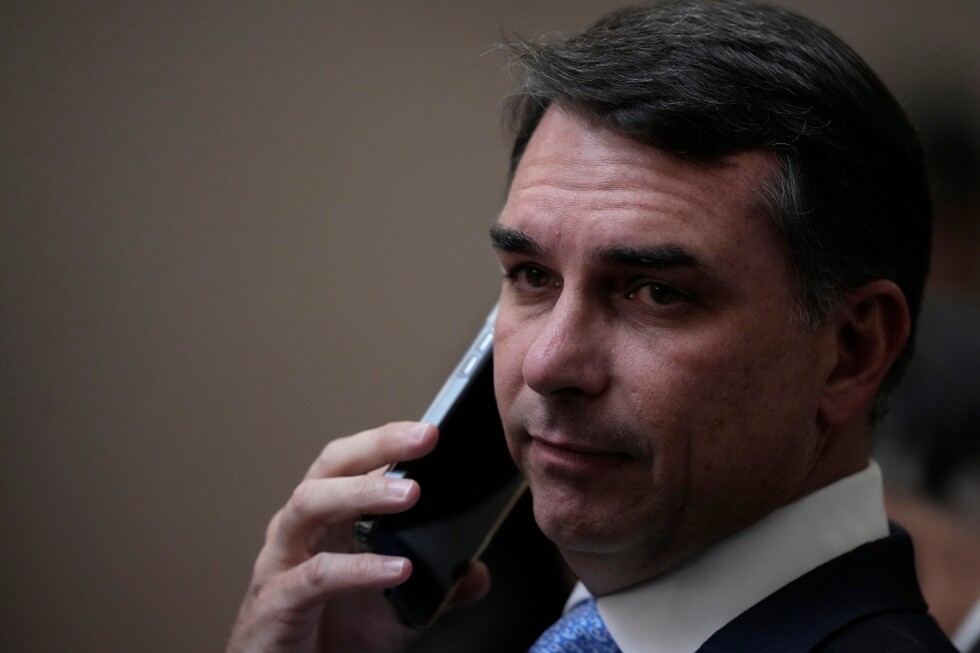
    Looking ahead to October, Lula is widely expected to face a challenger from the Bolsonaro camp: Sen. Flávio Bolsonaro, the eldest son of the former president, who has emerged as the likely standard-bearer for the far right in the upcoming contest.

  • Russian oil tanker docks in Cuba ending near-total blockade

    Russian oil tanker docks in Cuba ending near-total blockade

    In a significant development that alleviates a severe energy crisis, the Russian-owned oil tanker Anatoly Kolodkin has successfully docked at the port of Matanzas, Cuba. The vessel carried an estimated 730,000 barrels of crude oil, marking the first such delivery to reach the island nation since the United States imposed a near-total fuel blockade in January.

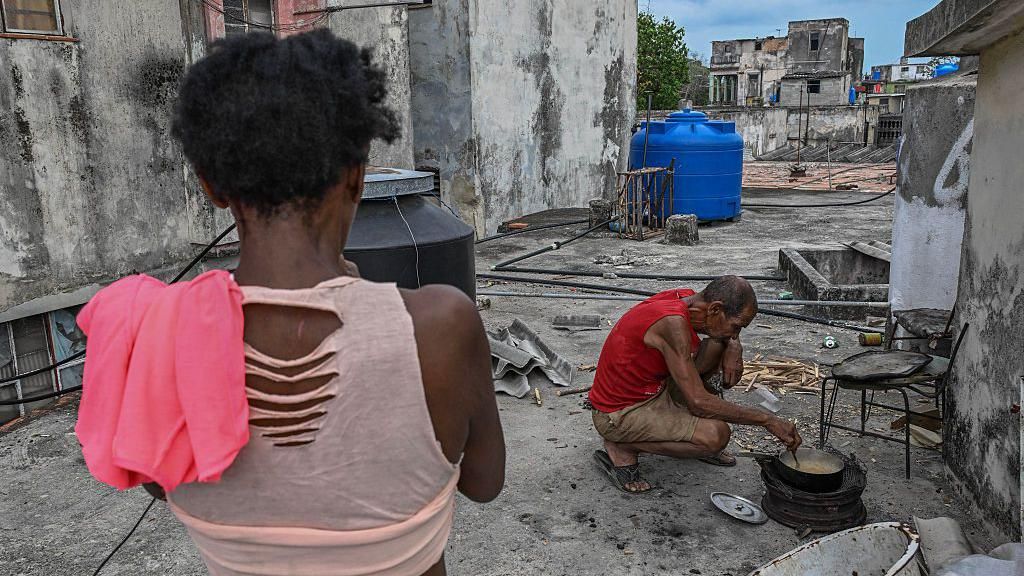
    The blockade was initiated following the U.S. capture of Venezuela’s socialist leader Nicolás Maduro, Cuba’s primary regional ally. President Donald Trump had threatened tariffs on any country supplying oil to Cuba, effectively severing its main energy supply and plunging the country into a dire humanitarian situation. This led to nationwide blackouts, crippled medical services in most hospitals, and forced the closure of schools and government offices.

    A notable shift in rhetoric emerged last weekend when President Trump stated he had “no problem” with other nations sending fuel to Cuba, clarifying that the Cuban people “have to survive.” This was followed by White House Press Secretary Karoline Leavitt’s announcement on Monday, explaining that the specific shipment was permitted on a “case-by-case basis” to address urgent humanitarian needs. However, she emphasized that there has been no overarching change in U.S. policy, and the broader oil embargo remains firmly in place.

    Despite the arrival of the crude, challenges persist. The oil must be processed at an aging refinery in Havana, a procedure that could take over a week. Furthermore, the island’s more immediate need is for diesel, which is essential for powering backup generators and sustaining transportation systems. Current rationing remains extreme; drivers are limited to purchasing a maximum of 20 liters of fuel, for which they must join a weeks-long waiting list via a state-run app and pay in U.S. dollars.

    Analysts, including Jorge Piñón, an energy expert at the University of Texas at Austin, caution that this Russian shipment will provide only a temporary respite, sustaining the Cuban economy for a mere few weeks. The event underscores the complex geopolitical interplay between the U.S., Russia, and Cuba, with the island’s population caught in the middle of a prolonged economic and energy struggle.