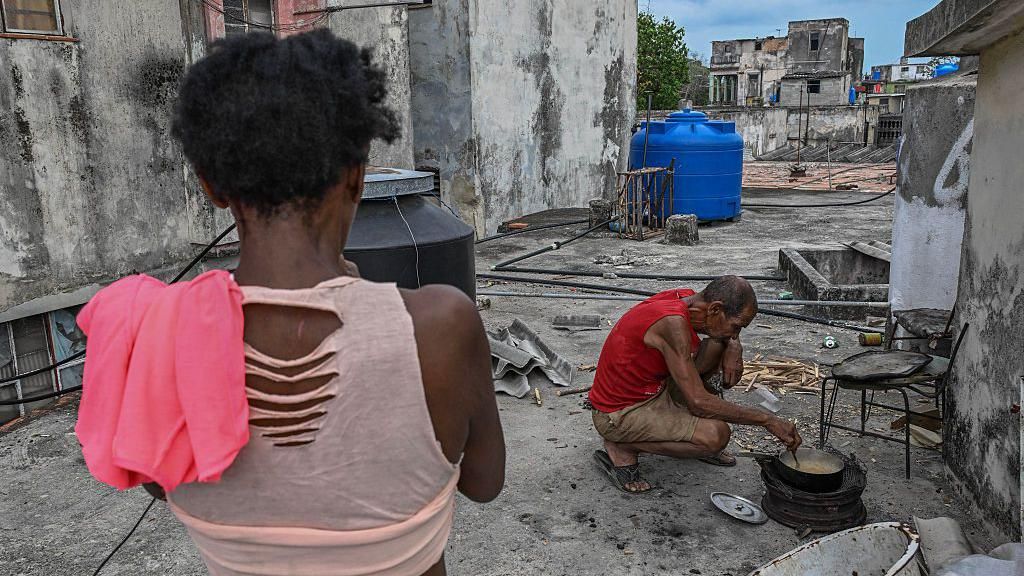
Cuba’s national energy system has entered a state of unprecedented crisis, with the Caribbean nation completely exhausted of its crude oil, diesel and fuel oil reserves, Energy Minister Vicente de la O Levy confirmed in an interview with local state media. The minister made clear that only limited volumes of locally extracted natural gas remain available, placing the country’s entire energy infrastructure in a “critical” condition that he directly attributes to the long-standing U.S.-led oil blockade squeezing incoming supply.
The acute fuel shortage has triggered staggering disruptions across daily life in Cuba. Multiple districts of the capital Havana are already experiencing scheduled rolling blackouts that last between 20 and 22 hours per day, forcing residents like the man photographed cooking over open firewood during outages to adapt to crippled basic services. De la O Levy acknowledged the public mood across the country has grown “extremely tense”, and on Wednesday, scattered public demonstrations against prolonged power cuts broke out across the capital, according to a Reuters on-the-ground report.
Critical public services have been brought to a near standstill by the energy collapse. Hospitals can no longer maintain normal operations, leaving vulnerable patients without consistent access to life-saving equipment, while schools and government administrative offices have been forced to suspend in-person operations indefinitely. The crisis has also hit Cuba’s most vital economic driver: the tourism sector, which relies on consistent power and infrastructure to accommodate international visitors, has already reported significant disruptions that threaten already fragile revenue streams.
Historically, Cuba has depended on fuel imports from Venezuela and Mexico to feed its domestic refining network. But those shipments have all but ceased in recent years, after former U.S. President Donald Trump introduced sweeping tariff threats against any third country that continued supplying fuel to Cuba, pressuring suppliers to cut trade ties.
Amid the deepening crisis, the U.S. has reaffirmed a controversial offer of $100 million in humanitarian aid, which it has tied directly to demands for “meaningful reforms” to Cuba’s ruling communist system. This offer follows a recent escalation of U.S. pressure: in early May, Washington expanded its blockade with a new round of sanctions targeting senior Cuban government officials, accusing them of human rights violations. Cuban Foreign Minister Bruno Rodriguez has already decried these new sanctions as “illegal and abusive.”
Last week, U.S. Secretary of State Marco Rubio claimed Cuban authorities had rejected the $100 million aid offer outright, a claim the Cuban government has formally denied. On Wednesday, the U.S. State Department repeated the aid proposal, stating the assistance would be distributed in partnership with the Catholic Church and what it described as “reliable” independent humanitarian organizations. “The decision rests with the Cuban regime to accept our offer of assistance or deny critical life-saving aid and ultimately be accountable to the Cuban people for standing in the way of critical assistance,” the State Department said in a statement.