标签: South America

南美洲

  • Argentina approves Milei’s bill that eases protections for glaciers, despite environmental backlash

    Argentina approves Milei’s bill that eases protections for glaciers, despite environmental backlash

    BUENOS AIRES, Argentina — In a contentious early-morning vote that has divided lawmakers, environmental advocates and scientific communities across the country, Argentina’s national Congress has greenlit a polarizing bill backed by libertarian President Javier Milei that rolls back decades-old glacier protections to open more large-scale metal mining projects. The legislation, which already cleared the Argentine Senate in February, passed the lower chamber with a final count of 137 votes in support, 111 votes in opposition, and three abstentions, setting the stage for Milei to sign the bill into law in the coming days.

    The core change introduced by the new regulatory framework is a major narrowing of environmental protections that have stood for 14 years. Back in 2010, Argentina enacted a landmark law that imposed a full ban on all mining activity on glaciers and their surrounding periglacial zones — frozen landscapes that act as critical natural water regulators for downstream communities. Under the updated rules, only glaciers and landforms documented to have “specific hydrological functions” will retain protected status, with individual provincial governments granted the authority to make these designation decisions.

    Industry leaders in Argentina’s mining sector project that the regulatory shift will unlock more than $30 billion in new investment over the next 10 years, with roughly 70% of that capital earmarked for new copper, gold and silver extraction projects across the country. Argentina is home to more than 16,900 glaciers spanning the Andes Mountain Range and South Atlantic Islands, covering a total area of roughly 3,276 square miles. Glaciology researchers have already documented that human-driven climate change is driving rapid glacial retreat across the nation, and scientific experts warn that weakening protections puts critical water resources at severe risk. For arid regions that depend on glacial melt to sustain river systems and community water access, scientists note that increased mining activity could permanently jeopardize long-term water security.

    Opposition political forces have already slammed the bill as unconstitutional, arguing that it eliminates core environmental safeguards that protect public natural resources. But the most immediate challenge to the new law will come from the courts, where leading environmental organizations have already begun organizing a massive public class-action lawsuit to block the legislation from taking effect. Groups including Greenpeace Argentina and the Environment and Natural Resources Foundation say the legislative process was deeply flawed, and that lawmakers ignored widespread public concerns over water safety and ecosystem protection.

    “If they refuse to listen in Congress, they will be forced to listen in the courts,” the coalition of environmental groups said in an official public statement. The organizations are urging ordinary Argentine citizens to join the legal action, which argues that the regulatory reform poses an existential threat to both public water access and the fragile, unique ecosystems that surround the nation’s glaciers.

  • Argentina passes bill loosening protection of its glaciers

    Argentina passes bill loosening protection of its glaciers

    BUENOS AIRES, Argentina — Argentina’s lower congressional chamber has given final approval to a hotly contested amendment to the country’s landmark 2010 Glacier Law, opening the door to expanded mining activity in sensitive glacial regions and sparking fierce pushback from environmental activists and water protection advocates. The original 2010 legislation, widely hailed as a pioneering global conservation measure, imposed a total ban on mining and mineral exploration across all glacial zones, designating these frozen landscapes as critical national water reserves.

    The approved reform shifts regulatory authority: the power to map and define which glacial areas will receive protected status is transferred from the national Argentine Institute for Snow, Ice and Environmental Sciences (Ianigla) to individual provincial governments. President Javier Milei, a prominent supporter of the overhaul, framed the change as a step toward decentralized resource governance, saying it empowers provincial leaders to leverage their own natural assets and permits mining activity only in areas that do not require environmental protection.

    The bill cleared the Argentine Senate in February 2026, leaving lower house approval as the final procedural barrier. Its passage has deepened political and social divides across the country, with opponents organizing mass public demonstrations outside congressional buildings. Protesters carried signs reading “La Ley de Glaciares no se toca” — “Hands off the Glacier Law” — to demand the legislation be withdrawn.

    Opponents warn the amendment puts Argentina’s most essential freshwater supply at existential risk. “Without water, we cannot even begin to plan for growth or development,” opposition Congresswoman Natalia de la Sota argued. Supporters of the reform, however, reject claims that the change weakens glacial protections. Backbench Congresswoman Nancy Picón Martínez, a proponent of the bill, said the mining industry has been unfairly demonized in public debate, insisting “this law protects glaciers, no matter how much some people want us to believe otherwise.”

    Under the terms of the new framework, existing glaciers and periglacial environments — frozen landscapes that may not be permanently covered in ice but remain frozen for a large part of the year — will retain protected status under Ianigla’s national inventory until provincial governments formally prove these areas do not function as strategic water reserves.

    Argentina is home to more than 16,900 glaciers, which feed 36 river basins spanning 12 provinces that supply freshwater to nearly seven million people. Meltwater from these glacial systems plays a critical role in buffering the impact of droughts, a growing threat across Argentina’s semi-arid northern and central regions driven by accelerating climate change. In provinces like Mendoza, glacial meltwater is often the only reliable water source for communities and agricultural production during extended dry periods.

    Governors of five mineral-rich provinces — Catamarca, Jujuy, Salta, Mendoza and San Juan — united in support of the amendment, arguing the 2010 law blocked efforts to drive inclusive, sustainable economic growth for both provincial and national economies without compromising resources for future generations.

    Leading environmental organizations have sharply condemned the reform, pushing back on the core argument that only a subset of glacial and periglacial areas qualify as strategic water reserves. “The primary function of all glaciers and the entire periglacial environment is to act as a freshwater reservoir,” explained Agostina Rossi Serra, a biologist with Greenpeace Argentina. “Periglacial environments hold water within their structure, and their gradual melt feeds the rivers and streams that sustain our country. A large portion of the regions pushing hardest for this amendment are arid and semi-arid areas where water is already an extremely scarce resource.”

  • Trapped miner rescued from flooded Mexican tunnel after 14 days

    Trapped miner rescued from flooded Mexican tunnel after 14 days

    A remarkable 14-day rescue mission ended in success this week, when Mexican army divers pulled a 42-year-old miner to safety after nearly two weeks trapped in a flooded, collapsed gold mine in the northern state of Sinaloa. The incident unfolded on March 25, when a tailings dam — the containment structure built to hold toxic mining waste — burst at the site, sending mud and water rushing through the underground tunnels. At the time of the collapse, 25 workers were operating deep below the surface. Twenty-one of those workers were able to evacuate to the surface immediately, but four were cut off and trapped 300 meters underground by the disaster.

    In the days that followed, rescue teams launched a frantic search through the waterlogged tunnels. Five days after the collapse, one trapped miner, José Alejandro Cástulo, was pulled to safety, while a second was found deceased. It took rescuers a full 13 days of continuous, painstaking searching to locate the third trapped miner, Francisco Zapata Nájera. After more than 300 hours of navigating murky, debris-filled water, divers finally spotted the faint, repeated blinking of Zapata Nájera’s headlamp, which he had been switching on and off intentionally to signal his location to search teams.

    Footage captured from the rescue mission shows Zapata Nájera standing in waist-deep water, visibly exhausted but unbroken in spirit. When divers reached his position and told him that his torchlight had been critical to finding him, he repeated again and again that he never lost faith that he would be saved. Even after locating him, however, the rescue team faced a new obstacle: the water level in the connecting tunnel was still too high for an immediate extraction. Divers left Zapata Nájera with emergency supplies including clean drinking water, canned tuna, and energy bars, and promised to return once they could lower the water enough to bring him out.

    Over the next 20 hours, rescue teams operated heavy pumps to drain excess floodwater from the tunnel system. Early Wednesday, the water level dropped enough to allow extraction, and Zapata Nájera was finally brought to the surface. Wrapped in a thermal blanket to stabilize his body temperature and seated on an electric utility cart, he exited the mine entrance, and was immediately airlifted by helicopter to a local hospital for evaluation, where he was reunited with his waiting family. Doctors reported that while he is frail after his 14-day ordeal, his vital signs are stable and he is expected to make a full recovery with appropriate medical care.

    The search is still ongoing for the fourth miner, who remains missing in the collapsed mine. Mexican President Claudia Sheinbaum issued a public statement praising both the relentless effort of the Mexican army rescue team and Zapata Nájera’s extraordinary resilience and unwavering hope, which she credited for making the “astounding rescue” possible.

  • Peruvians choosing a president from 35-candidate pool in Sunday’s election

    Peruvians choosing a president from 35-candidate pool in Sunday’s election

    On Sunday, Peru will hold a landmark general election that will select the Andean nation’s ninth president in just 10 years, alongside the launch of a new bicameral legislative system — all against a backdrop of soaring violent crime, deep-rooted public corruption, and widespread voter cynicism that has left much of the population skeptical of change. Thirty-five candidates are competing for the nation’s top office, an unprecedented field in Peru’s electoral history that ranges from a longtime political scion and a former capital mayor to a popular comedian, reflecting deep fragmentation in the electorate that analysts say all but guarantees a June runoff.

    Voting is compulsory for Peruvian citizens between the ages of 18 and 70, with more than 27 million registered voters nationwide. Around 1.2 million of those eligible to vote are currently living abroad, with the largest concentrations of overseas voters located in the United States and Argentina. To win the presidency outright, a candidate must secure a 50% majority of the vote; given the split field, no candidate is expected to hit that threshold, pushing the race to a second round.

    For most Peruvian voters, the single most pressing issue driving this election is the unchecked surge in violent crime that has upended daily life across the country. Official government data shows homicides have doubled over the past decade, while extortion cases have jumped fivefold. In 2025 alone, more than 200 public transportation drivers were killed in targeted attacks, leaving ordinary residents afraid to leave their homes. A 2025 national survey from Peru’s National Institute of Statistics and Informatics found that 84% of urban respondents worried they would become a crime victim within the next year.

    Juan Gómez, a 53-year-old construction worker supporting five children in Lima, summed up the pervasive frustration with public insecurity and political failure. “You can’t trust anyone anymore, nothing’s going to change,” Gómez said. “(Criminals) come on motorcycles, put a gun to your head… you look around and there’s no police officer. What are you going to do? You just let them rob you.” Raúl Zevallos, a 63-year-old retiree, echoed those fears, noting the constant risk of violence that comes with routine travel. “You get on the bus, and you have to sit far from the driver; you don’t know if you’ll make it home alive,” Zevallos said. “Criminals drive by on motorcycles, shoot, kill the driver, and you could die, too.”

    In response to widespread public anger over crime, most candidates have rolled out hardline policy proposals aimed at demonstrating they will tackle the crisis. Planks of these platforms include constructing massive new maximum-security megaprisons, restricting prisoner access to food unless they work, and reinstating the death penalty for serious violent offenses.

    The most high-profile candidate in the race is Keiko Fujimori, a conservative former congresswoman and daughter of late Peruvian President Alberto Fujimori, who is making her fourth bid for the presidency. Fujimori has campaigned on an “iron fist” anti-crime agenda, promising to make prisoners work to earn their meals and allow judges presiding over criminal cases to remain anonymous to protect them from gang retaliation. But her platform faces scrutiny: her political party supported recent legislative changes that legal experts argue have weakened criminal prosecutions, including eliminating preliminary detention for certain offenses and raising the legal bar for seizing assets connected to criminal activity.

    Another leading conservative contender is Rafael López Aliaga, the former mayor of Lima, who has proposed building new large-scale prisons in Peru’s remote Amazon region, also backing anonymous judges and calling for the expulsion of undocumented immigrants living in the country. The race also includes outsider candidates, most notably Carlos Álvarez, a comedian who has pivoted to politics and has promised to invite policy experts from El Salvador, Denmark, and Singapore to help craft a new national security strategy for Peru.

    Beyond the presidential race, Sunday’s election will mark the return of a bicameral Congress to Peru for the first time in more than 30 years, a change enacted via 2024 constitutional amendment by sitting lawmakers despite 80% of voters rejecting the proposal in a 2018 public referendum. Under the new structure, the 60-seat Senate will hold substantial new powers: the president will no longer have the authority to dissolve the Senate, and the chamber will have the power to remove the president from office through impeachment with just 40 votes, a lower threshold than the 87 votes required under the previous unicameral system. Political analysts note that the lower impeachment threshold was a direct response to the frequent turnover of presidents over the past decade that left Peru with nine leaders in 10 years, but warn the new structure concentrates too much power in a small chamber.

    “They’ve concentrated too much power in a 60-people chamber,” said Alejandro Boyco, a researcher at the Institute of Peruvian Studies. “They are not going to be immune to being corrupt.” The new Senate will also be responsible for appointing and disciplining top government officials, including the national Ombudsman, Constitutional Court justices, and members of the Central Bank’s board of directors, in addition to reviewing and amending legislation passed by the lower congressional chamber.

  • Brazil’s Lula argues for ban on online betting platforms

    Brazil’s Lula argues for ban on online betting platforms

    SAO PAULO — In a stark policy shift that has sent ripples through Brazil’s multi-billion dollar online gambling sector, President Luiz Inácio Lula da Silva announced Wednesday he supports a full nationwide ban on digital betting platforms, an industry that generates an estimated $4 billion in annual revenue in Brazil and ranks among the largest global markets for the activity. The 80-year-old incumbent, who is set to run for re-election in October’s general vote, framed the unregulated growth of online gambling as a “massive tragedy” that has driven exponential growth in household debt across millions of Brazilian families.

    In an interview with Brazilian news outlet ICL Noticias, Lula made his position clear: “If it were up to me, we would shut all of them down. I am deeply concerned about the growing indebtedness of the Brazilian people. If these platforms cause widespread harm to our population, why would we allow them to continue operating? We are discussing this proposal with the utmost seriousness.”

    The president acknowledged that any ban or major regulatory overhaul would require legislative approval from Brazil’s congress, where many lawmakers maintain close political and financial ties to betting industry lobbyists. The trajectory of online betting regulation in Brazil has shifted dramatically over the past seven years: sports betting was first legalized in 2018 via legislation signed by then-President Michel Temer. After taking office, Lula’s left-leaning administration blocked a number of unlicensed platforms in 2024 before introducing a formal regulatory framework for the industry in 2025. Currently, the administration is already pushing to raise industry tax rates from the existing 12% of gross income, a proposal that has drawn fierce pushback from operators.

    Betting industry representatives have argued they support clear, standardized regulation to build a more transparent and trustworthy domestic market. But they warn that excessive tax hikes or a full ban would backfire: local licensed operators would be forced out of business, while unregulated offshore platforms would continue to capture a large share of Brazilian consumers without meeting licensing requirements or paying any domestic taxes.

    Data from a leading Brazilian commerce and services confederation, published this past March, underscores the urgency of Lula’s concerns: more than 80% of all Brazilian households currently carry some form of outstanding debt, the highest recorded share since 2010. Independent market analysts have linked a significant portion of this rising household debt burden to the rapid expansion of the online betting sector over the past five years.

    Criticism of online betting has already united a broad coalition of opposition to the industry across Brazil. Most forms of gambling remain illegal under Brazilian law, and major religious groups and social activists have long decried the social harm caused by unregulated online betting. The industry also holds a massive cultural footprint in Brazil: betting companies sponsor nearly every top-flight and second-division professional soccer club in the country, and some of the nation’s biggest soccer stars — including Vinícius Júnior, Ronaldo Nazário, and Roberto Rivellino — serve as high-profile spokespeople for both domestic and international betting brands.

  • Watch: Fire damages roof of Rio’s Olympic velodrome

    Watch: Fire damages roof of Rio’s Olympic velodrome

    A significant fire has caused structural damage to the roof of Rio de Janeiro’s iconic Olympic velodrome, prompting a large-scale emergency response from local fire authorities in the early hours of the incident. The state military fire department confirmed that roughly 80 frontline firefighters and 20 specialized fire trucks were deployed to bring the blaze under control, working for several hours to fully extinguish the flames and prevent the fire from spreading to other sections of the venue. Fortunately, there have been no reports of injuries or casualties resulting from the incident, according to official updates from the department. Built for the 2016 Rio Olympic Games, the velodrome remains a key cycling and sports facility in the region, and local authorities have launched an initial investigation to determine the root cause of the fire. Emergency crews have cordoned off the damaged area to conduct safety inspections before any plans for repairs are finalized.

  • Takeaways from AP’s story on how oil drilling is fueling a migrant surge in Brazil’s Amazon

    Takeaways from AP’s story on how oil drilling is fueling a migrant surge in Brazil’s Amazon

    Tucked away in the far northern reaches of Brazil’s Amapá state, the small, remote border city of Oiapoque is already grappling with the uneven, disruptive early impacts of a projected oil-fueled economic boom, months after state-owned energy giant Petrobras launched exploratory offshore drilling along the Amazon rainforest coast. What was once a quiet community reliant on fishing, informal gold mining and cross-border trade with neighboring French Guiana has been upended by an unprecedented influx of thousands of job-seeking migrants, who have cleared large swathes of intact forest to build makeshift informal settlements while waiting for the employment opportunities they expect to emerge once full-scale oil production begins.

    Local officials confirm that the rapid, unplanned population expansion has already overwhelmed the city’s limited, underfunded public infrastructure. Oiapoque city councilor Tiago Vieira Araújo reports that seven entirely new residential neighborhoods have sprung up across the city in just 12 months, with several carved out of pristine rainforest that stood undisturbed barely a year ago. Local residents have raised widespread complaints about overcrowded public schools, and the city’s only public hospital is currently operating at 100% capacity, unable to accommodate the sudden jump in population.

    For Indigenous communities that have long called the region home, the drilling project and its aftermath have brought outright displacement and broken promises. Renata Lod, a representative of Oiapoque’s Indigenous council, harshly criticized Petrobras’ arrival in the region, noting that the company entered with robust political backing and marketed the project as a transformational development effort that would turn the remote city into a prosperous, Gulf-like economic hub overnight. “They promised we would go to sleep a small fishing town and wake up like Dubai,” she said. Instead, the region has faced chaotic unregulated growth and the illegal invasion of protected Indigenous territorial lands.

    Still, for thousands of economic migrants, the prospect of stable, high-wage work in the new oil sector has outweighed concerns about environmental risk and uncertainty. Reginaldo Nunes Fonseca, one such migrant, relocated to Oiapoque from Brazil’s northeastern state of Maranhão just weeks after seeing a televised report that Petrobras had secured its exploration license. “I’m going there,” he recalled thinking, drawn by the promise of opportunity that has eluded many working-class people across Brazil’s poorer interior regions.

    Beyond the immediate strain on urban services, the drilling project has sparked widespread alarm over potential long-term environmental harm to one of the world’s most biodiverse ecosystems. Environmental advocacy groups warn that even a small offshore oil spill would cause irreversible damage to the region’s sensitive coastal wetlands and critical commercial fisheries, which support the livelihoods of thousands of local families. Indigenous leaders add that the project’s expansion threatens the survival of their traditional way of life and the intact forest lands that their communities have stewarded for centuries.

    Brazilian federal prosecutors have already filed a formal request asking the country’s national environmental regulator to annul or suspend Petrobras’ exploration license, arguing that the company’s environmental impact assessments are incomplete and that it has hidden the full scope of potential harm the project could cause. As of early 2026, no court or regulatory ruling has been issued on the request.

    Petrobras has pushed back against these criticisms, stating that it completed comprehensive oil spill modeling as part of its license application and has deployed a network of floating monitoring devices to track ocean currents in the drilling area since operations launched in October 2025. Even so, the company was fined 2.5 million reais (equivalent to roughly $470,500) by IBAMA, Brazil’s federal environmental enforcement agency, after a drilling fluid leak in January 2026 that forced a temporary halt to operations.

    The situation unfolding in Oiapoque lays bare a central contradiction at the heart of Brazil’s current climate and energy policy under President Luiz Inácio Lula da Silva. Just last year, Brazil hosted the 30th UN Climate Change Conference (COP30) in Belém, where Lula and his negotiating team championed a global agreement to phase out fossil fuels, the leading driver of human-caused global climate change. Brazil has also joined dozens of other nations in committing to sharp cuts in greenhouse gas emissions over the coming decades.

    Yet for many developing countries including Brazil, the tension between climate action and economic development remains unresolved. Many local residents in Oiapoque and across the Amazon region hold out hope that new oil revenues will lift local living standards and lift the region out of persistent poverty. The expansion of oil drilling into the Amazon basin, even in this offshore project, also raises significant questions about whether Lula will fulfill his high-profile campaign pledge to protect the Amazon rainforest from destructive extractive development, a key promise that helped power his return to the presidency in 2022.

  • ‘I’m going there.’ Oil drilling fuels a migrant surge in isolated city in Brazil’s Amazon

    ‘I’m going there.’ Oil drilling fuels a migrant surge in isolated city in Brazil’s Amazon

    Deep in Brazil’s northern Amazon state of Amapá, along the remote border with French Guiana, the small riverside city of Oiapoque is undergoing a chaotic transformation sparked by a single prospect: offshore oil development. One recent rainy morning, Reginaldo Nunes Fonseca leaned against the porch rail of a friend’s makeshift wooden home in Nova Conquista — a new settlement carved out of pristine old-growth rainforest just 12 months prior — smoking a cigarette as heavy rains washed over the muddy, cleared plots. The downpour kept him from continuing work on his own small house or picking up casual day labor for other new arrivals, but the rain is far from the only barrier to the prosperity he traveled hundreds of miles to find.

    Like thousands of migrants who have flooded into Oiapoque over the past 18 months, Fonseca chased a promise of economic boom that arrived after Brazil’s state-owned energy giant Petrobras secured federal environmental approval last year for exploratory drilling in the Equatorial Margin, a vast offshore basin roughly 112 miles off Amapá’s coast near the mouth of the Amazon River. After seeing a televised report on the licensing last January, the unemployed father left his home in Brazil’s drought-prone northeastern state of Maranhão, drawn by the expectation of a growing city and abundant job openings. “I thought, well, that’s good — the city is going to grow, there will be a lot of job opportunities,” he explained. “So I started calling friends and said: ‘I’m going there because here I’m unemployed and not doing anything.’”

    Amapá has long ranked among Brazil’s poorest and most isolated states, cut off from the rest of the country by a lack of major road connections and surrounded by rivers and the Atlantic. Oiapoque’s pre-oil economy depended on small-scale fishing, rampant unregulated gold mining, and cross-border shoppers from French Guiana, who trade stable euros for local goods. But the promise of oil wealth has sparked unbridled optimism even as it triggers unplanned, strainful growth in a city already crippled by inadequate public infrastructure.

    This oil rush lays bare a defining dilemma for resource-rich developing nations across the globe: how can countries cut greenhouse gas emissions to slow catastrophic climate change, when untapped fossil fuel reserves represent the fastest path to lifting impoverished regions out of systemic poverty? It also puts President Luiz Inácio Lula da Silva’s landmark environmental pledges to the test. Since taking office, Lula has made halting Amazon deforestation a core policy priority, even hosting the United Nations COP30 climate summit in Brazil last year. Still, during a 2023 visit to Amapá, the president framed oil exploration as a matter of regional justice: “We don’t want to pollute a single millimeter of water, but no one can stop us from lifting Amapá out of poverty if there is oil here.”

    Exploratory drilling at the offshore site launched in October 2023, and is projected to wrap up after five months. If substantial commercial oil reserves are discovered, full extraction would require additional layers of federal permitting, a process that can stretch on for months or even years. For now, Oiapoque’s formal role in the operation is limited: the city serves only as a helicopter base for offshore crews, while all administrative operations are centered in Belém, the major Amazonian port nearly 1,000 miles away in neighboring Pará state.

    Even with massive uncertainty hanging over future extraction and Oiapoque’s small formal role in current operations, speculative fever has already remade the city’s landscape. Official 2022 census data put Oiapoque’s population at just 27,482, but no updated count has been conducted to track the recent inflow. Oiapoque city councilor Tiago Vieira Araújo, who raised public concerns during a March 10 community meeting where Petrobras presented its operational plans to local leaders, estimates that “in the past 18 months, Oiapoque has seen significant population growth.” That growth has already spawned seven new informal neighborhoods — including Nova Conquista — and brought a wave of overlapping social problems with it.

    Brazil’s national geography and statistics institute IBGE data underscores the city’s pre-existing infrastructure crisis: less than 2% of all households have access to adequate sewage systems, and just 0.2% of city streets meet formal construction standards. Conditions in the new settlements, known locally as “invasões” or invasions, are far worse. New arrivals have cleared swathes of public rainforest to stake informal claims to land, erecting simple shacks with just a kitchen, bed and rudimentary outdoor bathroom out of rough-cut lumber. Fresh tree stumps dot the muddy ground between makeshift plots. “We know it’s not right to clear the forest. Everyone knows it’s wrong,” Fonseca acknowledged. “But space is limited.”

    For local boosters like Yuri Alesi, a 34-year-old land rights lawyer and former city councilman running for vice mayor in an April special election, the oil boom could turn Oiapoque into an “Amazonian Dubai” modeled after the Gulf state’s oil-fueled transformation. “Dubai is in the middle of a desert, an unlikely place to grow,” Alesi argued. “The industry that drove its development was oil.”

    Geologists estimate the full Equatorial Margin, stretching from the Suriname border down to Brazil’s northeastern coast, holds as much as 10 billion barrels of untapped oil and gas, worth an estimated $719.7 billion at current market prices. Alesi projects that oil royalties alone could generate roughly $19 million per month for Oiapoque — a sum equal to the city’s entire annual GDP, per Brazilian government data.

    The Amazon basin plays an irreplaceable role in regulating the global climate, as its dense forests store massive volumes of carbon that would otherwise enter the atmosphere as greenhouse gases. Amapá has long been one of the basin’s best-protected regions: roughly 82% of the state remains covered in old-growth forest, according to MapBiomas, a non-profit that tracks Amazon land use. Its isolation has shielded it from the large-scale deforestation that has ravaged the southern Amazon for cattle ranching and soy cultivation.

    But history offers a cautionary tale for Oiapoque’s would-be transformation. Forty years of oil and gas exploration in Coari, another Amazonian city, has failed to lift its population out of poverty: a 2023 study by public policy non-profit Agenda Pública found 72% of Coari residents live in extreme poverty. Closer to home, Amapá has already seen repeated cycles of resource boom and bust linked to mining. Forty-six-year-old Selma Soares experienced that whiplash firsthand: she moved from Maranhão to the Amapá mining town of Pedra Branca in 2008, lured by an iron ore boom that drew thousands of workers. She opened a small grocery store, only to see the industry collapse after a 2013 port accident killed six workers and halted production. When new owners suspended operations permanently, the local economy collapsed. “People who had shopped with us for years struggled to eat,” Soares recalled. Last year, she heard rumors of Oiapoque’s new boom, moved her family to the city, and opened a small grocery on the outskirts — joining hundreds of other former mining boom refugees waiting for oil to deliver the prosperity mining never did.

    Today, the city’s mood is a tangled mix of fevered hope and simmering anxiety. At the river border with French Guiana, small port boats display green-and-yellow stickers emblazoned with a slogan pushed by local politicians: “Oil yes! Development yes!” But just a 20-minute boat ride away, members of the Indigenous Galibi Kali’na community, whose ancestral territory spans this stretch of the Amazon coast, say they have already paid a price for the promise of oil.

    Renata Lod, a representative of Oiapoque’s Indigenous council, says Petrobras sold a fairy tale of overnight transformation to local leaders: “Petrobras arrived with strong political backing, promising progress as if we would go to sleep one way and wake up like Dubai.” The reality, she says, is “completely disorganized population growth, invasions of Indigenous lands.” Lod notes that both Indigenous and non-Indigenous residents already face overcrowded public schools, and the city’s only hospital is already operating over full capacity. Most alarming is the risk of an offshore oil spill: the region’s coastal Indigenous territories are made up of fragile flooded wetlands, where oil contamination is nearly impossible to fully clean up. “Most Indigenous lands are flooded wetlands. How do you clean a wetland? Once oil enters the rivers, there is no way to remove it,” Lod said. An oil spill could quickly spread pollutants across the region’s coasts and rivers, destroying fishing grounds and mangrove ecosystems that the community depends on for survival.

    Petrobras has defended its operations, saying it conducted detailed spill risk modeling to secure its environmental license, and has deployed monitoring devices to track ocean currents since drilling began. Still, the company already faced a penalty for a safety incident: in January 2024, a leak of drilling fluid forced a temporary halt to operations, leading federal environmental regulator IBAMA to fine Petrobras roughly $470,500.

    For Araújo, the city councilman, local residents already see Petrobras as a silver bullet for Oiapoque’s generations of poverty. “But even a remedy has side effects,” he noted. “And we’re already experiencing the side effects before seeing any of the benefits.”

    Environmental and Indigenous organizations have already filed lawsuits against the federal government and Petrobras to halt exploration, arguing that the licensing process failed to require proper consultation with traditional communities, underestimated spill risks, and ignored the full long-term climate impact of extracting new fossil fuel reserves. Federal prosecutors have also asked IBAMA to annul or suspend the environmental license, saying Petrobras’ environmental impact studies are incomplete and the company has hidden the full scope of potential harm. No ruling has been issued on the challenges yet, leaving Oiapoque’s future hanging in the balance.

  • Co-founder of Jalisco New Generation drug cartel pleads guilty

    Co-founder of Jalisco New Generation drug cartel pleads guilty

    In a significant development in the bilateral fight against transnational drug trafficking, the U.S. Department of Justice has confirmed that Érick Valencia Salazar, one of the founding leaders of Mexico’s infamous Jalisco New Generation Cartel (CJNG), has entered a guilty plea to federal drug trafficking charges. Known widely by his cartel alias “El 85”, Valencia Salazar’s legal process marks one of the highest-profile convictions in recent years against the leadership of the hemisphere’s most powerful drug trafficking organization.

    Valencia Salazar’s path to a U.S. courtroom has been years in the making. He was first taken into Mexican custody in 2012, only to be released five years later—an outcome that drew widespread criticism of systemic corruption within Mexican law enforcement at the time. He remained at large until 2022, when Mexican military forces tracked and arrested him in the cartel’s home stronghold of Jalisco. In February 2025, he was part of a major extradition of 29 accused Mexican drug kingpins transferred to U.S. authorities to face trial.

    According to statements from the U.S. Drug Enforcement Administration (DEA), Valencia Salazar played an instrumental role in transforming CJNG from a splinter criminal group into one of the world’s most violent narcotics enterprises. Officials say the cartel under his early leadership adopted violence as a core business strategy: eliminating rival groups to seize territorial control across Mexico while smuggling massive volumes of illicit narcotics into American communities across the border. “He helped build CJNG into a ruthless organisation that uses violence as a business model – murdering for control in Mexico while flooding the United States with poison”, the DEA said in its official statement.

    Valencia Salazar changed his initial plea of not guilty to plead guilty to a single count of conspiracy to distribute five kilograms or more of cocaine into the United States. U.S. federal law mandates a minimum 10-year prison sentence for this offense, and his formal sentencing hearing is scheduled for July 31 this year.

    The conviction comes amid a period of heightened tension and coordinated action against CJNG, which is currently the most powerful criminal organization operating in Mexico. The cartel made global headlines just months earlier when a wave of coordinated violence erupted across 20 Mexican states following reports that CJNG’s supreme leader, Nemesio Oseguera Cervantes, commonly known as “El Mencho”, had died from injuries sustained during his capture by Mexican security forces.

    Last year, the Trump administration formally designated CJNG as a Foreign Terrorist Organization (FTO), a rare classification for a transnational criminal group that signaled the U.S. government’s intent to ramp up pressure on cartel networks. In justifying the designation, the administration argued that CJNG’s activities pose a grave threat not just to the safety of American citizens and the security of U.S. borders, but also to the political and social stability of the entire Western Hemisphere. The Trump administration has repeatedly put diplomatic pressure on Mexican President Claudia Sheinbaum to increase resources and operations against cartel groups based on Mexican territory. For her part, Sheinbaum has framed the capture and subsequent death of “El Mencho” as clear evidence of the Mexican armed forces’ unwavering commitment to rooting out the country’s most notorious drug trafficking figures.

    This latest guilty plea represents a major milestone in the long-running, binational effort to dismantle CJNG’s leadership structure, though security analysts warn that the cartel remains largely operational across Mexico and continues to control significant portions of the cross-border drug trade into the U.S.

  • The US refinery now processing Venezuelan oil

    The US refinery now processing Venezuelan oil

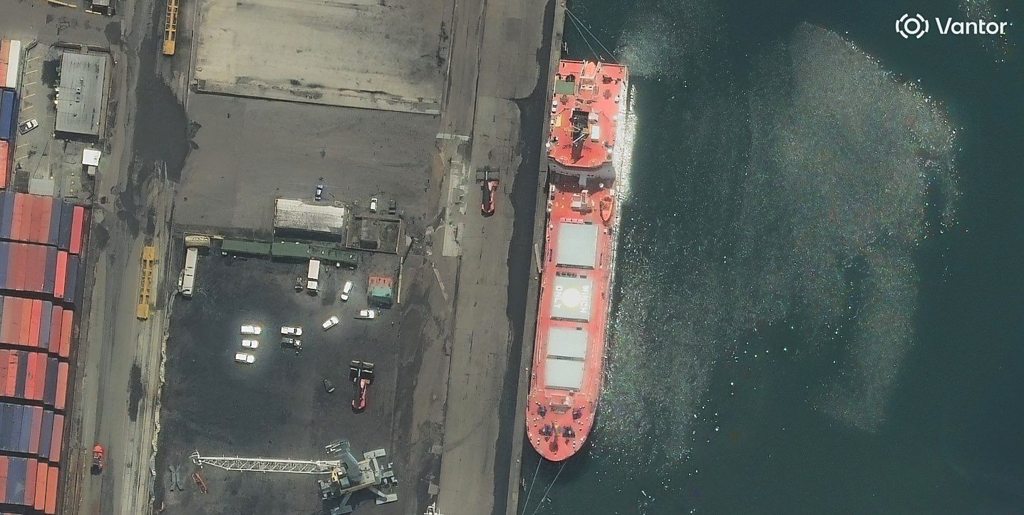
    Nestled in the Mississippi Sound, within sight of the Gulf of Mexico’s sprawling U.S. oil reserves, the 250-meter navy-and-burgundy tanker Minerva Gloria sits docked at a coastal wharf. Its cargo would have been unthinkable just six months ago: 400,000 barrels of heavy Venezuelan crude, marking the resumption of full-scale oil shipments between the OPEC nation and the United States after years of disrupted trade.

    Venezuela holds the world’s largest proven conventional oil reserves, but decades of underinvestment and a sweeping U.S. import ban had crippled its export sector for years. That changed abruptly after a January U.S. military raid captured former Venezuelan leader Nicolas Maduro, opening the door for Washington to roll back sanctions and access the untapped reserves. President Donald Trump made tapping Venezuela’s oil supplies a core priority, a pledge that is now translating to tangible shipments.

    By March 2026, Venezuelan monthly crude exports crossed the one million barrels per day threshold for the first time since September 2025, a rapid rebound for the country’s energy sector. The timing could not be more consequential: as global energy markets roil from Iran’s blockade of the Strait of Hormuz, major U.S. energy firms including Chevron — the only large American oil producer still holding operational assets in Venezuela — have ramped up imports of Venezuelan crude to full capacity.

    For Chevron’s largest U.S. refinery in Pascagoula, Mississippi, the return of Venezuelan oil is far more than a symbolic shift. “It’s a big deal not only for Chevron but the entire Gulf region,” noted Tim Potter, the facility’s director. The refinery was purpose-built and upgraded over decades to process heavy, high-sulfur crude — the exact type of oil that Venezuela produces in abundance. “It’s a pretty big incentive for us to run it at full capacity,” Potter added. Now, the firm can extract crude from its own Venezuelan fields, process it domestically, and deliver it directly to U.S. consumers, cutting out middlemen and logistical delays.

    Venezuelan crude carries a lower upfront price tag than many other grades, despite its more complex refining requirements. Currently, Chevron imports an average of 250,000 barrels of Venezuelan crude per day, and Andy Walz, president of Chevron’s downstream, midstream and chemicals division, says the company is positioned to boost that volume by 50% in coming months, hitting between 350,000 and 400,000 barrels daily for the firm alone. While Chevron is the only U.S. company with direct extraction rights in Venezuela, other domestic refiners are also purchasing crude from Venezuelan producers, expanding the overall supply hitting U.S. markets.

    Nearly 70% of U.S. refining capacity is optimized to run most efficiently on heavy crude grades, and the U.S. already draws less than 8% of its total oil imports from the Middle East as of 2025. Increased Venezuelan imports expand overall domestic supply, which industry leaders argue should eventually translate to lower pump prices for U.S. drivers. President Trump emphasized this dynamic in a recent primetime address, stating: “The United States imports almost no oil through the Hormuz Strait, and won’t be taking any in the future, we don’t need it.”

    Yet for American consumers filling their tanks right now, relief has not yet arrived. Just miles from Chevron’s Pascagoula refinery, at a local company-branded fuel station, retail gas prices continue to climb. David McQueen, a retired Vietnam veteran who relies on Social Security for income, called the ongoing price hikes unsustainable. “The price has got to go down because I’m going down with it,” he said, echoing widespread frustration that abundant domestic and Venezuelan reserves have not translated to lower costs. Another local resident, Donna, told reporters she has cut back on driving and reduced other spending to afford fuel, cutting back on visits to her grandchildren who live several hours away. “You gotta do what you gotta do,” she said.

    Data from the American Automobile Association confirms that even in this oil-rich region of Mississippi, where prices are still below the national average, gasoline costs roughly $1 more per gallon than they did before the escalation of conflict around the Strait of Hormuz. Why has increased supply not yet lowered prices? Industry leaders explain that the U.S. remains fully integrated into global oil markets, so even domestic crude is priced according to international benchmarks. “While we’re able to still get crude available here to this refinery because of our relatively local supply, the overall pricing of that crude has gone up because it’s based off of world markets,” Potter explained.

    Chevron officials maintain that the long-term benefits of increased Venezuelan oil supplies will eventually reach consumers, with the current price volatility driven by the Iran crisis temporarily masking the impact. “When things do get back to normal, that additional supply out of Venezuela will actually translate to lower prices for Americans. So it will in the future, but it isn’t having an impact now,” Walz said. For now, though, U.S. drivers are still waiting for the promised relief from resumed Venezuelan oil trade.