Fifteen Latin American asylum seekers who were deported to the Democratic Republic of Congo under the former Trump administration’s hardline, widely panned migration crackdown are now stranded in a country they never knew existed, facing an impossible choice no protected refugee should ever have to make. For the 29-year-old Colombian woman at the center of this case, who spoke to the Associated Press on condition of anonymity out of fear of retaliation, what was supposed to be a search for safety after fleeing persecution has devolved into what she describes as an unending nightmare—an outcome far removed from Congolese President Félix Tshisekedi’s dismissive description of their situation as “living the Congolese dream.”
The Colombian woman’s account lays bare the severe human cost of the opaque third-country deportation deals the Trump administration struck with at least eight African nations. Legal experts widely frame these agreements as a deliberate legal loophole designed to bypass longstanding U.S. asylum protections. The woman’s case mirrors that of dozens of other deportees: she had already received a formal protection order from a U.S. immigration judge, which barred her forcible return to Colombia, where she faced threats from armed groups and ongoing abuse at the hands of a former government-linked partner.
Her journey to this crisis began in 2024, when she fled Colombia for Mexico, secured a U.S. border appointment through the official government system, and successfully established a credible fear of persecution at an Arizona port of entry that qualified her for asylum processing. For 18 months, she remained in U.S. Immigration and Customs Enforcement detention, where she described routine dehumanization: repeated racist abuse from officers, punitive solitary confinement, revoked access to basic amenities like showers, and a complete loss of personal privacy even when using restroom facilities. In May 2025, a federal judge granted her formal protection under the U.N. Convention Against Torture, confirming she could not be safely repatriated to Colombia. She won her release from detention in February 2026 and relocated to Texas, where she was required to wear a GPS monitoring device as a condition of her release. But at her first routine check-in with ICE, she was taken back into custody immediately.
All officials told her was that a third country had agreed to accept her, she recalled. Less than three weeks later, she was strapped into a 24-hour charter flight to Congo—her destination was only disclosed to her 24 hours before departure. “When they told me they were going to deport me, I almost fainted,” she said. She and the 14 other Latin American deportees arrived in Kinshasa on April 17, their hands and feet shackled throughout the entire journey.
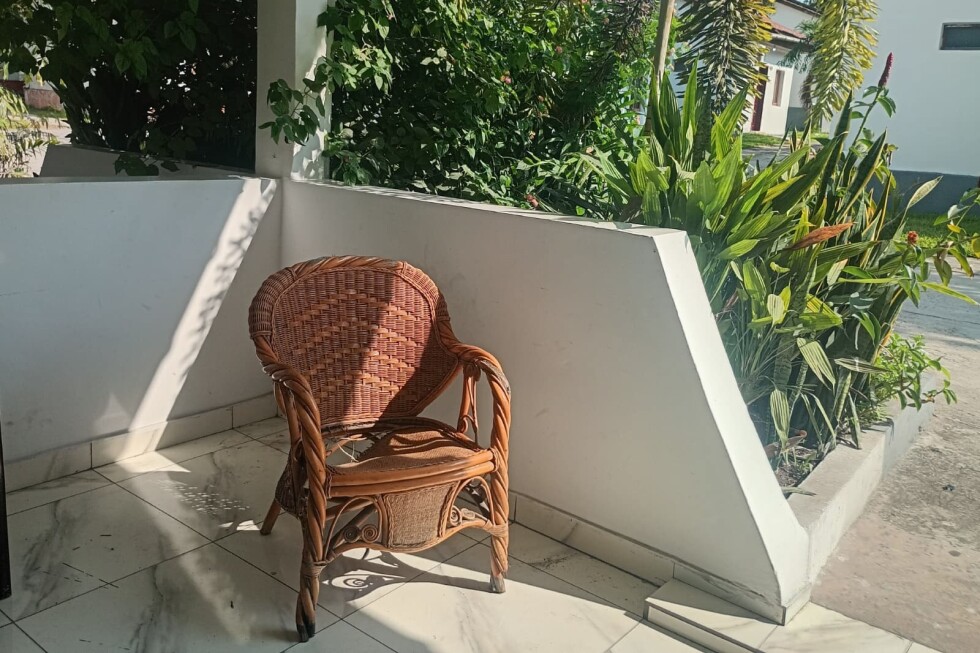
Since her arrival, the woman and the other deportees have been confined to a locked hotel compound near Kinshasa’s N’djili Airport, housed in tidy white bungalows with all current costs covered by the Congolese government, according to the UN-affiliated International Organization for Migration, which oversees the group’s daily management. Deported migrants are only permitted to leave the hotel compound once per week, and every trip is strictly chaperoned by IOM staff—there is no unsupervised movement, even for routine errands like grocery shopping or banking. “They choose where we go and what we buy,” the woman explained. While IOM has organized recreational activities including painting classes, music groups and volleyball matches, many deportees have lost interest in the repetitive routine. The woman spends most of her time alone in her room, making late-night calls to her 10-year-old daughter who remains in Colombia, constantly uncertain of when she will see her again.
With their three-month Congolese visas set to expire imminently, there is still no clear plan for their future, leaving the group in total legal and personal limbo. IOM has presented the woman with two unworkable options: accept “assisted voluntary return” to Colombia, where the U.S. judge already confirmed she faces extreme danger, or remain permanently in Congo with absolutely no financial, housing or social support from any agency. “What would one do in a completely unknown place, without a place to live and without knowing what to do?” she asked. She has experienced persistent stomach illness from the unfamiliar food, cannot speak French or Lingala—two of the most common languages in the country—and feels deeply unsafe in a setting that is entirely alien to her. “They treat us like we’re children,” she added. “The worst part is having to go through all of that without having committed any crime, simply for going to another country to ask for safety and protection.”
Alma David, the woman’s U.S.-based attorney, has condemned the entire process as a fundamental violation of U.S. domestic law and international human rights obligations. “By deporting them to a third country with no opportunity to contest being sent there, the U.S. not only violated their due process rights but our own immigration laws and our obligations under international treaties,” David explained. She noted that current ICE policy allows for deportation to any third country that provides blanket diplomatic assurances it will not persecute deportees, requiring no additional screening, no advanced notice to the deportee, and no individual risk assessment.
The full terms of the deal between the U.S. and Congo remain undisclosed. While other participating African nations have received millions of dollars in compensation for accepting deportees, Tshisekedi claimed earlier this month that Congo agreed to the arrangement as a free “act of goodwill between partners,” with no financial payment. Many regional analysts attribute Kinshasa’s willingness to comply to ongoing U.S. diplomatic pressure over the M23 rebel insurgency in eastern Congo, where Washington has openly condemned Rwanda’s support for the rebel group. Tshisekedi has downplayed the crisis, noting that the migrants are technically free to leave Congo at any time, and quipped that “they dreamed of living the American dream, and now they are living the Congolese dream.”
Congolese human rights organizations have rejected the agreement as a blatant violation of international refugee law. The Kinshasa-based Institute for Human Rights Research has described the migrants’ confinement as “arbitrary detention by proxy for the United States.” The AP’s investigation has already uncovered similar abuses across other participating African nations, including a gay Moroccan asylum seeker deported to Cameroon, where same-sex relations remain criminalized nationwide.
In response to requests for comment on the Colombian woman’s case, the U.S. Department of Homeland Security declined to answer specific questions. The agency has previously defended third-country deportation agreements, claiming they “ensure due process under the U.S. Constitution” and are a necessary tool to remove “criminal illegal aliens” whose home countries refuse to accept their repatriation. A recent U.S. court ruling that found the U.S. likely acted illegally in the deportation of another Colombian man to Congo has left the woman and her legal team uncertain what, if any, relief it will provide her case.
In a statement on its involvement, an IOM spokesperson confirmed the organization provides humanitarian assistance to deportees based on individual vulnerability assessments, including protection support, service referrals and general wellbeing outreach, but declined to share further details. The organization offers assisted voluntary return services that cover travel documents, flight costs, transit and temporary housing for those who agree to go back to their home countries, and has stressed it plays no role in selecting which migrants are deported. IOM also reserves the right to end its assistance if “minimum protection standards” are not met, the spokesperson added. For now, the Colombian woman remains trapped, cut off from her family and her future, with no clear path forward.