标签: South America

南美洲

  • Bahamas police search for US woman who reportedly fell off boat

    Bahamas police search for US woman who reportedly fell off boat

    A massive cross-agency search operation is ongoing in the Abaco Islands of the Bahamas after an American tourist disappeared overboard from a small recreational dinghy over the weekend, local law enforcement confirmed.

    The missing person has been identified as Lynette Hooker, a resident of Michigan, who was on a holiday in the Caribbean island nation alongside her husband, also a United States citizen. According to official statements from the Royal Bahamas Police Force, the incident unfolded around 7:30 p.m. local time Saturday, when the couple set out from Hope Town bound for Elbow Cay aboard an 8-foot hard-bottom dinghy. Hooker’s husband told first responders that his wife fell from the bouncing vessel when it hit uneven water, and was quickly pulled out to open sea by strong local currents. Critically, the woman took the dinghy’s engine keys with her when she fell overboard, leaving her husband stranded without power to navigate or pursue.

    Without functioning propulsion, the husband was forced to paddle the unpowered small boat to shore, a journey that took more than eight hours. He only reached the Marsh Harbour Boat Yard around 4 a.m. local time Sunday, where he immediately alerted on-site staff, who in turn contacted Bahamian law enforcement to launch the search. Hope Town Volunteer Fire and Rescue Chief Troy Pritchard confirmed to CBS News, the BBC’s U.S. news partner, that the woman was ejected violently from the small craft, a common hazard in choppy coastal waters around the island chain.

    In an official social media statement, the Royal Bahamas Police Force announced it had launched a full investigation into the disappearance, and that multiple partner agencies had joined the search effort. Alongside Bahamian national police and the Royal Bahamas Defence Force, U.S. diplomatic and law enforcement counterparts as well as local volunteer rescue groups are contributing assets and personnel to the operation, police confirmed.

    The incident comes nearly 13 months after the U.S. State Department issued a public travel advisory explicitly warning U.S. travelers of deadly boating risks across the Bahamas. The March 2025 advisory noted that the island nation does not tightly regulate recreational boating activity, a gap in oversight that has already led to multiple preventable injuries and fatalities for visitors in recent years.

  • In Brazil’s capital, Indigenous leaders rally as land disputes and mining pressures grow

    In Brazil’s capital, Indigenous leaders rally as land disputes and mining pressures grow

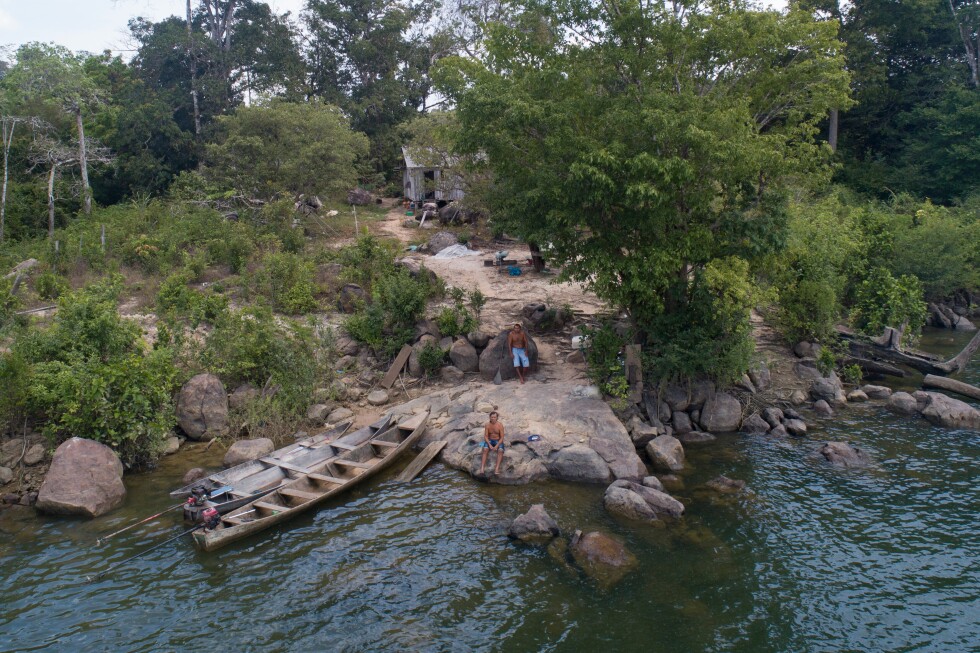
    In the heart of Brazil’s capital Brasilia, thousands of Indigenous representatives from 200 distinct communities across the nation gathered this Tuesday for the 22nd iteration of the Free Land Encampment, the country’s largest annual Indigenous mobilization. Marching along the Esplanade of the Ministries toward Three Powers Square — the central district housing Brazil’s presidential palace, Congress, and Supreme Court — demonstrators came together to push back against the encroachment of corporate agribusiness, logging, and mining projects on their constitutionally protected ancestral territories.

    Organized under this year’s theme “Our future is not for sale, and the answer is us,” the gathering coincides with a rising tide of land-related violence and tension across Brazil, including ongoing violent disputes targeting the Pataxo people in Bahia state and widespread unrest in the Amazon basin over the past several months. An estimated 7,000 attendees began arriving in Brasilia over the weekend, setting up camp in an open-air cultural space and holding preliminary assemblies to align their shared demands ahead of the main march. When Indigenous leaders asked the assembled crowd whether they were satisfied with the federal government’s progress on demarcating Indigenous land, and with the actions of Congress and the Supreme Court, every question drew a resounding chorus of “no.”

    The march also places direct pressure on President Luiz Inácio Lula da Silva, a leftist leader who campaigned on a platform of strengthening Indigenous land rights and environmental protection after four years of rollbacks under his predecessor, but has drawn sharp criticism for moving forward with oil exploration and other resource extraction projects that contradict those core promises. With Lula widely expected to run for re-election this October, Indigenous leaders say they are demanding a seat at the table for policy decisions that shape the future of their communities.

    “Congress, the Supreme Court, and the president make decisions about our lives without ever hearing our voices,” explained Alessandra Korap, a Munduruku Indigenous leader and 2023 Goldman Environmental Prize winner, as she joined the march. “They often consult one or a handful of Indigenous people and claim we all agree to a new waterway, a railroad, or a mining project. When we stand united like this, no one can speak for us — we are here to deliver our own message.”

    The mobilization follows a string of recent actions across the Amazon that have yielded mixed results for Indigenous communities. In February, thousands of protesters including Korap held 33 days of demonstrations outside a Cargill facility in Para state, successfully pushing Lula to revoke a decree that would have allowed private concessions for Amazonian waterways. Just weeks earlier, however, a federal court approved licensing for a massive Canadian-led gold mining project operated by Belo Sun in Para, prompting months of continuous Indigenous-led protests in the state capital of Altamira.

    As demonstrators marched on Tuesday, dressed in traditional headdresses and cultural body paint and chanting unified calls for land sovereignty, movement leaders emphasized that even with incremental gains under the Lula administration, Indigenous rights remain under growing threat from agribusiness, mining, and energy interests that dominate national politics. Dinamam Tuxá, executive coordinator of the Articulation of Indigenous Peoples of Brazil, noted that Brazil’s current political and economic context demands sustained, unified action from Indigenous communities. “Lawmakers have already advanced multiple bills that would weaken constitutional protections for our lands and reinterpret long-standing land rights to open more territories to extraction,” Tuxá explained. “With global demand for oil, gas, and critical minerals rising, these economic interests are putting unprecedented pressure on our territories.”

    The contradiction at the heart of Lula’s policy agenda remains a central point of tension for the movement. Lula was invited to attend the Free Land Encampment, but had not confirmed his attendance as of Monday afternoon. While members of his administration, including Indigenous Peoples Minister Eloy Terena, have confirmed they will participate in policy hearings during the week-long gathering, Lula has continued to argue that economic development and environmental conservation can coexist, even as he approves new extraction projects opposed by Indigenous and environmental groups.

    Recent judicial action has added new urgency to the movement’s demands. In February, Supreme Court Justice Flávio Dino ordered Congress to pass formal legislation regulating mining activity on Indigenous territories within two years. In his ruling, Dino acknowledged that illegal mining is already widespread on Indigenous lands, carried out with pervasive violence and disregard for environmental protections, and affirmed that the Cinta Larga people, whose territory spans the Amazonian states of Mato Grosso and Rondonia, retain the right to conduct mining on their own land if they comply with environmental rules and secure broad community approval. Under current Brazilian law, all mining and mineral exploration on Indigenous territory requires congressional approval in addition to community consultation.

    But legal and environmental advocates warn that a Congress dominated by agribusiness and pro-extraction lawmakers will almost certainly draft legislation that undermines Indigenous sovereignty. Renata Vieira, a lawyer with the non-profit Instituto Socioambiental, called the push to open Indigenous territories to formal mining one of the most severe threats facing Indigenous communities in modern Brazil. “Any legislation coming out of this current Congress will be deeply harmful to Indigenous rights,” Vieira said.

    Beyond the immediate fight for Indigenous sovereignty, the protection of Indigenous territories is widely recognized by climate scientists as one of the most effective strategies to curb Amazon deforestation. The Amazon, the world’s largest tropical rainforest, acts as a critical global carbon sink that regulates global climate patterns, and researchers warn that continued large-scale forest loss could accelerate dangerous levels of global warming. Data from 2022 collected by MapBiomas, a network of non-profit land-use tracking organizations, underscores the impact of Indigenous stewardship: over 30 years, Indigenous territories lost just 1% of their native vegetation, compared to a 20% loss on private land across Brazil.

  • Chilean woman accused of Pinochet-era kidnaps loses extradition battle

    Chilean woman accused of Pinochet-era kidnaps loses extradition battle

    After 12 years of drawn-out legal challenges, a 72-year-old Chilean woman accused of grave human rights abuses under former dictator Augusto Pinochet has failed to block her extradition from Australia, clearing the way for her to face trial for crimes committed nearly half a century ago.

    Adriana Rivas, who has lived in Australia’s Sydney suburb of Bondi since 1978 where she worked as a domestic cleaner and nanny, has long denied involvement in the enforced disappearance and torture of seven left-wing dissidents during Pinochet’s 1973 to 1990 military rule. Before resettling in Australia, Rivas served as the personal secretary to Manuel Contreras, the head of Pinochet’s notoriously brutal secret police force, the National Intelligence Directorate, widely known by its Spanish acronym DINA.

    Human rights campaigners and relatives of the regime’s victims have spent decades pushing for Rivas to face justice. DINA was created immediately after Pinochet seized power in a 1973 military coup specifically to hunt down and eliminate political opponents of the new dictatorship. Over its years of operation, the agency carried out thousands of abductions, extrajudicial killings, enforced disappearances, and systematic acts of torture, before being replaced by another equally violent military intelligence unit, the CNI.

    Chilean authorities first took Rivas into custody when she returned to her home country for a visit in 2006, but she was released on bail and returned to Australia before proceedings could advance. The Chilean government formally filed an extradition request with Australian officials in 2014, alleging that Rivas was an active DINA operative who directly participated in the 1976 abduction of Víctor Díaz, secretary-general of the Chilean Communist Party, and six other party members. Among the seven missing victims was 29-year-old Reinalda del Carmen Pereira Plaza, who was pregnant at the time of her abduction. All seven are widely presumed to have been killed while in DINA custody, and Chilean extradition documents accuse Rivas of serving as a guard and taking on operational roles during the detainees’ capture. Multiple witnesses interviewed for a documentary have labeled Rivas one of DINA’s most brutal torturers and a key member of the Lautaro Brigade, an elite hit squad tasked with eliminating the leadership of Chile’s underground communist movement. The documentary was directed by Rivas’ own niece, Lissette Orozco, who spent five years investigating her aunt’s past, and the film premiered at the 2017 Berlin International Film Festival.

    Rivas has consistently rejected all accusations of wrongdoing. In a 2013 interview with Australian public broadcaster SBS, she described her time working for DINA as “the best of my life,” and when asked about the widespread torture carried out by the agency, she claimed that “they had to break the people – it has happened all over the world, not only in Chile.”

    On Monday, an Australian federal judge rejected all arguments from Rivas’ legal team that the extradition request was legally invalid, bringing an end to the latest phase of her legal fight. According to local Australian media reports, Rivas still has the option to launch an appeal against the ruling before the full Federal Court, though it remains unclear whether she will be able to meet the legal requirements to proceed with an appeal.

    If Rivas does not launch a successful appeal, she will be deported back to Chile to stand trial on charges of aggravated kidnapping. Lawyers representing the families of the seven victims said relatives were overcome with joy by Monday’s ruling. The case comes amid a decades-long global push to hold surviving perpetrators of Pinochet-era human rights abuses accountable. Under Pinochet’s rule, official records confirm more than 40,000 people were subjected to political persecution, and close to 3,000 people were killed or forcibly disappeared.

  • Minnesota deny Rodriguez has rare muscle wasting condition

    Minnesota deny Rodriguez has rare muscle wasting condition

    Veteran Colombian playmaker James Rodriguez is at the center of swirling health rumors that have been firmly rejected by his current club, Major League Soccer side Minnesota United. The 34-year-old, who boasts a decorated career spanning European giants Real Madrid, English Premier League outfit Everton and his national side Colombia, was recently hospitalized after falling ill during an international fixture, sparking widespread concern across the global football community.

    Rodriguez first displayed visible symptoms of illness during Colombia’s 2025 March 29 international friendly against France, a match that ended in a 3-1 defeat for the South American side. Immediately after the match, the midfielder was admitted to hospital for three days to receive treatment for severe dehydration. He finally made his return to Minnesota United’s training complex on Monday to begin a gradual return to football activity.

    Following his hospitalization, the Colombian Football Federation released an official statement on April 2 confirming that Rodriguez was being monitored for an underlying medical condition unrelated to his football career, while adding that his medical outlook remained favorable. Despite this reassuring update, unsubstantiated rumors began circulating widely across social media platforms, and were picked up by some United States media outlets, claiming the midfielder was suffering from rhabdomyolysis – a rare and potentially fatal muscle-wasting disorder.

    Rhabdomyolysis, a condition that can be triggered by extreme overexertion, causes muscle tissue to break down and release toxic fibers into the bloodstream, which can in turn cause permanent kidney damage or even death if left untreated. However, Minnesota United has pushed back firmly against these claims in an official statement issued by the club.

    “The club and our medical professionals can unequivocally state there has been no clinical or laboratory evidence of rhabdomyolysis,” the MLS side said. Since his return to the training ground on Monday, Rodriguez has completed a supervised low-intensity return-to-activity session, and his progression back to full group training will be managed step-by-step by the club’s specialist medical team to protect his long-term health.

    A seasoned international, Rodriguez made his Colombia debut back in 2011, and has gone on to earn 124 senior caps for his country to date. Since joining Minnesota United in February 2025, he has made two appearances in MLS competition as he settles into his new role in the North American league.

  • Venezuela’s Delcy Rodríguez remains acting president after her initial 90-day appointment expired

    Venezuela’s Delcy Rodríguez remains acting president after her initial 90-day appointment expired

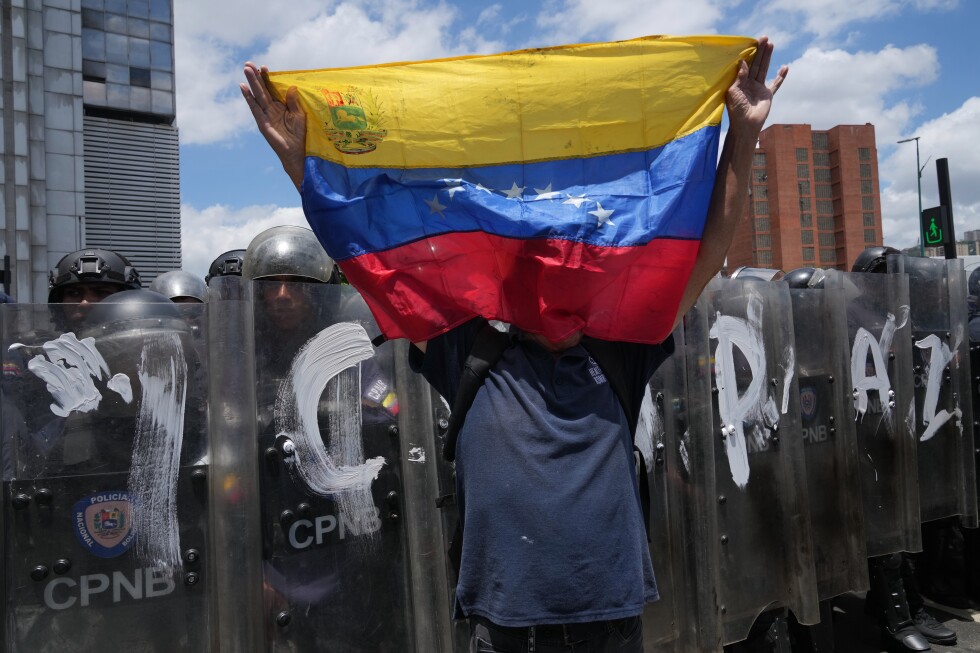
    Nearly three months after former Venezuelan President Nicolás Maduro was taken into U.S. custody on drug trafficking charges, Delcy Rodríguez continues to hold the interim presidential role she stepped into, in a move that pushes past the 90-day temporary tenure limit set by Venezuela’s Supreme Tribunal of Justice.

    The political standoff began on January 3, when Maduro and his wife Cilia Flores were arrested in Caracas and extradited to New York to face federal drug trafficking charges. Both have formally pleaded not guilty to the allegations. Rodríguez, who was serving as vice president under Maduro, was immediately named acting president by Venezuela’s top court, which framed Maduro’s detention as an illegal forced absence that made it impossible for him to carry out his constitutional duties. The court’s ruling capped her interim term at 90 days, which expired last Friday, leaving her officially past the deadline by Monday when the status of her role was first publicly questioned.

    Under Venezuela’s constitution, an interim presidential appointment for a temporary absence can only be extended beyond the initial 90 days by a public vote of the National Assembly. As of Monday, no such vote had been held, and no official public announcement about an extension has been made by the ruling party-led legislative body. If lawmakers were to formally declare the presidency permanently vacant, the constitution requires the National Assembly to trigger a snap general election to select a permanent new head of state.

    Venezuela’s government press office has not responded to multiple requests for comment on the current status of Rodríguez’s tenure, leaving political observers to speculate on the path forward.

    Ronal Rodríguez, a researcher with the Venezuela Observatory at Bogotá’s Universidad del Rosario, noted that the ruling party has a long track record of adapting constitutional and legal interpretations to maintain hold on power dating back to Maduro’s first term starting in 2013. He argued that a similar workaround for the current deadline would not be unexpected. “They will most likely try to come up with some kind of explanation, such as it being Good Friday or the way the days were counted, but in the end, everything will be validated by a ruling from the Supreme Tribunal of Justice,” he said.

    The current political landscape marks a sharp shift from years of U.S. policy toward Venezuela. Washington stopped recognizing Maduro as the country’s legitimate leader back in 2019, one year after he claimed victory in a widely discredited reelection that barred all major opposition candidates and parties from participating. In a surprise move after Maduro’s arrest, the Trump administration opted to partner with Rodríguez, a long-time ruling party figure, rather than back the country’s traditional political opposition.

    Since taking on the interim role, Rodríguez has aligned closely with the Trump administration’s phased plan to resolve Venezuela’s long-running political and economic crisis. She has actively courted international investment for the oil-rich nation, opened the country’s critical energy sector to private investment and international arbitration, and removed a number of long-time Maduro loyalists from senior government posts—including the former defense minister and attorney general who were closely aligned with the ex-president.

    U.S. President Donald Trump has publicly praised Rodríguez’s leadership in recent weeks. Last month, the U.S. State Department formally recognized her as Venezuela’s “sole Head of State,” and just last week the U.S. Treasury Department lifted all crippling economic sanctions that had been imposed on her for years. Public messaging from Rodríguez and other ruling party leaders has continued to demand the immediate release of Maduro and Flores, labeling their arrest a kidnapping, a narrative that is repeated on public billboards and murals across Caracas.

  • Step aside, children: A Chilean zoo stages an Easter egg hunt with treats for the animals

    Step aside, children: A Chilean zoo stages an Easter egg hunt with treats for the animals

    SANTIAGO, Chile — For many communities around the world, Easter weekend brings colorful candy-filled egg hunts for children chasing sweet treats. But at Chile’s largest private zoological park, this beloved holiday tradition gets a playful, animal-centric twist: this Easter egg hunt is exclusively for the park’s residents, with human visitors cheering them on from the sidelines.

    This year, Bioparque Buinzoo, located in the heart of Chile’s capital Santiago, held its 16th annual animal Easter egg hunt, a long-running event crafted to serve two key goals: delight visiting crowds observing the fun, and encourage native foraging behaviors that support the animals’ psychological and physical wellbeing.

    Across different animal enclosures, zookeepers hid holiday-themed treats that matched each species’ natural diet, wrapped in festive Easter-inspired packaging instead of the store-bought chocolate eggs familiar to human celebrants. For small wild cats including caracals, zookeepers tucked meat-filled pouches decorated to look like bright Easter eggs high on tree branches, prompting the agile felines to leap and climb to retrieve their snacks – just as they would climbing trees to hunt prey in the wild.

    Meerkats had their hidden treats placed in a small basket nestled between rocky outcrops in their enclosure, encouraging the curious burrowing animals to sniff out their meal. For primate residents including lemurs and multiple species of monkeys, zookeepers hid fresh, natural fruits inside brown paper bags printed with playful bunny graphics, matching the Easter holiday theme. Even the zoo’s flock of sheep got in on the fun: they foraged for food pellets tucked inside a colorful, holed sphere, a puzzle-like challenge that kept the animals engaged.

    Ignacio Idalsoaga, director of Bioparque Buinzoo, explained the core logic behind the annual event. In their natural wild habitats, the vast majority of these species spend a large portion of their daily lives searching for food, a routine that keeps them both physically active and mentally stimulated. “We wanted to recreate that natural searching behavior in a captive environment to keep our animals healthy and engaged,” Idalsoaga said. He also made clear that none of the “eggs” contained chocolate, a food toxic to many animals – all treats matched what the animals would naturally eat in the wild. Idalsoaga added that the zoo’s creative team brought extra imagination to this year’s event, crafting new themed challenges for animals across the park to enjoy.

  • One dead and dozens injured at Peru soccer stadium during fan rally

    One dead and dozens injured at Peru soccer stadium during fan rally

    LIMA, Peru – A tragic crowd crush incident at a major soccer stadium in Peru’s capital has left at least one fan dead and 60 others injured, according to official government and emergency management updates shared in the hours after the Friday night event. The chaos unfolded at Alejandro Villanueva Stadium, the home ground of top Peruvian side Alianza Lima, just one night before the team was set to face its long-standing bitter rival Universitario in a highly anticipated local derby. Thousands of Alianza Lima supporters had gathered in the stadium’s south stands for pre-match festivities when a sudden overcrowding triggered the dangerous crush, trapping dozens of attendees that responding police officers later pulled to safety. Initial unconfirmed reports from Peru’s Ministry of Health claimed a structural wall inside the venue had collapsed, a statement that has since been rejected in official, separate releases from both the national police force and Alianza Lima club leadership. Marcos Pajuelo, a senior brigadier with the local fire department, confirmed that one person had been killed in the incident, adding that all 60 injured fans have been transported to hospitals across Lima for urgent and ongoing care. As of the latest updates, investigators have not yet reached a definitive conclusion on what triggered the dangerous overcrowding. Footage captured by local television news outlets and circulated on social media shows thousands of fans packed tightly into the south stand, with visible fireworks exploding above the crowd. Separate clips show injured supporters waiting for emergency assistance in stadium seating areas while first responders worked to clear the overcrowded section. The tragedy has sent shockwaves through Peru’s tight-knit soccer community, with fans and officials already calling for thorough reviews of venue security and crowd management protocols ahead of future high-attendance matches.

  • Football rally in Peru leaves one dead and dozens injured

    Football rally in Peru leaves one dead and dozens injured

    A deadly pre-match incident has shaken Peruvian football, leaving one supporter dead and 47 others injured ahead of one of the nation’s most anticipated local derbies between Alianza Lima and Universitario de Deportes in the capital city of Lima. Official investigations remain ongoing to pinpoint the exact cause of the emergency, which sparked conflicting early accounts of what unfolded at Alianza Lima’s home ground, Alejandro Villanueva Stadium.

    Hours before the scheduled Saturday night clash, hundreds of Alianza Lima fans had packed the area outside the stadium, clad in the club’s colors, waving team flags and gathering for pre-match festivities ahead of the high-stakes derby against their cross-city rivals. Initial reports circulating in the immediate aftermath of the incident claimed that sections of the stadium’s outer wall and supporting structure had collapsed, triggering the mass casualty event. That narrative has since been challenged by multiple official and club sources.

    Confirming the fatality to reporters at a Lima hospital where injured victims are receiving care, Peruvian Health Minister Juan Carlos Velasco Guerrero updated the casualty count: 47 people were hurt in the incident, with three currently listed in critical condition. The country’s interior ministry first announced the emergency on social platform X, noting that 40 firefighting personnel had been deployed to respond to the incident, which was initially described as an event involving people trapped under a collapsed structure.

    However, Fire Chief Marcos Pajuelo later offered a contradictory assessment of the stadium’s condition after an on-site inspection. “There are no collapsed walls or sections fallen into the pit,” Pajuelo told reporters, adding that the structural integrity of the stadium’s southern stands appeared to be intact following a preliminary check. Host club Alianza Lima also issued a public statement on X pushing back on the early collapse claims, saying that available preliminary information confirms the incident is not linked to any failure of the stadium complex’s walls or structural infrastructure.

    Despite the tragedy and ongoing investigation, the Peruvian Professional Football League confirmed over the weekend that the scheduled derby match would go ahead as planned on Saturday night. In its official statement, the league emphasized that relevant authorities are working to fully unpack the circumstances of the pre-match incident, and reaffirmed the organization’s “commitment to the safety and well-being of all attendees at sporting events.” As of Sunday, no new conclusions have been released regarding the root cause of the incident that claimed the life of one fan and left dozens others harmed.

  • Cuba begins releasing more than 2,000 prisoners as US pressure mounts

    Cuba begins releasing more than 2,000 prisoners as US pressure mounts

    Emotional scenes unfolded across Cuban prisons on Friday as the first wave of inmates walked free, part of a government-ordered mass release of 2,010 prisoners described by Havana as a humanitarian and sovereign act, carried out against a backdrop of mounting economic and political pressure from the United States.

    Agence France-Presse correspondents on the ground captured moving moments at La Lima prison in eastern Havana, where more than two dozen released inmates embraced relatives who had waited for hours behind prison walls for the moment of reunion, many openly crying as they were reunited with loved ones. Among the first to leave was 46-year-old Albis Gainza, who had completed half of a six-year sentence for a robbery conviction.

    In an official statement released Thursday through its embassy in Washington, Cuba confirmed the release will prioritize specific vulnerable groups: foreign nationals, youth, women, and incarcerated people over the age of 60. Eligibility for release was determined through a multi-factor review, the statement added, including an assessment of the individual’s original offense, documented good behavior during incarceration, completion of a substantial portion of their sentence, and underlying health conditions. The government also framed the move as a traditional practice tied to Holy Week religious celebrations, a longstanding custom within the country’s criminal justice system.

    The large-scale release marks the second prisoner amnesty Cuba has authorized this year alone. In March, 51 inmates were freed following diplomatic talks with the Vatican. In 2005, a previous 553-person release was brokered through a joint agreement between the Vatican and the United States.

    Local reports from across the country confirmed releases were underway at multiple facilities. Cuban independent outlet 14ymedio, citing the head of Spain-based human rights organization Prisoner Defenders, reported that 41 prisoners had already been released from the Toledo 2 Forced Labor Prison in southwestern Havana. In the eastern city of Las Tunas, six people convicted of common crimes were freed from El Típico prison, alongside dozens more from nearby forced labor camps, the outlet added. Freed inmates were documented waving their official release papers as they exited correctional facilities to rejoin their families.

    The amnesty comes at a moment of severe crisis for Cuba, driven by aggressive policy shifts from the Trump administration. Since returning to the U.S. presidency, Donald Trump has made clear his goal of forcing regime change in Cuba’s long-standing communist government, tightening economic sanctions that have crippled the island nation’s energy supply. Previously, Cuba relied on heavily discounted crude oil shipments from ally Venezuela, but the U.S. cut off that arrangement after a January military raid in Caracas that seized former Venezuelan president Nicolás Maduro, and now imposes tariffs on any third country that sends oil to Cuba, worsening the island’s energy crisis.

    Trump’s hardline policy has shifted focus back to Cuba in U.S. Latin America strategy following the Maduro raid. The U.S. leader has repeatedly publicly raised the possibility of using military force to occupy Cuba and install a U.S.-aligned government. While Washington recently signaled it had no objection to a Russian-owned tanker carrying 730,000 barrels of crude docking in Cuba last week—the first such arrival since early January—Moscow confirmed Thursday it will send a second tanker with enough crude to keep Cuba’s economy operating for several weeks.

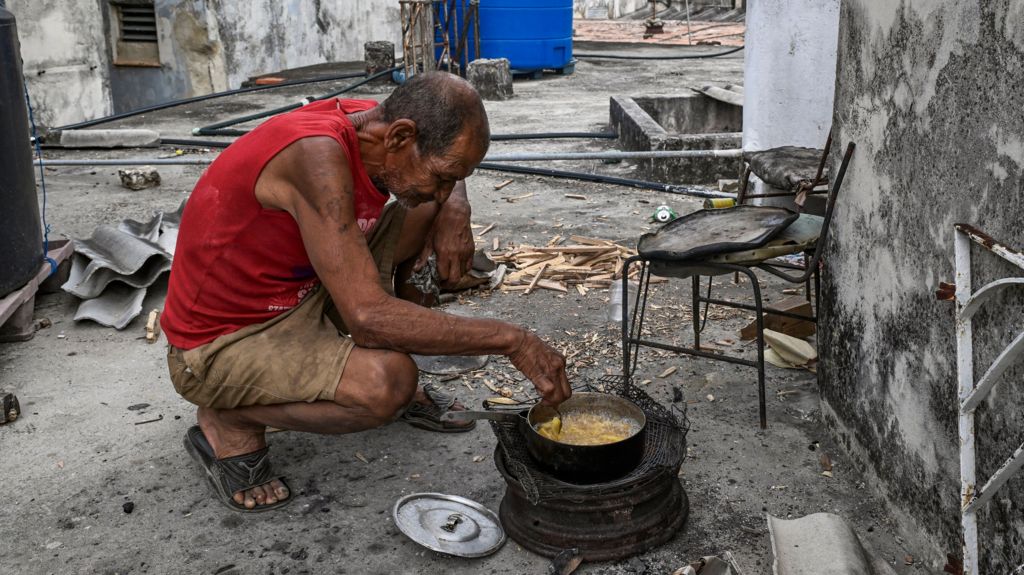
    The ongoing fuel shortage has triggered cascading crises across Cuban society. The World Health Organization warned last week that widespread fuel shortages have left Cuban hospitals unable to maintain critical emergency and intensive care services, putting thousands of vulnerable patients at risk. Rolling blackouts have left millions of Cuban residents without power for extended periods, sparking rare public protests against the government in recent months. While Havana and Washington have held quiet talks to de-escalate tensions and resolve the current impasse, both sides have publicly laid out non-negotiable political and economic red lines that have made finding a compromise elusive so far.

    Human rights groups including Human Rights Watch estimate that Cuba currently holds hundreds of political prisoners, and that government critics face regular harassment and criminal prosecution. Following the U.S. operation in Venezuela, the interim Venezuelan government installed by Washington has also carried out a release of political prisoners, a key demand from the Trump administration, though one prisoner rights group has noted that only one-third of the promised releases have been completed to date.

  • Good Friday across Latin America brings faith into the streets

    Good Friday across Latin America brings faith into the streets

    Across the length and breadth of Latin America, millions of Catholic faithful gathered on Good Friday to mark one of the holiest days on the Christian calendar, reviving centuries-old traditions of public processions, solemn ceremonies, and acts of penance that honor the crucifixion of Jesus Christ. Even as religious demographics have shifted across the region in recent decades, these deeply rooted observances drew crowds of devotees spanning multiple generations, underscoring the enduring power of faith in public life.

    In Antigua Guatemala, the UNESCO-listed colonial gem tucked beneath towering, active volcanoes in southern Guatemala, the city’s annual Holy Week celebrations kicked into their most solemn phase at dawn. Dozens of penitents, locally known as cucuruchos, clad in flowing purple and white robes, processed slowly along the city’s iconic cobblestone streets under the rising sun. Other participants bore gilded, centuries-old religious images of Jesus, passing through neighborhoods packed with onlookers who have traveled from across the country and beyond to witness the event. Antigua hosts more than 15 separate processions throughout Holy Week, each with its own distinct history and devotional purpose.

    For 63-year-old Marcos Bautista, the occasion is a lifelong family tradition, stretching back to when he was an infant carried in his father’s arms. “To describe Holy Week in Antigua, there are no words that can capture what it feels like,” he shared. “It’s a feeling that, just by speaking about what Jesus has done in our lives, moves me deeply.”

    In Bolivia, this year’s Good Friday held particular political and cultural significance, marking a break from a nearly 20-year precedent of government leaders avoiding public religious events. Under Bolivia’s secular constitution, national leaders refrained from official participation in religious ceremonies between 2006 and 2025. But President Rodrigo Paz, who took office last November, broke with that tradition in recent weeks by attending Palm Sunday Mass carrying a ceremonial palm frond, and traveled to the southern city of Tarija to join Good Friday observances this year. In the capital La Paz, local government officials and military marching bands joined public processions, where hooded penitents carried the Holy Sepulcher through downtown streets.

    Antonio Santamaría, a participant who carried a religious image of Jesus during the procession, welcomed the shift in government engagement. “I’m glad everyone is here now,” he said. Bolivia remains a majority Catholic nation, with strong overlapping Indigenous spiritual traditions that shape many local religious practices. A longstanding household custom of eating only fish on Good Friday and preparing up to 12 dishes to represent Jesus’ 12 apostles has faded in recent years, however, as the country grapples with a sustained economic crisis that has strained household budgets.

    In neighboring Ecuador, where roughly 80% of the population identifies as Catholic, processions unfolded in every major urban center. In the capital Quito, the annual “Jesús del Gran Poder” procession drew more than 150,000 faithful, who packed the streets of Quito’s historic center, filling the air with chants and prayers as they accompanied the centuries-old image of Jesus carrying the cross.

    Just across the border in Colombia, thousands of devotees made the steep climb up Monserrate Hill, a 3,100-meter peak that overlooks the capital Bogotá, to attend a special Good Friday Mass at the hilltop basilica. Similar observances, including dramatic reenactments of the Stations of the Cross that retrace Jesus’ final journey to crucifixion, were held in towns and cities across the country.

    In Mexico, home to nearly 100 million Catholics, communities also marked the day with deeply rooted local traditions. In the central town of Atlixco, in the state of Puebla, the famous “Procession of the Chained” drew crowds of onlookers. Masked penitents walked the route bound in heavy iron chains, with pieces of cactus pressed into their skin as an act of penance. For participants, the ritual serves two purposes: some take part to atone for sins, while others walk to fulfill a vow in thanks for answered prayers and miracles. “It’s very beautiful, very sad,” said Marcela Ramírez, a homemaker who attended the procession. “It’s a kind of reverence, and you have to come and accompany them.”

    While demographic data from 2024 surveys conducted by Pew Research Center and Latinobarómetro confirms that the share of Latin Americans who identify as Catholic has declined over the past two decades, the faith remains the largest religious affiliation across the region. Even in countries where that share has fallen, more than 60% of adults still identify as Catholic in nations including Peru and Argentina, keeping these large-scale public Good Friday traditions alive for new generations.